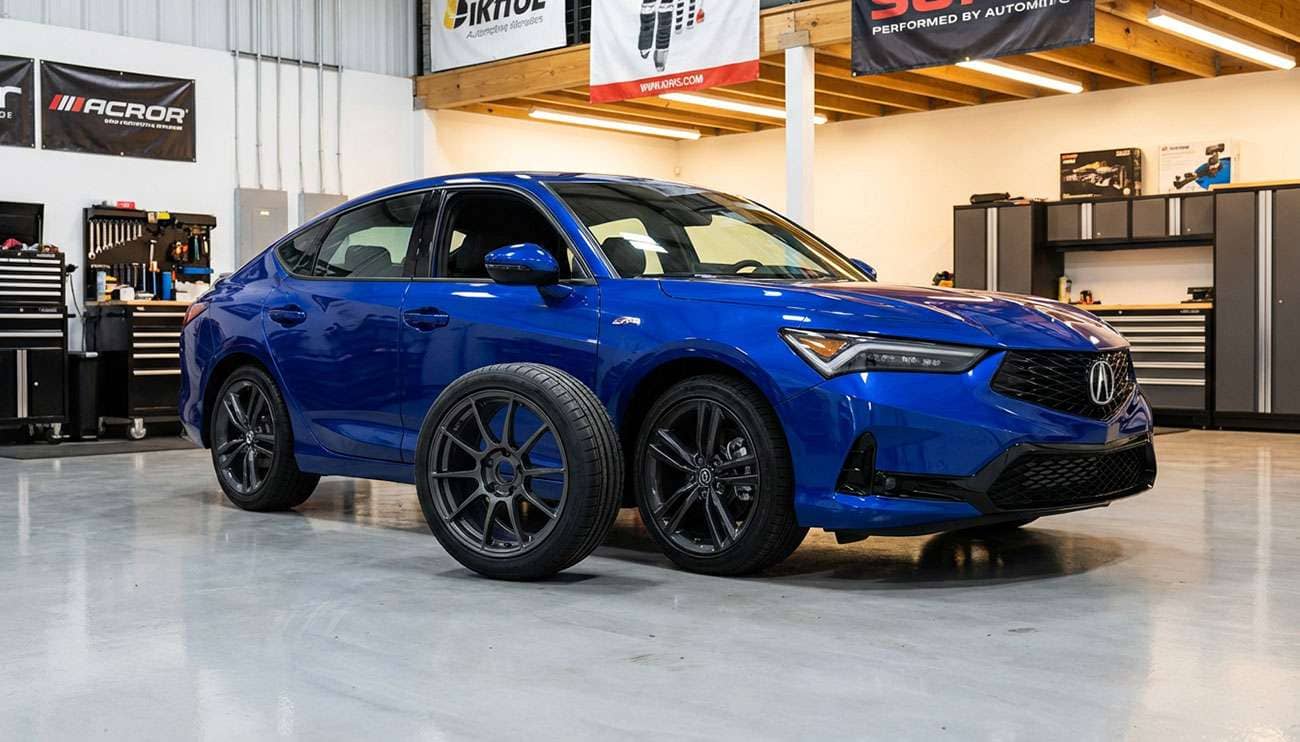
At Performance Plus Tire, we understand that selecting Acura Integra aftermarket wheels requires precise attention to fitment details. The 18x9.5" wheel size has become the preferred choice for this platform, offering the ideal balance of performance and style. The 5th generation Integra (2022 to present) arrives from the factory with either 17x7" or 18x8" wheels running approximately +50 offset, creating specific requirements for aftermarket upgrades.
When shopping for 2023 Acura Integra aftermarket wheels, 2024 Acura Integra aftermarket wheels, or Integra Type S wheels, three critical factors determine proper fitment: your specific trim level, the Acura Integra lug pattern, and your desired stance. Our expert team has worked with countless Integra fitments, and we know that getting these specifications right prevents costly rubbing issues and clearance problems. We'll guide you through every detail needed to select wheels that fit perfectly and perform exactly as intended.
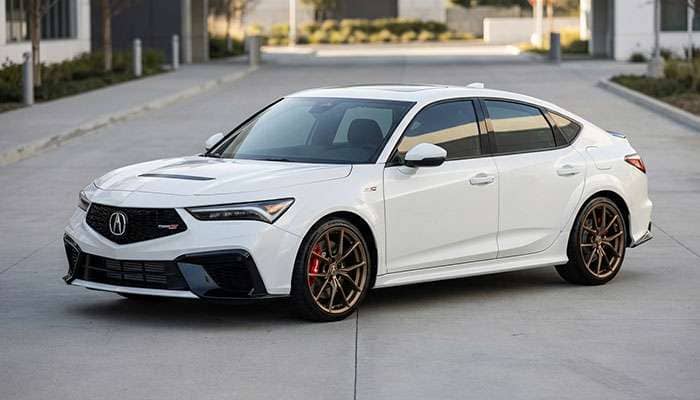
Understanding your specific Integra trim level comes first before selecting aftermarket wheels. The differences between models extend far beyond appearance and directly determine which wheels will bolt on properly.
The Type-S operates in a completely different performance category than its siblings. Base and A-Spec models feature a 1.5L turbocharged engine producing 200 horsepower, while the Type-S jumps to a 2.0L turbo generating 320 horsepower. This substantial power increase requires chassis modifications that dramatically affect wheel fitment.
Body width creates the most significant difference between these trims. The Type-S measures 74.8 inches wide compared to 72.0 inches on Base and A-Spec models, adding roughly 3 inches of total width. This wider stance goes beyond body panels alone. The suspension system positions the hubs outward, creating an entirely different wheel mounting position that changes your offset requirements completely.
Here's the critical detail that catches many buyers off guard: the Type-S uses a completely different lug pattern than other Integra trims. Base and A-Spec models feature a 5x114.3mm bolt pattern, while the Type-S switches to 5x120mm. Wheels designed for a Base or A-Spec Integra simply won't bolt onto a Type-S without adapters.
Lug nut specifications differ as well. Base and A-Spec models require M12x1.5 threads with 80 ft-lbs torque, whereas the Type-S needs M14x1.5 threads and 93 ft-lbs torque. All trims share a consistent 64.1mm center bore.
Factory wheel sizes establish your baseline for aftermarket upgrades. Base Integra models arrive with 17x7 inch wheels, while A-Spec trims step up to 18x8 inch wheels. The Type-S comes equipped with 19x9.5 inch wheels, already approaching aggressive sizing from the factory.
All factory wheels maintain approximately +50mm offset regardless of trim level. The Type-S keeps this offset despite running significantly wider wheels, which works because of the altered track width. Factory tire sizes match accordingly: Base models wear 215/50R17, A-Spec gets 235/40R18, and Type-S runs 265/30ZR19 summer tires.
Track width measurements explain why the Type-S accommodates different wheel specifications. A-Spec models measure 60.5 inches front and 61.6 inches rear. The Type-S extends to 64.0 inches front and 63.5 inches rear. This 3.5-inch front track width increase allows the Type-S to run wider wheels at similar offsets without wheels protruding beyond the fenders.
The wider track provides the Type-S with additional room for wheels featuring greater backspacing. Some Type-S setups successfully run 10.5 inch wide wheels with +47 offset without excessive poke. The identical wheel specifications on an A-Spec would extend significantly past the fender line, creating clearance issues and an illegal stance in many jurisdictions.
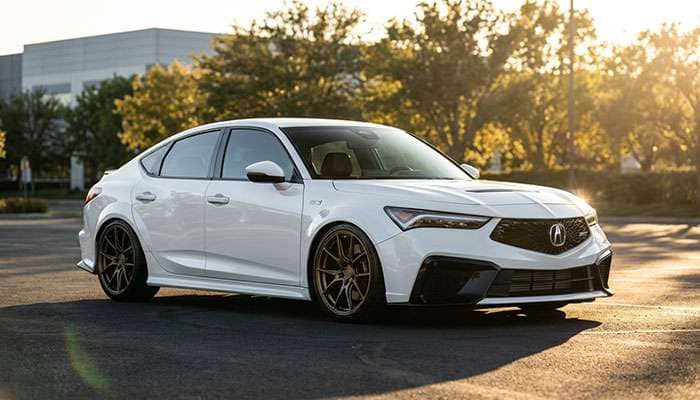
Understanding wheel specifications goes well beyond simple diameter measurements. Each dimension directly affects your Integra's suspension geometry, brake clearance, and fender contours. Getting these specs right prevents costly fitment issues and ensures optimal performance.
Moving from 17" to 18" wheels typically means fitting a lower-profile tire to maintain overall diameter close to stock. The visual impact sharpens and turn-in feels crisper, but ride comfort takes a hit alongside tire pricing. An 18" wheel often clears larger brake kits that 17" wheels cannot accommodate.
Lower-profile tires transmit more road texture directly through the chassis. Heavier wheel and tire assemblies can reduce acceleration and hurt fuel economy. Flow-formed or forged construction helps offset this weight penalty. Choose your diameter based on your priorities: 17" for comfort and affordability, 18" for the best balance, or 19" for maximum visual impact.
Offset determines where your wheel sits relative to the hub mounting surface. The hub mounting surface positioned in front of the wheel's centerline creates positive offset. Most front-wheel drive vehicles and newer rear-drive platforms use positive offset. When the hub mounting surface sits behind the centerline, you have negative offset. Deep dish wheels typically feature negative offset. Zero offset places the mounting surface directly aligned with the wheel's centerline.
A wheel marked ET38 sits 38mm outward from center. The same width wheel at ET48 positions 10mm farther inboard. This 10mm shift affects clearance to suspension components, brake calipers, and fender lips. Wrong offset reduces vehicle stability or interferes with braking function. Offset changes alter scrub radius, which is the distance between the tire contact patch and steering axis. Staying within 5mm of your original offset maintains handling characteristics.
The center bore hole in your wheel's center must accommodate your Integra's hub diameter. Hub-centric wheels feature a center bore matching your vehicle's hub diameter exactly. This design reduces vibration and stress on wheel studs. Most aftermarket wheels use oversized center bores to fit multiple vehicle platforms. A hub-centric ring fills the gap between a larger wheel bore and your vehicle hub.
Improper center bore sizing causes vibration, especially at highway speeds. Even slight centering errors create imbalance leading to vibrations that plague aftermarket installations. Hub-centric rings convert lug-centric wheels to proper hub-centric fitment. These rings come in aluminum or polycarbonate materials. Polycarbonate resists heat without fusing to the hub after extended use. Installation involves sliding the ring into the wheel's center bore where it fits snugly, then mounting the wheel on the hub.
Thread size determines which lug nuts fit your wheel studs. M12x1.5 threads typically require 72-87 ft-lbs torque. M14x1.5 threads need 85-95 ft-lbs. Tighten lug nuts in a star pattern, not sequentially around the wheel. Use a calibrated torque wrench rather than an impact gun. Re-torque all lug nuts after driving 50-100 miles. Wheels settle slightly after initial installation, requiring a second torque check.
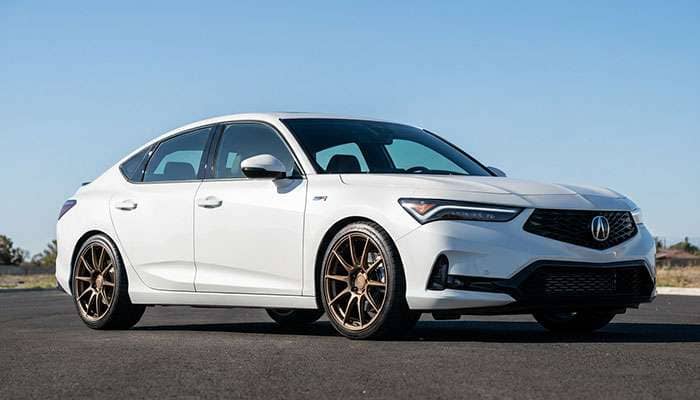
Real-world testing reveals which wheel specifications actually work on your Integra trim. The aftermarket community has put countless combinations through their paces, and certain setups consistently deliver flush fitment without requiring modifications.
Base Integra owners consistently choose 18x9.5" wheels with offsets between +30 and +40. This represents a substantial upgrade from the narrow factory 17x7" setup. An 18x9.5" +38 wheel paired with 255/35R18 tires bolts on without issues. This combination keeps the wheel slightly tucked inside the fender line, delivering a clean appearance while significantly improving grip.
Dropping offset to +30 moves the wheel approximately ¼" closer to the fender. Pair 265/35 tires at this offset, and you'll almost certainly need fender rolling. The 18" diameter works perfectly for this platform, balancing performance benefits against ride comfort and tire costs. You can browse complete wheel options for your specific Integra model to compare sizing across different brands.
Type-S owners face a choice between keeping 19" wheels or downsizing to 18". For trouble-free daily driving, 19x9.5" wheels with +45 to +50 offset provide flush fitment on stock suspension. This offset range fills the wider fenders perfectly without creating rubbing at full steering lock. Tire sizes of 265/30R19 maintain factory diameter, or step up to 275/30R19 for extra traction.
Downsizing to 18x9.5" stays popular despite the larger factory wheels. Aggressive Type-S builds push limits with 19x10" wheels at +35 to +42 offset. This setup creates noticeable poke and typically demands lowering springs plus camber adjustment. At the extreme end, 10.5" wide wheels at +47 offset actually fit Type-S models thanks to their increased backspacing room. Pairing these with 285/35 tires works for track-focused builds rather than street use.
A-Spec fitment follows Base recommendations since both trims share identical track width. The proven 18x9.5" +38 setup with 255/35R18 tires works identically. Moving to +30 offset with 265/35 tires creates more aggressive stance but requires fender rolling. Adding some negative camber brings the wheel flush with the fender lip at this specification.
Flush fitment positions the tire sidewall even with the fender edge. The wheel doesn't stick out past the body line or sit recessed inside the arch. Measurements require precision down to 2-3mm, as slight variations create either poke or recess. This style works best for performance driving by maximizing track width within the fender.
Tucked fitment places the wheel inside the fender line. The tire sidewall sits behind the fender when viewed straight on. Higher positive offsets pull wheels inward. This look demands aggressive lowering to prevent excessive wheel gap, and fender rolling often becomes necessary to prevent contact during suspension compression.

Tire selection makes the difference between wheels that perform flawlessly and setups that create clearance problems. Match your tire dimensions correctly to your wheel width, or you'll sacrifice both appearance and handling performance.
Factory tire sizes give you the baseline diameter to maintain. Base models run 215/50R17, A-Spec trims use 235/40R18, and Type-S comes equipped with 265/30ZR19. Staying with these specifications keeps your speedometer accurate and maintains proper ride height. OEM tires represent the exact make and model that came with your vehicle from the factory. Aftermarket options match original equipment specifications, though quality varies significantly between budget and premium brands.
Tire stretch happens when you mount a narrower tire on a wider wheel than the manufacturer recommends. Reference sites like TyreStretch.com catalog over 5,300 images showing real fitments across 800 different size combinations. These visual guides show exactly how specific tire widths look on your chosen wheel width. A 225mm tire on a 9.5" wheel creates obvious stretch. The same tire on an 8.5" wheel fits properly without stretching. Always check manufacturer rim width ranges to stay within safe mounting limits.
Summer tires cut stopping distances by 10 to 20 percent while delivering superior cornering grip compared to all-season tires. They use straighter grooves and continuous ribs to keep more rubber in contact with the road. The rubber compound stays flexible for wet traction and dissipates heat effectively during spirited driving. All-season tires balance performance across temperature ranges with blocky tread patterns and narrow sipes for snow and mud traction. Summer tires lose grip below 44°F, becoming dangerous in cold conditions. Browse complete tire options for your Integra to compare summer and all-season choices.
Wider tires don't automatically create bigger contact patches. Equal pressure and load only change the patch shape. A shorter, wider patch gives you more lateral grip for cornering, while a longer, narrow patch cuts through water better. Proper wheel width matching matters more than raw tire width. Testing proves a 225mm tire on a 9-inch wheel runs half a second faster per lap than the same tire on an 8-inch wheel.
Aggressive wheel setups often require modifications beyond simple installation. Rolling fenders flattens the horizontal inner lip against the vertical face, creating clearance without altering fender shape. Pulling stretches the metal outward, genuinely widening the opening. Work slowly with a heat gun to prevent paint cracking. Metal and paint resist quick movements, so incremental adjustments produce cleaner results.
Stock ride height combined with aggressive offsets creates rubbing during suspension compression. Even moderate bumps can push tires into fenders when geometry compresses upward. Rolling becomes necessary when tire sidewalls show cutting or scraping marks. Front fenders typically require aggressive pulling for wide setups, whereas rears often need only minor work.
Lowering your Integra reduces center of gravity but alters suspension geometry for the worse. Roll center and bump steer change negatively as ride height drops. Shock travel decreases unless using coilovers with independent ride height adjustment. Camber increases during compression, shifting the tire contact patch and eliminating fender clearance.
Oversized wheels reduce wheel well clearance. Incorrect offset pushes tires outward, causing sidewall contact during steering. Worn suspension components sag, bringing tires closer to liners. Replace failing shocks and springs to restore proper ride height.
Mount wheels temporarily and verify 3-4mm brake caliper clearance minimum. Rotate each wheel by hand in neutral, checking for caliper contact with rim or balancing weights. Have someone turn the steering fully left and right while you observe clearance. Check again after lowering the vehicle onto suspension.
At Performance Plus Tire, we're confident you now have the knowledge to select the perfect Acura Integra aftermarket wheels for your specific needs. The key factors remain straightforward: lug pattern compatibility between trims, proper offset for your desired fitment, and wheel width that enhances both handling and appearance.
The 18x9.5" setup delivers excellent results across Base and A-Spec models, while Type-S owners enjoy more aggressive options thanks to their wider platform. Browse available wheel options for your specific Integra and pair them with the appropriate tire sizes for your driving style.
Our experienced team understands that proper fitment makes the difference between a perfect upgrade and costly mistakes. Take time with your measurements, test fit before final installation, and your Integra will deliver exactly the stance and performance you're after. We're here to help you get it right the first time.
Master these essential fitment principles to select perfect Acura Integra aftermarket wheels without costly mistakes or clearance issues.
• Know your lug pattern first: Type-S uses 5x120mm while Base/A-Spec models use 5x114.3mm - wheels won't interchange between trims • 18x9.5" with +38 offset is the sweet spot: This size works perfectly on Base/A-Spec models with 255/35R18 tires for flush fitment • Type-S has 3+ inches more width: The wider track allows aggressive wheel specs that would never fit on standard Integra models • Offset changes everything: Moving from +38 to +30 offset pushes wheels ¼" outward, often requiring fender modifications • Test fit before final installation: Check 3-4mm brake clearance minimum and full steering lock clearance to avoid expensive mistakes
The Type-S's significantly wider track width (64.0" front vs 60.5" on A-Spec) explains why it can run much more aggressive wheel specifications. Always verify your specific trim's requirements before purchasing, as the wrong lug pattern means your wheels simply won't bolt on.
For Base and A-Spec Integra models, 18x9.5" wheels with an offset around +38 paired with 255/35R18 tires provide excellent fitment without modifications. While you can run 17-19" diameter wheels, 18" offers the best balance of performance, ride quality, and tire availability. The Type-S can accommodate more aggressive sizing due to its wider track width.
Start by checking your vehicle's bolt pattern (5x114.3mm for Base/A-Spec, 5x120mm for Type-S), then verify wheel diameter, width, and offset compatibility. Measure the distance from the wheel's center point to the mounting surface (offset), add this to half the wheel's width to find backspace, and compare against your wheel well clearance. Always ensure at least 3-4mm brake caliper clearance.
Flush fitment positions the tire sidewall even with the fender edge, maximizing track width without protruding past the body line. Tucked fitment places the wheel inside the fender line with the tire sitting behind the fender when viewed straight on. Tucked setups typically require aggressive lowering and often need fender rolling to prevent contact during suspension compression.
Fender modifications depend on your wheel offset and ride height. An 18x9.5" wheel with +38 offset typically fits without modifications at stock height. However, dropping to +30 offset or lowering your suspension often requires rolling the fenders. If you notice tire sidewall cutting or scraping marks, fender rolling becomes necessary to prevent damage.
Summer performance tires deliver 10-20% shorter stopping distances and superior cornering grip compared to all-season tires, making them ideal for spirited driving. However, they become rigid and lose traction below 44°F. All-season tires provide balanced year-round performance with better cold-weather capability. Choose based on your climate and driving style—summer tires for performance-focused driving in warmer months, all-seasons for year-round daily use.