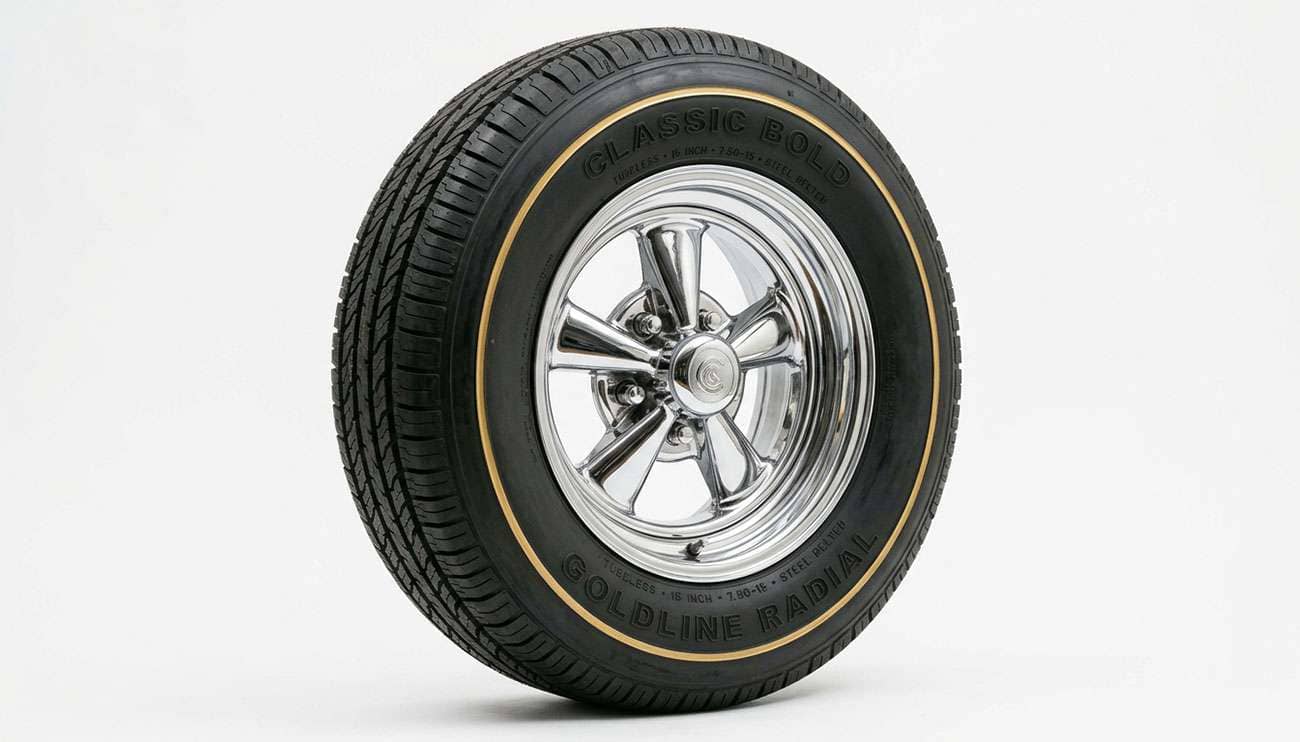
A gold line tire is a tire with a thin gold stripe built into the sidewall — the same idea as a redline, just gold instead of red. It was a rare factory option in the mid-1960s, most famously on the 1965 and 1966 Corvette Sting Ray and the 1965 Z16 Chevelle. You will also hear it called a goldwall or gold stripe tire. The good news for anyone restoring one of those cars: you can still buy authentic gold line tires today, in both period-correct bias-ply and modern radial construction.
I have sold a lot of colored-sidewall tires over the years, and the gold line is the one that stops people in their tracks because so few folks have ever seen a real set. Redlines everybody knows. Whitewalls everybody knows. But a thin gold stripe wrapping the sidewall of a mid-year Corvette? That is a detail only the people who were there remember. Let me walk you through what they are, which cars wore them, and how to put a correct set on your car.
A gold line tire carries a narrow gold or yellow stripe, typically about 3/8 of an inch wide, running around the outer sidewall. The important part is how that stripe is made. On a genuine gold line tire, the gold rubber is laid into the sidewall during the building of the tire and bonded permanently when the tire is cured. It is part of the carcass, not a coating painted on afterward. That is why a real gold line holds its color and resists cracking and fading far better than any add-on stripe ever could.
The look was meant to read as understated performance. Where a wide whitewall said luxury and a redline said muscle, the gold line said something a little more exclusive — a subtle, premium accent that complemented a car's body lines without shouting. It was offered for only a short window, which is exactly why it is the rarest of the colored-sidewall styles today and the one that turns the most heads at a show.
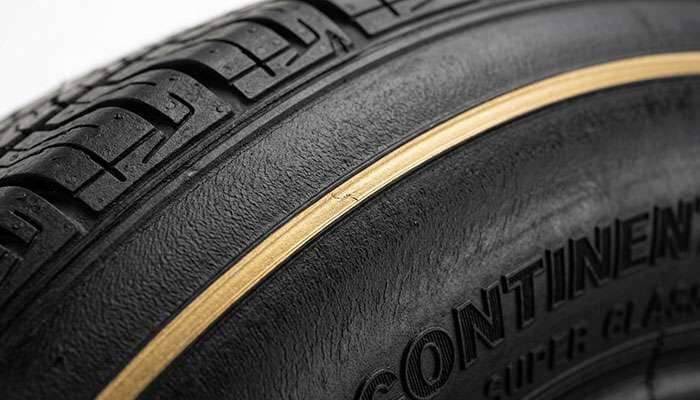
The gold line's claim to fame is the second-generation Corvette. For the 1965 and 1966 Corvette Sting Ray, buyers could choose from a black sidewall, an optional narrow whitewall, or the optional gold-striped tire. On the option chart it showed up as a gold-stripe or goldwall tire — Chevrolet listed it under RPO T01 as a special nylon tire in the 7.75-15 size. It was a rare, mostly two-year choice, which is a big part of why an original-style set looks so special on a mid-year today.
The other headline application was the 1965 Z16 Chevelle, the rare and now extremely valuable big-block Chevelle that wore gold lines from the factory. Beyond those, the gold line stayed a niche, premium-performance look rather than a mass-market option the way the redline became. If you want the full picture on what the factory bolted onto period muscle cars, our guide to factory muscle car tires covers the broader story.
Gold line, redline, and blue line tires are all part of the same mid-1960s colored-sidewall family. They share the same basic idea — a thin colored stripe molded into the sidewall — but they differ in color, rarity, and which cars wore them. Here is how they stack up.
Feature |
Gold Line |
Redline |
Blue Line |
|---|---|---|---|
Stripe color |
Gold / yellow |
Red |
Blue |
Era |
Mainly 1965-1966 |
1964 through about 1970 |
Mid-1960s, limited |
Signature cars |
Corvette Sting Ray, Z16 Chevelle |
GTO, Chevelle, Camaro, muscle cars |
Some Shelby and Mopar applications |
Rarity today |
Rarest of the three |
Most common, widely reproduced |
Very rare |
Message |
Understated premium accent |
Performance and muscle |
Specialty, period flair |
No. They are built the same way and belong to the same family, but they are not interchangeable. The obvious difference is color — gold versus red. The bigger difference is application. The redline became the default sporty look across a huge range of muscle cars and stayed in production for years, so it is common and easy to find. The gold line was a short-lived, premium option tied mostly to the Corvette and the Z16 Chevelle, which makes it far rarer. If you want the full rundown on the red-striped sibling, we cover it in what are redline tires.
Nothing — they are three names for the same tire. "Goldline" is the most common modern term, "goldwall" is how some period factory paperwork listed it, and "gold stripe" or "gold-stripe" shows up on original option charts. You will see all three used interchangeably by restorers and tire sellers. Do not let the different words confuse you when you are shopping; they all describe a tire with that thin gold sidewall stripe. The same naming pattern shows up on Vogue's gold-and-white sidewall tires, which we cover in our history of Vogue Tyre.
Yes. You cannot get them new from the original 1960s production, but several manufacturers make authentic gold line reproductions today, and the quality is excellent. These modern tires put the genuine gold stripe into the sidewall the same way the originals did, so you get the correct look without hunting down 60-year-old rubber that is no longer safe to drive on. That last point matters: even a perfectly preserved vintage tire should be replaced once it passes roughly ten years of age, because the rubber compound deteriorates whether the tire is used or not.
Both, and which one you want depends on how you use the car. A bias-ply gold line, like the BFGoodrich Silvertown reproduction, gives you the most period-correct construction and is the right call for a concours or originality-focused restoration. A modern radial gold line gives you better ride quality, handling, and highway stability, which is what most owners who actually drive their cars want. The radials wear the same correct gold stripe, so you are not giving up the look to gain the manners. If you are weighing the choice, our breakdown of radial vs. bias-ply tires for classic cars lays out the tradeoffs.
Start with the correct size for your car. The classic mid-year Corvette wore a 7.75-15, which reproductions cover in both the original bias-ply 775-15 and a modern 205/75R15 radial. For a wider range of rear-wheel-drive American classics, the 235/55R17 radial opens up later wheel sizes while keeping the gold line look. Getting the period-correct size right is half the battle, and our guide to the most popular vintage tire sizes can help you match your car. The same goes for the styled-sidewall details — if you are also weighing whitewall width on another build, our whitewall width guide covers that.
Tire |
Size |
Best For |
|---|---|---|
American Classic Goldline Radial |
235/55R17 |
Later-wheel RWD American classics, drivers |
BFGoodrich Goldline Silvertown Radial |
205/75R15 |
Mid-year Corvette, period look with radial ride |
Diamond Back I-Goldline |
205/75R15 |
Custom-built radial with a correct gold stripe |
Here is what I put on customers' cars. The American Classic Goldline Radial in 235/55R17 is my go-to for a driver, with an H speed rating and the integrated 3/8-inch gold stripe built in from day one. For a mid-year Corvette that wants the original look with a better ride, the BFGoodrich Goldline Silvertown Radial in 205/75R15 is the closest thing to factory you can buy new. And the Diamond Back I-Goldline in 205/75R15 is a quality custom-built radial — if you want my honest read on that brand, I put it in our Diamond Back tire review. You can browse the full range of gold line and period-correct rubber on our classic tires page.
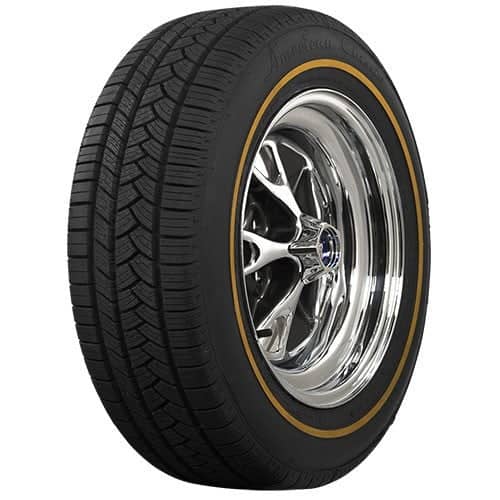
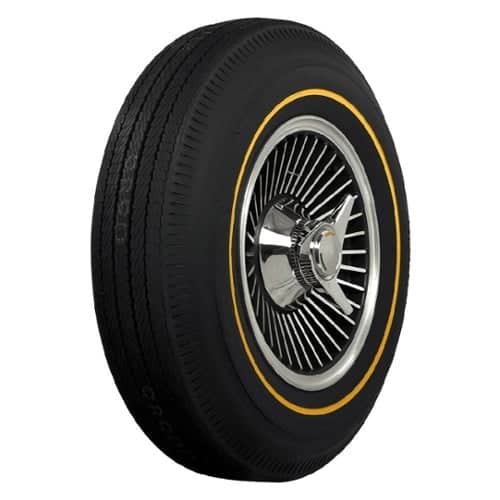
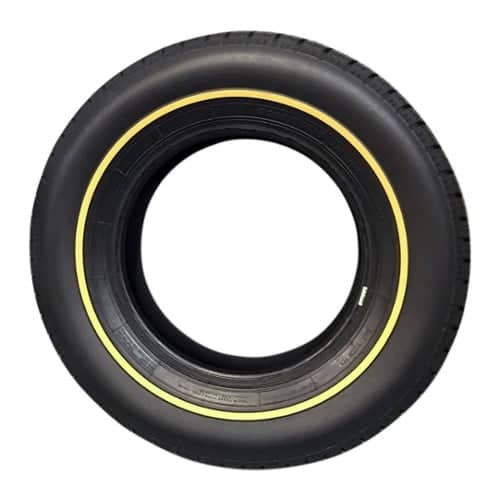
The gold line is the quiet star of the colored-sidewall world. It never had the broad muscle-car run that made the redline famous, which is exactly why a correct set still stops people at a show. If you own a 1965 or 1966 Corvette Sting Ray, a Z16 Chevelle, or any premium classic where you want a subtle, period-correct touch most people have never seen, the gold line delivers it. Get the size right, decide between bias-ply originality and radial drivability, and put on a set of authentic reproductions. It is one of the easiest ways to add a detail that says you did your homework.
Gold line tires have a thin gold or yellow stripe, usually about 3/8 inch wide, molded into the sidewall during manufacturing. The gold rubber is bonded permanently when the tire is cured, so it is part of the tire rather than a painted-on coating. They are the same idea as redline tires, just gold instead of red.
The most famous application was the 1965 and 1966 Corvette Sting Ray, where the gold-stripe tire was a factory option listed under RPO T01 in the 7.75-15 size. The rare 1965 Z16 Chevelle also wore gold lines from the factory. Beyond those, the gold line stayed a niche premium option rather than a mass-market choice.
No. They are built the same way and belong to the same colored-sidewall family, but the gold line uses a gold stripe and was a short-lived premium option tied mostly to the Corvette and Z16 Chevelle. The redline uses a red stripe, ran for years across many muscle cars, and is far more common and easier to find today.
Yes. Several manufacturers produce authentic gold line reproductions today in both bias-ply and modern radial construction. They use the same integrated gold stripe as the originals, so you get the correct period look on new, safe rubber instead of relying on deteriorated vintage tires.
Both are available. Bias-ply gold lines, like the BFGoodrich Silvertown reproduction, are the most period-correct choice for concours and originality builds. Modern radial gold lines offer better ride, handling, and highway stability for owners who drive their cars, while still carrying the correct gold sidewall stripe.
Match the size to your car. The mid-year Corvette used a 7.75-15, available as an original bias-ply 775-15 or a modern 205/75R15 radial. For a wider range of rear-wheel-drive American classics on later wheels, a 235/55R17 radial keeps the gold line look. Always confirm the correct original size for your specific make, model, and year.