
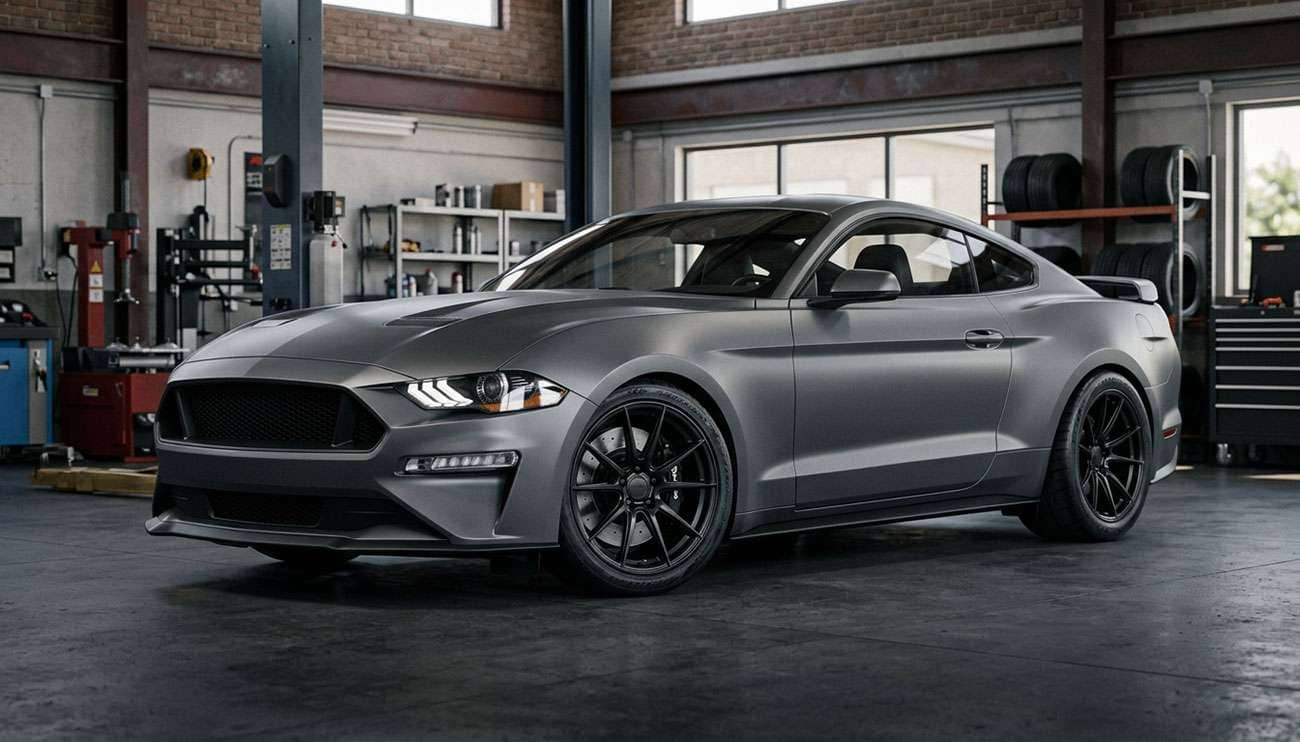
I've been bolting wheels and tires onto pony cars since the 1965 Mustang first rolled into my shop. Sixty years of working on Mustangs, Camaros, Challengers, and the occasional Firebird tells me something specific about these cars: they need different wheel and tire logic than either pure sports cars or full muscle cars. Pony cars sit in a unique category — sporty enough to demand serious performance tires and proper staggered setups, but commonly daily-driven enough that pure track-only equipment makes the car miserable to live with. The right wheel and tire combination for a pony car balances aggressive aesthetics with daily-driver usability, performance capability with reasonable economics.
The modern pony car category in 2026 covers three primary platforms: the Ford Mustang (S550 2015-2023, S650 2024+), the Chevrolet Camaro (5th gen 2010-2015, 6th gen 2016-2024), and the Dodge Challenger (3rd gen LX/LD/LE 2008-2023). The platforms share fundamental design philosophy — front-engine, rear-wheel drive, two-door body style, V8 power available, daily-driver compatibility — but each has specific fitment requirements, brake configurations, and chassis tuning that affect wheel and tire selection. The owner of a 2018 Mustang GT needs different wheels than the owner of a 1969 Mustang fastback, even though both are technically pony cars.
This guide covers wheels and tires specifically for the modern pony car platforms most owners drive in 2026 — though much of the advice applies to classic pony cars too with the caveat that classic pony cars have additional considerations (period-correct aesthetics, brake upgrades, original suspension limitations) that this guide touches on but doesn't deep-dive into. Every wheel and tire mentioned is in current Performance Plus Tire inventory, with specifications matched to pony car application requirements. Click any product to verify sizes and pricing for your specific year and model.
Four characteristics define pony car wheel and tire requirements differently than other categories.
1. Rear-wheel drive with V8 torque demands rear traction. Modern pony cars produce 400-700+ horsepower routed exclusively to the rear wheels, which creates traction demands that front-wheel drive and all-wheel drive vehicles don't face. The rear tires need to put down power that's often beyond what stock-width tires can handle, particularly on Mustang GT (480 hp), Camaro SS (455 hp), Challenger Hellcat (717-807 hp), and similar performance variants. This drives the need for wider rear tires and staggered setups more aggressively than other vehicle categories.
2. Sporty aesthetic priorities require aggressive wheel designs. Pony car owners typically choose these cars specifically for the aggressive aesthetic — they're not buying a Mustang or Camaro to look conservative. The wheels need to make a visual statement that matches the car's design philosophy. A subdued grand touring wheel that looks acceptable on a sedan often looks out of place on a Mustang or Camaro — the aggressive body lines of pony cars demand wheels that match the visual aggression.
3. Daily-driver compatibility constrains track-only equipment. Most pony cars are daily-driven, weekend-warrior cars rather than dedicated track machines. The wheel and tire choices need to deliver acceptable daily driving characteristics — ride quality, road noise, tread life, all-weather capability when needed — alongside the performance capability that pony car owners want for weekend canyon runs and occasional track days. Pure track wheels and R-compound tires sacrifice too much daily usability for most pony car owners.
4. Brake clearance varies by trim level. Performance pony cars (Mustang GT, Camaro SS, Challenger R/T, Scat Pack, Hellcat) come with substantially larger brakes than base models — Brembo six-piston front calipers on many trims, with rotor diameters 14-15 inches that require wheel inner barrel clearance most stock wheels don't provide. The wheel choice has to account for the specific brake package on the car, not just the model. A wheel that fits a Mustang EcoBoost may not clear the Brembo calipers on a Mustang GT or Mach 1.
The first major decision when choosing pony car wheels and tires is whether to run a staggered setup (wider rears than fronts) or a square setup (same width front and rear).
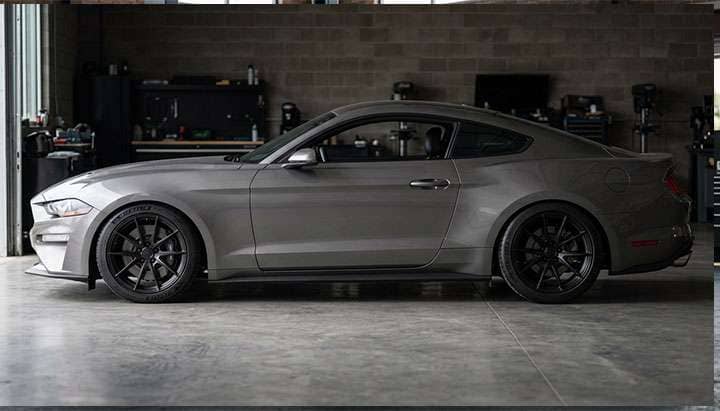
Staggered setup (wider rears): The traditional pony car approach. Wider rear tires improve traction during acceleration on rear-wheel drive applications, particularly for V8 power output that overwhelms stock-width rear tires. The visual aesthetic of staggered setups also matches pony car design philosophy — the wide rear stance signals the car's rear-wheel drive performance character. The trade-off is rotation impossibility (you can't rotate tires front-to-rear with different-width tires), which produces uneven wear across the four tires and increases total tire ownership cost. Staggered setups also create handling characteristics that emphasize rear grip — the car will understeer at the limit rather than oversteer, which is more daily-driver friendly but less playful.
Square setup (same width front and rear): The track-oriented approach. Equal-width tires let owners rotate tires front-to-rear (extending total tire life by 20-30% versus staggered), produce more balanced handling characteristics with neutral cornering balance, and simplify tire purchasing decisions. Track-focused pony car owners typically prefer square setups because the handling balance is more controllable at the limit, and the rotation capability matters when you're going through tires faster than typical daily-driver applications. The trade-off is reduced rear traction during acceleration (the rear tires aren't as wide as they could be) and less aggressive visual aesthetic (the rear stance isn't as wide).
Most pony car owners should run staggered setups. The traction advantages, aesthetic priorities, and daily-driver friendliness make staggered the right answer for most applications. Reserve square setups for dedicated track cars or owners who specifically prioritize neutral handling balance and tire rotation economics over traction and aesthetics. For a deeper analysis of staggered setups on muscle cars, see our muscle car staggered setup guide.
Each pony car generation has specific OE wheel sizing and aftermarket fitment ranges. Match yours below.
Platform / Generation |
OE Wheel Size |
Common Aftermarket Range |
Notes |
|---|---|---|---|
S550 Mustang GT (2015-2023) |
19x9 front / 19x9.5 rear |
19x9 to 20x11 staggered |
Performance Package shipped 19x9 / 19x9.5 |
S650 Mustang GT (2024+) |
19x9 front / 19x9.5 rear |
19x9 to 20x11 staggered |
Dark Horse runs 19x9.5 / 19x10 |
S550/S650 Mustang Mach 1 |
19x9.5 / 19x10 |
19x10 to 20x11 |
Aggressive fitment from factory |
Mustang Shelby GT500 |
20x11 / 20x11.5 |
20x11 to 20x12 |
Very aggressive staggered setup |
5th gen Camaro SS (2010-2015) |
20x8 / 20x9 |
20x9.5 to 20x11 |
1LE shipped 20x10 / 20x11 |
6th gen Camaro SS (2016-2024) |
20x8.5 / 20x9.5 |
20x9.5 to 20x11 |
1LE 20x10 / 20x11, ZL1 20x10 / 20x11 |
Challenger R/T (3rd gen LX/LD) |
20x8 / 20x9 or 20x9.5 |
20x9 to 20x11 staggered |
Widebody adds 3.5 inches of fender clearance |
Challenger Scat Pack / Hellcat |
20x9 / 20x9.5 |
20x9.5 to 20x11 (widebody: to 20x12) |
Widebody shipped 20x11 from factory |
The pattern: pony car aftermarket fitment typically stays within 20-inch diameter (matching most OE) with aggressive width upgrades (1-2 inches wider than stock). 19-inch wheels work well on S550/S650 Mustangs for owners who prefer more sidewall (better daily ride quality, lower wheel weight). 18-inch wheels exist primarily for track applications where lower wheel weight and taller sidewall matter more than aesthetic aggression. Going beyond 20-inch (22-inch+ aftermarket diameters) sacrifices ride quality and handling response for show truck-style aesthetics — not the right answer for most pony car applications.
Performance pony cars use brake packages substantially larger than base models, and the wheel choice has to clear those brakes.
Mustang GT Performance Package (S550/S650): 15-inch front Brembo six-piston caliper / 14.4-inch rear two-piston. Most quality 19-inch and 20-inch aftermarket wheels clear these, but some entry-tier wheels with shallow inner barrels don't. Verify clearance before purchase.
Mustang Mach 1: 15-inch front Brembo six-piston with two-piece rotors. Larger inner barrel clearance required than standard Mustang GT — fewer wheel options work.
Mustang Shelby GT500: 16.5-inch front Brembo six-piston with two-piece rotors. Substantial inner barrel clearance required — typically requires specific 20-inch wheels designed for GT500 fitment.
Camaro SS 1LE / ZL1: 14.6-inch front Brembo six-piston / 14.4-inch rear four-piston. Most 20-inch aftermarket wheels clear these, but verify spoke design doesn't interfere with caliper.
Challenger Scat Pack / Hellcat: 15.4-inch front Brembo six-piston / 13.8-inch rear four-piston. Most 20-inch aftermarket wheels clear, but front spoke design matters for caliper clearance.
The general rule: any aftermarket wheel that has been tested and verified for your specific pony car platform should clear the OE brake package, but verify before purchase if you have aftermarket brakes (Brembo big brake kits, Wilwood, AP Racing) installed beyond OE specification. Performance Plus Tire can verify brake clearance for your specific application before order. For broader Mustang wheel fitment guidance, see our Mustang aftermarket wheels guide.
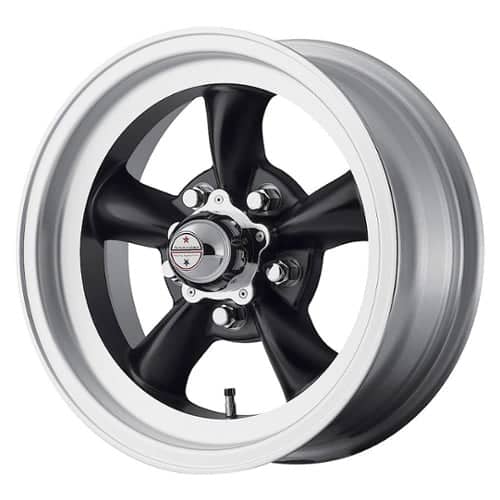
Best For: Classic muscle aesthetic with modern execution • Finish: Satin Black with Machined Lip • Sizes: 17" through 20"
The American Racing VN105 Torq Thrust D in Satin Black with Machined Lip is the wheel I bolt onto more pony cars than any other when the owner wants classic American performance aesthetic with modern execution. American Racing has been making Torq Thrust wheels since 1963 — the design literally predates the original pony car generation, and seeing a Torq Thrust on a 1969 Camaro or 1965 Mustang reads as historically correct rather than just "aftermarket." The VN105D variant updates the original Torq Thrust design with modern five-spoke geometry, satin black center finish, and machined lip detail that catches light dramatically.
What gives the VN105D its position is the heritage combined with the broad fitment range. The wheel works on classic pony cars (1964-1973 Mustang fastback, 1967-1969 Camaro, 1970-1974 Challenger) AND modern pony cars (S550/S650 Mustang, 5th/6th gen Camaro, 3rd gen Challenger). The 17-inch and 18-inch sizes are popular on classic pony cars where the Torq Thrust heritage matters most; the 20-inch sizes work on modern pony cars where the larger diameter matches OE proportions. For owners building Mustangs, Camaros, or Challengers that want to look intentional and heritage-aware rather than just generically aggressive, the VN105D is consistently the right answer. Browse VN105 Torq Thrust D sizes, or see the full American Racing lineup.
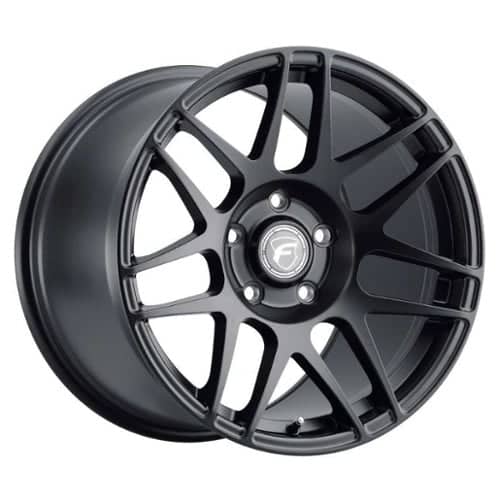
Best For: Track-capable modern Mustang and Camaro builds • Finish: Satin Black • Sizes: 18" through 20"
The Forgestar F14 in Satin Black is the wheel that's become a default choice on modern S550/S650 Mustang, 5th/6th gen Camaro, and Challenger track-focused builds. Forgestar's flow-formed construction process delivers structural strength approaching forged construction at meaningfully better pricing — the F14 is approximately 20% lighter than typical cast aluminum alternatives of equivalent size, which produces measurable handling improvements (reduced unsprung weight directly improves steering response and suspension performance) at price points that don't require track-budget commitment.
The F14's clean five-spoke design is purpose-built for performance pony car aesthetics — track-derived rather than show-truck-derived. The wheel ships in widths from 8.5 inches up to 11+ inches with offset specifications optimized for modern pony car staggered setups. Multiple finish variants beyond Satin Black (Gloss Black, Anthracite, Gloss Anthracite, Satin Bronze, Gloss Gunmetal) give buyers extensive aesthetic options. For Mustang GT, Mustang Mach 1, Camaro SS 1LE, Camaro ZL1, Challenger Scat Pack, and Challenger Hellcat applications where the buyer wants track-capable engineering with aggressive modern aesthetic, the F14 is consistently the right answer. The Forgestar F14 Drag variant adds wider rear-specific options for drag racing applications. Browse Forgestar F14 sizes.
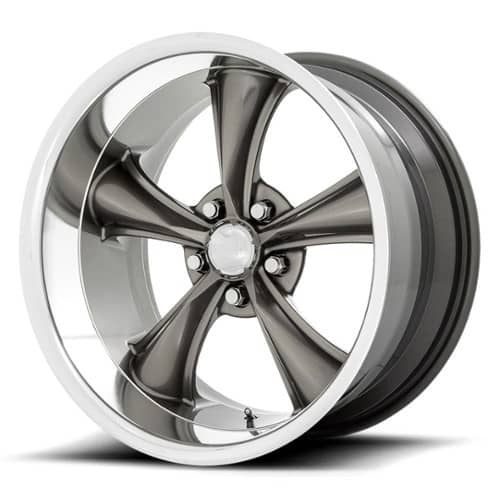
Best For: Modern take on classic American Racing for premium pony car builds • Finish: Graphite with Diamond Cut Lip • Sizes: 19" and 20"
The American Racing VN338 Torq Thrust Boss in Graphite with Diamond Cut Lip is the modern evolution of the Torq Thrust design specifically engineered for late-model pony car applications. Where the VN105D delivers traditional Torq Thrust aesthetic, the VN338 Boss takes the Torq Thrust design language and modernizes the proportions, spoke complexity, and finish options for cars built in the last decade. The Graphite finish reads as deliberately premium rather than just dark — a wheel that looks intentional on a Mustang Mach 1 or Camaro SS rather than aftermarket-generic.
The Diamond Cut Lip finish creates dramatic visual contrast against the Graphite center, and the wheel's deeper concave face produces visual depth that flat-face alternatives can't match. For Mustang GT, Mustang Mach 1, Camaro SS, Camaro ZL1, Challenger R/T, and Challenger Scat Pack applications where the buyer wants American Racing heritage with modern premium execution, the VN338 Boss delivers strong visual impact. The Textured Black with Diamond Cut Lip variant offers an alternative aesthetic for owners who prefer more aggressive matte presentation. Browse VN338 Torq Thrust Boss sizes.
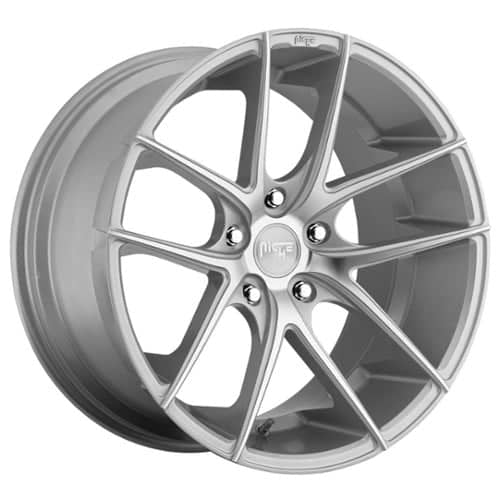
Best For: Modern luxury performance aesthetic on pony car builds • Finish: Silver Machined • Sizes: 19" through 22"
The Niche Targa M131 in Silver Machined brings European-influenced luxury performance aesthetic to pony car applications for owners who want their Mustang, Camaro, or Challenger to read as premium daily driver rather than aggressive muscle car. The wheel's intricate multi-spoke design with silver center and machined detail produces visual sophistication that matches what modern luxury sport sedans run, while still delivering the proportions and offsets that pony car applications require. Niche's design language sits between aggressive American Racing aesthetic and full European luxury wheel design.
For Mustang GT, S650 Mustang Dark Horse, Camaro SS Premium, Challenger R/T Plus, and similar premium pony car applications where owners want sophisticated daily-driver aesthetic rather than aggressive weekend-warrior presentation, the Targa M131 delivers strong visual results. The wheel ships in offsets optimized for modern pony car platforms with adequate brake clearance for performance variants. Other popular Niche options for pony car applications include the Misano M117 in Matte Black, Misano M119 in Gloss Black, and Targa M129 in Matte Gunmetal — Niche's broader catalog gives buyers extensive options within the brand's design philosophy. Browse Niche Targa M131 sizes.
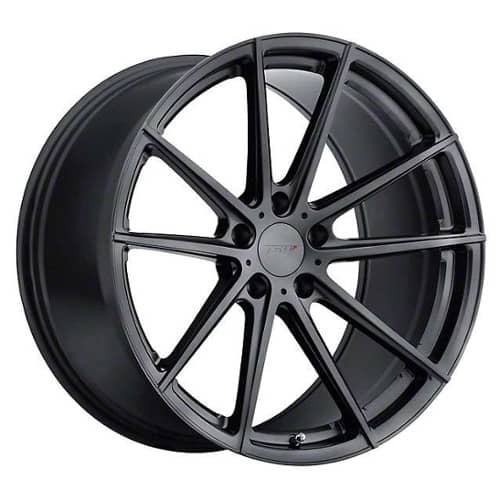
Best For: European-style modern performance aesthetic at value pricing • Finish: Matte Black • Sizes: 18" through 20"
The TSW Bathurst in Matte Black delivers European-influenced split-spoke design at meaningfully better pricing than premium American Racing or Forgestar alternatives. TSW's design language emphasizes split-spoke and multi-spoke geometries derived from European racing aesthetics — wheels that read more like what's on BMW M3 or Audi RS5 applications than traditional American muscle. For pony car owners who want their Mustang, Camaro, or Challenger to read with European performance influence rather than American muscle car aesthetic, TSW's lineup delivers strong results.
The Bathurst specifically uses a 10-spoke split-spoke design that produces visual complexity without being busy. The Matte Black finish reads as deliberately understated, which works well on modern pony cars where the goal is sophisticated aggression rather than overt aggression. Multiple finish variants (Matte Black, Gloss Gunmetal, Silver with Mirror Cut Face) give buyers options for different build philosophies. Pricing typically lands 20-30% below comparable American Racing alternatives at equivalent sizes while delivering competitive construction quality and proper pony car fitment specifications. Browse TSW Bathurst sizes.
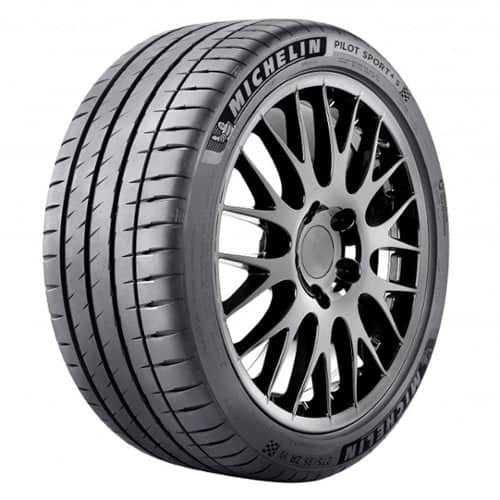
Best For: UHP summer benchmark for performance pony cars • Category: Max Performance Summer • Typical Price: $230-380 per tire
The Michelin Pilot Sport 4 S is the UHP summer tire benchmark for pony car applications and the tire I recommend more often than any other for Mustang GT, Camaro SS, Challenger Scat Pack, and similar performance pony car builds. Michelin's Variable Contact Patch 3.0 technology delivers exceptional dry grip and balanced handling — the tire generates more lateral grip than competing alternatives while maintaining the predictable transition behavior that makes the car drivable at the limit rather than spooky. The Bi-Compound construction uses different rubber compounds for the inner (dry-optimized) and outer (wet-optimized) sections of the tread, producing strong performance across both conditions.
For Mustang GT Performance Package, Mustang Mach 1, Camaro SS 1LE, Camaro ZL1, Challenger Scat Pack Widebody, and Challenger Hellcat applications where peak summer performance matters and the buyer can manage seasonal swaps in colder climates, the Pilot Sport 4 S is consistently the right answer. The trade-off is summer-only operation — the compound stiffens dramatically below 40-45°F and loses meaningful grip below that threshold. For year-round daily-driver use, the Continental ExtremeContact DWS06 Plus is typically the better answer. For the deep PS4S vs PZ4 head-to-head, see our 2026 PS4S vs PZ4 comparison. Browse Michelin Pilot Sport 4 S sizes.
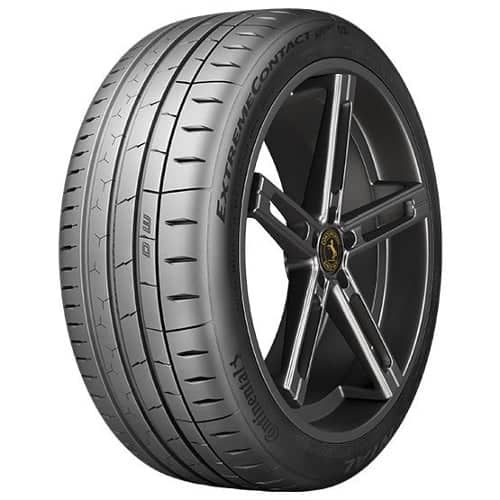
Best For: UHP summer value alternative to Michelin PS4S • Category: Max Performance Summer • Typical Price: $180-280 per tire
The Continental ExtremeContact Sport 02 delivers Continental's UHP summer engineering at meaningfully better pricing than Michelin Pilot Sport 4 S alternatives. The tire uses Continental's SportPlus Technology compound chemistry tuned specifically for dry handling and braking performance, with wet capability that competes effectively with premium alternatives. The Performance Sport tread design uses asymmetric pattern engineering that delivers strong cornering precision and braking response — meaningful for performance pony car applications where steering feel and braking confidence matter.
What gives the ExtremeContact Sport 02 its position is the price-to-performance ratio. Pricing typically lands 20-30% below the Michelin PS4S at equivalent sizes while delivering approximately 90-92% of the peak performance. For Mustang GT, Camaro SS, Challenger R/T, Challenger Scat Pack, and similar performance pony car applications where the buyer wants strong UHP summer performance without paying Michelin premium pricing, the ExtremeContact Sport 02 is consistently the right answer. Tread life typically runs 30,000-35,000 miles — competitive with UHP summer alternatives. Browse Continental ExtremeContact Sport 02 sizes.
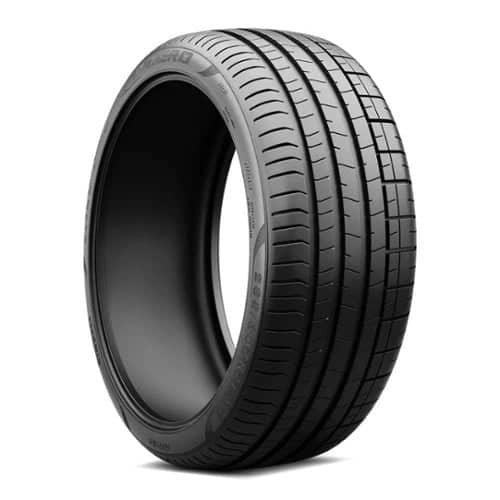
Best For: European OE specification, sharp turn-in response • Category: Max Performance Summer • Typical Price: $210-360 per tire
The Pirelli PZero (PZ4) brings European-engineered UHP summer performance to pony car applications with different handling character than the Michelin Pilot Sport 4 S. Pirelli tunes the PZ4 for sharper turn-in response and more communicative steering feel at the trade-off of marginally less peak lateral grip at the absolute limit. For pony car owners who value steering communication and the responsive front-end character that makes the car feel sharper, the PZ4 delivers a different driving experience than the Michelin PS4S.
The PZ4 is OE specification on certain Mustang Shelby GT500 trims and various European performance applications. For Mustang owners running OE-specification Pirelli or replacing OE-spec tires, the PZ4 is the correct answer. For Camaro and Challenger applications, the PZ4 is a strong alternative to PS4S when the buyer specifically wants Pirelli's handling character rather than Michelin's. Pricing typically lands competitive with PS4S at equivalent sizes (sometimes slightly below). For broader comparison context, see our PS4S vs PZ4 track-tested comparison. Browse Pirelli PZero PZ4 sizes.
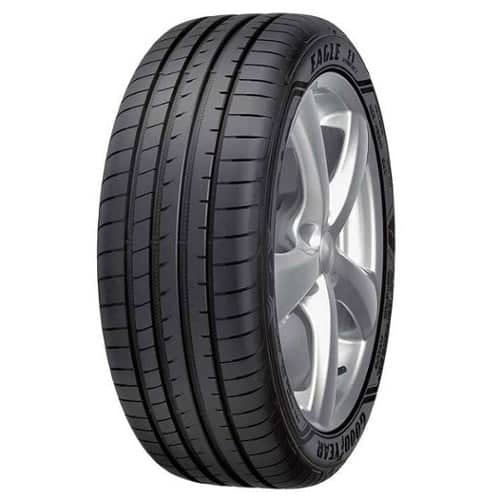
Best For: Value UHP summer for performance pony cars • Category: Max Performance Summer • Typical Price: $170-260 per tire
The Goodyear Eagle F1 Asymmetric 3 delivers UHP summer performance at meaningfully lower pricing than premium Michelin and Pirelli alternatives. The Asymmetric tread design with three-zone pattern delivers strong dry grip, competitive wet performance, and acceptable tread life for the UHP summer category. Goodyear's compound chemistry produces handling characteristics tuned for both daily-driver usability and weekend performance use — a balance that works well on pony car applications.
What gives the Eagle F1 Asymmetric 3 its position is the value proposition. Pricing typically lands 20-30% below Michelin PS4S at equivalent sizes while delivering approximately 88-92% of the peak performance. The tire is OE specification on certain Mustang and Camaro applications, which provides direct replacement compatibility. Tread life typically runs 25,000-30,000 miles, competitive with UHP summer alternatives. For buyers building Mustangs, Camaros, or Challengers on tighter budgets who still want UHP summer performance, the Eagle F1 Asymmetric 3 delivers strong economics with acceptable performance. Browse Goodyear Eagle F1 Asymmetric 3 sizes.
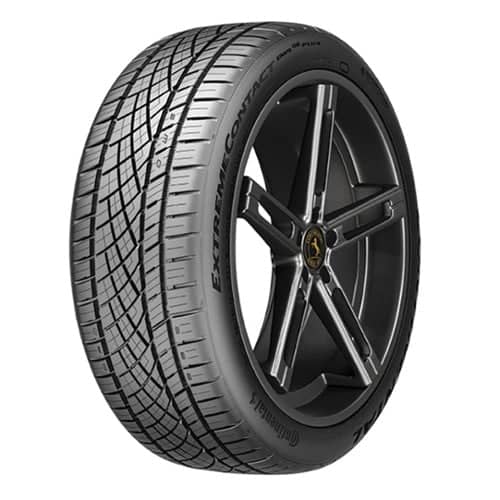
Best For: UHP all-season for daily-driven pony cars • Category: Ultra-High-Performance All-Season • Typical Price: $170-270 per tire
The Continental ExtremeContact DWS06 Plus is the UHP all-season benchmark — the right answer for daily-driven pony cars where the owner wants strong performance capability without the summer-only seasonal limitations that UHP summer tires create. The "DWS" designation stands for Dry, Wet, Snow — Continental's promise that the tire delivers acceptable performance across all three conditions rather than excellence in summer-only operation. The tread wear indicator system (the DWS letters wear away as the tire ages, indicating which condition the tire still handles capably) provides useful visual feedback on tire condition over time.
For daily-driven Mustang GT, Camaro SS, Challenger R/T, and similar pony car applications in regions with meaningful winter exposure (Pacific Northwest, mid-Atlantic, Northeast, Midwest), the DWS06 Plus delivers usable winter capability that UHP summer alternatives can't match. The tire isn't a replacement for dedicated winter tires in severe winter conditions, but it handles light snow, cold temperatures, and wet roads better than UHP summer alternatives. Tread life typically runs 40,000-50,000 miles, substantially longer than UHP summer alternatives. For owners who don't want to run separate winter tires, the DWS06 Plus is consistently the right year-round answer. Browse Continental ExtremeContact DWS06 Plus sizes.
The wheel and tire choice should match the actual use case, not the aspirational use case.
Use Case |
Recommended Wheels |
Recommended Tires |
|---|---|---|
Pure daily driver, all-weather |
Niche Targa M131, TSW Bathurst, or VN105D |
Continental ExtremeContact DWS06 Plus |
Daily driver + weekend canyon runs |
Forgestar F14, VN338 Boss |
DWS06 Plus or Continental ExtremeContact Sport 02 |
Performance daily driver, summer |
Forgestar F14, VN338 Boss, VN105D |
Michelin Pilot Sport 4 S or ExtremeContact Sport 02 |
Weekend warrior + occasional track day |
Forgestar F14 |
Michelin Pilot Sport 4 S |
Dedicated track car |
Forgestar F14 (lighter weights), F14 Beadlock |
Michelin Pilot Sport Cup 2 (track-only) |
Drag-focused build |
Forgestar F14 Drag (drag-specific rear) |
Drag radials (Nitto NT05R or similar) |
Show car / cruise night |
VN105D, VN605 Chrome, Cragar SS |
Eagle F1 Asymmetric 3 or PZero (PZ4) |
Classic period-correct build |
American Racing VN105 (classic Torq Thrust) |
White-letter UHP summer tires |
The pattern: daily-driver applications with year-round use benefit most from UHP all-season tires paired with versatile wheel choices. Weekend warriors with seasonal tire swapping flexibility get peak performance from UHP summer tires. Dedicated track applications benefit from lighter wheels and track-specific tires. Show car applications prioritize wheel aesthetics over performance metrics. Match the wheel and tire choice to actual use rather than theoretical use.
I see the same mistakes from pony car owners more often than any others. Knowing what they are saves you the return trip and the wasted investment.
1. Wheel offset wrong for the platform. Each pony car platform (S550/S650 Mustang, 5th/6th gen Camaro, 3rd gen Challenger) has specific offset specifications that work properly. Generic wheels designed for "5x114.3 bolt pattern" without platform-specific offset tuning often produce tire poke (illegal in some states), fender rubbing, or tucked-in appearance that ruins the visual stance. Verify the wheel is tested and fitment-verified for your specific platform before ordering.
2. Tire too wide for the wheel. Running a 305mm tire on a 9.5-inch wheel produces tire ballooning, poor sidewall support, and harsh ride characteristics. Verify wheel width compatibility with tire width — most tire manufacturers publish recommended wheel width ranges for each tire size. For pony car staggered setups, the rear typically wants 10-11 inch wheels for 305-315mm rear tires.
3. UHP summer tires in winter climates. UHP summer tires lose meaningful grip below 40-45°F and become genuinely dangerous in freezing conditions. Owners in Pacific Northwest, mid-Atlantic, Northeast, and Midwest regions who buy Michelin Pilot Sport 4 S without managing seasonal storage and swaps end up driving on UHP summer compound through winter, which creates real safety issues. For year-round daily-driver use in cold climates, Continental ExtremeContact DWS06 Plus or seasonal tire swaps are the right answers.
4. Going too aggressive with wheel diameter. Some pony car owners install 22-inch wheels to maximize visual impact, but the trade-off is meaningful: harsher ride quality, reduced handling response (more unsprung weight, less tire sidewall absorbing impacts), and higher tire replacement costs. For most pony car applications, 19-inch and 20-inch wheels deliver the right balance of aggressive aesthetic and daily-driver usability. Save 22-inch wheels for show car applications where ride quality doesn't matter.
5. Ignoring brake clearance on performance variants. Mustang Mach 1, Mustang Shelby GT500, Camaro SS 1LE, Camaro ZL1, and Challenger Hellcat all use brake packages substantially larger than base models. Wheels designed for base model fitment often don't clear performance brake calipers — the wheel spoke geometry interferes with the caliper at full steering lock or at certain rotation positions. Verify brake clearance for your specific performance variant before order. For broader sports car tire selection, see our 2026 best high-performance tires.
Product |
Category |
Best For |
Price Tier |
|---|---|---|---|
American Racing VN105 Torq Thrust D |
Wheel - Classic Heritage |
Heritage aesthetic across all generations |
Mid |
Forgestar F14 Satin Black |
Wheel - Track-Capable |
Modern track-focused builds |
Mid to Premium |
American Racing VN338 Torq Thrust Boss |
Wheel - Modern Heritage |
Premium modern pony car aesthetic |
Premium |
Niche Targa M131 |
Wheel - Modern Luxury |
Sophisticated daily-driver aesthetic |
Mid |
TSW Bathurst |
Wheel - European Style |
European performance influence at value |
Mid (Value) |
Michelin Pilot Sport 4 S |
Tire - UHP Summer Benchmark |
Peak summer performance |
Premium |
Continental ExtremeContact Sport 02 |
Tire - UHP Summer Value |
UHP summer at better pricing |
Mid |
Pirelli PZero (PZ4) |
Tire - UHP Summer European |
Sharp turn-in, European OE specification |
Premium |
Goodyear Eagle F1 Asymmetric 3 |
Tire - UHP Summer Value |
UHP summer at lowest pricing tier |
Mid (Value) |
Continental ExtremeContact DWS06 Plus |
Tire - UHP All-Season |
Year-round daily-driven pony cars |
Mid |
The 2024 S650 Mustang GT ships with 19x9 front / 19x9.5 rear staggered OE wheels. Aftermarket fitment range covers 19x9 to 20x11 staggered setups, with most owners running 19x9.5 / 19x10.5, 20x10 / 20x11, or similar aggressive staggered combinations. The Dark Horse variant comes with 19x9.5 / 19x10 from factory and works well with similar or slightly more aggressive aftermarket fitments. For Mustang GT Performance Package and Mach 1 variants, verify wheel-to-brake clearance because the larger Brembo six-piston front calipers (15-inch on GT PP, 15-inch with two-piece rotors on Mach 1) require more inner barrel clearance than base model wheels provide. Performance Plus Tire can verify fitment for your specific 2024 Mustang configuration.
For most Camaro applications, staggered setups deliver the right balance of acceleration traction, aesthetic aggression, and daily-driver compatibility. The 5th gen Camaro SS shipped with 20x8 front / 20x9 rear staggered OE; the 6th gen SS shipped 20x8.5 / 20x9.5; the 1LE and ZL1 variants shipped 20x10 / 20x11. Most aftermarket builds extend the staggered approach with 20x9.5 / 20x11 or 20x10 / 20x11 configurations. Square setups (same width front and rear, typically 20x10 / 20x10 or 20x11 / 20x11) work for dedicated track Camaro builds where balanced handling matters more than acceleration traction, and tire rotation capability extends total tire life by 20-30%. For weekend warriors and daily drivers, staggered remains the right answer.
For daily-driven Mustang GT applications, the right tire depends on climate exposure. For warm-climate drivers (Southwest, Southeast, southern California, much of Texas) where UHP summer tires can operate year-round without meaningful cold exposure, the Michelin Pilot Sport 4 S is consistently the right answer — peak summer performance with acceptable wet capability and reasonable tread life. For drivers in regions with meaningful winter exposure (Pacific Northwest, mid-Atlantic, Northeast, Midwest), the Continental ExtremeContact DWS06 Plus delivers UHP all-season capability that handles year-round use without seasonal swap logistics. The DWS06 Plus doesn't match peak PS4S summer performance, but it works through cold conditions where the PS4S becomes dangerous. For owners willing to manage seasonal swaps in cold climates, running PS4S in summer and dedicated winter tires in winter delivers the strongest year-round capability.
Generally no. Mustang and Camaro use different bolt patterns: Mustang uses 5x4.5 (5x114.3mm) while Camaro uses 5x4.75 (5x120mm). The bolt pattern difference means Mustang wheels won't bolt onto Camaros and vice versa without bolt pattern adapters (which add complications and aren't typically recommended for performance applications). Challenger uses 5x115mm, also different from both Mustang and Camaro. Each platform requires platform-specific wheels with the correct bolt pattern. Some aftermarket wheels are available in multiple bolt patterns for the same design, which lets owners run the same visual style across different platforms — but the actual wheels are platform-specific. Verify bolt pattern matches your specific vehicle before ordering.
For Challenger Hellcat applications, the wheel choice depends on whether the car is standard or widebody. Standard Hellcat shipped with 20x9 front / 20x9.5 rear staggered, with aftermarket range extending to 20x9.5 / 20x11 staggered. Widebody Hellcat shipped with 20x11 from factory and accommodates aftermarket fitments up to 20x12 width. The Forgestar F14 in Satin Black or Gloss Black is consistently the right answer for performance-focused Hellcat builds — track-capable engineering, aggressive aesthetic, and proper fitment specifications. For owners wanting heritage American Racing aesthetic, the VN338 Torq Thrust Boss works well on Hellcat applications. Verify brake clearance for the 15.4-inch front Brembo six-piston calipers before ordering — most quality aftermarket wheels clear, but some entry-tier wheels with shallow inner barrels don't.
For most pony car applications, 22-inch wheels are too aggressive and produce meaningful trade-offs that aren't worth the visual gain. The reduced sidewall (compared to 19-inch or 20-inch wheels with equivalent overall diameter) produces harsher ride quality, reduces handling response (less compliance, more unsprung weight, more impact transmitted to suspension), and increases tire replacement costs (22-inch tires cost substantially more than 19-20 inch equivalents). For show car applications where the car is primarily a visual statement rather than driven aggressively, 22-inch wheels work fine. For weekend warriors, daily drivers, and track-focused builds, 19-inch and 20-inch wheels deliver the right balance of aggressive aesthetic and driving capability. Match the wheel diameter to the car's actual use rather than maximum visual aggression.
Mustang GT Performance Package uses 15-inch front Brembo six-piston calipers that require more inner barrel clearance than base Mustang GT wheels. Quality aftermarket wheels designed for performance Mustang applications typically clear these brakes without issue — Forgestar F14, American Racing VN338 Boss, Niche Targa M131, and similar performance-focused wheels are tested for Brembo clearance. The wheels that don't clear are typically entry-tier alternatives with shallow inner barrels designed for base model fitment. Before ordering wheels for Mustang GT PP, Mach 1, or Shelby GT500 (which uses the even larger 16.5-inch front Brembo), verify brake clearance with the wheel manufacturer or Performance Plus Tire fitment specialist. The clearance specification is usually published as "Brembo compatible" or with specific inner barrel measurements that match Brembo caliper width requirements.
For a 20x10 / 20x11 staggered pony car setup, typical tire sizing runs 275/35R20 front / 305/30R20 rear or 285/35R20 front / 315/30R20 rear. The 275-285mm front tire pairs with 10-inch wheel width (within recommended 9.5-10.5 inch range for most UHP tires), and the 305-315mm rear tire pairs with 11-inch wheel width (within recommended 10.5-11.5 inch range). The 35-section front and 30-section rear produces matched overall diameters that maintain proper speedometer calibration and avoid drivetrain stress from mismatched roll-out distances. For deeper sizing guidance, verify tire-to-wheel width compatibility with the specific tire manufacturer's published wheel width ranges — running tires outside the recommended range produces ride quality and handling problems even if the tire physically mounts to the wheel.



