Looking for last year's analysis? See our 2025 head-to-head comparison.
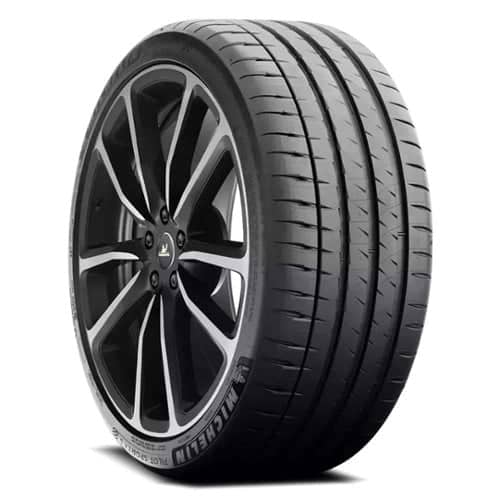
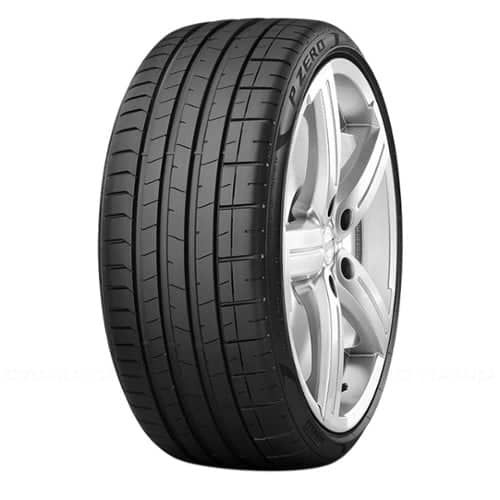
Two ultra-high-performance summer tires. Two flagship platforms from two of the most credible tire manufacturers on the market. Two tires that show up on factory fitments for Porsche 911, BMW M3, Mercedes-AMG, Audi RS, and similar high-end performance applications. The Michelin Pilot Sport 4S launched in 2017 and quickly established itself as the benchmark for the UHP summer category. The Pirelli P Zero PZ4 launched a year earlier in 2016 and earned its own reputation through factory fitments and independent test wins. Both have been refined and revised across multiple production years since launch, and both represent the current state of the art in UHP summer tire engineering.
So which one wins the head-to-head? Across eight independent comparative tests with measurable results, the Michelin Pilot Sport 4S claimed seven category victories against the Pirelli P Zero PZ4's one. The data points are consistent across multiple test methodologies — wet braking distance, dry handling, rolling resistance, treadwear all favor the Michelin by margins ranging from negligible (sub-1% in some categories) to meaningful (8%+ in others). But "wins on average" doesn't mean "wins for everyone," and the PZ4 has specific advantages on specific applications that make it the right answer for specific buyer profiles.
This 2026 head-to-head goes through every measurable comparison category — dry, wet, comfort, noise, treadwear, rolling resistance, price-to-value — with the actual data and the buyer scorecard at the end. Both tires are in current stock at Performance Plus Tire with multiple size variants for cars from sports sedan through supercar applications.
For drivers who want the fastest answer — here's the verdict above the fold.
Category |
Winner |
Margin |
|---|---|---|
Wet braking from 60 mph |
Michelin PS4S |
~0.3 meters (1%) |
Dry braking from 60 mph |
Michelin PS4S |
~1-3 feet typical |
Dry corner stability |
Pirelli PZ4 |
~7% advantage |
Steering response |
Pirelli PZ4 |
~8.5% advantage |
Rolling resistance / fuel economy |
Michelin PS4S |
~8% advantage (1.5 mpg) |
Treadwear / longevity |
Michelin PS4S |
~30%+ advantage |
Ride comfort |
Michelin PS4S |
~5-7% advantage |
Cabin noise |
Pirelli PZ4 |
~3-5% advantage |
Overall verdict: The Michelin Pilot Sport 4S wins the head-to-head on objective performance and economic metrics — wet braking, dry braking, rolling resistance, treadwear, ride comfort. The Pirelli P Zero PZ4 wins on the specific dynamic metrics that aggressive drivers value most — corner stability and steering response. For most buyers, the PS4S is the right answer. For drivers who prioritize peak cornering precision over everything else, the PZ4 deserves consideration. The right choice depends on which performance characteristics matter most for the specific application.
Specification |
Michelin Pilot Sport 4S |
Pirelli P Zero PZ4 |
|---|---|---|
Category |
UHP Max Performance Summer |
UHP Max Performance Summer |
Launch year |
2017 |
2016 |
UTQG Treadwear |
300 |
220 (typical) |
UTQG Traction |
AA |
AA |
UTQG Temperature |
A |
A |
Speed rating |
Up to Y (186 mph) |
Up to Y (186 mph) |
Available diameters |
17" through 23" |
17" through 22" |
Compound technology |
Helio Compound (functionalized hydrophobic silica) |
Smart Tread Technology (advanced silica matrix) |
Tread pattern |
Asymmetric with variable contact patch |
Asymmetric with directional inner section |
Construction |
Aramid-Nylon hybrid belt |
Polyamide hybrid belt with PNCS noise reduction (select sizes) |
OE applications |
Porsche, Tesla, Mercedes-AMG, BMW M, Audi RS |
Ferrari, Lamborghini, McLaren, Maserati, Aston Martin |
Typical price (245/40R18) |
~$295-340 per tire |
~$310-360 per tire |
The specs are similar enough that direct comparison makes sense — both are AA-traction-rated max performance summer tires with Y speed ratings, both use advanced silica compound chemistry, and both target the same premium UHP buyer. The OE fitment patterns reveal something interesting about brand positioning. Michelin's PS4S earns OE fitments primarily on German performance platforms (Porsche, Mercedes-AMG, BMW M, Audi RS) plus the Tesla high-performance variants. Pirelli's PZ4 dominates the Italian and British exotic segment (Ferrari, Lamborghini, Maserati, McLaren, Aston Martin). The OE engineering relationships shape how each tire's character is tuned — the PS4S inherits Germanic engineering preferences for measurable consistency and longevity, while the PZ4 inherits Italian preferences for emotional driving feel and peak cornering precision.
Both tires deliver excellent dry performance — they're both AA-rated, both Y-rated, both designed for high-speed track-capable operation. The differences show up in specific dry driving categories where each tire's tuning philosophy emphasizes different characteristics.
Dry braking from 60 mph. The PS4S typically achieves 105-115 feet from 60 mph on dry pavement; the PZ4 typically lands in the 107-118 foot range. Differences are small — usually 1-3 feet across most independent tests — and both tires are excellent here. The PS4S's marginal advantage comes from the variable contact patch geometry that maintains rubber-on-pavement contact more consistently under heavy braking deceleration. The PZ4's tread pattern with the more aggressive directional inner section produces slightly more variability in contact patch shape during high-deceleration events, which contributes to the small margin.
Dry corner stability. This is where the PZ4 wins clearly. Independent testing rates the PZ4 at approximately 87% corner stability against the PS4S at approximately 80% on standardized scoring. The advantage comes from the PZ4's sidewall construction — Pirelli engineers a stiffer sidewall that resists deformation under sustained cornering loads better than the PS4S's slightly more compliant construction. For drivers who push hard through long sweeping corners — track days, mountain road driving, autocross — the PZ4's sidewall stiffness translates to more predictable, more controllable corner exit dynamics. The PS4S compensates with progressive breakaway character that some drivers prefer for road use, but for peak cornering precision the PZ4 is the better choice.
Steering response. The PZ4 also wins here, scoring approximately 86.5% against the PS4S's 78% in standardized testing. The PZ4's slightly stiffer sidewall and more aggressive tread block geometry produce a more immediate steering response — the car turns in faster, with less initial sidewall lag, when the driver makes a steering input. For aggressive drivers who value the connection between steering wheel and road surface, this matters. For drivers who prefer a slightly more progressive, slightly more forgiving turn-in character, the PS4S's softer initial response works better.
Dry traction. Both tires score similarly here — approximately 91-92% in standardized testing, essentially indistinguishable. Both use sophisticated silica-rich compounds with similar friction coefficients on dry pavement. Real-world differences are negligible.
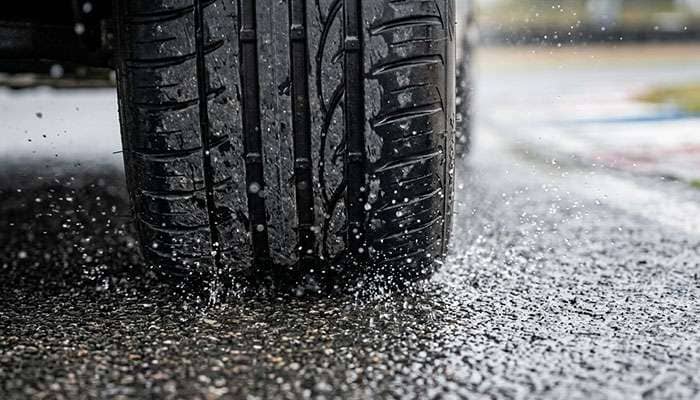
Wet performance is where the PS4S extends its advantage most consistently. Across multiple independent test methodologies, the PS4S delivers measurably shorter wet braking distances and better hydroplaning resistance than the PZ4 — though both tires perform exceptionally well in absolute terms.
Wet braking from 60 mph. Across eight comprehensive comparative tests, the PS4S averaged 32.7 meters (107.3 feet) from 60 mph in wet conditions; the PZ4 averaged 33.0 meters (108.3 feet). The 0.3-meter advantage is approximately 1% — small in percentage terms, but meaningful when the alternative is "didn't stop in time." Premium-tier UHP summer tires like both of these deliver wet braking distances that are 30-50 feet shorter than typical mainstream all-season tires, which is the more consequential comparison for most buyers.
Hydroplaning resistance. The PS4S typically resists hydroplaning at speeds 1-2 mph higher than the PZ4 in standardized straight-line testing. The PS4S's deeper longitudinal grooves and higher sipe density across the tread blocks evacuate water more aggressively from the contact patch, which extends the speed at which the tire can maintain pavement contact through standing water. Both tires significantly outperform mainstream all-season alternatives — hydroplaning resistance is typically 5-10 mph higher than the all-season averages — but the PS4S has the marginal advantage between the two.
Wet lateral grip. The PS4S delivers approximately 0.85-0.90 g of lateral grip on wet pavement at the limit, with the PZ4 typically scoring 0.83-0.88 g across the same conditions. The 2-3% lateral grip advantage to the PS4S translates to slightly higher cornering speeds and slightly more predictable handling in heavy rain. The Helio Compound's hydrophobic silica chemistry repels water at the molecular level, maintaining a thinner water film between the rubber and the pavement than the PZ4's compound at the same wear depth.
Wet steering feel. Both tires deliver sharp wet steering feel that's a meaningful improvement over mainstream alternatives, though the PZ4's slightly stiffer sidewall produces a more immediate response in wet conditions just as it does in dry. Drivers who prefer aggressive direct steering feel will prefer the PZ4 in either condition; drivers who prefer progressive feel will prefer the PS4S.
For deeper guidance on wet performance specifically, see our 8 best tires for wet roads in 2026 ranking, where the Pilot Sport 4S takes the top wet-performance slot across all categories.
Both tires are summer max performance applications, which means neither prioritizes ride comfort or noise reduction the way grand touring or luxury all-season tires do. Within the UHP summer category, however, both tires deliver excellent comfort characteristics for the performance level — though they trade off in opposite directions.
Ride comfort. The PS4S typically scores 8.9/10 in comfort testing while the PZ4 scores approximately 8.4/10. The PS4S's slightly more compliant sidewall absorbs road imperfections more effectively, transmitting less vibration to the cabin under normal driving conditions. The PZ4's stiffer sidewall delivers better cornering precision (covered above) at the cost of slightly more transmitted road texture.
Cabin noise. The PZ4 wins this category — typical noise scoring places the PZ4 at approximately 8.5/10 and the PS4S at approximately 8.2/10. Pirelli's optional PNCS (Pirelli Noise Cancelling System) on select sizes incorporates internal foam absorption that reduces cavity resonance noise meaningfully — but the standard PZ4 also benefits from a tread block geometry that produces lower frequency noise patterns at highway speeds. The PS4S's variable tread pattern is engineered for handling consistency, which incidentally produces slightly more noticeable tread noise.
For drivers who weigh comfort and noise differently, the choice clarifies. Daily-driven sports cars where the driver values ride compliance (PS4S) versus daily-driven sports cars where the driver values cabin quietness (PZ4 with PNCS) point to different answers. Both tires deliver acceptable comfort and noise for the UHP summer category — the differences are at the margin, not at the level of being a deal-breaker either direction.
This is where the PS4S delivers its largest economic advantage. The 300 UTQG treadwear rating versus the PZ4's typical 220 UTQG translates to approximately 30%+ longer service life under comparable driving conditions. For buyers who are spending $1,200-1,400 on a set of four UHP summer tires, the longevity difference is consequential.
Real-world treadwear. The PS4S typically delivers 25,000-30,000 miles of service life under normal driving conditions, though aggressive driving can cut that to 15,000-20,000 miles. The PZ4 typically delivers 18,000-22,000 miles under normal driving conditions, dropping to 12,000-15,000 miles under aggressive driving. Both tires wear faster than mainstream touring alternatives because the soft, silica-rich compounds that deliver wet and dry performance also wear faster than firmer compounds — that's the trade-off inherent to UHP summer category.
Wear pattern uniformity. The PS4S typically wears more uniformly across the tread surface than the PZ4 due to the variable contact patch geometry that maintains consistent contact pressure across the tread blocks. The PZ4's directional inner section can wear faster than the outer section if the alignment is off or if the driver consistently corners hard in one direction — careful alignment maintenance helps both tires but matters more for the PZ4.
Compound aging. Both tires use advanced silica compounds that resist degradation across the tire's service life. The PS4S's compound chemistry holds wet performance better through the wear curve — at 4/32-inch tread depth, the PS4S has lost approximately 20-25% of its peak wet braking performance, while the PZ4 has lost approximately 25-30%. Premium tires from both brands hold performance better as they age than mainstream alternatives, but the PS4S has the marginal advantage.
For drivers who replace tires based on remaining wet-weather safety rather than legal minimum tread depth, both tires should be replaced at approximately 4/32-inch — about 80% of total useful tread life. For drivers who run tires to the legal 2/32-inch minimum, both tires deliver acceptable but compromised wet performance in the final 20% of service life.
Rolling resistance is where the PS4S extends its largest measurable performance advantage over the PZ4. The PS4S averages 7.77 kg/t rolling resistance across multiple independent tests; the PZ4 averages 8.46 kg/t — an 8.16% efficiency advantage for the Michelin. This translates to approximately 1.5 mpg better fuel economy in real-world driving conditions.
What 1.5 mpg actually means. Over a 30,000-mile typical PS4S service life, the fuel economy advantage saves approximately 240 gallons of fuel compared to the PZ4. At 2026 fuel prices averaging approximately $4.00 per gallon for premium fuel (most UHP tire applications run on premium), that's roughly $960 in fuel savings over the tire's life. The PS4S typically costs $15-20 less per tire than the PZ4 at most popular sizes, which adds another $60-80 to the price advantage. Total cost-of-ownership advantage to the PS4S over the comparable PZ4 service life is approximately $1,000-1,100 across the four-tire set.
Test methodology variability. The PS4S won five of seven independent rolling resistance tests across multiple test protocols, with margins ranging from negligible to substantial. The 2025 Sports Cars Tire Test showed the PS4S at 7.8 kg/t against the PZ4 at 10.6 kg/t — a dramatic difference. The 2021 Auto Bild test measured the PS4S at 8.87 kg/t against the PZ4 at 9.9 kg/t. The 2021 Tire Reviews UHP test showed the PZ4 actually winning marginally at 9.44 kg/t versus 9.67 kg/t. The averaged results favor the PS4S consistently, but individual test conditions can shift the comparison either direction.
Why rolling resistance matters for performance applications. Beyond fuel economy, lower rolling resistance also translates to faster acceleration off the line and slightly higher top speed for the same horsepower input. For track-day applications where every fraction of a second matters, the PS4S's rolling resistance advantage adds up across multiple laps. For street driving, the fuel economy advantage matters more than the performance advantage — but both factors favor the PS4S consistently.
Both tires sit at the top of the UHP summer category pricing — neither is a budget option, and both target buyers who are willing to pay for premium-tier performance. The price difference between them, however, deserves attention.
At the popular 245/40R18 fitment, the PS4S typically retails for $295-340 per tire while the PZ4 typically retails for $310-360 per tire. That's a $15-20 per tire advantage to the PS4S, or $60-80 across a full set of four. Combined with the rolling resistance fuel economy advantage and the 30%+ treadwear advantage, the PS4S delivers approximately $1,000-1,100 lower total cost of ownership over the tire's service life.
For the PZ4 to justify its higher purchase price plus higher operating costs, it needs to deliver something the PS4S doesn't. The candidates are the cornering precision advantage (7-8% on standardized testing), the steering response advantage (similar margin), and the cabin noise advantage (3-5%). For drivers who value those characteristics specifically — track-day enthusiasts pushing the limits, drivers who prioritize feel over economics, owners of Italian exotics where the PZ4 is the OE specification — the additional cost is justified. For drivers who want excellent UHP summer performance at the best total economic value, the PS4S is the more rational choice.
The data points to clear buyer profiles for each tire. Match yourself to the right column.
Buyer Profile |
Right Tire |
Why |
|---|---|---|
Daily-driven sports car (M3, RS5, AMG GT) |
Michelin PS4S |
Best total cost of ownership, excellent wet/dry performance |
Track-day-focused enthusiast (Porsche Cayman GT4, BMW M2 CS) |
Pirelli PZ4 |
Better corner stability and steering response for limit driving |
Italian exotic owner (Ferrari, Lamborghini, Maserati) |
Pirelli PZ4 |
OE specification, maintains factory chassis tuning |
Tesla Model S Plaid, Porsche, AMG owner |
Michelin PS4S |
OE specification, optimized for the chassis |
High-mileage daily driver in mixed conditions |
Michelin PS4S |
30%+ longer treadwear, better wet performance |
Aggressive mountain road driver, autocross |
Pirelli PZ4 |
Sharper turn-in, better cornering precision at the limit |
Quietness-focused luxury sports car owner |
Pirelli PZ4 with PNCS |
Lower cabin noise, foam absorption technology |
Comfort-focused daily driver in performance vehicle |
Michelin PS4S |
Better ride compliance, more progressive character |
The pattern that emerges: drivers who prioritize total economics, daily-driving comfort, and balanced performance gravitate to the PS4S. Drivers who prioritize peak cornering precision, sharp steering response, and OE specification matching for Italian exotics gravitate to the PZ4. Both tires are objectively excellent — neither is a wrong answer in the wrong category. The question is which set of trade-offs matches your specific application.
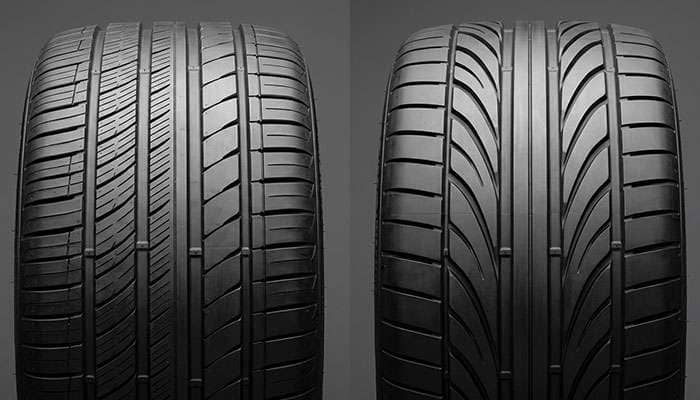
Both tires represent the premium tier of the UHP summer category, and both have credible alternatives worth considering for specific use cases.
Continental ExtremeContact Sport 02 is a strong alternative that often comes in at lower pricing than either the PS4S or PZ4. Continental's compound chemistry delivers wet performance comparable to the PZ4 at meaningfully lower price points, with the trade-off being slightly less peak dry cornering capability. For value-focused buyers in the UHP summer category, the Sport 02 is often the most rational choice.
Goodyear Eagle F1 Asymmetric 6 is the third major OE-fitment competitor in the category. Goodyear has secured factory fitments on more European performance vehicles than any other manufacturer in the UHP summer category, which means the F1 Asymmetric 6 is engineered to specific OE specifications for cars like Audi RS6, Mercedes-AMG GT, BMW M5, and Porsche 911. Wet performance is competitive with the PS4S; dry performance is slightly behind the PZ4. For OE replacement applications where Goodyear was original equipment, the F1 Asymmetric 6 is often the closest match to factory specification. See more in our 2026 high-performance tire ranking.
Bridgestone Potenza Sport is the Japanese alternative that has gained significant market share in recent years. Pricing typically lands between the PS4S and PZ4, with performance characteristics that split the difference — better cornering than the PS4S but slightly less than the PZ4, better treadwear than the PZ4 but slightly less than the PS4S. For buyers who want a balanced UHP summer choice that's not Michelin or Pirelli, the Potenza Sport is the strongest Japanese alternative.
For the all-season equivalents (UHP All-Season rather than UHP Summer), the Continental ExtremeContact DWS06 Plus and Pirelli P Zero All Season Plus are the comparable products. See our 8 best wet road tires guide for cross-category comparison.
The Michelin Pilot Sport 4S wins the head-to-head against the Pirelli P Zero PZ4 on the metrics that matter to most buyers most of the time. Better wet braking by approximately 1%. Better dry braking by 1-3 feet. Better rolling resistance by 8%, translating to approximately 1.5 mpg fuel economy advantage. Better treadwear by 30%+, translating to approximately 30% longer service life. Better ride comfort by 5-7%. Lower purchase price by $15-20 per tire. Total cost of ownership advantage of approximately $1,000-1,100 across a typical service cycle.
The Pirelli P Zero PZ4 wins on the specific dynamic metrics that aggressive drivers value most — corner stability by 7%, steering response by 8.5%, cabin noise by 3-5%. For the buyer profile that prioritizes those characteristics, the additional cost is justified. For the OE replacement market where Pirelli was original equipment (Ferrari, Lamborghini, Maserati, McLaren, Aston Martin), staying with PZ4 maintains the factory chassis tuning the engineers designed around.
For most buyers in 2026, the Michelin Pilot Sport 4S is the right answer. For specific buyer profiles, the Pirelli P Zero PZ4 is the better choice. Both are excellent tires — the question is which set of trade-offs matches your specific application.
Browse Michelin Pilot Sport 4S sizes or Pirelli P Zero PZ4 sizes. For the full Michelin lineup see Michelin Tires; for the full Pirelli lineup see Pirelli Tires.
The Michelin Pilot Sport 4S wins the head-to-head 7 of 8 measurable categories — better wet braking, dry braking, rolling resistance, treadwear, ride comfort, and lower purchase price. The Pirelli P Zero PZ4 wins on dynamic feel categories — corner stability (7% advantage), steering response (8.5% advantage), and cabin noise (3-5% advantage). For most buyers in 2026, the PS4S is the right answer due to better total cost of ownership. For aggressive drivers who prioritize peak cornering precision, or OE replacement on Italian exotics where Pirelli is the factory specification, the PZ4 is the better choice.
The Michelin Pilot Sport 4S typically delivers 25,000-30,000 miles of service life under normal driving conditions, while the Pirelli P Zero PZ4 typically delivers 18,000-22,000 miles under comparable conditions — approximately 30%+ longer service life for the PS4S. The treadwear advantage shows up in the UTQG ratings: PS4S is rated 300 versus PZ4 at typically 220. Aggressive driving cuts both tires significantly — PS4S can drop to 15,000-20,000 miles, PZ4 to 12,000-15,000 miles. Both tires wear faster than mainstream touring alternatives because the soft silica-rich compounds that deliver UHP performance also wear faster than firmer compounds.
For most buyers, no. The PZ4 typically costs $15-20 more per tire than the PS4S at comparable sizes ($60-80 across a four-tire set), and operating cost is higher due to lower fuel economy and shorter treadwear. Total cost of ownership advantage to the PS4S is approximately $1,000-1,100 across a typical service cycle. For the PZ4 to justify the additional cost, it needs to deliver value beyond the economic disadvantage — typically corner stability advantage (7%), steering response advantage (8.5%), or OE specification matching for Italian exotics where Pirelli is factory equipment. Track-day enthusiasts and aggressive mountain road drivers often justify the PZ4's premium; daily drivers in performance cars typically don't.
The Michelin Pilot Sport 4S has a small but consistent advantage in wet performance. Wet braking from 60 mph averages 32.7 meters (107 feet) for the PS4S versus 33.0 meters (108 feet) for the PZ4 — about 1% advantage. Hydroplaning resistance is 1-2 mph higher for the PS4S, and wet lateral grip is 2-3% higher. The PS4S's Helio Compound uses functionalized hydrophobic silica that repels water at the molecular level, while the PZ4's Smart Tread Technology is similarly sophisticated but slightly less hydrophobic. Both tires substantially outperform mainstream all-season alternatives by 30-50 feet of wet braking distance — the differences between PS4S and PZ4 are at the margin compared to the gap to non-UHP-summer alternatives.
No. Both tires are dedicated summer max performance tires and lose grip dramatically below approximately 40°F (4°C). The silica-rich compounds that deliver excellent wet and dry performance in warm conditions stiffen in cold weather, producing reduced grip even on dry pavement. Operating either tire in freezing or near-freezing temperatures is unsafe regardless of road surface conditions. For mixed-climate operation that includes winter weather, UHP all-season alternatives (Continental ExtremeContact DWS06 Plus, Pirelli P Zero All Season Plus) sacrifice some peak summer performance to deliver acceptable cold-weather grip year-round, or dedicated winter tires used seasonally provide the safest combination.
Yes. Pirelli has secured OE fitments on most Italian exotic and British supercar applications including Ferrari, Lamborghini, Maserati, McLaren, and Aston Martin. Many of these manufacturers specify Pirelli as the original equipment tire and engineer the chassis tuning around Pirelli's specific characteristics. For OE replacement on these applications, the P Zero PZ4 typically maintains the factory chassis tuning better than aftermarket alternatives. Michelin Pilot Sport 4S OE fitments are more common on German performance applications (Porsche, Mercedes-AMG, BMW M, Audi RS) plus Tesla high-performance variants. The OE relationship affects how each tire is tuned and which buyer profile the tire serves best.
The Michelin Pilot Sport 4S delivers approximately 1.5 mpg better real-world fuel economy than the Pirelli P Zero PZ4 due to the rolling resistance advantage. Across the PS4S's typical 30,000-mile service life, that translates to approximately 240 gallons of fuel saved compared to running PZ4 tires for the same distance. At 2026 premium fuel pricing averaging approximately $4.00 per gallon, the fuel savings amount to approximately $960 over the tire's life — meaningful money over a multi-year ownership period.
The Continental ExtremeContact Sport 02 is the strongest value alternative in the UHP summer category. Pricing typically lands $30-60 per tire below the PS4S or PZ4 at comparable sizes, with wet performance comparable to the PZ4 and dry performance close to but slightly below either premium tire. The trade-off is slightly less peak cornering precision and slightly less treadwear than the PS4S, but for value-focused buyers in the UHP summer category, the Sport 02 delivers most of the performance at meaningfully lower cost. Bridgestone Potenza Sport and Goodyear Eagle F1 Asymmetric 6 are other credible alternatives at slightly higher price points than the Continental but typically lower than the PS4S or PZ4.