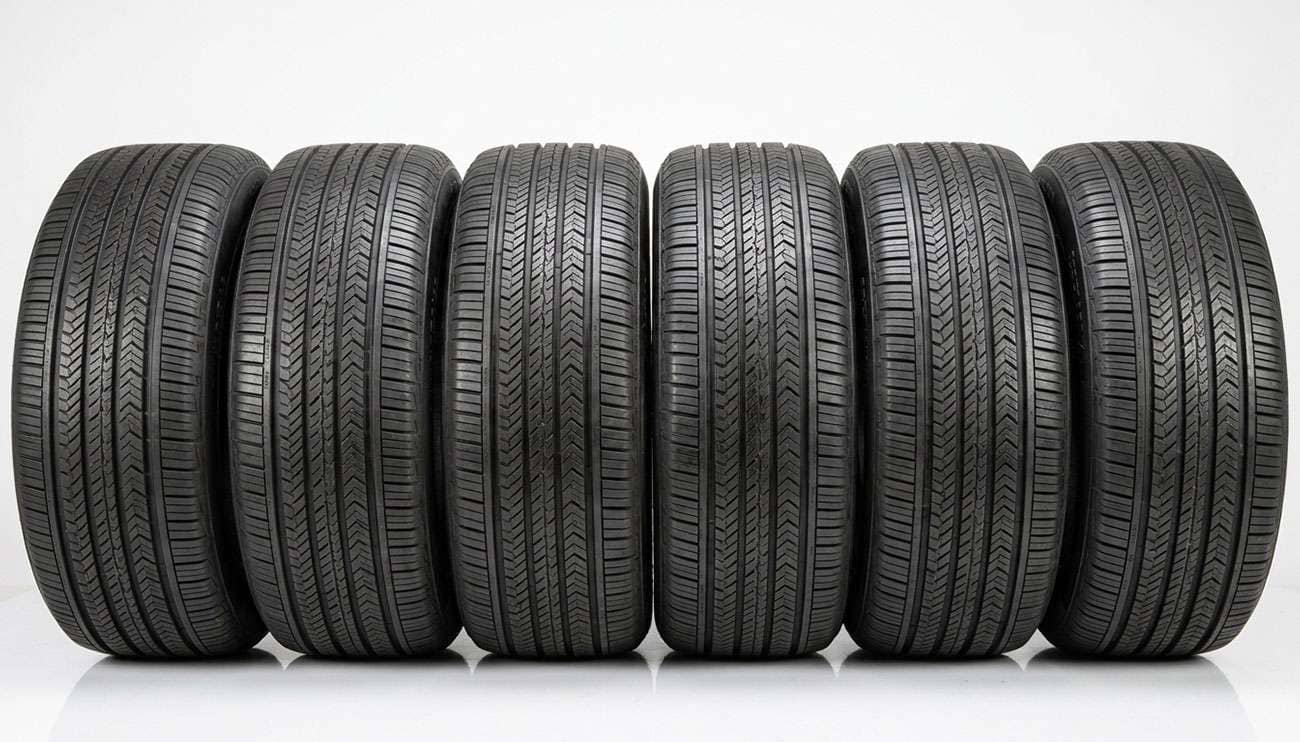
The best brands for 235 55R19 tires are Michelin, Continental, Bridgestone, Goodyear, Hankook, and Pirelli, but which of them can actually sell you a tire depends on one number nobody else mentions: whether your door placard calls for a 101 standard load or a 105 extra load. Across the 247 currently priced 235/55R19 models we stock, 144 exist only in extra load and 72 exist only in standard load. Just 31 come both ways. That means roughly 87 percent of this size is locked to one load rating, and picking the wrong one narrows or eliminates entire brands before you ever compare tread patterns.
Every brand roundup I read before writing this one ranked the same six names and never once mentioned the load split. That is not a small omission in this size. Cooper builds eight models in 235/55R19 and not one of them is a standard load. Dunlop builds three and not one of them is extra load. If you walk in with a brand in mind instead of a number in mind, you will spend an afternoon shortlisting tires that were never available to your vehicle.
Open the driver's door and read the placard. In 235/55R19 you will see either 101 or 105 after the size, sometimes with the letters SL or XL. That single digit pair is the gate.
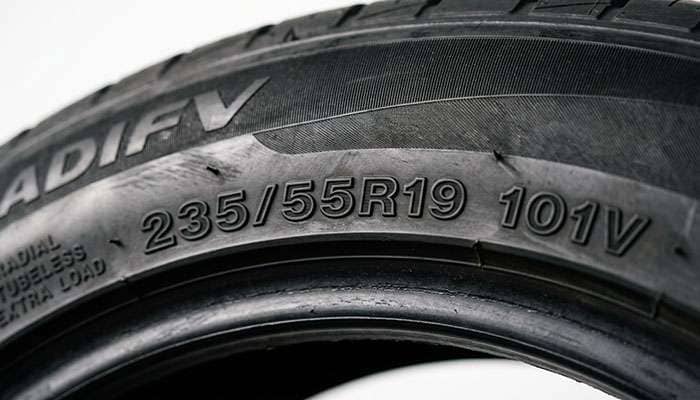
A load index of 101 corresponds to 1,819 pounds per tire at its maximum inflation of 36 psi. A load index of 105 corresponds to 2,039 pounds per tire at 42 psi. That is 220 pounds of reserve capacity per corner, or 880 pounds across all four. The Tire and Rim Association assigns those values, and NHTSA's FMVSS No. 139 requires that the load index and its corresponding capacity be branded on the sidewall of every passenger tire sold in the United States.
The rule that matters is simple and it is not negotiable: never fit a replacement tire with a lower load index than the vehicle came with. A 101 tire on a vehicle that was homologated at 105 is running with less structural reserve than the manufacturer specified, and it will run hotter under the same load. If your placard says 105, a P235/55R19 will not work either. The P-metric version of this size exists only as a standard load, so the P prefix is itself a downgrade signal on an extra load application. If any of that reads as unfamiliar territory, our breakdown of load range vs load index covers the mechanics in more depth.
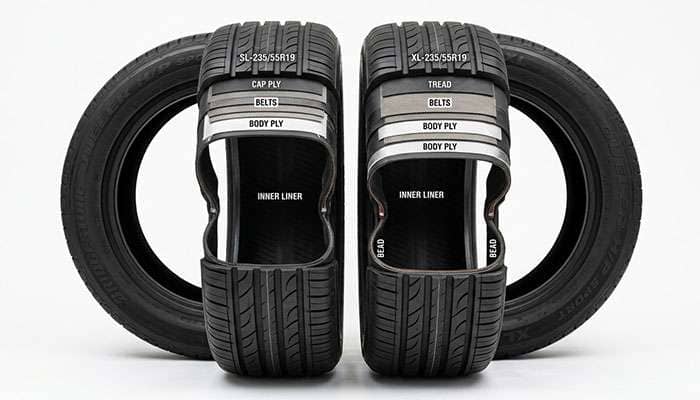
Going the other direction is allowed. A 105 tire on a 101 placard is legal and safe, but it is not free. The extra load casing uses a stiffer sidewall to earn its capacity, and at the same inflation pressure it will ride firmer. Owners who move up a load rating and keep the placard pressure often report a harsher ride and complain about the tire when the real culprit is inflation. An extra load tire carries slightly less weight per psi than a standard load tire does, so matching the original capacity usually means adding a pound or two over the placard number.
Here is how the size actually breaks down by load rating across our current catalog. This is the table to read before you read anything about tread compounds.
Feature |
Standard Load (101) |
Extra Load (105) |
|---|---|---|
Capacity per tire |
1,819 lbs at 36 psi |
2,039 lbs at 42 psi |
Models available in our catalog |
103 of 247 |
175 of 247 |
Models locked to this rating only |
72 |
144 |
Brands with deepest selection |
Goodyear, Bridgestone, Continental |
Michelin, Hankook, Pirelli, Falken |
Brands unavailable to you |
Cooper, Nitto, Ironman, Advanta |
Dunlop, Uniroyal, Delta, Travelstar |
Typical ride character |
Softer sidewall, more compliance |
Firmer sidewall, flatter cornering |
These are ranked by a combination of catalog depth in this specific size, engineering fit for the crossovers that wear it, and price positioning. Every price shown is a live per-tire figure from our catalog at the time of writing.
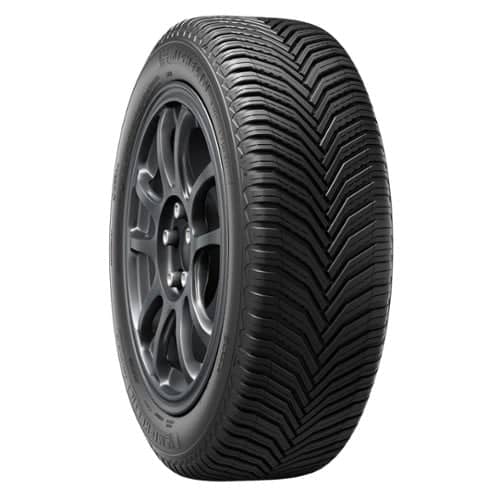
Sixteen models in this size, thirteen of them extra load. If your placard reads 105, Michelin gives you the deepest bench of any brand here. The CrossClimate2 CUV at $218.67 is the one I put on more Acura RDX and Audi Q5 owners than anything else in the size, because it carries the three-peak mountain snowflake symbol while still behaving like a normal all-season the other ten months of the year. The Defender2 at $265.99 trades that winter capability for tread life. For a Stelvio or SQ5 driver who wants summer grip, the Pilot Sport 4 SUV at $281.99 is the benchmark. The honest limitation is price. Michelin's floor in this size is above where several excellent competitors top out.
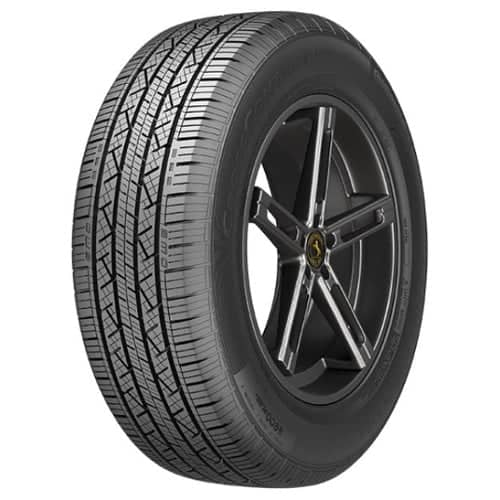
Fifteen models and, unusually, a genuinely balanced split between the two load ratings. That makes Continental the safest single brand to recommend when I do not know which placard the caller is reading from. The Cross Contact LX25 at $229.99 covers the standard load side, the ProContact GX at $243.75 covers extra load, and the ExtremeContact DWS06 Plus at $254.99 is the wet-weather answer for anyone who drives a crossover like a sport sedan.
Thirteen models, and the only major brand that skews standard load rather than extra load in this size. Nine of its thirteen are 101s. If your placard reads 101, Bridgestone deserves a look before Michelin does, simply because more of the range is open to you. The WeatherPeak at $275.49 is the all-weather pick, and the Alenza AS Ultra at $294.67 is the extra load flagship. Bridgestone is expensive here and the entry price reflects it.
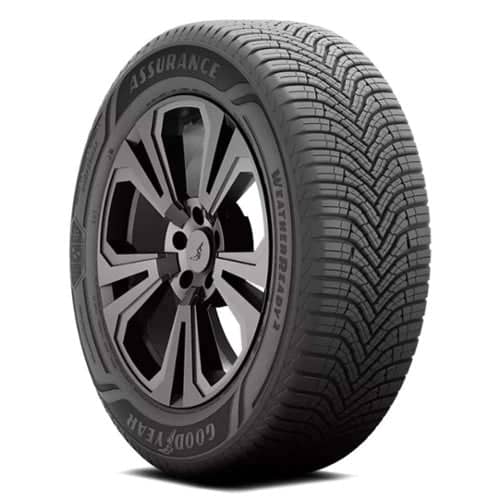
Nineteen models is the widest single-brand catalog in 235/55R19, and the price band runs from roughly $118 to $457, which is the largest spread of any brand here. That range is the point. The Assurance WeatherReady 2 at $280.99 is a true all-weather tire, the Assurance Maxlife 2 at $245.99 chases mileage, and the ElectricDrive 2 SCT at $287.99 is purpose-built for the electrified crossovers wearing this size.
Fifteen models, eleven of them extra load, at prices that consistently undercut the German and French brands by $40 to $80 per tire. The Dynapro HP2 RA33 at $214.76 is the standard load value play. The iON evo AS SUV IH01A at $288.99 is one of the few genuinely EV-specific options in the size, which matters if you are on a Q4 e-tron and have watched a set of ordinary tires disappear in 20,000 miles. Our piece on why EV tires are different explains what the extra weight and instant torque actually do to a casing.
Fourteen models, eleven extra load, and the strongest OE relationship of any brand on this list with the European crossovers that wear 235/55R19. The Scorpion All Season Plus 3 at $244.35 is the volume seller. The Cinturato P7C2 at $315.22 is the rolling-resistance play for hybrids. Pirelli's ceiling in this size is high enough to sting.
Eleven models, ten of them extra load, and priced like a value brand while performing like a premium one. The Ziex CT60 A/S at $222.00 is the best dollars-per-mile tire in this entire size, and the Wildpeak A/T Trail at $255.00 is the only credible light all-terrain here for owners who see gravel.
Ten models spanning $136 to $496. The Geolandar CV G058 at $237.99 is the quiet touring choice, the Geolandar CV 4S at $246.99 adds severe snow certification, and the Advan Sport V107 at $495.69 is the OE-grade summer tire for performance variants.
Ten models weighted heavily toward extra load. The Celsius II at $246.85 is the all-weather pick for anyone who sees four real seasons but will not swap wheels twice a year, and the Open Country Q/T at $265.17 is the highway comfort option.
Nine models, eight of them extra load, and the winter and all-weather engineering here is genuinely a class above. The Nokian One at $240.20 and the Outpost APT at $268.37 are the two to know. Dealer coverage is thinner than the big five, which is the honest tradeoff.
Seven models built on Continental engineering at roughly 80 percent of the price. The Altimax RT45 at $213.99 and the Grabber HTS60 at $199.91 are the two I reach for when someone wants a known quantity under $220.
Four models, but they are well chosen and they cover both load ratings. The Crugen HP71 at $187.45 is the cheapest tire in this article I would put on my own vehicle.
One brand deserves a specific mention outside the ranking. Cooper fields eight models in 235/55R19 and every single one is extra load. If your placard reads 105, Cooper is an underrated option with real depth. If it reads 101, the brand simply does not exist for you in this size.
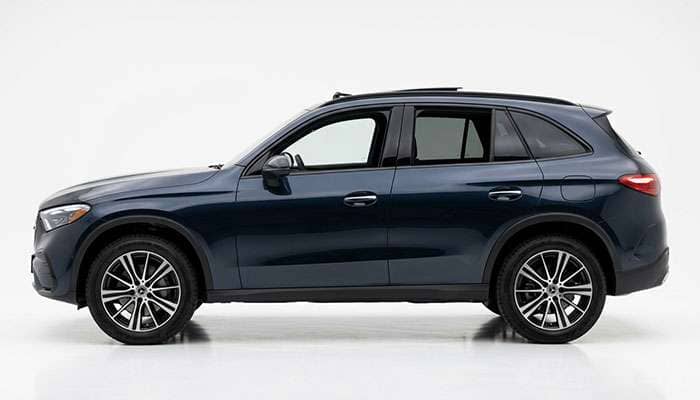
This is a crossover and compact SUV size almost exclusively. The vehicles that wear it from the factory include the Acura RDX from 2019 forward and the earlier MDX, the Alfa Romeo Stelvio, the Audi Q5, SQ5, and Q5 Sportback, the Audi Q4 e-tron and Q4 Sportback e-tron, the Buick Envision, and hybrid trims of the Honda CR-V. Wheel fitment databases list well over 250 model applications across more than 80 manufacturers worldwide.
The pattern inside that list is what matters for brand choice. The internal-combustion crossovers tend to specify 101 standard load. The plug-in hybrids and battery-electric variants, which carry several hundred additional pounds of battery, overwhelmingly specify 105 extra load. That is why the Q5 and the Q5 PHEV can share a size on paper and require different tires in practice. If your crossover is a hybrid or an EV, assume extra load until the placard tells you otherwise, and shop accordingly. Our broader guide to the best SUV tires tested in 2026 covers how these platforms differ once you step outside a single size.
Yes, and by a useful measure. We carry 247 currently priced models in this size from 60 brands. For comparison, a genuinely rare size will show fewer than 30 models from a dozen brands, and a niche size may show single digits. At 247 models, 235/55R19 sits comfortably in the mainstream tier.
What makes it feel uncommon to shoppers is that it is not a size you will find stacked in a warehouse club. Nineteen-inch fitments in general are OE-driven rather than aftermarket-driven, and the retailers that stock deep in 16 and 17 inch sizes carry only a handful of 19s. The size is common in the industry; it is just not common on a retail shelf. That gap is the reason so many owners assume their options are limited to whatever the dealer quotes them.
Price spread is the practical consequence of that depth. Across the size, currently priced models run from roughly $61 to $496 per tire. That is an eight-fold range, and most of it is real engineering difference rather than branding.
A 235 millimeter section width converts to about 9.3 inches. In the context of passenger cars and crossovers, that is moderately wide but nowhere near the top of the range. It is wide enough to matter for grip and stability on a vehicle carrying real weight, and narrow enough to avoid the tramlining and hydroplaning penalties that come with genuinely wide fitments.
For scale: 195 to 215 is narrow and typically found on compacts and economy cars, 225 to 245 is the mainstream band for sedans and crossovers, 255 to 275 is wide and shows up on performance vehicles and full-size trucks, and anything above 285 is specialty territory. At 235, you are near the middle of the mainstream band.
Worth knowing: section width is measured at the widest point of the sidewall, not across the tread. The actual contact patch on a 235/55R19 is narrower than 9.3 inches, typically by an inch or more depending on tread design. That is why a 235 and a 245 can feel closer than the numbers suggest, a comparison we worked through in detail in our look at 235 vs 245 tires.
Reliability in a tire means three separate things, and brands rank differently on each. There is warranty performance, meaning whether the tire reaches its stated treadwear mileage. There is construction consistency, meaning whether one tire in the set is out of round or requires excessive weight to balance. And there is compound stability, meaning whether the tire still performs at year five the way it did at year one.
On all three measures across this size, Michelin and Continental hold the top positions, with Bridgestone and Goodyear close behind. That ordering has been stable in independent survey data for a long time and I have no reason to argue with it from the shop floor. Among value brands, Hankook and Yokohama are the two that consistently exceed what their price suggests, and Kumho and Falken are close behind.
The more useful framing is that no brand is reliable across its whole catalog. A brand's flagship line and its entry line can be built to different standards in the same factory. In 235/55R19 specifically, a mid-tier tire from a premium brand is often a worse buy than a flagship tire from a value brand at the same price. If you want the full brand-by-brand breakdown, we ranked them in our most reliable tire brand comparison guide.
Usually yes, but check the wheel width first and understand what changes.
A 225/55R19 has an overall diameter of about 28.7 inches. A 235/55R19 comes in at about 29.2 inches. That is a 0.5 inch difference in diameter, or roughly 1.7 percent, which sits well inside the 3 percent tolerance the industry treats as acceptable. Your speedometer will read approximately 1.7 percent slow, meaning an indicated 70 mph is an actual 71.2 mph. That is small enough that most drivers never notice it.
The constraint that catches people is rim width. A 235/55R19 is approved for wheels between roughly 6.5 and 8.5 inches wide. If your 225 was fitted to a 6.5 inch rim, the 235 is at the very bottom of its approved range and the sidewall will bulge slightly. It is legal but it is not ideal, and it will change turn-in feel.
The other item to verify is load index. Confirm the 235 you are buying meets or exceeds the load index on your placard, because widening a tire does not automatically raise its capacity. We covered the reverse direction, and the specific traps in going narrower, in our guide to replacing a 235 with a 225 tire.
Once your load rating has narrowed the field, this is the second axis that decides the purchase. Find the row that matches how you actually drive rather than how you would like to.
Feature |
Best Brand |
Model to Ask For |
Price Per Tire |
|---|---|---|---|
All-around daily driving |
Michelin |
CrossClimate2 CUV |
$218.67 |
Maximum tread life |
Michelin |
Defender2 |
$265.99 |
Heavy rain and standing water |
Continental |
ExtremeContact DWS06 Plus |
$254.99 |
Real winter without swapping wheels |
Toyo |
Celsius II |
$246.85 |
Summer grip on a performance crossover |
Michelin |
Pilot Sport 4 SUV |
$281.99 |
EV or plug-in hybrid |
Hankook |
iON evo AS SUV IH01A |
$288.99 |
Best value under $225 |
Falken |
Ziex CT60 A/S |
$222.00 |
Tightest budget that is still safe |
Kumho |
Crugen HP71 |
$187.45 |
Occasional gravel and light trail |
Falken |
Wildpeak A/T Trail |
$255.00 |
The damage from getting this wrong is not dramatic. It is a ladder, and each rung costs more than the last.
Month one. An undersized load rating flexes more than the casing was designed to. You will not feel it. The sidewall will run measurably warmer under the same load, and heat is what ages rubber.
Month six. Shoulder wear appears first, because the overloaded casing rolls further onto its edge in corners. On a crossover carrying real weight this shows up as a rounded outer shoulder while the center still has tread. You are now losing mileage you paid for.
Month twelve. Sustained heat cycling starts breaking down the bond between the belt package and the casing plies. This is the point where a tire stops being a tire that is wearing and becomes a tire that is failing. The Tire Industry Association identifies chronic underinflation and overload as the two leading contributors to this failure mode, and neither leaves an obvious external mark until late.
Month eighteen. Visible sidewall distress. A bulge, a wave in the sidewall profile, or a soft spot you can feel by hand. At this point the tire is not repairable and it is not safe to keep driving on. If you are already looking at something on your sidewall and wondering how urgent it is, our guide to tire sidewall damage and whether it is safe to drive walks through what is repairable and what is not.
The arithmetic is straightforward. A set of four correct-load-rating tires in this size runs between roughly $750 and $1,150. Replacing an incorrect set at 60 percent of its expected life costs you the unused tread plus the labor twice. The wrong choice is almost never cheaper by the time it finishes.
Step one. Open the driver's door and photograph the tire placard. Write down the load index, either 101 or 105, and the speed rating letter that follows it.
Step two. Filter to that load rating before you look at a single brand name. If your placard says 105, ignore every standard load listing regardless of how good the price looks. If it says 101, you may buy either, but budget an extra pound or two of pressure if you go up to a 105.
Step three. Pick your climate case. If you see genuine snow, you want the three-peak mountain snowflake symbol, which narrows you toward CrossClimate2 CUV, WeatherPeak, Celsius II, Geolandar CV 4S, or the Nokian range. If you do not, a standard all-season opens the field considerably.
Step four. Set your ceiling and choose within it. Under $225 puts you in Falken, Kumho, General, and Hankook territory. Between $225 and $275 is the sweet spot where Continental, Yokohama, Toyo, and Pirelli live. Above $275 buys the Michelin and Bridgestone flagships.
Step five. Confirm the speed rating meets or exceeds your placard before you order. Speed ratings are tied to the tire's heat tolerance, not to how fast you plan to drive, and dropping one is the same category of mistake as dropping a load index.
The best brands for 235 55R19 tires are Michelin and Continental if you want the ceiling, Bridgestone and Goodyear if you want depth on the standard load side, and Hankook, Falken, or Kumho if you want most of the performance for meaningfully less money. But every one of those recommendations is conditional on the number on your door placard, because 87 percent of the models in this size are locked to a single load rating.
Read the placard first. Filter to 101 or 105. Then pick a brand. Doing it in that order takes ten seconds and it is the difference between a shortlist that is real and a shortlist that is fiction.
Ready to see what is actually available in your load rating? Shop our full 235/55R19 tire selection and filter by the number on your placard.
Michelin, Continental, Bridgestone, Goodyear, Hankook, and Pirelli lead this size on catalog depth and engineering quality. Which of them can actually sell you a tire depends on whether your door placard specifies a 101 standard load or a 105 extra load, because most models in 235/55R19 exist in only one of the two.
The Acura RDX and MDX, Alfa Romeo Stelvio, Audi Q5, SQ5, Q5 Sportback, Q4 e-tron and Q4 Sportback e-tron, Buick Envision, and hybrid trims of the Honda CR-V all use this size from the factory. Wheel fitment databases list more than 250 model applications across over 80 manufacturers.
Yes. We carry 247 currently priced models in 235/55R19 from 60 brands, which places it firmly in the mainstream tier. It feels uncommon only because 19-inch fitments are OE-driven and warehouse retailers rarely stock them deep.
A 235 millimeter section width is about 9.3 inches, which is moderately wide rather than wide. It sits mid-pack in the mainstream 225 to 245 band. Genuinely wide territory starts around 255 and specialty fitments begin above 285.
Michelin and Continental hold the top positions on warranty performance, construction consistency, and compound stability, with Bridgestone and Goodyear close behind. Among value brands, Hankook and Yokohama consistently exceed what their price suggests. No brand is uniformly reliable across its whole catalog, so compare specific models rather than badges.
Usually yes. The 235 is about 0.5 inches larger in diameter, a 1.7 percent difference that sits inside industry tolerance and makes your speedometer read roughly 1.7 percent slow. Verify your wheel is at least 6.5 inches wide and confirm the new tire's load index meets or exceeds your placard.
A load index of 101 supports 1,819 pounds per tire at 36 psi and indicates a standard load casing. A load index of 105 supports 2,039 pounds at 42 psi and indicates an extra load casing with a stiffer sidewall. That is 880 pounds of difference across four tires. Never fit a lower load index than your placard specifies.