
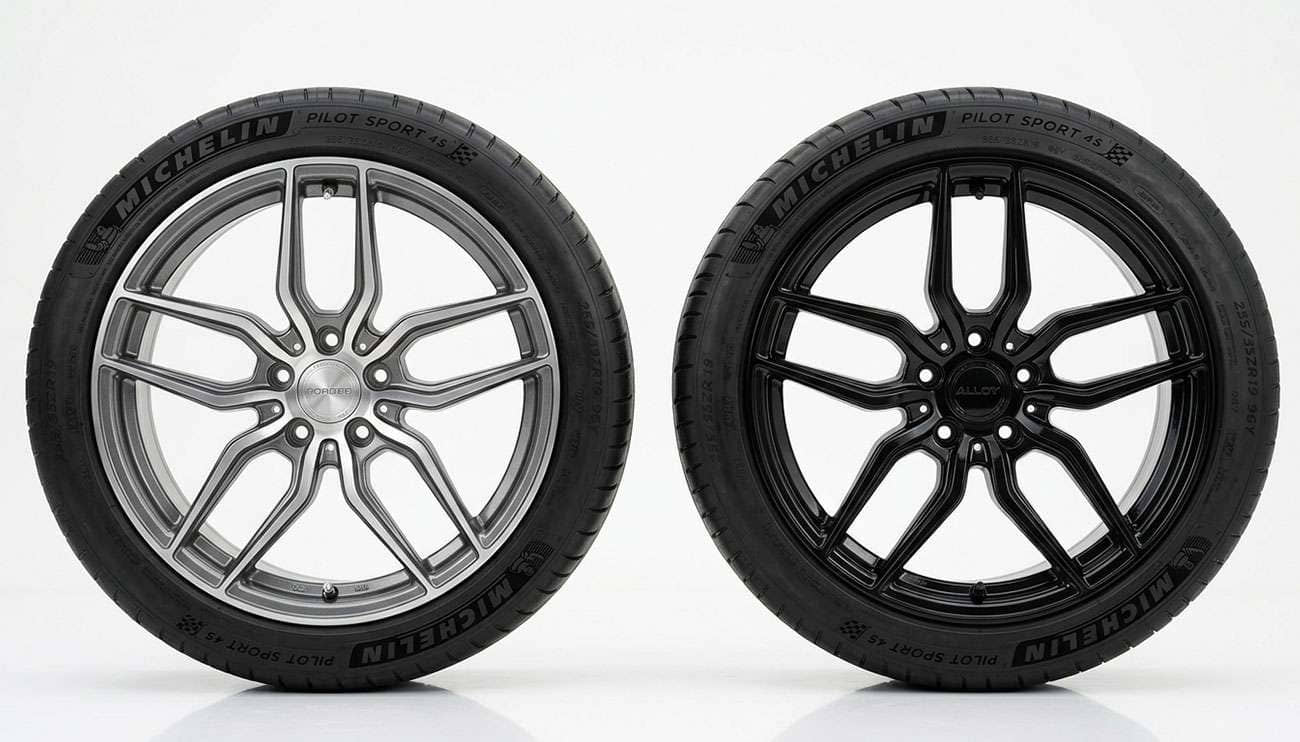
Neither one is better. They hide different dirt. That is the whole answer, and it is the part every article on this question gets wrong. Half the internet says silver is easier to maintain, the other half says black is, and both sides state it like settled fact. They are both right and both wrong, because there are two kinds of grime that land on a wheel and they are opposite colors. Brake dust is dark, so it vanishes on black and glares on silver. Water spots, road film, and salt residue are light, so they vanish on silver and glare on black. Which finish stays looking clean on your car comes down to your brake pads and your climate, and I will show you how to read both.
I have been selling wheels since before most of the people arguing about this online had a license, and I can tell you the argument itself is out of date. I pulled the numbers from our own warehouse before writing this, over 133,000 wheels in current inventory, and the market quietly settled the question years ago in a way neither side wants to admit. We will get to that, because it is the most useful thing in this article. But first, the dirt.
When someone tells you one wheel color is "easier to keep clean," ask them which dirt they mean. They will not have an answer, because they have never separated the two. Here is the separation.
Brake dust is dark. Every time you touch the brake pedal, the pads shed fine particles, and most of what lands on the wheel face is iron from the rotor mixed with pad material. On a semi-metallic pad, that dust is nearly black, it is slightly magnetic, and it is hot when it lands, which is why it bonds to the wheel face instead of blowing off. Against a silver or polished face it shows up as a gray-brown haze within days. Against gloss black it effectively disappears, because you cannot see dark dust on a dark wheel.
Everything else is light. Hard-water spots from your sprinklers. The mineral film left when rain dries. Road salt and the liquid de-icer half the country sprays all winter. The gray traffic film that mists up off a wet freeway. All of it dries pale, chalky, and light-colored, which means it disappears against silver and stands out like chalk on a blackboard against black. A gloss black wheel that drove through one rainstorm and then dried in the sun looks worse than a silver wheel that has not been washed in a month.
So when the guys who love black wheels tell you black hides the dirt, they mean brake dust, and they are right. When the guys who love silver tell you silver hides the dirt, they mean water spots and film, and they are also right. Neither one is describing your car. Your car has its own mix of the two, and that mix is set by two things you can actually check: what is in your brake pads, and what falls out of your sky.
Your Situation |
Dominant Grime |
Finish That Stays Looking Clean |
|---|---|---|
Semi-metallic pads, lots of city stop-and-go |
Dark brake dust, heavy and constant |
Black, gunmetal, or anthracite |
Ceramic pads, mostly highway miles |
Light dust and road film |
Silver, machined, or brushed |
Hard water, sprinkler overspray, coastal air |
Pale mineral spotting |
Silver or brushed. Spots vanish into the finish. |
Salted winter roads, liquid de-icer states |
White salt residue and film |
Silver. Black shows salt spray within one drive. |
Performance driving, big brakes, aggressive pads |
Severe dark dust, baked on hot |
Black or gunmetal, sealed or ceramic coated |
Dry dusty climate, dirt roads, desert |
Tan and gray surface dust |
Silver, bronze, or two-tone machined face |
Notice something in that table. There is no row where the answer is "whichever looks cooler." Looks are real and we will get to them, but the maintenance question that drives this search has an actual answer, and it changes household to household. A man in Phoenix with ceramic pads and a man in Chicago with semi-metallics and February salt should not buy the same wheel finish, and no article that hands everyone one answer is telling either of them the truth.
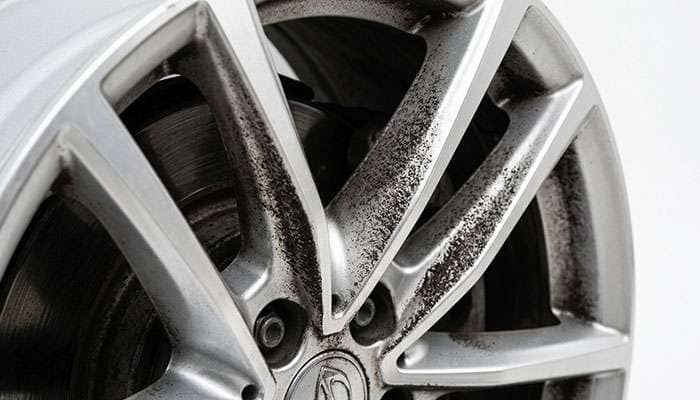
This is the part I have never once seen another wheel article connect, and it is the single most useful thing you can take from this page. The color of your brake dust is set by your pad compound, and pad compounds throw dust in different colors.
Semi-metallic pads are built with steel wool, iron powder, and copper. They stop hard, they last, and they throw the most dust of any compound, and that dust is dark, iron-heavy, and abrasive. If your car runs semi-metallics, your front wheels are collecting near-black dust every single day. On silver wheels that reads as filth by Friday. On black wheels you will not see it for weeks. European performance sedans are the classic case here. Their pads are chosen for bite, they dust like a chimney, and it is exactly why so many of them wear dark wheels from the factory. The engineers were not making a style call. They were hiding the evidence.
Ceramic pads flip the whole equation, and this is the twist. Ceramic compounds throw far less dust to begin with, and the dust they do throw is a fine, light gray, almost tan powder. Light dust on a black wheel shows. So the driver who switched to ceramics for cleaner wheels and then bought gloss black actually bought the worst pairing available: the one finish that displays his pale dust against a dark background. That same driver on silver wheels would barely see dust at all. I have watched customers spend money on low-dust pads and dark wheels in the same month, each purchase canceling the other, and nobody at either counter said a word to them.
Organic pads, the quiet soft-stopping compound on a lot of economy cars, throw a moderate amount of dust in a medium gray that splits the difference. If that is what you run, the pad is not going to decide your wheel color for you, and your climate becomes the tiebreaker.
So before you pick a finish, find out what is on your calipers. It is printed on the pad box, it is in your service records, or your shop can tell you in ten seconds. Semi-metallics vote black. Ceramics vote silver. That one fact, which takes less time to check than reading this paragraph, settles the maintenance half of this argument for your specific car, and it is a fact your wheel salesman has probably never asked you about in his life.
People ask why most rims are silver, and the honest answer is that the question is about fifteen years out of date. Most rims on the road are silver. Most rims being chosen are not. Those are two different facts, and the gap between them is the whole story.
Silver is the factory default, and it is the default for reasons that have nothing to do with style. Raw aluminum is silver. A silver painted or machined finish is cheap to apply at volume, forgiving on the assembly line, hides light dust and water spots on the dealer lot, and offends nobody on a lease return. When an automaker has to pick one finish for two hundred thousand identical cars, silver is the lowest-risk answer to a committee question. That is why the roads are full of it. It is not evidence that drivers prefer it. It is evidence that automakers prefer not to gamble.
The aftermarket is where people vote with their own money, and I can tell you exactly how that vote goes because I counted it. Before writing this I ran the finish column across our entire current wheel inventory, every brand, every style, 133,000-plus wheels. Here is the count.
Black-family finishes, meaning gloss black, matte black, satin black, and every black-with-something combination, make up 54 percent of everything we stock. The silver and bright family, meaning silver paint, machined, polished, chrome, and brushed, comes to 34 percent. Gunmetal and anthracite take about 5 percent, bronze and gold about 3 percent, and everything else, the whites, the reds, the blues, splits the scraps. Black outnumbers silver in the aftermarket by better than one and a half to one, and that ratio is not close and has not been close for years. Manufacturers build what sells, and what sells is black. If bronze is the finish that caught your eye instead, we covered why bronze wheels got so popular separately, and the short version is that bronze pulls off a trick neither silver nor black can manage.
So the real picture is a split market. Silver owns the factory floor. Black owns the aftermarket counter. And the question "are silver wheels better than black" is really asking whether the factory default beats the upgrade choice, which is why it never gets a straight answer from anyone selling one or the other.
Now here is the number from that inventory count that actually settles this argument, and it is the one nobody else has because nobody else counted.
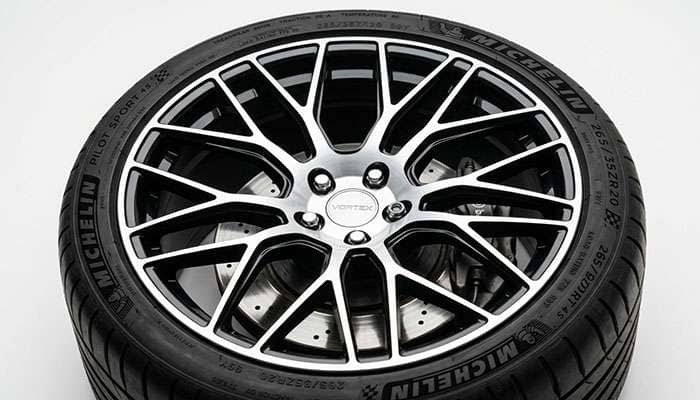
Forty-one percent of every black wheel we stock is not solid black. It is black with a machined face, black with milled spokes, black with a mirror-cut lip, black with brushed windows. Four out of every ten "black" wheels in the catalog have bare silver aluminum showing on purpose. The single most common thing wheel designers do, across every brand we carry, is take a black wheel and cut silver back into it.
Think about what that means. The people who design wheels for a living, who watch what sells across the entire country, looked at the silver-versus-black argument and refused to answer it. They built both finishes into one wheel. The machined face gives you the brightness, the detail, and the light-catching depth that silver does well. The black windows and pockets give you the contrast, the aggression, and the dust-hiding that black does well. A two-tone wheel is the industry admitting, in aluminum, that this question is a false choice.
There is a practical bonus buried in that design, too. On a black-and-machined wheel, the dark brake dust settles mostly into the recessed black pockets where you cannot see it, while the bright machined faces sit proud where the airflow keeps them cleaner. The wheel hides dark dust in its dark parts and shrugs off light film on its bright parts. It genuinely does split the maintenance difference, which is half of why the design took over.
The other half is that it photographs beautifully and reads as expensive from twenty feet, and I will not pretend the industry is above that. But when I get a customer standing at the counter genuinely torn between silver and black, the honest answer most of the time is that the market already built him a third option, and it outsells his other two choices put together. If you want the deeper walk through how each finish type is made and holds up, our guide on why custom wheel finishes make or break your car's look covers the full field.
Everything so far has been about how the wheels look while they are perfect. Let me tell you what happens after the parallel parking incident, because this is where the silver-versus-black question flips completely upside down, and it is the section of this argument that thirty years of watching wheels come back damaged has taught me.
Here is the reversal in one line: silver is easier to live with, black is easier to fix. The finishes trade places the moment they touch a curb.
Finish |
How It Fails |
Spot Repairable? |
What You End Up Buying |
|---|---|---|---|
Gloss black painted or powder coated |
Curb rash shows bright silver metal through dark finish |
Yes, easily. Fill, sand, color-match, clear. |
One inexpensive refinish |
Matte or satin black |
Rash plus any polishing attempt leaves glossy shine marks |
No. Sheen cannot be blended. Full recoat only. |
A full-wheel refinish, sometimes all four |
Silver painted |
Rash shows, but silver-on-silver hides it at a distance |
Yes, and small rash barely shows anyway |
Often nothing for years |
Machined face with clear coat |
Rash cuts through clear. Moisture creeps under, white corrosion spreads. |
No. Face must be re-cut on a lathe and re-cleared. |
Machine work per wheel, or a new wheel |
Polished aluminum |
Scratches and dulls. No clear coat to breach. |
Yes, by hand, forever. That is the deal you signed. |
Polish and elbow grease, monthly |
Chrome plated |
Chips and pits. Winter salt gets under the plating and peels it. |
No. Chrome cannot be spot repaired. |
Re-plating that costs near a new wheel, or a new wheel |
Read the black rows first. A gloss black painted wheel is the single most forgiving finish in the industry to repair. Black is black. Any competent wheel shop can fill the rash, match the color, and re-clear, and you will never find the spot. The damage looks dramatic, bright metal through dark paint always does, but it is the cheap kind of dramatic. Our full breakdown on fixing curb rash, DIY versus professional costs walks the numbers.
Now read the machined-face row again, because this is the trap hiding inside the two-tone wheel I just recommended. That bright cut face everyone loves is bare aluminum under a layer of clear coat, and the finish is only as strong as that clear. Rash it, or chip it with winter gravel, and moisture gets underneath and starts the white worm-track corrosion that spreads under the coating where no cleaner can reach it. The only real fix is re-cutting the face on a lathe, which not every town has a shop for. Two-tone wins the looks-and-maintenance argument and loses the damage argument, and you deserve to know both halves before you buy. In salt states especially, a painted or powder coated finish, in any color, outlives a machined face, and if that trade matters to you, powder coating explained covers why it is the durability king.
And a word on matte black, because it is popular and it carries a secret. Matte cannot be spot repaired. The flat sheen is the finish, and any sanding, polishing, or blending leaves a shiny scar worse than the rash was. One curbed matte wheel means one full recoat minimum, and if the coater cannot match the factory sheen, it means four. The guys who buy matte for the low-maintenance dust-hiding are buying the highest-stakes finish on the board and mostly do not know it. We went deep on the differences in gloss versus matte versus satin black wheels if matte is still calling your name after that warning.
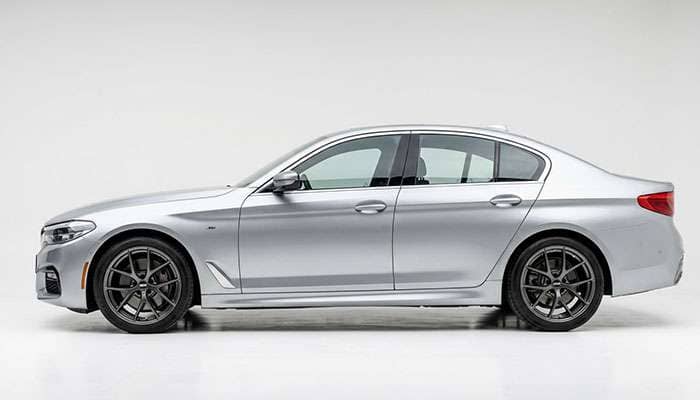
Half the people typing this question into Google are really asking a follow-up: my car is silver, now what? Fair question, and after a few decades of watching combinations roll out of the shop, here is how I would call it.
Gunmetal and anthracite are the safe money on a silver car. Dark enough to give the body some contrast so the wheels do not vanish into the paint, but in the same gray family, so nothing fights. It is the combination that still looks right in ten years, and if I could only stock one finish for silver cars, that would be it.
Gloss black is the sporty call, and it works because silver paint and black wheels is maximum contrast without adding a third color to the conversation. The one honest warning: all the maintenance math from earlier still applies. A silver car hides road film. Black wheels under it do not. You will wash the wheels more often than the car.
Silver wheels on a silver car can absolutely work, but they need contrast built into the wheel itself or the whole side of the car goes flat and monochrome. This is exactly where the two-tone black-and-machined wheel earns its keep: the machined faces tie into the silver body, the black pockets supply the contrast the paint cannot. On a silver car, two-tone is not the compromise choice. It is the correct one.
Bronze on silver is the enthusiast's handshake. It reads warm against the cool silver, it says you follow the sport, and it hides dust respectably. It is a louder statement than gunmetal, and it will not be for everybody, but nobody ever accused it of being boring.
And if your car is black rather than silver, the logic flips, and we already wrote that one up in the best wheels for a black car.
Everything above collapses into four questions. Answer them in order and the finish picks itself.
Then wash whatever you buy correctly for what it is, because a machined face, a matte coat, and a chrome lip do not take the same bucket of chemicals. We broke that down finish by finish in how to clean aftermarket wheels by finish. When you are ready to see the options side by side, our custom wheel finish guide lets you compare every finish family we stock and search by the one your answers pointed to.
Are silver wheels better than black? After thirty-plus years and a warehouse count to check my own instincts, here is my honest scorecard. Silver wins the daily-living contest for most drivers: it hides water spots, salt film, ceramic pad dust, and curb rash, which is most of what actually lands on a wheel in normal use. Black wins for anyone whose pads throw dark dust, and it wins the repair contest going away, because gloss black is the cheapest finish on earth to fix. And the market, given decades to vote, refused to pick either one: the best-selling idea in the business is a black wheel with silver cut back into its face.
So do not ask which color is better. Ask which dirt your car makes, which weather your zip code makes, and how you handle a curb. Those three answers point at one finish, and it will be the right one for your driveway even when it is the wrong one for the guy arguing in the comments.
Because silver is the factory choice, not the buyer's choice. Raw aluminum is silver, the finish is cheap to apply at factory volume, it hides light dust on the dealer lot, and it offends nobody. Most wheels on the road are silver because automakers picked them. In the aftermarket, where drivers spend their own money, black-family finishes outsell silver by more than one and a half to one.
Usually one of three things. If it is the bright face of the wheel itself, that is machined aluminum, bare metal cut on a lathe and sealed under clear coat. If it is a small disc snapped into the middle, that is the center cap covering the hub. If it is a small weight clipped or stuck to the rim edge, that is a balance weight, and it belongs there.
Gunmetal and anthracite are the safest and most timeless, dark enough for contrast but in the same gray family as the paint. Gloss black gives maximum sporty contrast. Two-tone black-and-machined wheels are the strongest all-around answer on silver paint, because the machined faces tie into the body color while the black pockets supply the contrast. Bronze works as the bolder enthusiast choice.
Yes, and the reason is temperature contrast. Silver paint is a cool tone and bronze is a warm one, so the wheels stand out without needing to be dark. Bronze also hides tan and gray road dust better than either silver or black. It is a louder statement than gunmetal and reads as an enthusiast choice, so decide whether that is the message you want the car sending.
In current aftermarket inventory, black-family finishes lead at roughly 54 percent of everything stocked, with the silver and bright family, including machined, polished, chrome, and brushed, at about 34 percent. Gunmetal and anthracite take around 5 percent, bronze and gold about 3 percent, and all other colors split the remainder. The fastest-growing idea is not a color at all but the two-tone wheel, black with a machined silver face, which makes up about 41 percent of all black wheels sold.
Same logic as the wheels, and the same honest answer. Silver body paint hides light dirt, water spots, and fine swirl marks better than any color made, which is why it dominates fleets and leases. Black paint shows everything but delivers the deepest shine when detailed. Silver is the low-maintenance choice, black is the high-reward choice, and neither is wrong. Pick the one whose upkeep matches how often you actually wash a car.



