
Looking for last year's rankings? See our 2025 wet-road tire picks.
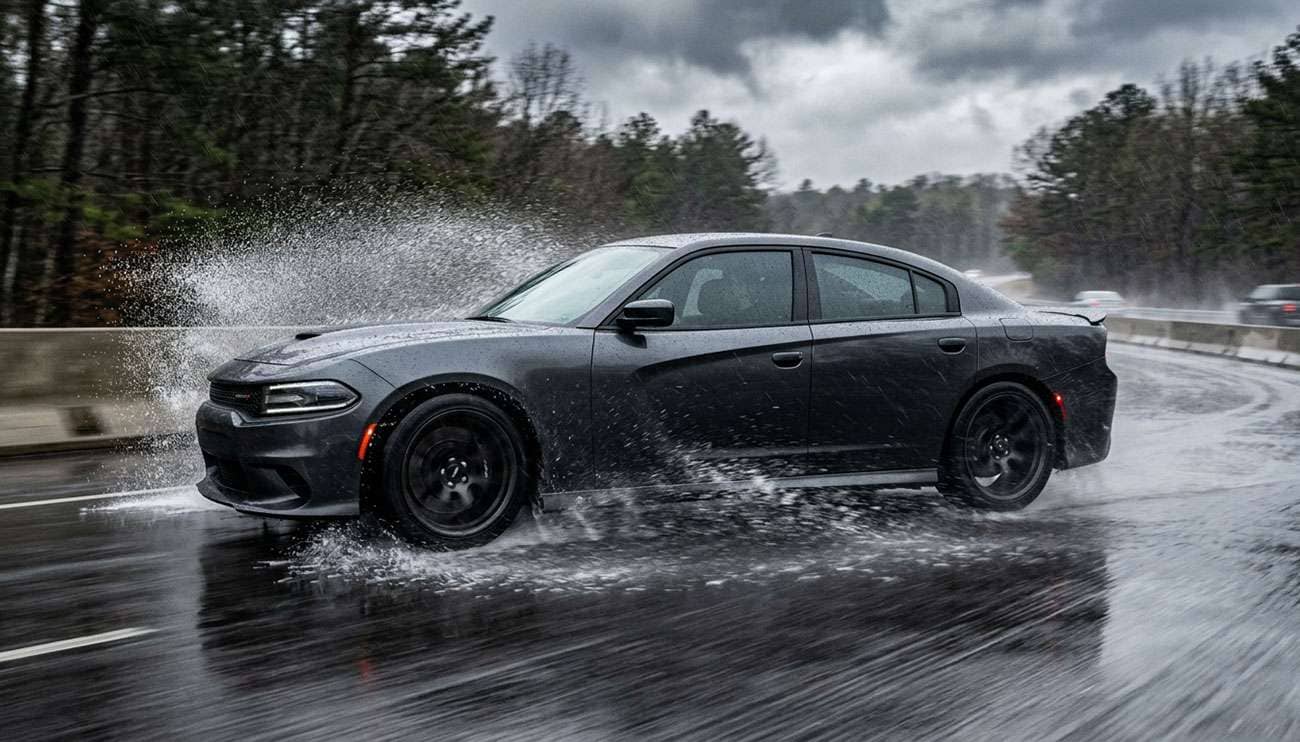
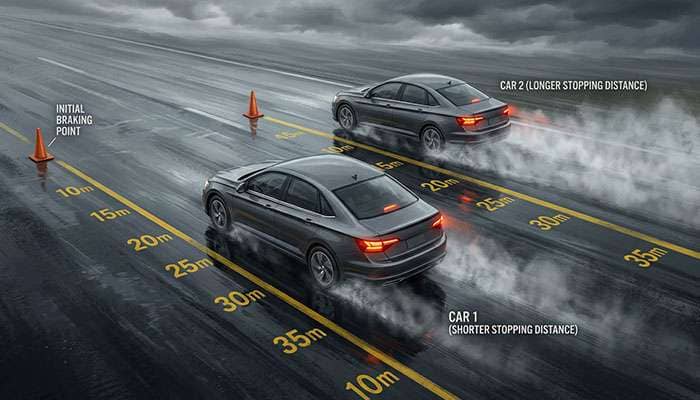
Wet braking distance differences between premium and budget tires can exceed 50 feet from 60 mph. That's roughly three car lengths — the difference between stopping at the crosswalk and stopping in the middle of the intersection. The numbers come from independent comparative testing across the major tire categories, and they're the single most important data point in wet-road tire selection. Everything else — the marketing, the brand reputation, the showroom appearance — is secondary to whether the tire stops the car when standing water hits the contact patch.
The 8 tires below earned their 2026 ranking based on measured wet performance characteristics: hydroplaning resistance speeds, wet braking distance from 60 mph and 80 mph, lateral grip on wet pavement, and tread compound chemistry that maintains those numbers as the tire ages. The lineup spans four distinct categories — ultra-high-performance summer, ultra-high-performance all-season, all-weather (3PMSF rated), and grand touring all-season — because the right tire depends on what climate the driver actually sees and what other performance characteristics matter alongside wet capability.
Every tire on this list is in current stock at Performance Plus Tire with multiple size variants. Every recommendation links directly to the product page where you can verify size availability and current pricing for your specific vehicle.
Three engineering systems determine wet-road performance. Understanding what they do clarifies why some tires stop the car effectively in standing water and others lose grip catastrophically.
Tread compound chemistry. Modern wet-performance tires use silica-enriched rubber compounds rather than traditional carbon-black compounds. Silica particles bond differently with the rubber polymer matrix, which produces higher friction coefficient on wet surfaces while maintaining acceptable rolling resistance and tread life. The most advanced compounds use functionalized silica with chemical bonding agents that further improve wet grip — Michelin calls this approach "Helio Compound," Goodyear uses "ActiveGrip Technology," Continental uses "TractionPlus Technology," and the underlying chemistry is similar across the premium brands. Hydrophobic silica compounds repel water at the molecular level, which keeps a thin water film from forming between the rubber and the road surface even when the macroscopic grooves can't fully evacuate the standing water.
Groove geometry. Circumferential grooves (running the length of the tire) evacuate water from the contact patch as the tire rotates. Wider, deeper grooves displace more water — a tire with four 8mm-deep circumferential grooves can displace meaningfully more water per second than a tire with three 6mm grooves at highway speed. Lateral grooves (running across the tread) provide the void space that allows water to escape sideways out of the contact patch. The combination of circumferential and lateral grooves determines hydroplaning resistance — the speed at which the tire loses contact with the road and rides on top of standing water rather than through it. Premium wet-performance tires hydroplane at speeds approximately 10-15 mph higher than budget tires of the same size, which translates to massive safety margin in real-world conditions.
Sipe pattern. Sipes are the small slits cut into the tread blocks that open under tire deflection and provide additional water evacuation channels at the microscopic level. Modern wet-performance tires use 3D-shaped sipes (interlocking when compressed, opening when stretched) that maintain tread block stiffness for dry handling while opening to evacuate water under wet conditions. Sipe density (the number of sipes per square inch of tread) directly correlates with wet braking performance — denser sipe patterns deliver shorter wet braking distances at the cost of slightly noisier dry-road operation.
For deeper hydroplaning physics, see our complete hydroplaning explainer. For the safety implications of the first rainfall after dry conditions, see the first 10 minutes of rain.
Five technical factors determine where a tire ranks. Wet braking distance from 60 mph is the headline number — premium-tier tires deliver stopping distances of 110-125 feet from 60 mph on wet pavement, while budget alternatives often exceed 160 feet at the same speed. Hydroplaning resistance measures the speed at which the tire loses contact with standing water; better tires hydroplane 10-15 mph higher than budget alternatives, which translates directly to safety margin in heavy rain. UTQG traction rating is the standardized measure of wet braking grip on standardized test surfaces — AA is the top rating, A is acceptable for most driving, B and below should be avoided for any serious wet-weather application. Compound chemistry sophistication affects how wet performance holds up as the tire wears; cheaper tires lose wet grip faster as tread depth decreases. 3PMSF rating availability determines whether the tire can serve as a year-round solution in regions that see meaningful winter weather alongside heavy rain.
The 8 tires below cover all four major categories — UHP summer, UHP all-season, all-weather (3PMSF rated), and grand touring all-season — because the right wet-road tire depends on the climate envelope the driver actually operates in. UHP summer tires deliver the absolute best wet performance from 40°F upward but lose grip below freezing. All-weather 3PMSF tires sacrifice some peak wet braking distance for genuine snow capability. All-season alternatives split the difference. Picking the right category for your geography is a more consequential decision than picking the highest-ranked tire within a category.
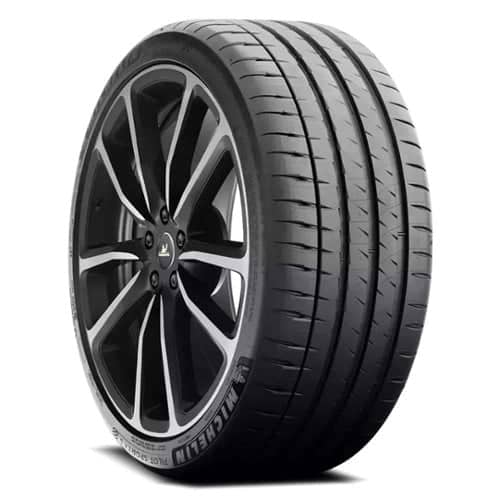
Category: Ultra-High-Performance Summer • UTQG: 300 AA A • 3PMSF: No (summer-only) • Best For: Sports cars, performance sedans, dedicated dry/wet weather operation 40°F+
The Michelin Pilot Sport 4S sets the wet performance benchmark in the ultra-high-performance summer category. Wet braking distances from 60 mph land in the 110-115 foot range across most independent test data — among the shortest stopping distances measured for any size-class tire on the market. The combination of Michelin's Helio Compound (hydrophobic silica with functionalized polymer matrix), Dynamic Response Technology (variable belt construction that maintains contact patch under heavy braking), and the asymmetric tread pattern with broad outer shoulders for dry grip plus dense inner sipes for wet evacuation produces measurably better wet performance than competitors in the same category.
What separates the PS4S from Michelin's older Pilot Sport 4 is the broader fitment range and the further-refined compound. The PS4S handles sizes from 17-inch through 23-inch with load and speed ratings up to Y (186 mph), making it the appropriate choice for everything from a Mustang GT500 to a Porsche 911 GT3 to a Tesla Model S Plaid. The compound chemistry holds wet performance through the tire's full service life rather than degrading aggressively as tread depth decreases — Michelin's tread block geometry preserves groove volume meaningfully better than most competitors as the tire wears.
The trade-off is that the PS4S is a true summer tire — it loses meaningful grip below approximately 40°F (4°C) as the silica-rich rubber compound stiffens. For drivers in California, the southern half of the country, or any climate that doesn't see freezing temperatures regularly, that's not a constraint. For drivers in northern climates where winter operation matters, the all-season alternatives further down this list make more sense as a primary tire.
Browse Michelin Pilot Sport 4S sizes and pricing, or see the full Michelin Tires lineup. For comparison against another premium summer alternative, see our 2026 high-performance tire ranking.
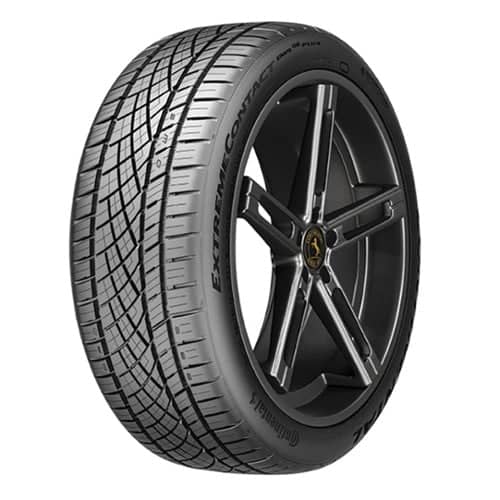
Category: Ultra-High-Performance All-Season • UTQG: 560 AA A • 3PMSF: No (all-season) • Best For: Daily-driven sports cars and performance sedans operating in mixed climates
The "DWS" in ExtremeContact DWS06 Plus stands for Dry, Wet, Snow — Continental's claim to balanced performance across conditions. The tire largely delivers on that claim, though the snow capability is light-duty rather than genuine winter performance. What matters for wet-road performance is the +Sport-derived tread pattern with extra-wide circumferential grooves, the SportPlus Technology compound (Continental's hydrophobic silica formulation), and the dense sipe network across the inner tread blocks. Wet braking distances from 60 mph fall in the 115-125 foot range — slightly longer than dedicated summer tires like the PS4S, but meaningfully shorter than typical all-season alternatives.
The DWS06 Plus separates itself from older DWS variants through the +Plus revision's improved compound chemistry and the visible tread wear indicators. Continental molded "DWS" indicators into the tread blocks; as the tire wears, the letters disappear in sequence — D first (the tire still has acceptable dry grip), then W (no longer recommended for wet conditions), then S (no longer rated for snow). This wear indicator system gives drivers concrete feedback on when the tire's wet performance has degraded enough to warrant replacement, rather than just relying on the standardized 2/32-inch tread depth wear bar.
For drivers who want UHP-class wet performance in a tire that also handles light snow and operates acceptably in cold weather, the DWS06 Plus is the strongest choice on the market. The tire works particularly well on cars like BMW M3, Audi S5, Genesis G70, and similar performance sedans that see daily duty in climates with meaningful winter weather. UTQG treadwear rating of 560 also means longer service life than dedicated summer alternatives — the DWS06 Plus typically delivers 35,000 to 50,000 miles of service compared to 20,000-30,000 miles for high-performance summer tires.
Browse Continental ExtremeContact DWS06 Plus sizes, or see the full Continental Tires lineup.
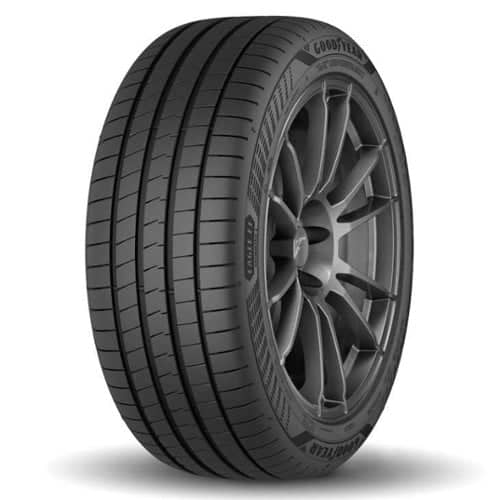
Category: Ultra-High-Performance Summer • UTQG: 320 AA A • 3PMSF: No (summer-only) • Best For: European performance cars and OE-fitment applications requiring wet-weather capability
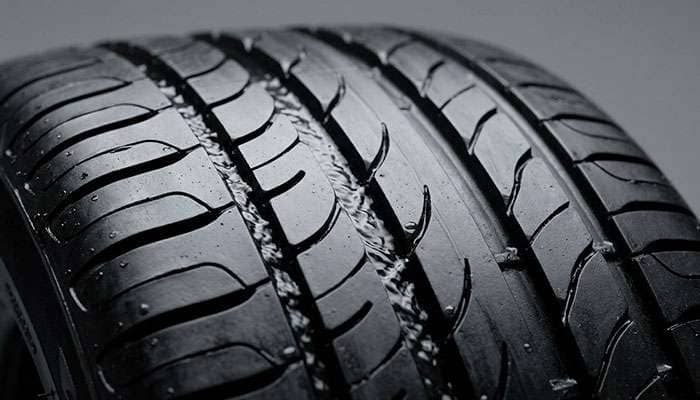
The Eagle F1 Asymmetric 6 is Goodyear's current-generation flagship UHP summer tire and the successor to the highly-regarded Eagle F1 Asymmetric 5. The asymmetric tread pattern divides the tire into a dry-handling outer half (broad rib design with minimal voids) and a wet-handling inner half (dense circumferential grooves with extensive sipe network), which produces excellent dry handling without sacrificing wet performance. Independent comparative testing consistently places the F1 Asymmetric 6 within 5-10 feet of the Pilot Sport 4S in wet braking from 60 mph — essentially indistinguishable in most real-world driving conditions.
Where the F1 Asymmetric 6 has a meaningful advantage is OE fitment. Goodyear has secured factory fitments on more European performance vehicles than any other manufacturer in the UHP summer category, which means the F1 Asymmetric 6 is engineered to specific OE specifications for cars like Audi RS6, Mercedes-AMG GT, BMW M5, and Porsche 911. For drivers who want OE-spec replacement on a European performance car, the F1 Asymmetric 6 often matches the original-equipment specification more closely than aftermarket alternatives.
The compound chemistry uses Goodyear's ActiveGrip Technology — silica-enriched rubber with proprietary functionalized polymers that maintain wet grip across the operating temperature range. Tread life is rated at 320 UTQG, slightly higher than the Pilot Sport 4S's 300, with most drivers reporting 25,000 to 35,000 miles of service depending on driving style. As with all summer tires, the F1 Asymmetric 6 loses grip below approximately 40°F and should not be operated in winter conditions.
Browse Goodyear Eagle F1 Asymmetric 6 sizes, or see the full Goodyear Tires lineup.
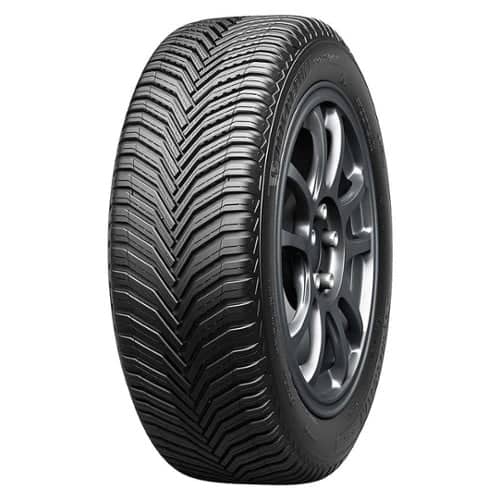
Category: All-Weather (3PMSF rated) • UTQG: 640 A B • 3PMSF: Yes (genuine winter capability) • Best For: Year-round operation in climates with meaningful rain and winter weather
The Michelin CrossClimate2 represents the most sophisticated approach to single-tire year-round operation currently on the market. The tire carries the 3PMSF (Three-Peak Mountain Snowflake) rating that certifies genuine winter capability — distinct from the basic M+S marking that all-season tires carry but which doesn't guarantee actual snow performance. The compound uses Michelin's V-shaped tread pattern with directional water evacuation, hydrophobic silica chemistry tuned for both warm-weather wet conditions and cold-weather snow grip, and the Thermal Adaptive Compound that maintains pliability across a broader temperature range than traditional all-season rubber.
Wet braking from 60 mph falls in the 125-135 foot range — longer than the UHP summer and UHP all-season alternatives above, but meaningfully better than typical all-season tires. The trade-off is intentional: the CrossClimate2 sacrifices some peak wet performance to deliver snow capability that legitimately substitutes for dedicated winter tires in moderate snow conditions. For drivers in climates that see 10+ inches of annual snowfall alongside heavy rain seasons, the CrossClimate2 is the right answer because the alternative is running summer tires year-round (dangerous in winter) or swapping to dedicated winter tires twice annually (expensive and inconvenient).
The CrossClimate2 covers an exceptionally broad fitment range — sizes from 15-inch through 22-inch covering passenger cars, crossovers, and light trucks. The 640 UTQG treadwear rating delivers 50,000-60,000 miles of typical service life, comparable to traditional all-season touring tires despite the more sophisticated compound chemistry.
For broader 2026 all-season options, see our 12 best all-season tires for 2026 ranking. Browse Michelin CrossClimate2 sizes.
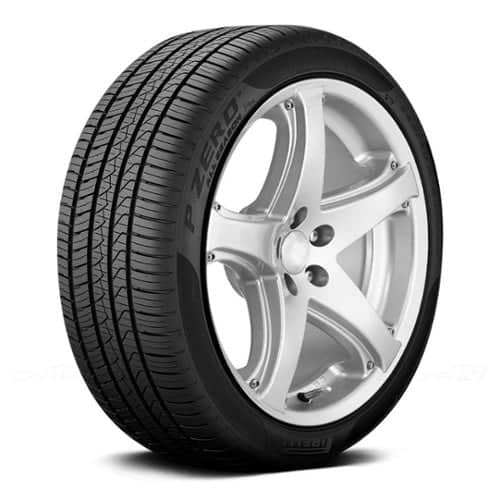
Category: Ultra-High-Performance All-Season • UTQG: 500 AA A • 3PMSF: No (all-season) • Best For: European luxury and performance vehicles in mixed-climate operation
The Pirelli P Zero All Season Plus brings Italian engineering to year-round UHP operation. The tire uses an asymmetric tread pattern with four longitudinal grooves for water evacuation, horizontal sipes in the shoulder blocks for tread pattern stability under cornering loads, and Pirelli's proprietary silica-enriched compound (Smart Tread Technology) tuned for balanced wet/dry/snow performance. Wet braking from 60 mph falls in the 120-130 foot range — competitive with the Continental DWS06 Plus and meaningfully shorter than budget all-season alternatives.
What separates the P Zero AS Plus from competitors in the same category is the brand's deep OE-fitment relationships with European luxury and performance manufacturers. Mercedes-Benz, BMW, Audi, Porsche, Maserati, and Ferrari all use Pirelli OE fitments extensively, and the P Zero AS Plus inherits that engineering relationship — the tire is engineered for the chassis dynamics, weight distribution, and performance envelope of European luxury platforms in a way that more generic all-season tires can't match. For drivers replacing OE Pirellis on a European luxury sedan or sports coupe, the P Zero AS Plus is often the closest aftermarket match to the original specification.
The 500 UTQG treadwear rating delivers approximately 30,000-45,000 miles of service depending on driving style and vehicle weight. The compound holds wet performance reasonably well as the tire wears, though not quite as strongly as the Continental DWS06 Plus. For drivers who prioritize OE-spec European performance over absolute peak wet braking, the P Zero AS Plus is the right answer.
Browse Pirelli P Zero All Season Plus sizes, or see the full Pirelli Tires lineup.
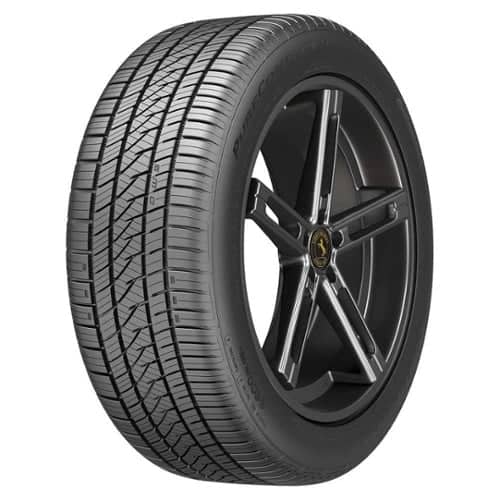
Category: Grand Touring All-Season • UTQG: 700 A A • 3PMSF: No (all-season) • Best For: Luxury sedans, midsize family cars, daily drivers prioritizing wet capability and tread life
The Continental PureContact LS represents the strongest grand touring all-season option for drivers who prioritize wet capability and long tread life over UHP-class dry handling. The "LS" stands for Luxury Sedan, reflecting Continental's tuning of the tire for refined, comfort-oriented operation rather than aggressive performance driving. Wet braking from 60 mph falls in the 130-140 foot range — longer than the UHP-class options above, but meaningfully shorter than mainstream touring tires from non-premium manufacturers. The combination of EcoPlus Technology compound (silica-enriched with reduced rolling resistance), three-dimensional sipes for wet weather grip, and the comfort ride pattern delivers a tire that drives quietly, lasts a long time, and stops the car effectively in standing water.
The 700 UTQG treadwear rating is among the highest in the wet-performance category — most drivers report 60,000-80,000 miles of service depending on rotation discipline and driving style. The PureContact LS comes with Continental's 70,000-mile treadwear warranty for most fitments, which is among the longer warranties in the all-season category. For drivers who want to amortize tire cost over many years and many miles, the PureContact LS delivers strong economics.
The tire works particularly well on luxury sedans (Lexus ES, Acura TLX, Lincoln MKZ, Cadillac CT5), midsize family cars (Toyota Camry, Honda Accord, Mazda6), and any application where the driver values quiet operation and long tread life alongside acceptable wet performance. For drivers willing to give up some peak wet braking to gain meaningful tread life and ride comfort, the PureContact LS is the strongest grand touring option in the wet-performance category.
Browse Continental PureContact LS sizes.
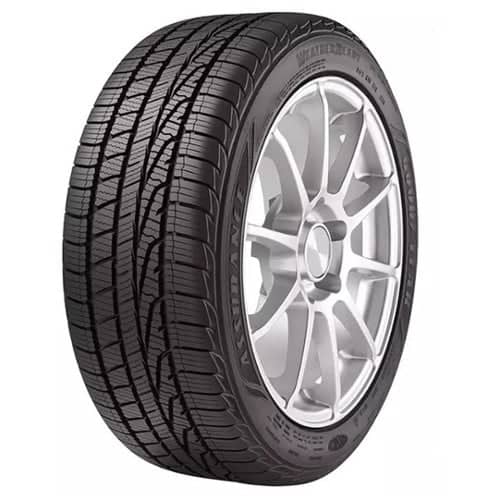
Category: All-Weather (3PMSF rated) • UTQG: 700 A B • 3PMSF: Yes (genuine winter capability) • Best For: Year-round operation prioritizing rain, light snow, and long tread life
The Goodyear Assurance WeatherReady is the broader-fitment alternative to the Michelin CrossClimate2 in the all-weather 3PMSF category. The tire delivers genuine winter capability through the 3PMSF certification, strong wet performance through the asymmetric tread pattern with sweeping circumferential grooves and dense sipe network, and the long tread life that Assurance-line tires are known for. Wet braking from 60 mph lands in the 130-140 foot range — comparable to the CrossClimate2 in most independent testing, slightly worse than the UHP options above, and meaningfully better than non-3PMSF all-season alternatives.
What gives the WeatherReady its position over the CrossClimate2 in some applications is the broader fitment range and the more accessible pricing. Goodyear produces the WeatherReady in sizes from 15-inch through 20-inch covering most passenger car and crossover applications, and the per-tire pricing typically lands $20-40 below the CrossClimate2 at the same size. For drivers who want true year-round capability without paying premium-tier pricing, the WeatherReady delivers most of what the CrossClimate2 delivers at meaningfully lower cost.
The 700 UTQG treadwear rating delivers 50,000-65,000 miles of typical service. The compound uses Goodyear's Soybean Oil-Enhanced Tread Compound — the soybean oil provides natural pliability that helps the tire maintain grip across temperature variations without sacrificing tread life. The technology is genuine engineering, not just marketing, and the resulting compound holds wet and snow performance better through the tire's full service life than older Goodyear all-season alternatives.
For families and daily drivers in climates that see meaningful seasonal weather variation — Pacific Northwest, Northeast, Upper Midwest — the Assurance WeatherReady is one of the strongest all-weather choices available. Browse Goodyear Assurance WeatherReady sizes.
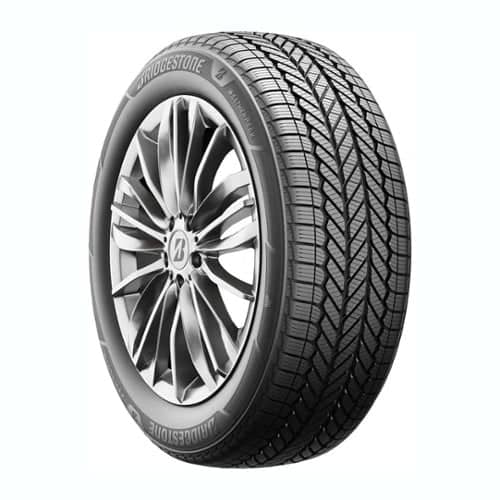
Category: All-Weather (3PMSF rated) • UTQG: 700 A B • 3PMSF: Yes (genuine winter capability) • Best For: SUV, crossover, and light truck applications requiring year-round wet/snow capability
The Bridgestone WeatherPeak is the third 3PMSF-rated all-weather option on this list, completing the category alongside the Michelin CrossClimate2 and Goodyear Assurance WeatherReady. The WeatherPeak's particular strength is heavier-vehicle applications — SUVs, crossovers, and light trucks where vehicle weight stresses the tire's wet-weather performance more aggressively than passenger car applications. Bridgestone engineered the WeatherPeak with a stiffer sidewall construction and a wider footprint optimized for SUV and crossover load characteristics, which delivers wet braking performance that holds up better under heavy-vehicle deceleration than passenger-car-tuned alternatives.
Wet braking from 60 mph on heavier vehicles falls in the 135-145 foot range — comparable to the WeatherReady in independent testing on similar vehicles, with the WeatherPeak's stiffer construction delivering slightly more consistent performance under high-load conditions. The tire uses Bridgestone's Multi-Cell Compound (the same technology family as their flagship Blizzak winter tires, applied here for all-weather operation) which incorporates microscopic cell structures that improve grip on wet and icy surfaces. The compound also incorporates extended polymer chains for tread life, producing a tire that lasts approximately 50,000-70,000 miles depending on application.
The WeatherPeak covers fitments from compact SUVs (Toyota RAV4, Honda CR-V, Mazda CX-5) through full-size SUVs (Toyota Sequoia, Chevrolet Tahoe, Ford Expedition) and most crossover applications. For light truck applications (Toyota Tacoma, Ford F-150, RAM 1500) operating primarily on highways with occasional wet/snow conditions, the WeatherPeak is one of the more capable choices in the all-weather category.
Browse Bridgestone WeatherPeak sizes, or see the full Bridgestone Tires lineup.
The single most consequential metric in wet-road tire selection is wet braking distance from 60 mph. The numbers below are typical industry-published ranges from independent comparative testing — actual performance varies by tire size, vehicle weight, and pavement condition, but the relative ordering holds across most testing methodologies.
Tire |
Category |
Wet Braking 60-0 mph |
UTQG Traction |
|---|---|---|---|
Michelin Pilot Sport 4S |
UHP Summer |
110-115 feet |
AA |
Goodyear Eagle F1 Asymmetric 6 |
UHP Summer |
115-120 feet |
AA |
Continental ExtremeContact DWS06 Plus |
UHP All-Season |
115-125 feet |
AA |
Pirelli P Zero All Season Plus |
UHP All-Season |
120-130 feet |
AA |
Michelin CrossClimate2 |
All-Weather 3PMSF |
125-135 feet |
A |
Continental PureContact LS |
Grand Touring All-Season |
130-140 feet |
A |
Goodyear Assurance WeatherReady |
All-Weather 3PMSF |
130-140 feet |
A |
Bridgestone WeatherPeak |
All-Weather 3PMSF |
135-145 feet |
A |
Typical budget all-season (reference) |
Budget All-Season |
155-180 feet |
B |
The 50+ foot difference between the top of the table (Michelin Pilot Sport 4S at 110-115 feet) and a typical budget all-season tire (155-180 feet) is the safety margin that wet-road tire selection actually delivers. That's three additional car lengths of stopping distance — the difference between stopping at the crosswalk and stopping in the middle of the intersection. For drivers who operate regularly in heavy rain or wet-pavement conditions, the wet braking distance gap is the single most important variable in tire selection.
The fresh-tire numbers above also degrade as the tire wears. From new to 4/32-inch remaining tread depth, wet braking distance typically increases 14-31 feet depending on the tire's compound chemistry. Premium-tier tires with sophisticated silica compounds maintain performance better through the wear curve; budget alternatives lose wet performance more aggressively as tread depth decreases.
The 8 tires above all earned their 2026 ranking. Picking among them depends on three decisions in order.
Decision 1: What climate do you actually operate in? If your annual climate stays above 40°F (4°C) and you don't see freezing temperatures, dedicated UHP summer tires (Michelin Pilot Sport 4S, Goodyear Eagle F1 Asymmetric 6) deliver the best wet performance available. If you see meaningful freezing temperatures or occasional snow but your primary concern is rain capability, UHP all-season tires (Continental ExtremeContact DWS06 Plus, Pirelli P Zero All Season Plus) split the difference effectively. If you see real winter weather alongside heavy rain seasons — Pacific Northwest, Northeast, Upper Midwest — all-weather 3PMSF tires (Michelin CrossClimate2, Goodyear Assurance WeatherReady, Bridgestone WeatherPeak) are the right answer because they substitute for dedicated winter tires while still handling rain effectively.
Decision 2: What vehicle and what driving intensity? Sports cars and performance sedans benefit from UHP-class tires (PS4S, F1 Asymmetric 6, DWS06 Plus, P Zero AS Plus) where the tire's grip envelope matches the vehicle's performance capability. Luxury sedans and grand touring vehicles benefit from comfort-tuned alternatives like the Continental PureContact LS where ride quality and tread life matter alongside wet capability. SUVs, crossovers, and light trucks benefit from heavier-vehicle-tuned alternatives like the Bridgestone WeatherPeak where the construction handles vehicle weight more effectively.
Decision 3: How long do you keep tires? Drivers who replace tires every 2-3 years can prioritize peak performance over tread life — UHP summer alternatives make sense because the 25,000-30,000 mile service life isn't a constraint. Drivers who keep tires for 5+ years should prioritize the long-life alternatives — the Continental PureContact LS (700 UTQG, 60,000-80,000 mile service life) and Goodyear Assurance WeatherReady (700 UTQG, 50,000-65,000 mile service life) deliver meaningful tread life economics over multi-year ownership.
For driving technique that complements good tires, see our tips for driving in heavy rain and the ABS and hydroplaning explainer.
Rank |
Tire |
Category |
Best For |
|---|---|---|---|
1 |
Michelin Pilot Sport 4S |
UHP Summer |
Performance cars in warm climates |
2 |
Continental ExtremeContact DWS06 Plus |
UHP All-Season |
Daily-driven sports cars in mixed climates |
3 |
Goodyear Eagle F1 Asymmetric 6 |
UHP Summer |
European performance cars and OE replacement |
4 |
Michelin CrossClimate2 |
All-Weather 3PMSF |
Year-round operation with real winter weather |
5 |
Pirelli P Zero All Season Plus |
UHP All-Season |
European luxury and performance OE replacement |
6 |
Continental PureContact LS |
Grand Touring All-Season |
Luxury sedans, midsize cars, long tread life |
7 |
Goodyear Assurance WeatherReady |
All-Weather 3PMSF |
Family vehicles in mixed seasonal climates |
8 |
Bridgestone WeatherPeak |
All-Weather 3PMSF |
SUVs, crossovers, light trucks year-round |
The Michelin Pilot Sport 4S leads the 2026 ranking with wet braking distances of 110-115 feet from 60 mph — among the shortest stopping distances measured for any size-class tire. The combination of Michelin's Helio Compound (hydrophobic silica with functionalized polymer matrix), Dynamic Response Technology variable belt construction, and the asymmetric tread pattern delivers measurably better wet performance than competitors. The trade-off is that the PS4S is a true summer tire that loses meaningful grip below 40°F, so drivers in colder climates should consider UHP all-season alternatives like the Continental ExtremeContact DWS06 Plus instead.
Three indicators predict wet-road performance. First, the UTQG traction rating — AA is the highest rating and indicates excellent wet braking; A is acceptable for most driving; B and below should be avoided. Second, the tire category — UHP summer and UHP all-season categories use more sophisticated silica-rich compounds that deliver better wet grip than mainstream all-season alternatives. Third, the wet braking distance from independent comparative testing — premium-tier tires deliver 110-130 feet from 60 mph on wet pavement, while budget alternatives often exceed 160 feet. Looking at all three indicators together rather than any single one in isolation produces the most reliable assessment.
All-season tires carry a basic M+S (Mud and Snow) marking that indicates the tread pattern can handle light snow but does not certify actual snow performance. All-weather tires carry the 3PMSF (Three-Peak Mountain Snowflake) symbol that certifies genuine winter capability based on standardized testing — these tires deliver real snow grip comparable to dedicated winter tires in moderate conditions. For drivers in climates that see real winter weather, 3PMSF-rated tires (Michelin CrossClimate2, Goodyear Assurance WeatherReady, Bridgestone WeatherPeak) substitute for the swap between summer and winter tires while still delivering acceptable wet-road performance.
Tread life varies dramatically by category. UHP summer tires (Michelin Pilot Sport 4S, Goodyear Eagle F1 Asymmetric 6) typically deliver 25,000-30,000 miles of service. UHP all-season tires (Continental ExtremeContact DWS06 Plus, Pirelli P Zero All Season Plus) deliver 35,000-50,000 miles. All-weather 3PMSF tires (Michelin CrossClimate2, Goodyear Assurance WeatherReady, Bridgestone WeatherPeak) deliver 50,000-70,000 miles. Grand touring all-season tires like the Continental PureContact LS deliver the longest service at 60,000-80,000 miles. Wet performance degrades meaningfully as tread depth decreases — from new to 4/32-inch tread depth, wet braking distance increases 14-31 feet depending on compound chemistry.
Summer tires deliver better peak wet performance than all-season alternatives, but only when operated above approximately 40°F (4°C). Summer compound chemistry uses silica formulations optimized for warm-weather wet performance, which produces 5-10 foot shorter wet braking distances than comparable all-season tires. Below 40°F, summer compound rubber stiffens and loses grip dramatically, making summer tires actively dangerous in cold weather even on dry pavement. The choice depends on climate — for drivers who never see freezing temperatures, summer tires are the better wet-road choice. For drivers in mixed climates, UHP all-season alternatives sacrifice some peak wet performance to deliver acceptable cold-weather grip.
Hydroplaning occurs when standing water on the road surface accumulates in front of the tire faster than the tire's tread grooves can evacuate it. When the water layer becomes thick enough, the tire loses contact with the pavement and rides on top of the water — at which point steering, braking, and traction control all become ineffective. Three factors determine hydroplaning susceptibility: vehicle speed (faster equals more hydroplaning risk), tread depth (worn tires hydroplane at lower speeds), and groove geometry (deeper, wider grooves resist hydroplaning better). Premium wet-performance tires hydroplane at speeds 10-15 mph higher than budget alternatives, which translates directly to safety margin in heavy rain. For deeper coverage, see our hydroplaning explainer guide.
Yes, and the wet performance difference is the strongest justification for premium-tier tire spending. Wet braking distance from 60 mph differs by 50+ feet between the best premium tires (Michelin Pilot Sport 4S at 110-115 feet) and typical budget alternatives (155-180 feet). That's three additional car lengths of stopping distance — the practical difference between stopping at the crosswalk and stopping in the middle of the intersection. The premium pricing reflects more sophisticated compound chemistry (hydrophobic silica vs. carbon black), more advanced tread geometry, and engineering optimization that simply costs more to develop and manufacture. For drivers who operate regularly in wet conditions, the safety margin justifies the cost differential.
Wet performance degrades meaningfully as tread depth decreases. The legal minimum is 2/32-inch tread depth, but wet braking performance is already significantly compromised by 4/32-inch depth — independent testing shows wet braking distance increases 14-31 feet from new to 4/32-inch depth depending on the specific tire. For safety, replace tires when tread depth reaches approximately 4/32-inch in regions that see meaningful rain, rather than waiting for the legal minimum. Tires older than 6 years should also be replaced regardless of tread depth because rubber compound chemistry degrades over time, and wet performance suffers accordingly even on tires with apparently adequate tread.



