
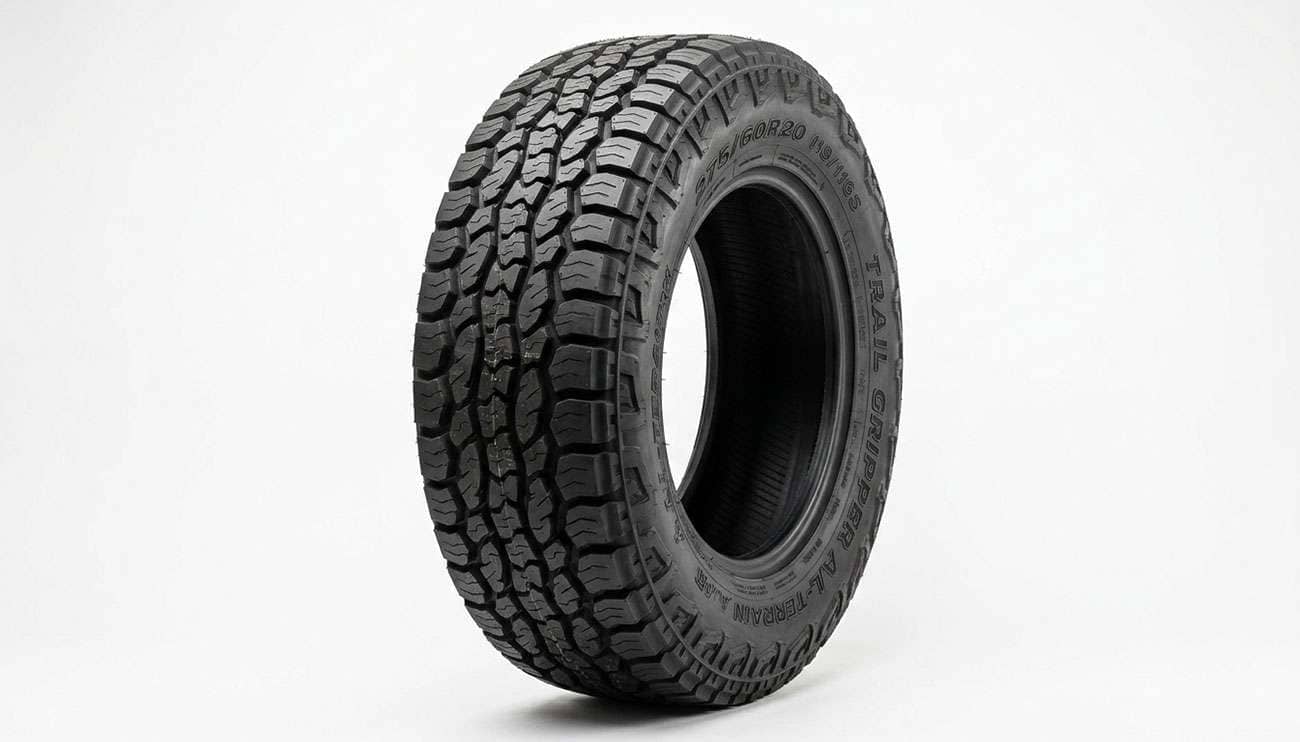
A 275 60R20 tire measures 33.0 inches in overall diameter, 10.8 inches in section width, and mounts on a 20 inch wheel. The sidewall stands 6.5 inches tall, the circumference works out to 103.6 inches, and the tire turns approximately 611 revolutions per mile. In plain terms, this is the 33 inch tire of the modern 20 inch half-ton truck world, and the numbers below break down exactly how each figure is calculated.
The metric size converts to inches with two simple operations: divide millimeters by 25.4, and remember that the middle number is a percentage of the width, not a fixed measurement. Here is every dimension worked out.
Measurement |
Metric |
Inches |
|---|---|---|
Overall Diameter |
838 mm |
33.0 in |
Section Width |
275 mm |
10.8 in |
Sidewall Height |
165 mm |
6.5 in |
Wheel Diameter |
508 mm |
20.0 in |
Circumference |
2632 mm |
103.6 in |
Revolutions Per Mile |
380 per km |
611 per mile |
Recommended Rim Width |
191 to 241 mm |
7.5 to 9.5 in |
The math behind the diameter: 275 mm of width multiplied by the 60 percent aspect ratio gives a 165 mm sidewall, which is 6.50 inches. Double it for top and bottom, add the 20 inch wheel, and you land at 32.99 inches, which the industry rounds to 33.0. If reading sidewall codes is new territory, our 265 70R17 in inches guide walks through the same conversion on the most common 17 inch truck size.
Yes. At 32.99 inches of calculated diameter, a 275 60R20 is the textbook metric equivalent of a 33 inch tire. Manufacturers consider anything from roughly 32.8 to 33.3 inches a "33," and this size sits dead center in that window. It is the reason so many half-ton owners searching for a 33 inch tire on a 20 inch wheel end up right here. For a full breakdown of how 33s compare against the sizes above and below them, see our guide to 31s vs 33s vs 35s tires.
Only when the aspect ratio and wheel diameter cooperate. The 275 alone tells you width, not height. A 275 60R20 is a 33, but a 275 55R20 is only 31.9 inches and a 275 65R20 stretches to 34.1 inches. Never judge tire height by the first number; always run the full calculation with all three figures.
No. A 35 inch tire measures roughly 34.8 to 35.3 inches tall, and a 275 60R20 falls a full 2 inches short of that at 33.0 inches. To reach true 35 territory on a 20 inch wheel you need something like a 35x12.50R20 or a 315 70R20, both of which typically require a leveling kit or lift to clear on a stock half-ton.
The best substitutes keep overall diameter within about 1.5 percent so your speedometer, ABS, and transmission shift points stay accurate. All of the following mount on the same 20 inch wheel.
Alternative Size |
Diameter |
Difference |
Notes |
|---|---|---|---|
285/60R20 |
33.5 in |
+1.4% |
Slightly wider and taller, popular upgrade |
305/55R20 |
33.2 in |
+0.6% |
Much wider footprint, check fender clearance |
33x12.50R20 |
33.0 in |
0% |
Flotation equivalent, wider and off-road styled |
275/65R20 |
34.1 in |
+3.3% |
Same width, one size taller, verify clearance |
275/55R20 |
31.9 in |
-3.3% |
Shorter street-oriented option |
Yes, by about half an inch. The 285 60R20 carries a 171 mm sidewall against the 275's 165 mm, which adds 0.47 inches of overall diameter for a total of 33.5 inches. It also gains 0.4 inches of width. Most trucks that run the 275 will clear the 285 without modification, which makes it the most common step-up size.
On a 275 width, dropping from a 60 to a 55 aspect ratio shrinks the sidewall by 13.75 mm, or 0.54 inches. Since the sidewall counts twice in overall diameter, the 60 series tire stands 1.08 inches taller than the 55. That is exactly the gap between the 33.0 inch 275 60R20 and the 31.9 inch 275 55R20 we covered in our 275 55R20 in inches guide.
No, they run taller. A 275 65R20 measures 34.1 inches, which puts it closer to a 34 than a 33, and swapping to it from a 275 60R20 will read your speedometer about 3 percent slow. The full numbers are in our 275 65R20 in inches breakdown.
This is the dominant original-equipment size for 20 inch wheels on American half-ton trucks and full-size SUVs. You will find 275 60R20 fitted from the factory on the Ford F-150, Ram 1500, Chevrolet Silverado 1500, GMC Sierra 1500, Toyota Tundra, Nissan Titan, Ford Expedition, Chevrolet Tahoe and Suburban, GMC Yukon, and Cadillac Escalade, depending on trim and wheel package. Because it serves such a huge population of trucks, nearly every manufacturer builds the size in highway, all-terrain, and rugged-terrain tread patterns. If you are weighing those categories against each other, our HT vs AT vs MT tires guide lays out the trade-offs. Owners running the 18 inch wheel package on the same trucks typically carry the 275 70R18, which we measured in our 275 70R18 in inches guide.
We stock more than 90 tire models in 275 60R20. These four cover the spread from budget highway duty to aggressive rugged terrain.
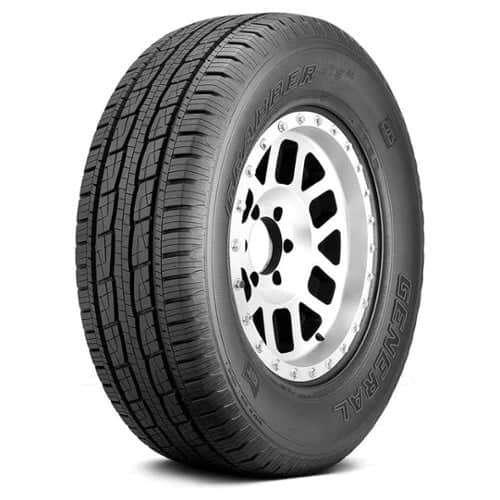
The value play. The General Grabber HTS60 delivers name-brand highway manners, a 65,000 mile treadwear warranty class, and quiet daily-driver behavior at 148 dollars, which undercuts most of the segment by 100 dollars or more.
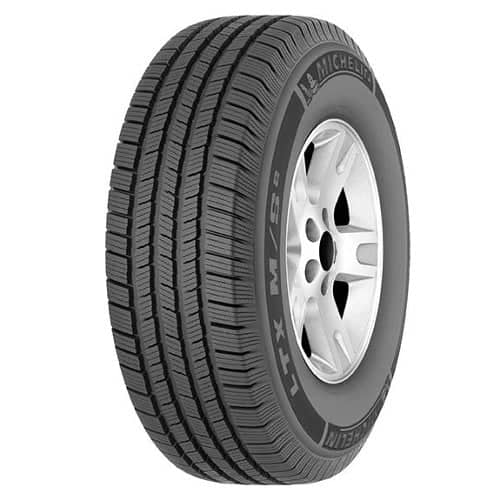
The benchmark. The Michelin Defender LTX M/S 2 in the XL 116H spec is the tire the rest of the highway category measures itself against: class-leading wet braking, exceptional tread life, and the extra load rating that towing owners want, at 321 dollars.
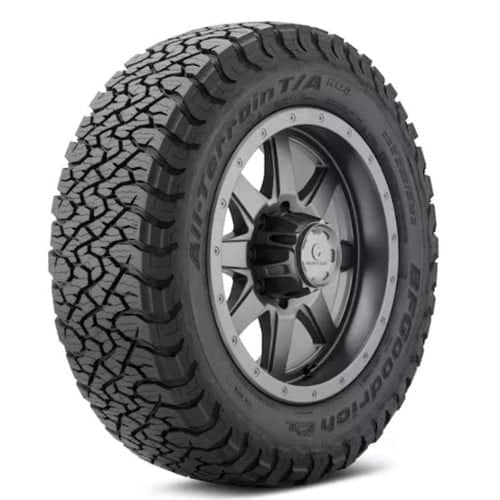
The all-terrain heavyweight. The BFGoodrich All-Terrain T/A KO3 replaces the legendary KO2 with tougher sidewall armor and improved wear, here in an 8-ply LT casing rated 119/116S for 352 dollars. This is the pick for trucks that actually leave pavement.
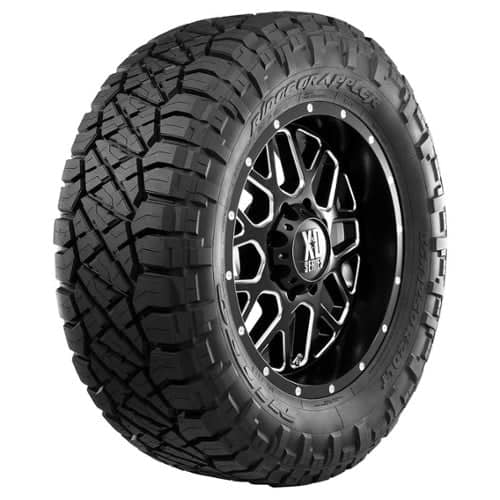
The style-and-substance hybrid. The Nitto Ridge Grappler pioneered the rugged-terrain category, splitting the difference between all-terrain civility and mud-terrain aggression with its variable-pitch tread. The XL 116T spec runs 333 dollars and dominates the lifted half-ton scene.
A 275 60R20 converts to a 33.0 inch tall, 10.8 inch wide tire on a 20 inch wheel: the definitive metric 33 for modern half-ton trucks. Step up to a 285 60R20 for half an inch more, cross-shop the 305 55R20 for width, or match the flotation-sized 33x12.50R20 exactly. Whichever direction you go, browse every pattern we carry on our 275 60R20 tires page, and if you are considering a bigger jump, our 295 65R20 in inches guide covers the next size class up.
The 60 is the aspect ratio: the sidewall height expressed as a percentage of the section width. Sixty percent of 275 mm is 165 mm, or 6.5 inches of sidewall. A lower number means a shorter sidewall, a higher number means a taller one.
The approved rim width range is 7.5 to 9.5 inches, with 8.0 to 9.0 inches being the sweet spot most factory truck wheels occupy. Staying inside that range keeps the tread flat on the road and the sidewall properly supported.
Yes. The 275 60R20 is 3.3 percent taller, so if your truck was calibrated for the 55 series, the speedometer will read about 2 mph slow at highway speeds. Trucks calibrated for the 60 series from the factory are unaffected.
It comes in both. Most versions are P-metric or Euro-metric with 115 load index in standard load and 116 or 119 in XL. Heavy-duty patterns like the BFGoodrich KO3 are also built as LT275/60R20 in 8-ply and 10-ply ratings for towing and off-road durability. Match the load spec to what your door placard requires.



