
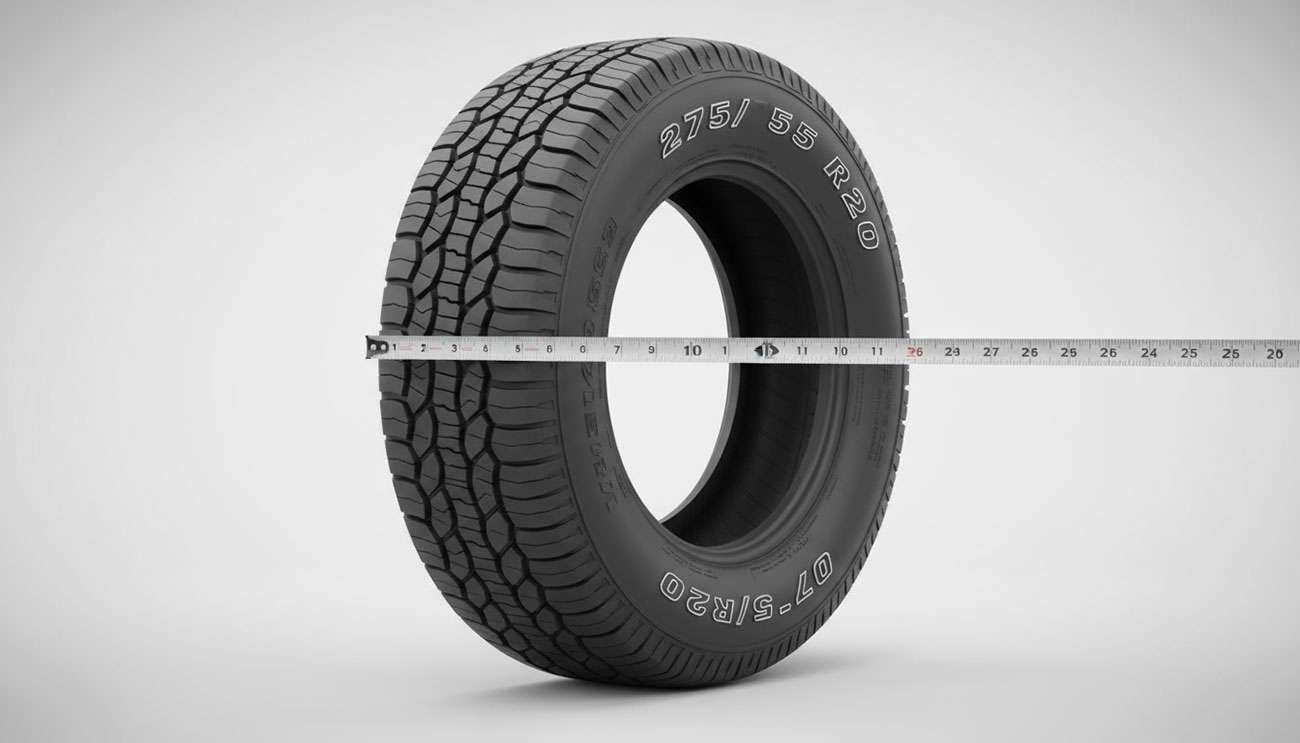
What size is 275 55 R20 in inches? The 275/55R20 tire measures precisely 31.9 inches in diameter and 10.8 inches in width. These exact dimensions are essential when you're upgrading your vehicle's tires or wheels for better appearance and performance.
The 275/55R20 tire size delivers specific measurements that matter for your driving experience. The sidewall height measures 5.9 inches, while the tire's circumference reaches 100.2 inches. This tire size makes 632 revolutions per mile, a critical specification that affects your speedometer accuracy and fuel economy calculations. Vehicles driven primarily on paved surfaces and city roads benefit from the 275/55R20's balanced performance characteristics with its medium profile design compared to taller alternatives.
We'll break down every dimension of the 275/55R20 tire in inches, decode what each number in the tire designation means, and show you how this tire size stacks up against other options for your vehicle.
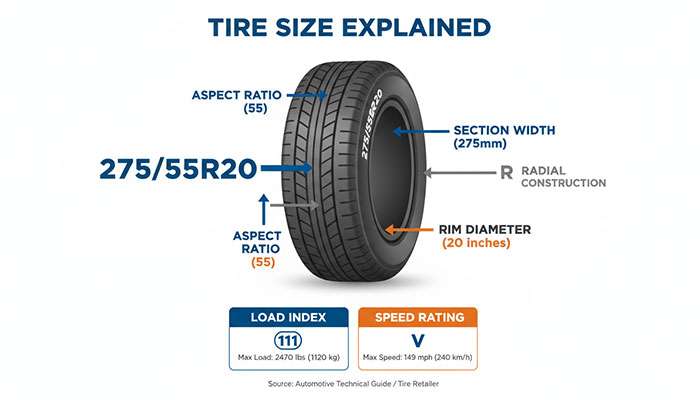
Breaking down the 275/55R20 tire designation reveals essential information about dimensions and construction. Each part of this code tells you specific details about the tire's physical characteristics and how it will perform on your vehicle.
The first number "275" indicates the tire's width in millimeters, measured at the widest point from sidewall to sidewall. This measurement, also called section width, equals exactly 10.8 inches when converted to imperial units. Wider tires deliver better traction and stability during cornering, making them popular for trucks and SUVs. The width measurement stays consistent regardless of which compatible wheel you mount the tire on, though the actual contact patch with the road may vary slightly depending on rim width.
The number "55" represents the aspect ratio - the sidewall height expressed as a percentage of the tire's width. This means the sidewall height equals 55% of the 275mm width, putting it in the 'low profile' category since any aspect ratio below 70% qualifies. For 275/55R20 tires, this calculation gives you a sidewall height of approximately 5.95 inches.
Aspect ratio dramatically affects how your vehicle handles. The lower 55 ratio delivers sharper steering response and better control. However, you'll get less cushioning against road imperfections compared to taller sidewalls. Higher aspect ratios provide smoother rides but feel less responsive during quick maneuvers. The 275/55R20 strikes an excellent balance between performance and comfort, which is why it's popular for trucks and SUVs that need both highway stability and reasonable ride quality.
The "R" in 275/55R20 designates radial construction, now standard for virtually all modern tires. Radial tires feature internal plies that run perpendicular to the direction of travel, with additional belt layers for reinforcement. This design provides improved fuel efficiency, longer tread life, and better handling compared to older bias-ply construction.
The final number "20" specifies the rim diameter in inches - the wheel size this tire is designed to fit. These tires are approved for mounting on wheels with widths ranging from 7.5 to 9.5 inches, giving you flexibility when selecting different wheel designs within the same tire size.
Here are the precise dimensions of 275/55R20 tires in inches for practical fitment and performance evaluation. Each measurement directly affects your vehicle's handling characteristics and compatibility.
The section width measures exactly 10.8 inches, converted from the metric 275 millimeters (dividing by 25.4 mm per inch). This measurement represents the distance from sidewall to sidewall at the tire's widest point. The substantial 10.8-inch width delivers excellent traction and stability, especially beneficial for trucks and SUVs that require confident handling. These tires mount on rim widths ranging from 7.5 to 9.5 inches, giving you flexibility when selecting wheels for your vehicle.
The sidewall measures approximately 5.9-5.95 inches in height. This dimension equals 55% of the tire's width, creating a medium-profile design that balances performance with comfort. The sidewall height provides enough cushioning to absorb road imperfections while maintaining responsive handling characteristics. This measurement significantly influences both ride quality and cornering stability for your daily driving experience.
The total diameter spans precisely 31.9 inches from top to bottom. You can calculate this by adding twice the sidewall height to the rim diameter: (2 × 5.95) + 20 = 31.9 inches. Overall diameter affects ground clearance, gear ratios, and speedometer accuracy. Maintaining similar diameter when changing tire sizes helps preserve your vehicle's original performance characteristics and prevents speedometer errors.
The tire's circumference measures between 100.2 and 100.25 inches, with slight variations depending on manufacturer specifications. At this circumference, the tire completes approximately 632 revolutions per mile, though some sources indicate up to 651 revolutions per mile. This specification determines speedometer accuracy and affects fuel economy calculations. For drivers seeking tires with these exact specifications, Performance Plus Tire offers various 275/55R20 options with detailed dimension information.
| Dimension | Measurement |
|---|---|
| Width | 10.8 inches |
| Sidewall Height | 5.9-5.95 inches |
| Overall Diameter | 31.9 inches |
| Circumference | 100.2-100.25 inches |
| Revolutions per Mile | 632-651 |
These calculations enable you to determine any tire's dimensions from its size designation, which helps when comparing options or verifying fitment before purchase.
Converting tire width from millimeters to inches requires dividing by 25.4, the number of millimeters per inch. For 275/55R20, divide 275 by 25.4 to get 10.83 inches, typically rounded to 10.8 inches. This conversion applies universally - a 285mm tire equals 11.22 inches, while a 265mm tire measures 10.43 inches.
Sidewall height calculation uses the formula: (Tire Width in mm × Aspect Ratio) ÷ 25.4. For 275/55R20: (275 × 0.55) ÷ 25.4 = 5.95 inches. The aspect ratio percentage (55 in this case) represents what portion of the tire width makes up the sidewall height. Higher aspect ratios produce taller sidewalls - a 275/60R20 has a 6.5-inch sidewall versus 5.95 inches for 275/55R20.
Calculate total tire diameter by adding the wheel diameter to twice the sidewall height: (2 × Sidewall Height) + Rim Diameter. For 275/55R20: (2 × 5.95) + 20 = 31.9 inches. This formula works for any tire size. A 33x12.5R20 has a 6.5-inch sidewall [(33-20)÷2], while a 285/55R20 measures 32.4 inches total diameter.

Tire size variations directly impact multiple aspects of your vehicle's behavior and efficiency. Understanding these effects helps you make better decisions when upgrading.
Your speedometer calibration depends on tire diameter. Factory calibration assumes specific tire dimensions - changes cause speedometer errors. When switching from stock 275/55R20 to 275/60R20, your speedometer will read slower than actual speed. At an indicated 70 mph, you're actually traveling approximately 72 mph with the taller tires. Conversely, installing smaller tires makes your speedometer over-report speed. These discrepancies affect more than convenience - they impact traffic tickets and accurate fuel economy tracking.
Larger diameter tires increase ground clearance but effectively change gear ratios. A 275/60R20 (33" diameter) provides 0.55 inches more clearance than 275/55R20 (31.9"). This added height reduces the effective gear ratio - your engine works less hard at highway speeds but sacrifices low-end torque. With 3.73 rear gears and 275/55R20 tires, your engine runs at approximately 2,554 RPM at 70 mph. Larger tires reduce engine RPM proportionally. Upgrading to 275/65R20 drops RPM by 162 at highway speeds with the same 3.73 gearing.
Larger tires typically improve highway fuel economy due to lower RPMs but reduce acceleration performance. Drivers report 1-2 mpg decreases when upsizing, primarily from increased weight and rolling resistance. Taller tires effectively lower your gear ratio, making the vehicle feel less responsive in city driving while providing smoother highway cruising.
Popular tire size alternatives offer different advantages depending on your driving needs and vehicle requirements.
The 275/60R20 stands 1.1 inches taller than the 275/55R20 (33" vs 31.9") while maintaining identical width (10.8"). The taller sidewall of the 275/60R20 (6.5" vs 6") provides superior comfort on rough terrain by absorbing more impact. The 275/55R20 delivers better handling and responsiveness on paved roads.
Most stock vehicles accommodate the upgrade from 275/55R20 to 275/60R20 without fitment issues. Expect about 2 mph speedometer difference with the taller option at highway speeds. Choose the 275/60R20 for enhanced ride comfort and off-road capability. Select the 275/55R20 for sharper handling and highway performance.
The 275/55R20 measures 31.9 inches in diameter, approximately an inch smaller than a true 33-inch tire such as the 33/12.5R20. Truck owners notice a significant visual difference between these sizes. Drivers report a noticeable appearance upgrade when switching from 275/55R20 to 33/12.5R20 tires. For those seeking high-quality 275/55R20 tires with exact specifications, check these options from Performance Plus Tire.
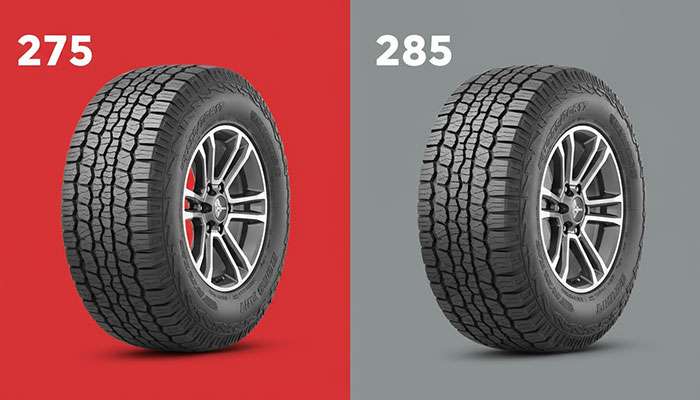
The 285/55R20 measures half an inch taller than the 275/55R20, with diameters of 32.4" and 31.9" respectively. The 285 variant provides slightly more ground clearance. The 285/55R20 offers a wider footprint for enhanced traction, particularly beneficial off-road.
The wider 285/55R20 typically costs more due to additional materials. The narrower 275/55R20 delivers better fuel economy from reduced rolling resistance. Consider your budget and primary driving conditions when choosing between these sizes.
Tire dimensions matter when you're selecting the right tires for your vehicle. We've covered the 275/55R20 tire size completely, confirming its 31.9-inch diameter and 10.8-inch width measurements. The sidewall height measures approximately 5.9 inches, with a circumference of 100.2 inches completing roughly 632 revolutions per mile.
Your tire size choice directly affects how your vehicle performs. Switching to 275/55R20 tires changes speedometer readings, potentially making your actual speed higher than what's displayed. These tires deliver excellent performance characteristics—the 55 aspect ratio offers sharp handling response while providing adequate cushioning for daily driving comfort.
The 275/55R20 stands apart from similar alternatives in important ways. The 275/60R20 measures 1.1 inches taller, delivering better comfort over rough surfaces but sacrificing some handling precision. The 285/55R20 provides a wider contact patch and additional ground clearance, though you'll see reduced fuel economy from the increased rolling resistance.
Tire dimensions impact your vehicle's capabilities beyond appearance upgrades. Ground clearance, gear ratios, fuel efficiency, and handling characteristics all shift with different tire sizes. With this detailed information about the 275/55R20 and comparable options, you can make the right choice when upgrading your vehicle's tires, balancing both visual appeal and driving performance for your specific needs.
Understanding tire dimensions helps you make informed decisions about upgrades and replacements that affect your vehicle's performance and safety.
• 275/55R20 measures exactly 31.9 inches in diameter and 10.8 inches wide - crucial specs for proper fitment and performance
• Changing tire sizes affects speedometer accuracy by 1-2 mph - larger tires make you travel faster than indicated speed
• The 55 aspect ratio balances responsive handling with comfort - lower profile than 60 series but more cushioned than 50 series
• 275/55R20 completes 632 revolutions per mile - impacts fuel economy and engine RPM at highway speeds
• Wider 285/55R20 offers better traction but reduces fuel economy - while taller 275/60R20 improves ride comfort
When selecting tires, consider how diameter changes affect ground clearance, speedometer readings, and overall driving dynamics. The 275/55R20 strikes an optimal balance for trucks and SUVs requiring both highway stability and reasonable ride quality.
A 275/55R20 tire measures 31.9 inches in overall diameter, 10.8 inches in width, and has a sidewall height of approximately 5.9 inches.
Switching to 275/55R20 tires can cause your speedometer to under-report by about 1-2 mph at highway speeds. For example, when your speedometer shows 60 mph, you may actually be traveling at 61-62 mph.
No, a 275/55R20 tire is not the same as a 33-inch tire. The 275/55R20 measures 31.9 inches in diameter, which is about an inch smaller than a true 33-inch tire like the 33/12.5R20.
The 285/55R20 is half an inch taller than the 275/55R20 and offers a wider footprint for enhanced traction, particularly beneficial off-road. However, the 275/55R20 typically provides better fuel economy due to reduced rolling resistance.
The 275/55R20 tire completes about 632 revolutions per mile, which can slightly improve highway fuel economy due to lower RPMs. However, these tires may reduce acceleration performance and can make the vehicle feel less responsive in city driving while providing smoother highway cruising.



