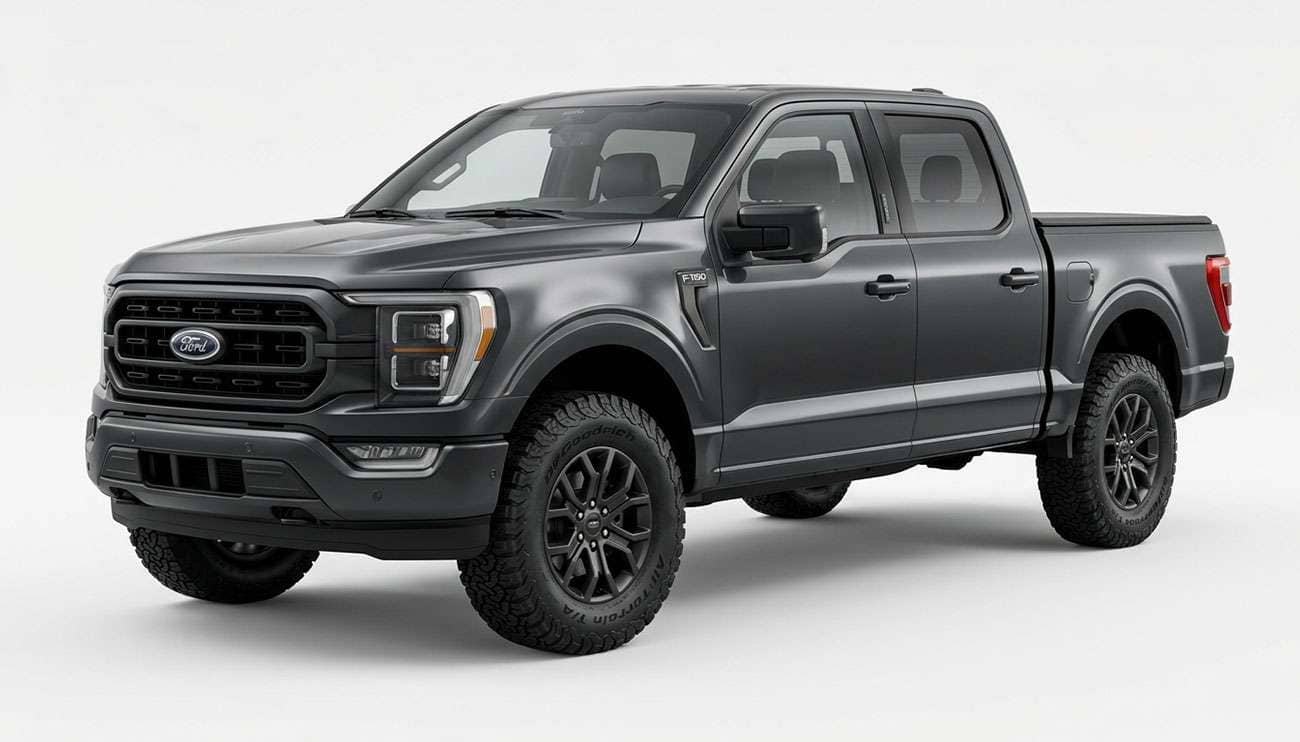
A 265/70R18 stands 32.6 inches tall, measures 10.4 inches across the section, carries a 7.3-inch sidewall, and turns about 619 revolutions per mile. Those numbers hold no matter whose name is on the tire. What changes everything is the letters in front of the size. This one comes in three flavors, and the load spread between the lightest and the heaviest is over 900 pounds per corner on the same three numbers.
I have had this conversation across the counter more times than I can count. A guy walks in with a half-ton or a body-on-frame SUV, tells me the size off his sidewall, and we are still two questions away from knowing what he actually needs. Most size pages hand you 32.6 inches and call it done. Here is the part nobody puts in front of you.
What is stamped on the tire |
Load index and capacity |
Who it is built for |
|---|---|---|
P265/70R18 114 |
2,601 lb per tire at 35 psi |
Light-duty SUV use. Derated on a truck, so read on before you buy |
265/70R18 116 |
2,756 lb per tire at 36 psi |
Euro-metric. The volume choice for unloaded daily driving |
LT265/70R18 124 |
3,527 lb per tire at 80 psi |
Load Range E. Towing, hauling, rock, and gravel |
LT265/70R18 121 |
3,197 lb per tire in dual-rear service |
The second number on a dual-rated LT tire, not a separate size |
Your door placard |
Whatever the factory specified |
The only rating that is not optional. Match it or beat it |
Run it out and 265/70R18 comes to about 32.6 x 10.4 R18. The 265 is section width in millimeters, which is 10.43 inches once you divide by 25.4. The 70 is not a measurement at all, it is a percentage. The sidewall stands at 70 percent of the section width, so 265 times 0.70 gives 185.5 millimeters, or 7.30 inches of sidewall. Stack two of those on an 18-inch wheel and you land at 32.61 inches tall.
Everything else falls out of that. Circumference is 102.4 inches. Divide 63,360 inches per mile by that and you get roughly 619 turns of the tire per mile, which is the number your speedometer, odometer, and traction control are all calibrated against. If you want the full sidewall decoded from end to end, we walk through it in our guide on how to read tire size.
Measurement |
Metric |
Inches |
|---|---|---|
Section width |
265 mm |
10.4 in |
Sidewall height |
186 mm |
7.3 in |
Rim diameter |
457 mm |
18 in |
Overall diameter |
829 mm |
32.6 in |
Circumference |
2,603 mm |
102.4 in |
Revolutions per mile |
384 per km |
619 per mile |
One thing I always tell people at the counter. That 10.4 inches is section width, measured across the sidewall bulge on a specified test rim, not the rubber actually touching the pavement. Tread width on a 265 usually comes in closer to 8.5 inches. When you are eyeballing clearance against a control arm or an inner fender liner, the sidewall is the widest part of that tire, not the tread.
No. It is a 32.6, and that four-tenths of an inch is the sort of thing that gets a guy in trouble on a Saturday afternoon.
People call this size a 33 because in truck-shop shorthand everything from about 32.5 up to 33.5 gets lumped in the 33 bin. That is fine for bench racing. It is not fine when you are working to a clearance spec, matching a spare, or sizing a leveling kit against a published fitment chart. A real 33 in an 18-inch diameter is a 275/70R18, which measures 33.16 inches, or a flotation-sized 33x12.50R18 at a nominal 33.0. Both of those are genuinely taller than what you are holding.
Size |
Overall diameter |
Difference vs 265/70R18 |
The straight answer |
|---|---|---|---|
265/70R18 |
32.61 in |
Baseline |
A 32.6, not a 33 |
285/65R18 |
32.59 in |
Minus 0.1 percent |
Same height, an inch wider. Watch inner clearance |
33x12.50R18 |
33.0 in |
Plus 1.2 percent |
An actual 33, and two inches wider |
275/70R18 |
33.16 in |
Plus 1.7 percent |
The metric 33. Easiest step up from here |
255/70R18 |
32.06 in |
Minus 1.7 percent |
Narrower and shorter. Better in deep snow ruts |
275/65R18 |
32.07 in |
Minus 1.7 percent |
Wider and shorter. Fills the well without gaining height |
If you are stepping up to a genuine 33, that jump from 32.61 to 33.16 puts a quarter inch of extra sidewall at each corner and about a half inch more under the axle. Your speedometer will read roughly one mile per hour slow at an indicated 60. That is inside the three percent tolerance the industry works to, so nothing dramatic, but it is real. We break down what changes at each step in our comparison of 31 vs 33 vs 35 vs 37 vs 40 inch tires, and the 275 size gets its own full treatment in what size tire 275/70R18 is in inches.
This is the part that matters most, and it is the part the size calculators skip entirely.
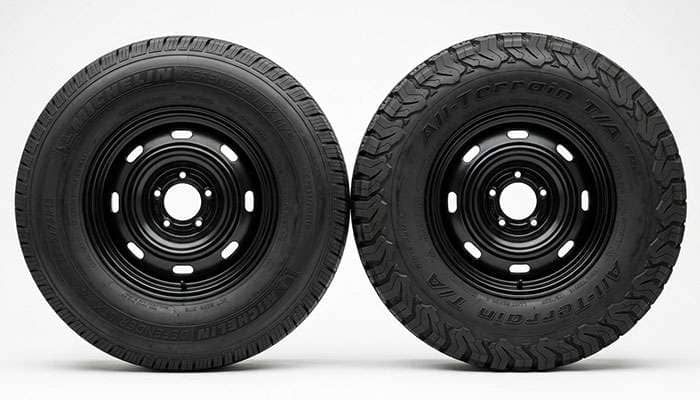
Walk into any tire shop and ask for a 265/70R18 and you could walk out with any one of three fundamentally different tires. They all measure 32.6 inches tall. They are not the same product.
P-metric. Stamped P265/70R18, usually a 114 load index, rated for 2,601 pounds at 35 psi. Built as a passenger-car-type tire in a truck size. Softer ride, quieter, lighter, cheaper to feed at the pump.
Euro-metric. No letter in front. Load index 116, rated for 2,756 pounds at 36 psi. Slightly stouter than the P-metric and the most common flavor for someone who wants a comfortable daily driver that still looks the part.
LT-metric. Stamped LT265/70R18, typically 124 in Load Range E, rated for 3,527 pounds at 80 psi. Heavier casing, stiffer sidewall, more plies, more rubber. This is the one that tows and hauls.
Now the number that ought to be on every size page in the country and never is. LT124 to P114 is a 926-pound difference per tire. Across four corners that is over 3,700 pounds of capacity. Same three numbers on the sidewall.
Here is the one that has bitten a lot of good people. When a P-metric tire is fitted to a light truck, an SUV, or a van, industry standards require you to divide its rated capacity by 1.10. That is not fine print somebody made up. It exists because trucks load their tires differently than cars do, and the standard builds in a reserve for it.
Run that math. A P265/70R18 114 is worth 2,601 pounds on paper. Put it on a pickup and you are working with 2,365 pounds. Against an LT124 at 3,527, you are down 1,162 pounds a corner. That is the difference between a tire that shrugs off a loaded trailer tongue on a hot August grade and one that is working overtime the whole way. Our breakdown of load range vs load index covers why those two terms get confused and why it matters.
I am not going to tell you everybody needs an E-rated tire, because plenty of people do not. LT construction is not free.
Speed ratings drop. In this size the LT versions run Q, R, and S, which is 99, 106, and 112 miles per hour. The P-metric and Euro-metric versions carry T or H, at 118 and 130. If you spend your life on interstate at 80 in Nevada heat, that is worth knowing.
Weight goes up, and it goes up in the worst possible place. Every pound of tire is unsprung and rotating, so it costs you acceleration, braking, and fuel. Empty, an E-rated tire at placard pressure rides firm because those sidewalls were built to carry a load that is not in the bed. And they are more expensive to buy and more expensive to replace.
The rule I give people is simple. If you tow, haul, run a camper, or work the truck for a living, buy the LT and never think about it again. If your truck hauls groceries and a mountain bike, the Euro-metric or P-metric will ride better, run quieter, and cost less. Just never go below what the door jamb sticker calls for.
Same width, same wheel, different sidewall. A 265/65R18 carries a 6.78-inch sidewall and stands 31.56 inches tall. The 70 series carries 7.30 inches of sidewall and stands 32.61. The 70 is 1.05 inches taller overall, which works out to a 3.3 percent difference.
That 3.3 percent puts you just outside the three percent window most shops treat as the safe swap zone, so it is not a straight trade. Half an inch of that extra height goes under your axle as ground clearance and the other half goes up into the fender well. On a stock truck it usually clears fine. On anything with an aftermarket bumper, a leveling kit already installed, or aggressive wheel offset, measure before you buy.
Your speedometer will read about two miles per hour slow at an indicated 60 if you go from the 65 to the 70 and leave the calibration alone. Odometer drifts the same direction, which quietly works against you on lease mileage and warranty coverage. We cover the whole picture in our piece on how bigger tires affect your speedometer, and the 65 series gets its own full breakdown in 265/65R18 in inches.
Beyond the numbers, the two tires feel different. The 70 series soaks up washboard gravel and expansion joints better because there is more air and more sidewall doing the work. The 65 turns in sharper and feels more planted on pavement because there is less sidewall to roll over. Neither is wrong. It depends on whether your truck spends its weekends on a fire road or an on-ramp.
About an inch on a truck-width tire, and here is the arithmetic so you can run it on any size that comes up.
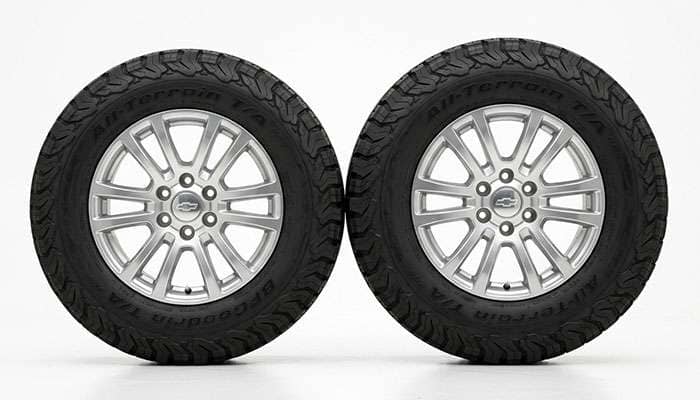
Five points of aspect ratio equals five percent of the section width per sidewall. You have two sidewalls, so the overall height difference is section width times 0.05, doubled, divided by 25.4 to land in inches. At a 265 width that comes to 1.04 inches of overall height and about half an inch of ride height at each corner.
Section width |
65 series sidewall |
70 series sidewall |
Overall height gain |
|---|---|---|---|
245 mm |
6.27 in |
6.75 in |
0.96 in |
265 mm |
6.78 in |
7.30 in |
1.04 in |
275 mm |
7.04 in |
7.58 in |
1.08 in |
285 mm |
7.29 in |
7.85 in |
1.12 in |
Notice what that table is telling you. The wider the tire, the more a jump in aspect ratio costs you in height. That is why guys who go wider and taller at the same time so often end up rubbing. Two changes that each look small on their own stack into something the fender well never planned for. Our explainer on tire aspect ratio decoded works through more of these.
Very. This is one of the workhorse sizes in the truck and full-size SUV world, and it is especially thick on the ground in the Toyota family.
Segment |
Vehicles that run this size |
What usually comes on it |
|---|---|---|
Toyota trucks and SUVs |
Tacoma, Tundra, 4Runner, Sequoia, Land Cruiser |
Highway terrain or all-terrain, load index 114 to 116 |
Lexus body-on-frame |
GX 550, LX 700h |
Quiet highway terrain compounds, higher placard pressures |
Full-size American SUVs |
Ford Expedition, Nissan Armada |
Touring and highway terrain, comfort-biased |
Half-ton pickups |
Nissan Titan, plus F-150 and Silverado 1500 as an upsize |
All-terrain, often stepped up to LT after purchase |
Newer off-road trims |
Jeep Recon and similar recent arrivals |
All-terrain with a taller sidewall for trail work |
Because it lands on trucks and SUVs, the tread mix in this size skews hard toward all-terrain and highway terrain, with rugged terrain and mud terrain filling out the aggressive end and a small but real winter selection. You will not find much in the way of street performance rubber here, and that is by design.
Two cautions on that table. Fitment is trim and model year specific, and the same nameplate can wear three different sizes across a single lineup. And the door jamb placard beats every list you will find online, this one included. If the sticker and a website disagree, the sticker wins every time.
A 265/70R18 is approved for wheels from 7.0 to 9.0 inches wide, with 7.5 inches serving as the measuring rim behind the published section width. Most factory truck and SUV wheels in this size come in at 7.5 or 8.0 inches.
Those bands come from the Tire and Rim Association, which publishes the dimensional standards the whole industry builds to. Staying inside the band matters because rim width changes the shape of the tire, not just how it mounts. Squeeze that tire onto a 7.0-inch wheel and the sidewalls pull in, the tread crowns, and the contact patch narrows. Stretch it onto a 9.0 and the sidewalls pull outward, the tread flattens, and the shoulders start carrying load they were not shaped to carry.
Rough rule from the shop floor: every half inch of rim width moves the actual section width about a fifth of an inch. On a lifted truck with an aggressive offset, that fifth of an inch is sometimes the whole difference between clearing the upper control arm and not.
Two things the width chart will not tell you, and both of them cost people money. Offset decides where the assembly sits in the well, so a perfectly correct 8.0-inch wheel with the wrong backspacing will still catch the fender liner at full lock. And on a truck, the hub bore has to either match the hub or get corrected with hub-centric rings. Lug nuts are there to clamp the wheel, not to center it, and a wheel centered on its lug nuts will drive you crazy chasing a vibration that no amount of balancing will fix.
Everybody wants a name. What actually gets you a good tire is a filter, applied in order, and this size is deep enough that a filter beats a top-five list every time. Nearly every major manufacturer builds here, in every tread family from quiet highway rubber to full mud terrain.
First, pick your version. P-metric, Euro-metric, or LT. That single decision eliminates most of the field and it is not a preference, it is a function of what you do with the truck. Everything below assumes you have already made that call and matched or beaten the placard load index.
Second, pick your tread family honestly. Not aspirationally. If the truck sees dirt four weekends a year, a highway terrain tire with a decent wet rating will make the other 48 weekends better. An aggressive all-terrain on a commuter is a lot of road noise bought on credit against trail days that never come.
Third, read the UTQG treadwear grade with a grain of salt. Federal regulation requires treadwear, traction, and temperature grades on passenger-rated tires, but the treadwear number is assigned by each manufacturer against its own control tire. It is meaningful inside a brand and loose across brands. In this size, grades above 640 point to a long-wear highway compound and grades under 500 point to a soft, grippy, shorter-lived one. Many LT and mud terrain tires carry no UTQG at all, which is normal for the category and not a red flag.
Fourth, decide about the mountain snowflake. An M+S stamp describes tread geometry. The three-peak mountain snowflake is earned in an actual snow traction test. If you see real winter, that symbol is what matters, and this size offers it in both all-weather and dedicated winter builds.
How the truck gets used |
What to filter for |
What it costs you |
|---|---|---|
Highway miles, empty most days |
Highway terrain, Euro-metric or P-metric, treadwear 640 or better |
Traction the moment the surface gets loose |
Towing and hauling |
LT construction, Load Range E, highway or all-terrain tread |
Ride quality when empty, fuel, and a lower speed rating |
Mixed pavement and gravel |
All-terrain in the version your placard calls for |
A few decibels and a little tread life |
Real trail work |
Rugged terrain or mud terrain, LT only, reinforced sidewall |
Road noise, wet pavement grip, and treadwear |
Snow country |
Three-peak mountain snowflake, all-weather or dedicated winter |
Summer tread life and some dry steering precision |
Work truck, all week, every week |
LT highway terrain with a commercial-duty casing |
Purchase price up front, earned back in casing life |
On price, this size sorts into rough bands. Value highway and all-terrain rubber generally runs from the high 100s per tire, mainstream name-brand all-terrain lands in the low-to-mid 200s, premium all-terrain and LT Load Range E sit in the high 200s to low 300s, and specialty mud terrain, commercial casings, and studdable winter builds climb from there. What separates the bands is casing construction, compound technology, and warranty backing, not the size itself.
An underrated tire does not blow out in the parking lot. It fails on a schedule, and I have seen every stage of it come through the door.
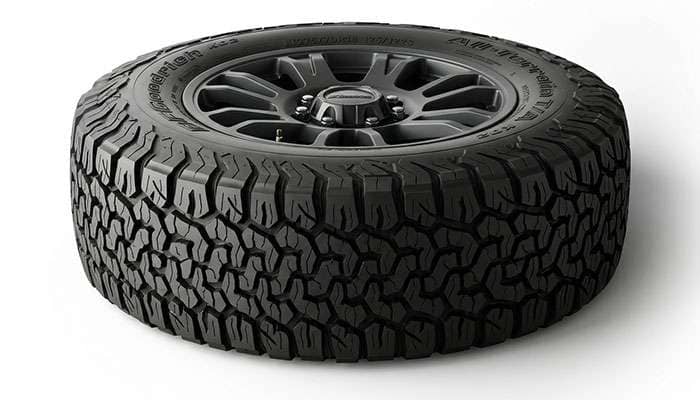
The first few thousand miles. A tire carrying more than it is rated for runs at greater deflection on every single rotation. More deflection means more flex, and flex makes heat. You will not feel a thing. You will notice the fuel economy slipped a little and the steering got heavier, and you will blame the weather.
The first hot tow. Sustained heat in the shoulder and belt area cooks the bonds between the steel belts and the rubber around them. Shoulder wear starts running out ahead of the center. The tire begins to look feathered on the outside edge and the cabin noise climbs a notch. This is the stage where the tire is telling you something and almost nobody is listening.
The failure. Once those bonds let go, a tread separation is only waiting on temperature and time. That is why the classic setting for a highway-speed failure is a long grade, a hot afternoon, a loaded trailer, and a tire that was one load index short from the day it went on.
The quiet version. Diameter mistakes do damage you never see. Go more than three percent off the original height and the wheel-speed signal feeding your anti-lock brakes and stability control is working from a number that no longer matches the road. Your odometer under-reports against your warranty. On four-wheel drive with a mismatched set, the transfer case eats a permanent speed difference and turns it into heat. None of that lights a dash lamp until something is already worn out.
When you are ready to shop the size, you can look through the full run of 265/70R18 tires and sort by construction, load range, and tread type.
265/70R18 measures 32.6 inches tall, 10.4 inches wide, with a 7.3-inch sidewall and about 619 revolutions per mile. It is not a 33, no matter what anybody at the parts counter calls it, and that four-tenths of an inch matters when you are working to a number.
The size is the easy part. The decision is P-metric, Euro-metric, or LT, and that fork is worth more than 900 pounds of capacity per corner. Read the placard, be honest about what you ask the truck to do, match or beat the rating, keep your diameter inside three percent, and stay between 7.0 and 9.0 inches of rim width. Do that and this size will serve you for a long time, because it has been serving trucks well for a long time already.
A 265/70R18 tire has a section width of 265 millimeters or 10.4 inches, a sidewall height of 186 millimeters or 7.3 inches, and an overall diameter of about 829 millimeters or 32.6 inches on an 18-inch wheel. It turns roughly 619 revolutions per mile. The size comes in P-metric, Euro-metric, and LT-metric versions with very different load capacities.
No. A 265/70R18 measures 32.6 inches, about four-tenths of an inch short of a true 33. It gets grouped with 33s in shop shorthand, but if you need an actual 33 on an 18-inch wheel, that is a 275/70R18 at 33.16 inches or a flotation-sized 33x12.50R18. The difference matters when you are working to a clearance spec or a lift kit chart.
Same width and same wheel, different sidewall height. The 265/65R18 has a 6.78-inch sidewall and stands 31.56 inches tall. The 265/70R18 has a 7.30-inch sidewall and stands 32.61 inches. That is 1.05 inches taller overall, or 3.3 percent, which sits just outside the three percent window most shops use for a straight swap.
About an inch at truck widths. Five points of aspect ratio equals five percent of the section width per sidewall, and you have two sidewalls. At a 245 width the gain is 0.96 inches, at 265 it is 1.04 inches, and at 285 it is 1.12 inches. Roughly half of that shows up as ride height at each corner.
Yes, it is one of the mainstream truck and full-size SUV sizes. It runs heavy in the Toyota family on the Tacoma, Tundra, 4Runner, Sequoia and Land Cruiser, on the Lexus GX and LX, and on the Ford Expedition, Nissan Armada and Nissan Titan. It is also a popular upsize on half-ton pickups. Selection skews toward all-terrain and highway terrain tread.
Start by choosing the construction your use demands: LT Load Range E if you tow or haul, Euro-metric or P-metric if the truck runs empty most days. Then pick the tread family honestly rather than aspirationally, since an aggressive all-terrain on a commuter is a lot of noise for trail days that rarely come. Finally, require the three-peak mountain snowflake if you see real winter.