

The tire sizing debate continues to spark passionate discussions among off-road enthusiasts everywhere. Whether you're upgrading your Jeep, truck, or SUV, selecting the right tire size can determine your success on challenging terrain and your satisfaction during daily driving.
When it comes to the popular 35 vs 37 inch comparison, the differences are substantial. Those 35-inch options (889.8mm diameter) deliver comfortable daily driving, better fuel economy, and nimble handling characteristics. Meanwhile, 37-inch tires (940.6mm diameter) provide increased ground clearance, aggressive styling, and serious trail capability. These larger tires exact a price though - expect your fuel economy to drop 4-5 MPG from stock, about 2 MPG more than you'd lose with 35s.
Bigger tires deliver undeniable off-road advantages. While 35-inch tires handle light to moderate terrain exceptionally well, 37-inch variants excel in rocky, muddy, and extreme conditions. The expanded footprint and improved clearance make a significant difference in soft sand and challenging trails.
We'll examine each tire size from 31 to 40 inches, helping you understand which option matches your driving requirements, vehicle setup, and budget. Ready to find your ideal tire match?
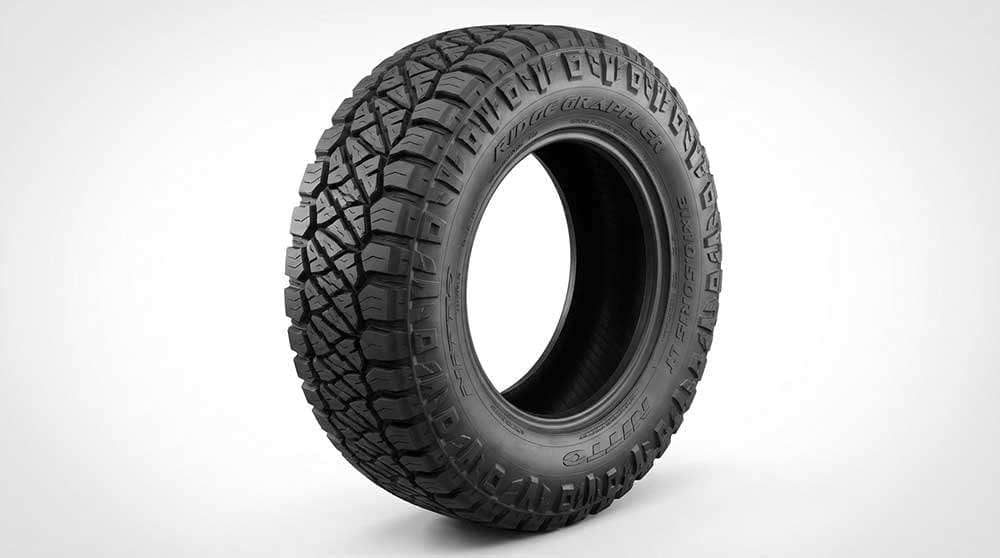
At the entry level of off-road upgrades, 31-inch tires deliver an excellent starting point for those upgrading from factory sizes. Measuring approximately 787 millimeters in diameter, these tires provide meaningful ground clearance gains without requiring extensive vehicle modifications.
31-inch tires excel for daily drivers who enjoy occasional weekend adventures. These tires are ideally suited for:
Jeep owners seeking enhanced off-road capability without sacrificing on-road comfort
Truck and SUV drivers requiring improved traction for light to moderate trail use
Daily commuters encountering occasional harsh weather or unpaved roads
When paired with a suspension lift, 31-inch tires boost the performance of trucks, SUVs, Jeeps, and lifted pickups. We've found them particularly effective for vehicles used in snowy climates, where the additional height and traction prove valuable without major fuel economy penalties.
Most importantly, 31-inch tires fit on stock or mildly modified vehicles - some Jeep models accommodate them without any lift whatsoever. For optimal performance and clearance, a small 1-1.25" body lift or 2-2.5" suspension lift creates the perfect setup. This compatibility makes them ideal for those beginning their off-road journey.
Pros:
Improved ground clearance over stock tires
Enhanced approach and departure angles for off-road obstacles
Better stability and traction across various conditions
Minimal impact on stock vehicle components
Compatible with rims ranging from 15 to 17 inches in diameter
Lighter weight means faster acceleration compared to larger options
Ability to fit many vehicles without major modifications
Less strain on steering components, ball joints, engine, transmission, and transfer case
Cons:
Limited improvement in extreme off-road situations compared to larger sizes
May cause minor rubbing at full steering lock without proper modifications
Some models report feeling "sluggish" with 31s versus stock tires
Not ideal for rock crawling or serious mud terrain without other modifications
May require minor adjustments to steering stops or bumpstops
For those frequently tackling demanding off-road trails, 31-inch tires might eventually feel limiting. However, for the average weekend warrior balancing daily commuting with occasional adventures, they represent an ideal compromise between capability and practicality.
Real-world testing reveals impressive versatility from 31-inch tires. During a comprehensive evaluation of 13 different all-terrain tires in the 31-inch size range, testers discovered significant differences between brands and models.
The BFGoodrich All-Terrain has remained the standard against which other tires in this category are measured for four decades. This legendary tire delivers balanced performance across varied terrain types. Meanwhile, alternatives like the Cooper Discoverer A/T3 excel in water channeling but may feel "stiff" and demonstrate less bite in softer terrain.
For winter driving, the General Grabber A/T2 performs exceptionally well in snow and ice conditions, with testers noting they're "some of the best off-road tires" they've used. The Hercules Terra Trac A/T impressed evaluators with its surprising capability, earning descriptions like "little badasses".
On-road performance remains a key strength of 31-inch tires. Despite the increased size over stock options, fuel economy penalties stay minimal compared to larger alternatives. The relatively modest weight increase helps maintain acceleration and braking capabilities close to stock levels.
One remarkable case study involved completing the challenging Rubicon Trail with 31-inch tires on a vehicle without a lift. Though requiring occasional winching and rock stacking, the setup proved capable even on one of America's most demanding trails.
31-inch tire costs vary substantially based on brand, model, and performance characteristics. Typically, prices range between $300 and $600 per tire, making a complete set an investment of $1,200-$2,400 plus installation.
Here's a comparison of popular 31-inch tire options with their approximate pricing (as of December 2025):
Tire Model |
Type |
Price Per Tire |
Notable Features |
|---|---|---|---|
BFGoodrich All-Terrain T/A KO3 |
All-Terrain |
$230+ |
Industry standard, balanced performance |
Cooper Discoverer A/T3 |
All-Terrain |
$180-220 |
Excellent water channeling |
General Grabber A/T2 |
All-Terrain |
$150-200 |
Superior snow/ice performance |
Hercules Terra Trac A/T |
All-Terrain |
$129-170 |
Budget-friendly performer |
When budgeting for 31-inch tires, consider these additional expenses:
Mounting and balancing: $20-40 per tire
Alignment (recommended after any tire size change): $75-150
Minor suspension modifications if needed: $200-500
Potential wheel upgrades: $150-400 per wheel
For most vehicles, 31-inch tires represent the most budget-friendly upgrade path into larger tires, as they rarely require extensive modifications beyond basic installation.
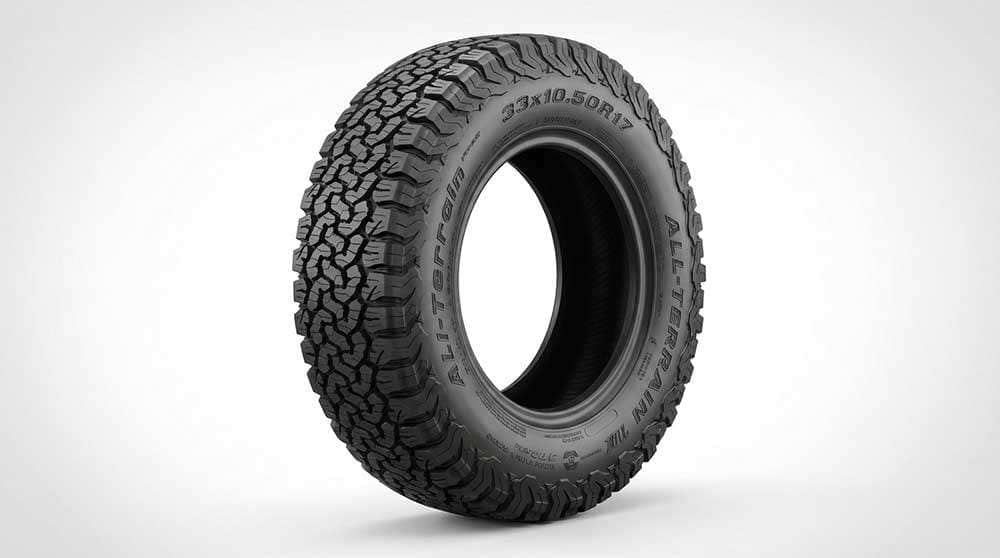
Stepping up to 33-inch tires (approximately 838mm diameter) represents a significant upgrade for many 4x4 owners. These tires strike an excellent balance between off-road capability and daily drivability, making them among the most popular choices for enthusiasts.
33-inch tires deliver the perfect blend of capability for drivers who regularly venture off-road while still commuting daily. They're particularly well-suited for:
Jeep Wrangler owners seeking improved trail capability without major modifications
Mid-size truck drivers wanting enhanced ground clearance
Overlanders building expedition-ready vehicles
Enthusiasts who split time between highway driving and weekend trail adventures
The 33-inch size represents the largest option many vehicles can accommodate without significant modifications. For example, stock Jeep JL Wranglers can run 33s with minimal or no lift depending on wheel offset and fender configuration. This makes them extremely popular among drivers who want substantial capability gains without the complexity and expense of more extensive builds.
Pros:
Substantial ground clearance improvement over stock sizes
Better approach, departure, and breakover angles
Improved traction in sand, mud, and rocky terrain
Many vehicles accommodate them with minimal or no lift
Maintains reasonable fuel economy (typically 2-3 MPG loss)
Wide selection of brands and tread patterns available
Compatible with most stock drivetrain components
Aggressive appearance without extreme modifications
Cons:
May require minor fender trimming on some vehicles
Slight decrease in acceleration and braking performance
Speedometer calibration typically needed
Increased road noise with more aggressive tread patterns
May stress some stock components over time
For many enthusiasts, 33-inch tires represent the "Goldilocks zone" - large enough to provide meaningful off-road improvements, yet small enough to maintain reasonable daily drivability without extensive vehicle modifications.
In real-world testing, 33-inch tires demonstrate remarkable versatility. The additional ground clearance over 31-inch options translates directly to improved obstacle clearance, typically adding 0.5-1 inch of clearance under the axles when compared to stock setups.
Popular choices in this size category include the BFGoodrich Mud-Terrain T/A KM3, which excels in challenging conditions while maintaining acceptable road manners. The Falken Wildpeak A/T3W offers an excellent all-around solution for mixed-use vehicles, with strong wet and snow performance alongside capable off-road grip.
Testing reveals that 33-inch tires handle moderate rock crawling effectively, though more technical terrain may expose their limitations compared to larger alternatives. In sand and mud, the larger footprint provides noticeably better flotation than 31-inch options.
On-road, 33-inch tires maintain comfortable cruising characteristics for most drivers. The weight increase remains manageable for stock engines and transmissions, though some drivers notice slightly slower acceleration, particularly in heavier vehicles or those with less powerful engines.
33-inch tire pricing spans a wide range based on brand reputation, tread design, and construction quality. Most quality options fall between $180 and $290 per tire, with a complete set running $720-$1,160 before installation.
Tire Model |
Type |
Price Per Tire |
Notable Features |
|---|---|---|---|
BFGoodrich Mud-Terrain T/A KM3 |
Mud-Terrain |
$280-320 |
Exceptional off-road grip |
Falken Wildpeak A/T3W |
All-Terrain |
$180-220 |
Excellent all-weather performance |
Nitto Ridge Grappler |
Hybrid |
$240-290 |
Quiet highway manners |
Toyo Open Country A/T III |
All-Terrain |
$200-260 |
Long tread life |
Additional costs for 33-inch tires remain relatively modest:
Mounting and balancing: $25-50 per tire
Alignment: $80-150
Minor lift kit (if required): $300-800
Fender modifications (if needed): $100-300
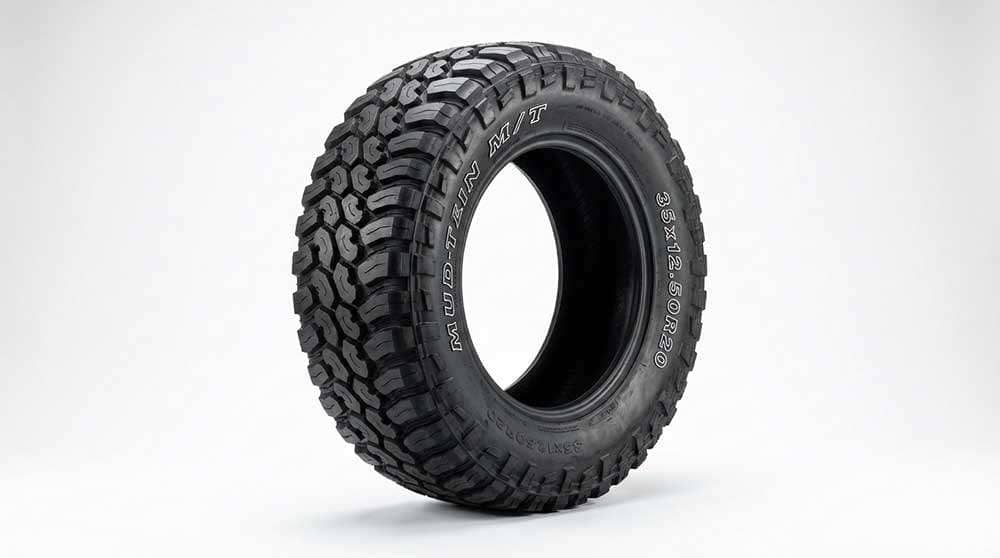
At 35 inches (approximately 890mm diameter), tires enter serious off-road territory. This size represents the sweet spot for many dedicated enthusiasts, offering substantial capability improvements while maintaining acceptable daily drivability for most applications.
35-inch tires excel for drivers who prioritize off-road capability while still using their vehicles regularly on pavement. They're ideal for:
Serious trail enthusiasts who tackle challenging terrain regularly
Overland adventurers requiring confident capability in remote areas
Rock crawlers seeking improved obstacle clearance without extreme modifications
Jeep and full-size truck owners building capable dual-purpose vehicles
The 35-inch size works particularly well on full-size trucks and SUVs where the larger tires look proportional and the heavier drivetrains handle the increased load more effectively. For Jeep Wranglers and similar vehicles, 35s represent a significant commitment that transforms the vehicle's capabilities.
Pros:
Substantial ground clearance for serious obstacles
Excellent traction across all terrain types
Improved flotation in sand and soft surfaces
Aggressive, commanding appearance
Wide selection of premium tire options available
Proven capability on demanding trails like the Rubicon
Good balance between capability and practicality
Cons:
Requires 2-4 inch lift on most vehicles
Noticeable fuel economy decrease
May require regearing for optimal performance (typically 4.56 or 4.88 ratio)
Increased stress on drivetrain components
Higher initial cost for tires and modifications
Reduced acceleration and braking performance
Fender modifications often necessary
For drivers serious about off-road capability but still using their vehicles daily, 35-inch tires offer perhaps the best overall compromise. The capability gains are substantial, while the sacrifices in terms of drivability, fuel economy, and modification requirements remain manageable for most enthusiasts.
Testing reveals that 35-inch tires transform vehicle capability in challenging environments. The increased ground clearance allows confident navigation over obstacles that would threaten smaller tires, while the larger contact patch provides remarkable traction in loose and slippery conditions.
In direct comparisons between 35 and 37-inch tires, the 35s consistently demonstrate better on-road manners. The 2-inch difference seems modest on paper but translates to noticeably improved handling, acceleration, and braking on pavement. For vehicles that see significant highway use, this distinction proves important.
Popular 35-inch options include the Nitto Trail Grappler M/T, which combines aggressive off-road capability with surprisingly civilized road manners. The Mickey Thompson Baja Boss A/T offers excellent all-around performance for mixed-use applications.
Rock crawling performance with 35s proves capable for all but the most extreme trails. The tires flex well over obstacles, providing the sidewall deflection needed to maintain traction on uneven surfaces. In mud and sand, the larger footprint offers substantial flotation improvements over smaller alternatives.
35-inch tire pricing reflects their premium positioning in the market. Quality options typically range from $380 to $460 per tire, with a complete set costing $1,520-$1,840 before installation and modifications.
Tire Model |
Type |
Price Per Tire |
Notable Features |
|---|---|---|---|
Nitto Trail Grappler M/T |
Mud-Terrain |
$380-440 |
Balanced on/off-road performance |
Mickey Thompson Baja Boss A/T |
All-Terrain |
$350-420 |
Exceptional durability |
Toyo Open Country M/T |
Mud-Terrain |
$400-460 |
Aggressive traction |
BFGoodrich All-Terrain T/A KO2 |
All-Terrain |
$380-430 |
Industry standard performance |
Budget for these additional expenses when planning a 35-inch tire upgrade:
Lift kit (2-4 inches): $500-2,000
Regearing (recommended): $1,200-2,000
Fender modifications: $200-500
Extended brake lines: $150-300
Mounting and balancing: $30-60 per tire
Alignment: $100-175
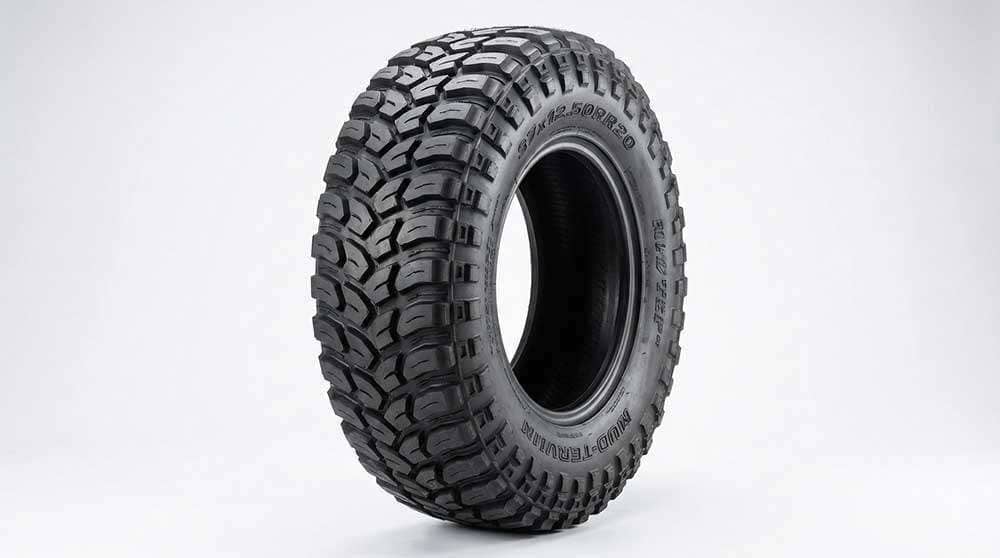
Moving to 37-inch tires (approximately 940.6mm diameter) represents a serious commitment to off-road capability. At this size, vehicles transform into purpose-built machines capable of conquering challenging terrain that would stop lesser setups.
37-inch tires are designed for enthusiasts who prioritize off-road capability above daily convenience. They're best suited for:
Dedicated rock crawlers tackling technical terrain regularly
Competition off-road vehicles
Full-size trucks built primarily for trail use
Serious overlanders exploring remote, challenging routes
At 37 inches, tires require substantial vehicle modifications that fundamentally change the driving experience. These are tires for drivers who accept significant compromises in daily drivability to achieve maximum trail capability.
Pros:
Superior ground clearance for extreme obstacles
Maximum traction in challenging conditions
Excellent flotation in sand, mud, and soft terrain
Impressive approach, departure, and breakover angles
Commanding presence and aggressive appearance
Capable of conquering the most demanding trails
Proven performance in competition environments
Cons:
Requires 4-6 inch lift minimum on most vehicles
Significant fuel economy penalty (4-5 MPG loss typical)
Mandatory regearing for acceptable performance
Expensive supporting modifications required
Noticeably compromised on-road handling and comfort
Accelerated wear on drivetrain components
Limited tire selection compared to smaller sizes
Higher replacement cost when tires wear out
The transition from 35 to 37-inch tires involves more than just larger rubber. It represents a philosophical shift toward building a vehicle optimized for off-road performance at the expense of on-road practicality.
In head-to-head testing, 37-inch tires demonstrate clear advantages over 35s in technical terrain. The additional 2 inches of diameter translates to roughly 1 inch more ground clearance under the axles - a meaningful difference when navigating large rocks and deep ruts.
The expanded footprint provides noticeably better flotation in soft conditions. In deep sand, 37-inch tires maintain momentum that 35s struggle to achieve. Similar advantages appear in deep mud, where the larger contact patch offers improved traction and self-cleaning capability.
Leading options in the 37-inch category include the Mickey Thompson Baja Boss M/T, designed specifically for extreme off-road use while maintaining reasonable road manners. The Nitto Trail Grappler continues to impress at this size, offering exceptional rock-crawling capability alongside acceptable highway characteristics.
However, on-road performance suffers noticeably with 37-inch tires. Even with proper regearing, acceleration feels sluggish compared to smaller setups. Braking distances increase, and handling becomes less precise. Highway driving requires constant steering corrections, and fuel economy typically drops 4-5 MPG from stock.
37-inch tire pricing reflects the specialized nature of these products. Quality options typically range from $390 to $500 per tire, with a complete set running $1,560-$2,000 before installation.
Tire Model |
Type |
Price Per Tire |
Notable Features |
|---|---|---|---|
Mickey Thompson Baja Boss M/T |
Mud-Terrain |
$450-500 |
Competition-proven performance |
Nitto Trail Grappler |
Mud-Terrain |
$420-480 |
Balanced capability |
Toyo Open Country M/T |
Mud-Terrain |
$400-460 |
Aggressive traction |
Falken Wildpeak M/T |
Mud-Terrain |
$390-440 |
Excellent value |
The total investment for a 37-inch tire setup extends well beyond tire costs:
Lift kit (4-6 inches): $1,500-4,000
Regearing (essential): $1,500-2,500
Upgraded axles (recommended): $2,000-5,000
Extended brake lines and driveshafts: $400-800
Fender modifications: $300-700
Steering upgrades: $500-1,500
Mounting and balancing: $40-80 per tire
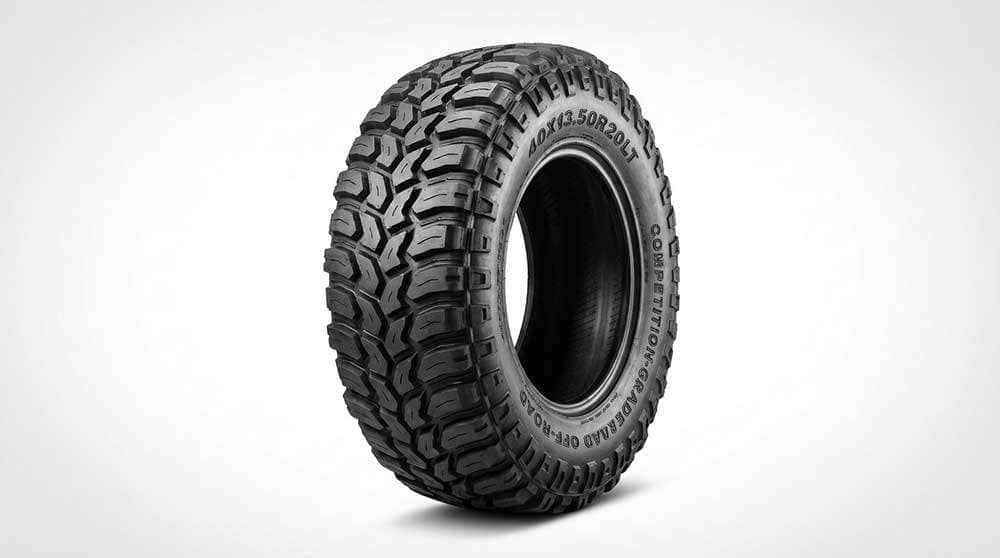
At 40 inches (approximately 1,016mm diameter), tires enter the realm of purpose-built extreme off-road machines. These massive tires represent the pinnacle of off-road capability, designed for vehicles built without compromise for maximum trail performance.
40-inch tires are strictly for dedicated off-road vehicles that rarely see pavement. They're appropriate for:
Purpose-built rock crawlers designed for competition
Extreme trail vehicles that trailer to trailheads
Show vehicles built to make a statement
Enthusiasts willing to completely rebuild their vehicles around the tires
Running 40-inch tires requires essentially rebuilding a vehicle from the ground up. These are not upgrades for daily drivers under any circumstances - they're specialized equipment for specialized applications.
Pros:
Maximum possible ground clearance
Unmatched obstacle-climbing capability
Superior flotation in all soft terrain conditions
Impressive presence and visual impact
Competition-level performance capability
Can navigate terrain impossible for smaller tires
Cons:
Requires 6-8 inch lift minimum
Mandatory complete drivetrain rebuilds
Impractical for any regular street driving
Extremely limited tire selection
Massive fuel economy penalty
Requires custom or one-ton axles
Steering components need significant upgrades
Substantially higher center of gravity
Dramatically reduced acceleration and braking
Total build costs easily exceed $20,000+
In extreme off-road conditions, 40-inch tires deliver capability that smaller sizes simply cannot match. The massive ground clearance allows vehicles to climb over obstacles that would high-center smaller rigs, while the enormous footprint provides flotation that seems to defy physics in deep sand and mud.
Rock crawling with 40s becomes an exercise in confidence. Lines that require careful wheel placement with smaller tires can be attacked more directly, as the increased clearance provides substantial margin for error. The massive sidewalls flex dramatically, maintaining traction across uneven surfaces that would unseat smaller tires.
However, on-road performance essentially disappears with 40-inch tires. Most vehicles equipped with tires this size are trailered to their destinations, as highway driving becomes genuinely unpleasant. The extreme weight, rolling resistance, and altered handling characteristics make extended pavement travel inadvisable.
Tire selection at 40 inches narrows considerably. Options like the Interco Super Swamper TSL and Pitbull Rocker dominate this segment, as mainstream manufacturers rarely produce tires this large. Expect limited choice and higher prices compared to more common sizes.
40-inch tire pricing varies considerably based on the limited options available. Expect to pay between $206 and $400+ per tire for quality options, with a complete set running $824-$1,600+ before installation.
Tire Model |
Type |
Price Per Tire |
Notable Features |
|---|---|---|---|
Interco Super Swamper TSL |
Extreme Mud |
$350-400+ |
Legendary off-road performance |
Pitbull Rocker |
Rock Crawler |
$300-380 |
Maximum rock traction |
Maxxis Trepador |
Competition |
$280-350 |
Competition-proven |
BFGoodrich Krawler T/A KX |
Rock Crawler |
$206-280 |
Industry standard performance |
Beyond tire costs, plan for significant additional investments: custom suspension ($1,000+), upgraded axles ($2,000-5,000), regearing ($1,500+), plus necessary modifications like extended brake lines and reinforced steering components.
When selecting the right tire size for your vehicle, having the key specifications side-by-side makes the decision process much clearer. We've compiled the essential details for each tire size to help you understand the trade-offs and requirements at a glance.
Attribute |
31 Inch Tires |
33 Inch Tires |
35 Inch Tires |
37 Inch Tires |
40 Inch Tires |
|---|---|---|---|---|---|
Diameter |
787mm |
838mm |
890mm |
940.6mm |
1,016mm |
Best Use Case |
Daily drivers with occasional off-road use |
Light to moderate off-roading |
Moderate to challenging off-road, overland expeditions |
Challenging rock crawling, technical trails |
Extreme off-road, hardcore rock crawling |
Required Lift |
1-2.5" |
Minor lift/stock on some vehicles |
2-4" |
4-6" |
6-8" |
Price Range (per tire) |
$129-$230 |
$180-$290 |
$380-$460 |
$390-$500 |
$206-$400+ |
Fuel Economy Impact |
Minimal |
2-3 MPG loss |
Moderate loss |
4-5 MPG loss |
Substantial decrease |
Key Advantage |
Minimal vehicle modifications needed |
Good balance of on/off-road performance |
Optimal balance of capability vs. practicality |
Superior obstacle clearance |
Maximum possible ground clearance |
Key Disadvantage |
Limited improvement in extreme situations |
Less ground clearance than larger options |
May require regearing |
Requires extensive modifications |
Requires complete drivetrain rebuild |
Vehicle Compatibility |
Most stock vehicles |
Many stock/lightly modified 4x4s |
Requires moderate modifications |
Requires significant modifications |
Requires extensive custom work |
This comparison clearly shows how each tire size fits different needs and budgets. The 35-inch category continues to stand out as the sweet spot for most enthusiasts, balancing capability improvements with reasonable modification requirements and costs.
Selecting the right tire size boils down to matching your off-road ambitions with practical considerations. Those smaller 31 and 33-inch options deliver excellent versatility for daily drivers who tackle weekend trails without extensive vehicle modifications or fuel economy sacrifices. The 35-inch sweet spot provides substantial capability improvements while maintaining reasonable drivability - explaining why many enthusiasts choose this optimal balance.
Serious off-roaders might find 37-inch tires worth the additional investment and modifications, though these represent a significant commitment to the off-road lifestyle. Those massive 40-inch options remain reserved for purpose-built rigs and extreme terrain enthusiasts willing to rebuild their vehicles around these giants.
Your vehicle type, existing modifications, budget constraints, and driving habits should guide your decision. A Jeep Wrangler owner primarily using their vehicle for commuting with occasional trail adventures might find 33-inch tires perfectly adequate, while a dedicated rock crawler needs the clearance that only 37 or 40-inch options provide. For all your tire needs across any size category, visit Performance Plus Tire to find the perfect fit for your vehicle and driving requirements.
At Performance Plus Tire, we carry the best selection of off-road tires at the lowest prices. Our expert team understands that each step up in tire size demands additional sacrifices in terms of vehicle modifications, fuel economy, handling, and cost. The ideal tire size isn't necessarily the largest you can fit - it's the one that best matches your specific off-road adventures while respecting your daily driving needs.
Choosing the right tire size is crucial for balancing off-road capability with daily drivability, fuel economy, and modification costs.
31-33 inch tires excel for daily drivers with weekend adventures, requiring minimal modifications and maintaining good fuel economy
35 inch tires represent the sweet spot, offering substantial off-road capability while preserving reasonable on-road manners and practicality
37-40 inch tires demand extensive vehicle modifications, regearing, and drivetrain upgrades but deliver maximum ground clearance for extreme terrain
Fuel economy decreases progressively with size: 35s lose moderate MPG, 37s drop 4-5 MPG, while 40s cause substantial decreases
Vehicle modifications scale dramatically - 31s need 1-2.5" lift, 35s require 2-4", while 40s demand 6-8" plus complete drivetrain rebuilds
The ideal tire size isn't the largest you can fit, but the one that best matches your specific off-road needs while respecting daily driving requirements and budget constraints.
35-inch tires offer more ground clearance and off-road capability, while 33-inch tires provide better fuel economy and handling. 35s create a bolder look but require more modifications, whereas 33s are easier to fit on stock vehicles.
35-inch tires offer a better balance of on-road comfort and off-road capability. They provide improved fuel economy and handling compared to 37-inch tires. However, 37-inch tires offer superior ground clearance and obstacle clearance for extreme off-roading.
40-inch tires usually require extensive modifications, including a 6-8 inch lift, upgraded axles (often one-ton rated), custom suspension setups, and drivetrain upgrades. Regearing (typically to 4.88 or 5.13 ratio) is also necessary for adequate performance.
Fuel economy generally decreases as tire size increases. 35-inch tires cause a moderate decrease, 37-inch tires typically reduce fuel economy by 4-5 MPG, while 40-inch tires result in a substantial decrease compared to stock tire sizes.
For daily driving with occasional off-road use, 33-inch or 35-inch tires often provide the best balance. They offer improved off-road capability over stock sizes without requiring extensive modifications or significantly compromising on-road performance and fuel economy.



