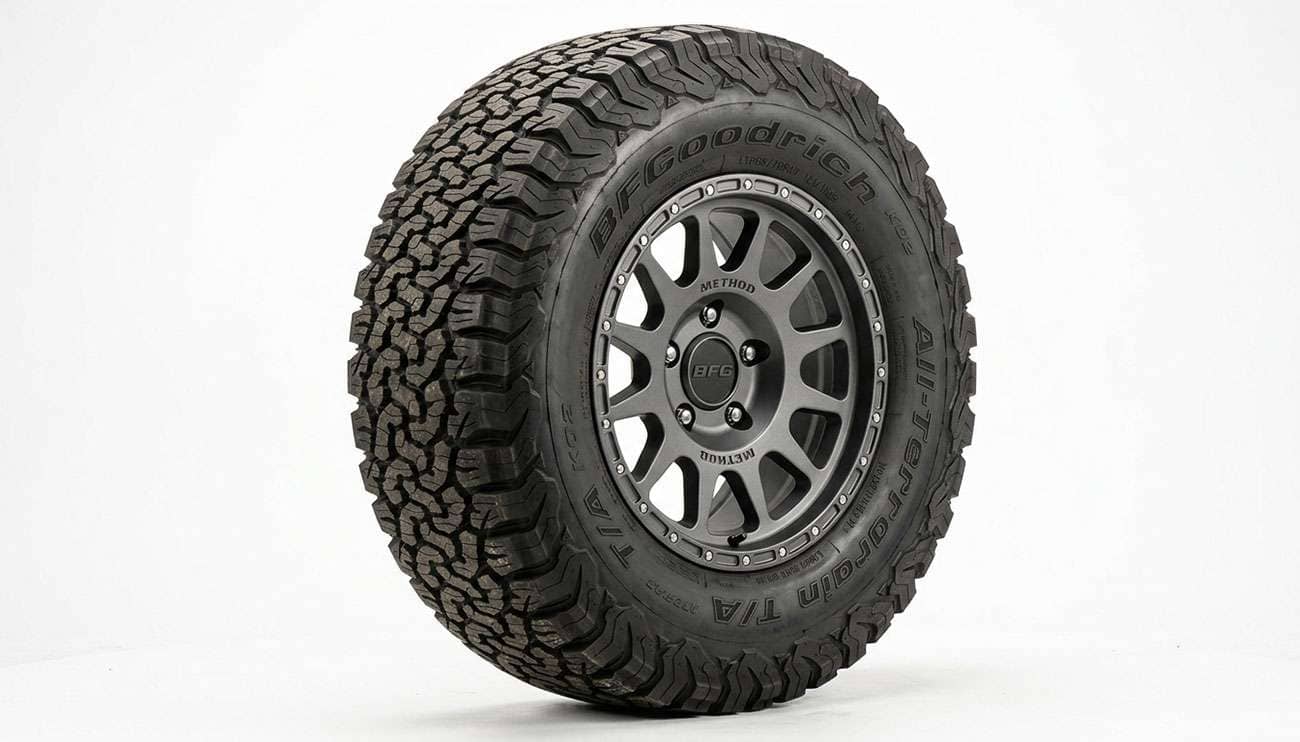
A 245/70R17 measures 30.5 inches in overall diameter, 9.6 inches in section width, and carries a 6.8-inch sidewall on a 17-inch wheel. Circumference is 95.8 inches and it turns 661 revolutions per mile. In flotation shorthand that is roughly a 30.5x9.6R17, which is what most people mean when they call it a 30-inch tire.
If you have been searching this size you have probably noticed something odd. Some sources say 30.5 inches and 661 revolutions per mile. Others say 30.6 inches and 659. Both numbers are floating around and nobody explains the gap, which is a problem, because there is exactly one situation where that tenth of an inch decides your answer. I will get to that.
Here is the full conversion, calculated from the ISO metric designation rather than copied from another chart.
Measurement |
Inches |
Millimeters |
|---|---|---|
Overall diameter (height) |
30.50 in |
775 mm |
Section width (tread) |
9.65 in (about 9.6 in) |
245 mm |
Sidewall height |
6.75 in (about 6.8 in) |
172 mm |
Circumference |
95.8 in |
2434 mm |
Wheel (rim) diameter |
17 in |
432 mm |
Approved rim width |
6.5 to 8.0 in |
165 to 203 mm |
Revolutions per mile |
661 |
411 per km |
Flotation equivalent |
About 30.5x9.6R17 |
Not applicable |
The arithmetic, if you want to check it: the sidewall is 70 percent of 245 millimeters, which is 171.5 mm. There are two sidewalls, top and bottom, so that is 343 mm. Add the 17-inch wheel, which is 431.8 mm, and you get 774.8 mm. Divide by 25.4 and you land on 30.50 inches.
The 30.6-inch figure you will see quoted comes from rounding the millimeter value up to 776 before converting, which pushes the inch figure over the line. Run the conversion the other direction and everything downstream shifts with it: circumference reads 96.1 instead of 95.8, and revolutions per mile reads 659 instead of 661. Neither set of numbers is wildly wrong. They just started from different rounding.
There is a second, more legitimate reason the numbers move around, and this one matters more. The calculated diameter is not the same as the measured diameter. The 30.50-inch figure describes a theoretical tire built exactly to nominal spec, free-standing and unloaded. Real tires vary by manufacturer and model, and published spec sheets often list a measured diameter that sits a few tenths either side of the calculation. Put the tire on a truck and it squats under load, so the loaded rolling radius is smaller again. That is why a manufacturer's revs-per-mile figure rarely matches what you get from pure geometry.
For most purposes the difference is academic. Here is the one place it is not: when you are checking a size swap against the 3 percent rule. If you compute your change using 30.6 instead of 30.5, a swap that actually sits at 3.1 percent can come out reading 2.8, and you will talk yourself into a fitment that is outside the window. When you are near the threshold, use the calculated figures for both sizes so the rounding error cancels out, then confirm against the actual spec sheet for the specific tire you intend to buy.
Four pieces, each carrying real information. If you want the full walkthrough we keep a plain-English guide to reading tire numbers, but here is the short version.
245 is the section width in millimeters, measured sidewall bulge to sidewall bulge on a specified measuring rim, not across the tread blocks. Divide by 25.4 for 9.6 inches.
70 is the aspect ratio. The sidewall stands 70 percent as tall as the tire is wide. This is a percentage, not a measurement, which is the single most misunderstood thing about tire sizing and the reason the 65-versus-70 question further down has a surprising answer. We went deeper on this in our breakdown of tire aspect ratio.
R is radial construction, meaning the body plies run radially from bead to bead.
17 is the wheel diameter in inches. This one is not approximate and not negotiable. A 17-inch tire mounts on a 17-inch wheel.
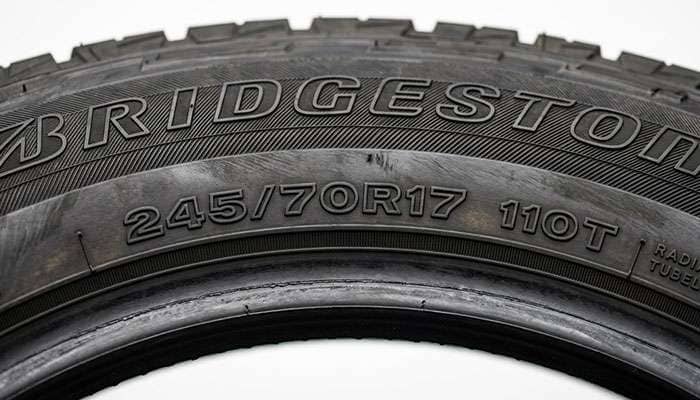
You will also see this size written with an LT prefix, as in LT245/70R17. That is not a cosmetic difference. LT means light truck construction, with heavier-duty internal build, a higher load range, and typically a higher inflation pressure to reach its rated capacity. Roughly half the 245/70R17 tires on our shelves are LT-metric and half are P-metric passenger construction. Match whichever one your door placard specifies. Substituting a P-metric where the vehicle calls for LT costs you load capacity you may be counting on.
It depends entirely on what it is bolted to, and this is where a lot of confused advice comes from.
On a passenger car, a 245 is genuinely wide. It is what you find under sport sedans and performance coupes, and it sits at the upper end of mainstream car fitments.
On a truck or SUV, which is what wears a 245/70R17, a 245 is narrow to middling. Full-size half-tons typically run 265 to 285 section widths. Midsize trucks and mid-generation SUVs run 245 to 265. So if you are looking at a 245/70R17 and wondering whether you have a wide tire, the honest answer is no. You have a moderately narrow truck tire with a tall sidewall.
That is not a criticism. A narrower tire on a truck cuts through snow and mud rather than floating on top of it, generates less rolling resistance, steers with less effort, and costs less. Wider is not automatically better, and there are real trade-offs going up in width, which we laid out in our piece on the disadvantages of wider tires.
This is a midsize truck and SUV size, and a busy one. Common fitments include:
The LT-metric version turns up on cargo vans, older half-ton pickups, and fleet vehicles where load capacity matters more than ride quality. That split explains the catalog: of the 373 tires we stock in this size, 179 are LT-metric and 194 are P-metric.
Always confirm against the placard on your driver's door jamb. Manufacturers change fitments between trim levels and model years, and the sticker on your specific truck beats any list, including this one.
A 265/70R17 stands 31.6 inches tall against 30.5 for the 245. That is 1.1 inches taller and 3.6 percent larger in diameter, plus 20 millimeters, or about 0.8 inch, wider across the tread.
Note that 3.6 percent figure, because it puts this swap outside the 3 percent window the industry works to. That does not mean it is impossible. It is one of the most common upsizes on midsize trucks and plenty of people run it. It means you should go in knowing what you are accepting.
Specification |
245/70R17 |
265/70R17 |
Change |
|---|---|---|---|
Overall diameter |
30.5 in |
31.6 in |
Plus 1.1 in (3.6%) |
Section width |
9.6 in |
10.4 in |
Plus 0.8 in |
Sidewall height |
6.8 in |
7.3 in |
Plus 0.5 in |
Revolutions per mile |
661 |
638 |
Minus 23 |
Ground clearance gain |
Baseline |
Plus 0.55 in at the axle |
About 14 mm |
What you are accepting: your speedometer under-reads by about 3.6 percent, so an indicated 70 mph is really about 72.5. Your odometer under-counts by the same margin, which quietly shifts your service intervals. You gain roughly half an inch of ride height at the axle. And the extra diameter and weight ask a little more of the engine, so most people see a small drop in fuel economy.
Clearance is the real question and it is truck-specific. Check for rubbing at full lock and at full suspension compression, not just sitting in the driveway. If you want the full spec breakdown of the larger size we did a 265/70R17 in inches guide separately.
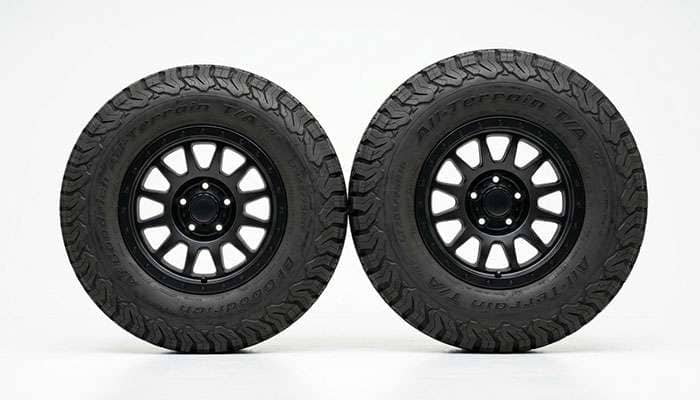
Two sizes come out functionally identical in height, and they are worth knowing because they widen your shopping options considerably.
245/75R16 stands 30.5 inches, a difference of about one tenth of one percent. Same height on a wheel one inch smaller, with a taller sidewall to make up the difference. If you are running 17s and considering a drop to 16-inch wheels, this is your equivalent. We covered it in detail in our 245/75R16 measurement breakdown.
265/65R17 stands 30.6 inches, about two tenths of a percent taller. Same wheel, same height, 20 millimeters more tread width. This is the swap for someone who wants a wider footprint without changing ride height at all.
Size |
Overall Diameter |
Difference vs 245/70R17 |
Notes |
|---|---|---|---|
245/70R17 |
30.5 in |
Baseline |
Your size |
245/75R16 |
30.5 in |
About -0.1% |
Same height, one wheel size down |
265/65R17 |
30.6 in |
About +0.2% |
Same height, wider tread |
265/70R16 |
30.6 in |
About +0.4% |
Wider, on a 16-inch wheel |
235/75R17 |
30.9 in |
About +1.2% |
Narrower and slightly taller |
255/70R17 |
31.1 in |
About +1.8% |
Safe step up in both dimensions |
265/70R17 |
31.6 in |
About +3.6% |
Outside the 3 percent window |
In flotation terms a 245/70R17 works out to roughly a 30.5x9.6R17. There is no common flotation size that matches it exactly at 17 inches, which is why you rarely see this size cross-listed the way 33x12.50R20 and 305/55R20 get paired up. If you are working through a wheel or tire change, run the numbers properly first with our plus-sizing guide.
Most answers to this say "the 70" and stop, which is right about half the time and wrong the other half. Here is the accurate version.
At the same section width and the same wheel diameter, a 70-series tire is taller than a 65-series. A 245/70R17 stands 30.5 inches. A 245/65R17 stands 29.5. The 70 wins by a full inch, because 70 percent of 245 is more than 65 percent of 245.
Across different section widths, the aspect ratio alone tells you nothing. The aspect ratio is a percentage of the width, so changing the width changes what that percentage is a percentage of. A 265/65R17 stands 30.6 inches, which makes it taller than a 245/70R17 despite having the lower aspect ratio. The wider tire's 65 percent works out to more millimeters of sidewall than the narrower tire's 70 percent.
The practical rule: aspect ratio is not a height. It is a ratio. To compare two sizes you have to run both numbers, and if the widths differ you cannot shortcut it by comparing the middle number. That is the mistake behind most bad fitment advice on truck forums, and it is why a 265/65R17 keeps showing up as an equivalent for a 245/70R17 in the table above when intuition says it should be shorter.
This size is competitive, with 373 tires from 64 brands on our shelves, so you are not paying any rarity premium. Budget tires start around 93 dollars. The mid-range runs 115 to 165. Premium all-terrains and highway tires land between 230 and 280, and heavy-duty LT and commercial construction climbs past 350.
For a set of four, figure roughly 370 dollars at the budget end, 650 for a good mid-range set, and around 1,100 for premium. Here are six honest picks across that range.
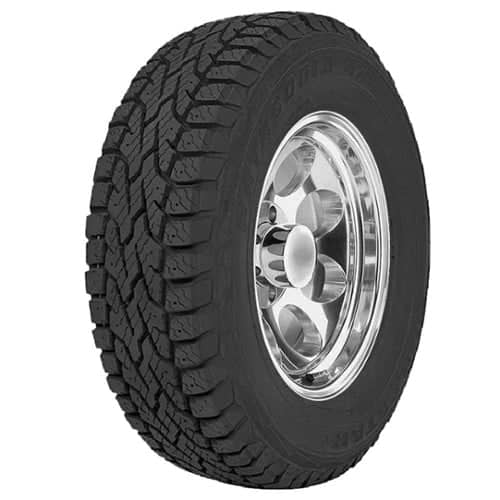
Milestar Patagonia A/T, about 93 dollars. The budget all-terrain. It will not match a premium A/T on wet braking or tread life, but it looks the part, works off-road, and at this price you can replace it on schedule instead of running it bald.
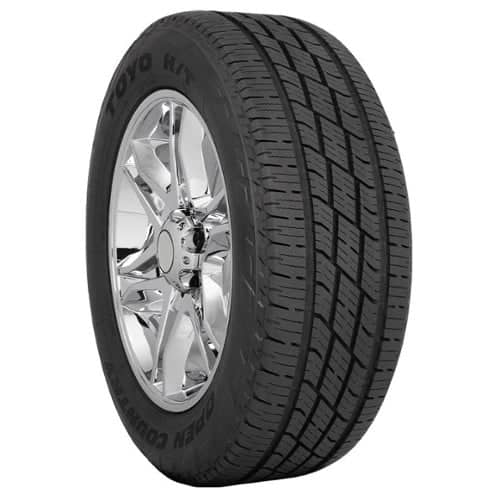
Toyo Open Country H/T, about 118 dollars. If your truck lives on pavement, stop shopping all-terrains. A highway tire is quieter, rides better, wears longer, and gets better mileage. This is a lot of Toyo for the money.
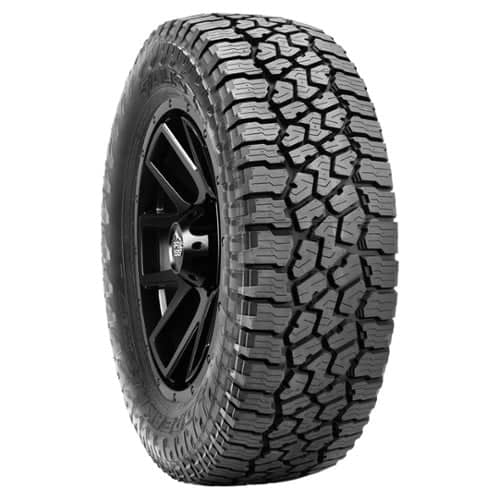
Falken Wildpeak A/T3W, about 163 dollars. The value benchmark in all-terrain and the one I recommend most often in this size. Three-peak mountain snowflake rated, genuinely capable off-road, and it does not punish you on the highway the way more aggressive treads do.
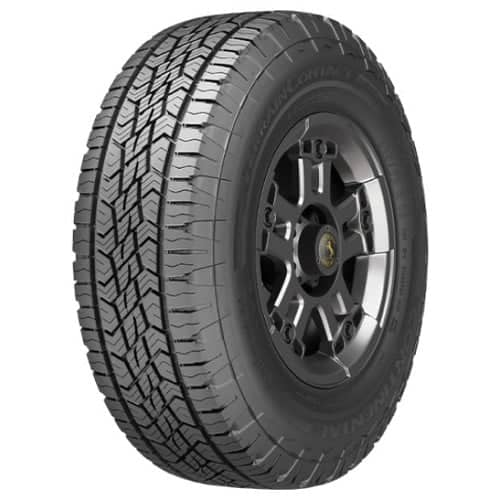
Continental TerrainContact A/T, about 230 dollars. The best on-road manners of any all-terrain in this size. If you want A/T capability but spend most of your miles on the freeway, this is the balance point. LT construction, 10-ply rated.
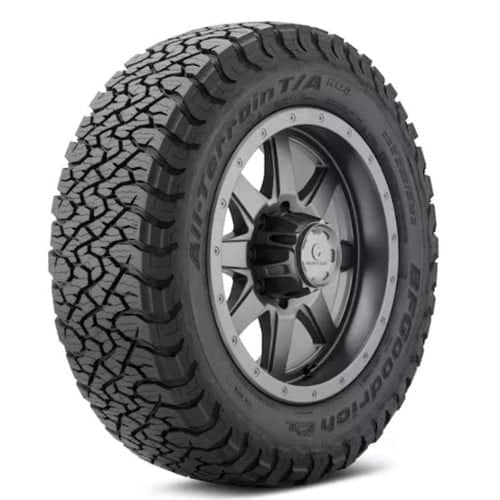
BFGoodrich All-Terrain T/A KO3, about 259 dollars. The serious off-road pick and the current generation. We still stock the KO2 a little cheaper, but the KO3 is the newer tire with better wet and snow performance, so make sure you are ordering the one you meant to.
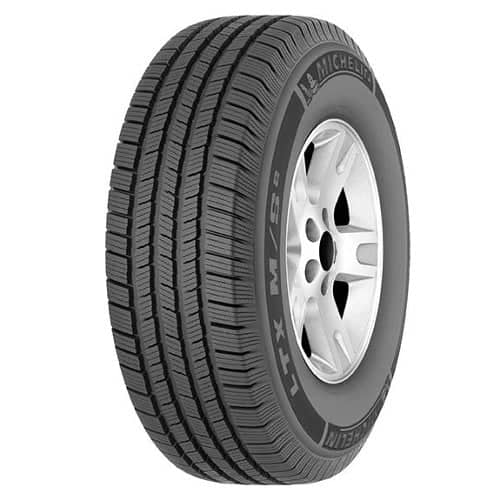
Michelin Defender LTX M/S 2, about 279 dollars. The longest-wearing tire on this list by a wide margin. Expensive per tire, frequently the cheapest per mile. For a truck that racks up highway miles, this is the one that pays you back.
Still deciding between tread types? Our comparison of all-terrain vs all-season tires covers where each one actually earns its keep. Or see the whole shelf and check what fits your truck: shop every 245/70R17 tire we carry here.
The 245/70R17 is a workhorse size: 30.5 inches of tire on a 17-inch wheel, tall enough in the sidewall to soak up rough ground, narrow enough to cut through snow and mud rather than float over it, and cheap enough that you are not penalized for driving a midsize truck.
Two things are worth carrying away. First, when you are comparing sizes, run the arithmetic yourself rather than trusting a chart, because rounding differences between sources can flip a borderline swap from inside the window to outside it. Second, the aspect ratio is a percentage and not a height, so a lower number does not automatically mean a shorter tire once the widths differ.
Get those two right and you can evaluate any fitment question in this size without guessing. Any questions, come see us at Performance Plus.
A 245/70R17 measures 30.5 inches in overall diameter, 9.6 inches in section width, and has a 6.8-inch sidewall on a 17-inch wheel. Its circumference is 95.8 inches and it turns 661 revolutions per mile. In flotation shorthand that is roughly a 30.5x9.6R17. Some sources quote 30.6 inches and 659 revolutions per mile, which comes from rounding the millimeter figure up before converting.
It depends on the vehicle. On a passenger car a 245 is genuinely wide, typical of sport sedans and performance coupes. On a truck or SUV, which is what wears a 245/70R17, it is narrow to middling. Full-size half-ton pickups usually run 265 to 285 section widths, so a 245 sits below them. A narrower truck tire cuts through snow and mud better, rolls with less resistance, and costs less.
It is a midsize truck and SUV size found on the Toyota Tacoma and 4Runner, Nissan Frontier, Xterra and Pathfinder, Jeep Grand Cherokee, Chevrolet Colorado, GMC Canyon, Ford Ranger and Explorer, Dodge Dakota and Durango, Honda Ridgeline, and Lexus GX. The LT-metric version also appears on cargo vans, older half-ton pickups, and fleet vehicles. Confirm against your door-jamb placard, since fitments change by trim and model year.
A 265/70R17 is 31.6 inches tall against 30.5 for the 245, making it 1.1 inches taller and 3.6 percent larger in diameter, plus about 0.8 inch wider across the tread. That 3.6 percent puts it just outside the 3 percent window. Expect your speedometer to under-read by roughly 3.6 percent, about half an inch of extra ride height at the axle, and a small fuel economy penalty. Check for rubbing at full lock and full suspension compression.
The two closest equivalents are 245/75R16, which is 30.5 inches and within a tenth of a percent on a wheel one inch smaller, and 265/65R17, which is 30.6 inches and two tenths of a percent taller with 20 mm more tread width on the same wheel. A 265/70R16 at 30.6 inches also works. In flotation terms a 245/70R17 is roughly a 30.5x9.6R17.
A 70-series is taller than a 65-series only when the section width and wheel diameter are the same. A 245/70R17 is 30.5 inches while a 245/65R17 is 29.5. Across different widths the aspect ratio alone tells you nothing, because it is a percentage of the width rather than a measurement. A 265/65R17 is 30.6 inches, making it taller than a 245/70R17 despite the lower aspect ratio.