
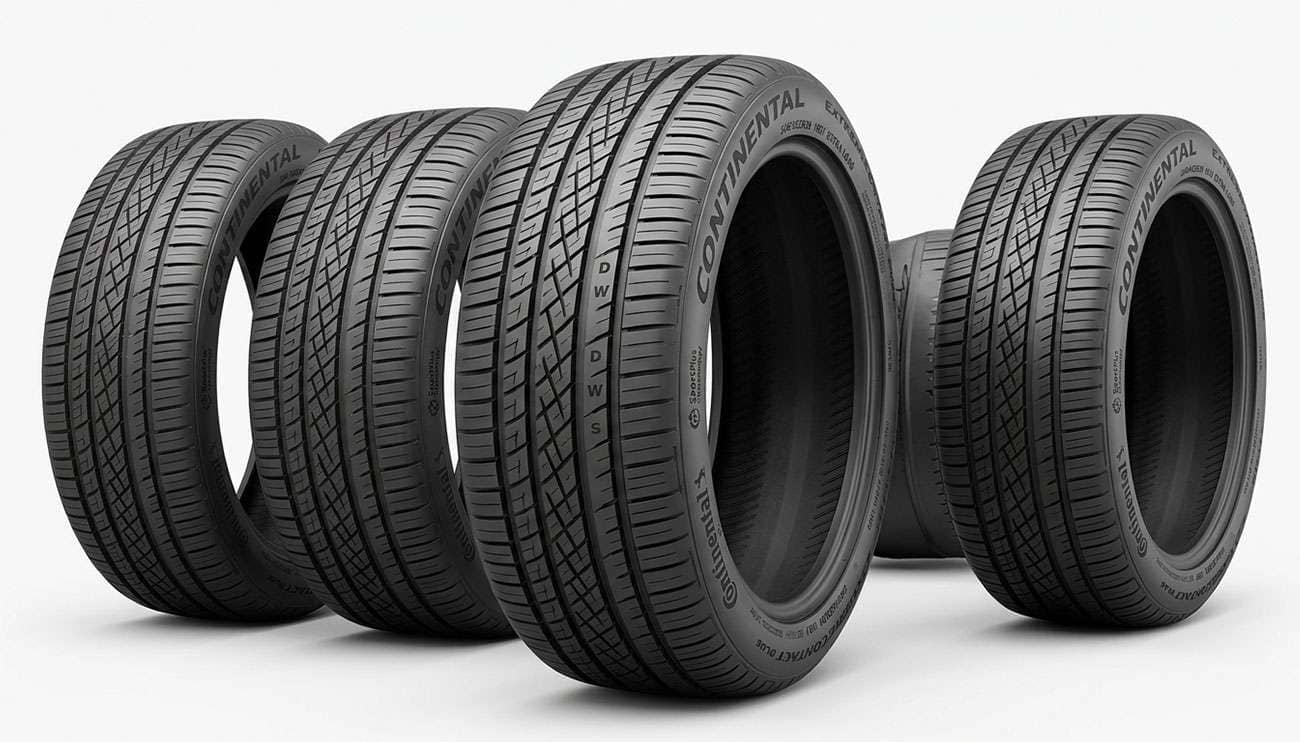
The Continental ExtremeContact DWS06 Plus at $271.99 is the strongest all-around 245/45R20 for most drivers, and it is a correct answer. But it is only half the answer, because 245/45R20 exists in two different load classes and the recommendation lists never say which one you need. The size ships as 99 SL and as 103 XL. That gap is 880 lbs of capacity across a set of four, and it separates a Chrysler 300 from a BMW X3. Price will not tell you which is which.
That is the part I want to fix before we get to the rankings. Every tire below is labeled with its load index, and the whole list is organized so you can filter by yours first.
245/45R20 is a crossover size and a sedan size simultaneously, which is unusual. Most sizes settle into one vehicle class. This one did not, because a 28.68 inch overall diameter happens to work under both a rear-drive luxury sedan and a compact premium SUV. Manufacturers took it in both directions and specified two different load indexes to match.
Spec |
99 SL (Standard Load) |
103 XL (Extra Load) |
|---|---|---|
Capacity per tire |
1,709 lbs |
1,929 lbs |
Capacity, set of four |
6,836 lbs |
7,716 lbs |
Typical max sidewall pressure |
44 psi |
50 psi |
Usual application |
Rear-drive sedans, lighter coupes |
Compact and midsize SUVs, EVs, AWD wagons |
Ride character |
Softer, more compliant over sharp impacts |
Firmer, stiffer sidewall, better load control |
Here is the trap. Across the 245/45R20 market, the median price of a 99 SL tire and the median price of a 103 XL tire are within six dollars of each other. You cannot infer load class from price, from brand prestige, or from where a tire lands on a best-of list. It is printed on the sidewall and nowhere else in the shopping process.
FMVSS 110 is the federal standard covering tire selection and rims, and the operating principle is straightforward: replacement tires must carry at least the load capacity the vehicle manufacturer specified. Drop a 99 SL onto a vehicle that left the factory on 103 XL and you are 880 lbs under across the axle set. The tire will hold air and drive fine on an empty commute. Load it with passengers and cargo on a summer highway and you are running a tire outside its designed operating envelope, which raises casing temperature and accelerates the failure modes that show up as belt separation.
The reverse direction is harmless from a safety standpoint. Putting 103 XL on a car specified for 99 SL costs you a little ride compliance and nothing else. If you are unsure, XL is the conservative choice.
Check the driver's door jamb placard, not the tire currently on the car. A previous owner may already have gotten this wrong. If you want the deeper background, we covered the terminology in load range vs load index.
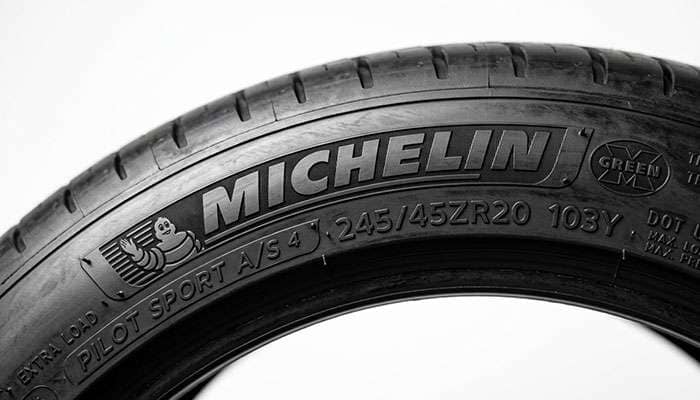
Nine picks, each chosen for a specific job rather than an overall score. Load index is listed on every one. Prices are per tire.
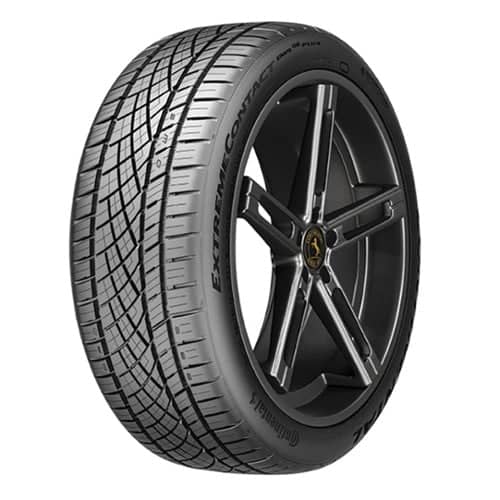
103Y XL, 560 A A treadwear, 50,000 mile warranty. This is the consensus pick and it earns it. The DWS06 Plus is the rare ultra-high-performance all-season that does not force a real tradeoff: dry grip stays sharp, wet braking is class-leading, and the tread compound holds usable light-snow traction down into temperatures where a summer tire has already gone hard. The Y speed rating means it is validated to 186 mph, which matters less than what it implies about carcass construction and heat tolerance.
Note the 103 XL. If your placard calls for 99 SL, this tire will still fit and work, you will just feel a slightly firmer edge over expansion joints.
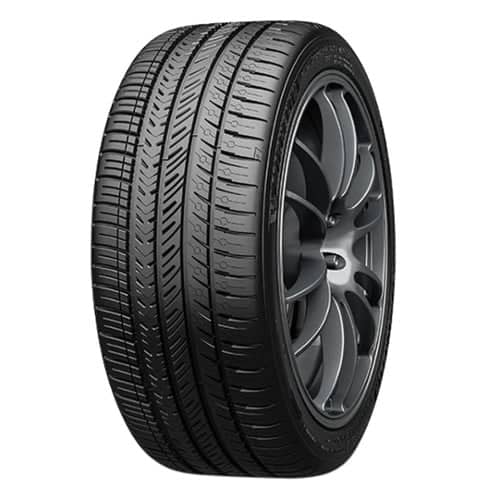
103Y XL, 540 AA A treadwear, 45,000 mile warranty. The AA traction grade is the meaningful number here, and only a handful of tires in this size carry it. If your 245/45R20 is on something with real power going through it, this is the tire that holds steering precision at the limit better than anything else with an all-season tread. You pay $37 more than the Continental and give up 5,000 miles of warranty for it.
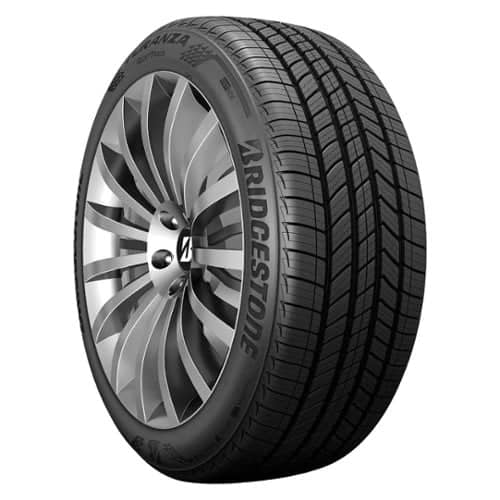
103V XL, 800 A A treadwear, 80,000 mile warranty. A 20 inch wheel with a 4.34 inch sidewall transmits a lot of road surface into the cabin, and this is the size where cabin noise becomes the complaint people actually notice. The Quiettrack is built around noise reduction through tread pitch sequencing, and the 800 treadwear rating means you are not buying quiet at the cost of longevity. V rating caps it at 149 mph, which is irrelevant for the touring driver this is aimed at.
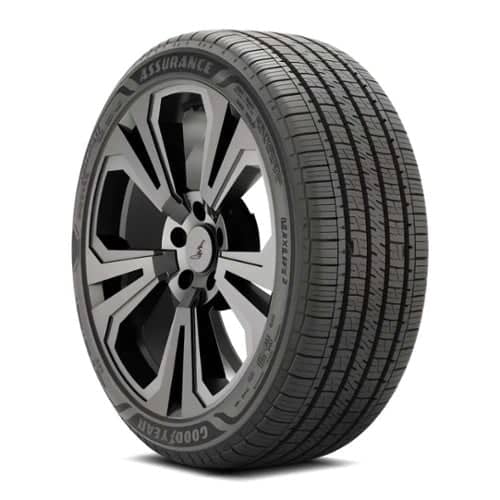
103V XL, 820 A B treadwear, 85,000 mile warranty. The longest warranty available in this size by a clear margin. Read the B temperature grade before you buy: it is the second of three grades and indicates a lower heat-dissipation threshold than the A-rated tires above it. For a commuter accumulating highway miles in a temperate climate that is a non-issue. For sustained high-speed running in desert heat, step up to an A.
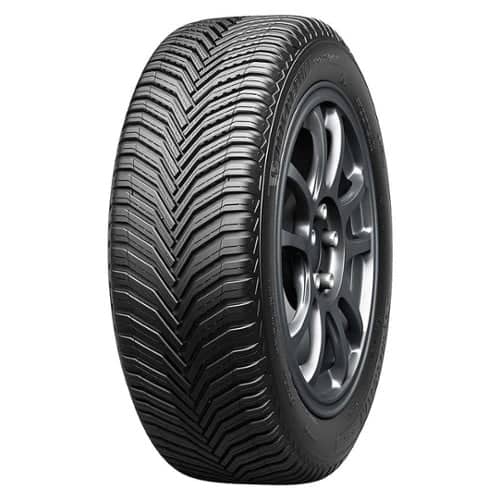
103V XL, 640 B A treadwear, 60,000 mile warranty. This is the pick if you get real winter but do not want a second set of wheels. CrossClimate2 carries the three-peak mountain snowflake symbol, meaning it passed a standardized medium-packed-snow traction test that ordinary all-seasons do not. The B traction grade is a wet-braking measure and reflects the directional tread's priorities; in exchange you get snow capability no conventional all-season in this size matches.
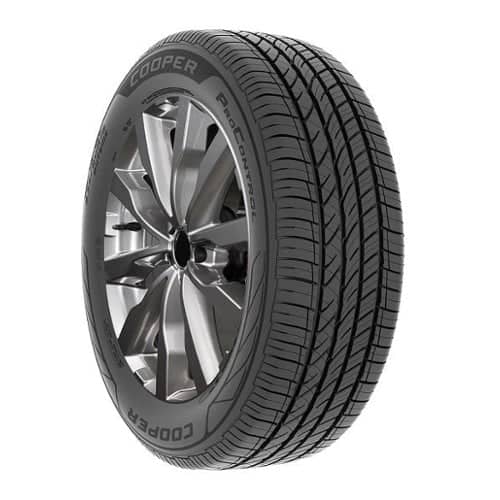
103V XL, 740 A A treadwear, 70,000 mile warranty. Run the math on this one. It costs $37 less than the DWS06 Plus, carries 180 more points of treadwear, and adds 20,000 miles of warranty. You give up the ultra-high-performance dry grip ceiling and the Y speed rating. For a crossover that never sees a canyon road, that is a trade worth making, and A A across both grades means nothing was compromised on the safety side to get there.
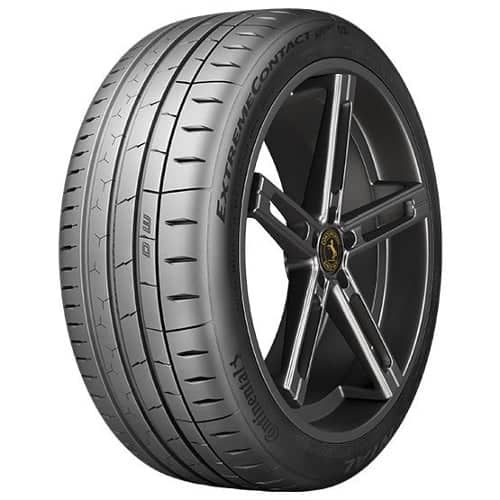
103Y XL, 340 AA A treadwear, 30,000 mile warranty. A dedicated summer tire, which means the compound stiffens badly below roughly 45 degrees Fahrenheit and should come off the car for winter. What you get in return is a grip ceiling no all-season reaches. The 340 treadwear tells you exactly what you are trading: roughly a third of the life of a touring tire, spent entirely on traction.
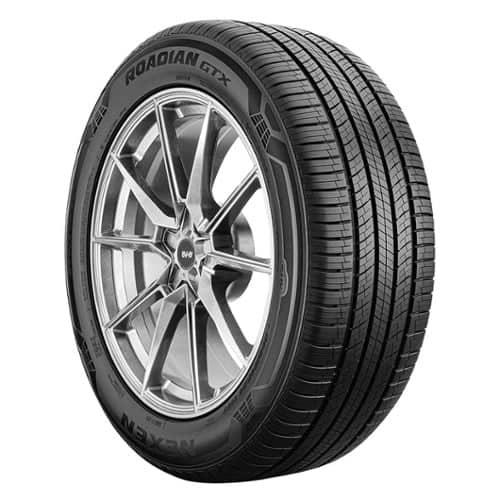
103V XL, 680 A A treadwear, 70,000 mile warranty. Under $215 with a 70,000 mile warranty and A A grades is the value floor where I stop being skeptical. This size goes considerably cheaper if you want it to, down past $80 a tire, but warranty coverage and treadwear ratings fall off a cliff below this point. The Roadian GTX is the last stop where the spec sheet still holds up.
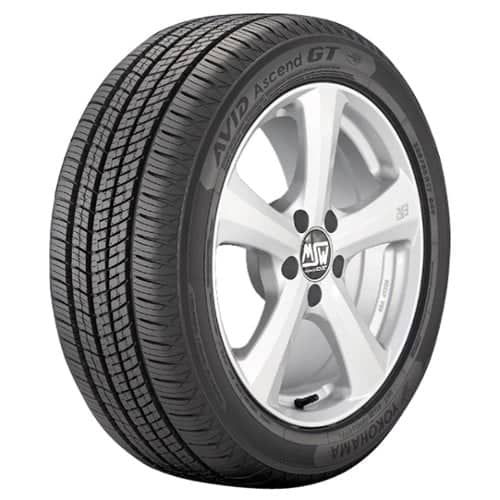
99V SL, 740 A A treadwear, 65,000 mile warranty. If your placard specifies 99 SL, this is where I would start. Standard load construction gives you the softer sidewall the engineers intended for a sedan chassis, and at 740 treadwear with A A grades you are not paying a penalty for staying in the correct load class. Choosing SL when SL is specified is not a downgrade, it is the correct part.
Tire |
Load Index |
Season |
UTQG |
Warranty |
Price |
|---|---|---|---|---|---|
103Y XL |
All Season |
560 A A |
50,000 mi |
$271.99 |
|
103Y XL |
All Season |
540 AA A |
45,000 mi |
$308.99 |
|
103V XL |
All Season |
800 A A |
80,000 mi |
$289.25 |
|
103V XL |
All Season |
820 A B |
85,000 mi |
$264.99 |
|
103V XL |
All Weather |
640 B A |
60,000 mi |
$332.99 |
|
103V XL |
All Season |
740 A A |
70,000 mi |
$234.99 |
|
103Y XL |
Summer |
340 AA A |
30,000 mi |
$302.99 |
|
103V XL |
All Season |
680 A A |
70,000 mi |
$214.00 |
|
99V SL |
All Season |
740 A A |
65,000 mi |
$247.99 |
For dedicated winter, the Continental Viking Contact 7 at $323.47 in 103T XL is the studless ice and snow option in this size, and the Michelin X-Ice Snow SUV at $466.81 in 103H XL sits above it.
This size appears as original equipment across roughly 180 vehicle models, and it splits cleanly along the load index line I opened with.
Vehicle Type |
Examples |
Typical Load Index |
|---|---|---|
Rear-drive sedans |
Chrysler 300 S and 300C, Dodge Charger, Dodge Challenger |
99 SL |
Compact premium SUVs |
BMW X3, BMW X4, Cadillac XT4, Buick Envision |
103 XL |
Midsize crossovers |
Ford Edge, Lincoln Nautilus, Nissan Murano |
103 XL |
AWD wagons and EVs |
Audi A6 allroad, Audi e-tron GT |
103 XL |
Look at the pattern. The sedans sit in the 99 SL column and everything with a taller center of gravity or a battery pack sits in 103 XL. That is not a coincidence, it is engineers matching sidewall construction to sprung mass and load transfer. It is also why "best 245/45R20 tire" is a question with two answers depending on what is in your driveway.
On rim width: 245/45R20 is approved across roughly 7.5 to 9.0 inches, with 8.0 to 8.5 inches as the target. A 20x8 or 20x8.5 wheel puts the tread flat on the road with the sidewall at its designed profile. Mount the same tire on a 20x9 and you stretch the tread slightly, sharpening turn-in and reducing sidewall compliance. Below 7.5 inches the tread crowns and you wear the center strip.
The size code decodes as 245 mm section width, sidewall height equal to 45 percent of that width, radial construction, 20 inch rim diameter. Here is what those numbers become in the units you can actually measure.
Measurement |
Metric |
Inches |
|---|---|---|
Section width |
245 mm |
9.65 in |
Sidewall height |
110.3 mm |
4.34 in |
Overall diameter |
728.5 mm |
28.68 in |
Circumference |
2,288 mm |
90.10 in |
Revolutions per mile |
437 per km |
703 per mile |
Approved rim width |
190 to 229 mm |
7.5 to 9.0 in |
The number worth internalizing is 4.34 inches of sidewall. That is the entire cushion between your wheel lip and the pavement. It is enough that this size rides better than a 245/40R20 or a 245/35R20, and it is short enough that pothole strikes reach the rim. Section width is a nominal figure measured at a reference rim, so your actual tread width will vary by an eighth of an inch or so between brands.
Equivalence means overall diameter within about 3 percent, which is the window where your speedometer stays accurate enough and your ABS and stability control keep reading wheel speeds correctly. Three sizes land almost exactly on top of 245/45R20.
Size |
Overall Diameter |
Difference |
Notes |
|---|---|---|---|
245/50R19 |
28.65 in |
-0.1% |
Drop to 19 inch wheels, more sidewall, better ride |
275/40R20 |
28.66 in |
-0.1% |
Wider tread, needs a 9.0 to 10.5 in rim |
245/40R21 |
28.72 in |
+0.1% |
Step up to 21 inch wheels, shorter sidewall |
255/45R20 |
29.03 in |
+1.2% |
Common upsize on the same wheel, check clearance |
265/40R20 |
28.35 in |
-1.2% |
Wider and slightly shorter |
235/50R20 |
29.25 in |
+2.0% |
Narrower with more sidewall, near the tolerance edge |
The 255/45R20 upsize is the one people ask about most, and it is popular on Chrysler 300 and Charger platforms because it fills the wheel well better on a 20x8 or 20x9. It is 1.2 percent larger, which is inside tolerance. The thing to verify before ordering is front clearance at full lock, because on some of those chassis the control arm sits close enough that 10 mm of extra section width matters.
Whichever equivalent you pick, carry your load index across. A 255/45R20 in 99 SL does not solve the problem if your placard says 103 XL.
The correct pressure comes from your vehicle, not from the tire. Read the placard on the driver's door jamb. For vehicles running 245/45R20 from the factory, that figure typically falls between 33 and 36 psi cold, though some AWD and EV applications specify higher.
Two things get confused here constantly, so let me separate them:
Your TPMS is required under FMVSS 138 to warn you at 25 percent below the placard figure. On a 35 psi specification that light comes on at about 26 psi, and by then you have been running low for a while. TPMS is a failure alarm, not a maintenance tool. Check monthly with a gauge.
Ambient temperature moves pressure about 1 psi per 10 degrees Fahrenheit. A set inflated correctly in September will be 3 to 4 psi low by a cold December morning. On a short 4.34 inch sidewall, that deficit concentrates flex into the shoulder and lower sidewall, which builds heat exactly where the belt package is bonded. That is the mechanism behind most highway-speed failures, and it is worth understanding alongside tire sidewall damage.
At 20 inches you are almost always buying a performance or touring tire, and the brand tiers sort by engineering depth rather than by marketing.
Michelin, Continental, Bridgestone, Pirelli, and Goodyear. These are the companies with the compound research budgets, and in this size that shows up as tires holding both an A or AA traction grade and a treadwear number above 500 at the same time. That combination is genuinely hard to engineer and it is what you are paying for. Expect $260 to $340.
Cooper, Yokohama, Hankook, Falken, Nexen, Toyo, Nitto, and Kumho. This tier is where the value lives right now. The Cooper ProControl and Nexen Roadian GTX picks above both come from here and both hold A A grades with 70,000 mile warranties. You give up the last few percent of limit grip and save $40 to $60 a tire.
Milestar, Sailun, Atlas, Hercules, Arroyo, Lionhart, Ironman, and similar. This size goes down under $80 a tire here. What changes is not usually the first 5,000 miles, it is wet grip retention as the tread wears and how the compound behaves in year four. Warranties shorten or disappear and treadwear ratings drop into the 300s. If the car is a lease turn-in or a second vehicle, the math can work. On a daily driver carrying family, spend the extra $130.
One thing worth flagging: brand tier tells you nothing about load index. Premium brands sell 99 SL and budget brands sell 103 XL. Verify the load index on the specific part number you are ordering. For the broader brand picture we ranked the field in 15 best tire brands ranked.
The Continental ExtremeContact DWS06 Plus at $271.99 is the right recommendation for the largest number of people running 245/45R20, and the ranking above holds up on the specs. But the more useful thing to take away is that this size contains two products wearing the same name. A 99 SL and a 103 XL look identical on a shelf, cost roughly the same, and differ by 880 lbs of capacity across a set.
Read your placard first. If it says 103, buy 103, and the DWS06 Plus, the Cooper ProControl, and the Nexen Roadian GTX cover the premium, value, and budget positions cleanly. If it says 99, the Yokohama Avid Ascend GT gives you the sidewall compliance your chassis was tuned around without giving up treadwear or traction grades.
Everything after that is preference. Quiet, long-wearing, snow capable, or maximum grip, this size has a well-built option in each direction, and the price spread between them is smaller than most people assume.
When you are ready, browse the full range of 245/45ZR20 tires, or contact us with your year, make, and model and we will confirm load index, speed rating, and rim width before anything ships.
The Continental ExtremeContact DWS06 Plus at $271.99 is the best all-around choice in 103Y XL, with 560 A A grades and a 50,000 mile warranty. For maximum performance the Michelin Pilot Sport A/S 4 leads on traction grade, for value the Cooper ProControl at $234.99 offers more treadwear and warranty for less money, and for standard load applications the Yokohama Avid Ascend GT is the pick in 99V SL. Confirm whether your vehicle requires 99 SL or 103 XL before choosing.
This size appears as original equipment on roughly 180 models. Rear-drive sedans including the Chrysler 300 S, Dodge Charger, and Dodge Challenger typically use 99 SL. Compact and midsize SUVs and crossovers including the BMW X3, BMW X4, Cadillac XT4, Buick Envision, Ford Edge, Lincoln Nautilus, and Nissan Murano typically use 103 XL, as do AWD wagons and EVs such as the Audi A6 allroad and Audi e-tron GT.
The closest equivalents are 245/50R19 at 28.65 inches, 275/40R20 at 28.66 inches, and 245/40R21 at 28.72 inches, all within 0.1 percent of the 28.68 inch stock diameter. Also within tolerance are 255/45R20 at plus 1.2 percent, 265/40R20 at minus 1.2 percent, and 235/50R20 at plus 2.0 percent. Carry your original load index across to any substitute size.
A 245/45R20 measures 28.68 inches in overall diameter, 9.65 inches in section width, and 4.34 inches in sidewall height. Circumference is 90.10 inches and the tire turns approximately 703 revolutions per mile. Approved rim width runs 7.5 to 9.0 inches, with 8.0 to 8.5 inches as the ideal target.
Use the pressure on your driver's door jamb placard, which for vehicles running this size is usually between 33 and 36 psi cold. The 44 psi on a standard load sidewall or 50 psi on an extra load sidewall is a maximum, not a recommendation. Check pressure before driving or at least three hours after, and remember that pressure drops roughly 1 psi for every 10 degree Fahrenheit fall in ambient temperature.
Michelin, Continental, Bridgestone, Pirelli, and Goodyear lead the premium tier and are the brands most likely to pair a high traction grade with a treadwear rating above 500. Cooper, Yokohama, Hankook, Falken, Nexen, Toyo, Nitto, and Kumho form a strong mid tier where the value currently sits. Brand tier does not indicate load index, so verify 99 SL or 103 XL on the specific part number.
Yes. Moving up in load index is always acceptable because the replacement tire exceeds the capacity the manufacturer specified. You will notice a slightly firmer ride from the stiffer extra load sidewall. Moving down from 103 XL to 99 SL is the direction to avoid, since it puts you below the load capacity your vehicle was engineered around.
More on this size family and how to shop it: best 245/45R19 tire covers the 19 inch version, 245/45R18 in inches handles the 18 inch step down, best rated 245/40R19 tires looks at the shorter sidewall option, and 9 best all-season performance tires expands the category beyond this single size.



