
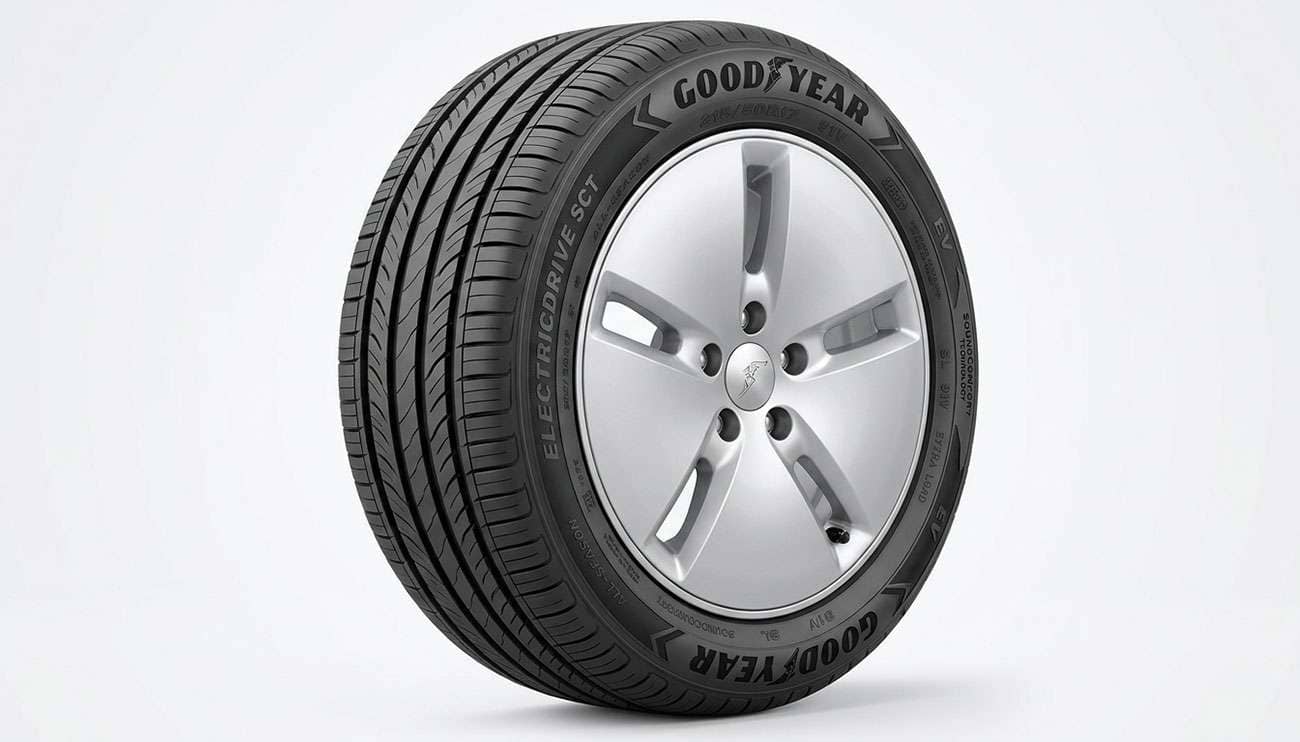
The best 215/50R17 depends on whether the car it goes on is electrified, because this is one of the handful of passenger sizes where the tire industry actually built separate EV-specific tires. Five different manufacturers now make one in 215/50R17, and they did that for a reason. A Bolt EV, a Bolt EUV, a Volt, an Insight and an Accord Hybrid all wear this size, and every one of them carries several hundred pounds more battery than the gas car it shares a footprint with. Put a grippy ultra-high-performance tire under that weight and you will pay for it in range and in tread life. Figure out which camp your car is in first.
I have been fitting tires since before anybody in this business had heard the word regenerative. So when a size comes across the counter and I see that five separate manufacturers have gone to the trouble of engineering a dedicated version for electric cars, I pay attention. That does not happen often. It happens in 215/50R17.
Goodyear builds the ElectricDrive line in it. Hankook builds the iON evo. Kumho built an EV variant of the Solus TA31 specifically. ERANGE, which makes nothing but EV rubber, covers it. That is the industry telling you something about who is actually driving on this size.
Here is what those cars do differently, and none of it is marketing.
They weigh more. A Bolt EUV carries a battery pack that puts it several hundred pounds above a comparable gas compact on the same footprint. That is why the load index in this size runs so heavily to 95 rather than 91. Ninety-five is rated for 1,521 pounds per corner. Ninety-one is 1,356. That is a 165-pound difference, and on a car hauling a floor full of cells, the engineers did not pick 95 by accident.
They deliver torque instantly. There is no clutch, no torque converter, no rev-up. The motor makes peak twist at zero RPM and hands it straight to the contact patch. That shears tread blocks in a way a gas engine never does. It is the single biggest reason EV owners are surprised by how fast their first set wears out.
They are silent. No engine noise means nothing masks road roar. A tire that sounds perfectly acceptable in a Civic will drone in a Bolt, because in the Bolt it is the loudest thing happening.
Rolling resistance turns into range. On a gas car, a grippier tire costs you a mile or two per gallon and you shrug. On an EV, it comes straight off the number on the dash, every single day, and you watch it happen.
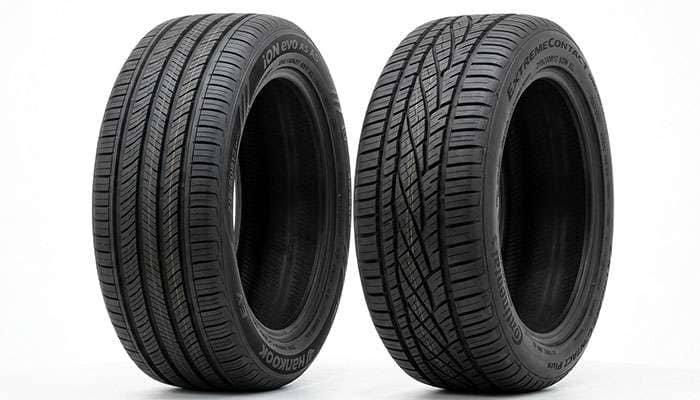
So the honest answer to which 215/50R17 is best splits before you get to brands:
What is the car |
Load index you likely need |
What to prioritize |
What to avoid |
|---|---|---|---|
Full EV (Bolt EV, Bolt EUV) |
95 XL |
Low rolling resistance, high treadwear grade, noise-reducing construction |
Ultra high performance summer or 300-treadwear all-seasons |
Hybrid or plug-in (Volt, Insight, Accord Hybrid) |
95 XL, sometimes 91 |
Efficiency-tuned touring compound, long warranty |
Anything marketed on cornering grip alone |
Conventional sedan or hatch (Accord, Sonata, Optima, Focus) |
91 or 95, check the placard |
Balanced touring or grand touring all-season |
Paying an EV premium you do not need |
Sport compact (MAZDASPEED3, Lancer, Civic Si) |
91 or 95, check the placard |
Dry and wet grip, AA traction grade, stiffer casing |
Long-mileage touring compounds that go greasy when pushed |
Older luxury or commercial-plated van |
95 XL or higher |
Load capacity first, then ride quality |
Any SL tire below the placard number |
Most lists you will find for this size rank on grip and call it a day, which is the right answer for maybe a third of the cars wearing it. The other two thirds are electrified or efficiency-tuned, and for them the winner changes completely. Open the driver's door, read the placard, and note the load index and speed rating before you shop. If you want the mechanical background on why electrified cars need different rubber, our piece on why EV tires are different covers the compound and construction side, and the hybrid tire guide handles the efficiency tradeoff.
What matters most |
Pick |
Service description |
Price |
|---|---|---|---|
EV range and quiet |
95V XL |
$234 |
|
EV value |
95V XL |
$158 |
|
Longest tread life |
95V XL |
$178 |
|
Best all-around value |
95V XL |
$140 |
|
One tire, all four seasons |
95W XL |
$175 |
|
Real snow without a second set |
95V XL |
$220 |
|
Quietest ride |
95V XL |
$238 |
|
Grip on a sport compact |
95Y XL |
$199 |
|
Dedicated winter set |
95H XL |
$222 |
|
Lowest price that is still safe |
95V XL |
$86 |
Browse the full 215/50R17 tire lineup and filter by load index before comparing models.
If the badge on the back of your car says EV, e, Hybrid, Prime or Energi, start here. These tires give up some ultimate cornering grip on purpose and buy back range, tread life and cabin quiet with it.
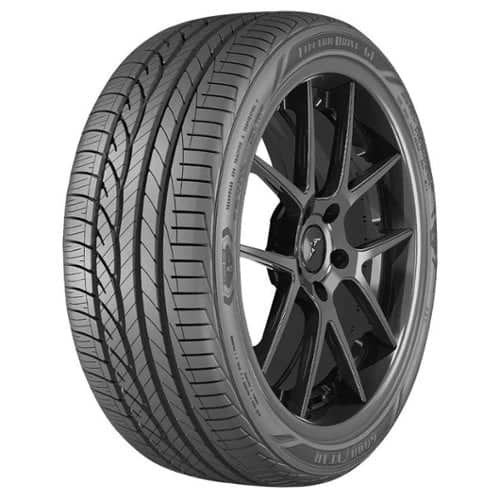
215/50ZR17 95V XL, UTQG 700 A B, 60,000-mile warranty, around $234.
This is the one I put on a Bolt without thinking twice. SoundComfort technology means there is a noise-damping layer built into the casing, which matters enormously on a car with no engine to cover for it. The 700 treadwear grade is unusually high for a tire that also has to survive instant torque, and Goodyear backs it with 60,000 miles, which almost nobody does in the EV category.
Where it costs you: it is the most expensive tire in this section, and it will not hold a line through a fast on-ramp the way a proper performance all-season will. That is the trade you are making on purpose.
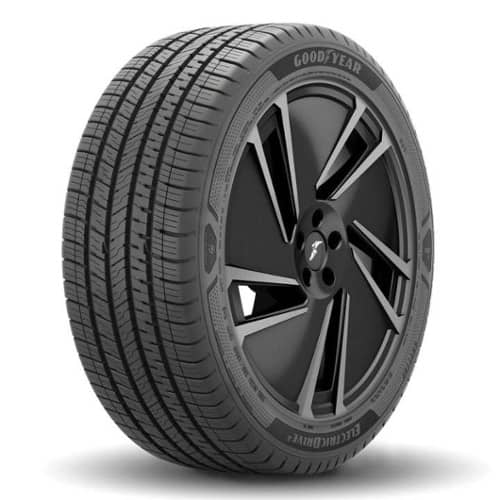
215/50ZR17 91V SL, UTQG 700 A A, 45,000-mile warranty, 10/32 tread depth, around $201.
Newer generation, better traction grade, and cheaper. But read that service description carefully, because this is exactly the kind of thing that catches people out. In 215/50R17, the second-generation tire comes as a 91 Standard Load, not a 95 Extra Load. If your placard calls for 95, the newer tire is not the right tire for your car no matter what the model number says. Newer does not automatically mean higher rated.
For a 91-rated application, though, this is the value pick in the EV tier and the A traction grade is a genuine step up.
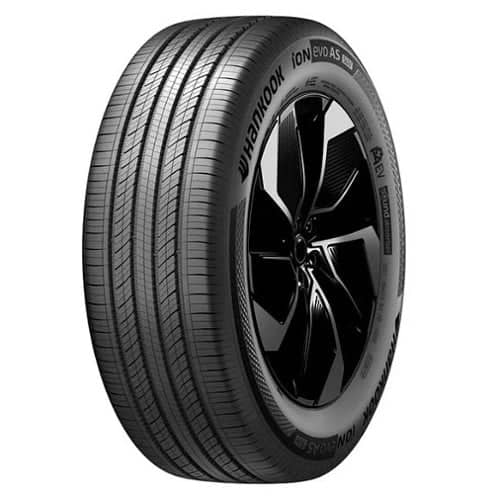
215/50ZR17 95V XL, UTQG 600 A A, 50,000-mile warranty, 10/32 tread depth, around $199.
Hankook built the iON line from the casing out for electrified cars rather than adapting an existing tire, and the sidewall reinforcement is where you feel it. Heavy car, low center of gravity, and a tire that does not roll over on its shoulder when you turn in. The A traction grade beats the ElectricDrive SCT and it costs less.
Where it costs you: 600 treadwear against Goodyear's 700, so expect fewer miles.
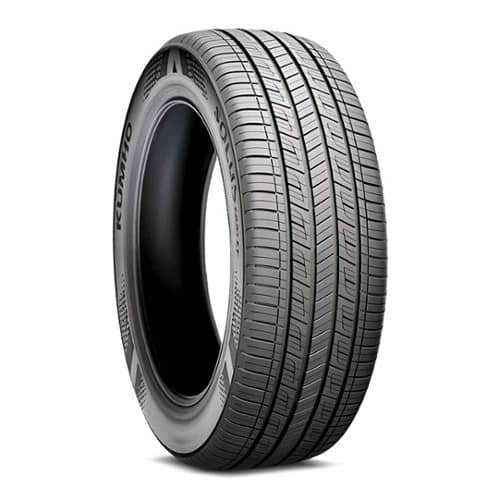
P215/50R17 95V XL, UTQG 500 A A, 50,000-mile warranty, around $158.
The sensible-money answer. Kumho took a proven touring tire and re-engineered the compound and tread for EV duty rather than starting a whole new premium line, and the price reflects that. You get the 95 XL rating and A traction for well under two hundred dollars a corner.
Where it costs you: 500 treadwear is the lowest in this group, and there is no dedicated noise-damping layer.
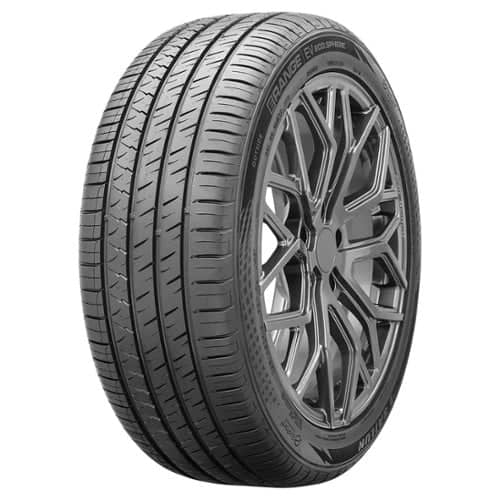
215/50ZR17 95V XL, UTQG 600 A A, 45,000-mile warranty, 9/32 tread depth, around $159.
ERANGE makes EV tires and nothing else, which I like more than I expected to. The Eco.Sphere splits the difference between the Kumho and the Hankook on paper at close to the Kumho's price. Reasonable choice if you want a purpose-built EV tire and the Goodyear number makes you wince.
For everything else on this size, and for EV owners who have decided they would rather have the grip, this is the field.
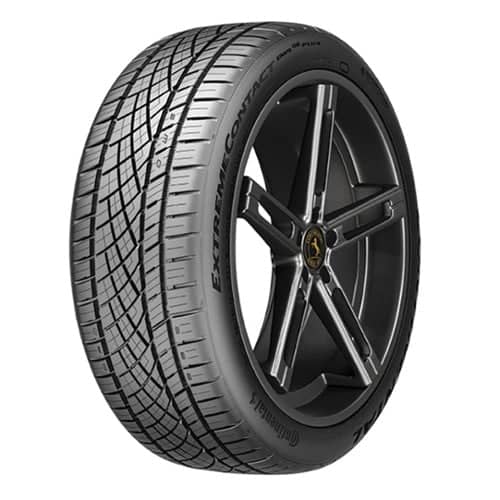
215/50ZR17 95W XL, UTQG 560 A A, 50,000-mile warranty, 10/32 tread depth, around $175.
The tire everybody names, and for once everybody is right. It has been the reference in the ultra-high-performance all-season class for years. The DWS letters molded into the tread wear away in order, the S first when snow capability is gone, then the W, then the D when the tire is finished. That is a real engineering feature and I have used it to settle more than one argument in the bay.
Where it costs you: on an EV it will pull range compared with anything in the section above, and it is not a snow tire.
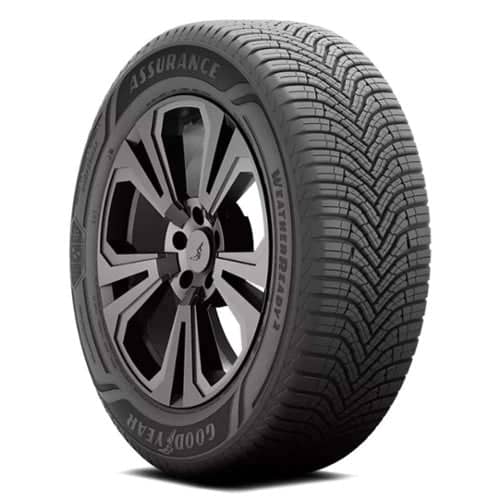
P215/50R17 95V XL, UTQG 700 A A, 60,000-mile warranty, 11/32 tread depth, around $204.
If you want one set of tires on the car and you see real winter a few times a year, this is the grown-up choice. It carries the three-peak mountain snowflake, which is a severe snow service rating and a different thing entirely from the M+S stamp most all-seasons wear. Eleven thirty-seconds of starting tread is deep for this class.
Where it costs you: it will not steer like the Continental and it is not cheap.
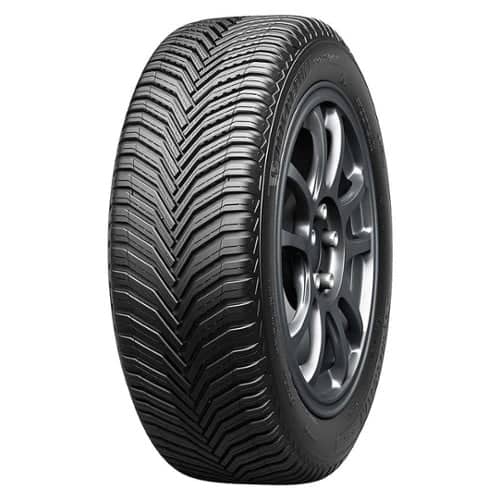
215/50ZR17 95V XL, UTQG 640 B A, 60,000-mile warranty, 10/32 tread depth, around $220.
The other three-peak all-season, and the one I reach for when somebody describes their winter as slush and cold rain rather than deep snow. That directional V tread throws water and slush out of the way faster than anything conventional in the category, and the compound stays soft well below the point where an ordinary all-season starts skating.
Where it costs you: directional tread means you cannot cross-rotate, and the B temperature grade comes with a bit more highway hum.
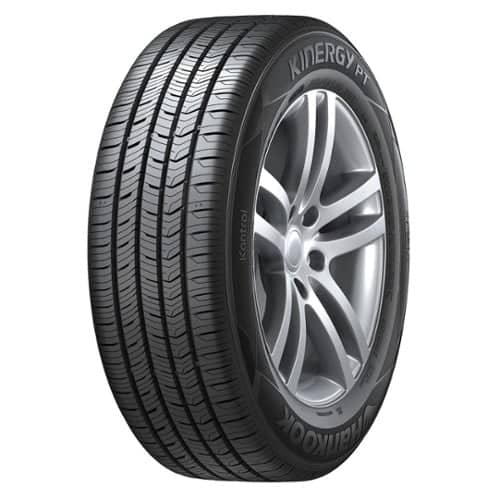
215/50ZR17 95V XL, UTQG 860 A A, 90,000-mile warranty, around $178.
Eight hundred sixty treadwear and a ninety thousand mile warranty. In this size that is the longest-lived tire on the board by a distance, and I have watched commuters get every mile of it. If your car eats 25,000 miles a year and you want to stop thinking about tires, the math is not close.
Where it costs you: a compound built to last that long is not built to grip hard. It is a commuter tire and it drives like one.
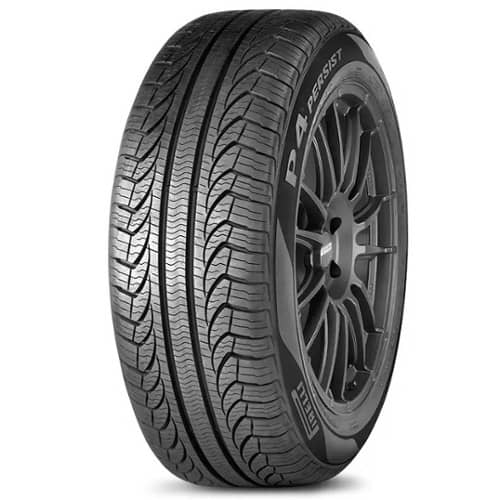
215/50ZR17 95V XL, UTQG 820 AA A, 85,000-mile warranty, 12/32 tread depth, around $140.
Read that line again. Eight hundred twenty treadwear, an AA traction grade, eighty-five thousand miles of warranty, twelve thirty-seconds of starting tread, and it is the cheapest premium-brand tire in this whole article. AA is the top wet-braking grade the government awards, and finding it paired with a treadwear number that high is genuinely unusual. If somebody made me pick one tire for a conventional car in this size without knowing anything else about it, this is the one.
Where it costs you: it is a touring tire. Push it and it will let you know.
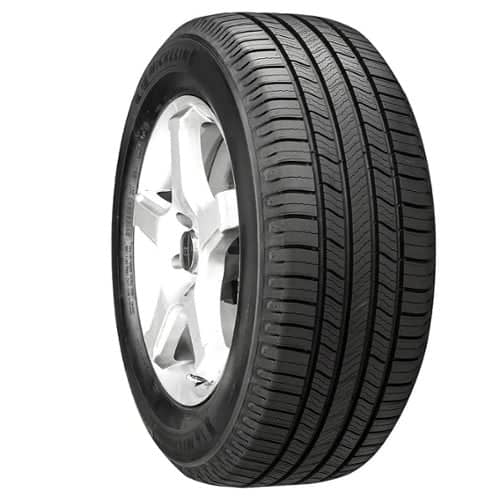
215/50R17 95H XL, UTQG 840 B B, 80,000-mile warranty, 10/32 tread depth, around $210.
Michelin's answer in the long-mileage lane, and the ride quality is where you feel the money. Eighty thousand miles behind a 45-series-adjacent touring tire is Michelin telling you they are confident in the compound.
Where it costs you: H speed rating. Plenty of cars on this size came with V or W from the factory, and if yours did, this one is off your list regardless of how good the warranty looks.
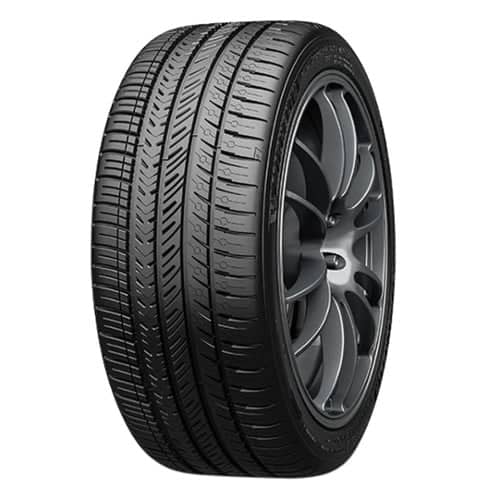
215/50ZR17 95Y XL, UTQG 540 AA A, 45,000-mile warranty, 10/32 tread depth, around $199.
For the sport compacts wearing this size, this is the sharpest steering you will get without giving up cold-weather use. A Y speed rating in a 50-series is Michelin telling you what the casing is capable of. AA traction, and the grip holds up as it wears instead of falling off a cliff at half tread.
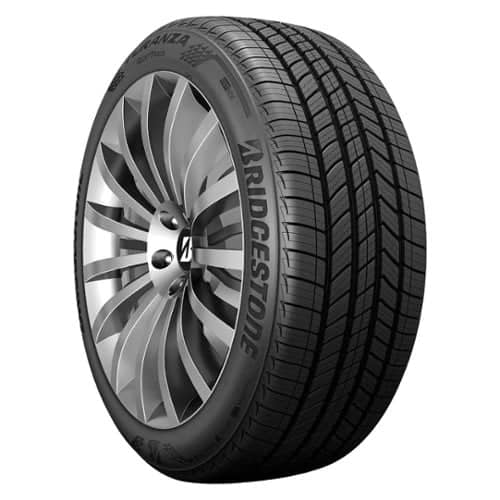
215/50ZR17 95V XL, UTQG 800 A A, 80,000-mile warranty, 9/32 tread depth, around $238.
The name is the pitch and the tire delivers on it. Bridgestone tuned the tread pitch sequence specifically to break up the frequency that turns into cabin drone. Worth the premium on a hybrid or an EV where there is no engine noise to hide behind, and worth it on any car where a highway commute has worn you down. If road noise is the reason you are shopping, our guide to foam-lined quiet tires covers the other approach manufacturers take.
Second set of wheels, or a climate that genuinely does not need cold-weather rubber. This is where the sport compacts on this size come alive.
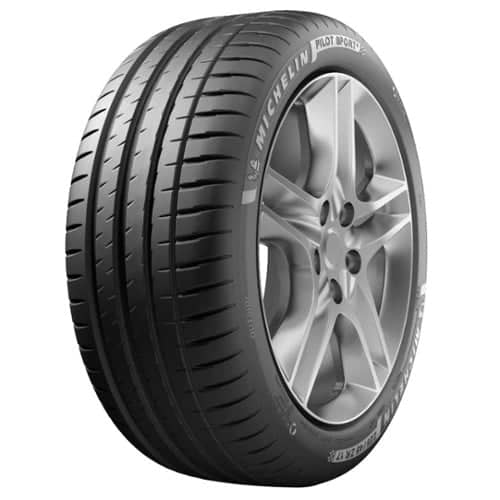
215/50ZR17 95Y XL, UTQG 320 AA A, 20,000-mile warranty, 9/32 tread depth, around $202.
The benchmark in the class. Bi-compound tread with a stiffer outer shoulder for cornering load and a grippier inner section for braking and wet work. On a light car this changes the whole character of the steering, and unlike a lot of max-performance summer rubber the wet behavior is progressive rather than abrupt.
Other strong summer options in this size are the Continental ContiSportContact 5 at 95W for around $254, the Pirelli P Zero Nero GT at 95Y for around $146, and the General G-MAX RS at 95W for around $154.
One thing worth saying up front for the EV crowd: cold weather already costs you range, and a winter tire costs a little more on top. That is not a reason to skip them. It is a reason to plan the swap and accept the number for three months.
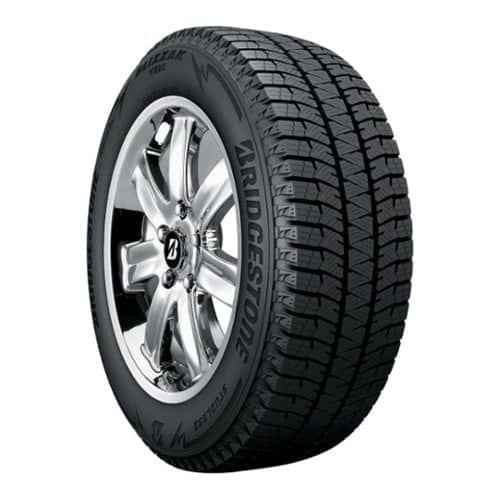
215/50R17 95H XL, 11/32 tread depth, around $222.
Still the ice-braking benchmark. The multicell compound has microscopic voids that pull the water film off the ice surface, and that mechanism is what separates a real winter tire from an all-season with a snowflake stamped on it. Available in the 95 XL rating the heavier cars on this size need.
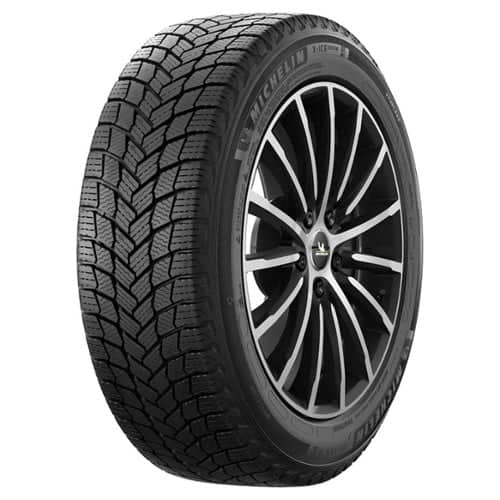
215/50R17 95H XL, 40,000-mile warranty, 10/32 tread depth, around $218.
One of the very few winter tires sold with a mileage warranty, which tells you where Michelin put the engineering. The full-depth 3D sipes keep their biting edges as the tire wears rather than losing grip at half tread, so a set lasts you more seasons.
Also worth a look in this size: the Continental VikingContact 7 at 95T for around $191, the Nokian Hakkapeliitta R5 at 95R for around $248, and the Goodyear WinterCommand Ultra at 95H for around $207.
Cheap does not have to mean dangerous. It does mean knowing what got cut.
Tire |
Service description |
UTQG |
Warranty |
Price |
|---|---|---|---|---|
95V XL |
500 A A |
50,000 mi |
$86 |
|
95W XL |
540 A A |
50,000 mi |
$100 |
|
95V XL |
600 A A |
55,000 mi |
$104 |
|
95V XL |
600 A A |
70,000 mi |
$127 |
|
95W XL |
500 AA A |
50,000 mi |
$115 |
My line in the budget tier is the traction grade. A is acceptable, AA is a bargain, and anything below A I would not put on a car carrying my grandkids. That grade is the one number on the sidewall that speaks directly to how the tire stops on wet pavement, and it is the last place to save forty dollars.
Figure $86 to $254 per tire. Most people buying this size land between $130 and $210.
Tier |
Per tire |
Set of four |
What you are getting |
|---|---|---|---|
Budget |
$86 to $130 |
$344 to $520 |
Safe daily driving, A traction, shorter life, more noise |
Mid tier |
$130 to $180 |
$520 to $720 |
Name-brand all-seasons, real warranties, good wet grip |
Premium |
$180 to $240 |
$720 to $960 |
Best wet braking, quietest ride, longest warranties, EV-specific options |
Specialty |
$200 to $254 |
$800 to $1,016 |
Dedicated summer or winter compounds, highest grip ceiling |
Two things move the number inside a tier. Extra Load construction runs roughly $10 to $25 more per tire than the Standard Load version of the same model, because there is more material in the casing. And EV-specific tires carry a premium of $30 to $60 over a comparable conventional tire, which is what the noise-damping layer and the low-rolling-resistance compound cost to build.
The number worth doing arithmetic on is cost per mile. The Pirelli P4 Persist AS Plus at $140 with an 85,000-mile warranty works out to about $0.0016 per mile per tire. A summer tire rated at 20,000 miles will never touch that. Both purchases can be right. They are just answering different questions.
Around 339 model lines across 78 manufacturers have used 215/50R17 as a factory size. The list is broader than most people expect, and it clusters into four groups.
Look at that first group again. A Bolt EUV and a 2003 Acura CL do not need the same tire, and they are not supposed to. That is exactly why the placard exists and why I keep sending people back to it.
A 215/55R17 has 0.42 inches more sidewall on each side and stands 0.85 inches taller overall, which is a 3.3 percent difference in diameter. That second number in the size is the aspect ratio, a percentage of the section width rather than a measurement, which is covered in full in our breakdown of tire aspect ratio decoded.
Specification |
215/50R17 |
215/55R17 |
Difference |
|---|---|---|---|
Sidewall height |
4.23 in (107.5 mm) |
4.66 in (118.3 mm) |
+0.42 in per side |
Overall diameter |
25.46 in |
26.31 in |
+0.85 in (3.3 percent) |
Revolutions per mile |
792 |
766 |
26 fewer |
Speedometer |
Baseline |
Reads 3.3 percent slow |
62 mph actual at 60 indicated |
Ride and handling |
Sharper turn-in, firmer |
Softer, absorbs more |
Trade response for comfort |
A 3.3 percent change sits just outside the plus or minus 3 percent window most manufacturers treat as an acceptable substitute. Practically, your speedometer under-reports, your odometer accumulates slower than reality, and on a modern car the ABS and stability control are doing their math from a slightly wrong wheel speed. Going the other way, from 55 down to 50, drops your ride height about four tenths of an inch and can put the front tire closer to things it was not meant to touch at full lock.
Neither is a drop-in swap for the other. If you are considering the taller size for ride comfort, check clearance first. Our full breakdown of what size tire a 215/55R17 is has the compatibility charts.
Whatever the placard on your driver's door jamb says. Not the number molded into the tire sidewall, which is the maximum the tire can hold, not what your car wants.
In this size the placard figure usually lands between 32 and 36 psi cold, and electrified applications commonly sit at the top of that range or a little above it because of the extra battery weight. Set them cold, meaning before you have driven more than a mile or after the car has sat three hours, because rolling heat can add three or four psi and give you a false reading.
Two notes specific to this size. First, if you are running an Extra Load 95 tire on a car whose placard was written for a 91, do not add pressure to chase the higher load number. The placard pressure is what the suspension and the stability control were calibrated around. Second, a low-rolling-resistance EV tire is more sensitive to being a few psi down than a conventional tire, because underinflation attacks rolling resistance directly, which is the whole thing you paid for. Check them monthly. Tires lose roughly a pound a month on their own, plus about a pound for every ten degrees the temperature drops.
Michelin has the strongest overall record across independent testing and long-term owner surveys, with Continental and Bridgestone right behind it. But reliable means three separate things and they do not always travel together: consistency from tire to tire, how well the compound holds up across the full tread life, and freedom from manufacturing defects.
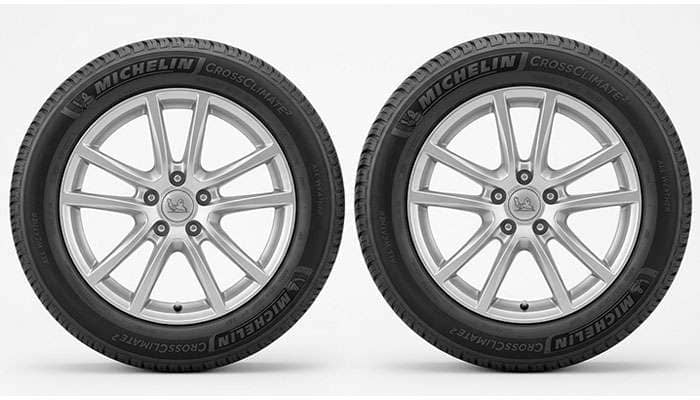
Michelin's edge is mostly the second one. Their tires tend to hold their wet and dry numbers as they wear, where plenty of competitors drop off hard in the last third. You can see it in this size: the Defender2 carries an 840 treadwear grade behind an 80,000-mile warranty, and the CrossClimate2 keeps its severe snow certification down at tread depths where ordinary all-seasons gave up long ago.
That said, reliable and worth-the-money are different questions. Hankook and Kumho both post excellent defect records at a good deal less, and Pirelli's P4 Persist in this size posts numbers that embarrass tires costing sixty dollars more. For a commuter that mostly sees highway, the practical gap is smaller than the price gap. Our full look at the most reliable tire brand goes through the survey and warranty-claim data.
Any 17-inch wheel from 6.0 to 7.5 inches wide. The measuring rim, which is the width the tire's published dimensions were taken on, is 7.0 inches. For most of the cars wearing this size, 6.5 to 7.0 is the sweet spot.
Rim width |
Status |
What it does to the tire |
|---|---|---|
6.0 in |
Approved minimum |
Sidewall pulls in, tread crowns, softer steering and faster center wear |
6.5 in |
Common OE width |
Comfortable compromise, what most factory wheels on this size run |
7.0 in |
Measuring rim |
Section width and profile match published specs exactly |
7.5 in |
Approved maximum |
Tread stretched flatter, sharpest response, shoulder wear picks up |
Width is only part of it. The wheel still has to match your bolt pattern, hub bore and offset, and offset is where people get burned, because a wheel with the right bolt pattern can still tuck the tire into a strut or a fender lip. Our explainer on what putting the same size tire on different rim widths does walks through the geometry. If you are shopping wheels alongside tires, start with 17x7 inch wheels and filter by bolt pattern.
The wrong tire in this size does not fail dramatically. It just quietly takes money out of your pocket, and each stage takes more than the last.
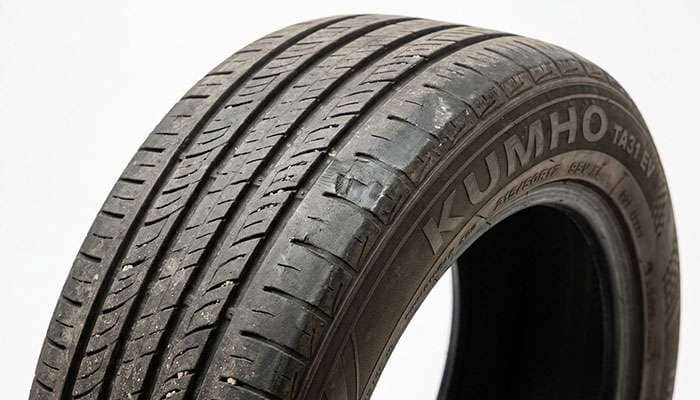
The first few months: range and fuel you never see leave. A performance compound on an electrified car adds rolling resistance from day one. It does not announce itself, because you have nothing to compare against. Owners tell me their range dropped after a tire change and assume it is the battery aging. Sometimes it is the battery. More often it is the tire.
Months three to eight: wear that outruns the warranty. Instant torque plus a compound that was not designed for it equals tread blocks that shear rather than roll. On a car whose placard called for 95 and got a 91, add heat from running near the load ceiling, and the shoulders start going ahead of the center. Most people blame the alignment here and pay for an alignment that fixes nothing.
Months eight to eighteen: wet performance quietly collapses. Tread depth is the mechanism that clears water out from under the contact patch. A tire that started at 10/32 and is down to 4/32 because of uneven wear has lost most of its water-evacuation volume. Hydroplaning speed drops, and on a 215-wide contact patch it drops sooner than it would on something wider.
After that: the collateral bill. Sustained overload works the belt edges and the sidewall turn-up, which is where separations begin. Meanwhile the uneven wear pattern is feeding vibration into wheel bearings and suspension bushings. A set of tires replaced 20,000 miles early, plus bushings, plus whatever the vibration did to the bearings, adds up to a lot more than the difference between a 91 and a 95.
The National Highway Traffic Safety Administration puts a meaningful share of tire-related crashes down to underinflation and overload rather than sudden failure of a sound tire. In forty-some years I have almost never seen a good tire simply let go. What I see is a tire that was asked to do a job it was never rated for.
Once you have that service description written down, filter the 215/50R17 selection by load index and season and compare inside your qualifying set.
Which 215/50R17 tires are the best comes down to a question most lists never ask: what is the car. This size straddles two populations with opposite priorities. On one side, Bolts and Volts and Insights that want low rolling resistance, a high load rating and a quiet casing. On the other, Mazdaspeeds and Lancers that want grip. A single ranked list serves one of those groups well and the other badly.
So start at the door jamb. Get your load index and speed rating. Decide which camp you are in. Then pick: the ElectricDrive SCT or the Solus TA31 EV if the car is electrified, the P4 Persist AS Plus or the Kinergy PT if you want the most miles for the money, the DWS06 Plus if you want one competent tire all year, the WeatherReady 2 or CrossClimate2 if winter is real where you live, and the Pilot Sport All Season 4 if the reason you are here is that you enjoy driving the thing.
And if you are staring at a placard and not sure what you are looking at, call the shop. I have been doing this a long time and I would rather spend five minutes on the phone than have you buy the wrong set.
It depends on whether your car is electrified. For EVs and hybrids, the Goodyear ElectricDrive SCT in 95V XL at around $234 or the Kumho Solus TA31 EV at around $158. For conventional cars, the Pirelli P4 Persist AS Plus at around $140 offers 820 treadwear with an AA traction grade, or the Continental ExtremeContact DWS06 Plus at around $175 for a year-round performance tire. Check your door placard load index first, because 215/50R17 comes in both 91 and 95.
Roughly 339 model lines across 78 manufacturers. Common applications include the Chevrolet Volt, Bolt EV and Bolt EUV, Honda Insight, Accord Hybrid, Accord and Civic, Hyundai Sonata, Kia Optima and Rondo, Mazda6, Mazda3 and MAZDASPEED3, Ford Focus, Mitsubishi Lancer, Chevrolet HHR, and the Acura TL, TSX, CL and Integra.
Between $86 and $254 per tire. Budget options run $86 to $130, mid-tier all-seasons $130 to $180, premium and EV-specific tires $180 to $240, and dedicated summer or winter compounds up to $254. Extra Load construction adds roughly $10 to $25 over the Standard Load version, and EV-specific tires carry a $30 to $60 premium.
The 215/55R17 has 0.42 inches more sidewall per side and is 0.85 inches larger in overall diameter, a 3.3 percent increase. That makes the speedometer read about 3.3 percent slow, so 60 indicated is roughly 62 actual. It sits just outside the plus or minus 3 percent tolerance most manufacturers accept for a substitute size, so neither is a direct swap for the other without checking clearance.
Whatever the placard on your driver's door jamb specifies, not the maximum number molded into the sidewall. In this size that figure typically falls between 32 and 36 psi cold, and electrified applications often sit at the top of that range or slightly above because of battery weight. Set pressures cold and check monthly, since tires lose about a pound per month plus a pound for every ten degree drop in temperature.
Michelin leads on overall long-term reliability across independent testing and owner surveys, with Continental and Bridgestone close behind. Michelin's strength is compound durability, meaning the tire holds its wet and dry performance across the full tread life rather than dropping off in the last third. Hankook, Kumho and Pirelli post excellent defect records at meaningfully lower prices, so for a highway commuter the practical gap is narrower than the price gap.
You do not have to run an EV-specific tire, but there is a real reason five manufacturers build one in this size. Electrified cars are heavier, deliver instant torque that shears tread faster, and have no engine noise to mask road roar. An EV tire trades some cornering grip for lower rolling resistance, higher load capacity and a noise-damping casing. A conventional all-season will fit and be safe, provided it meets your placard load index, but expect less range and shorter tread life.
No. A 91 is rated for 1,356 pounds per tire and a 95 for 1,521, a shortfall of 165 pounds per corner. Replacement tires must meet or exceed the load index on the vehicle placard. Going the other direction is fine: fitting a 95 XL where the placard calls for 91 adds capacity margin, though the stiffer casing rides a little firmer.



