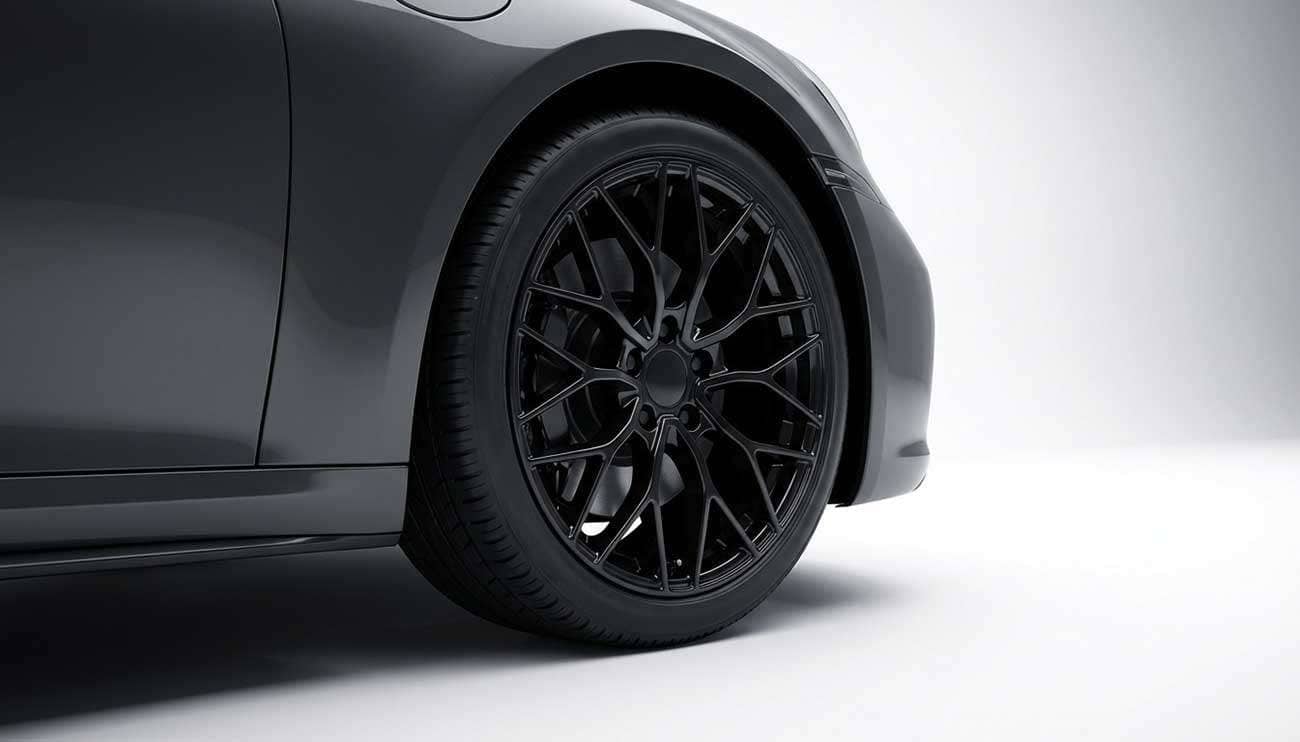
20-inch rims deliver performance advantages that extend well beyond their striking appearance. Consumer Reports confirms that upgrading to 20-inch rims produces noticeable improvements in handling and cornering performance. While many drivers appreciate the aggressive, bold styling these larger wheels provide, the real advantage lies in measurable performance gains.
The design characteristics of 20-inch wheels create tangible benefits for your driving experience. These wheels typically feature reduced sidewall height, which helps maintain greater rigidity during cornering maneuvers. The larger diameter also creates a broader contact patch where rubber meets road, contributing to improved overall handling.
Beyond performance enhancements, 20-inch rims offer the visual impact that vehicle owners seek. Their larger diameter showcases more of the actual wheel design while giving vehicles a more aggressive, premium stance.
Understanding whether 20-inch wheels suit your driving needs requires examining both advantages and trade-offs. We'll explore the performance benefits, styling appeal, and practical considerations to help you determine if these larger wheels match your vehicle type and driving conditions.
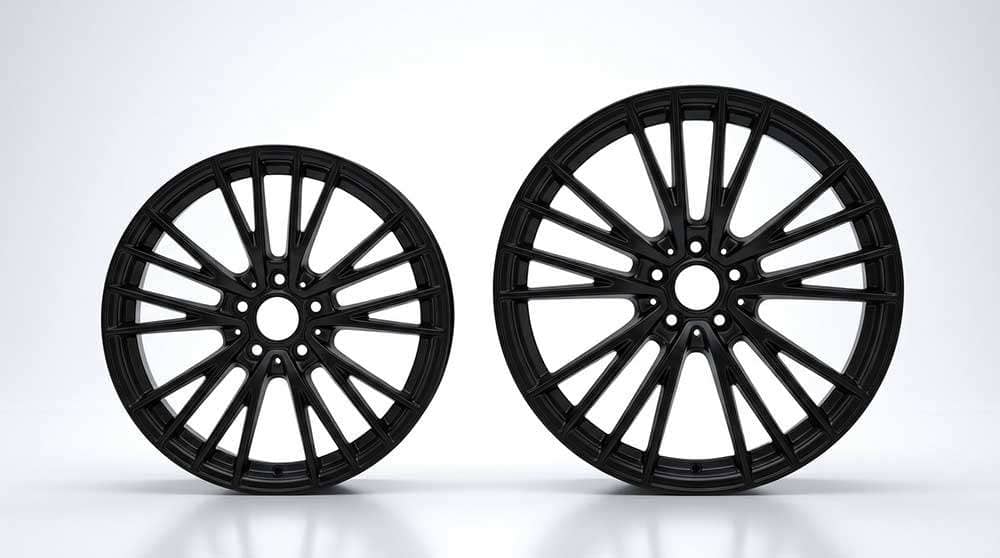
The distinction between 20-inch rims and smaller wheel sizes involves fundamental design differences that directly impact your vehicle's performance characteristics. These differences explain why larger wheels behave differently on the road and why they might suit your driving needs.
Plus-sizing refers to installing larger diameter wheels while maintaining the original overall tire diameter through shorter sidewall tires. This process involves pairing bigger wheels with lower profile tires to preserve proper vehicle operation.
The terminology is straightforward: "plus one" means adding one inch to wheel diameter (17" to 18"), while "plus two" involves adding two inches (18" to 20"). When upgrading from 18-inch to 20-inch wheels, you're implementing "plus two" sizing. The crucial aspect is maintaining nearly identical overall wheel-tire diameter to preserve vehicle functionality.
Market data supports this trend, with industry forecasts projecting the global automotive wheel market will expand at 5.5% annually from 2025 to 2034. This growth reflects both consumer demand and proven performance benefits.
Larger diameter wheels require shorter sidewall tires to maintain proper fitment. This change affects several aspects of your driving experience.
Shorter sidewalls provide more precise handling and quicker steering response. The wider contact patch of low-profile tires improves steering feel on smooth surfaces. This happens because reduced sidewall height means less flex during cornering, creating more immediate driver feedback.
Tires with smaller sidewalls maintain greater rigidity during road contact. This additional stiffness produces better cornering handling and more responsive driving characteristics. Performance vehicles like Mercedes AMG models benefit from 20-inch wheels through increased sideways grip during spirited driving.
However, these advantages come with trade-offs. Tire sidewalls function as cushioning between road surfaces and your rims. Taller sidewalls absorb impacts from potholes and road irregularities more effectively, while shorter sidewalls transmit more road vibration and impacts directly into the cabin.
Changing wheel and tire dimensions without maintaining overall diameter creates potential problems for vehicle systems. Most vehicle speedometers calculate speed based on tire revolution measurements within the transmission.
Larger overall tire diameter results in actual speeds exceeding speedometer readings. Smaller overall diameter produces the opposite effect—speedometer readings higher than true speed. A tire just 3% larger than stock can show 60 mph on your speedometer while actually traveling 63.3 mph.
Speedometer accuracy represents just one concern. Improper sizing affects anti-lock braking systems (ABS), traction control, and stability control functionality. Proper plus-sizing maintains these critical safety systems at their designed performance levels.
Industry standards recommend keeping overall diameter within 3% of original specifications (5% maximum). Following this guideline preserves vehicle system integrity while allowing you to enjoy the performance and appearance benefits that 20-inch rims offer.
For performance enthusiasts seeking measurable improvements in their driving experience, 20-inch rims deliver benefits that go far beyond appearance. These larger wheels offer tangible enhancements in how your vehicle responds to your inputs and handles demanding driving conditions.
The larger diameter of 20-inch rims creates fundamental changes in your vehicle's cornering behavior. Consumer Reports confirms that plus-sizing your tires produces noticeable improvements in handling and cornering performance. This isn't just marketing—it's measurable physics.
During high-speed turns, 20-inch wheels provide increased stability, particularly on smoother road surfaces. This enhanced stability becomes immediately apparent when navigating sharp curves at higher speeds. Drivers consistently report that their vehicles feel more planted and confident during aggressive cornering maneuvers.
The larger wheels establish a more direct connection between your steering inputs and the road surface. This connection creates a more engaging driving experience where your car responds predictably to steering commands, giving you greater control during challenging driving situations.
Many new vehicles come equipped with 20-inch rims specifically because of the wider tire that typically accompanies the larger wheel diameter. This dimensional change significantly impacts your vehicle's performance capabilities.
When you upgrade to a wider tire, you alter the contact patch where rubber meets road. The resulting shorter but wider contact patch helps the tire achieve better grip during cornering. This enhanced traction becomes particularly valuable during spirited driving or emergency maneuvering situations.
The increased width delivers better lateral grip on dry pavement, though this advantage diminishes in wet or slippery conditions. This wider stance provides performance-oriented vehicles with improved predictability during high-speed cornering and lane changes.
The combination of larger wheels and lower-profile tires fundamentally changes how your vehicle communicates road conditions to you. This enhanced communication creates a more connected driving experience.
Low-profile tires flex less during acceleration, deceleration, and cornering. This reduced flex means you receive more immediate and precise feedback about road surface conditions through your steering wheel. The result is steering that feels sharper, more responsive, and more direct than what smaller wheels can deliver.
Larger diameter wheels also reduce the deformation that occurs during acceleration and braking, particularly beneficial for high-performance vehicles with substantial power output. This characteristic helps maintain consistent handling even during aggressive driving.
Twenty-inch wheels create space for larger brake components that significantly enhance stopping power. This dimensional advantage translates into real-world safety and performance benefits.
The increased wheel diameter accommodates larger brake rotors and more robust caliper designs. These components generate greater stopping power while also providing superior heat dissipation during repeated braking scenarios. For performance vehicles and those regularly subjected to heavy loads or towing duties, this enhanced braking capability offers crucial safety advantages.
The improved heat management becomes particularly valuable during extended downhill driving or track use, where brake fade can compromise stopping performance. Larger braking components maintain consistent performance even under demanding conditions.
Beyond the measurable performance improvements, 20-inch rims transform your vehicle's visual presence in ways that smaller wheels simply cannot match. This styling impact represents a significant factor for many buyers who want their vehicles to stand out.
Twenty-inch rims deliver a bold, assertive look that immediately distinguishes your vehicle from stock configurations. The larger wheel diameter creates visual weight and presence that catches attention on the road.
These wheels fill the wheel wells proportionally, eliminating the visual gaps that smaller wheels often leave. This proper proportion creates a more cohesive, finished appearance that looks purposeful rather than compromised. The result is a stance that communicates performance capability before you even start the engine.
Modern vehicle design increasingly incorporates larger wheels as standard equipment because they complement contemporary styling language. Sleek body lines, aggressive fascias, and sculpted fenders all benefit from the visual balance that 20-inch wheels provide.
The increased diameter of 20-inch wheels provides significantly more visible surface area to display intricate wheel designs. This expanded canvas allows manufacturers to create more complex spoke patterns, deeper dish profiles, and more detailed finishing treatments.
Where smaller wheels might appear busy or cluttered with elaborate designs, 20-inch wheels carry these details with proper visual balance. The additional space allows design elements to breathe, making each aspect of the wheel's appearance more distinct and impactful.
This expanded visibility matters whether you choose classic five-spoke designs, modern multi-spoke patterns, or aggressive directional styles. The larger format ensures your wheel choice makes the statement you intend.
Twenty-inch rims create an immediate association with premium vehicles and performance-oriented models. This perception exists because luxury manufacturers and performance brands frequently include these larger wheels as standard or optional equipment on their flagship models.
The visual impact extends beyond the wheels themselves. Larger rims contribute to an overall appearance that suggests quality, capability, and attention to detail. This perception affects how others view your vehicle and can influence resale value when the time comes to upgrade.
Performance Plus Tire offers an extensive selection of premium 20-inch wheels that combine style with proven performance. Their collection includes designs suitable for various vehicle types and styling preferences.
While 20-inch rims offer compelling advantages, they also introduce specific challenges and compromises that you must understand before making this upgrade. These trade-offs affect daily driving comfort, long-term maintenance costs, and overall vehicle performance in certain conditions.
The shorter sidewalls that accompany 20-inch wheels provide less cushioning between road surfaces and your vehicle's suspension components. This reduced cushioning directly impacts ride quality on anything less than perfectly smooth pavement.
Potholes, expansion joints, and road imperfections that might pass unnoticed with taller sidewalls create noticeable impacts with 20-inch wheels. These impacts transmit through the chassis as jolts rather than being absorbed by the tire sidewall. Your passengers will feel these impacts more acutely, particularly on longer trips or rough urban streets.
The firm, connected feel that improves handling characteristics simultaneously creates a harsher ride over uneven surfaces. This represents a fundamental trade-off where performance gains come at the expense of cushioned comfort.
Upgrading to 20-inch wheels introduces immediate cost increases that extend throughout the ownership experience. The initial wheel purchase represents just the beginning of these financial considerations.
Twenty-inch tires consistently cost more than their smaller counterparts. This price premium reflects both the additional material required and the specialized nature of low-profile tire construction. Replacement tires for 20-inch wheels typically cost 20-40% more than equivalent 17-inch or 18-inch options.
Beyond tire costs, 20-inch wheels themselves command premium pricing. Quality aftermarket wheels in this size often start at higher price points than smaller alternatives, and original equipment manufacturer (OEM) wheels can be significantly more expensive still.
The reduced sidewall height that creates performance advantages simultaneously increases vulnerability to damage. Less rubber between the wheel and road surface means less protection for expensive wheel components.
Curb impacts that might only scuff a tire sidewall on 17-inch wheels can bend or crack 20-inch rims. Potholes that taller sidewalls absorb can cause irreparable damage to low-profile tire structures or the wheels themselves. One significant pothole strike can result in a bent wheel requiring replacement rather than repair.
These damage risks extend beyond inconvenience to create genuine safety concerns. A damaged wheel compromises vehicle handling and can lead to sudden tire failure. The combination of higher vulnerability and greater replacement costs makes careful driving essential with 20-inch wheels.
The increased weight of 20-inch wheels and tires directly affects fuel consumption. This efficiency loss occurs because your engine must work harder to accelerate and maintain the additional rotating mass.
Drivers typically experience 1-2 MPG reduction in fuel economy after upgrading to 20-inch wheels. While this might seem modest, it compounds over thousands of miles and can represent hundreds of dollars annually in additional fuel costs.
The aerodynamic impact adds to fuel consumption penalties. Larger wheels create greater wind resistance, particularly at highway speeds. This increased drag requires more power to overcome, further reducing efficiency.
Unsprung weight—the weight of components not supported by the suspension—increases with larger wheels and tires. This additional weight affects several aspects of vehicle dynamics.
Acceleration suffers slightly because the engine must overcome greater rotational inertia to spin heavier wheels. While not dramatically noticeable in typical driving, performance-oriented drivers who track their vehicles may find measurable differences in acceleration times.
The suspension must control greater unsprung mass, potentially compromising the system's ability to keep tires in optimal contact with road surfaces over rapid undulations. This effect becomes more pronounced on rough surfaces where the suspension must react quickly to changing conditions.
Additional weight also increases the energy required to slow the vehicle. While larger brakes can offset this with improved stopping power, the heavier rotating assembly still requires more energy to accelerate and decelerate.
Larger wheels place additional strain on drivetrain components. While engines typically handle this change well, transmission components – particularly clutches and bands – absorb most of the increased stress. These parts generate excess heat under constant higher loads, eventually causing slipping friction surfaces and potential transmission failure. Without proper modifications like differential re-gearing, these problems can persist.
Understanding these trade-offs helps you make an informed decision based on your driving priorities and conditions.
Selecting the proper wheel size depends on your vehicle type and driving conditions. Understanding when 20-inch rims deliver the best value—and when they create problems—helps ensure you make the right choice for your needs.
Twenty-inch wheels perform exceptionally well on luxury sedans like the Mercedes-Benz S-Class, Audi A8, and BMW 7 Series, where they enhance both visual appeal and handling characteristics. Sports cars such as the Lamborghini Huracan, Porsche 911, and Chevrolet Corvette benefit from the improved grip and braking efficiency these larger wheels provide.
Your driving habits play a crucial role in determining suitability. If you primarily drive on well-maintained city streets, spend most time on highways, or occasionally tow light loads, 20-inch rims offer an excellent balance of performance and appearance.
Ready to find the perfect 20-inch wheels for your vehicle? Browse the extensive selection at Performance Plus Tire.
Some situations call for smaller wheel sizes. Many manufacturers specifically advise against using 20-inch wheels for off-road driving. For frequent desert driving or roads in poor condition, 18-inch wheels provide better protection against damage.
Heavy towing applications often benefit from smaller wheels with taller sidewalls. The additional sidewall cushioning helps absorb impacts and provides better load-carrying capability.
Before purchasing, check whether 20-inch wheels are offered as a factory option for your specific model. This verification ensures the wheels meet proper performance specifications.
For trucks and heavy-duty vehicles, select LT (light truck) rated tires rather than P (passenger) rated options. Most importantly, maintain the overall tire diameter within 3% of original specifications to preserve speedometer accuracy and vehicle system functionality.
20-inch rims deliver a winning combination of enhanced performance and bold styling for the right applications. These larger wheels provide measurable improvements in handling, cornering grip, and steering response while creating that head-turning appearance many drivers want. The trade-offs in comfort, durability, and cost require careful consideration based on your specific needs.
Your driving environment determines whether 20-inch wheels make sense for your vehicle. Sports car enthusiasts and luxury vehicle owners who primarily drive on well-maintained roads will appreciate both the performance gains and aggressive styling. Those who frequently tackle rough terrain or heavy towing might find the reduced sidewall protection and firmer ride work against their needs.
Consider your typical driving conditions before making the upgrade. Drivers who want that perfect balance between bold appearance and improved handling can explore quality options at Performance Plus Tire's collection of 20-inch wheels, where you'll find designs engineered for both performance and appearance.
The advantage of 20-inch rims extends beyond simple wheel sizing—it represents a calculated upgrade that transforms both how your vehicle looks and performs when matched to the right driving conditions. While not ideal for every situation, these wheels deliver substantial benefits for drivers who can maximize their advantages while managing the trade-offs.
Ready to upgrade your ride? The right set of 20-inch wheels can give your vehicle the performance edge and distinctive appearance you're looking for.
Understanding the real advantages of 20-inch rims helps you make an informed decision that balances performance gains with practical trade-offs for your specific driving needs.
• Enhanced Performance: 20-inch rims deliver improved cornering, handling, and steering responsiveness through stiffer sidewalls and wider contact patches with the road surface.
• Bold Visual Impact: Larger wheels fill wheel wells proportionally, creating an aggressive, premium appearance that complements modern vehicle designs and enhances overall esthetics.
• Comfort and Cost Trade-offs: Expect reduced ride comfort on rough roads, higher damage risk, and increased replacement costs—typically 1-2 MPG fuel economy loss.
• Best for Smooth Roads: Ideal for sports cars, luxury vehicles, and city driving on well-maintained surfaces; avoid for off-roading, heavy towing, or frequent rough terrain use.
• Compatibility Matters: Always verify factory options for your vehicle and maintain overall tire diameter within 3% of original specifications to preserve vehicle systems functionality.
When properly matched to your driving conditions and vehicle type, 20-inch rims represent a worthwhile upgrade that transforms both performance and appearance, making the trade-offs acceptable for many drivers seeking enhanced handling and bold styling.
20-inch rims offer improved handling and cornering performance due to their larger diameter and wider contact patch with the road. They also provide a more aggressive and premium appearance that many drivers find desirable.
Yes, 20-inch wheels typically reduce fuel efficiency by 1-2 MPG compared to smaller wheel sizes. This is due to increased weight and greater wind resistance, which require more power during acceleration and cruising.
20-inch rims generally result in a firmer ride due to the reduced tire sidewall height. This can lead to increased vibrations and impacts from road imperfections, especially on rough surfaces.
Yes, 20-inch wheels tend to have higher maintenance costs. Tires for 20-inch rims are usually more expensive, and the wheels themselves are more susceptible to damage from potholes and curbs, potentially leading to costly repairs or replacements.
20-inch rims are ideal for sports cars, luxury vehicles, and vehicles primarily driven on smooth city streets or highways. They're less suitable for off-road vehicles, heavy-duty trucks, or cars frequently driven on rough terrain.