
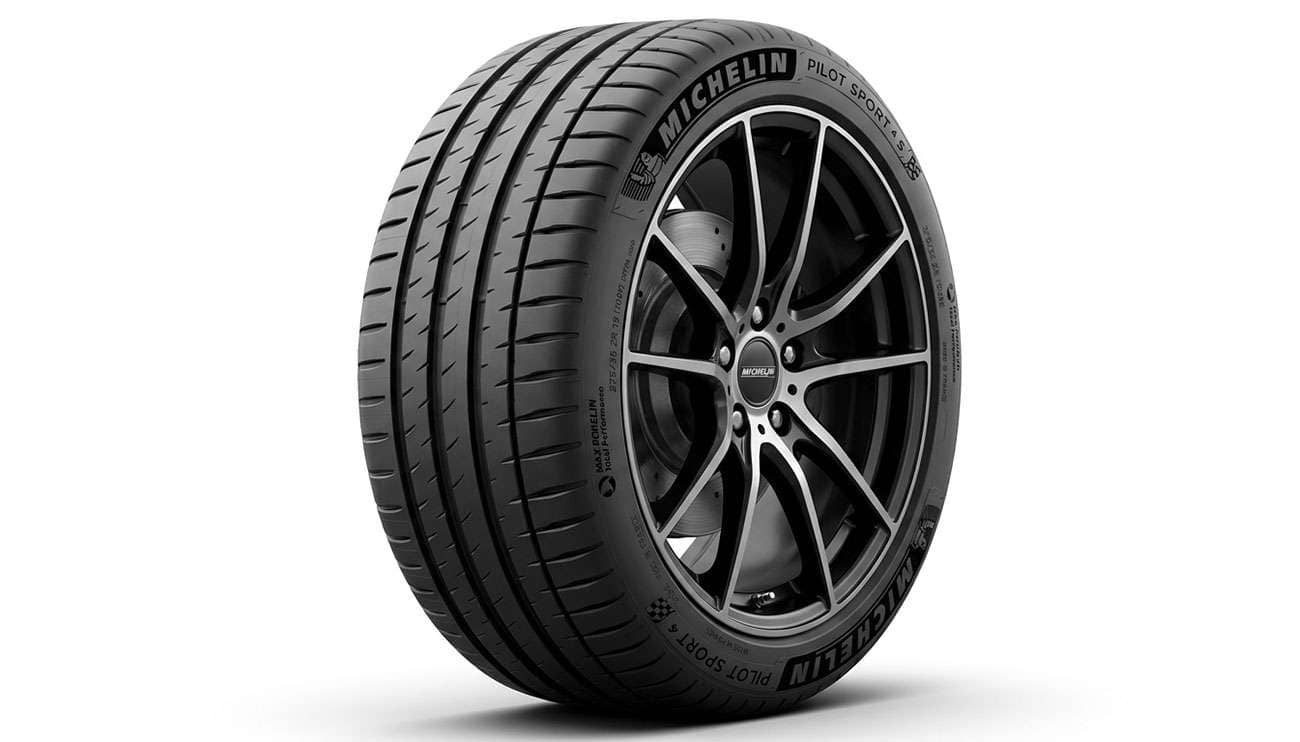
A performance tire is built to prioritize grip, steering response, and high-speed stability over ride comfort and tread life. That is the definition everyone gives you, and it is not wrong - it is just not useful, because performance tire is a marketing umbrella covering five distinct tiers. We stock all five. They differ in compound, speed rating, tread life, and one thing nobody puts in the definition: whether the tire is safe to drive in the cold. Buy the wrong tier and you will find that out in January.
Walk into any tire retailer and ask for a performance tire and you will be shown things that have almost nothing in common with each other. That is not a sales problem. It is a category problem. The industry uses one phrase for a range that runs from a mildly sporty all-season sedan tire to a shaved track compound with a treadwear grade in the double digits.
Here is how the tiers actually break down, using the same classifications we sort our own catalog by.
Tier |
What It Is Built For |
Season |
Safe Below 45F? |
Typical Treadwear Grade |
|---|---|---|---|---|
Performance |
Sporty sedans and coupes; a step up from touring in response, minimal give-up in comfort |
Usually all-season |
Yes |
400 to 560 |
High Performance |
V and W rated applications; noticeably firmer sidewall and quicker turn-in |
All-season or summer |
Check the sidewall - both exist |
340 to 500 |
Ultra High Performance |
Sports sedans and performance cars; the largest tier by volume and the widest internal range |
Split roughly evenly |
Only the all-season versions |
200 to 500 |
Sport and Maximum Performance |
Serious sports cars; maximum dry and wet grip, softest street-legal compounds |
Summer only |
No |
200 to 300 |
Track and R-compound |
Track days and competition; needs heat in the tire to work at all |
Summer only, arguably track only |
No |
60 to 200 |
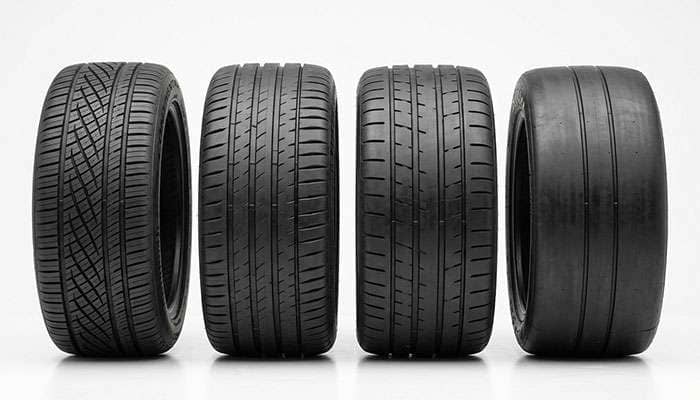
Notice the column that changes the most between rows. It is not grip and it is not price. It is whether the tire works in the cold. Two of those five tiers are genuinely hazardous on a forty-degree morning, and nothing in the phrase "performance tire" tells you which one you bought.
Work from your climate first, then your driving. That order matters, because climate is a hard constraint and driving style is a preference.
Stay in the all-season side of Performance, High Performance, or Ultra High Performance. You give up some ultimate dry grip and you keep the ability to drive the car year-round.
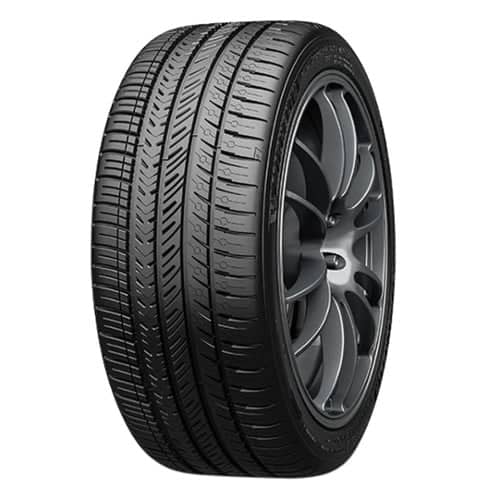
The Michelin Pilot Sport A/S 4 is the benchmark here, from $189.99. It is a genuine UHP tire with all-season capability, and it is what I put on cars whose owners want the handling but live somewhere with weather.
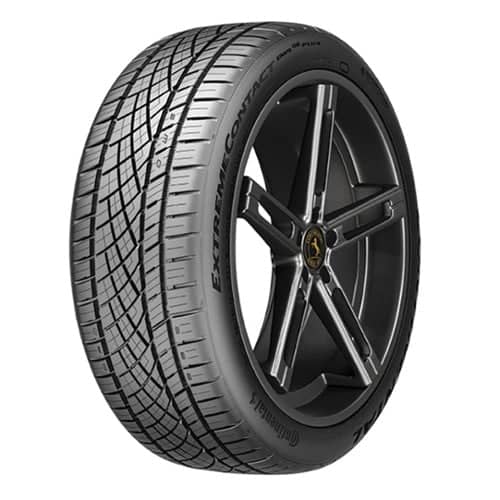
The Continental ExtremeContact DWS06 Plus, from $158.99, is the other one worth knowing. The DWS in the name stands for Dry, Wet, Snow, and the letters are molded into the tread as wear indicators - as the tire wears down, the S disappears first, then the W. It is a clever bit of engineering that tells you when the tire has stopped being a three-season tire.
Now the summer tiers open up, and the grip difference is not subtle. The Michelin Pilot Sport 4 S, from $237.99, is a Maximum Performance summer tire and it is the reference point most people measure against.
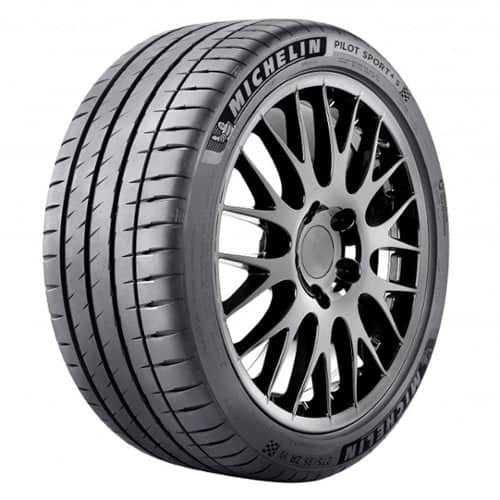
The Pirelli P Zero PZ4, from $141.43, sits in our Sport Performance tier and is heavily represented in OE fitments on European performance cars. If your car came with P Zeros from the factory, staying in the family keeps the calibration your chassis engineers signed off on.
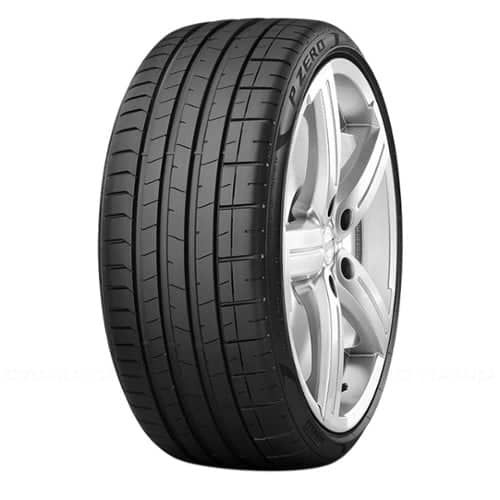
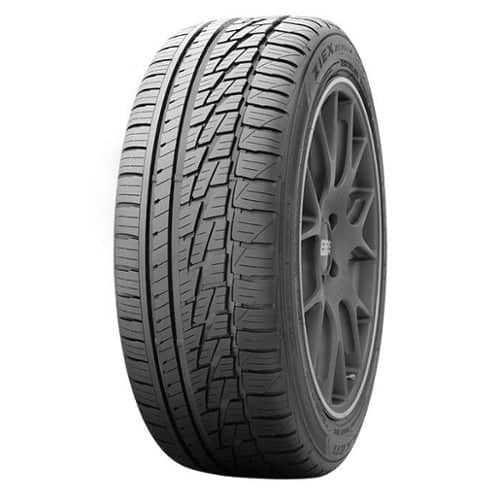
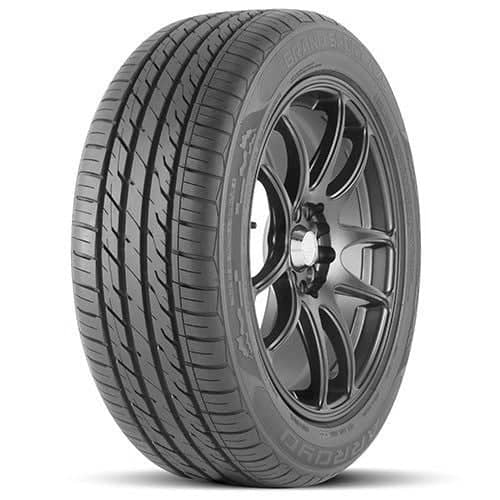
The entry tiers are legitimate tires, not consolation prizes. The Falken Ziex ZE950 A/S from $54.48 covers High Performance all-season duty at a price that leaves room in the budget, and the Arroyo Grand Sport A/S from $56.72 handles the Performance tier for daily drivers who want a W-rated tire without a premium badge.
The Michelin Pilot Sport Cup 2 from $307.32 is where the street ends. This tire needs heat to work and it is not pretending otherwise - on a cold street it is worse than a good all-season, and it wears at a rate that will surprise you. It belongs on a car that sees sessions.
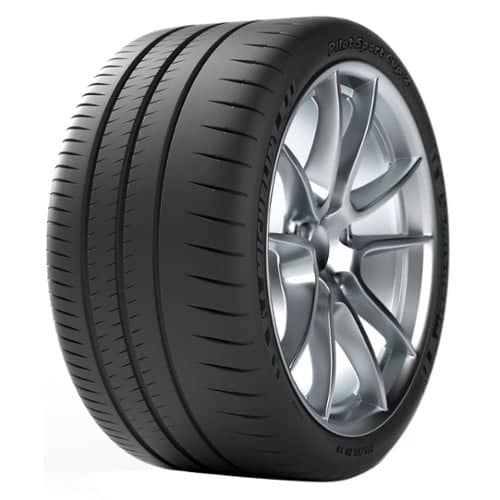
For a full ranked list at the sharp end of the category, Dennis put together 15 best high performance tires for sports cars.
This is the part the definitional answers leave out, and it is the part that actually matters for your safety.
A summer performance tire uses a compound engineered to stay pliable and grippy at elevated operating temperatures. That same chemistry works against it going the other direction. As ambient temperature drops toward and below roughly 45F, the compound stiffens. It stops conforming to the road surface at a microscopic level, which is where a large share of dry grip actually comes from. Braking distances lengthen. Turn-in gets vague and then abruptly lets go instead of sliding progressively.
Most manufacturers publish guidance in the 40F to 45F range as the floor for summer compounds. Below that you are not driving a high-grip tire anymore. You are driving a low-grip tire that still has a high speed rating printed on it, which is a genuinely dangerous combination because nothing about the car warns you.
That last point deserves emphasis, because it is the mechanism that catches people. A worn tire telegraphs its condition - you can see the tread depth. An underinflated tire triggers the TPMS light. A cold summer tire looks exactly like a warm summer tire. The tread depth is full, the pressure is correct, the car gives you no indication whatsoever. The only signal is a braking distance you do not discover until you need it, and a breakaway that arrives without the progressive slip angle a warm tire gives you first. Drivers describe it as the car letting go with no warning, and that description is literally accurate.
There is a second-order effect worth understanding too. Tires generate their own heat through sidewall flex and tread deformation as they roll, which is why a summer tire on a track gets better after a few laps. In cold ambient temperatures the tire sheds that heat to the air faster than driving generates it, so a short commute never brings the compound into its operating window at all. The tire that felt outstanding in September is not going to warm up its way out of the problem in January on a fifteen-minute drive to work.
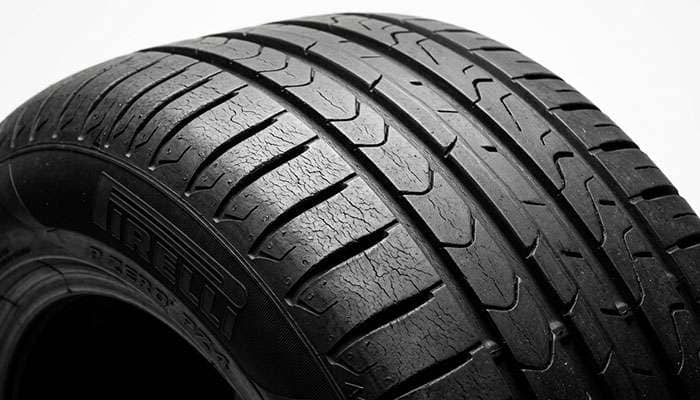
It gets worse in storage. Leave summer tires sitting through a hard freeze, generally cited around 20F and below, and the compound can develop surface cracking that does not reverse when things warm back up. That tire is finished as a performance tire regardless of how much tread is left on it. If you are seeing cracks, checks, or any deformation in the rubber, read tire sidewall damage and whether it is safe to drive before you put the car back on the road.
Two practical rules come out of this. First, a summer performance tire is a seasonal product in most of the country, and you need somewhere to put it and something to drive on in the meantime. Second, all-season on a performance tire does not mean winter - it means the compound stays functional in cold, not that the tire is a snow tire. The distinction is laid out in summer tires versus all-season tires, and the compound chemistry behind it is covered in how tire compounds actually behave in extreme weather.
Four things, and understanding them explains every tradeoff in the tier table above.
Compound. Higher silica content and softer polymers deform into road surface texture and generate mechanical interlock plus molecular adhesion. Softer grips harder and wears faster. There is no way around that relationship; it is the central tradeoff of the entire category.
Tread void ratio. Performance tires run less open space between tread blocks than touring or all-terrain tires. More rubber touching pavement means more grip, but less room to evacuate water, which is why wet performance on a summer tire depends heavily on how well the remaining grooves are engineered rather than on how many there are.
Block stiffness and sidewall construction. Large, tied-together shoulder blocks resist squirm under cornering load. A stiffer sidewall transmits steering input with less delay, which is what people are describing when they say a tire feels responsive. It is also why performance tires ride firmer - the same stiffness that gives you response transmits impacts.
Contact patch shape. Performance tires are typically wider with a lower aspect ratio, producing a shorter and wider contact patch. That geometry favors lateral grip during cornering over longitudinal grip during braking and acceleration, which is exactly the priority for a car meant to be driven on a road with corners in it.
Those four factors interact rather than stacking independently, which is why tire engineering is hard and why two tires with similar specifications on paper can feel completely different. A soft compound on a tread pattern with too much block movement will squirm and feel vague despite having enormous theoretical grip. A stiff block structure on a hard compound will feel sharp and responsive right up until it exceeds available traction, then let go abruptly. The tires that earn their reputations are the ones where the compound, block geometry, and casing stiffness were developed together rather than optimized separately.
This also explains something that confuses a lot of buyers: why a well-engineered ultra high performance all-season can outperform a mediocre summer tire in warm dry conditions. Compound softness is only one of four levers. A manufacturer with better block geometry and casing design can beat a softer compound that has nothing else going for it. The category label sets the ceiling; the engineering determines where in that range the tire actually lands.
Speed rating ties directly into construction. The V, W, Y, and ZR ratings you see on performance tires reflect verified performance in standardized high-speed testing, and the internal construction has to be capable of shedding the heat that speed generates. Never fit a tire below the speed rating your vehicle specifies. The full breakdown is in tire speed rating explained.
Yes, and the treadwear number on the sidewall is a less reliable guide to how much faster than most people assume.
The UTQG treadwear grade is part of the Uniform Tire Quality Grading system. A grade of 400 nominally means the tire should last four times as long as a reference control tire under a standardized government test procedure. Sounds objective.
Here is the catch that changes how you should read it: manufacturers assign their own grades. Each one runs the test and rates its tire against the control, and there is meaningful latitude in how they interpret and apply the result. There is also a competitive incentive to grade conservatively on a premium tire and generously on a budget one.
The practical consequence is that treadwear grades are reasonably comparable within a manufacturer's own lineup and considerably less comparable across manufacturers. A 300 from one brand and a 300 from another are not a like-for-like promise. If you are cross-shopping brands on treadwear alone, you are comparing numbers that were not generated to be compared. We go deeper on this in UTQG tire ratings decoded.
Rough real-world expectations by tier, assuming correct alignment, pressure, and rotation:
Tier |
Realistic Tread Life |
Typical Mileage Warranty |
What Shortens It Fastest |
|---|---|---|---|
Performance all-season |
50,000 to 65,000 miles |
Commonly offered |
Underinflation and skipped rotations |
High Performance all-season |
40,000 to 55,000 miles |
Commonly offered |
Aggressive alignment settings |
Ultra High Performance all-season |
30,000 to 45,000 miles |
Sometimes offered |
Negative camber on a staggered setup |
Summer Sport and Maximum |
15,000 to 30,000 miles |
Rarely offered |
Heat cycling and spirited driving |
Track and R-compound |
Measured in track sessions |
None |
Everything, by design |
The failure modes here are not gradual the way they are with a wrong-sized truck tire. They arrive on a specific morning.
The first cold morning. You have summer compound on a car in November. Ambient is 38F. Braking distance from 60 has grown by a margin you did not consent to, and the first time you need it is the first time you learn. This is the real cost and it is a safety cost, not a money one.
The first rain on worn summer tread. Low void ratio plus reduced tread depth is a hydroplaning setup. Performance tires give up wet capability faster as they wear than touring tires do, because they started with less water evacuation capacity to spend.
Month three, the alignment bill. Performance tires are far less forgiving of alignment error than touring tires. A quarter degree of camber that a touring tire would absorb across 60,000 miles shows up as a destroyed inside shoulder on a UHP tire in a single season.
The replacement cycle you did not budget. Somebody buys a max performance summer tire for a daily commuter because the grip numbers impressed him, then replaces a $240 per corner tire at 18,000 miles. That is not a defect. That is the tire doing exactly what it was designed to do, purchased by someone who needed a different tier.
The storage problem. If you buy summer, you need a second set for cold months and somewhere climate-stable to keep the off-season set. Factor that into the purchase, because discovering it in December is expensive.
There is also a quieter cost that shows up on the other side of the ledger, and it is worth naming because it cuts the opposite direction. Buying too far down the tier ladder on a car that was engineered around a specific grip level changes how the vehicle behaves in ways the driver did not sign up for either. Stability control and ABS calibration are tuned against an assumed friction range. Fit a substantially lower-grip tire to a car whose electronics expect summer performance rubber and the systems still work, but they intervene earlier and more often, and the handling balance the chassis engineers dialed in shifts. It is not dangerous the way cold summer rubber is dangerous. It just means you paid for a car you are no longer entirely driving.
Step 1 - Check your climate floor. How many weeks a year does your area sit below 45F? If the answer is more than a couple, you are in the all-season tiers unless you commit to a second set.
Step 2 - Read the placard and the OE fitment. Your vehicle specifies a minimum speed rating and a size. Stay at or above the speed rating. If the car came with a specific performance tire from the factory, that tells you what the chassis was tuned around.
Step 3 - Be honest about your driving. Commuting with occasional enthusiasm is Performance or High Performance. Canyon weekends and autocross is Ultra High Performance. Track days are their own tier and their own set of tires.
Step 4 - Look at the sidewall for the season marking, not the tier name. This is the step people skip. The tier name does not tell you summer versus all-season. Find the M+S marking or its absence, and check the manufacturer's stated temperature guidance.
Step 5 - Compare treadwear within a brand, not across brands. Use the grade to choose between two Michelins. Do not use it to choose between a Michelin and a Falken.
Step 6 - Get an alignment when you fit them. Not optional on this category. Performance tires punish alignment error faster than anything else you can bolt on.
If you want the all-season side narrowed down for you, Dennis already ranked those in 9 best all-season performance tires. Otherwise you can browse the full range across every tier in our performance tires selection.
A performance tire trades comfort and tread life for grip and response. That much is true and it is what every definition tells you. What the definitions leave out is that the phrase covers five tiers with genuinely different capabilities, and that the line between them that matters most is not how fast you can corner - it is whether the tire still works when it is cold.
Pick your tier from your climate first and your driving second, verify the season marking on the sidewall rather than trusting the category name, and compare treadwear grades only within a single manufacturer. Do those three things and the category stops being confusing.
A performance tire is engineered to prioritize grip, steering response, and high-speed stability over ride comfort and tread life, using softer compounds, stiffer sidewalls, and a lower tread void ratio. The term covers five distinct tiers ranging from mildly sporty all-season tires to track-focused R-compounds, and the tiers differ in whether they are safe to drive in cold weather.
Yes, though the size of the difference depends on conditions. In warm dry and wet conditions the improvement in braking distance, cornering grip, and steering response over a touring tire is substantial and immediately noticeable. In cold conditions a summer performance tire is actively worse than a good all-season, so the benefit reverses below roughly 45F.
Yes. All-season versions exist across the Performance, High Performance, and Ultra High Performance tiers, and modern ultra high performance all-season tires give up far less dry grip than they used to. The Sport, Maximum Performance, and track tiers are summer-only. Note that an all-season performance tire is not a winter tire; it means the compound stays functional in cold weather, not that the tire has snow traction.
No, they generally last considerably less. A Performance all-season may reach 50,000 to 65,000 miles, an ultra high performance all-season 30,000 to 45,000, and a maximum performance summer tire often 15,000 to 30,000. The softer compound that generates grip is the same thing that wears faster, and that tradeoff is fundamental to the category rather than a shortcoming of any one tire.
Usually yes on both sticker price and cost per mile, because you are paying more for a tire that lasts fewer miles. Entry-tier performance all-seasons start under $60 per tire, while maximum performance and track-focused tires run $240 to $300 and up. The cost-per-mile gap is wider than the sticker gap suggests once shorter tread life is factored in.
All-season performance tires can be driven year-round in mild winters, though they are not a substitute for dedicated winter tires in snow and ice. Summer performance tires should not be driven below roughly 45F, because the compound stiffens and grip drops sharply with no warning from the vehicle. Storing summer tires through a hard freeze can also cause permanent compound cracking.



