
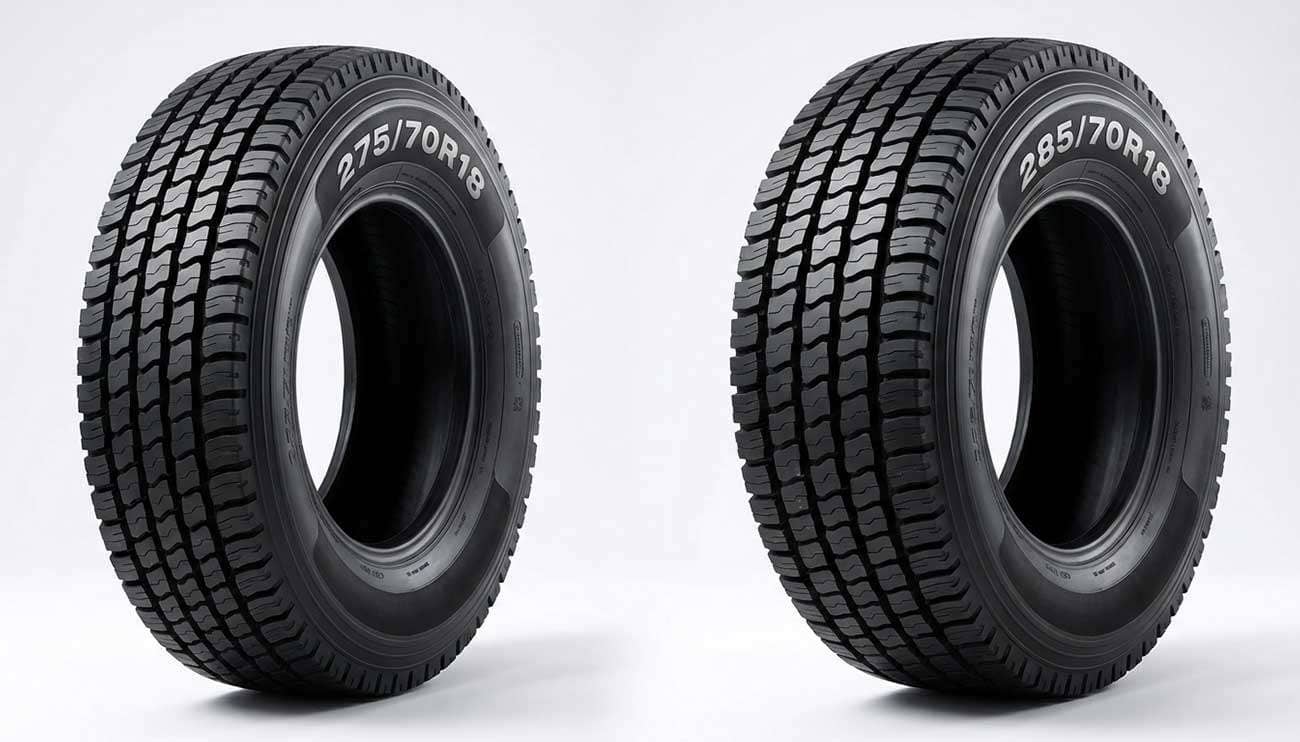
Choosing between 275 and 285 tires affects more than just the numbers on your sidewall. That 10mm width difference creates distinct changes in how your vehicle handles, sounds, and performs on the road. A 275 tire measures 275 millimeters across the tread, delivering a quieter ride and better fuel economy. The wider 285 tire spans 285 millimeters, providing stronger grip and enhanced stability when you need it most.
The decision between these two sizes comes down to what matters most for your driving. Narrower 275 tires excel at daily commuting and highway driving, offering improved fuel efficiency and reduced road noise. When you want better traction for off-road adventures or need enhanced stability at higher speeds, the wider 285 tires deliver a larger contact patch that boosts grip.
Your choice depends on whether fuel economy and comfort take priority, or if traction and performance drive your decision. This guide covers everything you need to know about both tire sizes, helping you select the right option for your vehicle and driving style.
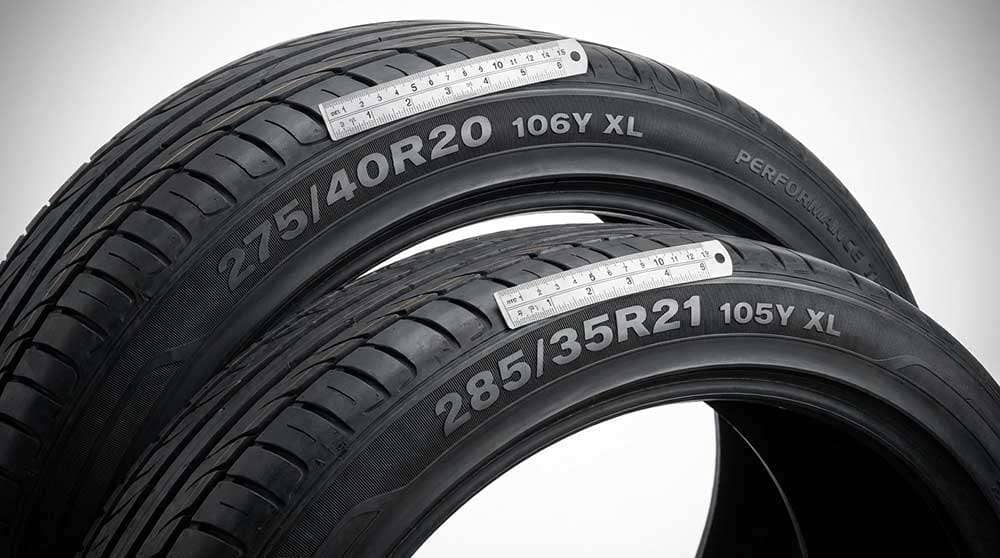
Tire size numbers follow a straightforward system once you understand what each part represents. The difference between 275 and 285 tires becomes clear when you break down these measurements and see how they affect your vehicle's performance.
These numbers tell you the exact width of your tire tread in millimeters. A 275 tire measures 275mm across its tread surface, while a 285 tire spans 285mm. This width measurement is part of a complete tire designation like 275/65R17, where the number following the slash shows the aspect ratio (sidewall height as a percentage of width), R stands for radial construction, and the final number indicates wheel diameter in inches.
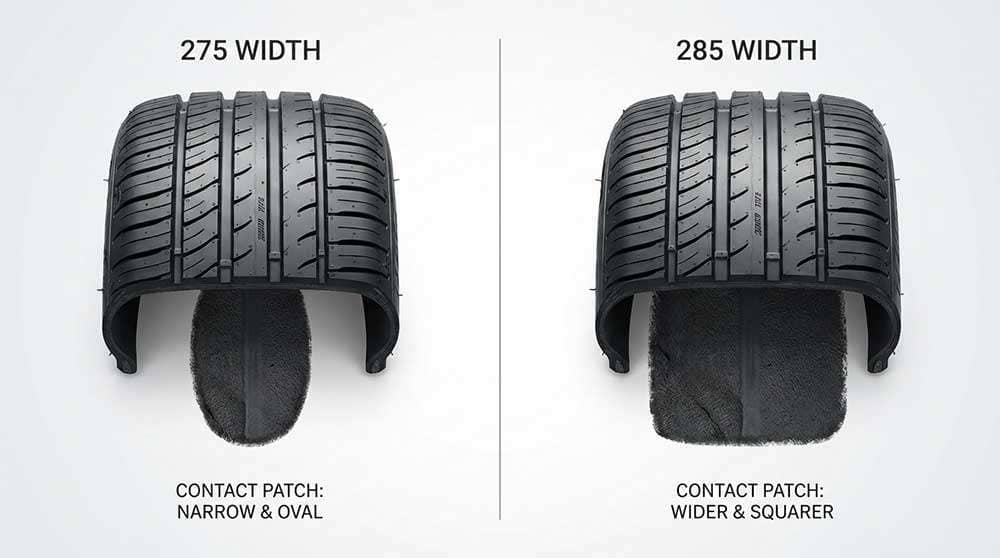
The width difference between these sizes is exactly 10mm or approximately 0.39 inches. This measurement might seem small, but it creates noticeable performance changes. The wider 285 tires put more rubber on the road, creating a larger contact patch for better grip. The narrower 275 tires concentrate more pressure per square inch on their smaller footprint.
Tire height depends more on the aspect ratio than just the width measurement. When comparing tires with identical aspect ratios, a 285 tire typically measures 0.3 to 0.5 inches taller than a comparable 275 tire. The height difference becomes more pronounced with different aspect ratios - a 275/65R17 versus a 285/70R17 shows approximately 1.63 inches or 41.5mm difference in overall height.
A 285 tire is 10mm (0.39 inches) wider than a 275 tire. This represents about a 3.6% increase in width. While less than half an inch difference might not look dramatic, this extra width changes the tire's contact patch and affects cornering performance, off-road traction, and handling characteristics.
Complete tire measurements show the real impact of this width difference. A 285/70R17 measures 11.22 inches wide compared to 10.83 inches for a 275/65R17. That 3.6% width increase translates into measurable performance differences you'll notice while driving.
Real-world driving reveals where that 10mm width difference between 275 and 285 tires makes the biggest impact on your vehicle's performance.
Daily road conditions favor the 275 tires with reliable grip on both wet and dry pavement. Their narrower profile cuts through snow more effectively, reaching the traction layer beneath. Off-road terrain tells a different story. The 285 tires deliver superior traction on sand, mud, and loose surfaces through their wider footprint. This increased contact patch provides better grip when you need it most in challenging environments.
Fuel economy becomes a key consideration when comparing these sizes. The 275 tires typically provide better fuel economy due to reduced rolling resistance. Drivers frequently report a 2-3 mpg decrease after switching to wider 285 tires. This happens because wider, heavier tires demand more energy to rotate, increasing resistance against forward motion.
High-speed stability favors the wider 285 tires, which provide enhanced cornering ability through their broader stance. They feel more planted during highway driving and offer better control when you push the limits. The 275 tires counter with more responsive steering and easier maneuverability, making them ideal for daily driving situations.
Comfort characteristics vary significantly between these sizes. The 275 tires operate more quietly on both highways and city streets. They also absorb road imperfections better, providing a smoother ride quality. Despite their performance advantages, 285 tires generate more road noise due to their wider contact patch and typically stiffer sidewall construction.
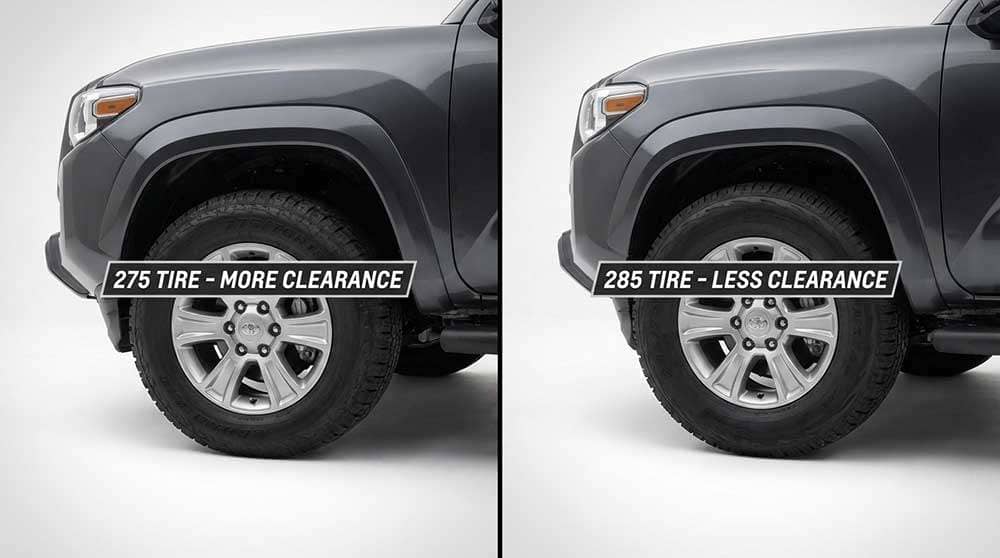
Understanding if these tires will actually fit your vehicle requires looking beyond just the size numbers. Several factors determine whether your vehicle can safely run either 275 or 285 tires.
Both tire sizes share similar wheel width needs, making the switch relatively straightforward. A 275 tire typically fits wheels between 8 to 10 inches wide, while 285 tires work best on 9 to 10-inch wheels. This overlap means if your current wheels accommodate 275 tires, they'll likely work with 285s too.
The extra width of 285 tires creates potential clearance problems. These wider tires may rub against wheel wells, especially during full steering lock or suspension compression. Before making the switch, measure your current clearance carefully. Most vehicles designed for 275 tires have only minimal extra space, and that 10mm increase per side (20mm total) can make the difference between smooth operation and constant rubbing.
Stock suspension systems rarely accommodate larger tires without modifications. Running 285 tires often requires lift kits ranging from 2 to 4 inches depending on your vehicle. Some drivers opt for wheel spacers as a less expensive alternative, though this solution brings its own handling considerations. The 275 tires typically fit stock configurations without issues.
Switching tire sizes affects your speedometer accuracy and odometer readings. Moving from 275 to 285 tires changes the tire's rolling circumference, causing speedometer readings to display slightly lower than actual speed. A 285/70R17 with its larger diameter will show approximately 2-3% error compared to factory 275 specifications. Recalibration restores accurate readings.
Beyond performance and fitment considerations, the financial impact of choosing between 275 and 285 tires plays a crucial role in your decision.
Tire prices follow a consistent pattern across tire sizes. The 275/65R18 tires average $202.67, while comparable 285/65R18 tires cost $216.08. Premium models show larger price differences—BFG KO2 in 285/60/20 costs $385 compared to $235 for the 275/60/20 size, creating a $600 savings for a complete set.
Warranty coverage varies between sizes and models. The General Grabber HTS60 in 275 provides up to 65,000-mile tread warranty, while the Crossmax AT-1 in 285 offers 50,000-mile coverage. The narrower 275 tires often deliver longer tread life due to reduced rolling resistance and more even wear patterns. For the best selection of 275 and 285 tire models at competitive prices, visit Performance Plus Tire
Here's a side-by-side comparison of the key differences between 275 and 285 tires to help you make the right choice for your vehicle:
Characteristic |
275 Tires |
285 Tires |
|---|---|---|
Width |
275mm (10.83 inches) |
285mm (11.22 inches) |
Width Difference |
Base measurement |
10mm (0.39 inches) wider |
Road Performance |
- Quieter ride |
- Enhanced grip |
Fuel Economy |
Better fuel efficiency |
2-3 mpg decrease compared to 275 |
Off-Road Performance |
Good for daily road conditions |
Better traction on sand, mud, and loose terrain |
Ride Comfort |
- Quieter operation |
- More road noise |
Fitment Requirements |
- Usually fits stock configurations |
- May require suspension modifications |
Average Price Range* |
Around $202.67 (275/65R18) |
Around $216.08 (285/65R18) |
Best Use Case |
Daily commuting and highway driving |
Off-road adventures and performance driving |
*Based on example sizes mentioned in the article
The differences shown in this comparison highlight why choosing the right tire size matters for your specific driving needs. Whether you prioritize fuel savings and comfort or maximum traction and performance, understanding these trade-offs helps you select the best option for your vehicle.
That 10mm width difference between 275 and 285 tires creates performance variations that matter more than the numbers suggest. The right choice depends on your specific driving needs and vehicle setup. We've shown how 275 tires deliver the best combination of fuel economy, comfort, and easy installation for daily drivers. Meanwhile, 285 tires provide superior traction and stability when you need maximum performance off-road or during aggressive driving.
Most vehicles handle 275 tires without any modifications, making them the practical choice for drivers who want better fuel economy and quieter rides. When you need the enhanced grip and stability that 285 tires offer, be prepared for potential clearance issues and higher fuel costs.
The price difference between these sizes can save you hundreds of dollars over a complete set, with 275 tires typically lasting longer due to lower rolling resistance. Consider your vehicle's clearance, your typical driving conditions, and whether you value efficiency over maximum traction.
Ready to find the perfect tires for your vehicle? At Performance Plus Tire, we carry the best selection of both 275 and 285 tires at the lowest prices. Our expert team can help you choose the right size and model that matches your driving style and vehicle specifications.
The best tire choice balances your performance needs with practical considerations like cost, installation requirements, and fuel efficiency. With the right information, you can select tires that enhance your driving experience while fitting your budget and vehicle perfectly.
Understanding the 10mm width difference between 275 and 285 tires helps you make an informed decision based on your driving priorities and vehicle requirements.
• 275 tires excel for daily driving - offering quieter rides, better fuel economy (2-3 mpg improvement), and easier fitment on stock vehicles without modifications.
• 285 tires provide superior performance - delivering enhanced grip, better high-speed stability, and improved off-road traction on sand, mud, and loose terrain.
• Fitment requirements differ significantly - 275 tires typically fit stock configurations, while 285 tires often require lift kits, spacers, or suspension modifications to prevent rubbing.
• Cost considerations favor narrower tires - 275 tires average $202 versus $216 for 285s, with premium models showing even larger price gaps (up to $600 savings per set).
• Choose based on your driving style - select 275 for daily commuting and highway efficiency, or 285 for off-road adventures and performance driving where enhanced traction matters most.
The right tire choice balances your vehicle's specifications, driving environment, and performance needs rather than simply choosing the widest option available.
The main difference is the width. 285 tires are 10mm (0.39 inches) wider than 275 tires, which affects performance, handling, and fuel efficiency.
Yes, but it requires careful consideration. Check your vehicle's clearance, as 285 tires may rub against wheel wells or suspension components. You might need modifications like lift kits or spacers to accommodate the wider tires.
275 tires typically offer better fuel economy due to lower rolling resistance. Switching to 285 tires often results in a 2-3 mpg decrease in fuel efficiency.
285 tires generally perform better off-road due to their wider footprint, providing better traction on sand, mud, and loose terrain. However, 275 tires can still handle most off-road conditions adequately.
Yes, there can be noticeable price differences. On average, 285 tires tend to be slightly more expensive than 275 tires. The price gap can widen significantly with premium models, potentially saving hundreds of dollars when choosing a set of 275s over 285s.



