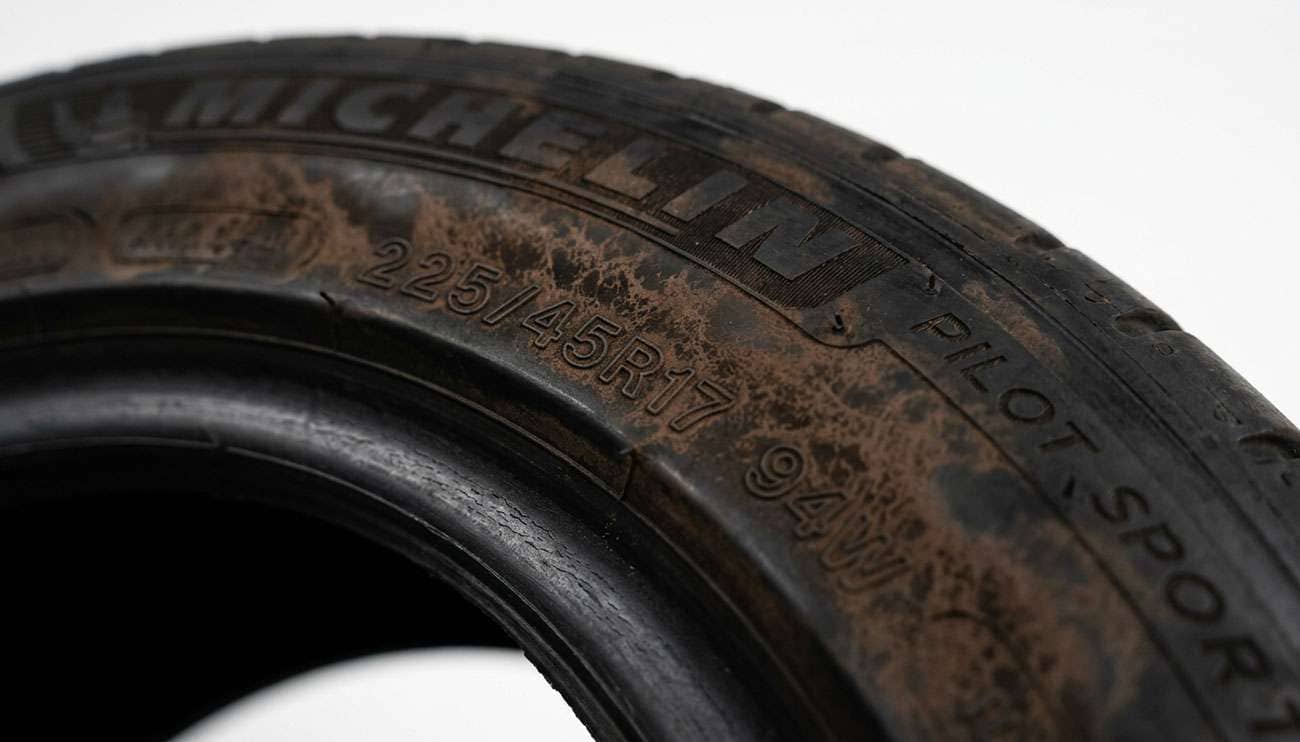
A fella pulled into the shop a while back, pointing at his sidewalls like he'd caught his tires committing a crime. "Hank," he says, "my tires are rusting." Now, rubber doesn't rust, but I knew exactly what he meant. Both fronts had gone from deep black to a dull, chocolate-brown haze, the kind that looks like dried mud until you try to wipe it off and it won't budge. He was sure he'd bought a bad set.
He hadn't. What he was looking at is something I've explained at the counter a thousand times, and it has a name: blooming. Far from a defect, that brown film is a sign the tire is doing exactly what it was built to do. Let me walk you through what's really happening on your sidewalls, why it shows up, and how to get that rich black back without hurting the rubber.
Tire rubber isn't just rubber. To survive years of sun, weather, and the ozone floating around in everyday air, manufacturers blend protective chemicals right into the compound. The main one is a mouthful called antiozonant, and the workhorse version goes by 6PPD. Its whole job is to fight off the slow drying and cracking that would otherwise turn your sidewalls brittle. The deep black you love, by the way, comes from carbon black in the compound, which is its own story I get into over in our piece on why tires are black.
Here's the trick. For that antiozonant to protect the surface, it has to migrate to the surface. Over time it works its way out of the rubber and rises to the outer skin of the sidewall, where the ozone and oxygen actually are. The moment it gets there and meets the air, it oxidizes, and oxidized antiozonant is brown. That dull, rusty-looking film is nothing more than spent protective chemistry sitting on top of your tire. It is not dirt that worked its way into the rubber, it is not the tire rotting, and it sure isn't rust.
This is the part that always settles folks down at the counter. Blooming is the tire's defense system showing its work. As long as that antiozonant keeps migrating to the surface, your rubber is staying pliable and resisting the ozone cracking that ages tires from the outside in. A tire that blooms is a tire whose protection is still active and doing its rounds.
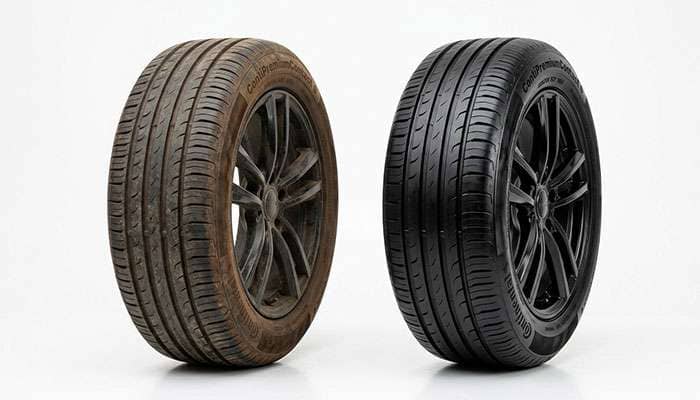
Compare that to the real enemy, which is dry rot. When a tire finally runs out of its protective reserves, or just gets old enough that the rubber gives up, you get the fine spiderweb cracking in the sidewall and tread grooves that I cover in our guide on tire dry rot and when to replace. Browning is cosmetic. Dry rot is structural. One is your tire flexing its muscles, the other is your tire waving the white flag. Knowing the difference is the whole ballgame, and I'll come back to it at the end.
Every tire blooms eventually, but some go brown faster than others. The compound blend matters, where you park matters, and a few outside agitators speed the whole thing along. Here's what I tell people to watch for.
Factor |
What It Does |
Effect on Browning |
|---|---|---|
UV and sunlight |
Drives antiozonant out and oxidizes it on the surface |
Speeds it up |
Ozone and oxygen |
React with the surfaced chemical |
Cause the brown itself |
Heat |
Accelerates the migration through the rubber |
Speeds it up |
Leftover mold release |
Traps antiozonant near the surface on newer tires |
Shows up early |
Brake dust |
Metallic grit clings and pulls chemical to the surface |
Speeds it up |
Silicone dressings |
Sticky film grabs dust and road grime |
Looks brown (dirt, not true bloom) |
That last row catches a lot of people. A glossy silicone dressing doesn't cause blooming, but it stays tacky and collects every bit of dust the road throws at it, so the tire looks brown when it's really just dirty. The mold release one surprises folks too. That's the slick coating left in the factory mold so the new tire pops out clean, and a little of it rides home on your sidewalls, which is why a brand-new set can start hazing over within a few weeks.
I've heard every theory under the sun about brown tires, and two come up constantly. The first is that only old, worn-out tires bloom. Not true. A two-week-old tire can bloom thanks to leftover mold release and an active, freshly loaded dose of antiozonant. Age makes it more likely, but youth doesn't make a tire immune.
The second myth is that tire dressings are what turn your sidewalls brown, so you should never use them. Also wrong, and it's the one I most want to put to bed. The browning is the oxidized chemical coming from inside the rubber, not from the bottle. A quality dressing actually does the opposite of causing it, by laying down a barrier that slows the oxidation. The confusion comes from cheap silicone products that hold dirt, which I covered above. If you want more of these counter-myths sorted out, I rounded up a bunch in our piece on common tire maintenance myths.
The good news is that blooming sits on the surface, so it cleans off. The bad news is that a lot of folks reach for the wrong tools and chew up their sidewalls doing it. Here's the way I do it on my own cars.
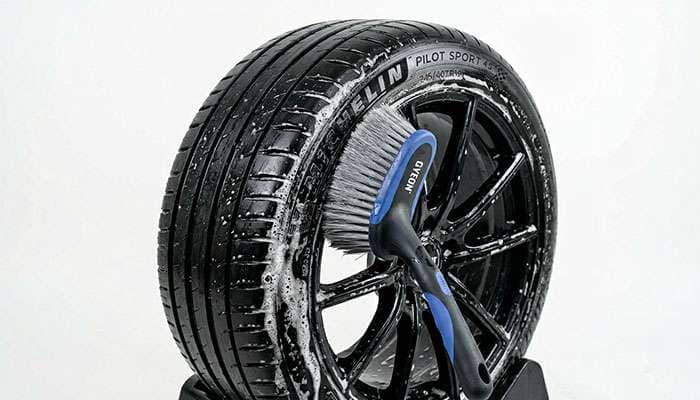
Start dry, knocking the loose dirt and brake dust off with a stiff but non-metal brush. Then rinse the tire down with a garden hose. Mix up a mild solution, a teaspoon of dish soap to a gallon of water does fine, or use a dedicated tire cleaner, and let it sit a minute to break up the oxidized film. Now scrub every inch of the sidewall with a soft-to-medium tire brush, working the soap in. Stay away from brushes with steel bristles, because they can score the rubber and even open up tiny leaks. Rinse it clean, then dry it with a towel so water spots don't set in. If the brown is stubborn, repeat rather than reaching for a harsh degreaser, since aggressive chemicals strip the outer rubber layer and actually make the next round of blooming worse.
If you run vintage whitewalls, the same gentle-first principle applies in spades, and the brown bloom can hide under yellowing on the white band. I walk through that delicate job separately in our guide on restoring faded whitewall tires.
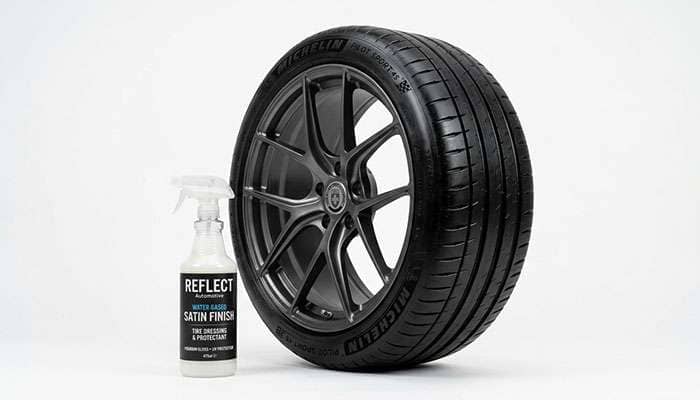
Cleaning gets the brown off. Keeping it off is about the dressing you choose and where you park. On dressings, there are two camps. Water-based products look milky going on, lay down a breathable layer, often carry UV protection, and don't degrade the rubber over time. Solvent and silicone-based products give that wet, glossy look but tend to sling onto your fenders, attract dust, and lean greasy. For long-term tire health I steer people to a quality water-based dressing every time. If you want the full rundown on getting a clean shine without the sling, we cover it in how to make tires shine.
Habits matter just as much as products. Sun is the biggest accelerator, so park in the shade or under a carport when you can. Wash the tires every time you wash the car, even a quick scrub, so brake dust and grime never build up. And if a vehicle is going to sit for a season, get it out of direct sun and off baking concrete. Storing a car or a spare set the right way keeps blooming and dry rot both at bay, which is exactly why we put together a guide on how to store wheels and tires for seasonal swaps.
Ninety-nine times out of a hundred, brown sidewalls are just bloom and a scrub fixes them. But once in a while the brown is riding along with something that actually matters, and that's when I want you paying attention. If, after a good cleaning, you still see fine cracks running through the sidewall or down in the tread grooves, that's dry rot, not bloom, and no amount of scrubbing brings that back. Brittle, hard rubber and cracking mean the protection is spent and the tire is aging out.
Age is the tiebreaker. A tire that's blooming heavily and is also pushing past six to ten years old deserves a hard look regardless of tread depth. The date code on the sidewall tells you exactly how old it is, and I show you how to read it in our guide on how to tell how old your tires are. If the rubber's cracking and the calendar agrees, it's not a cleaning project anymore, it's time for a fresh set. When you get there, you can browse the full lineup over at Performance Plus Tire.
So the next time your sidewalls go that dull chocolate brown, don't panic and don't assume you got a bad set. You're watching tire blooming, the oxidized remains of the very chemistry that keeps your rubber from drying out and cracking. It's cosmetic, it's normal, and it wipes away with a soft brush, mild soap, and a little patience. Keep them clean, dress them with a water-based product, park out of the sun, and your tires will stay black and healthy. Just keep one eye on the difference between harmless bloom and real cracking, because that's the line between a wash bucket and a new set.
Your tires are blooming. Protective chemicals called antiozonants, blended into the rubber to prevent drying and cracking, gradually migrate to the surface. When they reach the air and oxidize, they leave a brown residue. It's a normal chemical reaction sitting on the surface, not dirt, rust, or a sign the tire is failing.
No. Blooming is cosmetic and actually indicates the tire's protective chemistry is still active. It does not affect performance or safety. The thing to watch for is dry rot, which shows up as fine cracking in the sidewall and tread grooves and does not wash away.
No, the brown comes from inside the rubber, not the bottle. A quality water-based dressing actually slows browning by forming a protective barrier. The myth comes from cheap silicone dressings, which stay sticky and collect dust, making a tire look brown when it is really just dirty.
Yes. New tires carry leftover mold release on the sidewalls and a fresh dose of antiozonant, so a set just weeks old can begin hazing brown. It is not a defect, and a normal cleaning removes it.
Brush off loose dirt, rinse, then scrub with a soft tire brush and a mild solution of dish soap and water or a dedicated tire cleaner. Rinse and dry. Avoid steel-bristle brushes and harsh degreasers, which damage the outer rubber and make future blooming worse. Finish with a water-based dressing to slow it coming back.