
I've been turning wrenches and selling tires since before some of you were born, and I'll tell you the truth nobody at the counter wants to say out loud: half of what passes for "tire maintenance" these days is just a polite way to separate you from your money. Folks come into the shop clutching a list of things a quick-lube kid told them they "had" to do, and most of it does nothing but pad the ticket.
Now don't get me wrong. Tires need looking after. Back when I was building hot rods in a buddy's garage with a coffee can full of valve caps, we learned real fast that the four contact patches under your car are the only thing keeping you on the pavement. But there's a difference between care and ceremony. Let me walk you through the rules that are quietly draining your wallet, and the handful that actually earn their keep.
This is the big one, so let's lead with it. Somewhere along the way the industry decided that filling your tires with pure nitrogen instead of plain old air was worth charging you for, sometimes thirty or forty bucks a set, and then a fee every time you top off. The pitch sounds scientific: bigger molecules, less leakage, steadier pressure, longer tire life.
Here's what they don't put on the sign. The air you breathe is already about 78 percent nitrogen. So when you pay for a "nitrogen fill," you're paying a premium to swap out roughly a fifth of what's already in there. The federal safety folks studied this years ago, and the honest verdict from outfits like AAA is that for everyday street driving, the benefits are so small you'd never feel them in the seat of your pants or the gas pump.
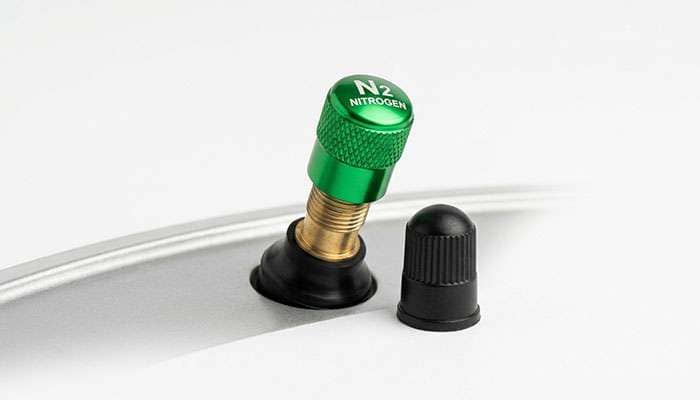
Now, if you're running a race car on a Sunday or a fleet of buses that sit for weeks, sure, there's a real-world case for the consistency. The pros use it for a reason. But your grocery-getter? Save the money. Free air at the corner station, checked regularly, will do everything nitrogen does and cost you nothing. And here's the kicker that makes me grind my teeth: some shops sell nitrogen as "maintenance-free," like you never have to check the pressure again. That's flat wrong, and it's the kind of myth that gets people hurt. We'll get back to that.
Rotating tires is good and proper. Moving them around evens out the wear so all four age together instead of you eating through the fronts twice as fast. I'm not going to argue against rotation. What I'll argue against is the idea that you must rotate at every single oil change like clockwork or the sky falls.
Most tires want a rotation somewhere in the 5,000 to 8,000 mile window, which conveniently lines up with a lot of oil-change intervals, and that's where the "every oil change" rule came from. But oil-change shops have stretched intervals way out on modern cars, some going 7,500 or 10,000 miles, while the marketing message stayed stuck at "every visit." If you're getting talked into a paid rotation every 3,000 miles because that's when you happen to roll in, you're paying for a service your tires didn't need yet.
Front-wheel-drive cars are the worst offenders for this confusion, because they really do wear the fronts faster. That's a reason to rotate on a sensible schedule, not a reason to do it twice as often as the rubber calls for. Learn the right pattern, watch the tread, and rotate on the mileage your tires actually want. A lot of tire warranties even require it on a set schedule, so check your paperwork rather than your service writer's mood.
You catch a nail, the tire's done, and the counter tells you that you've "got to" replace all four. Sometimes that's honest advice. A lot of the time it's the upsell of the day.
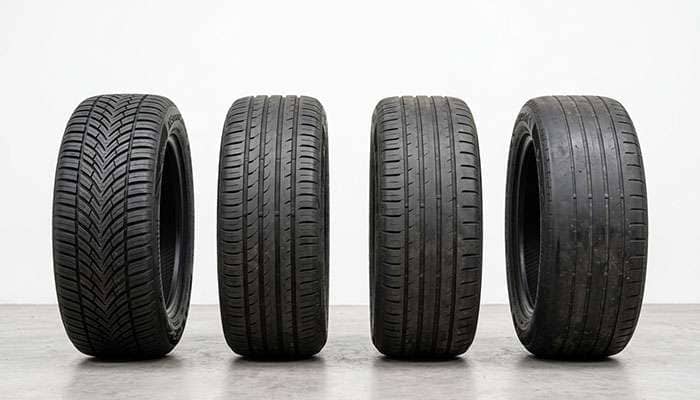
Here's the straight dope. If your other three tires are reasonably fresh, replacing one to match is perfectly fine on a lot of vehicles. The thing that actually matters is how close the new tire's diameter and tread depth come to the others, especially on the same axle. Mismatched tread between the left and right of an axle is what causes trouble, not a brand-new tire next to three half-worn ones in good shape.
Where the "buy four" advice earns its money is on all-wheel-drive vehicles. There, a big difference in rolling diameter between tires can put real strain on the drivetrain, and some manufacturers do want all four matched or at least shaved close. So it's not a flat scam, it's a rule that got copied onto every car whether it applies or not. Know what you're driving before you swallow it. When it genuinely is time for a full set, that's when shopping a quality high-mileage tire like the Goodyear Assurance MaxLife or the touring-friendly Michelin Defender 2 actually pays off, because you're buying tread life you'll keep for years.
Balancing keeps your wheels from shaking the fillings out of your teeth at highway speed, and a properly balanced wheel does ride better and wear more evenly. No argument there. But the notion that you need to pay to rebalance all four every time you rotate? That's another fee looking for a reason.
A wheel that was balanced correctly and hasn't lost a weight or hit a curb-eating pothole doesn't magically fall out of balance because you moved it to a different corner. Balancing is worth doing when you mount new tires, when you feel a vibration that builds with speed, or when you've clearly knocked a weight off. Doing it on a calendar, on tires that ride smooth as glass, is just feeding the machine. Trust your hands on the wheel. If it shakes, get it balanced. If it doesn't, keep your wallet shut.
This is the dangerous myth, and it comes in two flavors. The first is the nitrogen crowd telling you that you'll never have to check pressure again. The second is folks leaning entirely on the little dashboard light to do their thinking for them.
Every tire loses a little pressure over time. Doesn't matter what gas is in it. Hit a curb, run over something sharp, or just let a month go by, and that tire's lower than it should be. The tire pressure monitoring system in your dash is a fine safety net, but on a lot of vehicles it won't even light up until you're already 25 percent low, which is well past where you're hurting fuel economy and chewing up the shoulders of your tread. And aftermarket sensors can read wrong or quit on you entirely.
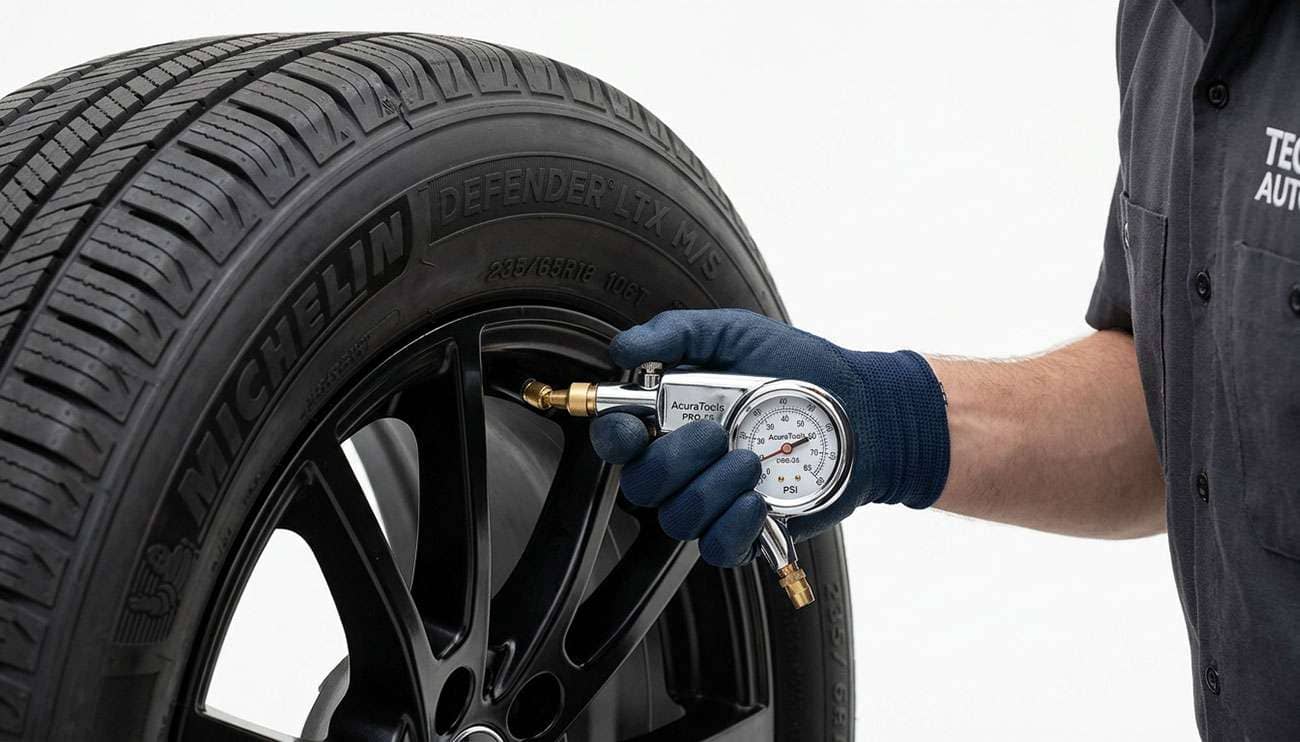
An underinflated tire isn't just a maintenance issue. It's heat, it's blowout risk, and it absolutely costs you at the pump. So no, your tires do not check themselves. A two-dollar gauge and five minutes once a month beats every gadget and gimmick on the market. Set them to the number on the sticker in your door jamb, not the big number molded on the sidewall, which is the maximum, not the target. If you're not sure where to find your figure, here's how to track down your recommended pressure.
Alright, enough about what to stop paying for. After all these years, here's the short list of tire care that genuinely earns its place. None of it is fancy, and most of it is free or close to it.
What To Do |
How Often |
Why It Actually Matters |
|---|---|---|
Check pressure with a gauge |
Monthly, and before long trips |
Saves fuel, prevents heat damage and blowouts, evens out wear |
Rotate the tires |
Every 5,000 to 8,000 miles |
All four wear together so you replace a full set later, not sooner |
Eyeball tread and wear pattern |
Monthly glance, closer look seasonally |
Catches alignment, suspension, and pressure problems before they cost real money |
Balance |
At new mounting or when you feel a vibration |
Smooth ride and even wear, without paying on a calendar |
Alignment |
When the car pulls or tread wears unevenly |
Stops you from scrubbing thousands of miles off a fresh set |
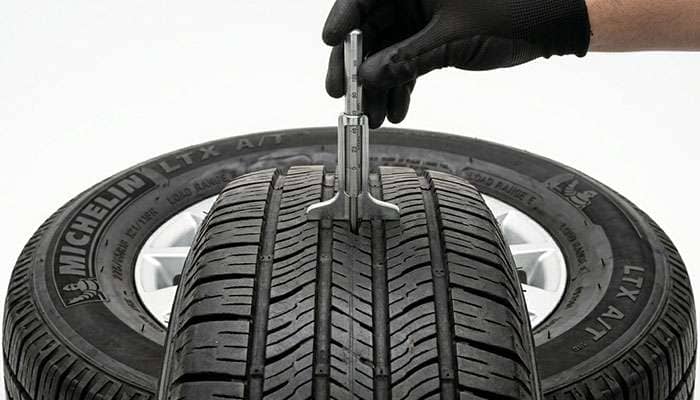
The cheapest one on that list, checking pressure, is the one most people skip and the one that costs you the most when ignored. The tread inspection is the next sleeper. Run your eyes and a penny across the tire once a month and you'll read what your tires are telling you long before a problem becomes a tow truck. Feathered edges, a worn center, bald shoulders, they each point to something specific, and catching it early is the difference between an alignment and a new set of rubber.
That's it. That's the whole gospel. Keep them aired up, move them around, watch the wear, balance and align when the car asks for it, and quit paying for the rest. Do that and a good set of tires will give you every mile the manufacturer promised, and then some.
The tire business has a long history of dressing up optional add-ons as required maintenance, and an honest shop will tell you which is which. Nitrogen fills, calendar-based balancing, knee-jerk "buy four" advice, and rotations on someone else's schedule are where most folks bleed money for no real return. The stuff that genuinely protects your tires, a pressure gauge, a sensible rotation, and a careful eye on the tread, barely costs a thing. Spend your money on good tires and your time on the simple checks, and you'll come out ahead every single time. When you're ready for a fresh set, come see us and we'll set you up with the right rubber for how you actually drive.
For everyday street driving, no. Regular air is already about 78 percent nitrogen, and safety studies show the real-world benefits of a pure nitrogen fill are too small to justify the cost. Nitrogen still leaks over time and still requires regular pressure checks, so you don't gain a "maintenance-free" tire. Racing and certain fleet uses are the exceptions where it can make sense.
Most tires want a rotation every 5,000 to 8,000 miles. That used to line up with oil changes, but modern oil intervals stretch much further, so rotating "every oil change" can mean paying too often. Check your tire warranty, which often specifies a required interval, and rotate on mileage rather than on each shop visit.
Not always. If your other three tires still have good, even tread, replacing one to match is fine on many vehicles, especially when the new tire's diameter and tread depth are close to its axle partner. The big exception is all-wheel-drive, where a mismatch in rolling diameter can strain the drivetrain and the manufacturer may require matched tires.
At least once a month and before any long trip. Tires lose pressure naturally over time, and a TPMS light often won't trigger until you're already significantly low, which hurts fuel economy and wears the tread. Use a handheld gauge and set the pressure to the figure on your door-jamb sticker, not the maximum number molded on the sidewall.



