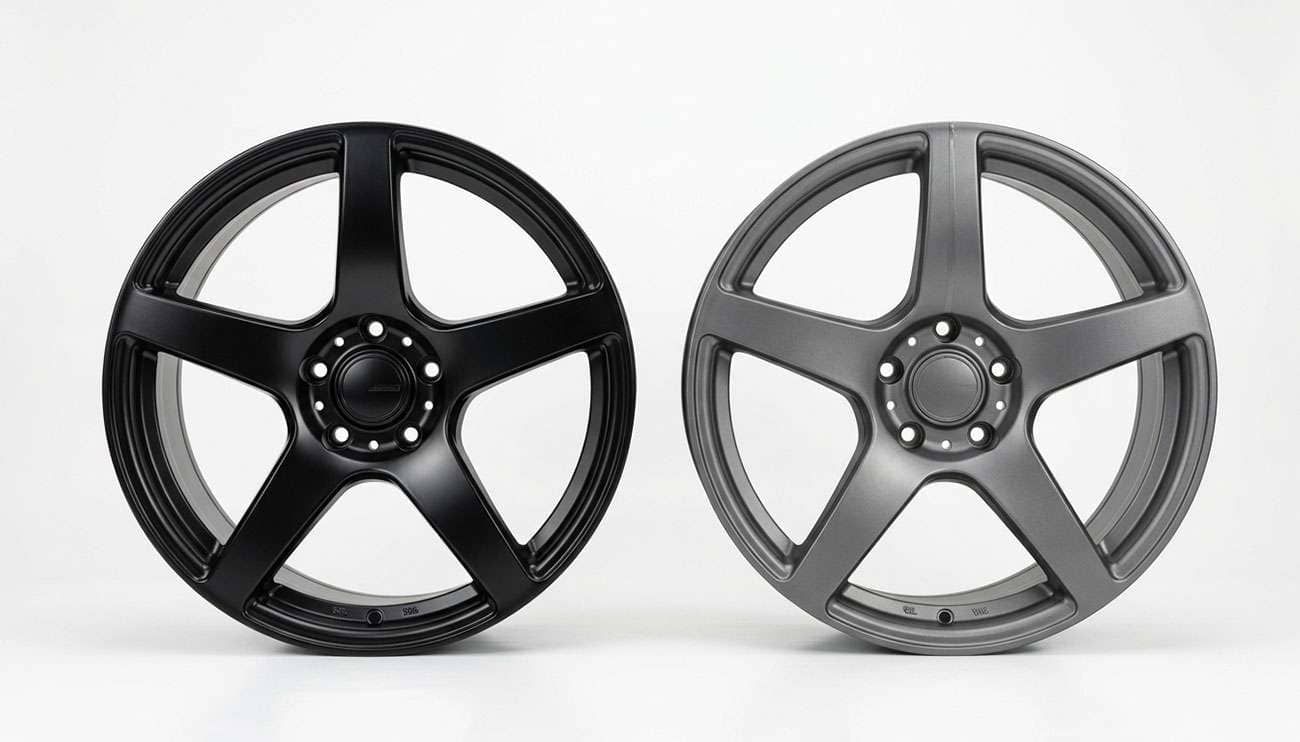
Short answer: at the wheel, neither one is meaningfully cheaper, and the "wrapping is cheaper than painting" line you have read a dozen times is a fact about wrapping an entire car that got copy-pasted onto rims. Professional wheel wrap runs about $100 to $300 per wheel. Professional wheel paint runs about $100 to $200. Powder coating runs about $150 to $300. Those ranges overlap almost perfectly. There is no wrap discount at wheel scale, because a wheel is a small part with enormous labor complexity relative to its surface area. The number that actually separates these options is cost per year of service life. And once you run that number, a brand new set of four wheels starting at $255 beats every professional refinish on this page.
I pull fitment and pricing data all day. Let me show you the arithmetic instead of the marketing.
Method |
Cost Per Wheel |
Set of Four |
Realistic Lifespan |
Cost Per Wheel Per Year |
|---|---|---|---|---|
DIY rattle can paint |
$10 to $15 in materials |
$40 to $60 |
1 to 2 years before chipping |
About $7 |
DIY peelable dip |
$13 to $20 in materials |
$50 to $80 |
1 to 2 years |
About $11 |
DIY vinyl wrap kit |
$20 to $38 in materials |
$80 to $150 |
2 to 3 years, less if applied poorly |
About $10 |
Professional paint |
$100 to $200 |
$400 to $800 |
3 to 5 years |
About $38 |
Professional vinyl wrap |
$100 to $300 |
$400 to $1,200 |
3 to 5 years |
About $50 |
Professional powder coat |
$150 to $300 |
$600 to $1,200 |
7 to 10 years |
About $27 |
New wheels |
From $63.82 |
From $255.28 |
Life of the wheel, factory warranty |
Under $7 |
Read that last column twice. Every professional refinishing option costs more per year than simply buying new wheels, and the two cheapest rows on the whole chart are a can of spray paint and a new set of wheels. That is not a sales pitch, it is division.
Search this question and look closely at what comes back. A large share of the top results are not about wheels at all. They are articles about wrapping an entire vehicle that happen to rank for a rim query because the wording is similar.
At vehicle scale, the claim is true and the gap is enormous. A full professional wrap on a car typically lands somewhere around $2,500 to $5,000. A comparable high quality paint job starts around $5,000 and can run past $20,000 for premium work. When you are covering forty or fifty square feet of body panel, vinyl is dramatically more efficient than stripping, prepping, spraying, and clear coating a whole car in a booth.
Now shrink the job to a wheel and every one of those economics inverts.
A wheel has almost no flat area. It has spokes, windows, a barrel, a lip, lug pockets, and compound curves in every direction. Vinyl does not want to lie down on any of that. Wrapping a wheel properly means cutting relief, working the film with heat around each spoke, and trimming edges that will be attacked by brake dust and wheel cleaner for the rest of their life. That is slow, skilled, hand labor, and labor is what you are paying for.
Meanwhile, painting a wheel got easier at small scale, not harder. A wheel fits on a rack. It can be blasted, primed, and sprayed without masking an entire vehicle. Powder coating a wheel is a routine production process that a coater runs dozens of times a week.
So the cost curves cross. The thing that made wrapping cheap on a car body, the ability to cover huge simple areas fast, does not exist on a wheel. The thing that made painting expensive on a car body, the enormous prep and masking burden, mostly disappears. That is why the professional quotes land on top of each other, and it is why the snippet answer you keep seeing does not hold up.
Painting is a category, not a single process, and the spread inside it is wider than the spread between painting and wrapping. Here is what separates the tiers.
DIY aerosol, roughly $40 to $60 for the set in materials. Scuff, clean, prime, two or three light color coats, clear. Done properly on clean wheels it looks genuinely good for a season or two. Done over dirty or glossy wheels it starts lifting at the lip within months. The single biggest determinant of how long a rattle can job survives is not the paint, it is whether you actually degreased and scuffed before you sprayed.
Professional wet paint, roughly $100 to $200 per wheel. A shop strips or scuffs, corrects minor damage, sprays in a controlled environment, and clears. You get an even finish and a real repair on lip damage as part of the process. Expect three to five years before it needs attention.
Powder coating, roughly $150 to $300 per wheel. This is a different animal. The wheel is stripped to bare metal, blasted, electrostatically coated with dry powder, then cured in an oven so the coating cross links into a hard shell. It is dramatically more durable than wet paint, standing up to brake dust, road salt, and wheel cleaner in a way spray paint does not. Seven to ten years is a normal expectation. If you want the full process, we broke it down in powder coating wheels explained.
One important caveat on all three. Chrome is a special case. You cannot simply scuff and shoot a chrome wheel and expect adhesion, because chrome plating is designed to be a hard, non porous, low energy surface. It has to be stripped or aggressively etched first, which adds real cost and is genuinely difficult to do at home. We covered the correct sequence in how to repair and paint chrome rims.
DIY vinyl, roughly $80 to $150 for the set. Wheel wrap kits are affordable and the material is forgiving to reposition. The problem is not cost, it is skill. Conforming film into a spoke junction without lifting, bridging, or leaving a stretched thin spot takes practice most people do not have on their first wheel. A first attempt usually looks acceptable at ten feet and rough at two.
Professional vinyl, roughly $100 to $300 per wheel depending on spoke count and design complexity. This is where the labor reality shows up in the invoice. A simple five spoke wheel with generous windows sits at the low end. A twenty spoke mesh wheel, a wheel with a stepped lip, or anything with intricate cutouts climbs fast, because every additional edge is another hand trimmed seam.
Peelable dip coatings deserve their own mention as the true budget option, roughly $50 to $80 for a set. They spray on like paint and peel off like vinyl, so they carry the reversibility benefit at a fraction of the price. Durability is the tradeoff, and aggressive wheel cleaners will attack them. If that is the direction you are leaning, we walked through it in how to dip factory car rims.
The genuine advantages of wrap have nothing to do with price. It is reversible, so you can return to the factory finish. It protects the surface underneath. You can drive immediately with no cure time. And the finish variety, including textures and color shifts, is something paint cannot easily replicate. Those are real reasons to choose wrap. Saving money is not one of them.
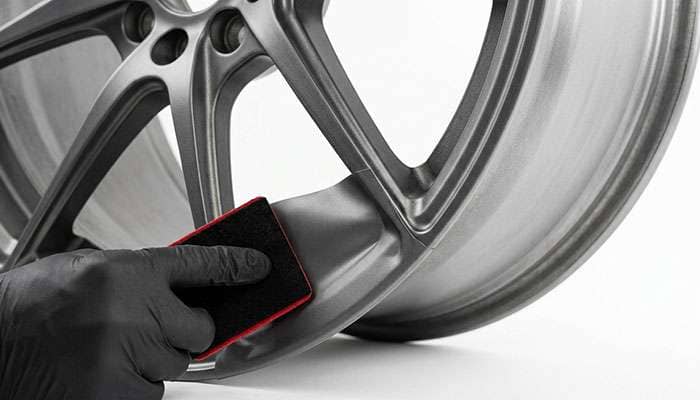
Every article on this topic compares sticker prices. That is the wrong comparison, because these finishes do not last the same length of time. A finish that costs 50 percent more and lasts twice as long is cheaper, full stop.
Divide the per wheel cost by realistic service life and the ranking reshuffles completely:
Wrap loses this comparison for a reason people forget to price in: removal is a separate labor charge. When the film reaches end of life, somebody has to peel it and clean off adhesive residue before the next finish goes on. Paint and powder do not have that step. You are paying twice on the same wheel.
So if the actual question is which finish costs less over the time you will own the car, the answer among professional options is powder coating, and it is not close. Wrap is the most expensive way to change a wheel color that anyone will quote you.
Here is where refinishing quotes get misleading. Whatever number the shop gives you is for the finish. It is not the total.
To refinish a wheel you already own, the tire has to come off it. That means:
Run a realistic total. Four wheels powder coated at the middle of the range is $900. Add $120 for tire service. Add $40 for sensor kits. You are at roughly $1,060 and your car has been on jack stands for most of a week.
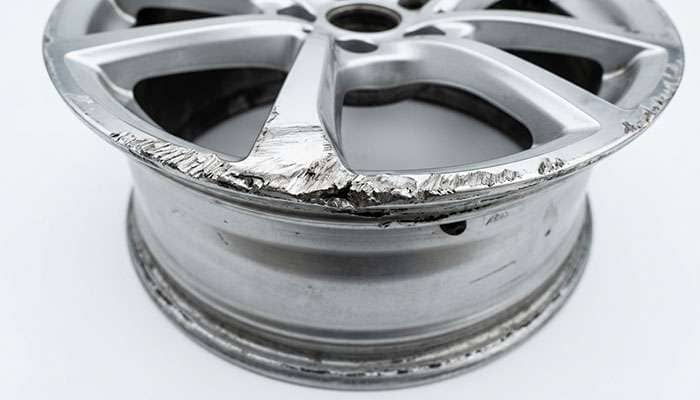
This one eliminates wrap for a large share of the people asking this question, and it rarely gets stated plainly.
Vinyl film bonds through a pressure sensitive adhesive that needs continuous contact with a smooth, clean, sound surface. Curb rash is none of those things. A gouge is a series of torn ridges and voids. Film laid over it will bridge the low spots rather than conform into them, which leaves air trapped underneath. Every one of those trapped pockets is an edge, and edges are where lifting starts. Add heat cycling from the brakes and pressure washing at the car wash and the failure timeline gets short.
Wheel wrap specialists say this themselves: do not wrap damaged rims, the surface needs to be smooth and clean for the film to work.
Which produces an awkward result. The reason most people go looking for a color change in the first place is that their wheels look bad. If they look bad because of curb rash, wrap is not a shortcut around the repair. You still have to fix the damage, which is the expensive part, and only then can you wrap. At that point you have paid for the repair and the wrap, and painting would have been included in the repair. Our breakdown of fixing curb rash, DIY versus professional repair costs has the real numbers on that step.
Wrap is a finish for wheels that are already in good condition. It is a style change, not a repair.
Now the part that reframes the whole question. I priced this against our current catalog rather than guessing.
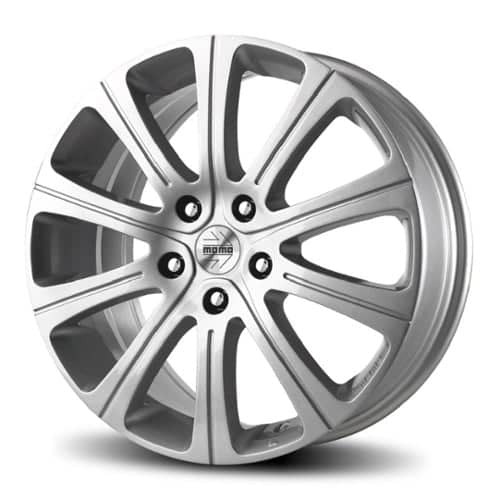
A set of four Momo WIN2 in 17x7, 5x110 bolt pattern, +40 offset with a 73.1 hub bore, in glossy silver, is $63.82 per wheel. That is $255.28 for all four.
A set of four Motegi MR135 in 17x8.5, 5x112, +35 offset with a 72.56 hub bore in hyper silver is $72.25 per wheel, or $289 for the set. A set of four Cragar 399 Soft 8 in 15x7, 5x114.3, zero offset with an 83.8 hub bore in silver is $58.41 per wheel, or $233.64 for the set.
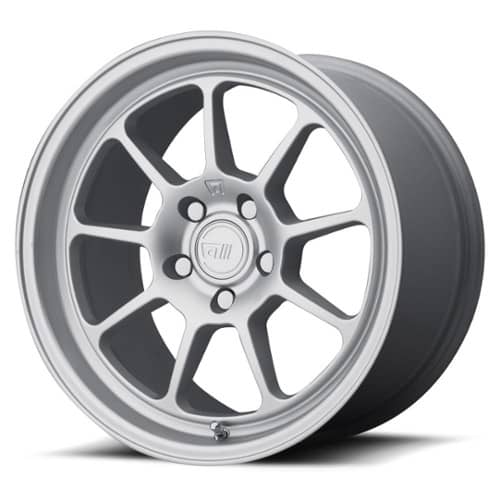
Set those against the refinishing numbers. The cheapest professional paint job on the four wheels you already own starts around $400. Powder coating starts around $600. Professional wrap starts around $400 and can reach $1,200.
A brand new set of wheels undercuts every one of them. And the new set arrives with a factory applied finish, a manufacturer warranty, no downtime, and your original wheels still sitting in the garage as a spare set or something to sell.
There is a threshold here worth memorizing. If a refinishing quote on your existing wheels comes back above roughly $400 for the set, price new wheels in your fitment before you accept it. On common bolt patterns you will frequently find the new set is cheaper outright. Whether new or refinished holds value better is a separate question we took apart in OEM versus aftermarket wheels and true cost value.
I am not going to pretend replacement always wins. It does not, and here is exactly when it loses.
Whichever direction you go, the finish you land on determines how you have to care for it afterward, and getting that wrong shortens its life considerably. We sorted that by finish type in how to clean aftermarket wheels by finish.
Is it cheaper to paint or wrap rims? At the professional level the quotes overlap so closely that price is not the deciding factor at all, and the widely repeated claim that wrapping is cheaper is borrowed from full vehicle wraps where the economics are completely different. On a wheel, vinyl is slow hand labor on a shape that fights it, and painting is a small, efficient, rack mounted job.
Judge by cost per year instead of sticker price and powder coating wins among refinishing options, at roughly $27 per wheel per year against $38 for paint and $50 for wrap. Wrap is the most expensive way to change a wheel color, and it will not go over curb rash, which is the very problem most people are trying to solve.
Then add the step nobody includes and the whole exercise changes shape. Once you count tire service, sensor kits, damage correction, and downtime, a refinish on four wheels routinely lands north of $1,000, while a new set in a common fitment starts at $255.28 with a factory finish and a warranty. Get the refinish quote. Then price your fitment. Let the arithmetic decide.
At the professional level they cost about the same. Wheel wrap runs roughly $100 to $300 per wheel and wheel paint runs roughly $100 to $200, so the ranges overlap. The common claim that wrapping is cheaper comes from full vehicle wraps, where covering large flat body panels in vinyl genuinely undercuts a premium paint job. A wheel has almost no flat area, so that cost advantage disappears.
Professionally, roughly $400 to $1,200 for a set of four depending on spoke count and design complexity. Simple five spoke wheels sit at the low end because there are fewer edges to hand trim. Mesh wheels, stepped lips, and intricate cutouts climb quickly. A DIY vinyl kit for four wheels runs about $80 to $150 in materials, but conforming film around spoke junctions without lifting takes practice.
Both professional wrap and professional wet paint typically last three to five years. Powder coating substantially outlasts both at seven to ten years, because the coating is cured into a hard cross linked shell rather than sitting on the surface. Wrap also carries a removal labor charge at end of life that paint and powder coating do not.
Not successfully. Vinyl bonds through a pressure sensitive adhesive that needs continuous contact with a smooth, sound surface. Film laid over gouges bridges the low spots and traps air, and every trapped pocket becomes an edge where lifting begins. The damage must be repaired and smoothed first, which is the expensive part of the job. Wrap is a style change, not a repair.
On a cost per year basis, yes. Powder coating costs the most up front at roughly $150 to $300 per wheel but lasts seven to ten years, working out to about $27 per wheel per year against roughly $38 for wet paint. It also resists brake dust, road salt, and aggressive wheel cleaners far better. The tradeoff is downtime, since the wheels leave your vehicle for several days.
Frequently, yes. A new set of four wheels in a common fitment starts around $255, while professional paint on four wheels starts around $400 and powder coating around $600, before tire dismount and rebalance, TPMS service kits, and any curb rash correction. If a refinishing quote comes back above roughly $400 for the set, price new wheels in your fitment before accepting it. Refinishing still wins for discontinued, staggered, forged, or unusually fitted wheels.
Know your quote before you commit. Compare it against a full set in your exact fitment in our custom wheels range, or send us your year, make, model, and current wheel size and we will tell you what bolts on.