
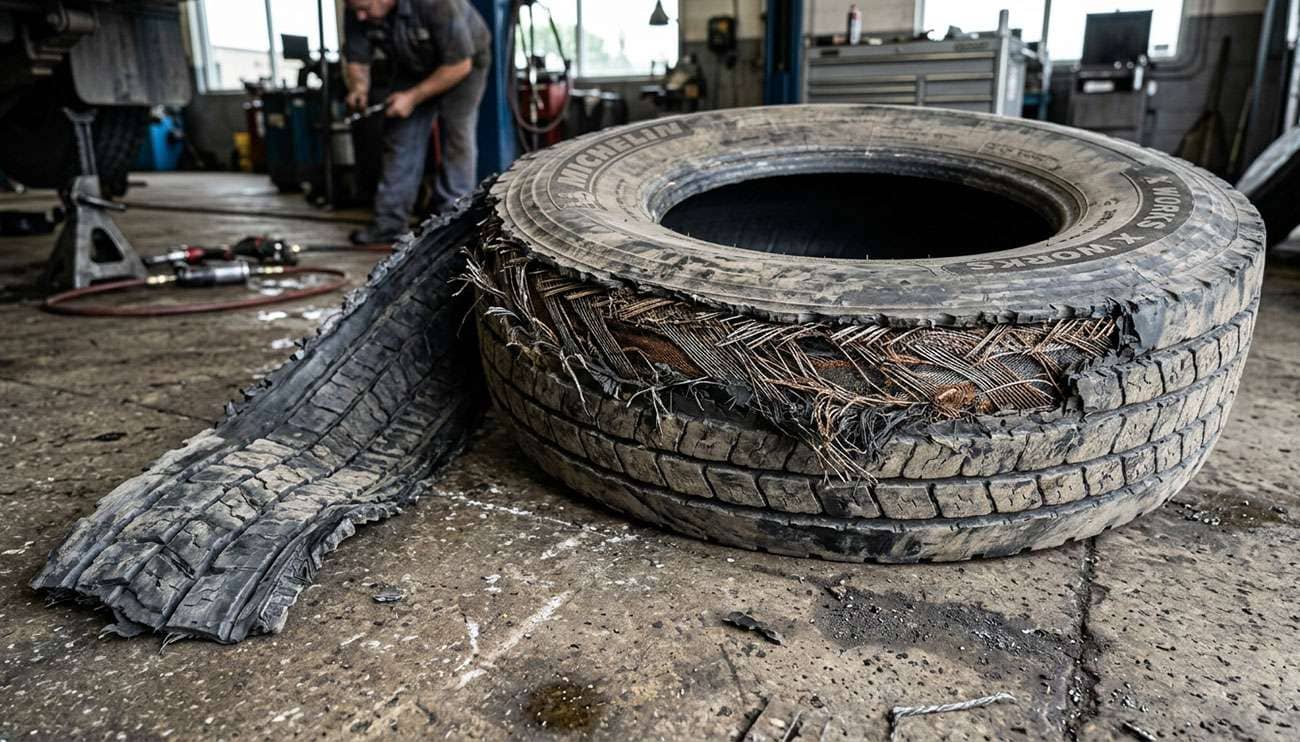
Ask that question anywhere and you get one word back. Underinflation. Every article, every tire shop, every safety pamphlet in the country says underinflation, and they are not wrong exactly. They are just answering a different question than the one you asked.
Here is what forty years of cutting failed tires apart taught me. Underinflation does not fail a tire. Heat fails a tire. Underinflation is simply the most common road to the heat, and it is not the only road. Overloading gets you there. Sustained highway speed on a hot day gets you there. A slow leak nobody bothered to fix gets you there. They all arrive at the same place, and when you slice open the carcass afterward, they all look the same inside.
Which road you are on depends almost entirely on what you drive and how you use it. And that is the part nobody tells you, because "check your pressure" is easy advice that fits on a poster. It is genuinely the right answer for about two drivers out of five. For the other three it is a distraction that keeps their eye on the wrong gauge while the real problem gets worse.
The statistics behind the standard answer are real. Industry figures have long held that the overwhelming majority of tire failures trace back to low pressure, and fleet studies back it up. The Technology and Maintenance Council's tire and wheel study found that running 20 percent under pressure cuts tire life by about 30 percent. Heavy truck data shows a tire running just 10 percent low operates roughly 20 degrees hotter than it should.
Those numbers are worth respecting. They are also drawn overwhelmingly from commercial fleets and passenger cars that accumulate miles steadily, and that is where the trouble starts. If your vehicle spends most of the year parked, or spends its working life at the top of its load rating, or is a trailer that gets pulled six weekends a summer, those numbers describe somebody else's tires.
I have had people come into the shop genuinely upset, holding a piece of a tire, telling me they checked the pressure religiously. And they had. Every trip, cold, with a good gauge. They did everything the poster told them and the tire came apart anyway, because pressure was never their problem. Nobody ever told them what their problem actually was.
So let us fix that.
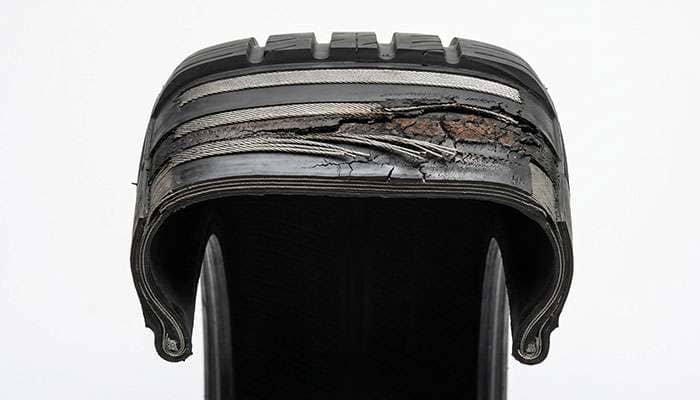
A tire is not one material. It is rubber, steel, polyester, and nylon glued together in layers, and the glue is what you are actually driving on. The steel belts under the tread are bonded to the rubber around them. The tread is bonded to the belt package. The inner liner is bonded to the casing. Every one of those bonds was made with heat and pressure in a mold, and every one of them can be unmade by heat.
Here is where the heat comes from. Rubber is not a spring. When you bend a spring and let it go, you get nearly all your energy back. When you flex rubber and let it go, some of that energy does not come back as motion. It comes back as heat, inside the material. Engineers call it hysteresis. I call it the reason tires get warm on a cool day.
Now count the flexes. At highway speed a tire is turning roughly fourteen times a second. Every rotation, a section of sidewall squashes flat entering the contact patch and springs back leaving it. Fourteen times a second, every second, for hours. That is normal, and a properly inflated tire carrying its designed load sheds that heat about as fast as it makes it. The system is balanced.
Break the balance and the tire starts winning the heat race against its own ability to cool. Run it soft and the sidewall flexes further on every one of those fourteen cycles. Run it heavy and the same thing happens for a different reason. Run it fast on hot pavement and you add ambient heat on top of what it is already generating. Now the rubber is running hotter than the bonds were designed for, and the adhesion starts letting go a little at a time, from the inside, where you cannot see it.
That is why a tire that fails almost never fails the day you abuse it. It fails weeks later on a perfectly ordinary drive, and the driver swears nothing happened. Something did happen. It happened in July and the tire finally gave up in August.
Find yourself in the left column. That is the failure you should actually be watching for.
What You Drive |
Your Real Number One |
What to Check |
|---|---|---|
Daily commuter, steady miles |
Underinflation |
Pressure monthly, cold, with a real gauge |
Truck that tows or hauls |
Overload against load index |
Door placard, load index, actual scale weight |
Trailer, camper, or RV |
Age and sitting, not miles |
DOT date code on every tire including spare |
Weekend or classic car |
Dry rot |
Sidewall and groove-base cracking, DOT date |
High mileage, long commutes |
Bad repairs and running past done |
Plug locations, tread depth, repair history |
Two of those five are pressure problems. The other three are not, and no amount of gauge work will save them. That is the whole point of this article.
If you drive a car to work most days and put steady miles on it, the standard answer is your answer. Underinflation is your number one, and it earns that spot.
What makes it dangerous is how quiet it is. A tire loses one to two PSI a month just breathing through its own rubber, and another pound for every ten degrees the weather drops. Neither of those is a defect. But a car that gets a pressure check twice a year is running low most of the time, and the driver never feels a thing. Modern cars ride so well that a tire eight pounds down feels exactly like a tire at spec.
Your dashboard light is not the safety net people think it is. Federal monitoring systems are required to warn at 25 percent below the recommended pressure. On a car placarded at 35 PSI, that light stays dark until you are down around 26. By then the tire has been running hot for a long time. The light is not an early warning, it is a late one.
The twenty degree figure is worth sitting with. Ten percent low, twenty degrees hotter, continuously. That is not a dramatic number and that is exactly the problem. It is not hot enough to smell or smoke or do anything you would notice. It is just hot enough to slowly cook the adhesion out of the tire over a few thousand miles, so that one day the tread lets go and you had no warning at all.
The fix is four minutes a month with a decent gauge, cold, before you drive. If one tire keeps needing air while the others hold, that is not a maintenance item, that is a leak, and we covered what that timeline looks like in slow tire leak how long drive.
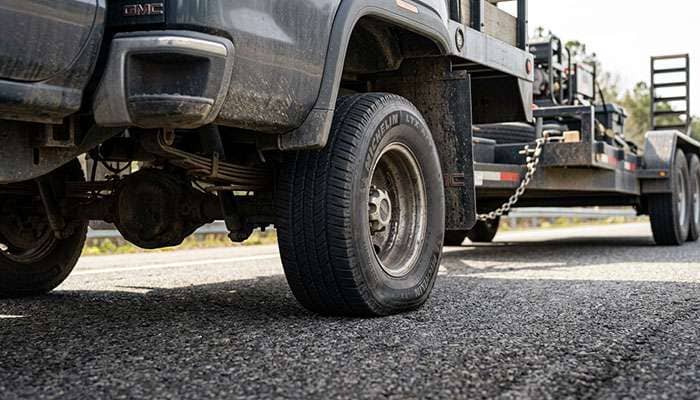
If your truck works, your number one is not pressure. It is load, and the reason it catches good people is that overload does not feel like anything.
An overloaded tire does not squat visibly. It does not steer badly. The truck sits a little lower and pulls a little heavier and you tell yourself it is fine because it has always been fine. Meanwhile the tire is doing exactly what an underinflated tire does, flexing further than designed on every rotation, making heat it cannot shed. Same failure, different cause.
The arithmetic that gets people is tongue weight. A properly balanced conventional trailer puts 10 to 15 percent of its total weight on the hitch ball, and every pound of that lands on your truck's rear axle. Hook up a 7,000 pound trailer and you have just added something like 700 to 1,000 pounds to the back of the truck before you have loaded a single cooler. Now add the generator, the firewood, the four people, and the toolbox that lives back there permanently. It adds up faster than anyone expects.
Two numbers settle it. The load index on your tire sidewall gives its maximum capacity, and that capacity is only valid at the pressure printed there. The rear gross axle weight rating on your door placard gives what the axle is rated for. Your loaded rear axle weight has to come in under both, and the only honest way to know that number is to drive across a scale. A CAT scale at a truck stop costs about the price of lunch and it will end the argument permanently.
If any of that is new, start with load range vs load index and then rear axle overloaded tires. And do not solve an overload problem by adding air. Running above the placard pressure to compensate does not raise the tire's load rating, it just makes the ride harsh and wears the center of the tread.
This is the one that makes people angry, because they did everything right.
Trailer and RV tires almost never wear out. They rot out. A camper that goes on six trips a summer might cover 2,000 miles a year, so the tread is still deep and the tire looks practically new at year eight. But it spent 46 weeks of every one of those years sitting in a side yard, loaded, in the sun, not moving.
Sitting is the problem, and here is why. The antiozonant compounds that protect tire rubber from the atmosphere have to migrate to the surface to do their job, and that migration is driven by flexing. A tire that rolls regularly keeps refreshing its own protection. A tire that sits does not. On top of that, the section resting on the pavement carries the full load in one spot for months while ultraviolet light works on the sidewall above it.
So you get a tire with 90 percent of its tread and a casing that has quietly aged out. It looks fine in the driveway. It comes apart at 65 miles an hour on the interstate in the first hot week of the season, usually about an hour into the first trip of the year, and it takes the fender skirt and sometimes the plumbing with it.
The number that matters is on the sidewall, not in the tread. Find the DOT code and read the last four digits as week and year. Trailer tires generally want replacing somewhere in the five to seven year range regardless of mileage, earlier than passenger car guidance, because of exactly the sitting problem described above. Check the spare too, since it has been in the same sun and is usually older than the rest. Full walkthrough in how to read DOT tire date codes a simple guide that could save your life.
If you can store it covered, on blocks, out of direct sun, do it. It genuinely buys you years.
Same disease as the trailer, different patient, and I see it constantly on cars people love.
A car that comes out for shows and nice Saturdays might cover 800 miles a year. The owner keeps it immaculate, garages it, washes it more than he drives it. And the tires under it are twelve years old with tread that looks brand new, because tread depth measures use and these tires have barely been used.
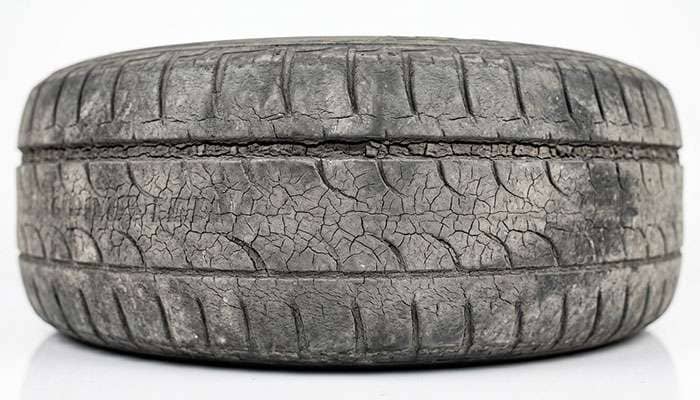
Rubber does not care whether you used it. Ozone in the air, ultraviolet light, heat cycling in an uninsulated garage through summer and winter, all of it keeps working on the compound whether the car moves or not. The rubber hardens, loses elasticity, and starts cracking where it flexes most, which is the base of the tread grooves and the sidewall.
The tell is the crazing. Fine lines like the glaze on old pottery are age showing its face, and that is a watch item. Cracks you can get a fingernail into have gone through the outer rubber and into the structure, and that tire is finished no matter how good the tread looks. If you can see cord at the bottom of a crack, do not drive the car onto the trailer, roll it.
There is a hard truth here that nobody enjoys. A gorgeous set of correct-looking tires on a car you have poured money into may need to come off while they still look perfect. Ten to twelve year old rubber on a heavy car in summer heat is how good weekends end badly. More on what to look for in tire dry rot explained everything you need to know about prevention and replacement.
If you put 25,000 or more miles a year on a car, your tires will never get old enough to rot. They wear out long before age matters, so your failure mode is different again. It comes down to repairs and to running past done.
On repairs, the rule that has not changed in my lifetime is that a proper repair goes in from the inside. The tire comes off the wheel, the technician inspects the inside of the casing for damage you cannot see from outside, and the injury gets a combination plug and patch that fills the hole and seals the liner. That repair lasts the life of the tire.
A plug jammed in from the outside without dismounting is not that. It might hold air for years and often does, which is exactly why people trust them. What it does not do is seal the inner liner or let anybody look at the inside of the casing, so moisture wicks down the puncture channel to the steel belts and rust starts working outward from the middle of the tire where nobody can see it.
The other half is location. Repairs belong in the crown of the tread, in the middle. Punctures in the shoulder or anywhere on the sidewall are not repairable by anybody, at any price, and a shop that offers is a shop to leave. The sidewall has no steel belt behind it and it flexes constantly, so there is nothing there for a repair to hold onto. That distinction is laid out fully in tire sidewall damage is it safe to drive.
And then there is the last few thousand miles. High mileage drivers are the most likely to stretch a set, because they are the ones buying tires most often and they know exactly what the bill looks like. But a tire at the wear bars in a rainstorm has almost no groove volume left to move water, and stopping distances on wet pavement at that point can run close to double what the same tire delivered new. That is not a slow decline, it is a cliff, and it arrives right where people are trying to save two hundred dollars.
Tires talk before they quit. Not always, but more often than people believe, and the signals are easy to miss because they arrive one at a time over weeks.
A thumping that rises with speed and did not used to be there is the one I would never ignore. Steady rhythm, felt in the seat more than the wheel, sometimes described as driving over a rope every few feet. That is often a belt that has started to shift inside the casing, which is the early stage of the tread coming off.
A vibration that arrived overnight is a different animal from one that crept in over a year. The gradual one is usually balance. The overnight one means something changed, and the candidates include a bent wheel, a thrown weight, a loose lug, or a belt on the move.
One tire that is warm to the touch after a drive when the others are cool is worth taking seriously. Feel the shoulders with the back of your hand at a fuel stop on a long trip. A tire noticeably hotter than its mates is losing the heat race for some reason, and the reason is usually low pressure or overload.
A section of tread that looks slightly raised or wavy, running around the tire, is separation you can actually see. Run your palm lightly across the tread. Any lump, ripple, or soft spot means stop.
And keep in mind heat is cumulative and seasonal. The first genuinely hot stretch of summer is when tires that were damaged months ago finally come apart, which is why blowout season is July and August and not January. We wrote about that pattern in tires can blow out in high temperatures.
People stretch tires because tires cost money and the car still drives. Fair enough. But the arithmetic on waiting is worse than most people picture, because a tire failure at speed is not a deflation, it is a demolition.
When a tread separates, a strip of rubber and steel the width of the tire comes off while turning fourteen times a second and beats the underside of the vehicle on its way out. On a passenger car that commonly takes the inner fender liner, a wheel speed sensor and its wiring, sometimes a brake line, and frequently the rocker panel or quarter. On a truck or RV with a wheel well close to the body, add plumbing, wiring runs, and exterior panels that are not cheap and not quick.
Then add the tow, because you are now sitting on a shoulder with one tire and possibly no usable spare. Add a hotel if this happened where you were headed rather than where you live. Add the diagnostic time to chase down whatever codes the electronics threw when the sensor wiring went.
The gap between replacing a tire on schedule and cleaning up after one that let go is usually a few hundred dollars against a few thousand. And on the highway, in traffic, with a trailer behind you, the arithmetic stops being about money at all.
What you replace with should follow your profile, not somebody else's.
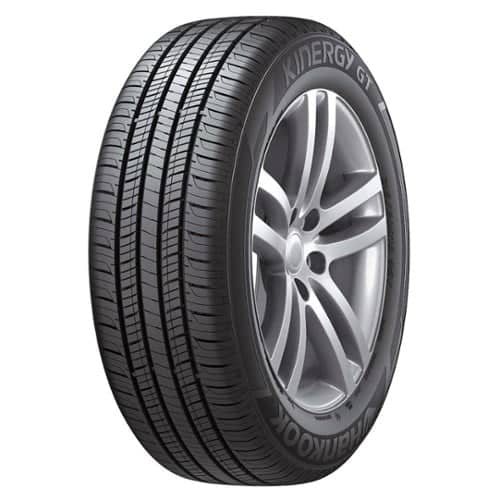
Hankook Kinergy GT H436. The commuter tire. If steady miles and pressure neglect are your risk, this is a touring all-season built for exactly that duty cycle, and it does not punish you for buying sensibly. Roughly 75 to 315 dollars depending on size, with most passenger sizes landing near the middle of that.
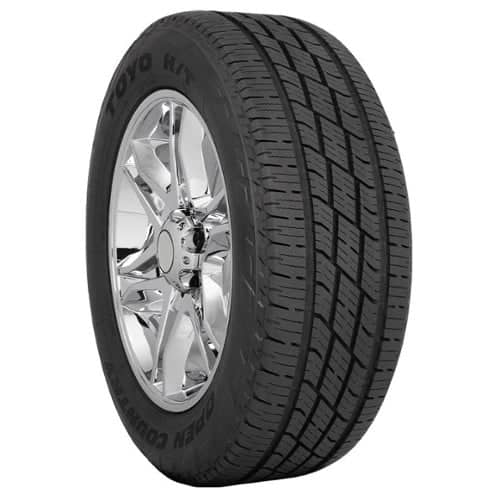
Toyo Open Country H/T. The tow rig answer. Highway terrain construction available in load ranges that actually match what a working truck asks of a tire, which is the whole issue in the overload section above. Roughly 68 to 368 dollars. Buy by load index first and tread pattern second, not the other way around.
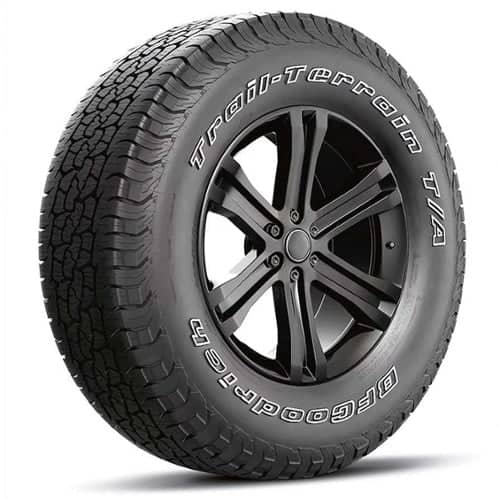
BFGoodrich Trail-Terrain T/A. For the truck or SUV that does a bit of everything, tows sometimes and sees gravel sometimes. More sidewall than a highway tire without the noise penalty of an aggressive all-terrain. Roughly 190 to 369 dollars.
Give us the size off your door placard and the heaviest thing you tow, and we will tell you what load index you actually need rather than what happens to be on sale. Have a look at the range at Truck Tires.
So what is the number one reason for tire failure? Heat. Every time, without exception, in every carcass I have ever cut open. Everything else on the usual list is just a way of generating it.
The question worth answering is which way you are generating it, and that comes down to what sits in your driveway. Drive a car to work every day and the answer really is pressure, so buy a gauge and use it. Tow with a truck and the answer is load, so find a scale and learn two numbers. Own a trailer, a camper, or a car you only take out on nice days and the answer is time, so go read the four digits on the sidewall and be honest with yourself about what they say.
The thing that gets people is not carelessness. It is doing the right maintenance for a problem they do not have. The man checking his camper tire pressure every single trip is doing good work on the wrong number while the date code quietly runs out.
Go look at what you drive, figure out which row of that table you are in, and check the thing that will actually save you.
Heat is what actually destroys a tire, by breaking down the adhesion holding the belts, casing, and tread together. Underinflation is the most common way drivers generate that heat, which is why it gets named as the number one cause. But overloading, sustained high speed in hot weather, and an unrepaired slow leak all produce the same failure, and for trailers, RVs, and low mileage vehicles the real number one is age rather than pressure.
Not necessarily. Pressure is the right thing to watch if you drive steady miles in a passenger car. If you tow, your bigger risk is exceeding the tire's load index or your rear axle rating, which produces the same overheating regardless of pressure. If your vehicle sits most of the year, your risk is the rubber aging out while the tread still looks new. Checking pressure on a seven year old trailer tire will not save it.
Because heat damage accumulates and hot pavement is the final straw. A tire run underinflated or overloaded in spring loses internal adhesion gradually without any outward sign. Add high ambient temperature, hot road surface, sustained highway speed, and a fully loaded vehicle, and the weakened area finally separates. The abuse usually happened weeks or months before the failure.
Generally five to seven years from the build date regardless of remaining tread, which is earlier than typical passenger car guidance. Trailer tires spend most of their lives parked and loaded, and the flexing that keeps protective compounds migrating to the rubber surface only happens when a tire rolls. Read the last four digits of the DOT code as week and year, and check the spare, which is usually the oldest tire on the trailer.
No. A tire's maximum load capacity is set by its load index and is only valid up to the pressure printed on the sidewall. Inflating beyond the vehicle placard pressure does not raise that capacity, it just stiffens the ride and wears the center of the tread. If your loaded rear axle weight exceeds what the tires or the axle are rated for, you need a higher load index tire, not more air.
A proper repair is safe and lasts the life of the tire, but it has to be done with the tire off the wheel so the inside of the casing can be inspected and a combination plug and patch can seal the inner liner. A plug pushed in from outside without dismounting seals nothing internally and lets moisture reach the steel belts. Repairs also belong only in the crown of the tread. Shoulder and sidewall punctures cannot be repaired safely at all.
Possibly, because tread depth only measures use, not condition. A low mileage or weekend vehicle can have 90 percent of its tread and a casing that has aged out completely. Look for fine crazing across the sidewall and at the base of the tread grooves, and read the DOT date code. Cracks deep enough to catch a fingernail mean the tire is finished no matter how good the tread looks.



