Here is the answer nobody puts at the top of the page: the urgency of a bad tire is set by where the damage sits, not what the damage is. A half-inch cut on the tread face is a plan-it-this-month problem. The identical cut on the sidewall is a tow-truck problem. Sidewall damage outranks tread damage at the same severity because the sidewall carries no steel belt underneath it and flexes on every single rotation.
Search this question and you get lists. Eight signs. Eleven signs. Low tread, cracks, bulges, vibration, noise, pulling, air loss. Every one of those lists presents the symptoms as peers, as though a fine crack and an exposed steel cord belong in the same paragraph. They do not belong in the same week.
You are probably not reading this out of curiosity. You are reading it because you already found something. You saw a lump. You felt a shake. The tread looks thin. What you need is not a checklist of things to look for, it is a straight answer about how fast you have to act on the one thing you already found. That is what this piece is.
Find your symptom in the left column. The right column tells you what to do today.
Warning Sign |
Location |
Urgency |
What to Do |
|---|---|---|---|
Bulge, bubble, or blister |
Sidewall |
Tier 1: stop now |
Do not drive it. Spare or tow. |
Exposed steel cords or fabric |
Anywhere |
Tier 1: stop now |
Do not drive it. Spare or tow. |
Tread lifting or separating |
Tread face |
Tier 1: stop now |
Do not drive it. Spare or tow. |
Cut deep enough to see cord |
Sidewall |
Tier 1: stop now |
Not repairable. Replace. |
Tread at or below 2/32 inch |
Tread face |
Tier 2: days |
Low speed to the shop. Avoid rain. |
Same tire low every week |
Anywhere |
Tier 2: days |
Get it dismounted and inspected. |
New vibration, appeared suddenly |
Anywhere |
Tier 2: days |
Slow down. Inspect before highway use. |
Cut or puncture in tread face |
Tread face |
Tier 2: days |
Often repairable. Have it checked. |
Tread at 4/32 to 3/32 inch |
Tread face |
Tier 3: weeks |
Start shopping. Replace before winter. |
Cupping, feathering, one-side wear |
Tread face |
Tier 3: weeks |
Fix the cause before buying tires. |
Fine surface cracking |
Sidewall or grooves |
Tier 4: monitor |
Inspect monthly. Watch for widening. |
Six to ten years old, tread fine |
Whole tire |
Tier 4: monitor |
Annual professional inspection. |
Notice the pattern. Every Tier 1 entry is either a sidewall problem or a structural failure that has already started. Nothing on the tread face alone puts you in Tier 1 unless the tread is physically coming off the tire. That is not an accident of how the table is arranged, and the rest of this article explains why.
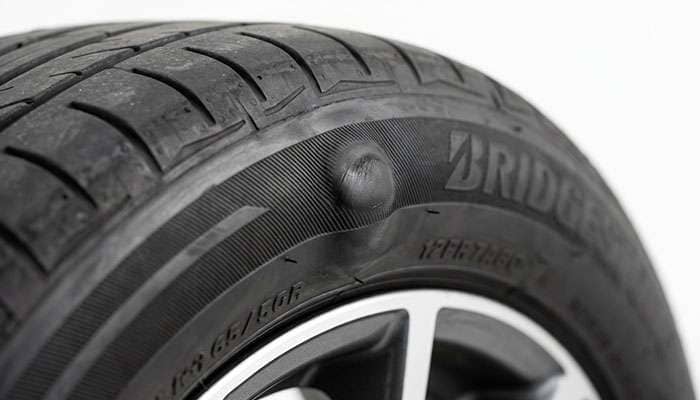
A bulge, bubble, or blister on the sidewall is the single most misread warning sign in this entire category. It looks cosmetic. It is a rupture.
Inside a radial tire, the sidewall is held together by body ply cords, usually polyester, running from bead to bead. Those cords carry the load and contain the air pressure. When you hit a pothole hard, drop into an expansion joint, or strike a curb at an angle, the tire pinches hard between the road and the rim flange. That pinch can snap a section of body ply cords instantly. The rubber itself does not tear. It stays sealed, so the tire keeps holding air and you drive away thinking you got lucky.
You did not get lucky. With those cords broken, nothing in that spot is restraining the air pressure except a thin layer of rubber and the inner liner. Thirty-five pounds of pressure pushes outward and the weakened patch balloons. That is the bulge. It is a failure that has already happened, sitting there waiting for the second event.
The second event is heat. Every rotation flexes that weak spot, and flexing rubber generates heat, and heat destroys the adhesion holding the remaining structure together. There is no warning before the release. It does not go soft first. It bursts, usually at highway speed, usually on the outside of a curve where the load on that sidewall is highest.
There is no repair. A plug, a patch, an inner tube, a shot of sealant, none of it restores broken cords. Put the spare on in the driveway or call for a tow. If you want the full mechanical breakdown of what is happening under that rubber, we covered it in depth in tire sidewall bubble explained.
If you can see steel, fabric, or cord anywhere on the tire, the structural envelope is open. Stop.
Steel showing through the tread face usually means the tire wore past every wear indicator it had while nobody was looking, or a suspension problem ground one shoulder down to the belt package. Either way the belts are now exposed to water, and steel belts rust. Rust breaks the rubber-to-steel bond that gives a radial tire its stability, and once that bond fails across an area, the tread starts to separate from the casing.
Tread separation is the thing you actually want to avoid. A separating tread makes itself known first as a rhythmic thumping that rises with speed, sometimes a wobble you can feel in the seat rather than the wheel. When it finally lets go, a strip of tread the width of the tire comes off at speed and takes the fender liner, the wheel well, brake lines, and sometimes the quarter panel with it. Those long black strips on the shoulder of every interstate are exactly this failure.
The National Highway Traffic Safety Administration treats tread separation as a defect condition serious enough to drive recalls, and the Federal Motor Vehicle Safety Standard for passenger tires, FMVSS 139, includes endurance and high-speed testing specifically to guard against this failure mode. When the tire is already showing exposed belt, none of that engineering margin is left.
Same rule as the bulge. Spare or tow. Do not drive it to the shop because the shop is only two miles away, because the failure does not care about distance, it cares about heat and flex cycles.
Two thirty-seconds of an inch is the legal minimum tread depth in most states, and it is the depth at which the molded wear bars sitting in the tire's grooves come flush with the surrounding tread. When you can see a solid rubber bar running across the tread from one groove to the next, that tire is done.
This is Tier 2 and not Tier 1 for one reason: a bald tire on dry pavement still stops the car. The structure is intact. What has disappeared is the tire's ability to deal with water.
Tread grooves have exactly one job in the rain, which is to give displaced water somewhere to go. The contact patch is roughly the size of your hand, and at highway speed in standing water each tire has to move gallons per second out of that patch to keep rubber touching road. Groove volume is what does the moving. At 2/32 inch there is almost no groove volume left, so the water has nowhere to go, so it lifts the tire. Independent wet-braking tests have repeatedly shown stopping distances at 2/32 inch running close to double what the same tire delivered new.
So the real-world answer is conditional on your weather. Dry forecast, short trips, moderate speeds, you have a few days to get to a shop. Rain in the forecast or a highway commute, treat it as Tier 1 and do not drive it in the wet. Hydroplaning does not build up gradually, it arrives all at once, and the first indication is the steering going light in your hands.
Every tire loses roughly one to two PSI a month through normal permeation, and every tire loses about one PSI for each ten degree Fahrenheit drop in ambient temperature. Those are physics, not problems. A tire that reads low every October is a tire that is behaving correctly.
The tire that matters is the one that is low again a week after you filled it, and only that one, while its three siblings hold steady. That is a leak, and the reason it sits in Tier 2 rather than Tier 4 is that you cannot tell from the outside whether it is trivial or serious.
A nail in the center of the tread is trivial and repairable. A leaking valve stem is a fifteen-dollar fix. But the same slow, steady loss also comes from a bead that is not sealing against a corroded wheel, from a hairline crack in the rim, and from internal damage where the inner liner has been chafed by an object working its way around inside the casing. Those last ones do not stay stable.
The failure mode that makes this urgent is chronic underinflation. An underinflated tire flexes far more in the sidewall than it was designed to, and that extra flex generates heat continuously. Heat is what breaks down the adhesion between the belts, the casing, and the tread. Drive on a tire that runs eight or ten PSI light for a few thousand miles and you can destroy it structurally without ever seeing a mark on the outside. Topping it up every week is not managing the problem, it is hiding it. We laid out the timelines in detail in slow tire leak how long drive.
Vibration is the most ambiguous signal on this list, and how you should react depends almost entirely on how it arrived.
A vibration that crept in over months, that shows up in a narrow band around 55 to 65 miles per hour and smooths out above and below, is almost always a balance issue. Wheel weights fall off. Tires develop small uniformity variations as they wear. This is an appointment, not an emergency.
A vibration that appeared between one drive and the next is a different animal. Something changed. That something is a lost wheel weight, a bent rim from an impact you may not have registered, a belt that has shifted inside the casing, or a lug nut that has backed off. Two of those four are structural, and one of them is the early stage of the tread separation described earlier.
Where you feel it narrows things down. Vibration coming up through the steering wheel points at the front. Vibration you feel in the seat or the floor points at the rear. Vibration only under braking points at the brake rotors rather than the tires. Vibration that gets worse the faster you go, and keeps getting worse, is the one that means get off the highway.
The useful discipline here is simple. Any new vibration earns a walk-around and a lug nut check before the next highway trip. Most of the time you find nothing. The time you find something, you will have found it in a parking lot instead of a merge lane.
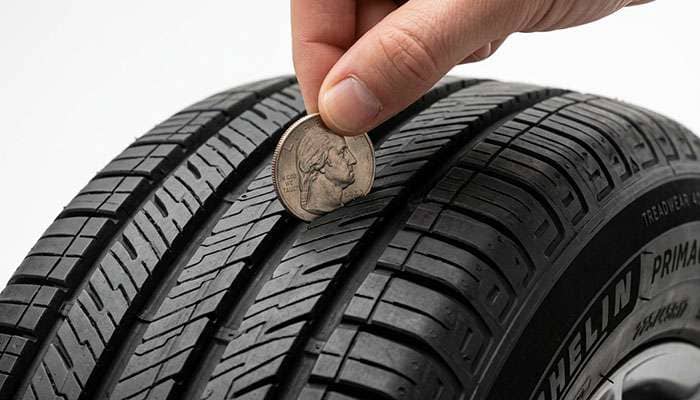
Everyone knows the penny test. Lincoln goes in head first, and if you can see the top of his head, you are at or below 2/32 inch and the tire is finished. It has been the standard driveway check for generations.
There is a wrinkle now. The United States Mint struck the final circulating penny at its Philadelphia facility on November 12, 2025, ending a 232-year production run. Existing pennies remain legal tender and will circulate for years, so the test still works if you have one in the cupholder. But the coin is no longer being replaced, and it is going to get progressively harder to reach for.
The quarter is the replacement, and here is the part that matters more than the coin swap: it does not measure the same thing. Washington's head sits 4/32 inch from the edge of a quarter. Lincoln's head sits 2/32 inch from the edge of a penny. So the two tests answer two different questions.
Coin |
Depth Measured |
What It Tells You |
|---|---|---|
Penny, Lincoln head down |
2/32 inch |
Head visible means legally worn out. Replace now. |
Quarter, Washington head down |
4/32 inch |
Head visible means start shopping. Wet grip is fading. |
The quarter is the better tool for most drivers, because 4/32 inch is where you should be making the decision rather than where you are out of road. Wet braking performance does not fall off a cliff at the legal limit, it degrades steadily from about 5/32 inch downward, and by 4/32 inch a tire has given up a meaningful share of the wet grip it had new. Anyone driving through real winters should be replacing at 4/32 inch and not arguing about it.
Check in three places across the tread and at three points around the circumference. If the readings differ across the width of the tire, you do not have a tread depth problem, you have the alignment or suspension problem covered in the next section. Our full walkthrough lives in what is the penny rule for tires.
This is the section that saves people the most money, and it is the one the checklist articles skip entirely.
When a tire wears unevenly, the tire is not the thing that is broken. The tire is the receipt. Something else on the car is misbehaving and the tread is where the evidence prints out. Replace the tires without fixing the cause and the new set inherits the exact same fault, and you will be back inside of a year having paid twice.
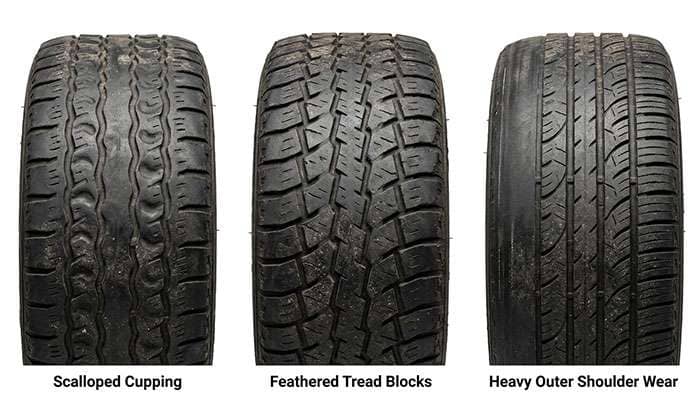
Wear Pattern |
What You See |
Actual Cause |
|---|---|---|
Cupping or scalloping |
Dips around the tread, often noisy |
Worn shocks or struts letting the wheel hop |
Feathering |
Tread blocks sharp one way, smooth the other |
Toe misalignment dragging the tire sideways |
One shoulder worn |
Inner or outer edge gone, rest fine |
Camber, or a worn ball joint or control arm bushing |
Both shoulders worn |
Edges low, center high |
Chronic underinflation |
Center strip worn |
Middle low, both edges fine |
Chronic overinflation |
Patchy random spots |
Isolated flat areas, no rhythm |
Out of balance, or a bent wheel |
The last two are free to fix, which is worth sitting with for a second. Both shoulders worn and center worn are pressure problems, and pressure is the one variable on this entire page that costs nothing and takes four minutes a month. A tire wearing on both shoulders has been run soft, which means it has also been running hot, which means it may have structural damage on top of the wear.
Get an alignment check before you buy, not after. Bring the old tires or photograph them before they go in the scrap pile, because the wear pattern tells an alignment tech more than the printout from the rack does. Full reference on reading these is in how to read tire wear patterns.
Rubber is not stable over time. Ultraviolet light, ozone, heat cycling, and the slow migration of antiozonant compounds out of the compound all work to make it harder and more brittle. The visible result is cracking, and it shows up first in the flex zones, which means the base of the tread grooves and the sidewall.
The distinction that matters is depth, not presence. Fine surface checking that looks like the crazing on old pottery is age showing, and it is Tier 4. Cracks wide enough to slip a fingernail into, or cracks with any visible cord at the bottom, have gone through the outer rubber into the structure, and those move up to Tier 1.
Age itself is the other half. Every tire carries a DOT code on the sidewall, and the last four digits give you the week and the year it was built. A tire stamped 3623 came out of the mold in the thirty-sixth week of 2023. Most manufacturers and most vehicle makers converge on the same guidance: consider replacement somewhere between six and ten years from the build date regardless of how much tread is left, and have any tire beyond six years inspected professionally each year.
This catches people in specific situations. Low-mileage cars. Weekend and collector vehicles. Spare tires that have never touched pavement. RVs and trailers that sit for eleven months. A tire can hold 90 percent of its tread and still be structurally aged out, and that combination, a great-looking tire that is fifteen years old, is exactly how people end up with a blowout on the first hot highway run of the summer. Full detail in tire dry rot explained everything you need to know about prevention and replacement and in how to read DOT tire date codes a simple guide that could save your life.
Everything above hangs on one piece of construction, so it is worth being precise about it.
A radial passenger tire is not uniformly strong. Under the tread face sits the belt package, typically two layers of steel cord set at opposing angles, plus a nylon cap ply on many performance and touring tires. That package is stiff. It holds the tread flat against the road, resists penetration, and spreads impact loads across a wide area. It is the reason a nail in the tread is usually a repairable nuisance.
That belt package stops at the shoulder. It does not wrap the sidewall. The sidewall is body ply cords and rubber, and nothing else.
Two consequences follow, and together they explain the whole urgency ladder.
First, the sidewall has no redundancy. Damage to the tread face has a steel structure behind it that keeps working while you drive to the shop. Damage to the sidewall has nothing behind it. That is why the Tire Industry Association and effectively every tire manufacturer classify sidewall injuries as non-repairable, full stop, and confine legitimate repairs to the crown area of the tread.
Second, the sidewall is the part that flexes. It is designed to. Every rotation, the section entering the contact patch deflects and then springs back, roughly fourteen times per second at highway speed. Rubber under repeated deformation generates internal heat through hysteresis, and heat is the enemy of every adhesive bond in the tire. A healthy sidewall handles those cycles for tens of thousands of miles. A sidewall with broken cords, a deep cut, or chronic underinflation concentrates the flex into a compromised area, heat builds where the structure is weakest, and the timeline collapses from years to hours.
So when you find damage and you are trying to decide how fast to move, the first question is not how big it is. The first question is whether it is above or below the shoulder. Our most detailed treatment of that call is in tire sidewall damage is it safe to drive.
Nobody delays because they think a bad tire is fine. They delay because replacing tires is expensive and the car still drives. So here is the arithmetic on waiting, laid out as the ladder it actually is.
Stage one, the tire. You are past the wear bars but the casing is sound. This is the cheapest exit that exists. One set of tires, done.
Stage two, the set. You wait, and now the worn tires have been dragging against an alignment fault for another 5,000 miles, or you replace only two and the new pair fights the old pair. On an all-wheel-drive vehicle this is not merely wasteful, it is a mechanical problem: significant differences in rolling circumference between axles force the center differential or transfer case to absorb the mismatch continuously. Some manufacturers will decline a driveline warranty claim over exactly this.
Stage three, the suspension. The cupping you ignored was worn struts. Struts that are letting the wheel hop are also failing to keep the tire loaded during braking, so stopping distances stretch, and the new tires you finally bought start cupping within a few thousand miles because the cause never got addressed. Now you are buying struts and a second set of tires.
Stage four, the failure. A tread separation at speed does not politely deflate. It flails a heavy strip of rubber and steel through the wheel well, and it commonly takes out the inner fender liner, wheel speed sensor wiring, a brake line, and body panel. Add a tow. Add a rental. On a vehicle with speed-sensitive electronics, add diagnostic time to chase the codes it threw.
Stage five, the one with no price. NHTSA data has consistently shown that a substantial share of tire-related crashes involve vehicles running significantly underinflated or worn tires, and that the crash risk climbs steeply as tread depth falls. A blowout in a corner or a hydroplaning event in traffic is a different category of outcome than a repair bill.
The gap between stage one and stage four is usually a few hundred dollars against a few thousand. That is the actual decision in front of you, and it is why the tier your symptom sits in matters more than the price of the tire.
Once you have established the tire is done, the replacement decision comes down to what you drive and what you drive through. Three that cover most of what rolls through our shop:
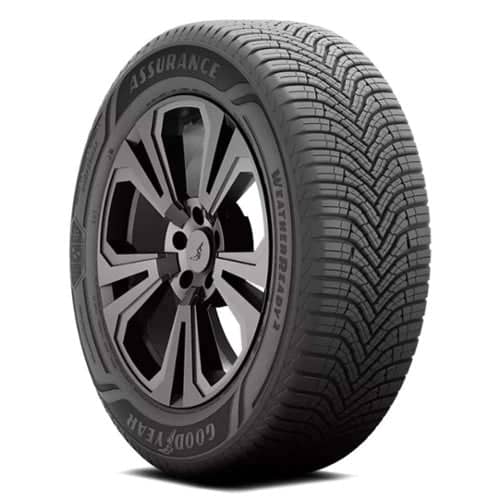
Goodyear Assurance WeatherReady 2. If the reason you are here is that you found your tread down at 3/32 inch heading into a wet or snowy season, this is the straightforward answer. It is built around year-round wet and winter capability rather than treating cold weather as an afterthought, which is the specific weakness of a worn all-season. Roughly 178 to 437 dollars depending on size.
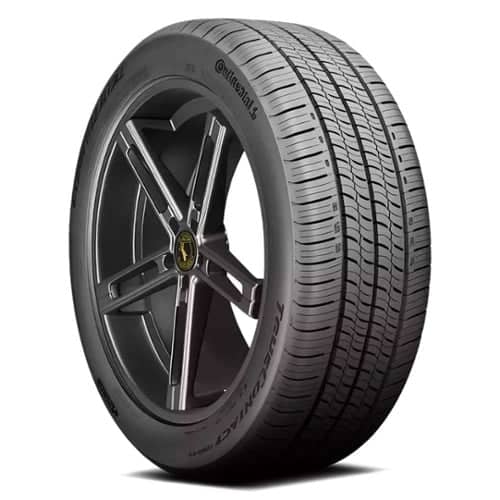
Continental TrueContact Tour 54. The daily-driver pick when the old set wore out early and you want the replacement to last. Touring construction, long tread life, quiet at highway speed. Roughly 146 to 262 dollars. If uneven wear is what brought you here, get the alignment corrected first or this tire will wear exactly like the last one did.
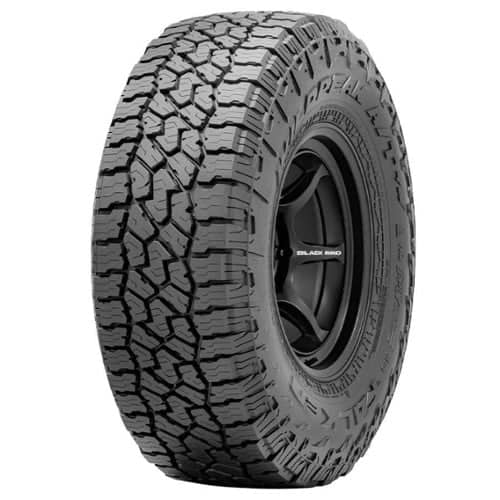
Falken Wildpeak A/T4W. For trucks and SUVs, particularly anything that tows or works. Heavier construction and a more robust sidewall than a highway-terrain tire, which matters directly given everything above about sidewall vulnerability. Roughly 174 to 617 dollars depending on size and load rating.
Two practical notes. Replace in pairs at minimum, on the same axle, and put the new pair on the rear regardless of which wheels drive the car, because the rear losing grip first is what turns a wet corner into a spin. On all-wheel drive, replace all four unless the remaining tires are nearly new. Browse the full range at All Season Tires, or call and give us your size and we will tell you what is actually in stock in it.
The question that brought you here has a better version. Not "are my tires bad," which every list on the internet will answer identically and unhelpfully, but "how fast do I have to act on the specific thing I just found."
The dividing line is the shoulder of the tire. Above it, on the sidewall, you have body ply cords and rubber holding back the air with no steel behind them and a flex cycle running fourteen times a second at highway speed. Bulges, deep cuts, and exposed cords up there are not problems to schedule. They are problems to stop for.
Below the shoulder, on the tread face, the belt package buys you time. Worn tread, a nail, a slow leak, a wear pattern that points at the suspension, these are real and they are costing you money and grip every mile. But they are appointments, not emergencies, provided you keep the appointment.
Go look at your tires in daylight, run a quarter through the grooves in a few spots, and read the DOT date on the sidewall while you are down there. Ten minutes now tells you which tier you are in, and the tier tells you everything else.
Check the sidewall first and the tread second. A bulge, a deep cut, or any visible cord or steel means the tire is unsafe to drive on right now. On the tread face, look for wear bars flush with the tread, uneven wear across the width, and cracking at the base of the grooves. Then read the DOT date code, because a tire can be aged out with plenty of tread remaining.
No. A bulge means the body ply cords inside the sidewall have already broken and only a thin layer of rubber is containing the air pressure. Every rotation flexes that weak spot and builds heat, and the failure comes without warning at speed. Fit the spare or have the vehicle towed. Sidewall damage cannot be repaired.
Yes, the test still works with any penny you already have, since existing pennies remain legal tender. The United States Mint struck the last circulating penny in November 2025, so the coin will simply get harder to find over time. A quarter is the better everyday substitute, but note that it measures 4/32 inch rather than the penny's 2/32 inch, so it warns you earlier rather than telling you the tire is legally worn out.
It needs to be diagnosed within days. A nail in the tread is repairable and a valve stem is cheap, but the same symptom also comes from a corroded bead seat, a cracked rim, or internal casing damage. The bigger risk is what running underinflated does to the tire, since the extra sidewall flex generates continuous heat that degrades the internal bonds. Refilling it weekly hides the problem rather than solving it.
Replace in pairs at minimum and always on the same axle. Put the newer pair on the rear regardless of which wheels drive the vehicle, because rear grip loss in the wet is what turns a corner into a spin. On all-wheel drive, replace all four unless the remaining tires are close to new, since differences in rolling circumference between axles put continuous strain on the center differential or transfer case.
Most manufacturers and vehicle makers point to a replacement window of six to ten years from the build date, independent of tread depth, and recommend annual professional inspection past six years. Find the DOT code on the sidewall and read the last four digits as week and year. This matters most on low-mileage cars, weekend vehicles, trailers, and spare tires that have never been used.
Almost always because the fault that killed the previous set was never corrected. Cupping points to worn shocks or struts, feathering points to toe misalignment, and single-shoulder wear points to camber or a worn suspension component. Wear across both shoulders means the tires were run underinflated and wear down the center means overinflated. Get an alignment and suspension check before fitting new tires, not after.