
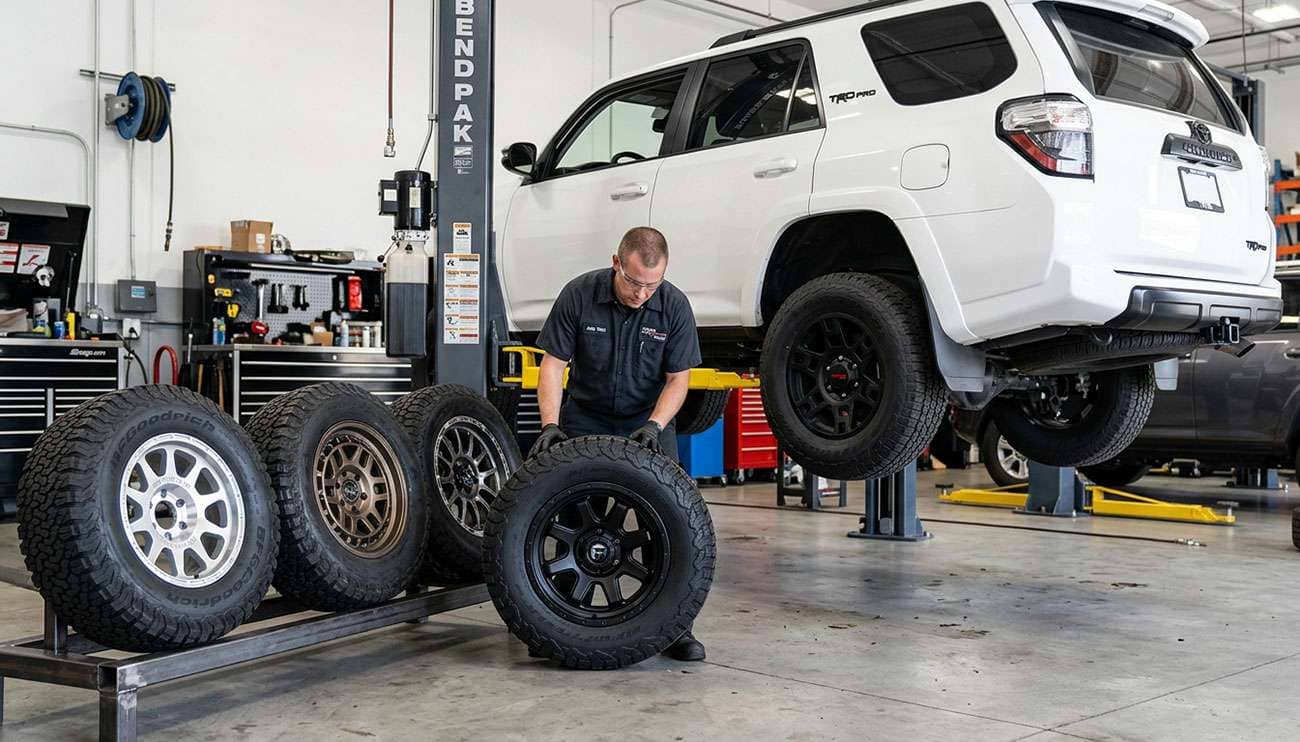
SUV wheels represent one of the most important upgrades you can make to your vehicle. The right wheels enhance both performance and appearance, while the wrong choice can negatively impact handling, fuel economy, and ride quality. Lightweight wheels deliver improved acceleration and handling, while larger diameter options provide enhanced traction and grip. Understanding these differences becomes essential when selecting wheels that match your driving needs.
At Performance Plus Tire, we understand that choosing SUV wheels requires expert guidance. Our extensive selection covers everything from budget-friendly steel options to high-performance alloys designed for specific driving conditions. Whether you need truck and suv wheels for daily commuting or rugged off-road adventures, we'll help you find the perfect match for your vehicle and driving style.
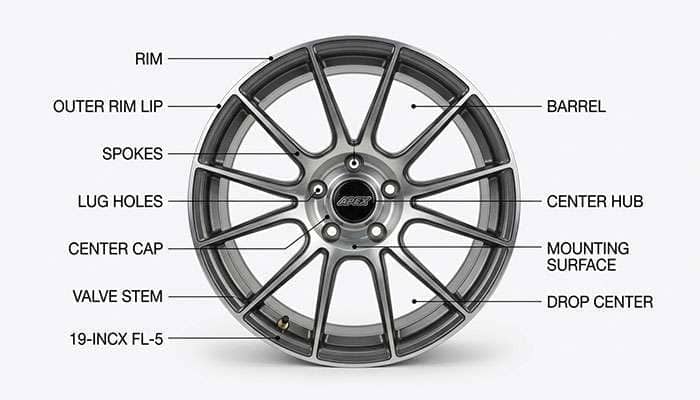
Understanding SUV wheels is important before making a purchase. The wheel serves as the complete mechanical structure connecting your vehicle to the road surface. According to Society of Automotive Engineers standards, it functions as a circular component designed to rotate on an axle bearing, transmitting power while minimizing friction. Each wheel integrates multiple components - the rim, hub, spokes, and mounting hardware - that work together as a single unit.
SUV wheels handle demanding tasks that require exceptional strength and reliability. They transfer engine power to the ground through driven wheels while supporting substantial vehicle weight. A typical wheel and tire assembly on pickup trucks supports approximately 900 to 1,200 pounds per corner. These wheels also maintain traction and directional stability while serving as the foundation for your brake system components.
We carry wheels in two primary construction types for SUVs. Steel wheels provide exceptional durability at budget-friendly prices, typically ranging from $50 to $150 each. Aluminum alloy wheels cost more but deliver important performance advantages. They weigh significantly less than steel, dissipate brake heat more effectively, and allow for more intricate styling designs, with prices ranging from $125 to $500 per wheel.
Most people use "wheels" and "rims" as the same thing, but they represent different components. The rim refers specifically to the outer edge of the wheel - the part that holds the tire in place. It forms the circular outer structure and surrounds the hub and spoke area. The tire bead sits against this rim section, creating the seal that maintains air pressure.
The wheel represents the entire assembly. This includes the spokes, mounting surface, rim, and all components that secure the tire to your vehicle. Think of the rim as one part of the complete wheel structure. On modern alloy wheels, the rim integrates directly into the wheel design rather than existing as a separate component.
Rim dimensions determine tire compatibility. A 17x8" specification means the rim accepts 17-inch diameter tires and supports tire widths within specific parameters. This distinction becomes crucial when ordering replacement tires or discussing fitment with service technicians. When someone mentions needing to "change their wheels," they often mean replacing just the tires, which are the removable rubber components.
Selecting the right wheels affects every aspect of your SUV's performance and value. Custom wheels can improve your vehicle's appearance and increase resale value compared to factory options. The impact extends far beyond visual appeal.
Wheel bearings allow smooth rotation at highway speeds by reducing friction between moving and stationary components. These bearings typically last between 85,000 and 100,000 miles depending on driving conditions. Warning signs include grinding or humming sounds that vary with vehicle speed, steering wheel vibration, and irregular tire wear patterns.
Your wheel hub connects directly to critical vehicle systems. It provides mounting points for brake rotors and houses sensors for ABS and stability control systems. Hub problems can trigger dashboard warning lights and compromise braking performance, making proper wheel selection essential for safety.
Damaged wheels create immediate handling problems. Bent, cracked, or corroded wheels produce noticeable changes in ride quality and vehicle control. You might experience uneven tire wear or vibrations that worsen with speed. Minor wheel damage makes proper tire balancing difficult, while severe damage prevents proper tire sealing, causing air leaks and pressure loss.
Weight determines more about wheel performance than any other single factor. Lighter wheels allow your suspension to work more effectively over bumps and deliver a sportier driving experience. The performance difference becomes measurable even in racing applications, where lightweight wheels can improve lap times by 0.3-0.4 seconds on small kart tracks. Aluminum wheels weigh approximately 2.5 times less than steel equivalents, providing noticeable improvements in acceleration, braking response, and fuel economy.
Wider wheels create better sidewall support for your tires, increasing the contact patch and improving cornering grip. This enhanced performance comes with trade-offs. Additional width increases rolling resistance, which improves road holding but can reduce fuel efficiency. Larger wheels also add unsprung weight, requiring careful balance between size benefits and suspension performance.
Wheel diameter directly affects how your SUV handles and rides. Larger diameter wheels improve cornering precision and high-speed stability through increased contact area and reduced sidewall flex. However, they require lower-profile tires with reduced cushioning ability. This creates sharper steering response but produces a firmer ride over rough surfaces.
Smaller diameter wheels paired with higher-profile tires provide superior cushioning and ride comfort. They also reduce rotational mass, requiring less energy for acceleration and potentially improving quarter-mile performance. Consider your priorities when choosing between 20-inch and 22-inch options based on comfort versus performance needs.
Steel wheels outweigh aluminum equivalents by 2.5 to 3 times. This additional mass actually improves traction on snow and ice, making steel wheels popular for winter applications. Steel construction resists impact damage better than alloy, proving ideal for harsh conditions and heavy-duty use. Aluminum alloy wheels excel at heat dissipation, reducing brake fade and wheel deformation during extended use.
Steel wheels offer the most economical entry point, starting around $30 per wheel or approximately $120 for a complete set. Standard alloy options range from $125 to $500 per wheel depending on size and construction. Premium custom wheels can exceed $1,000 each, while specialized carbon fiber options reach $10,000 to $13,500 for complete sets. Most drivers invest around $725 for professional wheel replacement.
Your typical driving conditions should guide wheel selection. Highway-focused applications benefit from wheels optimized for smooth surfaces, long mileage, and comfortable rides. All-terrain tires work well for mixed use, providing on-road comfort while handling occasional encounters with snow, dirt, and gravel. Mud-terrain applications require wheels that accommodate deep tread blocks for maximum traction, though this comes at the cost of on-road refinement and fuel economy.
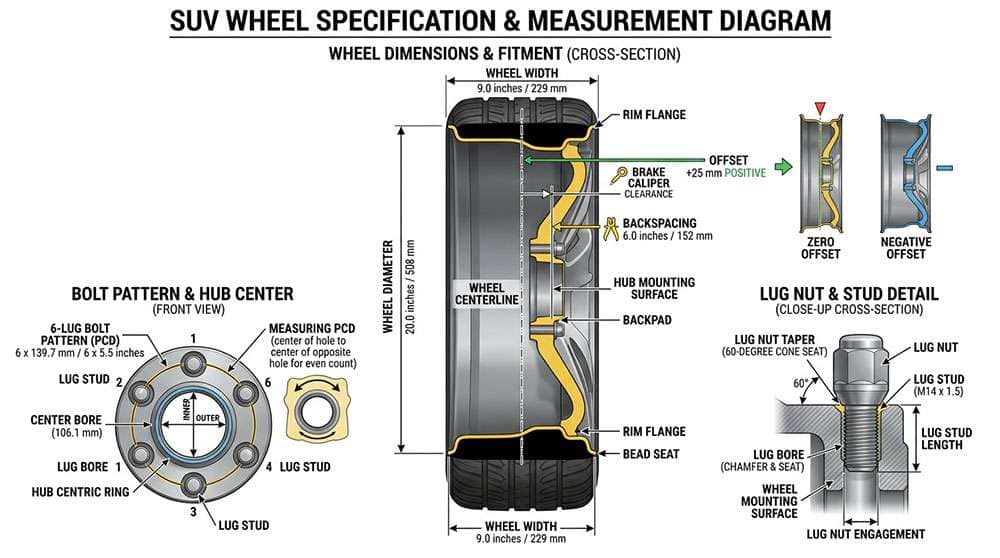
Understanding wheel measurements begins with knowing where each specification comes from. The diameter represents the distance between the two bead seat areas where the tire seals onto the wheel. You can locate this measurement on your current tire sidewalls or inside the driver's door frame. Width measures the distance from each bead seat, running from inside edge to outside edge.
These measurements determine tire compatibility with your wheels. A 17x8" specification indicates a 17-inch diameter wheel with an 8-inch width. Factory wheels are engineered to work perfectly with your SUV's suspension geometry, gear ratios, and body clearances.
Offset measures how far inward or outward the mounting surface positions relative to the wheel's centerline. The centerline divides the wheel into two equal halves. Positive offset moves the wheel and tire inward because the hub mounting surface sits ahead of the centerline. Negative offset pushes them outward since the mounting surface sits behind the centerline.
Backspacing measures the distance from the mounting surface to the wheel's back edge in inches. Offset uses millimeters and can be positive, zero, or negative, while backspacing only shows positive values. Both measurements accomplish the same goal through different methods: determining the wheel's mounting flange position.
The bolt pattern combines the number of lug holes with the diameter of the circle passing through each hole. Most vehicles use 4-, 5-, 6-, or 8-lug patterns with specific spacing requirements. Measuring a 4-lug pattern requires measuring from the center of one hole straight across to the opposite hole. For 5-lug patterns, measure from the outside of one wheel stud hole to the center of the opposite stud. Six- and 8-lug patterns measure from center to center of opposite holes.
Load rating specifies the maximum weight each tire can safely support when properly inflated. Most passenger vehicles have load index values ranging from 70 to 110, translating to 739 to 2,337 pounds per tire. SUVs require special consideration because P-metric or Euro-metric tires used on SUVs must carry 10% more weight than required for passenger cars, limiting their capacity to 91% of the sidewall rating.
Proper wheel fitment requires more than matching basic measurements. Modern SUVs feature complex brake systems, suspension components, and electronic monitoring that demand precise compatibility verification. Simply purchasing wheels with the correct bolt pattern and diameter won't guarantee proper fit or safe operation.
Your new wheels must clear all brake components and suspension hardware without interference. Wheel offset, width, and spoke design all impact clearance requirements. When upgrading to larger brake systems, maintain at least 3mm clearance in all directions between the caliper and wheel spokes.
Brake calipers expand during operation due to heat buildup. This thermal expansion makes adequate clearance critical for safe operation. If your caliper contacts the wheel spokes, you'll need high-quality hubcentric spacers to move the wheel outward. However, spacers widen your vehicle's track, so you must verify that tires clear the fender wells at full suspension travel and steering lock.
Hub-centric wheels feature a center bore machined to fit precisely over your vehicle's hub. This design centers the wheel properly and reduces vibration after the lug nuts are tightened. Most original equipment wheels use hub-centric fitment, with the vehicle's weight supported by the machined hub surface while lug nuts handle lateral forces.
Aftermarket wheels often use lug-centric fitment with larger center bores to fit multiple vehicle applications. The lug nuts center and secure the wheel to the axle. Without proper installation torque and sequence, vibrations and wobbling can occur. Hub-centric rings provide an effective solution by fitting over the hub to create the proper connection. These plastic or aluminum rings reduce vibrations while improving ride comfort and safety.
Tire pressure monitoring sensors cannot be eliminated simply because they don't fit aftermarket wheels. Aftermarket stems and seals allow stock sensors to adapt to custom wheels while maintaining proper function and orientation. When sensors don't fit the original valve hole location, mount them on the drop center using a band kit. Position sensors flat and secure, opposite the valve stem to prevent damage during tire mounting.
Programmable sensors offer flexible mounting options when stock sensors prove incompatible with your wheel choice. Always recalibrate the TPMS system when changing tire size or load rating, as different specifications require pressure monitoring adjustments.
Professional tire mounting secures the tire to the wheel using proper techniques and equipment. Wheel balancing corrects weight distribution imbalances in the complete assembly. Proper balancing prevents steering wheel vibration, uneven tire wear, and premature suspension component wear that can result from unbalanced wheel assemblies.
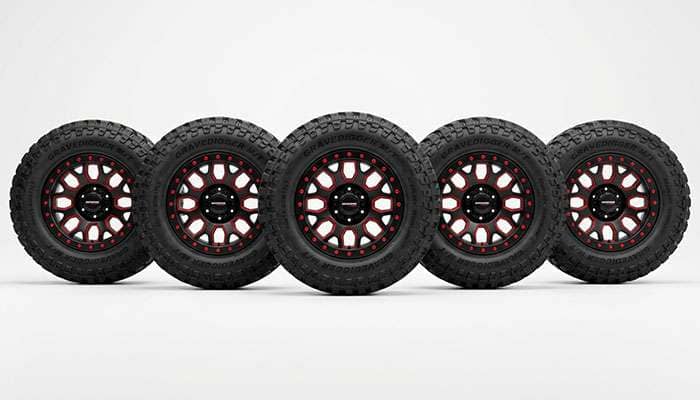
Steel wheels deliver exceptional durability at prices that won't break the bank. Black steel rims offer rugged reliability for off-road enthusiasts who demand performance without premium prices. Basic alloy options provide the perfect balance of style and performance for city driving applications.
The Pro Comp Rock Crawler Xtreme Series 51 stands out as an economical choice starting at USD 102.00, featuring load ratings between 1,600-2,200 lbs for serious capability. JEGS Brand wheels compete directly with higher-priced alternatives while maintaining the quality you need. These budget options prove you don't have to sacrifice performance to stay within your budget.
Flow-forged construction delivers the ultimate combination of strength and reduced weight. This advanced manufacturing process creates wheels that are lighter than traditional cast options while maintaining superior durability. Method Race Wheels brings genuine motorsport DNA to street applications with race-tested designs that perform. Forgestar uses cutting-edge flow forming technology to achieve superior strength and weight savings that you can feel.
ICON Alloys Rebound Pro handles the most demanding applications with an impressive 3,200 lbs load rating at USD 315.00. Fuel Off-Road dominates aggressive builds with strong load ratings and deep lips that make a statement. Black Rhino specializes in rugged, purpose-built designs featuring serious load capacities perfect for towing and overlanding adventures. Cast rims work well for moderate trails, while forged aluminum excels when extreme conditions demand maximum performance.
Original equipment wheels from sources like Performance Plus Tire typically cost around half the dealer list price while maintaining OEM quality. These carefully selected OEM rims undergo multi-point inspections and reconditioning using factory methods to ensure reliability. Replica wheels provide cost-effective alternatives that perfectly replicate popular factory designs. Available finishes include painted silver, charcoal, hyper silver, powder coated black, CNC machined, polished, PVD, and chrome to match any style preference.
Selecting the right SUV wheels comes down to matching your specific needs with the right combination of size, material, and specifications. The best wheels balance performance, durability, and budget while ensuring proper fitment and safety for your vehicle.
Steel wheels provide unbeatable durability and winter traction at budget-friendly prices. Alloy wheels deliver superior performance through reduced weight, better heat dissipation, and enhanced styling options. Both have their place depending on your driving conditions and performance requirements.
At Performance Plus Tire, we carry the best selection of SUV wheels at competitive prices. Our experienced team can help you find the perfect wheels for your vehicle, whether you're upgrading for daily driving performance or serious off-road capability. We ensure proper fitment and provide professional mounting and balancing services to guarantee optimal performance and safety.
Ready to upgrade your ride? Performance Plus Tire has the expertise and inventory to help you make the right choice. Contact us today to find wheels that enhance both your SUV's performance and your driving confidence.
Choosing the right SUV wheels involves balancing performance, safety, and budget considerations to match your specific driving needs and conditions.
• Weight matters most for performance - Lighter alloy wheels improve acceleration, handling, and fuel economy compared to heavier steel options • Verify critical specifications first - Always check bolt pattern, offset, load rating, and brake clearance before purchasing to ensure proper fitment • Match wheels to your driving style - Steel wheels excel for winter/off-road durability, while alloy wheels provide better on-road performance and heat dissipation • Professional installation is essential - Proper mounting, balancing, and TPMS compatibility checks prevent vibrations and safety issues • Budget wisely across the spectrum - Steel wheels start at $30 each, standard alloy runs $125-500, while premium options can exceed $1,000 per wheel
The right wheel choice enhances your SUV's performance, safety, and resale value while providing the confidence to tackle any driving condition you encounter.
Q1. What's the difference between a wheel and a rim? A wheel is the complete circular assembly that includes the rim, spokes, hub, and all mounting components. The rim is just the outer edge of the wheel that holds the tire in place. Think of the rim as one part of the whole wheel structure.
Q2. Should I choose steel or alloy wheels for my SUV? Steel wheels are more affordable ($50-$150 each) and extremely durable, making them ideal for winter driving and off-road conditions. Alloy wheels cost more ($125-$500 each) but weigh about 2.5 times less than steel, offering better acceleration, fuel economy, and heat dissipation for improved brake performance.
Q3. How does wheel size affect my SUV's performance? Larger wheels improve cornering and handling on dry pavement but require lower-profile tires that create a stiffer ride. Smaller wheels with higher-profile tires provide better cushioning and a smoother ride over bumps. Lighter wheels also improve acceleration and reduce the workload on your suspension system.
Q4. What specifications must I check to ensure wheels fit my SUV properly? You need to verify the bolt pattern (number and spacing of lug holes), wheel diameter and width, offset (position of the mounting surface), load rating (weight capacity per tire), and brake clearance. Also confirm that the center bore matches your hub size to prevent vibrations.
Q5. Do I need to worry about tire pressure monitoring sensors when changing wheels? Yes, you cannot simply remove tire pressure monitoring sensors. If your stock sensors don't fit the new wheels, you can use aftermarket stems and seals to adapt them, mount them on the drop center with a band kit, or install programmable sensors that offer flexible mounting options.



