
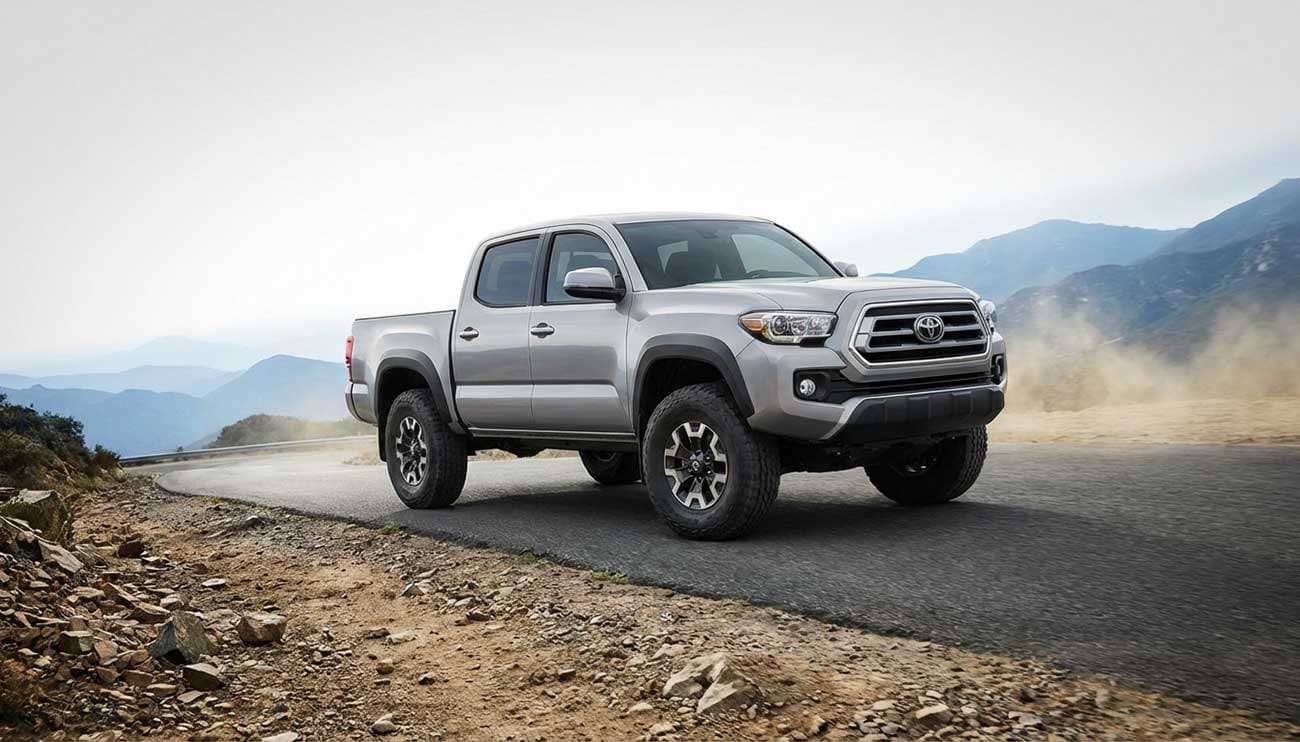
All terrain tires are engineered to deliver reliable performance across multiple driving conditions, from smooth highways to rugged backroads. When you need the same vehicle for weekday commutes and weekend adventures, these versatile performers offer the perfect solution for your varied driving demands.
All-terrain tires excel where standard highway tires fall short. They provide dependable traction on paved surfaces, gravel roads, dirt trails, and even light mud or snow conditions. The reinforced sidewalls and tougher tread compounds deliver superior puncture resistance compared to regular highway options. Many premium models now carry the Three-Peak Mountain Snowflake (3PMSF) symbol, proving they meet rigorous industry standards for severe snow performance.
At Performance Plus Tire, we understand that choosing the right tires means balancing everyday practicality with adventure capability. This guide covers everything you need to know about all-terrain tires – from key features and performance benefits to potential trade-offs and ideal vehicle matches. Whether you're upgrading your daily driver or preparing for off-road exploration, we'll help you determine if all-terrain tires fit your driving lifestyle.
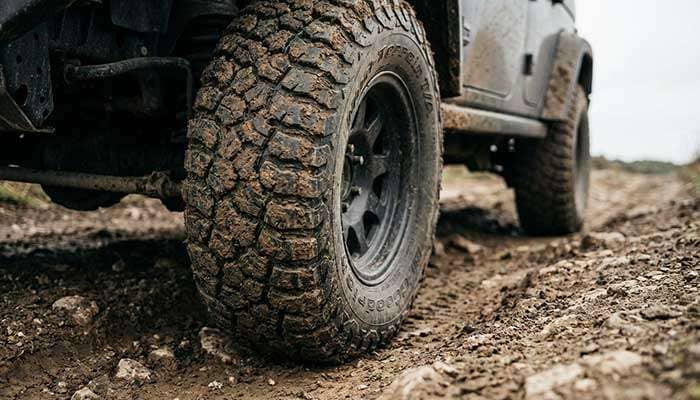
All-terrain tires bridge the gap between everyday practicality and adventure capability. These versatile performers handle highways, city streets, gravel roads, mild off-road terrain, and various weather conditions including light snow. They've gained popularity among drivers who refuse to compromise between weekday reliability and weekend exploration.
All-terrain tires (commonly called A/T tires) occupy the middle ground between standard highway options and aggressive mud-terrain designs. They deliver a careful balance of on-road comfort and off-road capability, making them the most adaptable tire category for diverse driving conditions.
Essential features that define all-terrain performance include:
Open-tread design featuring larger voids and shoulder tread blocks that efficiently clear mud, snow, and debris during driving
Reinforced sidewall construction providing enhanced protection against punctures from rocks and rough surfaces
Specialized rubber compounds engineered to resist damage from gravel, dirt, and uneven terrain
Multi-directional tread patterns that maintain grip across different surface types
Increased tread depth compared to highway tire designs
Premium all-terrain options often include wraparound tread extending onto the sidewall for additional grip and protection when tackling rocky conditions. These tires also feature interlocking tread elements that maintain consistent contact with both loose surfaces and paved roads.
All-terrain tires sit between highway/all-season designs and specialized mud-terrain models. Most A/T tires qualify as all-season, but not every all-season tire offers true all-terrain capability.
Compared to all-season tires, all-terrains provide:
More aggressive tread patterns with deeper channels
Stronger sidewall construction
Better traction on unpaved surfaces
Enhanced puncture resistance
Slightly increased road noise
Modest reduction in fuel efficiency
All-season tires maintain advantages in on-road refinement, offering quieter operation, smoother ride quality, and more responsive handling on pavement. The best all-season options can deliver superior comfort, control, and fuel economy compared to even refined all-terrain designs.
Mud-terrain tires represent the opposite extreme from all-terrains. Mud-terrains use fewer, larger tread lugs with wider spacing - perfect for ejecting mud and rocks but generating more noise. Mud-terrain designs employ softer rubber compounds for maximum off-road grip, while all-terrains use firmer compounds that balance durability with performance.
All-terrain tires typically provide 45,000-65,000 miles of service life, making them far more practical for daily driving than mud-terrain alternatives. However, extreme conditions like deep mud or serious rock crawling will expose the limits of all-terrain capability compared to specialized mud tires.
When you need one set of tires for both Monday morning commutes and Saturday trail adventures, all-terrain options deliver the ideal compromise.
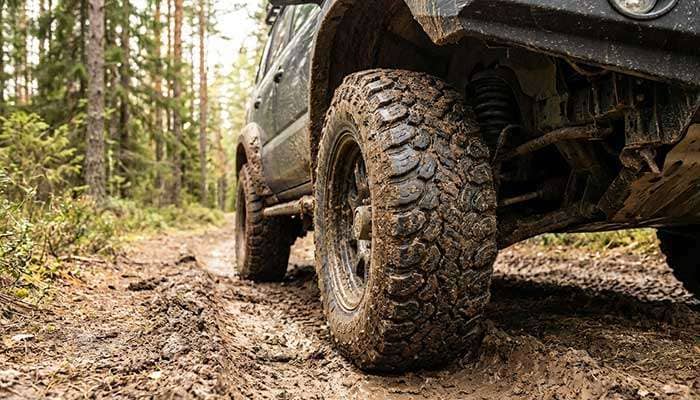
All-terrain tires prove their worth when you need reliable performance across different driving conditions. These versatile performers deliver advantages that standard highway tires simply cannot match, making them an excellent choice for drivers who refuse to compromise.
All-terrain tires excel where conventional options struggle. The open-tread design adapts to changing surfaces with remarkable consistency. Those interlocking tread elements bite into rocks and loose soil with impressive grip, while the larger voids between tread blocks continuously clear away water, mud, and debris that would otherwise reduce traction.
This self-cleaning capability maintains consistent performance even as conditions deteriorate. Quality options like the BFGoodrich All-Terrain T/A KO3 demonstrate remarkable adaptability across multiple environments, finding grip and building speed efficiently. You won't need to swap tire sets when transitioning from city streets to backcountry roads.
Reinforced sidewalls resist punctures, cuts, and damage from sharp objects that would quickly compromise standard highway tires. This robust construction provides confidence when you're far from the nearest service station.
Premium all-terrain tires feature advanced protection technologies:
BFGoodrich KO2's CoreGard Technology creates sidewalls 20% tougher than previous generations
Nokian's Aramid Shield incorporates puncture-resistant Aramid fibers into sidewalls and beneath the tread
These tires handle the punishment from rocks, branches, and road debris that destroys conventional options. For drivers navigating construction zones, rural routes, or unpaved paths regularly, this durability advantage is significant.
Modern all-terrain tires often earn the Three-Peak Mountain Snowflake (3PMSF) symbol, proving they meet rigorous testing standards for severe winter conditions. Unlike self-reported M+S designations, 3PMSF certification represents actual tested performance to American Society for Testing and Materials standards.
This certification allows confident year-round use, even in regions experiencing winter weather. Advanced models feature specialized tread compounds and full-depth sipes that maintain consistent biting edges throughout the tire's life, ensuring reliable wet and snow performance.
Weekend explorers who want to venture beyond paved roads without investing in specialized equipment find all-terrain tires strike the ideal balance. They provide the confidence to tackle gravel roads, reach remote campsites, or navigate mild trails without requiring aggressive mud tires that compromise daily drivability.
The aggressive tread patterns grab loose surfaces while providing stability that helps inexperienced off-road drivers maintain control. One tester noted about the BFGoodrich All-Terrain T/A KO3: "Driving off-road can feel like being along for the ride at times, but this felt like it brought the experience under control".
We carry an extensive selection of quality Discount All Terrain Tires that deliver the perfect balance between capability and value. Our wheels are also available in a range of prices to fit any budget.
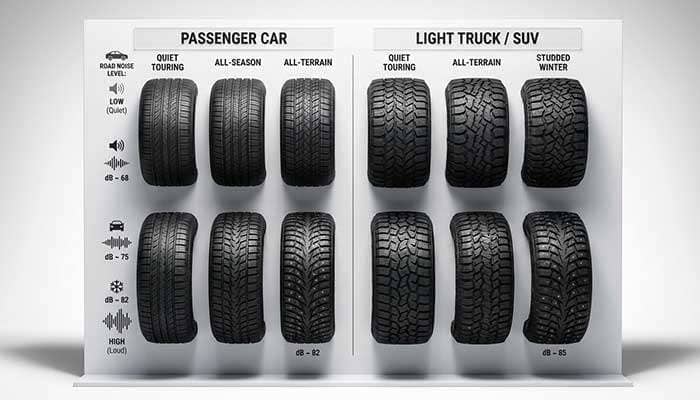
While all-terrain tires deliver impressive versatility, they involve trade-offs that buyers should understand before making their purchase. Knowing these limitations helps you decide whether the benefits justify the compromises for your specific driving requirements.
The aggressive tread design that delivers excellent off-road traction works against fuel efficiency on pavement. All-terrain tires create greater rolling resistance, forcing your engine to work harder and consume more fuel at highway speeds. Research indicates that tires account for 15 to 25 percent of fuel economy reduction at low speeds and 20 to 35 percent at highway speeds. The blockier tread patterns and specialized rubber compounds designed for off-road grip generate more friction on smooth pavement, making A/T tires less fuel-efficient than standard highway options.
The open channels between tread blocks that clear mud and debris off-road create noticeable sound on paved surfaces. Air moving through these wider voids produces a distinctive noise that increases with vehicle speed. Testing has shown that A/T tires can be approximately 1.5 decibels louder than highway tires at cruising speeds. Some A/T tires develop a rhythmic humming sound that can resonate inside the vehicle cabin over time.
The softer rubber compounds used in all-terrain construction wear faster on abrasive pavement surfaces. This increased wear typically limits tread life warranties to around 40,000 miles, though premium options may offer 50,000-70,000 mile coverage. Beyond replacement costs, worn tires negatively impact safety, handling, and fuel efficiency as they decline.
All-terrain tires show particular susceptibility to scalloping or cupping – an uneven wear pattern that creates randomly worn patches across the tread surface. This irregular wear forms distinct peaks and valleys approximately 3-4 inches wide around the tire. Common causes include:
Incorrect wheel alignment
Worn suspension components
Tire imbalance
Improper inflation pressure
Scalloped tires produce rhythmic noise and vibrations felt through the steering wheel or seat. These unevenly worn tires also reduce traction, increase stopping distances, and compromise handling, especially on wet roads. Once cupping develops, it continues without addressing the underlying mechanical issues.
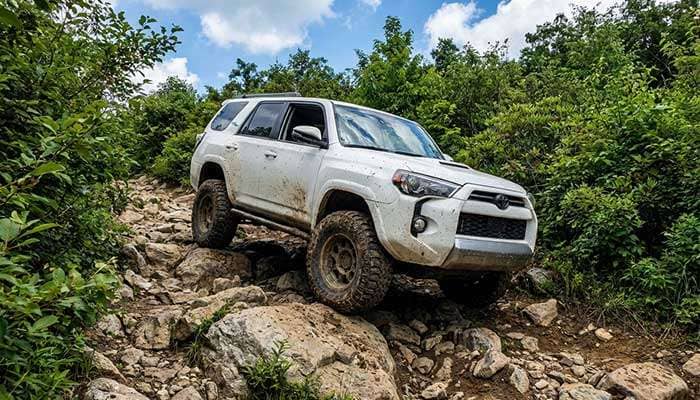
Selecting the right vehicle for all-terrain tires matters just as much as choosing the tires themselves. Some vehicles naturally pair with these versatile performers better than others, delivering maximum performance and tire longevity.
Light trucks and pickup trucks represent the ideal match for all-terrain capabilities. The robust suspension systems and elevated ground clearance work perfectly with aggressive tread patterns. Many manufacturers recognize this natural compatibility by equipping trucks with all-terrain tires from the factory. This combination delivers exceptional durability for towing, hauling, and construction site navigation. Pickup trucks gain that crucial safety margin when tackling unpredictable terrain while maintaining solid on-road behavior.
Full-size SUVs and crossovers benefit significantly from all-terrain upgrades. The Subaru Outback, Forester, and Crosstrek offer all-terrain packages in their Wilderness editions, featuring 17-inch wheels with specialized tires. The Toyota RAV4 TRD Off-Road comes equipped with 225/60R18 Falken Wildpeak A/T Trail tires that complement its 8.6-inch ground clearance. Even the Mazda CX-50 Meridian Edition targets outdoor enthusiasts with factory all-terrain options. Smaller crossovers also gain substantial all-weather capability with proper A/T tire upgrades.
Recreational vehicles and dedicated 4WD platforms depend on all-terrain versatility for their varied use. The Goodyear Wrangler All-Terrain Adventure with Kevlar specifically serves this segment, providing enhanced puncture resistance and superior traction across changing conditions. Campers benefit from improved load capacity and enhanced durability. These tires quickly shed rocks and debris on unpaved roads, preventing vehicles from getting stuck during adventures.
Standard passenger cars rarely gain significant benefits from all-terrain tires. Lower ground clearance and lightweight construction limit their off-road potential. The aggressive tread patterns can introduce excessive road noise in car cabins with less insulation than trucks or SUVs. The reduced fuel economy also affects smaller engines more noticeably.
Looking for Discount All Terrain Tires for your truck or SUV? Performance Plus Tire offers quality options at competitive prices to match your specific vehicle needs.
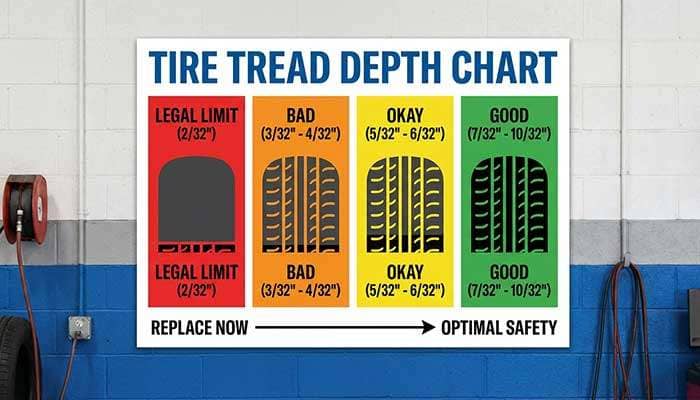
Understanding tire lifespan is important before making a purchase. All-terrain tires typically deliver solid service life when properly maintained, making them a practical choice for drivers who need versatility without frequent replacements.
Most quality all-terrain tires deliver between 45,000 to 65,000 miles of service life. This represents a reasonable balance between highway tires and more aggressive off-road options. You can expect anywhere from 40,000 to 60,000 miles from standard all-terrain models, depending on your specific driving conditions. Premium all-terrain options often exceed these numbers, with some high-quality tires capable of reaching 80,000+ miles under ideal circumstances.
Several key variables determine how much mileage you'll get from your all-terrain set:
Rubber compound and construction - The moderately soft compounds that provide all-terrain grip naturally wear faster than harder highway tire compounds
Driving surfaces - Rough pavement, gravel roads, and off-road trails accelerate tread wear compared to smooth highways
Vehicle weight - Heavier trucks and SUVs place more stress on tires, typically wearing them faster than lighter crossovers
Driving habits - Hard acceleration, aggressive braking, and fast cornering significantly reduce tire longevity
Geographic conditions - Urban driving with frequent stops causes more slippage and quicker tread degradation than consistent highway cruising
Proper maintenance can maximize your investment. Rotate your tires every 5,000-8,000 miles to promote even wear patterns. Maintaining proper inflation pressure is especially important – correct pressure can add approximately 4,700 miles to your tire's lifespan.
For those who frequently venture off-road, consider having your alignment checked with every oil change rather than waiting for the standard 30,000-mile interval. Regular visual inspections can catch potential problems before they become serious. Your driving style makes a substantial difference – smooth acceleration, gentle cornering, and gradual braking preserve tread significantly longer than aggressive driving habits.
At Performance Plus Tire, we offer all-terrain options designed for maximum durability and performance. Our expert team can help you select the right tires for your vehicle and provide guidance on proper maintenance to ensure you get the most miles from your investment.
All-terrain tires deliver solid performance for drivers who need one tire to handle multiple driving situations. Their reinforced sidewalls and aggressive tread patterns provide reliable traction on highways, dirt roads, and light off-road conditions. The enhanced puncture resistance and 3PMSF snow ratings make them practical for year-round use.
The trade-offs are real and worth considering. Increased road noise, reduced fuel economy, and faster highway wear might not justify the investment for city-only driving. For truck and SUV owners who regularly encounter unpaved roads, construction zones, or weekend trail access, these tires offer excellent value through their adaptability.
Proper care makes a significant difference in performance and longevity. Regular tire rotation every 5,000-8,000 miles, maintaining correct air pressure, and checking alignment can help you reach that 45,000-65,000 mile range. Your driving habits matter too – smooth acceleration and gradual braking extend tread life considerably.
We carry quality Discount All Terrain Tires that balance capability with value to match your specific vehicle requirements.
All-terrain tires work best for drivers who need flexibility without switching tire sets. They won't outperform highway tires on pavement or mud tires in extreme conditions, but their versatility makes them ideal when you want one tire that handles diverse conditions reliably. For most truck and SUV drivers who mix highway commuting with occasional off-road adventures, all-terrain tires represent a smart, practical choice.
All-terrain tires offer the perfect balance between highway comfort and off-road capability, making them ideal for drivers who need versatility without switching tire sets.
• All-terrain tires excel on multiple surfaces—highways, gravel, dirt trails, and light snow—thanks to open-tread designs and reinforced sidewalls that resist punctures.
• These tires sacrifice fuel efficiency and create more road noise compared to highway tires, but deliver 45,000-65,000 miles of service life with proper maintenance.
• Trucks, SUVs, and 4WD vehicles benefit most from all-terrain upgrades, while standard passenger cars rarely see significant advantages due to lower ground clearance.
• Regular tire rotation every 5,000-8,000 miles and maintaining proper inflation pressure can extend tread life by thousands of miles and maximize your investment.
• Many modern all-terrain tires earn the 3PMSF snow rating, allowing confident year-round use even in regions with severe winter conditions.
For drivers who commute during the week and explore trails on weekends, all-terrain tires eliminate the need for seasonal tire changes while providing the confidence to venture beyond paved roads safely.
All-terrain tires are suitable for daily driving, offering versatility for both highway commutes and weekend adventures. However, they may have slightly reduced fuel efficiency and increased road noise compared to standard highway tires.
The key benefits of all-terrain tires include versatile traction on multiple surfaces, improved durability and puncture resistance, all-year usability including light snow conditions, and enhanced off-road confidence for casual adventurers.
Most quality all-terrain tires deliver between 45,000 to 65,000 miles of service life. Premium options may reach up to 80,000 miles under ideal conditions. Factors like driving habits, vehicle weight, and road surfaces can affect longevity.
All-terrain tires are ideal for light trucks, pickup trucks, SUVs, crossovers, and 4WD vehicles. These vehicle types naturally complement the tires' design, maximizing both performance and longevity.
To maximize the lifespan of all-terrain tires, regularly rotate them every 5,000-8,000 miles, maintain proper inflation pressure, have your alignment checked frequently, and adopt smooth driving habits. These practices can significantly extend tread life and maintain optimal performance.



