
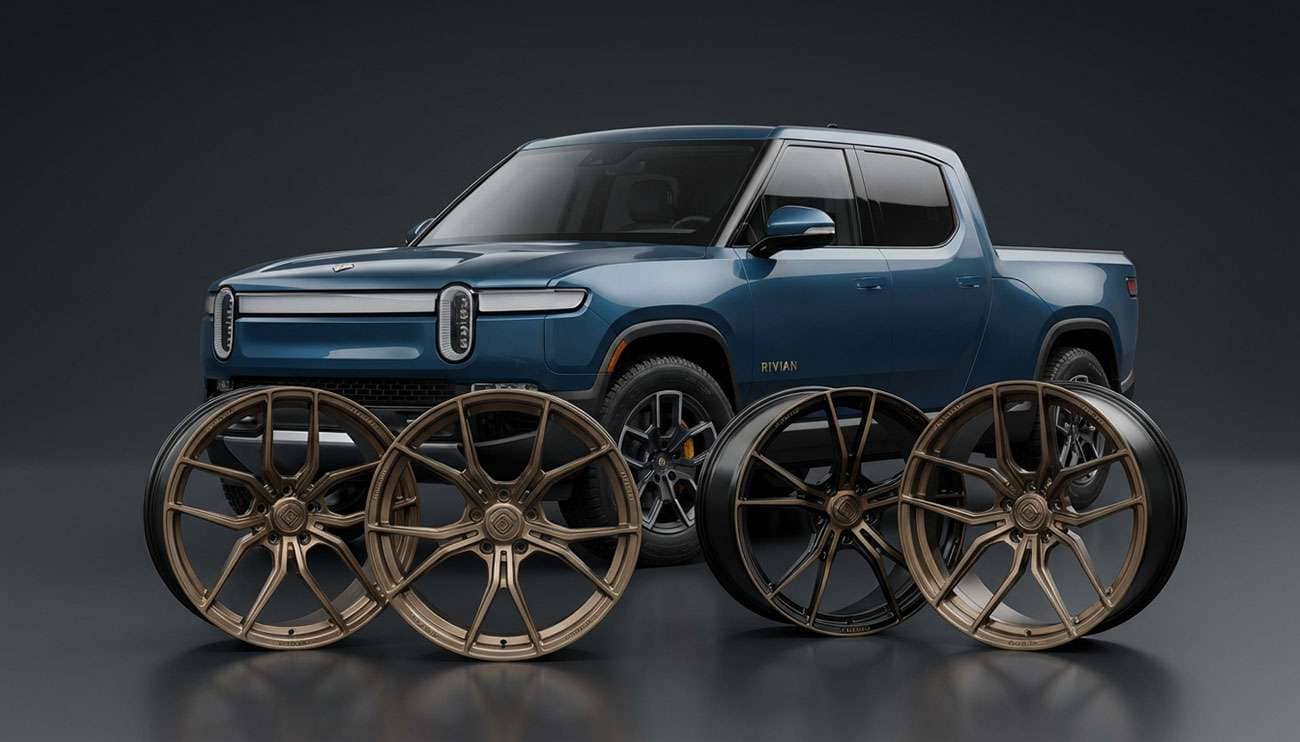
Rivian's stock 20" All Terrain wheels weigh 35.7 lbs each. This extra weight directly impacts your EV's range, acceleration, and handling performance. Aftermarket wheels provide an effective solution to these performance limitations.
Choosing the right aftermarket wheels for your Rivian R1T or R1S requires understanding essential compatibility factors. Whether you want to enhance off-road capabilities or maximize driving range, proper wheel selection affects your vehicle's overall performance. Bolt patterns, load ratings, and offset specifications work together as a complete system with your tires.
When it comes to Rivian wheel options, we have the knowledge and selection to help you make the right choice. This guide covers everything you need to select the perfect aftermarket wheels for your vehicle.
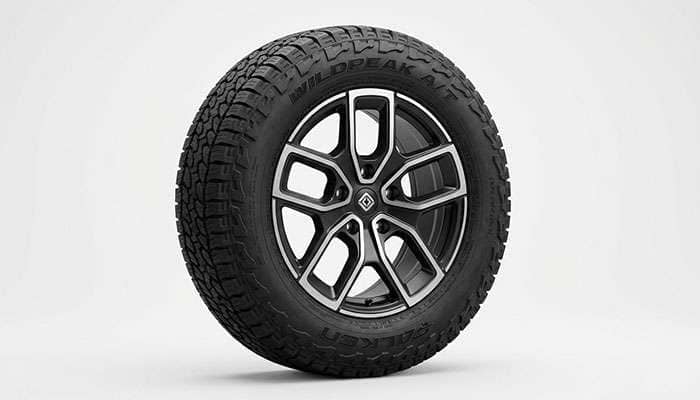
Both R1T and R1S models use identical wheel fitment specifications, making wheels completely interchangeable between the two vehicles. Rivian provides three diameter choices: 20", 21", and 22" wheels across multiple finish options.
The 20" category offers All Terrain, All Terrain Bright, All Terrain Dark, and Dune variants. Standard 21" Road wheels come at no additional charge, while 22" options include Sport Bright, Sport Dark, Sport Burnished Bronze, and Range designs.
Each diameter size requires specific tire dimensions. The 20" wheels use 275/65R20 tires, 21" wheels mount 275/55R21 tires, and 22" wheels fit 275/50R22 tires. Gen 2 models (2025-2026) added a 20" All-Season option with Goodyear Wrangler Territory AT tires sized at 275/60R20.
All factory Rivian wheels share core measurements regardless of diameter. Every option measures 8.5 inches in width. The offset stays at +48mm to clear the large brake calipers. The bolt pattern uses a 5x139.7 configuration, also known as 5x5.5".
Centerbore diameter measures 64.1mm across all factory wheels. Lug bolts use M14 x 1.5mm threading with a 22mm socket for installation. Torque specifications require 140 ft-lbs or 190 Nm. Offset range spans 46-50mm, with backspacing at 169mm or 6.65 inches.
Rivian uses different construction methods for each size. The 20" wheels are forged, while 21" and 22" options use casting processes. This construction difference explains weight variations between sizes. A complete 20" setup with mounted Pirelli Scorpion tires weighs 88 lbs.
Factory wheels work directly with all OEM components. Stock TPMS sensors, center caps, and lug nuts function across every size. This means switching between factory wheel sizes requires no additional hardware changes. The consistent +48mm offset and 64.1mm centerbore provide the foundation that aftermarket wheel manufacturers must match for proper fitment.
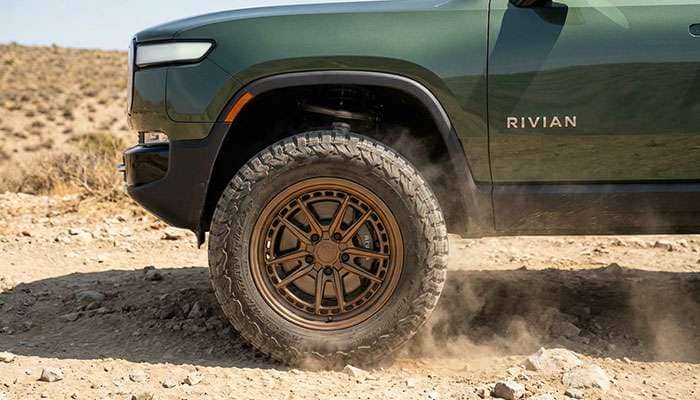
Aftermarket rivian wheels deliver measurable performance improvements through reduced unsprung weight. Unsprung weight requires approximately three times the power to accelerate compared to stationary weight. Drop 15 pounds per wheel and you effectively remove around 180 pounds of impact on your vehicle's dynamics. This means sharper steering response, improved braking distance, and better suspension compliance over rough terrain.
Forged wheels manufactured under high pressure typically weigh 25-40% less than cast alternatives. Flow-formed construction offers a middle ground, delivering 15-25% weight reduction over traditional cast wheels at a more accessible price point. Carbon fiber wheels push weight savings even further, reducing wheel weight by 40-50% compared to aluminum while offering exceptional stiffness. For heavy EVs like the R1T and R1S, every pound affects range and efficiency.
Rivian aftermarket wheels expand your design choices far beyond the limited factory palette. Aftermarket options offer diverse finishes, spoke patterns, and color combinations that let you personalize your R1T or R1S beyond standard OEM offerings. From sleek directional designs to aggressive off-road styles, aftermarket manufacturers provide options that complement your vehicle's intended use while expressing your individual taste.
The benefits of lighter rivian wheel options extend well beyond simple weight savings. Carbon fiber wheels can be more than 50% lighter than traditional alloy options, yet also stronger and more durable. Reduced moment of inertia requires less energy to accelerate and brake. Decreased gyroscopic force means less steering effort during direction changes. For heavy EVs like the R1T and R1S, these four-corner weight savings can bring range improvements while improving ride quality.
Serious off-road applications benefit from specialized aftermarket features. Beadlock wheels prevent tires from slipping on wheels during extreme torque and traction situations, enabling safe low-pressure operation for maximum contact patch. Bolt-on bead protectors shield wheels when you're navigating rocks or other hazards. Wider wheel designs provide enhanced steering response and grip on hard surfaces, while reducing side-to-side tire movement helps you hold lines on technical terrain.
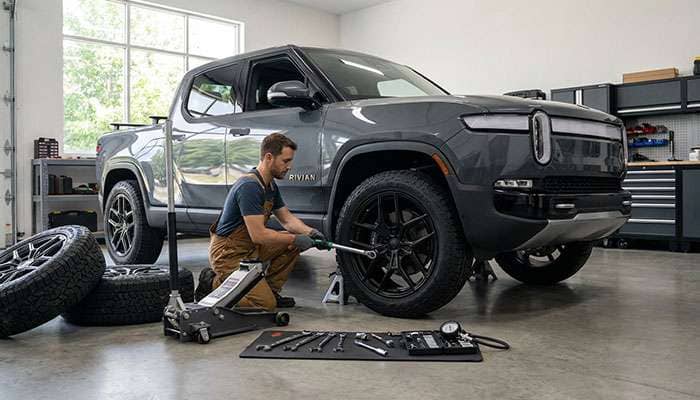
Proper wheel fitment prevents safety issues and ensures optimal performance. Electric vehicles have specific requirements that differ from traditional trucks.
Both R1T and R1S models use a 5x139.7 bolt pattern, also expressed as 5x5.5". This traditional truck configuration appears on Ram full-size trucks through 2018. Any aftermarket wheel must match this exact PCD measurement for safe installation. Manufacturers like Team 1EV and Atomic Wheels design their products specifically around this specification.
Factory wheels use +48mm offset. Aftermarket options typically range from +38mm to +48mm depending on your intended use. The large brake calipers create clearance challenges that require careful attention. Reducing offset by just 2mm can position wheels too close to brake calipers. Backspacing measures 169mm (6.65 inches) on stock wheels.
All wheels require a precise 64.1mm centerbore for proper hub-centric fitment. This measurement centers the wheel on the hub before lug bolts take the load. Wheels without hub-centric fitment will vibrate and transfer stress unevenly to the fasteners.
Battery pack weight demands minimum load ratings between 1,150 kg (2,530 lbs) and 1,200 kg (2,640 lbs) per wheel. Standard passenger car wheels cannot handle EV loads safely. Always verify that load ratings meet or exceed these specifications before purchase.
Factory TPMS sensors work directly with most quality aftermarket wheels. Reputable manufacturers engineer their wheels for compatibility with Rivian's pressure monitoring system. Look for available wheel options that maintain full sensor compatibility.
Rivian uses M14 x 1.5mm lug bolts that require a 22mm socket. Torque specification is 140 ft-lbs or 190 Nm. Aftermarket wheels designed for Rivian accept factory lug hardware without any modifications.
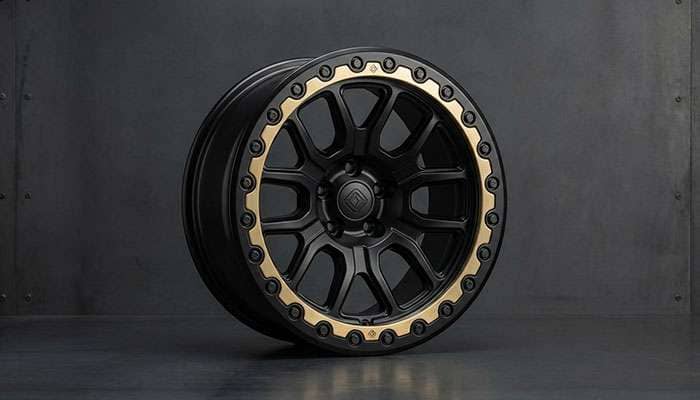
Selecting the right wheel type depends on your driving priorities and intended use. Different construction methods and designs serve specific purposes for your Rivian.
Aero wheels feature smooth, closed face designs that reduce drag at highway speeds. These wheels help your vehicle cut through air more efficiently, delivering up to a 4% range boost during everyday driving. The closed face design minimizes turbulence around wheel arches, making them ideal for long highway commutes where aerodynamic efficiency matters most.
All-terrain designs balance off-road capability with daily drivability. Rivian's factory 20" All-Terrain option weighs 82 lbs as a complete assembly and uses forged aluminum construction paired with Pirelli Scorpion All Terrain Plus tires. These setups handle both pavement and dirt roads effectively, though tire selection affects range more than wheel diameter.
Beadlock systems mechanically clamp tire beads using a metal ring with 24 recessed attachment points and Grade 8 hardware. This design allows safe operation at 2-4 psi for rock crawling or 6-8 psi for sand riding without bead separation. The 1,200-pound load capacity handles heavy EVs confidently, while functional bead knurling prevents tire slip during extreme torque situations. Explore performance wheel options designed specifically for your Rivian.
Forged wheels resist cracking better and offer superior strength compared to cast alternatives in identical sizes. The forging process under 8,000-10,000 tons of pressure eliminates porosity and creates uniform grain structure. Cast wheels dominate 90% of OE applications due to lower manufacturing costs. Flow-formed construction bridges the gap between cast and fully forged options, offering improved performance at a more accessible price point.
Selecting the right aftermarket wheels for your Rivian R1T or R1S comes down to matching proper specifications with your driving priorities. Fitment requirements like bolt pattern, offset, centerbore, and load ratings determine safety and compatibility. Performance goals determine which wheel type delivers the results you want.
Verify these critical specifications before making your purchase. Browse compatible wheel options for your Rivian that meet these essential requirements. Whether you want maximum range efficiency, serious off-road capability, or custom styling, the right wheels enhance your driving experience while maintaining the safety your electric vehicle demands.
The investment in quality aftermarket wheels pays dividends in improved performance, reduced weight, and personalized appearance. Focus on verified compatibility first, then select based on how you use your vehicle.
Choosing the right aftermarket wheels for your Rivian R1T or R1S requires understanding critical compatibility factors and performance benefits that can significantly enhance your EV experience.
• Match exact specifications: Use 5x139.7 bolt pattern, +48mm offset, 64.1mm centerbore, and minimum 2,530 lbs load rating to ensure proper fitment and safety.
• Weight reduction improves performance: Aftermarket wheels can be 25-40% lighter than stock, reducing unsprung weight for better range, acceleration, and handling.
• Choose wheel type based on use: Aero wheels maximize range, all-terrain handles mixed driving, beadlock enables serious off-roading at low tire pressures.
• Forged construction offers advantages: Forged wheels resist cracking better and weigh significantly less than cast alternatives while maintaining strength for heavy EVs.
• Maintain TPMS compatibility: Quality aftermarket wheels work with factory sensors and lug hardware, requiring no additional modifications for installation.
The right aftermarket wheels transform your Rivian's performance while maintaining the safety and functionality your electric truck demands. Focus on verified compatibility first, then select based on your specific driving priorities.
Both R1T and R1S models share identical wheel fitment with a 5x139.7 bolt pattern, +48mm offset, 64.1mm centerbore, and 8.5-inch width. Factory wheels come in 20", 21", and 22" diameter options, with all sizes using M14 x 1.5mm lug bolts torqued to 140 ft-lbs. The wheels are interchangeable between both models across all configurations.
Aftermarket forged wheels typically weigh 25-40% less than cast alternatives, while flow-formed options offer 15-25% weight reduction. Carbon fiber wheels can reduce weight by 40-50% compared to aluminum. Since the stock 20" All Terrain wheels weigh 35.7 lbs each, dropping 15 pounds per wheel effectively removes around 180 pounds of impact on your vehicle's dynamics.
Due to the battery pack weight in electric vehicles, aftermarket wheels require a minimum load rating between 1,150 kg (2,530 lbs) and 1,200 kg (2,640 lbs) per wheel. Standard passenger car wheels cannot safely handle EV loads, so it's essential to verify that any aftermarket wheel meets or exceeds these specifications for safe operation.
Yes, factory TPMS sensors transfer directly to most quality aftermarket wheels designed for Rivian vehicles. Reputable manufacturers engineer their wheels with compatibility for Rivian's pressure monitoring system, and the factory lug hardware also works without modification, requiring no additional components for installation.
Beadlock wheels are ideal for serious off-roading as they mechanically clamp tire beads, allowing you to safely run 2-4 psi for rock crawling or 6-8 psi for sand riding without bead separation. These wheels feature a 1,200-pound load capacity suitable for heavy EVs and functional bead knurling that prevents tire slip during extreme torque situations on technical terrain.



