
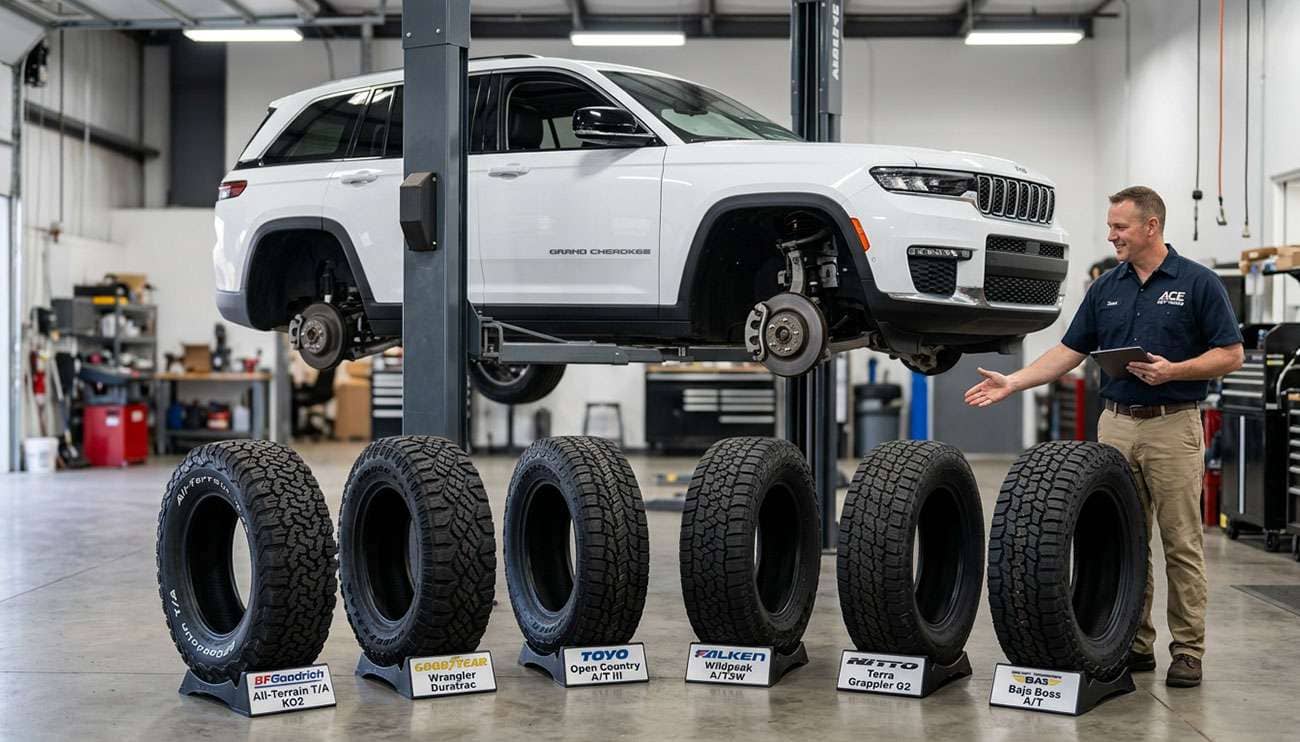
Selecting the right Jeep Grand Cherokee aftermarket tires makes the difference between ordinary performance and exceptional capability. We understand that the best tires for your Grand Cherokee do more than just look good - they deliver the safety, durability, and performance your vehicle was designed to provide.
Quality tires for your Jeep Grand Cherokee can deliver around 50,000 miles of reliable service when matched correctly to your driving needs. Proper jeep grand cherokee tire pressure between 33 and 36 PSI ensures you get maximum performance and longevity from your investment.
Our expert team will guide you through every aspect of tire selection - from understanding the differences between all-season reliability and all-terrain versatility to finding the best 265/50r20 tires for jeep grand cherokee and the best all season tires for jeep grand cherokee. We'll help you discover the perfect combination of style, performance, and value for your specific driving requirements.

The tire category you choose directly impacts how your Grand Cherokee handles, stops, and performs across different surfaces. Each type serves distinct driving needs, and selecting the wrong category can compromise both safety and tire lifespan.
All-season tires provide consistent year-round performance on paved surfaces without seasonal changes. These tires maintain reliable grip on both wet and dry pavement while delivering quiet operation during daily commutes. The Michelin CrossClimate2 demonstrates this balance perfectly - it stays flexible in cold weather and maintains durability when temperatures rise, extending tread life while improving fuel efficiency.
When your driving consists primarily of highways and city streets, all-season tires deliver the comfort and efficiency your family needs without compromising wet-weather safety.
All-terrain tires combine street-friendly comfort with genuine off-pavement capability. These tires feature more aggressive tread patterns than highway options while remaining quiet enough for daily commuting. The Continental TerrainContact A/T showcases this versatility - it provides off-road traction when you need it but maintains comfortable highway manners for regular use.
The larger tread blocks and deeper grooves handle gravel, dirt, and light trail conditions effectively. Siped tread blocks improve wet traction and snow grip, while reinforced sidewalls resist damage from rocks and trail debris. Most all-terrain tires deliver between 40,000 and 70,000 miles of service, depending on your driving habits and the specific brand. The moderate tread design promotes even wear patterns and supports better fuel economy compared to more aggressive off-road options.
Off-road tires target drivers who regularly face challenging terrain beyond what all-terrain options can handle. These tires incorporate aggressive tread patterns, reinforced sidewall construction, and specialized rubber compounds engineered for maximum grip in mud, across rocks, and on demanding wilderness trails.
The trade-off for this extreme capability includes increased road noise and higher fuel consumption when used on highways compared to milder tire types.
Mud-terrain and rock crawling tires serve different extreme conditions. Mud-terrain options like the BFGoodrich Mud-Terrain T/A KM3 feature deep voids and aggressive lugs that self-clean as they rotate, ejecting mud to maintain traction. These tires typically provide 20,000 to 40,000 miles of service but wear more rapidly when used primarily on pavement.
Rock crawling tires such as BFGoodrich's Krawl-Tek use softer rubber compounds that conform to slick rock surfaces, delivering superior grip through flexibility. Their thicker, reinforced sidewalls resist sharp rock damage and support low air pressure operation for maximum ground contact.
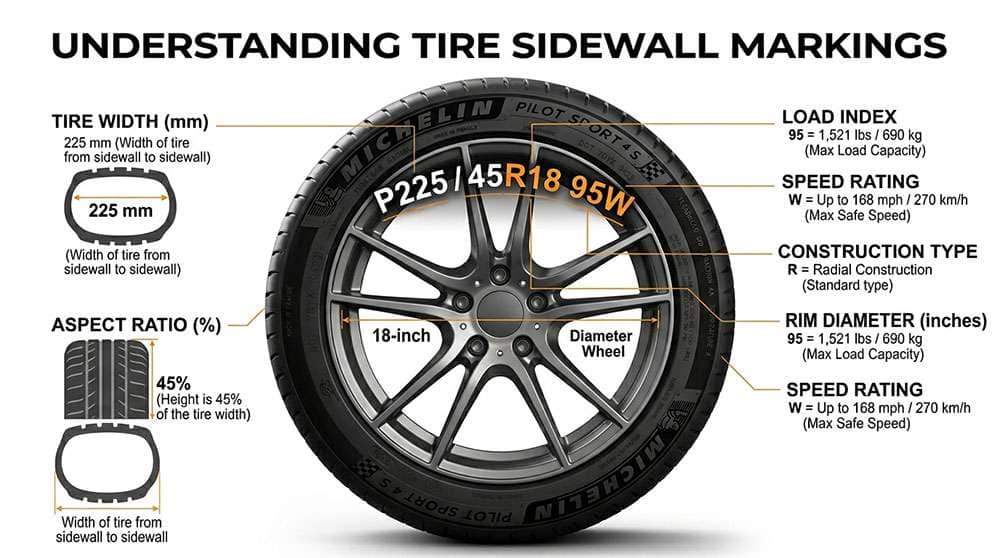
Your Grand Cherokee's tire size information appears in two key locations. The sidewall of your current tires displays molded numbers and letters that specify exact dimensions. The tire placard on your driver's door jamb lists manufacturer-recommended specifications. Your owner's manual provides additional confirmation when needed.
Tire codes follow a standard format that reveals crucial specifications. The first letter indicates tire type: P designates passenger vehicle, while LT means light truck. The three-digit number shows width in millimeters measured from sidewall to sidewall. The two-digit aspect ratio represents sidewall height as a percentage of width. A 265/50R20 tire has a sidewall height equal to 50% of the 265mm width. The R confirms radial construction. The final two digits specify rim diameter in inches. Load index and speed rating follow, indicating weight capacity and maximum sustained speed.
Different trim levels require specific tire sizes:
Laredo: 245/70R17
Limited: 265/60R18
Overland: 265/50R20 standard, 265/60R18 with Off-Road Package
Summit: 265/50R20
Summit Reserve: 275/45R21
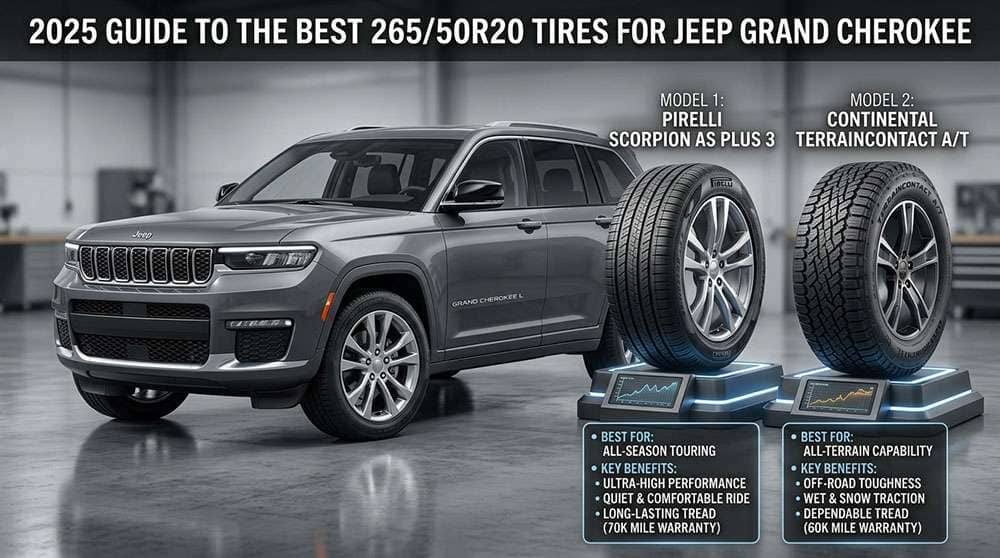
The Michelin CrossClimate2 leads 265/50R20 applications with a 4.8/5 rating and delivers up to one extra year of tread life. The Michelin Defender LTX M/S 2 earns a 4.5/5 rating with engineering specifically designed for SUVs and trucks. Both options support proper jeep grand cherokee tire pressure requirements while providing consistent performance across diverse driving conditions.
Matching your Jeep Grand Cherokee aftermarket tires to how you actually drive prevents costly premature wear and dangerous performance gaps.
City drivers need tires engineered for frequent stops and starts. Look for options with optimized braking distances on both wet and dry surfaces, extended longevity ratings to handle stop-and-go traffic, and low rolling resistance compounds that improve fuel economy. Highway commuters require different priorities: exceptional braking performance at sustained speeds, reduced vibration and noise for passenger comfort, and superior handling characteristics that maintain grip and stability during lane changes.
If you regularly encounter unpaved roads, prioritize tires with genuine off-road traction capabilities and reinforced construction for maximum durability against rocks and debris.
Understanding how weather impacts your tires helps prevent performance issues. Cold temperatures cause air molecules inside your tires to contract, reducing pressure and creating uneven tread wear that shortens tire life while decreasing fuel efficiency. Hot weather produces the opposite effect - expanding air increases pressure beyond optimal levels, resulting in harsher rides and reduced road contact that compromises traction.
When temperatures consistently drop below 44°F, standard tire rubber compounds harden significantly, making winter tires essential for maintaining safe grip levels.
Never compromise on manufacturer specifications. The load rating indicates the maximum weight each tire safely supports when inflated to proper pressure. Speed ratings use letter codes that specify maximum sustained speeds under controlled conditions. Installing tires with lower ratings than your Grand Cherokee requires creates serious safety risks and increases the likelihood of tire failure during normal operation.
Properly balanced tires distribute road contact evenly, eliminating unnecessary drag that forces your engine to work harder than necessary. This balance directly improves fuel efficiency while extending tire lifespan through even tread wear patterns. The investment in proper balancing pays dividends through reduced fuel costs and longer replacement intervals.
When it comes to jeep grand cherokee tires, brand selection makes the difference between adequate performance and exceptional reliability that you can count on mile after mile.
We carry the best selection of premium tire brands that deliver measurably superior results. Premium manufacturers like Michelin and Bridgestone engineer their tires using silica-enriched compounds and advanced polymers that provide real performance advantages. Independent testing proves premium all-season tires stop 10-20 feet shorter from 60 mph on wet surfaces compared to budget alternatives.
The Michelin Defender LTX M/S 2 stands behind its exceptional performance with an impressive 80,000-mile warranty, while the Bridgestone Dueler H/L Alenza Plus delivers exceptionally quiet rides with a solid 65,000-mile warranty. These warranties reflect genuinely longer tread life and superior construction, not just marketing promises.
Our mid-range selection balances premium performance with accessible pricing. The Continental CrossContact LX25 excels in wet braking performance while offering up to a 70,000-mile warranty. Goodyear's Assurance WeatherReady earns Three-Peak Snow ratings for year-round capability with reliable 60,000-mile coverage. Both options deliver premium-level safety features at price points that make sense for your budget.
Quality doesn't have to break the bank. Budget tires from established manufacturers like Falken and Cooper provide reliable performance without premium pricing. The Falken Wildpeak A/T Trail and Cooper Discoverer AT3 4S offer genuine all-terrain capability. Customer reviews consistently praise Wildpeak models for quiet operation, outstanding durability, and impressive snow performance.
For all-season applications, the Continental CrossContact LX25 leads our recommendations with exceptional wet grip and handling scores of 9.3 and 9.7 respectively. The Bridgestone Weatherpeak combines all-season comfort with Three-Peak Mountain Snowflake certification for superior winter performance. Explore our complete selection at Performance Plus Tire's Grand Cherokee selection.
Most Grand Cherokee models require 33-36 PSI for optimal performance. Your Tire Pressure Monitoring System alerts you when tires fall below manufacturer specifications through a yellow dashboard symbol. Check pressure monthly when tires are cold - every 10°F temperature drop decreases pressure by approximately 1 PSI.
The right Jeep Grand Cherokee aftermarket tires transform your driving experience from ordinary to exceptional. Matching your tire selection to actual driving conditions delivers the safety, performance, and value your vehicle deserves.
At Performance Plus Tire, we carry the best selection of Grand Cherokee tires at the lowest prices. Whether you choose all-season comfort, all-terrain versatility, or off-road capability, we have the perfect match for your needs and budget.
Ready to upgrade your ride? Explore your options at Performance Plus Tire and discover tires engineered specifically for your Grand Cherokee model. Your perfect match is waiting!
Selecting the right aftermarket tires for your Jeep Grand Cherokee requires matching tire type to your actual driving patterns for optimal safety, performance, and longevity.
• Match tire type to driving conditions: All-season for daily commuting, all-terrain for mixed use, and off-road tires for extreme conditions to maximize performance and safety.
• Verify proper tire size using sidewall codes: Check your current tire sidewall or door jamb placard to decode size specifications like 265/50R20 before purchasing replacements.
• Maintain 33-36 PSI tire pressure monthly: Proper inflation prevents premature wear, improves fuel efficiency, and ensures optimal performance across all driving conditions.
• Premium brands offer measurably better performance: Michelin and Bridgestone tires stop 10-20 feet shorter on wet surfaces and provide longer warranties than budget alternatives.
• Consider load ratings and speed requirements: Never install tires with lower ratings than manufacturer specifications to avoid safety risks and potential tire failure.
The right tire selection transforms your Grand Cherokee's capabilities while protecting your investment through extended tread life and improved fuel economy. Quality tires paired with proper maintenance deliver the reliability and performance your vehicle was designed to provide.
The best tires depend on your driving needs. For daily commuting, all-season tires like the Michelin CrossClimate2 or Continental CrossContact LX25 offer excellent year-round performance. If you frequently drive on mixed terrain, all-terrain tires such as the Continental TerrainContact A/T provide a balance between street comfort and off-road capability. For serious off-roading, mud-terrain options like the BFGoodrich Mud-Terrain T/A KM3 deliver maximum traction in challenging conditions.
Tire sizes vary by trim level. The Laredo typically uses 245/70R17, the Limited comes with 265/60R18, the Overland and Summit use 265/50R20, and the Summit Reserve features 275/45R21. You can verify your specific tire size by checking the sidewall of your current tires or the tire placard on the driver's door jamb.
Most Jeep Grand Cherokee models require tire pressure between 33 and 36 PSI. You should check your tire pressure monthly when tires are cold, as temperature changes affect pressure—every 10°F drop decreases pressure by approximately 1 PSI. Proper inflation prevents premature wear, improves fuel efficiency, and ensures optimal performance.
Premium brands like Michelin and Bridgestone offer measurably better performance, stopping 10-20 feet shorter from 60 mph on wet surfaces compared to budget options. They also provide longer warranties—up to 80,000 miles—reflecting genuinely extended tread life. Mid-range brands like Goodyear and Continental balance performance and cost, while budget-friendly options from Falken and Cooper provide reliable performance at more accessible prices.
Both the Overland and Summit trims typically come with 265/50R20 tires as standard equipment. However, the Overland offers an Off-Road Package option that includes 265/60R18 tires for enhanced off-road capability. The Summit Reserve, the highest trim level, features larger 275/45R21 tires for a more premium appearance and handling characteristics.



