
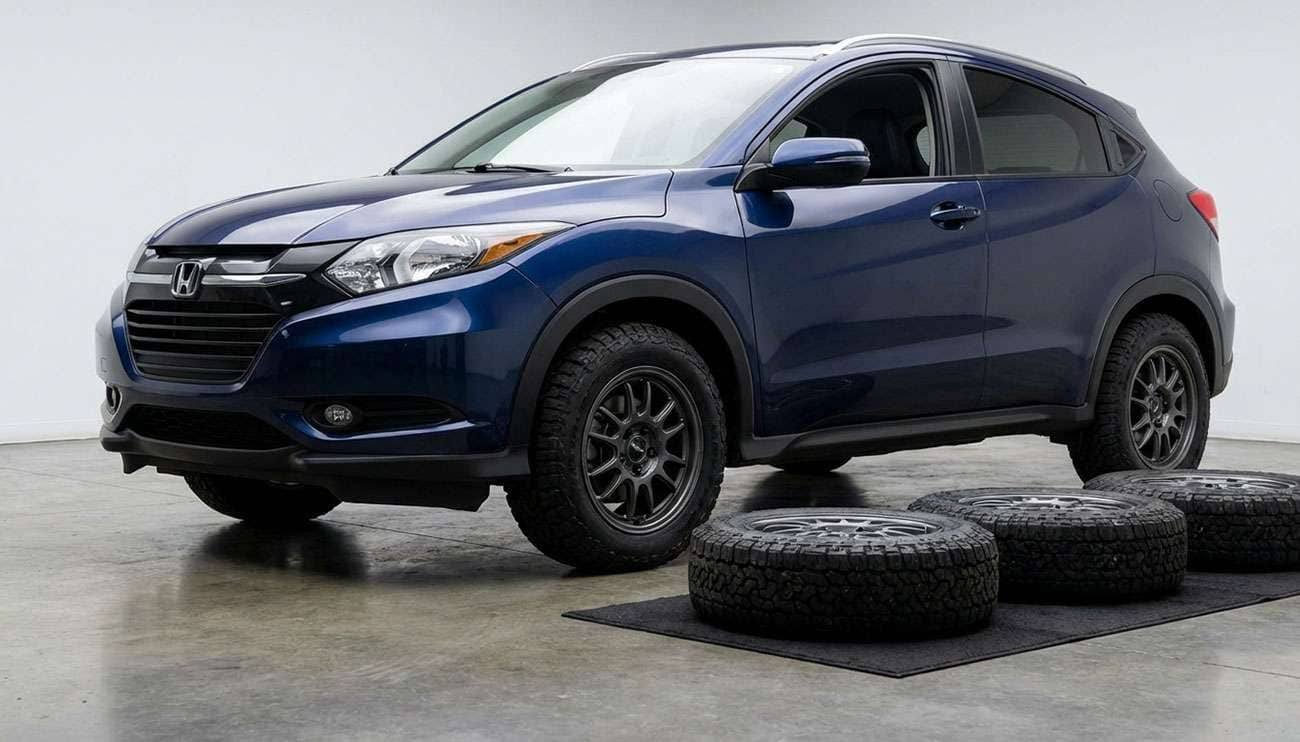
Honda HR-V tires typically deliver 20,000 to 50,000 miles of service before requiring replacement. Understanding the right specifications for your specific trim level makes all the difference between optimal performance and costly mistakes.
Different HR-V trim levels require distinct tire sizes for proper fitment and safety. LX and EX-L models use 215/60R17 or 205/65R16 tires, while Sport trim models demand larger 225/55R18 or 215/60R17 sizes. Choosing the wrong size can affect your vehicle's handling, safety systems, and overall performance.
Tire type selection dramatically impacts your driving experience beyond just size considerations. Winter tires can reduce braking distances by 30-40% on snow and ice compared to standard all-season options. However, under-inflated tires or poor wheel alignment will cut your tire life significantly short, regardless of quality.
We've compiled this expert guide to help you select the perfect aftermarket tires for your Honda HR-V. Our step-by-step approach covers everything from understanding tire specifications to evaluating performance trade-offs. Whether you're seeking better handling, improved comfort, or enhanced fuel economy, you'll find the practical guidance needed to make the right choice for your specific driving needs.
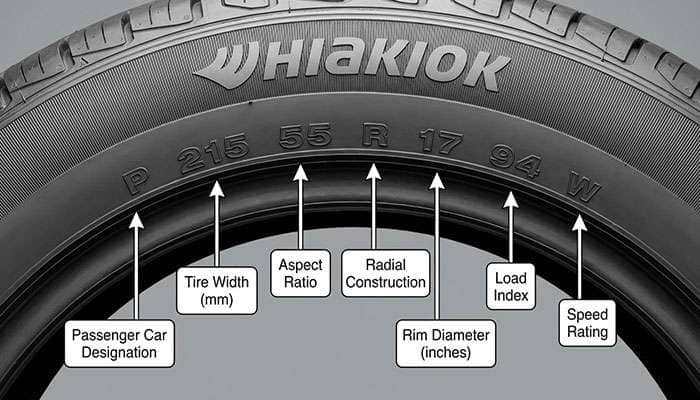
Your Honda HR-V's tire sidewall contains essential information that determines proper fitment and performance. Reading this information correctly helps you select compatible aftermarket tires that maintain your vehicle's safety and handling characteristics.
Locate your current tire size on the tire sidewall, owner's manual, driver's side door jamb, glove box door, or gas tank hatch. Here's how to decode a typical HR-V size like P215/55R17:
P: Designates passenger vehicle tire construction
215: Tire width in millimeters measured from sidewall to sidewall
55: Aspect ratio - sidewall height equals 55% of the tire's width
R: Radial construction with cord plies running radially across the tire
17: Wheel diameter in inches that the tire fits
Load index and speed rating: Additional codes like 94V indicating weight capacity and maximum speed
Your HR-V's trim level determines the correct tire size for optimal performance. Current models (2023-2025) use these factory specifications:
LX trim: 215/60R17
EX-L trim: 215/60R17
Sport trim: 225/55R18
Earlier HR-V models (2016-2022) typically used 215/55R17 tires, while Sport trims from 2019-2022 required 225/50R18 sizes.
Honda specifically recommends maintaining original tire sizes because "modification could affect the safety and/or operation of the vehicle".
Different tire dimensions impact your vehicle's behavior in distinct ways. Wider tires (the first number) provide improved grip on various road surfaces but may decrease fuel efficiency due to increased rolling resistance.
Aspect ratio (the middle number) significantly influences ride quality and handling. Lower aspect ratios create shorter sidewalls for better steering response and cornering stability, but deliver firmer rides. Higher aspect ratios offer more sidewall cushioning for comfortable daily driving.
Using incorrect tire sizes compromises your HR-V's performance and safety systems. Check the tire and loading information label on your driver's doorjamb for specifications including proper cold tire pressure requirements.
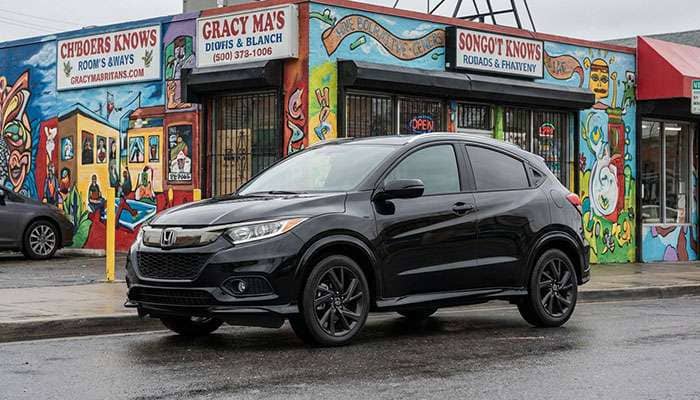
Honda equips every HR-V with factory tires that deliver solid daily driving performance. However, aftermarket options can provide superior capabilities for specific driving needs and preferences.
Honda designs each trim level with distinct wheel and tire combinations that match the intended character:
2022-2025 Model Specifications:
LX trim: 17-inch silver-painted alloy wheels with 215/60R17 all-season tires
Sport trim: 18-inch black-painted alloy wheels with 225/55R18 all-seasons for enhanced appearance
EX-L trim: 17-inch machined-finish alloy wheels with shark-gray inserts, using 215/60R17 all-season tires
Factory tires prioritize balanced performance across comfort, fuel efficiency, and all-weather capability to complement the HR-V's versatile nature.
Aftermarket tires offer significant advantages over factory options:
Performance Improvements: Superior grip, handling, and braking performance compared to original equipment tires.
Specialized Capabilities: Excellence in specific conditions like wet roads, snow, or high-performance driving that surpasses factory all-season limitations.
Customization Options: Unique tread patterns, sidewall designs, and wheel upgrade compatibility for personalized appearance.
Enhanced Durability: Premium compounds and advanced construction often provide longer service life than original tires.
We recommend these proven aftermarket choices for Honda HR-V applications:
Top All-Season Performers:
Continental TrueContact Tour: Delivers exceptional quietness and performance in wet conditions and light snow
Continental ExtremeContact DWS06 Plus: Provides excellent wet and dry handling with smooth, quiet ride quality
Style and Performance Packages:
Sparco Terra: Rally-inspired design that combines distinctive appearance with performance benefits
Fifteen52 Tarmac: Clean, minimalist styling that improves driving dynamics, particularly striking in rally white
Winter Driving Solutions:For cold-weather performance, 16-inch steel wheels with 215/65R16 winter tires offer compatibility across all HR-V trims with improved snow and ice traction.
These aftermarket options allow you to optimize your HR-V's performance for your specific driving environment and preferences while maintaining proper fitment and safety.
Tire type selection determines how your Honda HR-V performs across different driving conditions. Aftermarket options provide specialized capabilities that factory all-seasons simply cannot match.
All-season tires deliver adequate performance across dry pavement, wet roads, and light snow conditions. These jack-of-all-trades options work well for year-round use in moderate climates. However, they represent a compromise that falls short in extreme conditions.
Winter tires excel when temperatures drop below 45°F or when facing significant snowfall. These specialized tires maintain flexibility in cold conditions and feature aggressive tread patterns designed for snow and ice traction. Tires like the Goodyear Winter Command Ultra carry Three Peak Mountain Snowflake Certification for proven cold-weather performance.
Summer tires provide superior dry grip, enhanced handling, and stiffer sidewalls for precise steering response in warm conditions. These tires become dangerous when temperatures approach freezing.
Regions with harsh winters benefit from dedicated winter tires such as the Michelin X-Ice Snow, Continental VikingContact 7, or Goodyear UltraGrip Performance+ SUV.
Areas with mild winters can consider all-weather tires as a practical middle ground. Options like Michelin CrossClimate 2 and Firestone Weathergrip earn mountain snowflake ratings while eliminating seasonal tire changes.
Continental PureContact LS stands out for premium all-season performance, offering exceptional traction, longevity, and a 70,000-mile warranty. Other top-rated choices include Michelin CrossClimate 2 and Bridgestone Turanza QuietTrack.
Budget-conscious HR-V owners should consider the Kumho Ecsta PA51 with its 45,000-mile warranty or the Hankook Kinergy PT featuring an impressive 90,000-mile warranty. These options deliver solid performance at lower price points without sacrificing essential safety features.
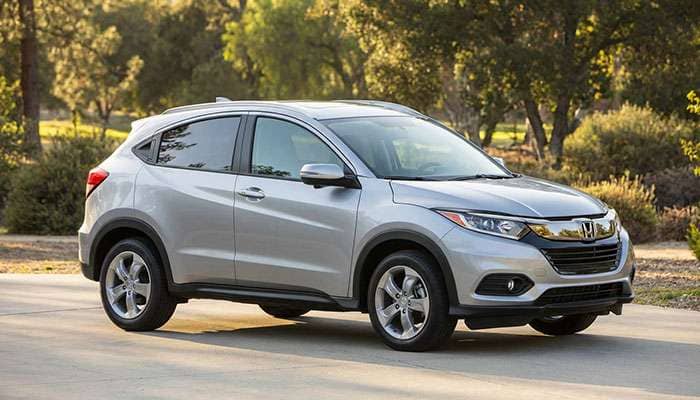
Tire selection for your Honda HR-V affects much more than appearance. Your choice directly influences how your vehicle performs, how comfortable your rides feel, and how much you'll spend over time.
Larger, wider tires create more rolling resistance and add weight to your HR-V, which typically reduces fuel efficiency. Moving from 215mm to 225mm width means a greater contact patch with the road surface, creating additional friction that your engine must overcome. However, some low rolling resistance tire designs can actually improve efficiency by 3-5% compared to standard options.
Your tire choice involves trade-offs between competing priorities. Lower-profile tires with smaller aspect ratios deliver sharper steering response and better cornering stability. The downside? They provide a harsher ride quality over bumps and road imperfections.
Tires with taller sidewalls offer more cushioning for comfortable daily driving, especially around town. If your HR-V pulls to one side or vibrates while driving, improper tire balance or wheel alignment could be the culprit.
Maintaining proper tire pressure is essential for safety, performance, and tire longevity. Your Honda HR-V has specific requirements based on model year:
Model Year |
Front PSI |
Rear PSI |
|---|---|---|
2025 |
33 |
32 |
2020-2019 |
32 |
28-30 |
2018 |
32 |
30 |
2017 |
30-35 |
30-35 |
Honda HR-V owners can expect 20,000 to 50,000 miles from their tires, depending on driving habits and maintenance practices. Standard replacement tires cost between $150-$350 each, while high-performance options can exceed $500 per tire. Calculate the cost per mile over the tire's expected lifespan to determine true value.
Follow a consistent rotation schedule to maximize your investment. Front-wheel drive HR-V models should have tires rotated every 5,000-7,500 miles. All-wheel drive versions require more frequent attention—every 3,000-5,000 miles works best.
Regular rotation distributes wear patterns evenly across all four tires. This simple maintenance step improves traction, reduces road noise, and extends overall tire life significantly. The result is better performance and more value from your tire investment.
Selecting aftermarket tires for your Honda HR-V requires matching tire specifications to your driving priorities and conditions. We've covered the essential factors from tire size notation to performance considerations to help you make an informed decision.
Your HR-V performs best with tires that match both your trim level requirements and driving environment. Consider your typical weather conditions, driving terrain, and performance expectations when making your selection. Winter tires deliver substantial safety benefits in cold climates, while quality all-season options provide year-round convenience in moderate weather regions.
Proper maintenance extends tire life significantly. Front-wheel drive models need rotation every 5,000-7,500 miles, while all-wheel drive versions require rotation every 3,000-5,000 miles. Maintaining correct tire pressure—typically 32-33 PSI front and 28-32 PSI rear depending on your model year—maximizes safety, performance, and tire longevity.
Budget matters, but quality tires represent a smart long-term investment. Your tires are the only components connecting your vehicle to the road, making them critical for safety and performance.
We're confident this guide provides the knowledge needed to select aftermarket tires that deliver optimal performance, comfort, and value for your Honda HR-V. The right tire choice enhances safety, improves driving satisfaction, and protects your vehicle investment for thousands of miles ahead.
Selecting the right aftermarket tires for your Honda HR-V requires understanding specific trim requirements and balancing performance with practical considerations.
• Know your trim's tire size: LX and EX-L models use 215/60R17, while Sport trims require 225/55R18 tires for optimal performance and safety.
• Choose tire type based on climate: Winter tires reduce braking distances by 30-40% on snow/ice, while all-season tires offer year-round convenience in moderate climates.
• Balance performance with comfort: Wider, lower-profile tires improve handling but reduce fuel economy and ride comfort compared to standard sizes.
• Maintain proper tire pressure: Keep 32-33 PSI front and 28-32 PSI rear (varies by model year) to maximize safety, performance, and tire longevity.
• Rotate regularly for even wear: Front-wheel drive HR-Vs need rotation every 5,000-7,500 miles, while AWD models require every 3,000-5,000 miles.
With proper selection and maintenance, quality aftermarket tires can significantly enhance your HR-V's performance, safety, and driving experience while lasting 20,000-50,000 miles depending on your driving habits and care routine.
The correct tire size depends on your HR-V's trim level. For newer models (2023-2025), LX and EX-L trims use 215/60R17 tires, while the Sport trim requires 225/55R18 tires. Always consult your owner's manual or the tire information placard on your vehicle for the most accurate specifications.
For front-wheel drive HR-V models, rotate your tires every 5,000-7,500 miles. If you have an all-wheel drive HR-V, more frequent rotation is recommended - every 3,000-5,000 miles. Regular rotation helps distribute wear evenly and extends tire life.
If you live in an area with significant snowfall or temperatures regularly below 45°F, winter tires can provide substantial benefits. They can reduce braking distances by 30-40% on snow and ice compared to all-season tires, significantly improving safety in cold weather conditions.
Larger, wider tires typically reduce fuel efficiency due to increased rolling resistance and weight. When upgrading to wider tires, you may experience a slight decrease in fuel economy. However, some low rolling resistance tires can potentially improve efficiency by 3-5%.
Honda HR-V tires typically last between 20,000 and 50,000 miles, depending on driving habits and maintenance. Proper tire pressure, regular rotations, and alignment checks can help maximize tire life. The actual lifespan may vary based on the specific tire model and your driving conditions.



