
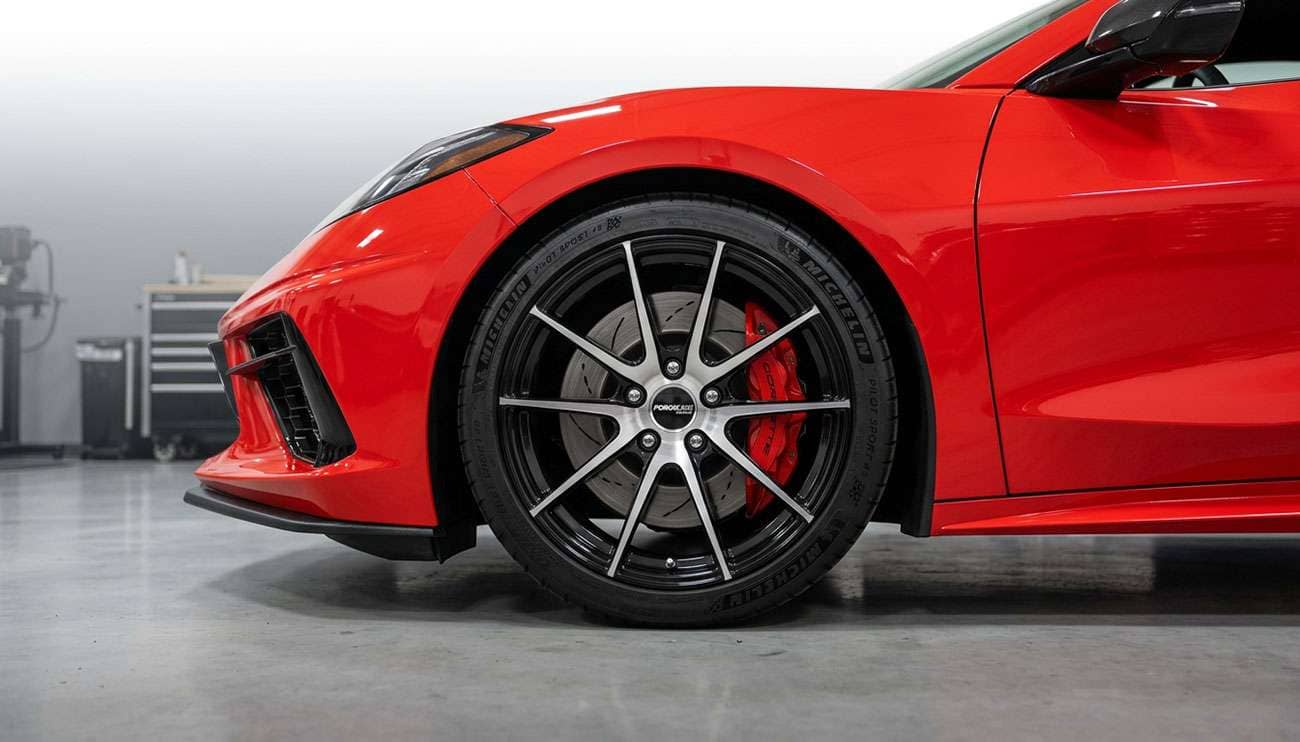
Selecting the right aftermarket wheels for your Corvette demands precision that goes far beyond typical wheel shopping. We know the critical specifications that make the difference between perfect fitment and costly mistakes. From C1 through C7, every generation uses the same 5x120.65mm bolt pattern, but the C8 changed everything with its 5x120mm specification. This small difference creates major compatibility issues that catch many owners off guard.
The technical details matter more than you might think. Your C5 requires a 70.3mm center bore, while lug torque specifications jump dramatically from 100 ft-lbs on the C5 to 140 ft-lbs on the C8. Factory Corvette wheels typically range from 17 to 20 inches, with C7 models featuring staggered setups that affect your aftermarket options.
At Performance Plus Tire, we understand that your Corvette represents decades of American performance heritage. That's why we'll walk you through every specification, measurement, and consideration you need to select wheels that enhance both performance and appearance. Whether you're building a weekend warrior or a daily driver, the right wheel choice transforms your Corvette's personality while maintaining the precision engineering that makes it special.
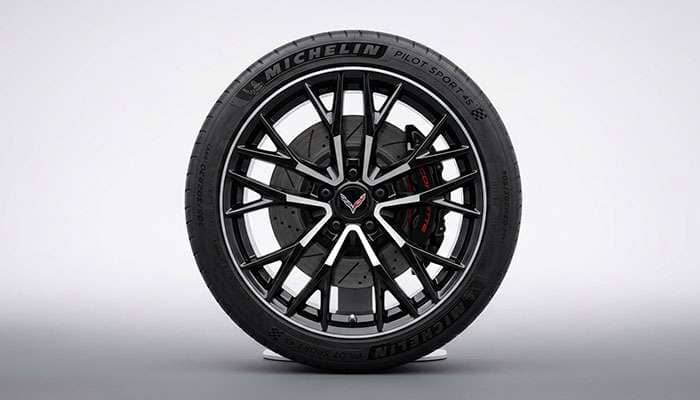
Understanding bolt patterns is crucial before selecting wheels for your Corvette. The bolt pattern determines not just fitment, but also your access to aftermarket options and long-term compatibility.
The bolt pattern represents the number of lug holes combined with the diameter of the circle they form. Chevrolet maintained remarkable consistency with Corvette wheels from 1953 through 2019, using the 5x120.65mm bolt pattern across every generation from C1 through C7. This measurement translates to 5x4.75 inches in imperial units. The pattern designation means five lug holes positioned on a circle with a 120.65mm diameter.
GM adopted this specific pattern for most passenger cars starting in 1949, creating a distinct identification system that affected replacement parts for decades. When GM transitioned to metric hardware, they standardized on 5x120mm, which sits just 0.65mm different from the traditional 5x4.75-inch pattern. This seemingly minor variance creates significant compatibility considerations when selecting chevrolet corvette wheels.
The C8 generation broke from tradition by adopting the 5x120 bolt pattern. This change opened access to substantially more aftermarket wheel options, with some shops reporting over 100,000 possible wheels in the new pattern versus only a fraction available in the older 5x120.65 specification. The shift aligned the C8 with a more widely supported standard used by manufacturers like BMW.
However, this modification means C7 corvette stock wheels cannot interchange with C8 models. The difference between 120mm and 120.65mm amounts to 0.65mm, or roughly 0.026 inches on a 4.8-inch circle. While this variance appears negligible, attempting to mount 5x120 wheels on earlier generation Corvettes using the 5x120.65 c7 corvette bolt pattern creates improper lug seating that can lead to vibrations and potential wheel cracking.
Center bore specifications vary between generations and require precise matching. C5 corvette wheels through C7 models require a 70.3mm center bore, whereas the C8 uses a smaller 66.9mm center bore. The center bore represents the machined opening that fits over the vehicle's hub. Proper centering prevents wheels from relying solely on lug nuts for positioning, which otherwise causes vibrations, uneven tire wear, and premature component failure.
Lug thread specifications also differ across generations. C6 models use M12 x 1.5 threads with a torque specification of 103 ft-lbs. The C8 employs larger M14 x 1.5 threads requiring 140 ft-lbs of torque. This increase in stud diameter from 12mm to 14mm necessitates larger wheel holes surrounding the lug nuts.
Incorrect bolt patterns compromise safety by preventing proper wheel attachment. The bolt pattern affects performance through its influence on handling characteristics and load distribution. Wheels with mismatched patterns create poor fitment that produces vibrations during high-speed driving or aggressive cornering.
Converting to alternative patterns remains possible for experienced builders. One method involves drilling factory hubs and pressing in lug studs, which requires redrilling rotors to match. Another approach uses parts from a Cadillac CTS, including hubs and brake rotors, providing a reversible bolt-on option. Converting to 5x114.3 opens access to numerous wheel options, including JDM wheels. Proper conversion requires redrilling and boring out lug holes, combined with hub-centric rings to adapt from 66.9mm to 70.3mm center bores.
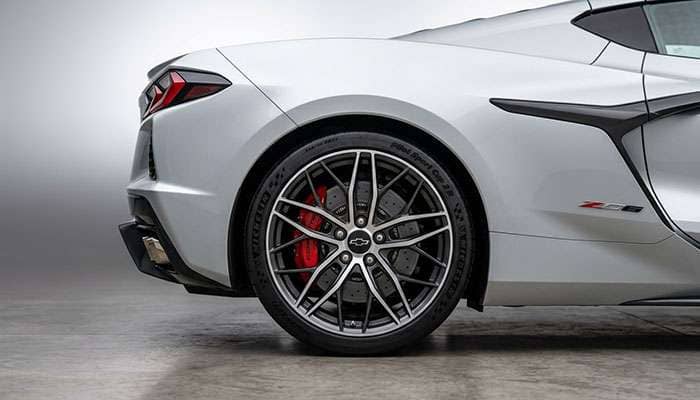
Every Corvette generation has distinct wheel specifications that determine what fits properly. Base models differ significantly from performance variants, and knowing these differences saves you from expensive fitment mistakes when selecting Chevrolet Corvette aftermarket wheels.
Base C5 models from 1997 to 2000 came with 8.5Jx17 front wheels and 9.5Jx18 rears. The fronts used +58mm offset with 245/45R17 tires, while rears featured +65mm offset mounting 275/40R18 rubber. Later base models from 2001 to 2004 kept the same wheel dimensions but changed tire profiles.
Z06 variants require different specifications entirely. Front wheels measure 9.5Jx17 with ET54 offset, mounting 265/40R17 tires. Rear wheels expand to 10.5Jx18 with ET58 offset, accommodating 295/35R18 tires. Popular aftermarket upgrades for c5 corvette wheels include 18x10 front and 18x11 rear configurations, or 18x11 square setups for track applications. Square setups allow proper tire rotation to extend life and improve handling balance.
Base C6 Corvettes use 18x8.5 front wheels with +56mm offset and 19x10 rears at +79mm offset. These narrowbody models accommodate 245/40ZR-18 front tires and 285/35ZR-19 rears. The Z51 package maintains identical wheel specifications to base models throughout the C6 generation.
Widebody variants change everything. Z06 models utilize 18x9.5 front wheels with +40mm offset and 19x12 rears at +59mm offset. These mount 275/35ZR-18 front tires and 325/30ZR-19 rears. The ZR1 increases sizing further to 19x10 fronts and 20x12 rears. Grand Sport models adopted widebody specifications starting in 2010, replacing the Z51 option.
Widebody C6 models measure approximately 4 inches wider in front and 5 inches wider in rear compared to narrowbody versions. This creates dimensional differences that prevent direct wheel interchange between body styles. Narrowbody wheels on widebody cars create excessive negative offset, causing the wheels to sit too far inward.
The c7 corvette bolt pattern maintains the traditional 5x120.65 specification with a 70.3mm center bore. Base Stingray models run 18x8.5 front wheels with +56mm offset and 19x10 rears at +79mm offset. An alternative factory configuration offers 19x8.5 fronts with 20x10 rears. The c7 corvette stock wheels require 140 Nm torque specification on M12 x 1.5 threads.
Z06 and Grand Sport widebody variants share specifications: 10Jx19 front wheels at ET43 and 12Jx20 rears at ET59. These mount 285/30ZR19 front tires and 335/25ZR20 rears. The ZR1 uses slightly different front offset at 10.5Jx19 ET42 while maintaining the same rear configuration.
Factory C8 Stingray wheels measure 19x8.5 front and 20x11 rear. The narrowbody Stingray configuration requires 245-35-19 front tires and 305-30-20 rears. Many owners upsize to 20x9 fronts with 21x12 rears, which fill wheel wells better and provide Z06 stance. Some owners downsize to 18/19 or even 18/18 square setups for track use, reducing unsprung weight.
When choosing wheels for your specific Corvette, consider both the generation and performance variant. Widebody cars include Z06, Grand Sport, and ZR1 variants, featuring larger wheel flares, additional air intakes on side bodies, and non-functional scoops in front bumpers. These differences affect wheel selection beyond just diameter and width considerations.
Getting the sizing right determines how your Corvette looks and performs. The choices you make here affect everything from wheel well fitment to handling characteristics.
Your diameter choice balances appearance against performance needs. C8 owners find that 20/21 setups fill wheel wells better and deliver that aggressive Z06 stance. Comfort stays largely unaffected, though you might need some trimming depending on tire choice. Don't overlook 18/19 combinations - they can look amazing when done right.
Track-focused builds benefit from 18/18 configurations that reduce unsprung weight, even though the rear arches look somewhat empty. The factory double staggered 19/20 combination lets you keep factory tires while maintaining the original form factor with better fitment.
Width directly impacts tire options and clearance. A C8 2LT running 9" fronts and 11.5" rears with wider Toyo Proxes RR tires creates no clearance problems, even when lowered on MCS coilovers.
Upsizing to 20/21 while keeping tire profiles from smaller setups typically requires mudflap area trimming. Wider front tires like 255/30R20 measure wider and slightly taller than stock, causing interference between mudflaps and tires at full lock. Browse Chevrolet Corvette wheels to explore compatible width options for your generation.
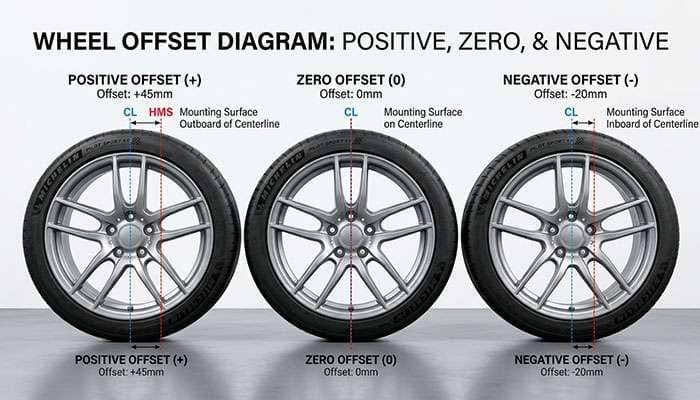
Offset measures the distance between the wheel's mounting surface and centerline. Backspacing represents the distance from mounting surface to the rim's outer edge.
For backspacing calculations, add one inch to rim width, divide by two to find centerline, then convert offset to inches. Positive offset adds to the centerline, negative offset subtracts from it. Wrong offset causes tire rubbing on suspension components or puts excessive load on wheel bearings.
Square setups use identical wheels at all corners, enabling tire rotation and extended life. An 18x10.5 square configuration with 285/30/18 tires represents common C5 track fitment. Square 315/30-18 setups deliver improved front grip and sharper turn-in response.
Staggered configurations provide more rear traction for straight-line acceleration. The factory double staggered C8 setups differ from normal staggered arrangements.
Factory C8 wheels use cast construction. Forged wheels offer superior strength at the lightest weight with greater load capability. Flow formed wheels combine cast affordability with enhanced strength through high-pressure spinning that stretches the material.
Forged MRR wheels weigh 18.8 lbs front and 20.2 lbs rear - approximately 6 lbs lighter front and 10 lbs rear than alternatives. Cast wheels remain the heaviest and most affordable. Flow formed options balance strength and weight between cast and forged alternatives.
Getting fitment right the first time saves both money and frustration. We've seen too many expensive mistakes that could have been prevented with proper verification before mounting tires.
Print wheel fitment templates from brake kit manufacturers at full scale, verifying dimensions with a ruler. Tape the template to cardboard, cut along dotted lines, then drop it into the wheel's center hole and press against the mounting surface. You need minimum clearance of 5mm between caliper and wheel rim to accommodate thermal expansion during braking.
Here's what catches most people: smaller brake kits don't automatically fit wheels that clear larger kits. Spoke design affects clearance regardless of brake size. Check wheel weight positioning to prevent caliper contact after installation. This simple step prevents the heartbreak of discovering clearance issues after expensive tires are already mounted.
Wrong offset causes more rubbing problems than diameter changes alone. Larger diameter wheels make offset increasingly critical. We recommend pushing wheels outward 10-15mm with proper hubcentric spacers to provide room for full suspension travel and prevent contact with sway bars or lower control arms during turning.
Watch for these telltale signs: rubbing at the 12 o'clock position indicates excessive dive under braking or body roll during cornering. Contact at 9-10 or 2-3 o'clock positions occurs under full steering lock, typically from improper rim size or excessive positive offset.
Mount wheels without tires first to identify clearance issues visually. Rotate wheels slowly by hand, checking for brake caliper contact at all points. Test through full suspension travel and steering angles before committing to tire installation. Once tires mount onto wheels, returns become impossible. This extra step prevents expensive mistakes that could cost thousands in unusable wheel and tire combinations.
C5 preferred front camber measures -0.2 degrees with tolerance of +/- 0.5 degrees. For minimal tire wear on daily drivers, run 0.0 degree front camber, 5.0 degree caster, and 0.1 degree positive total toe. Track setups require more aggressive specifications that cause accelerated street tire wear. Proper alignment ensures your new wheels deliver the performance and tire life you expect.
Converting to 5x114.3 opens access to numerous wheel options. Use transfer drill plates bolted to factory wheel bearings, providing transfer holes for 14mm drill bits required for ARP wheel studs. Press new studs into drilled holes using ARP-100-7717 specifications. This conversion dramatically expands your wheel selection while maintaining proper fitment and safety.

Choosing the right brand makes all the difference between a wheel that looks good and one that delivers lasting performance. We carry the best selection of aftermarket wheel brands at the lowest prices, and our experience helps you avoid the common pitfalls that cost owners thousands.
Forgeline Motorsports engineers custom made-to-order forged wheels tested beyond SAE standards using finite element analysis. Their wheels feature I-beamed spokes and hidden titanium ARP fasteners, manufactured in Dayton, Ohio. Most models accommodate diameters up to 22 inches with virtually any width.
E5 Wheels brings over 40 years of wheel industry experience, specializing exclusively in hub-centric designs for C5 through C8 models. These manufacturers prioritize precise fitment through 3D scanning of factory brakes to optimize barrel profiles and spoke curvatures. When you're building a serious performance machine, these brands deliver the strength and precision your Corvette demands.
Reproduction wheels recreate factory designs using modern aluminum construction instead of original steel, reducing weight while improving corrosion resistance. Hub-centric fitment ensures proper alignment, with most options carrying limited lifetime structural warranties. These replicas accept factory center caps and clear stock brake calipers.
Our reproduction selection gives you that authentic look with modern performance benefits. You get the classic appearance that matches your Corvette's heritage while enjoying improved durability and lighter weight.
Powder coating delivers thicker, more durable protection than paint, resisting chips and UV damage. Chrome provides mirror-reflective appearance but requires frequent cleaning in winter climates. PVD finishes rival chrome's brightness at lower weight. Gloss black shows dust readily, while satin black hides smudges better. Machined faces combine bright metal with dark pockets for high contrast.
We help you select finishes that match your driving habits and maintenance preferences. Track builds benefit from finishes that hide brake dust, while show cars can handle high-maintenance chrome that delivers maximum visual impact.
Track setups prioritize lightweight construction to reduce rotational mass, typically using 18-19 inch diameters with increased width. Browse Chevrolet Corvette wheels to compare options matching your intended application.
Our expert team guides you through the selection process, ensuring your wheel choice enhances both performance and appearance. Whether you're building for weekend track events or daily driving, we have the brands and styles that deliver exactly what your Corvette needs.
Ready to upgrade your ride? You now have the complete knowledge base for selecting aftermarket wheels that perfectly match your Corvette's specifications and your driving goals. From bolt patterns to offset calculations, every detail we've covered protects your investment and ensures proper performance.
Each generation demands different specifications, but the fundamentals remain the same. Whether you're building a track-focused machine or enhancing your daily driver, the right wheels make all the difference in both appearance and performance.
At Performance Plus Tire, we are confident that we can provide you with the perfect set of wheels for your Corvette at a price you can afford. Our extensive selection covers every generation from C5 through C8, and our expert team understands the unique requirements that make Corvette fitment different from typical wheel selection.
Start with your specific generation's requirements, verify all clearances carefully, and explore available options that match your exact specifications. Your Corvette represents decades of American performance heritage, and it deserves wheels that enhance both its legacy and your driving experience.
We're here to help you make it happen. Find your perfect Corvette wheels today.
Master these essential points to select the perfect aftermarket wheels for your Corvette without costly mistakes or fitment issues.
• Know your bolt pattern: C1-C7 use 5x120.65mm while C8 switched to 5x120mm - this 0.65mm difference prevents wheel interchange between generations
• Verify clearances before mounting: Check brake caliper clearance (minimum 5mm), test suspension travel, and confirm no rubbing at full steering lock
• Match specifications to your generation: C5-C7 require 70.3mm center bore, C8 needs 66.9mm - wrong specs cause vibrations and premature wear
• Choose offset carefully: Incorrect offset causes tire rubbing more than diameter changes - proper offset prevents suspension component contact
• Consider your driving purpose: Track builds benefit from lightweight 18-19" wheels, while street setups can upsize to 20-21" for better esthetics
Getting these fundamentals right ensures your wheel upgrade enhances both performance and appearance while maintaining safety and reliability.
You need to confirm the bolt pattern (5x120.65mm for C1-C7 or 5x120mm for C8), center bore diameter (70.3mm for C5-C7 or 66.9mm for C8), wheel offset, diameter, and width. These specifications must match your specific Corvette generation to ensure proper fitment, prevent vibrations, and maintain safety during operation.
No, C7 wheels are not compatible with C8 models due to different bolt patterns. The C7 uses a 5x120.65mm bolt pattern while the C8 switched to 5x120mm. Although the difference is only 0.65mm, this variance prevents proper lug seating and can cause vibrations, wheel damage, and safety issues.
Incorrect offset is the primary cause of rubbing issues. Using proper offset specifications and adding hubcentric spacers (10-15mm when needed) provides adequate clearance for full suspension travel and steering lock. Always test fit wheels without tires first, checking clearance through complete suspension movement and steering angles before final installation.
Maintain at least 5mm clearance between the brake caliper and wheel rim to accommodate thermal expansion during braking. You can verify clearance by using manufacturer-provided fitment templates or by test-fitting wheels before mounting tires. Never assume smaller brake kits automatically fit, as spoke design significantly affects clearance regardless of brake size.
Square setups use identical wheels at all corners, allowing tire rotation for extended life and balanced handling—ideal for track use. Staggered configurations provide more rear traction for straight-line acceleration and maintain the factory esthetic. Your choice depends on whether you prioritize tire longevity and rotation capability or maximum rear grip and original appearance.



