
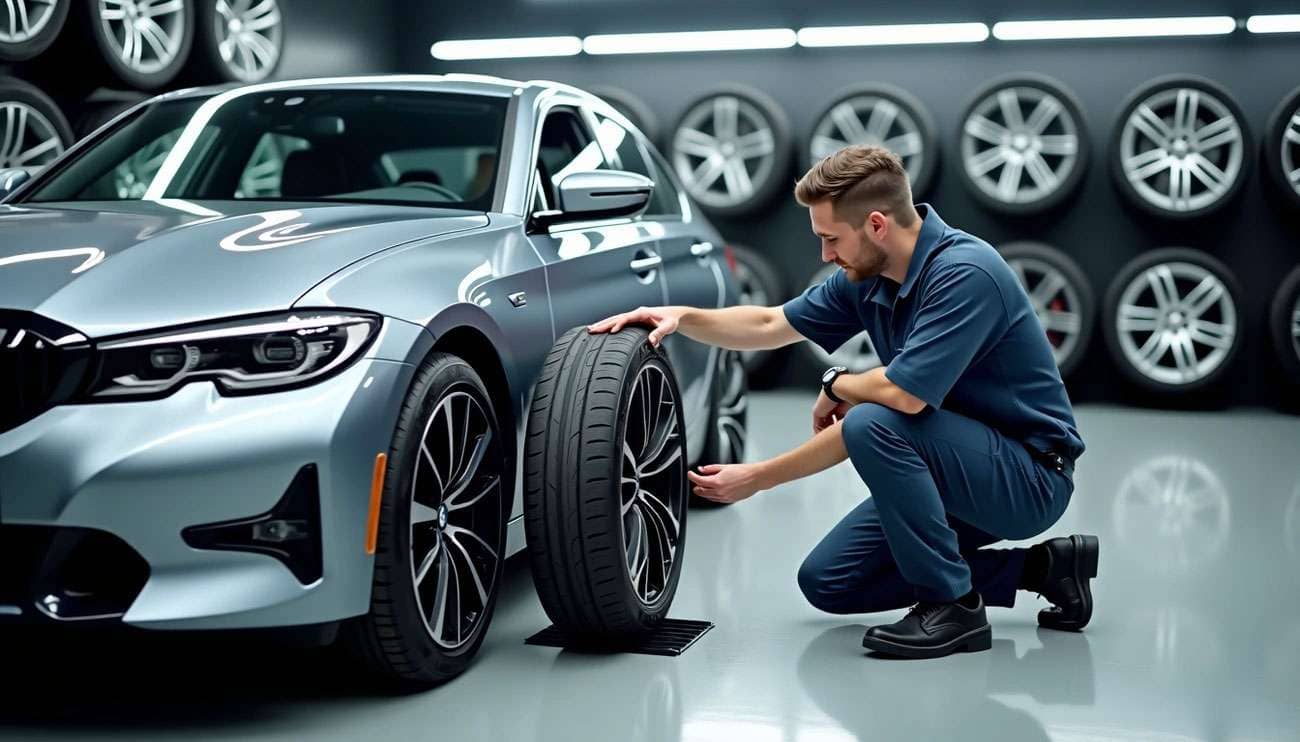
BMW 3 Series aftermarket tire selection demands precision and expertise. The 05-13 models feature a bolt pattern of 5x120mm, while wheel diameters typically span 17 to 20 inches. Front rim widths range from 8 to 9.5 inches, with rear widths extending from 8 to 10.5 inches.
Your BMW deserves more than just good looks—performance and longevity matter equally. A single rear Michelin Pilot Sport tire for newer BMW models can reach nearly $500, which makes smart tire selection essential for both your driving experience and budget. The E90 generation accommodates wheels from 16 to 19 inches in diameter, with widths spanning 7 to 9.5 inches.
Tire wear develops gradually over time, making proper rotation every 10,000 miles critical for even wear patterns. Smart tire selection requires attention to hub bore, bolt pattern, offset, and tire size specifications. BMW 3 Series wheels perform best with offsets between +20 and +45, while rolling diameter differences should stay within 2% from front to rear.
We've created this step-by-step guide to help you select the ideal aftermarket tires for your BMW 3 Series. You'll learn everything from basic fitment requirements to brand comparisons and pricing strategies. Our expert guidance ensures you get both the performance you want and the perfect fit your BMW needs.
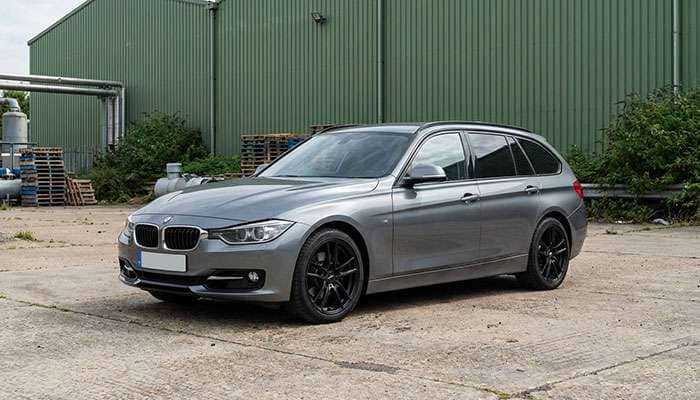
Understanding BMW 3 Series tire fitment is essential before shopping for aftermarket tires. Proper fitment ensures safety, optimal performance, and prevents costly damage to your vehicle's components.
Three critical measurements form the foundation of proper wheel fitment. Most BMW 3 Series models use a 5x120mm bolt pattern, though newer G20 versions have switched to 5x112mm. This pattern must match your wheel hubs exactly—there's no room for guesswork when it comes to safe installation.
Offset determines where your wheel sits within the wheel well. BMW engineers typically specify positive offset to prevent clearance problems. The recommended offset range for 3 Series spans 15mm to 47mm depending on your model generation. Higher offset moves the wheel inboard toward suspension components, while lower offset pushes it outward toward the fender.
Hub bore specifications matter just as much—typically 72.6mm for older models and 66.6mm for the G20. When using wheels with larger bores, hub-centric rings help reduce vibration. These three measurements work together to ensure your wheels sit correctly relative to both suspension components and fenders.
Tire size directly impacts how your BMW handles and rides. BMW uses a standard width/aspect ratio/diameter format like 225/45R17 to specify tire dimensions.
Wider tires generally deliver better grip but can hurt fuel efficiency. The aspect ratio—sidewall height as a percentage of width—affects both comfort and handling. Lower profiles sharpen cornering response but transmit more road imperfections to the cabin.
Tire width can dramatically change your BMW's handling balance. Wider front tires help create balanced handling, reducing understeer where the car pushes wide in corners. Performance enthusiasts often upgrade from stock sizes like 225/50/17 to wider options such as 245/40/18 for improved grip and responsiveness.
However, excessively wide tires might need additional modifications like negative camber adjustments to prevent rubbing against fender liners or suspension parts. For most street driving, keeping rolling diameter within 1-2% of original specifications prevents speedometer errors and driveline stress.
BMW 3 Series owners must choose between staggered (different sizes front/rear) or square (identical all around) tire configurations.
A staggered setup typically runs wider rear tires and wheels—like 9" fronts with 9.5" rears. This setup boosts traction and creates an aggressive look. Staggered configurations promote understeer, which BMW engineers intentionally design in for safety and stability. This makes the car more predictable at the limit, especially for everyday drivers.
Square setups offer several practical benefits. They allow full tire rotation to extend tire life, provide more balanced handling, and often reduce understeer for neutral cornering feel. For winter conditions or track use, many enthusiasts choose square setups for their predictable handling characteristics.
Your choice depends on driving priorities and style. Staggered setups excel when you want straight-line stability and aggressive appearance. Square setups work better when you prioritize tire longevity, balanced handling, or frequently drive in challenging conditions.
Understanding your current tire setup forms the foundation for selecting the right aftermarket tires for your BMW 3 Series. This baseline information prevents costly mistakes and ensures your new tires will deliver the performance you expect.
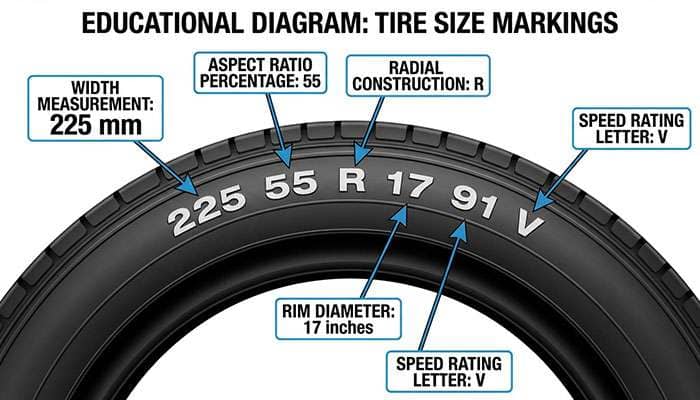
Your tire's sidewall tells the complete story of what's currently on your BMW. Every BMW 3 Series owner should know how to decode this information. A typical tire marking reads "225/45R18 95H" with each component revealing crucial details:
Width: The first number (225) shows tire width in millimeters from sidewall to sidewall
Aspect Ratio: The number after the slash (45) represents sidewall height as a percentage of width—this tire's height equals 45% of its width
Construction: "R" indicates radial construction, which is standard for all modern passenger vehicles
Wheel Diameter: The next number (18) specifies the wheel diameter in inches that this tire fits
Load Index: The "95" indicates load-carrying capacity—this particular rating means 1,521 pounds per tire when properly inflated
Speed Rating: The letter (H) shows maximum safe speed—H-rated tires handle speeds up to 130 mph
At the code's beginning, you might see "P" for passenger vehicle, "LT" for light truck, or no letter for European metric tires. BMW typically uses European metric tires, which have slightly different load capacities compared to P-metric alternatives.
Finding your BMW's original tire specifications is straightforward when you know where to look.
The driver's side door jamb contains a manufacturer sticker showing recommended tire size and pressure. This represents BMW's engineering specifications for optimal performance and safety.
Your owner's manual provides detailed tire recommendations, often listing multiple approved sizes for different driving conditions. Some BMW models offer summer and winter tire options with varying specifications.
Compare these factory specifications with your current tires. Any differences might indicate previous owners installed non-standard sizes, which could affect your replacement choices.
BMW has used several popular tire sizes across different 3 Series generations. The most common sizes include 225/45R17 V, 225/45R18 W, 255/40R17 V, and 255/35R18 W. Many newer models feature 225/45R18 front tires paired with 255/40R18 rear tires in a staggered configuration.
When examining your current setup, determine whether you have a staggered configuration with different front and rear sizes, or a square setup with identical tires all around.
Check the DOT code on your tire sidewalls to determine manufacturing date. The last four digits show week and year of production—"3323" means the 33rd week of 2023. We recommend replacing tires older than six years regardless of remaining tread depth.
Selecting the right tire type for your BMW 3 Series makes all the difference between good and exceptional driving performance. Different driving conditions demand specific tire characteristics, and your choice directly impacts handling, comfort, and safety.
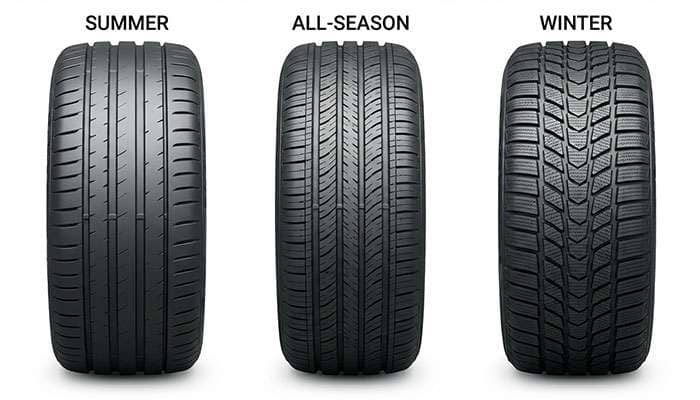
Temperature determines which tire type delivers the best performance for your BMW. Summer tires excel in temperatures above 45°F, providing outstanding cornering and braking on both dry and wet roads. However, they become dangerously hard and lose grip when temperatures drop.
All-season tires offer year-round convenience in moderate climates, handling rain and light snow adequately. They provide a smooth, quiet ride in most conditions, though their tread compounds stiffen in cold weather, reducing traction significantly.
Winter tires are specifically engineered for temperatures below 45°F. Their specialized rubber compounds stay flexible in cold conditions, while deeper treads and aggressive edges maximize traction on snow and ice. Even with XDrive all-wheel drive, BMW 3 Series owners in cold regions need winter tires—AWD helps you accelerate but doesn't improve stopping power.
Performance tires are built for drivers who demand maximum handling and responsiveness from their BMW 3 Series. These tires feature softer rubber compounds that grip the road better but wear faster, typically lasting 20,000 to 40,000 miles. Popular choices like Michelin Pilot Sport 4S and Bridgestone Potenza RE-71R typically cost between $150-$250+ per tire.
Touring tires prioritize comfort, longevity, and fuel efficiency over outright performance. Their wider tread patterns and moderate contact patches absorb road imperfections while delivering 60,000-80,000 miles of service on average. At $90-$150 per tire, they're more budget-friendly and provide a noticeably quieter ride.
Run-flat tires come standard on most BMW models, allowing you to drive approximately 50 miles at speeds up to 50mph after a puncture. Their reinforced sidewalls also protect your wheels better against pothole damage.
Run-flats cost more ($200-$500 each) and usually can't be repaired when punctured, but they eliminate the need for a spare tire, freeing up trunk space. Standard tires offer a softer ride with more performance options, though you'll need either a spare tire or roadside assistance coverage.
Consider your driving style, local climate, and priorities when making your final tire choice. The right decision balances performance, comfort, and safety for your specific needs.
Proper aftermarket tire selection for your BMW 3 Series requires more than size matching—technical specifications must align with your wheels for optimal performance and safety.
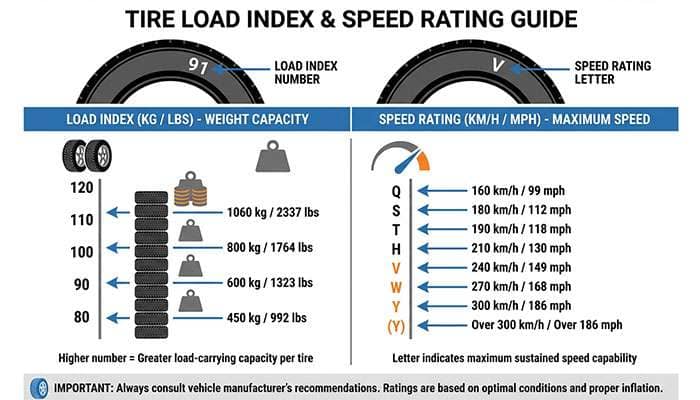
Load ratings and speed indices appear on your tire sidewall after the size designation (like 245/35ZR19 93Y) and determine crucial performance capabilities. These often-overlooked specifications can make the difference between safe driving and potential failure.
Load ratings use a two-digit numerical system corresponding to specific weight capacities. A load index of 91 supports 1,356 lbs per tire, while 98 handles 1,653 lbs. Performance BMW tires frequently display XL (Extra Load) markings, indicating reinforced construction designed for heavier vehicles.
Speed ratings appear as letters showing maximum sustainable speeds:
V: 149 mph
W: 168 mph
Y: 186 mph
BMW 3 Series models typically require Y or V-rated tires to match factory performance standards. Choosing lower-rated tires compromises both safety and warranty coverage.
Proper fitment extends beyond tire dimensions to include brake caliper clearance considerations. Even matching wheel diameters don't guarantee sufficient space for performance brake systems.
Backspacing—determined by wheel offset—directly impacts brake clearance during installation. This becomes critical if you've upgraded to performance brakes like 380mm Brembos, which demand specific wheel designs for adequate clearance.
Lowered suspensions create additional fitment challenges. Maintaining proper clearance inside wheel arches may require smaller tire sizes or modified offset values. Some enthusiasts use spring pad modifications to create extra clearance for wider rear tires.
BMW 3 Series models with XDrive all-wheel-drive systems require consistent rolling diameter across all four wheels. Maximum acceptable difference should remain within 1% to prevent expensive transfer case damage.
Calculate rolling diameter by multiplying sidewall height (width × aspect ratio) by two, then adding wheel diameter in millimeters: 225mm × 0.45 = 101.25mm sidewall Total diameter = (101.25mm × 2) + wheel diameter
Staggered setups on XDrive models demand careful front and rear combination matching to maintain compatible rolling diameters. Square setups with identical tires on all four corners eliminate any XDrive compatibility concerns.
Smart shopping requires comparing your options once you know the right specifications for your BMW 3 Series tires. Brand selection, pricing, and customer feedback all play crucial roles in making the best choice for your driving needs and budget.
Premium summer performance demands top-tier options. The Continental PremiumContact 7 delivers excellent grip and comfort, while the Michelin Pilot Sport 5 provides precision steering response. For stability-focused drivers, the Bridgestone Turanza T005 II excels, and the Pirelli Cinturato P7 C2 balances sportiness with everyday comfort. Winter driving calls for specialized tires like the Continental WinterContact TS870P, Michelin Alpin 7, or Pirelli Winter Sottozero 3.
BMW enthusiasts consistently praise Michelin Pilot Sport tires as the market leader for performance and reliability. Bridgestone, Continental, Pirelli, and Goodyear also earn high marks for quality and durability across different driving conditions.
Your tire budget depends heavily on vehicle specifications, tire size, and quantity needed. Performance tires typically range from $150-$250+ per tire, while touring options offer solid value at $90-$150 each. Run-flat technology adds approximately $20-$50 per tire to your total cost.
Installation costs vary significantly between service providers. Dealerships charge $25-$40 per tire for mounting and balancing, while independent shops typically offer the same service for $12-$20 per tire. These savings add up quickly when mounting four new tires.
Online retailers offer convenience and competitive pricing. TireRack.com provides extensive selections with free shipping and road hazard protection. Check Performance Plus Tire's BMW 330i selection for competitive pricing on premium brands. Both Blackcircles.ca and Goodyear.com feature transparent pricing without hidden fees.
Installation networks connect online purchases with local service. Dealerships may offer price matching but typically charge premium service rates. Compare total costs including installation when evaluating your options.
Perfect aftermarket tire selection for your BMW 3 Series comes down to understanding the right specifications and choosing quality products that match your driving needs. We've covered everything from bolt patterns and offset measurements to tire types and brand comparisons. These specifications directly impact your BMW's performance, safety, and handling characteristics.
Your driving style and local conditions determine the ideal balance between performance, comfort, and longevity. Summer performance tires deliver sharp handling for enthusiastic drivers, while all-season options provide versatility for varied conditions. Proper fitment prevents premature wear on suspension components and maximizes your BMW's grip and handling potential.
Tire replacement gives you the chance to enhance your driving experience significantly. Performance Plus Tire's BMW 330i selection offers high-quality options that meet factory specifications while delivering improved performance. Premium tires cost more upfront but provide better value through enhanced durability, fuel efficiency, and superior handling.
The right tires can transform how your BMW 3 Series feels on the road. You now have the knowledge to select aftermarket tires that perfectly match your vehicle, driving style, and budget. Take time to compare options, read reviews, and consult with tire specialists before making your decision.
At Performance Plus Tire, we understand that your BMW is an extension of your personality. Our expert team is ready to help you find the perfect tire solution that combines style, performance, and value. Your BMW deserves the best selection at the lowest prices—and we're here to deliver exactly that.
Choosing the right aftermarket tires for your BMW 3 Series involves understanding critical fitment specifications and matching them to your driving needs and budget.
• Check your current tire sidewall for size specs - Read the alphanumeric code (e.g., 225/45R18 95H) to understand width, aspect ratio, diameter, load rating, and speed index before shopping.
• Match bolt pattern and offset precisely - BMW 3 Series uses 5x120mm bolt pattern (5x112mm for G20) with recommended offset between +15mm to +47mm for proper clearance.
• Choose tire type based on climate and driving style - Summer tires excel above 45°F, all-seasons work year-round in moderate climates, while winter tires are essential below 45°F.
• Maintain rolling diameter within 1% for XDrive models - Consistent tire diameter prevents transfer case damage in all-wheel-drive BMW systems.
• Balance performance with budget considerations - Premium brands like Michelin Pilot Sport cost $150-$250+ per tire but offer superior handling, while touring tires at $90-$150 prioritize comfort and longevity.
Proper tire selection transforms your BMW's performance while ensuring safety and optimal handling characteristics for years of driving enjoyment.
Top choices include the Michelin Pilot Sport series, Continental PremiumContact, and Bridgestone Turanza for summer performance. For all-season use, the Continental ExtremeContact DWS and Michelin Pilot Sport All Season are highly recommended. Winter tire options include Continental WinterContact and Michelin Alpin series.
Check your vehicle's tire sidewall for the alphanumeric code (e.g., 225/45R18 95H) which indicates width, aspect ratio, diameter, load rating, and speed index. You can also find this information on the driver's side door jamb or in your owner's manual.
While run-flat tires come standard on most BMW models and offer the advantage of driving up to 50 miles after a puncture, they're not strictly necessary. Standard tires can provide a softer ride and more options in performance categories, but require either a spare tire or roadside assistance plan.
Tire replacement frequency depends on various factors including driving habits and conditions. However, experts recommend replacing tires when the tread depth reaches 4/32 of an inch, or after six years regardless of tread depth. Regular rotation every 5,000-8,000 miles can help extend tire life.
Maintaining proper tire pressure is crucial for optimal performance, fuel efficiency, and safety in your BMW 3 Series. Correct inflation helps ensure even wear, improves handling, and can significantly impact your vehicle's fuel economy. Check tire pressure monthly and before long trips, adjusting as necessary to meet the manufacturer's recommendations.



