
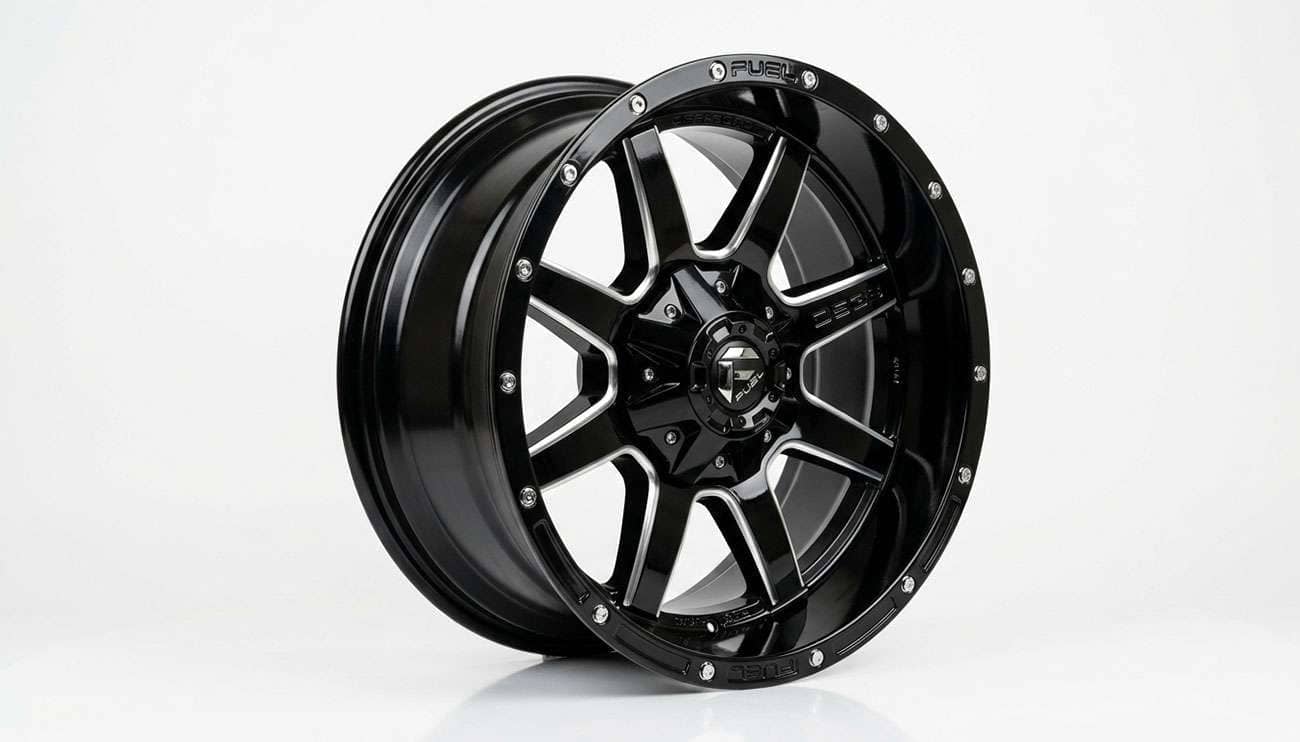
Fuel rims currently run from about 99 dollars to about 2,890 dollars per wheel, and where you land inside that range comes down to two variables: diameter and construction. A 17-inch cast Fuel wheel has a median price around 320 dollars. A 20-inch runs about 470. A 24-inch runs about 1,257. And every wheel in Fuel's forged FF series starts at 603.95 regardless of how small you order it, which is the single hardest line in the catalog.
That is a spread of roughly twenty-nine to one between the cheapest and most expensive wheel wearing the same brand name, which is why a short answer to this question is always wrong. The numbers below come from a full pass across our current Fuel inventory, 15,553 individual wheel listings, so these are actual catalog figures rather than estimates. Prices move with material costs, tariffs, and availability, so treat these as current rather than fixed.
I want to be specific about what drives the spread, because once you understand the two variables you can predict your own price before you shop.
Diameter is the first and largest driver. More diameter means more aluminum, more machining time, and a heavier structure to support the same load rating, and the price curve is not linear. It is close to flat from 17 to 18 inches, then it climbs steeply.
Diameter |
Listings in Stock |
Lowest |
Median |
Highest |
|---|---|---|---|---|
17 inch |
1,507 |
99.32 |
320.00 |
650.47 |
18 inch |
1,529 |
168.21 |
336.42 |
545.00 |
20 inch |
5,454 |
127.05 |
469.74 |
1,117.53 |
22 inch |
3,150 |
190.58 |
796.32 |
1,511.21 |
24 inch |
1,574 |
279.00 |
1,257.11 |
2,025.53 |
26 inch |
1,254 |
291.53 |
1,744.74 |
2,429.21 |
28 inch |
105 |
1,125.00 |
2,426.53 |
2,659.16 |
30 inch |
124 |
2,532.11 |
2,716.34 |
2,890.00 |
The steep section is between 20 and 24 inches. Median price roughly doubles from 20 to 22, then rises another 58 percent from 22 to 24. If you are choosing between a 20 and a 22 for appearance reasons, understand that you are looking at something in the neighborhood of 1,300 dollars more across a set of four before tires enter the picture.
Smaller sizes exist but the selection thins out fast. Fifteen-inch Fuel listings have a median around 232 dollars across 120 options, and 16-inch sits near 259 dollars across 55 options. Those are mostly older Jeep and light truck fitments. If you are shopping in that range, our guide to off-road wheel sizes covers what actually clears your brakes and suspension.
This is the variable most price guides skip, and it explains more of the spread than diameter does.
Fuel builds wheels two ways. Cast wheels are produced by pouring molten aluminum into a mold, which is efficient, repeatable, and inexpensive at volume. Forged wheels start as a solid billet of aluminum that gets compressed under enormous pressure and then machined down to final shape. Forging aligns the grain structure of the metal, which produces a wheel that is stronger for a given weight or lighter for a given strength. It also takes vastly more machine time and material waste, and the price reflects that.
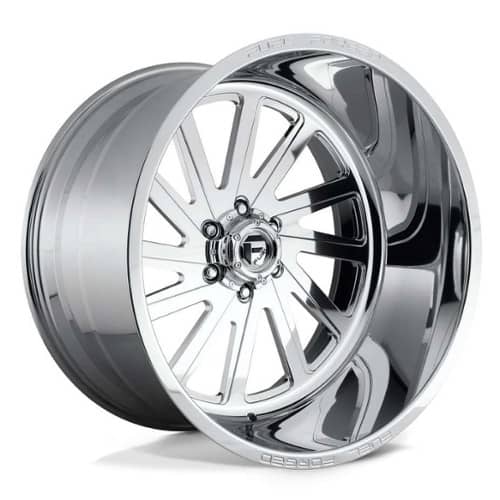
In our current inventory that difference shows up as a hard floor. Every listing in Fuel's forged FF series starts at 603.95 dollars per wheel. Not approximately. That exact figure is the entry point across FF03, FF09, FF10, FF11, FF12, FF15, FF16, FF17, FF18, FF19, FF20, and FF21, and it holds at the smallest diameter each series offers. From there they climb to 2,890 dollars at 30 inches.
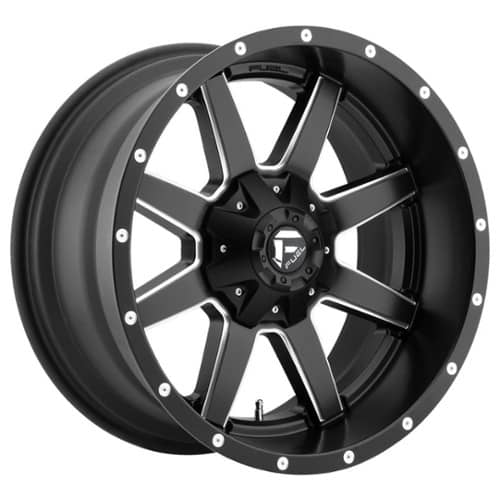
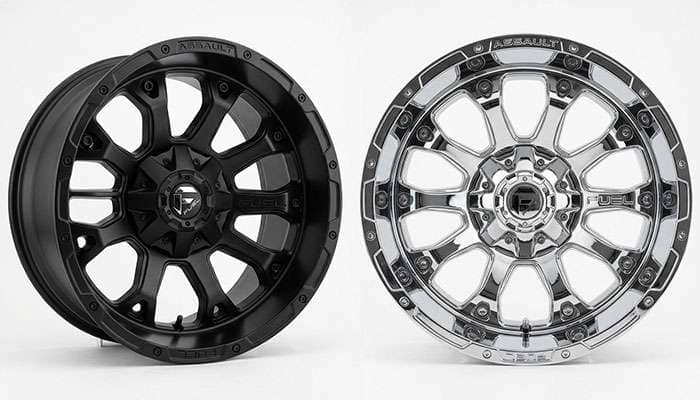
Cast Fuel wheels live entirely underneath that line at the small end. A Maverick D538 starts at 127.05. A Hostage D531 starts at 186.11. That means the cheapest forged Fuel wheel costs nearly five times the cheapest cast one, and the two will look broadly similar in a photograph.
Which is the right answer depends on what you are doing. For a daily-driven truck on pavement with occasional trail use, cast is the correct engineering choice and the money is better spent on tires. For a rig that sees real rock, heavy loads, or competition, forged buys you strength per pound that cast construction cannot match. Our review of whether Fuel wheels are good on durability and performance gets into how each type holds up.
Cast is where most buyers actually shop, so here is the current picture on the highest-volume models.
Model |
Price Range |
Median |
Diameters Available |
|---|---|---|---|
Hostage D531 |
186.11 to 527.00 |
319.71 |
17 to 24 inch |
Assault D546 |
160.16 to 639.74 |
381.16 |
15 to 24 inch |
Maverick D538 |
127.05 to 814.95 |
395.00 |
14 to 26 inch |
Maverick D536 |
234.42 to 931.26 |
491.21 |
17 to 24 inch |
Charger FC873 |
320.00 to 685.00 |
500.00 |
17 to 22 inch |
Catalyst FC402 |
495.00 to 1,010.00 |
685.00 |
17 to 24 inch |
The Hostage D531 is the value leader among the well-known designs, with the lowest median of the group and a range that tops out well under the others. The Maverick D538 is the volume champion in terms of fitment coverage, spanning 14 through 26 inches, which is why it appears on everything from a Wrangler to a dually.
Note the FC-series models sitting higher. The Charger and Catalyst carry more machining complexity in the face, and the price steps up accordingly even though they remain cast. Construction sets the floor, but design complexity moves you within the band.
The FF series is where Fuel competes with dedicated forged houses, and the pricing structure is different from anything on the cast side.
Series |
Price Range |
Median |
Diameters Available |
|---|---|---|---|
FF03, FF12, FF17, FF18 |
603.95 to 1,977.37 |
1,062.50 |
20 to 26 inch |
FF09, FF10 |
603.95 to 2,429.21 |
1,150.63 |
20 to 26 inch |
FF11, FF19, FF21 |
603.95 to 2,890.00 |
1,163.16 |
20 to 30 inch |
FF16, FF20 |
603.95 to 2,890.00 |
1,260.68 |
20 to 30 inch |
Two things stand out. First, the entry price is identical across every series, which tells you the floor is set by the forging process itself rather than by the specific design. Second, forged Fuel wheels do not exist below 20 inches in our inventory. If you want a 17-inch forged wheel, that is a different manufacturer's conversation.
Most FF listings are configured to order rather than sold off the shelf, which is why they appear as custom builds with finish selected at time of order. That also means lead times differ from cast wheels, and the price you see is a starting figure that moves with your chosen finish and specification.
Finish is the third lever, and it moves prices by a meaningful amount even holding model and diameter constant.
Finish |
Listings |
Median Price |
|---|---|---|
Matte Bronze |
270 |
315.84 |
Matte Gunmetal |
200 |
320.00 |
Matte Black |
1,166 |
370.00 |
Matte Black Milled |
660 |
381.16 |
Blackout |
406 |
452.74 |
Gloss Black |
462 |
460.00 |
Gloss Black Milled |
1,263 |
469.74 |
Chrome |
499 |
474.21 |
Matte finishes are consistently the least expensive because they require the fewest process steps. Milled faces add machining. Chrome adds a plating operation and carries the highest median of the standard finishes at 474.21. The practical gap between matte bronze and chrome is roughly 158 dollars per wheel at the median, or about 633 dollars across a set, for wheels that are otherwise identical underneath.
Per-wheel pricing is how the catalog is organized, but nobody buys one wheel. Here is the set math at the median for each common configuration.
Configuration |
Set of Four at Median |
Set of Four at Entry Price |
|---|---|---|
17 inch cast |
1,280 |
397 |
20 inch cast |
1,879 |
508 |
22 inch |
3,185 |
762 |
24 inch |
5,028 |
1,116 |
20 inch forged, entry |
4,653 |
2,416 |
30 inch forged |
10,865 |
10,128 |
Then add tires, because a wheel purchase is almost never a wheel purchase. A set of thirty-five-inch all-terrains or mud-terrains commonly adds between 1,000 and 1,600 dollars, sometimes more in larger or load-rated sizes. Buying the two together is usually the better move on price and always the better move on fitment. Our comparison on whether wheel and tire packages are cheaper puts numbers on that.
This is the question I get most often, and the answer is a stack of four factors rather than one.
Construction is the biggest. Cast versus forged accounts for the majority of any large gap within the same diameter, and it is not a cosmetic difference. Forging changes the grain structure of the aluminum, which changes the load and impact behavior of the finished wheel.
Width and offset come next. A 22 by 12 with an aggressive negative offset uses substantially more material than a 22 by 9 in a conservative offset, and the wider barrel costs more to produce. Two wheels can share a diameter and differ by three inches of width.
Load rating is third and gets overlooked constantly. A wheel built to carry a three-quarter-ton truck at its gross axle weight rating is engineered differently than one built for a half-ton, and dually applications differ again. Never buy on price without checking that the load rating meets your vehicle's requirement.
Finish complexity is fourth, and as the table above shows, it is worth about 150 dollars per wheel between the cheapest and most expensive standard options. Our overview of what custom wheels cost covers how these same factors play out across the wider aftermarket.
One more input that sits outside the wheel itself: import costs. Aluminum wheel pricing has been sensitive to tariff and supply-chain movement, which is part of why any figure in an article like this one should be read as a snapshot. Our breakdown on how tariffs affect wheel prices explains the mechanism.
At the cast end, the value case is strong. A Hostage D531 at a median of 319.71 or a Maverick D538 at 395 is competitively priced against comparable cast wheels from other aftermarket brands, and Fuel's fitment coverage is unusually deep, which matters when you are working around a lift, a specific brake package, or a dually rear. Breadth of fitment has real value that does not show up on a spec sheet.
At the forged end, the 603.95 floor is in line with the forged market generally. Forged wheels are expensive everywhere because the process is expensive everywhere. What you are buying is strength-to-weight, and if your use case genuinely demands it, the premium is doing work. If your truck lives on pavement, it mostly is not.
The honest caution is on very large diameters. A 26-inch wheel at a 1,744 median, or a 30-inch at 2,716, is an appearance decision rather than a performance one, and it comes with real trade-offs in ride quality, tire cost, and pothole vulnerability. That is a legitimate choice to make with open eyes. Our owner-perspective piece on why people like Fuel wheels and our look at Fuel wheel types and features cover the range of reasons buyers land where they do.
Start with diameter, because it sets your budget more than anything else. Decide what fits your vehicle and what you actually want, then read the median for that size in the table above and multiply by four. That is your realistic starting number.
Next decide cast or forged. If you cannot articulate a specific reason you need forged strength, you want cast, and the money saved is better applied to tires.
Then pick your finish knowing it is worth roughly 600 dollars across a set between the least and most expensive standard options.
Finally, confirm width, offset, backspacing, and load rating against your vehicle before you order anything. Price is the easy part of this decision. Fitment is the part that ruins builds. You can browse current Fuel wheels filtered by size and finish to see live pricing for your specific fitment.
Fuel rims cost between roughly 99 and 2,890 dollars per wheel, and that range is not arbitrary. Diameter drives the curve, with median pricing roughly doubling between 20 and 22 inches and climbing sharply past that. Construction sets a hard floor, with every forged FF series wheel starting at 603.95 regardless of size. Finish moves you about 150 dollars per wheel within a given model.
Once you know your diameter and your construction, you can predict your own price within a fairly narrow band before you ever open a product page. That is the useful version of the answer, and it is worth more than any single number could be.
Fuel rims currently range from about 99 to 2,890 dollars per wheel. Median pricing by diameter runs about 320 at 17 inch, 470 at 20 inch, 796 at 22 inch, and 1,257 at 24 inch. Forged FF series wheels start at 603.95 regardless of diameter. A typical set of four 20-inch cast Fuel wheels lands near 1,879 dollars at the median.
At median pricing, a set of four runs about 1,280 in 17 inch, 1,879 in 20 inch, 3,185 in 22 inch, and 5,028 in 24 inch. Entry-level configurations come in considerably lower, starting near 397 for a 17-inch set and 508 for a 20-inch set. Forged sets begin around 2,416 for four wheels at the 603.95 entry price.
Four factors stack up. Construction is the largest, since forged wheels start at more than four times the cheapest cast wheels. Diameter is second, with median price roughly doubling from 20 to 22 inches. Width, offset, and load rating account for material differences within the same diameter. Finish complexity adds roughly 150 dollars per wheel between matte and chrome.
The lowest current listing sits at 99.32 dollars in a 17-inch fitment. Among the well-known cast models, the Maverick D538 starts at 127.05 and the Assault D546 starts at 160.16. Availability at these entry prices depends on the specific bolt pattern, width, and offset, so the cheapest listing overall may not exist in your vehicle's fitment.
It depends on use. Forging aligns the grain structure of the aluminum, producing a wheel that is stronger for a given weight, which matters for heavy loads, rock crawling, and competition use. For a daily-driven truck on pavement with occasional trail work, cast construction is the appropriate engineering choice and the savings are better spent on tires.
No. The figures above are wheels only. Adding a set of thirty-five-inch all-terrain or mud-terrain tires commonly adds between 1,000 and 1,600 dollars, and more in larger or heavily load-rated sizes. Buying wheels and tires as a package is generally better on both price and fitment, since the set arrives mounted and balanced.



