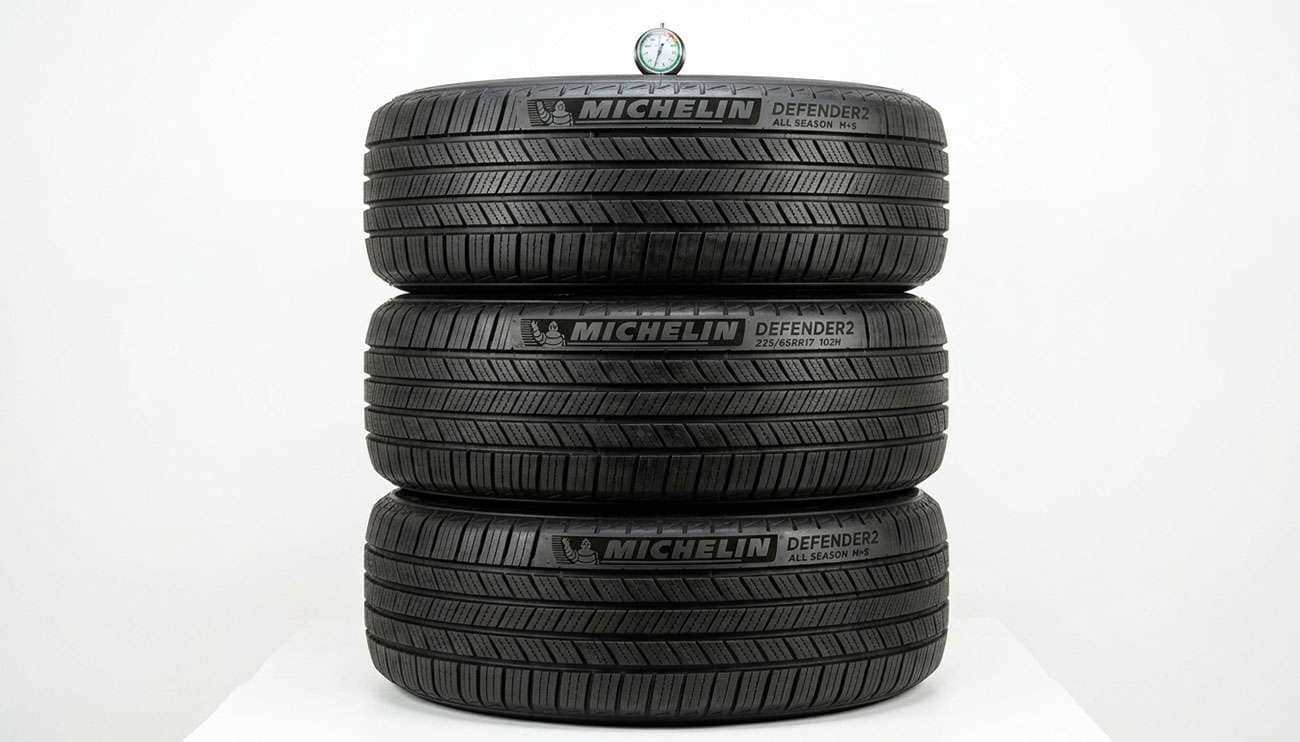
Short answer: yes, the right Michelin can, but only two lines carry that promise, and a six-year clock decides whether you can collect on it. The Defender2 and Defender T+H are warranted for 80,000 miles. Consumer Reports estimates 100,000 for the Defender2, and Michelin's own test came in at 94,400. The variable most guides skip is how much you drive. Michelin's treadwear warranty expires six years after purchase, so you need about 13,333 miles a year to use all of it.
I'm Hank Feldman, and I've been selling tires in Long Beach since 1971. I've heard a lot of mileage claims in that time, and I've learned to ask the same three things every time: on which tire, on whose car, and measured how? Michelin earns its reputation. But when a customer asks if a Michelin really goes 80,000 miles, a plain yes doesn't help him. The right tire can go that far. The part nobody puts in front of you is whether you'll ever get to collect on it.
Start here, because this one's about you and not the tire. Michelin's treadwear warranty expires six years after the date of purchase. Divide 80,000 by six and you get 13,333 miles a year. Drive less than that and the calendar ends your warranty before the odometer does.
Miles You Drive a Year |
Years to Reach 80,000 |
Miles Covered in 6 Years |
What It Means for You |
|---|---|---|---|
8,000 |
10 |
48,000 |
You'll reach Michelin's 10-year age limit about when you reach 80,000. |
10,000 |
8 |
60,000 |
The tread can outlast the warranty by two years. |
12,000 |
6.7 |
72,000 |
Close. The warranty runs out 8,000 miles short. |
13,482 (U.S. average) |
5.9 |
80,000 |
You make it with less than a month to spare. |
15,000 |
5.3 |
80,000 |
Comfortable. This is who the warranty fits. |
20,000 |
4 |
80,000 |
The best case. You get the most from the promise. |
The Federal Highway Administration puts the average driver at 13,482 miles a year, so the average driver barely makes it. If you're retired, work from home, or keep a second car, you're probably on the top half of that chart.
None of that makes the tire a bad buy. A Defender2 doesn't quit when the warranty does. Michelin calls for an inspection every year once a tire reaches five years, and replacement by 10 years no matter how it looks. So at 8,000 miles a year, you could run the tread for a decade. You just won't have the warranty behind you for the second half of it.
Two lines: the Defender2 and the Defender T+H. Everything else in the lineup carries less, and some of it a lot less. Here's how the common ones stack up, with one example size for each. Cost per 1,000 miles is four tires divided by the warranty mileage, before rebates and installation.
Michelin Tire |
Mileage Warranty |
Speed Ratings |
Treadwear |
Example Size and Price |
Cost per 1,000 Miles |
|---|---|---|---|---|---|
80,000 |
H, V |
840 |
225/65R17 102H, $205.99 |
$10.30 |
|
80,000 |
H |
820 |
195/65R15 91H, $173.99 |
$8.70 |
|
70,000 |
T, H |
820 |
275/55R20 117T, $272.99 |
$15.60 |
|
60,000 |
H, V |
640 |
225/65R17 102H, $224.99 |
$15.00 |
|
55,000 |
H, V |
540 |
215/55ZR17 94V, $219.99 |
$16.00 |
|
45,000 |
Y |
540 |
235/45ZR18 98Y, $222.99 |
$19.82 |
|
30,000 |
Y |
300 |
245/35ZR19 93Y, $339.99 |
$45.33 |
Prices are from our site on November 5, 2026, and they move. The product pages show any rebate running at the time you shop. Michelin's fall 2026 rebate of $80 on four tires runs through November 30.
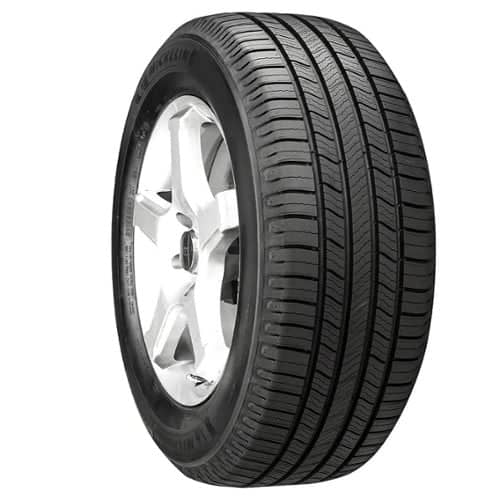
Watch the fine print on names. The same tire can carry two different warranties depending on its speed rating. The Primacy Tour A/S gets 55,000 miles in H and V, but 45,000 in W. The Pilot Sport A/S 4 gets 45,000 in Y, but 30,000 in the (Y) sizes. Read the line for your exact size, not the headline number on the model.
Speed rating can also rule the Defender2 out altogether. It comes in H and V. If your door jamb placard calls for W or Y, you shouldn't go below that to chase a longer warranty. On those cars, 80,000 miles isn't on the menu. I laid out the rest of the Defender2's strengths in are Michelin Defender 2 tires any good.
The evidence says yes, and it comes from three different directions. None of them is perfect, so here's each one with its catch:
Owner reports run all over the map, as they always do, though owner surveys on this tire are strongly positive overall. When two people get very different mileage from the same tire, I look at rotation, alignment, and the car before I look at the rubber.
Put those together and I'm comfortable telling a customer this tire can do it. A warranty that long is also a statement. Michelin is on the hook for every set that falls short, so it doesn't print 80,000 lightly. Dennis ranked the long-distance tires in what tire brand lasts the longest, and the Defender2 came out on top of his list.
The numbers tell you most of it. The Defender2 starts at 10/32 of tread, the same as a typical touring tire. It just spends that tread slower. Take 80,000 miles and divide by the 8/32 of usable tread, and it's promising 10,000 miles per 32nd. A typical all-season touring tire with a 60,000-mile warranty promises about 7,400. So on Michelin's own warranty math, the Defender2 gets about 35 percent more miles from each 32nd.
That shows up in the treadwear grade too. It's 840, and tires graded 800 or higher are a small club. The credit goes to its EverTread 2.0 compound and its MaxTouch construction, which spreads driving forces evenly across the contact patch. Even contact matters as much as the rubber. A tire that wears flat and even uses all of its tread. A tire that wears on one edge throws away the rest.
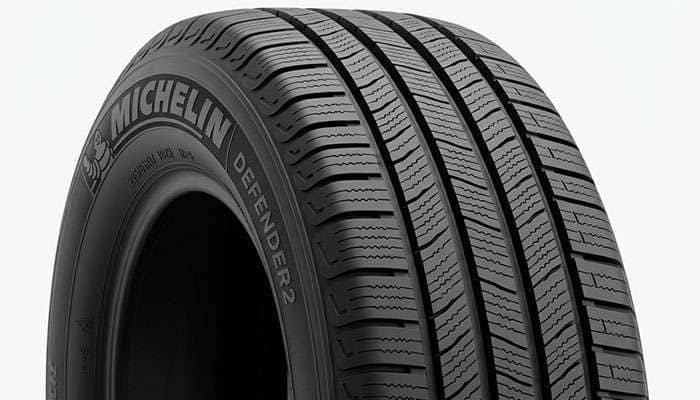
They're close relatives, not twins. The Defender2 came out in 2022 as the successor to the Defender T+H, and it's the newer design, with the updated EverTread 2.0 compound. Both carry the same 80,000-mile warranty, and both start at 10/32 of tread.
The real difference for most folks is size. The T+H covers 14-inch through 18-inch wheels in H-rated, standard-load sizes, so it's the way to get an 80,000-mile warranty on a small older car. The Defender2 covers 16-inch through 20-inch wheels, in H and V, with some XL sizes for heavier crossovers. If your size comes in both, I'd lean toward the Defender2. If you're on a 14- or 15-inch wheel, the T+H is your 80,000-mile tire.
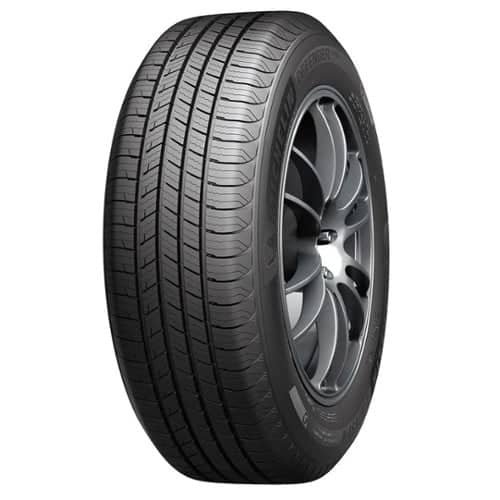
This is the second thing nobody tells you. The 80,000-mile promise runs down to the 2/32 wear bars. Dennis and I both tell people to replace at 4/32 if they drive in the rain, because wet braking falls off well before the legal limit. His guide to replacing tires by the 32nd has the details. Stopping at 4/32 means you use 6/32 of tread instead of 8/32, and your mileage shrinks to match:
To reach 80,000 miles and still have 4/32 left, a set has to run on a pace of about 106,700 miles. That Torque News Accord was on that kind of pace, but it's one gentle commuter, and I wouldn't plan your budget around it. For most drivers, a realistic safe number sits somewhere around 60,000 to 75,000 miles. That's still a terrific tire. It's just a more honest figure than the one on the sign.
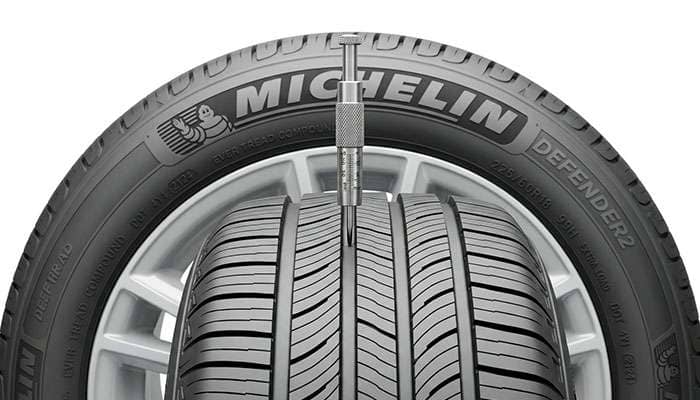
It sure does. Look at where the good numbers came from: a RAV4 and a Honda Accord. Those are light, easy cars for a tire. Put the same tire on something heavier and the math moves. Consumer Reports has put EV tire wear at roughly 20 percent faster, and 20 percent off 80,000 miles leaves 64,000. A heavy foot, a lot of stop-and-go, and hot pavement all take their share on top of that.
Long freeway miles are the easy miles. A commuter running the 405 at a steady speed will get far closer to the number than a driver doing short trips around town. I don't hold that against the tire. It's why the warranty is a promise about the tire, and your own mileage depends on the car and the road.
On an 80,000-mile tire, you need to think about that. Rubber ages whether it's rolling or not, and heat speeds it up. At the average 13,482 miles a year, you pass the five-year mark with about 12,600 miles still to go on the warranty. So the last stretch runs on rubber that's five to six years old.
That's nothing to panic about. It's why Michelin wants a yearly inspection after year five. Just remember that the two clocks start at different times. The six-year warranty starts on your purchase date, but the 10-year limit runs from the date the tire was made. Read the DOT date code when your tires arrive, and write it down with your receipt.
More than you'd think. Here's what cuts or voids the coverage, going by Michelin's guide and SlashGear's rundown of the Promise Plan:
Two housekeeping items protect you. Michelin ties its Promise Plan to buying from an authorized dealer and registering your tires. Do both, and keep your receipt and every rotation record in one place.
You get a credit toward a new tire, not your money back. Michelin prorates it by the miles you received against the miles it promised, using the current retail price, and you pay for mounting, balancing, and tax. In the first year, a tire that's lost less than 2/32 or 25 percent of its tread gets replaced with a comparable tire.
Run it on a $205.99 Defender2. If a set wears out at 60,000 miles, you've used 75 percent of the promise, so you'd get about $51 off each tire, or about $206 on a set. At 40,000 miles, it's about $103 a tire and about $412 on a set. Dennis lays out who gets paid and who doesn't in why tires don't reach their mileage warranty. The short version is that the tires have to wear to the bars, and your paperwork has to be in order.
Don't forget the easy one. Michelin's Promise Plan also gives you 60 days to bring tires back with your receipt and swap them for a new set of equal or lesser value if you don't like them. Three years of roadside assistance comes with it.
No, and this is where a lot of the confusion comes from. A customer sees Michelin on the sidewall of a new car, remembers the 80,000-mile ad, and figures he's set. Those are different tires. Automakers order factory tires for the ride, the noise, and the fuel economy of one vehicle, and long tread life comes further down that list. Plenty of owners get 30,000 to 50,000 miles from them.
That's nothing against Michelin. It built what the car company ordered. Just don't judge the brand by the first set on your car, and don't expect a mileage warranty on it either. The name on the sidewall tells you who made the tire, not what it was built to do. There's more in OEM vs. aftermarket tires.
The Defender LTX M/S 2 is the long-distance choice here, with a 70,000-mile warranty in its T and H sizes. That's a big promise for a tire carrying a truck. It starts deeper too, with 11/32 or 12/32 in those sizes. The LT sizes in S rating drop to 50,000 miles, because a tire built for heavy load and towing lives a harder life.
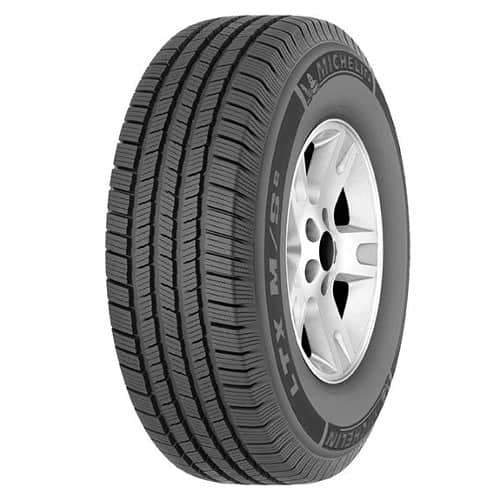
For a half-ton or a big SUV that mostly stays on pavement, that's about as good as it gets from Michelin. If you tow a lot, plan on less than the warranty, and match your load range first. The LTX A/T2 all-terrain carries 60,000 miles, which is strong for its class.
Much less, on purpose. The Pilot Sport 4 S is a 30,000-mile tire. The Pilot Sport 4 is 20,000. The Pilot Sport A/S 4 is 45,000 in Y sizes. Nobody's cheating you there. Those tires trade tread life for grip, and they're some of the best in the business at it. If a customer tells me his Pilot Sport 4 S tires lasted 25,000 miles on a fast car, that's about what I'd expect.
So when somebody says "Michelins don't last," I ask which ones. Same brand, and a warranty range from 20,000 to 80,000 miles. That's why the model matters more than the name.
There's no free lunch in rubber. A compound built to resist wear tends to give something back. Road testers have marked the Defender2 down for wet traction and vague steering compared with the sharpest tires in its class, and snow is its weak spot. It doesn't carry the three-peak mountain snowflake mark.
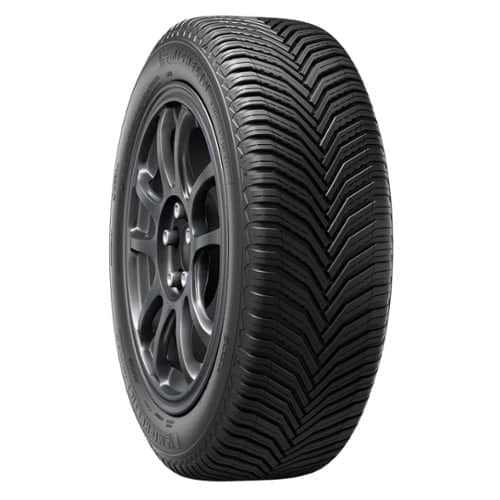
Here in Long Beach, that's an easy trade for most drivers. If you see real snow, it isn't. Look at the CrossClimate2 instead. It carries the snowflake mark and handles bad weather far better. You give up 20,000 miles of warranty and pay about $15 per 1,000 miles instead of $10.30, and I think that's money well spent in a snow state. My head-to-head is in CrossClimate 2 vs Defender 2.
If you drive enough to use it, yes. At $205.99 a tire, a set of Defender2 in 225/65R17 runs about $824 before rebates and installation. At the full 80,000 miles, that's $10.30 per 1,000 miles. Stop at 4/32 and 60,000 miles and it's still $13.73, which beats most tires even at their full warranty.
Run the same check for your own driving before you buy:
That last group is the one I talk out of the longest-lasting tire most often. A second car that goes 4,000 miles a year doesn't need an 80,000-mile tire. It needs a good tire that's replaced on time.
When you're ready, shop Michelin tires by size and check the warranty line for your exact fitment.
Do Michelin tires really last 80,000 miles? The right ones do. The Defender2 has the warranty, the treadwear grade, and the test numbers to back it up, and I'm happy to put it on a customer's car. But "Michelin" isn't one tire. It's a lineup that runs from 20,000 miles to 80,000.
Know what you're buying. You need the right line in your size, about 13,333 miles a year to use the whole warranty, and the discipline to rotate and keep your records. Do that, stop at 4/32 for safety, and a realistic figure is around 60,000 to 75,000 miles of good, quiet driving. After all these years selling tires, I'd call that a promise kept.
It depends on the line. Michelin mileage warranties run from 20,000 miles on Pilot Sport 4 summer tires to 80,000 on the Defender2 and Defender T+H. Touring tires like the Primacy Tour A/S carry 55,000, and the CrossClimate2 carries 60,000. Factory tires have no mileage warranty.
Among current lines, the Defender2 and Defender T+H, both warranted for 80,000 miles. Consumer Reports estimates about 100,000 miles for the Defender2. For trucks and SUVs, the Defender LTX M/S 2 leads with a 70,000-mile warranty in its T and H sizes.
It expires six years after the date of purchase. That means you need to drive about 13,333 miles a year to use all 80,000 miles. If you drive less, the tread may outlast the warranty.
Yes, if you drive enough to use the tread. In 225/65R17, a set works out to about $10.30 per 1,000 miles at the full warranty. If you drive under 8,000 miles a year, age will likely retire the tires first, so a less expensive tire may make more sense.
Every 6,000 to 8,000 miles. Keep your receipts and rotation records, because you'll need to show the tires were maintained if you file a claim. Vehicles with different front and rear tire sizes can't be rotated front to back, and they get half the mileage warranty.
No. Michelin excludes original equipment tires from its mileage warranty starting with the 2018 model year. Factory tires are built to an automaker's specification and often last 30,000 to 50,000 miles, even with Michelin on the sidewall.