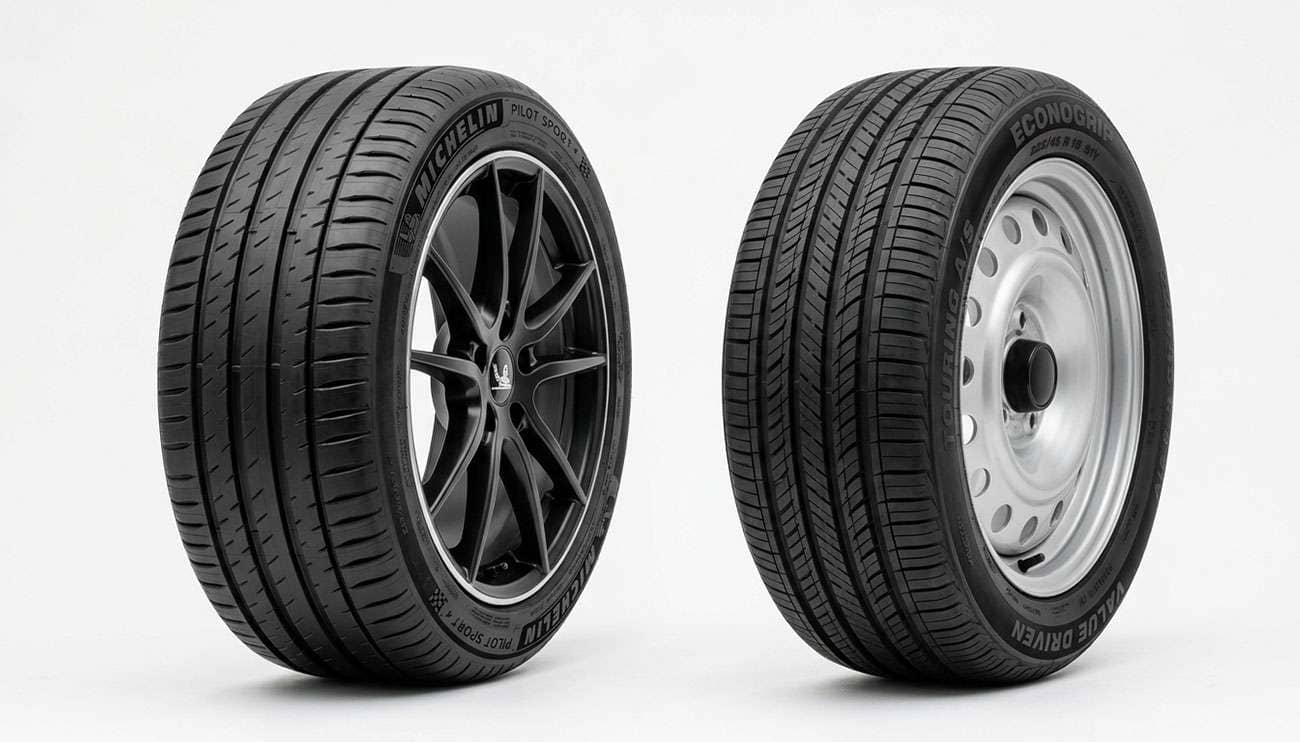
I get this question on the sales floor almost every day: a customer is staring at two tires in the same size, one priced at $70 and one at $190, and they want to know whether the cheap one is a mistake. The honest answer is the one nobody likes — it depends. A budget tire isn't automatically a bad tire, and a premium tire isn't automatically worth the premium for your situation. What separates a smart buy from a regret is whether the tire's specifications match how, where, and how far you actually drive.
So let's do this the way I'd do it at the counter: lay out the real pros, the real cons, and then read the spec sheet so you can tell a genuinely good value from a tire that's cheap for the wrong reasons. By the end you'll have a clear rule for your own car.
Buying cheap tires makes sense when your driving is low-mileage, low-speed, and in mild, dry conditions — think a second car, a short city commute, or a vehicle you plan to sell soon. The upfront savings are real and immediate. Cheap tires become a poor choice when you regularly drive highway speeds, log serious annual mileage, or face rain and snow, because the typical trade-offs — longer wet stopping distances, shorter tread life, more road noise, and thinner construction — start to cost you more in safety and replacements than you saved at purchase. The trick is matching the tire to the job, and that's exactly what the rest of this guide helps you do.
Let's give budget tires their due, because the advantages are legitimate.
Real upfront savings. This is the obvious one. A set of four budget tires can run roughly $240 to $400 installed, while a comparable premium set often lands at $600 to $1,000 or more. For a household watching every dollar, that difference is meaningful — and it's the same reason people ask whether it's even worth paying up. We tackle that head-on in our look at whether it's worth it to buy cheap tires after 20,000 miles of real use.
Ideal for short-term ownership. If you're selling the car within a year, or it's a beater that rarely leaves the neighborhood, there's little reason to invest in 70,000-mile premium rubber you'll never use up. Match the tire's lifespan to your ownership horizon.
Plenty good for gentle, dry-climate driving. If your driving is mostly low-speed errands on dry pavement in a mild climate, a quality budget all-season delivers perfectly adequate performance. You simply aren't pushing the tire into the conditions where premium engineering earns its keep.
Adequate basic performance from reputable value brands. The budget tier has matured. Established value brands now build tires that handle normal daily driving competently. The key word is reputable — a recognized value brand with published ratings is very different from an unbranded tire with no spec sheet. Our roundup of the best brands for cheap tires separates the genuine values from the rest.
Now the trade-offs, because they're just as real — and this is where I want you to think in specifications, not brand reputation.
Reduced wet and cold performance. This is the big one. Independent testing consistently shows that lower-tier tires need longer distances to stop on wet roads and are more prone to hydroplaning. The compound and tread design that move water out from under the tire are exactly where budget manufacturing economizes. In an emergency stop, those extra feet are the difference that matters most.
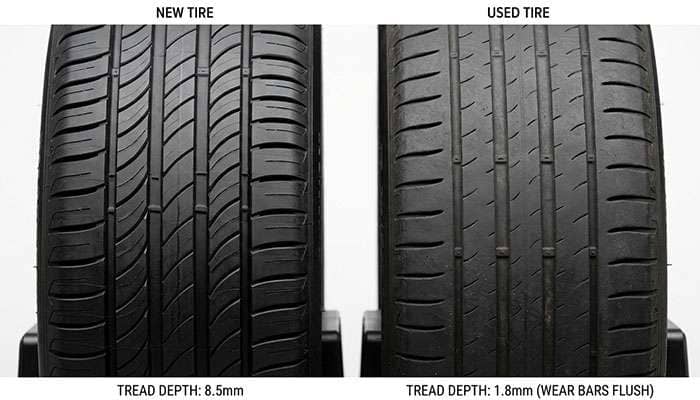
Shorter tread life. Softer or less-refined compounds often wear faster, so a cheaper tire may need replacing sooner — which can quietly erase the money you saved up front. We'll put actual numbers to that in the cost-per-mile section below, and you can see which designs give up fastest in our piece on which tire wears out fastest.
More road noise and a harsher ride. Budget tires frequently run louder and transmit more impact harshness, which you'll notice most on the highway. It's a comfort tax that's easy to ignore in the showroom and hard to ignore on a long drive.
Thinner construction. Some value tires use lighter sidewall construction that flexes more, which can affect handling precision and leave the tire more vulnerable to pothole and impact damage. Rather than steer you toward or away from any particular brand, I'd rather teach you to read the spec sheet — the section below shows you the red flags to look for, no matter whose name is on the sidewall.
Compromised grip overall. Lower grip shows up in braking and cornering, the two moments where you most want the tire to hold. For drivers who never push the limits, this rarely surfaces; for anyone who drives fast or in poor weather, it's the core safety argument against going too cheap.
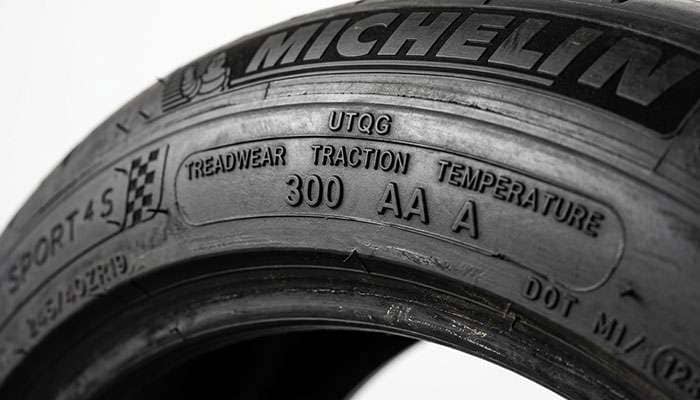
Here's the part most buyers skip, and it's the single best way to avoid a bad cheap tire. Every passenger tire carries a Uniform Tire Quality Grading (UTQG) stamp and a service description. Learn to read them and you can judge a $70 tire on its merits instead of its price tag.
Treadwear grade. This number (often somewhere from 200 to 800) is a relative durability rating from the manufacturer. Higher generally means longer-wearing. A budget tire with a treadwear grade in the 500s is telling you it's built to last; one in the low 200s on a non-performance tire is a red flag for a short life.
Traction grade. Graded AA, A, B, or C, this measures straight-line wet braking on standardized surfaces. For a daily driver, I want to see A at minimum. A C-rated traction grade is the kind of spec-sheet warning sign that matters far more than the brand on the sidewall.
Temperature grade. Graded A, B, or C for heat resistance at speed. A or B is fine for normal use; this matters more the faster and farther you drive.
Load index and speed rating. The service description (for example, 91H) tells you the tire's load capacity and certified speed. Never drop below your vehicle's required load index — that's a safety spec, not a suggestion. Matching these correctly is part of choosing the right tire for your vehicle, and there's no budget exception to it.
Read those four things and the "cheap tire gamble" turns into an informed decision. A value tire with a strong treadwear grade, an A traction grade, and the correct load index is a genuinely good buy. One that skimps on traction and treadwear is cheap for a reason.
Price per tire is the wrong number to compare. The number that actually tells you which tire is cheaper is cost per mile — purchase price divided by the miles you'll get out of it. Let me show you why a low sticker can still be the more expensive tire.
Say a budget tire costs $80 and delivers about 45,000 miles. That's roughly 0.18 cents per mile. A premium tire at $190 that delivers 75,000 miles works out to about 0.25 cents per mile — and you bought half as many sets over the life of the car. On paper the premium tire costs more per mile here, but it bought you longer intervals, better wet grip, and a quieter ride along the way. Flip the numbers — a budget tire that only reaches 30,000 miles — and the cheap tire's cost per mile jumps to 0.27 cents, erasing the savings entirely while giving up safety margin.
The lesson isn't "premium always wins" or "cheap always wins." It's that you can't judge value from the sticker alone. Run the cost-per-mile math with the treadwear grade as your life estimate, and factor in how much the wet-weather and comfort differences are worth to you. For a deeper version of this comparison, our breakdown of budget vs premium tires runs the full math, and how much a good tire should cost sets realistic price expectations.
Factor |
Budget Tire |
Premium Tire |
|---|---|---|
Typical price per tire |
USD 60-100 |
USD 150-250+ |
Typical tread life |
Shorter |
Longer |
Wet braking |
Longer distances |
Shorter distances |
Road noise / comfort |
Louder, firmer |
Quieter, smoother |
Best suited to |
Low miles, mild climate |
High miles, all weather |
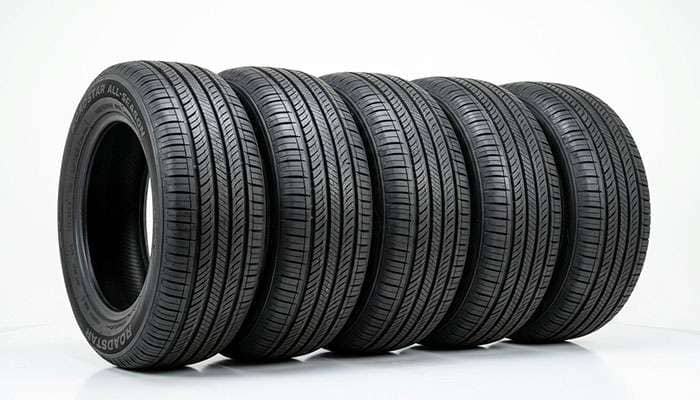
Cheap doesn't have to mean a gamble. These are recognized value brands with published ratings — the kind of budget tires I'm comfortable putting on a customer's daily driver, organized by what they're built for.
Value all-season passenger tires. For commuters who want low cost without flying blind, the Sailun Atrezzo SH406, Nexen Aria AH7, and Arroyo Eco Pro A/S deliver dependable everyday performance at a budget price. The Atlas Force HP is another solid value pick in common passenger sizes.
Sporty compact sizes. If you drive a smaller car and want a little more response, the Milestar Interceptor AS810 and Kenda Kaiser KR20A cover popular 16- and 17-inch fitments affordably.
Budget light-truck and SUV options. For trucks and crossovers, the Ironman All Country A/T and GT Radial Adventuro AT3 bring real all-terrain capability without premium pricing, and the Americus lineup rounds out the value end.
Want a curated shortlist rather than a whole catalog? Dennis's picks for the 9 best affordable tires under $100 narrows it down, and you can browse the full selection on our tire catalog.
Here's the decision rule I give customers, boiled down.
Cheap tires are a reasonable choice if you drive low annual mileage, mostly at city speeds, in a mild and mostly dry climate; you're on a tight budget right now; or you plan to sell the vehicle soon. In those cases a reputable value tire with good UTQG numbers gives you everything you actually use. If budget is the pressing issue, we also cover how to get tires when you can't afford them and payment-plan options so safety doesn't wait on cash flow.
Cheap tires are usually the wrong call if you're a daily highway commuter, you drive a heavier or higher-performance vehicle, or you regularly face rain or snow. In those conditions the wet-braking and longevity gaps stop being abstract and start being a safety and cost problem — and stepping up, or at least up to a strong value tire with an A traction grade, pays for itself. If you're weighing the very top of the market, our test of whether Michelin tires are worth the extra money shows where premium spending does and doesn't deliver.
One more tip: you don't always have to choose between cheap-and-now or premium-and-later. Timing your purchase helps — see the cheapest month to buy tires — and so does shopping smart, which is why online tire prices often beat the local shop on the same model.
Cheap tires aren't a yes-or-no question — they're a matching problem. The pros are real: immediate savings, a sensible fit for low-mileage and short-term needs, and genuinely competent performance from reputable value brands for gentle, dry-climate driving. The cons are just as real: longer wet stopping distances, shorter tread life, more noise, and thinner construction, all of which bite hardest at highway speed and in bad weather.
The way you win is to stop comparing stickers and start comparing specs and cost per mile. Read the UTQG grades, confirm the load index, estimate the life, and weigh it against how you actually drive. Do that, and you'll know whether the $70 tire in front of you is a smart value or a false economy. When you want a second set of eyes on it, that's what we're here for at our shop at 3910 Cherry Ave in Long Beach.
A reputable value tire with good UTQG ratings and the correct load index is safe for normal driving. The safety concern with the cheapest tires shows up mainly in wet and cold conditions, where lower grip means longer stopping distances. Check the traction grade — aim for A — and confirm the load index matches your vehicle before buying.
Often, yes. Budget compounds frequently wear faster than premium ones, which can erase the upfront savings. The tire's treadwear grade is your best clue — a higher number indicates a longer-lasting tire. Compare cost per mile (price divided by expected miles) rather than the sticker price to see the true value.
Premium tires usually pay off for high-mileage highway commuters, heavier or performance vehicles, and anyone who regularly drives in rain or snow. In those conditions the better wet grip, longer life, and quieter ride outweigh the higher price. For low-mileage, mild, dry-climate driving, a quality budget tire is often the smarter spend.
Read the UTQG stamp and service description. Look for a solid treadwear grade for long life, an A traction grade for wet braking, an A or B temperature grade, and a load index that meets or exceeds your vehicle's requirement. A value tire that hits those marks is a genuine bargain; one that skimps on traction or load is cheap for the wrong reasons.
If you only replace two, the newer tires should go on the rear axle for stability, and ideally all four tires should be reasonably matched in type and wear. Mixing very different grip levels front to rear can affect handling in wet conditions, so when budget allows, a matched set is the safer choice.