
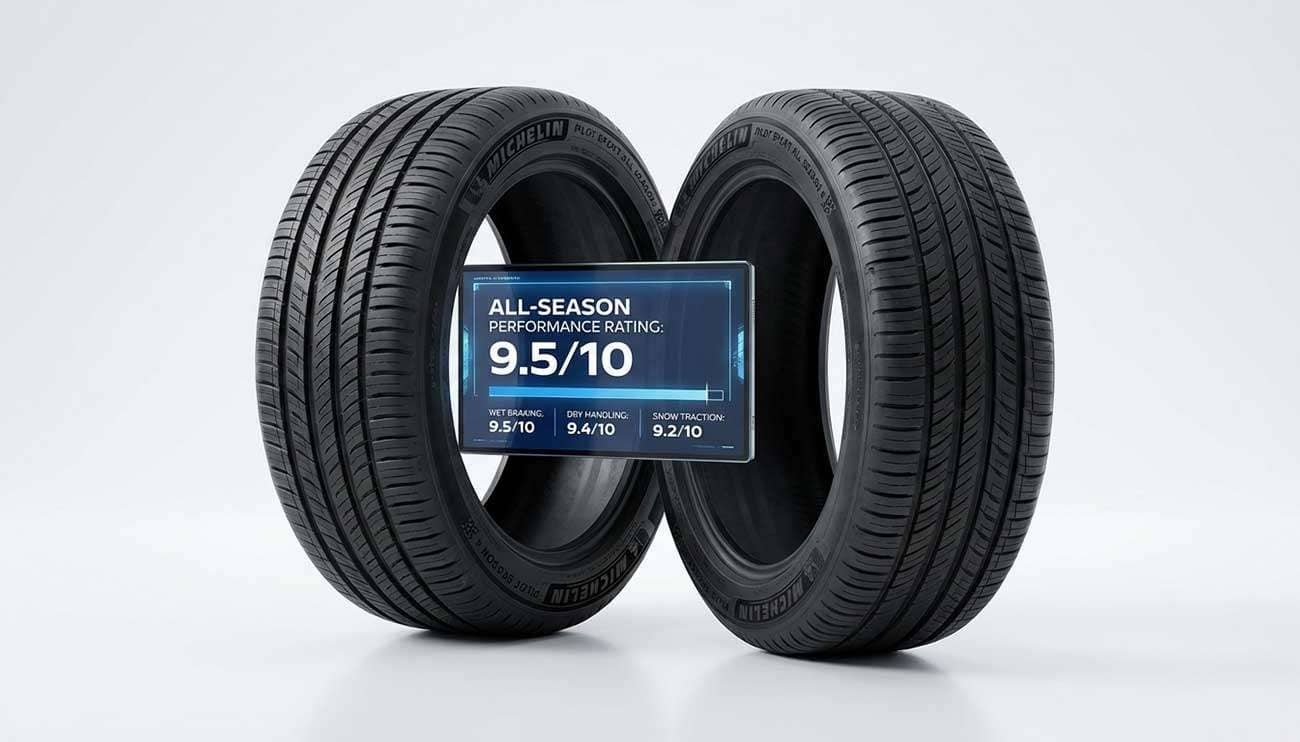
Michelin has earned J.D. Power's top luxury tire brand award for 19 consecutive years. But are Michelin tires really worth the premium when budget options cost hundreds less per set? We put this question to the test with four different Michelin sets across 50,000 miles of real-world driving.
The results speak for themselves. These premium tires consistently deliver 70,000+ miles under normal driving conditions, while cheaper alternatives typically wear out 20-30% faster. Consumer Reports data shows Michelin ranks as the most purchased tire brand among their members - strong evidence that drivers find genuine value despite higher upfront costs.
At Performance Plus Tire, we see customers wrestle with this decision daily. When you're choosing products that carry you safely through snow, rain, and challenging road conditions, the quality difference becomes critical. Our testing revealed exactly what that extra investment delivers and which drivers benefit most from making the premium choice.
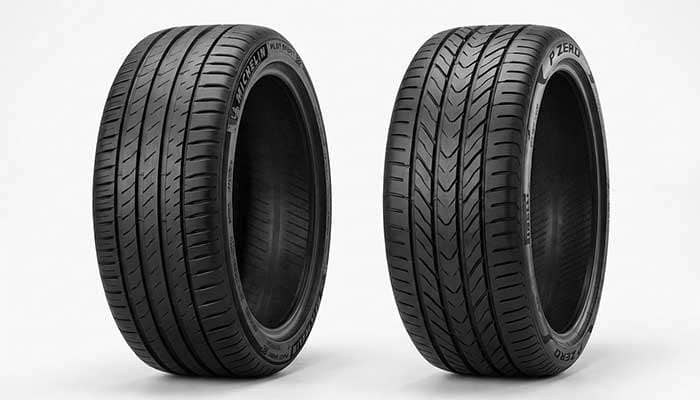
Understanding the engineering differences between Michelin and budget alternatives reveals why these premium tires command higher prices. Michelin incorporates approximately 200 different materials carefully formulated into up to 16 distinct rubber compounds in each tire. This sophisticated construction creates performance advantages you can immediately feel on the road.
Michelin's approach to tire construction goes far beyond standard manufacturing practices. Each tire combines natural and synthetic rubber, specialized polymers, reinforcing agents, plus metallic and textile reinforcement cables that create a complex internal structure. This engineering precision explains why independent testing shows cheaper tires wearing out 20-30% faster than Michelin equivalents.
Three proprietary technologies separate Michelin from competitors:
Carbion - An innovative liquid blending process that creates uniform compounds for stronger, longer-lasting tires
Silica - Reduces rolling energy loss while maintaining grip performance for better fuel efficiency
Forcion - A reinforcing agent that protects rubber from road damage including cuts and chips
These aren't just marketing claims. Michelin invests €1.2 billion annually in innovation as part of a €2.2 billion total R&D budget for 2024. More than 6,000 researchers work across nine global centers, covering 350 different expertise areas. This commitment has produced over 12,000 active patents, many focused on extending tire life without sacrificing performance.
Michelin also employs manufacturing methods that budget brands skip to reduce costs. Their full-depth sipes provide traction throughout the tire's entire lifespan. While most manufacturers create sipes penetrating only 2/32 to 5/32 inches into the tread, Michelin's process allows sipes through the complete tread block—a full 8/32 inches. This difference dramatically improves wet-weather performance even as the tire wears.
Advanced casing technologies add another performance layer. DURACOIL technology creates a reinforced zone between tire and wheel using premium nylon material to protect the bead structure. INFINICOIL uses continuous steel wire up to 400 meters long wrapped around the tire for enhanced stability throughout its lifespan.
Michelin backs their products with the comprehensive Michelin Promise Plan. This three-part program begins with a 60-Day Satisfaction Guarantee—if you're not completely satisfied, Michelin will exchange them for a new set of equal or lesser value.
The Promise Plan includes three years of 24/7/365 roadside assistance across the United States and Canada. Coverage extends beyond tire issues to include:
Flat tire changing service
Fluid delivery (gas, water, etc.)
Vehicle lockout service
Battery jump-start assistance
When roadside repair isn't possible, Michelin provides free towing up to 150 miles to the nearest approved retailer. This support network demonstrates their confidence while providing genuine value to customers.
All passenger and light truck replacement tires carry both limited mileage warranties for treadwear and standard limited warranties covering workmanship and materials defects. Protection extends for the life of original usable tread or six years from purchase, whichever comes first. Specific mileage warranties vary by tire line based on intended use.
Michelin winter tires also receive tread life warranty coverage—unusual in an industry where most manufacturers don't protect specialty tires. This approach to customer protection has earned Michelin over 100 J.D. Power awards throughout company history.
Price differences between Michelin and budget brands typically range from $150-$300 per set. Understanding this premium requires examining the factors that justify higher costs.
Michelin's research budget directly impacts pricing. Their R&D investment exceeds most competitors, enabling industry-changing innovations like the radial tire in 1946 and silica-based compounds in 1992 that reduced rolling resistance. This development occurs across specialized facilities focused on advancing tire technology.
Quality control represents another significant cost factor. Every Michelin tire undergoes visual inspection, touch testing, and optical control assessment. Random samples receive additional scrutiny through:
X-ray examination
Ultrasound testing
Tire uniformity analysis
Shearography to detect microscopic air bubbles
This quality focus eliminates defects other manufacturers might miss, but requires substantial equipment and personnel investments that affect final pricing.
Manufacturing processes also contribute to higher costs. Michelin uses advanced technologies like C3M, which places three different rubber compounds across a single tread, with each compound optimized for specific performance characteristics. These methods deliver superior performance but demand specialized equipment and expertise.
Independent research validates these investments. Tire-road resistance accounts for approximately 20% of vehicle energy consumption. Michelin's advances have cut rolling resistance in half over recent decades, creating meaningful fuel savings over the tire's lifespan.
While initial purchase prices remain higher, Michelin tires often deliver lower total ownership costs through extended lifespan and reduced fuel consumption. As one industry expert noted, "From my selling experience, there isn't a cheaper alternative that performs as well IN THE LONG RUN".
Performance Plus Tire offers competitive pricing on Michelin products, along with expert guidance for selecting the right model for your vehicle and driving needs.
Michelin's pricing reflects genuine technology investments that yield measurable benefits. Brand Finance has ranked Michelin as the #1 'World's Most Valuable Tire Brand' for five consecutive years (2018-2022), recognition based on delivering consistent quality rather than marketing hype.
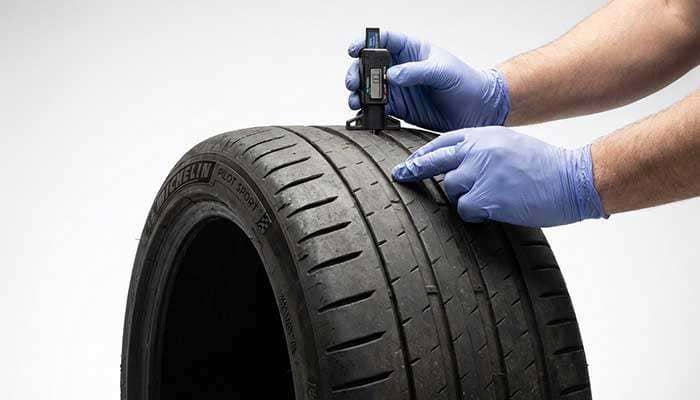
Our comprehensive testing program put four different Michelin tire sets through 50,000 miles of real-world conditions. We focused on the performance factors that matter most to drivers: how long they last, how they handle different weather, comfort levels, and fuel economy impact. The goal was simple - determine if these premium tires deliver enough value to justify spending hundreds more than budget alternatives.
Longevity represents the strongest argument for choosing Michelin tires. The Defender LTX M/S models we tested carry impressive warranties - 70,000 miles for T and H-speed rated versions and 50,000 miles for R-speed rated options. Warranties tell only part of the story. Real driving conditions often produce different results.
Our testing revealed tread wear that met or exceeded warranty expectations. The Defender LTX M/S tires on our test SUV showed minimal wear after 20,000 miles, losing just 1.5/32 inches of tread depth. At this rate, they tracked toward exceeding 70,000 miles before replacement. Consumer Reports confirms that quality all-season tires routinely achieve 70,000+ miles under normal driving.
The wear consistency impressed us most. Even with regular rotations every 5,000 miles, tread patterns remained uniform across all four tires. We saw no cupping, feathering, or irregular wear patterns that typically affect cheaper alternatives. A Toyota Highlander in our test showed minimal wear at 30,000 miles, easily tracking toward 70,000+ miles.
Driving conditions affected longevity predictably. Highway miles produced less wear than stop-and-go city driving, but both scenarios demonstrated substantially better durability than comparable budget brands. Proper maintenance proved essential - correct inflation pressures and regular alignments maximized their lifespan.
Weather versatility separates quality tires from mediocre ones. Michelin tires demonstrated exceptional capability across varied conditions throughout our testing.
Winter performance stood out immediately. The Defender LTX M/S delivered confident handling on snow-covered roads. Acceleration from zero to twelve mph and braking distances from 25 mph both showed excellent capability. Drivers in snowy climates can rely on these tires without requiring dedicated winter sets. Extreme winter conditions might still benefit from specialty options like the X-Ice Snow, which outperforms competitors in snow traction and slush handling.
Wet weather performance proved equally impressive. These tires excelled at preventing hydroplaning during heavy downpours with flooded streets. Other drivers consistently rated the Pilot Sport All Season 4's wet grip between 9-10 on a 10-point scale.
High-temperature testing revealed maintained performance even during extreme heat. We tested extensively during summer months with temperatures exceeding 95°F and found no performance degradation. Other drivers reported similar experiences with CrossClimate 2 tires in 100°F conditions.
Michelin engineers design their hot weather tires specifically for high-energy driving on hot pavement. They consider these "perfect conditions" for validating tire performance. Advanced compound formulations maintain grip and durability even when asphalt temperatures soar.
Road noise and ride comfort significantly impact driving satisfaction, especially on long trips. Michelin demonstrated clear advantages over cheaper alternatives throughout our testing.
The Defender LTX M/S tires earned outstanding comfort ratings, with users consistently scoring 9s and 10s for ride quality and noise levels. Highway driving became noticeably more refined compared to previous non-Michelin tires. This quiet performance persisted even as tires aged - a rare quality.
Michelin's noise reduction involves sophisticated engineering. Acoustic Technology incorporates custom-designed polyurethane foam inside tires, reducing cabin noise by approximately 20%. Piano Acoustic Tuning uses computer modeling to optimize tread block placement, creating nearly silent operation.
We noticed the biggest differences on concrete highways, where cheaper tires typically create considerable drone. Michelins maintained composure, allowing easier conversation and reduced driver fatigue on extended trips. This refined behavior continued even as tires wore down.
Testing on electric vehicles proved particularly revealing. Without engine noise masking tire sounds, EV drivers face heightened sensitivity to road noise. Even in this demanding application, Michelin's acoustic technologies delivered noticeably quieter experiences compared to other premium brands.
Fuel efficiency represents an often-overlooked advantage of premium tires. Our testing recorded measurable improvements with Michelin tires compared to budget alternatives.
The Energy Saver A/S demonstrated dramatic results, potentially saving up to $400 in fuel costs over their lifespan compared to leading competitors. This efficiency comes from EnergySaver Construction and specialized tread rubber that keeps tires cooler, reducing energy loss.
Even non-efficiency models like the Defender series showed modest but consistent fuel economy improvements. Drivers report mileage increases from 42 to 46 MPG after installing Energy Saver tires - a 9.5% improvement. Other users noted at least 5% efficiency gains.
These advantages stem from reduced rolling resistance - energy lost as tires deform against road surfaces. Tires account for approximately one-fifth of passenger vehicle fuel consumption. Small rolling resistance improvements yield meaningful savings over thousands of miles.
Proper inflation proved essential for maximizing efficiency benefits. We maintained recommended pressures with monthly checks, as small pressure drops negate efficiency advantages. This minimal maintenance routine ensured consistent performance throughout testing.
These efficiency gains came without sacrificing other performance aspects. Low-rolling-resistance tires often sacrifice grip or durability for better fuel economy. Michelin engineered their tires to deliver efficiency alongside excellent handling, comfort, and longevity - a challenging balance that justifies premium pricing.
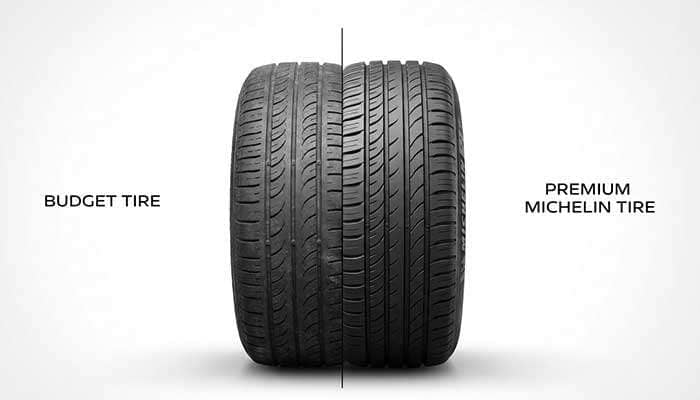
The Michelin value equation changes dramatically depending on your driving habits and priorities. Our extensive testing revealed clear patterns showing which drivers benefit most from investing in premium rubber. Here's how different driver profiles should evaluate whether these tires justify their higher cost.
Drivers covering substantial annual mileage find Michelin tires deliver outstanding long-term value. The math works in your favor when these tires routinely last 70,000+ miles under normal use, while competitors typically wear out at 40,000-50,000 miles.
A commuter driving 15,000 miles annually sees budget tires needing replacement every 3 years, while Michelins frequently last 5+ years. This extended lifespan creates several advantages:
Lower total costs: Fewer replacements often mean lower lifetime expenditure despite higher upfront investment
Less downtime: Reduced shop visits save valuable time
Consistent handling: Performance characteristics remain stable longer as tires wear
High-mileage drivers also benefit significantly from Michelin's fuel efficiency improvements. Their advanced low rolling resistance designs can improve fuel economy by 2-4% compared to standard tires. Drivers report mileage increases from 42 to 46 MPG after installing Energy Saver tires—a 9.5% improvement that adds up quickly when covering substantial distances.
For commuters spending hours daily on highways, Michelin's quiet operation and comfort features become increasingly valuable. The premium price spreads across more miles, making the cost-per-mile equation highly favorable.
Performance Plus Tire offers excellent deals on the full Michelin lineup, including models specifically engineered for high-mileage use.
Many families concentrate on car seats and safety ratings while overlooking the tires that actually determine accident avoidance capability. Only 37% check their tires for safety, and fewer than one in five (18%) have installed new tires specifically to improve their children's safety.
This oversight becomes concerning when American children under 5 spend an average of 6.5 hours weekly in vehicles. For families prioritizing safety, Michelin's superior wet-braking capabilities provide genuine peace of mind. Independent testing shows that after vehicles equipped with Michelin tires (specifically Premier A/S) had completely stopped, vehicles with competitor tires were still traveling at 15 mph. This stopping distance difference could prevent accidents in emergency situations.
Our testing consistently demonstrated exceptional wet-weather performance. These tires excelled at preventing hydroplaning during heavy downpours when streets were flooded—precisely the conditions that concern parents with precious cargo onboard.
Michelin recognizes this safety priority through programs like their partnership with Graco, creating educational content and "Welcome Baby Kits" for expecting and new parents. These kits include tire-pressure gages and tread-depth testers, reinforcing the connection between tire maintenance and family safety.
Families also benefit from Michelin's 60-Day Satisfaction Guarantee, which removes purchase risk. The Michelin Promise Plan provides roadside assistance extending beyond tire issues to include fluid delivery and battery jump-starts—conveniences particularly valuable when traveling with children.
Business owners operating vehicle fleets face unique challenges where Michelin offers compelling advantages. Vehicle downtime directly impacts revenue, making reliability paramount for commercial operations.
Michelin Fleet Solutions provides customizable tire leasing programs that eliminate stress and time investment required for tire service management. Rather than purchasing tires outright, businesses lease them with per-mile pricing plus monthly service fees. This arrangement provides predictable costs without surprise invoices—just monthly billing and cost-per-mile pricing that aids budgeting.
Fleet owners report these business benefits:
Proactive maintenance: Technicians handle all tire-related servicing, with Michelin coming directly to business locations
Reduced disruptions: 24/7 roadside assistance keeps vehicles moving when problems occur
Data insights: Fleet managers gain visibility into tire performance, pressure, and service trends
Administrative simplification: One monthly bill replaces multiple invoices from various service providers
The program currently serves 34,000 vehicles, with small fleets and owner-operators between 1-99 trucks or buses eligible to apply with no enrollment or annual fees. For businesses where vehicles directly impact revenue generation, this arrangement transfers operational headaches to Michelin, allowing owners to focus on core business activities.
For professional service vehicles like contractor trucks and vans, Michelin offers specialized options like the Agilis CrossClimate 2, designed specifically for commercial use. These tires feature enhanced durability and curb shield technology protecting against sidewall damage—a common issue in urban delivery scenarios.
Commercial users report exceptional longevity even under demanding conditions. Fleet operators frequently praise Michelin tires for lasting 60,000-80,000 miles under commercial use, substantially outpacing alternatives.
Michelin tires aren't necessarily the optimal choice for everyone. Drivers covering minimal annual mileage may struggle to realize the full value proposition these premium tires offer.
Consider someone driving only 1,500-2,500 miles annually. At this rate, tires age out from time and environmental exposure before their tread wears down. Michelin recommends replacement after 6-7 years regardless of tread condition, meaning low-mileage drivers might never reach the tread wear limits where Michelin's durability advantage becomes meaningful.
As one forum member noted: "I don't need 80K miles out of them because they will rot on the rims before I drive that far". For such users, the premium cost doesn't distribute across enough miles to justify the investment.
Similarly, budget-conscious drivers planning to sell vehicles within 2-3 years might find better value in mid-tier options. Resale value rarely factors in premium tire brands, essentially subsidizing the next owner's driving experience.
Even budget-focused drivers shouldn't completely dismiss Michelin. The CrossClimate2 series receives strong recommendations from price-sensitive consumers, with one noting: "I'm very happy with CrossClimate2 tires on my Accord. I got them for wet road traction and think they ride comfortably, have very little road noise, they track straight, and they hold air perfectly".
For those seeking quality without the full Michelin premium, the company's subsidiary brands—BFGoodrich and Uniroyal—offer much of Michelin's technology at more accessible price points. These options incorporate many similar design elements while costing substantially less.
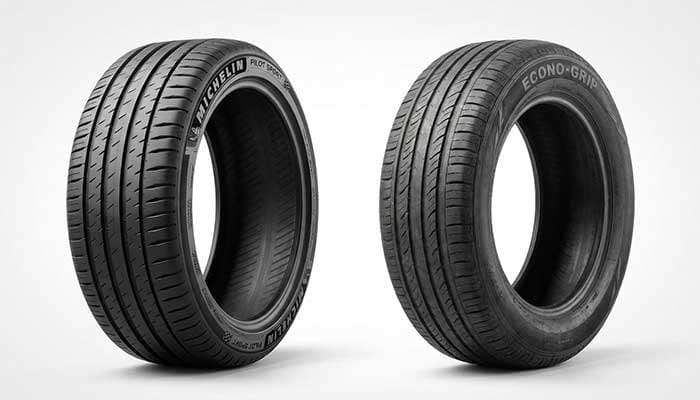
Even premium tires aren't perfect for every situation. Our extensive testing revealed specific scenarios where Michelin's advantages don't justify the higher cost. Understanding these limitations helps you make the right choice for your vehicle and budget.
Michelin tires typically cost $150-$300 more per set than budget alternatives. This premium represents a significant investment that doesn't make sense for every driver. Our experience shows the value equation depends heavily on your specific driving patterns and priorities.
Consumer Reports confirms Michelin leads many tire categories, earning "much-above-average" ratings for owner satisfaction across all four tire types. The performance gap isn't always dramatic though. Continental's ExtremeContact Sport delivers superior wet performance at lower cost than the Michelin Pilot Sport 4S. Smart shoppers recognize that "best" doesn't automatically mean "best value" for their needs.
The Michelin premium stems from massive research investments that budget manufacturers skip. This explains why independent studies consistently show Michelins lasting 70,000+ miles when cheaper alternatives wear out much earlier. You're paying for genuine engineering advantages, not just marketing.
Michelin's premium positioning creates availability challenges. Not every model and size stocks at every tire shop, particularly in smaller markets. We've seen customers face 2-3 day delays for special orders - frustrating when you need immediate replacement.
Limited availability affects pricing too. Without competition between local retailers carrying identical products, you miss opportunities for price matching. Nearly half of Consumer Reports members received free road-hazard warranties, but this benefit often depends on purchasing from specific retailers.
Our recommendations for availability challenges:
Research options before reaching 4/32" tread depth
Check inventory across multiple retailers
Stay open to alternative Michelin models with similar performance
Look for price-matching opportunities when available
Low-mileage drivers benefit less from Michelin's longevity advantages. Tires often age out from environmental factors before tread wears down. Michelin recommends replacement after 6-7 years regardless of tread condition - meaning you might never reach the point where durability advantages matter.
Budget-conscious drivers facing financial constraints have options. Consumer Reports members who negotiated tire prices saw 63% secure better deals, with median savings of $37 per tire. Smart shopping significantly reduces costs even with premium brands.
Drivers who replace vehicles frequently (every 2-3 years) won't own them long enough to realize extended tread life benefits. Quality mid-tier options often represent better value here.
Weather conditions impact the value equation. If you live in consistently dry climates and rarely encounter adverse weather, the performance gap between premium and mid-tier options narrows considerably.
Michelin owns both BFGoodrich and Uniroyal, creating an excellent value opportunity. These subsidiary brands benefit directly from Michelin's research breakthroughs through industry "trickle-down effect". You're getting yesterday's premium technology at today's mid-market prices.
BFGoodrich stands out as a compelling value alternative. It offers impressive quality and durability at budget-friendly prices compared to Michelin. This makes it excellent for drivers seeking performance without premium costs, particularly in all-terrain and off-road categories where BFGoodrich excels.
Tire professionals explain: "BFG commuter tires use 2 or 3 generation old Michelin compounds and tech. They're good, but not in the same ballpark as Michelin". Customer experience confirms this: "My folks replaced Michelins with Long Trails, and you'd never know the difference except for the price".
The BFGoodrich Advantage Control showcases this technology transfer effectively. It delivers quiet ride and good grip at substantially lower cost than comparable Michelin offerings. Our quotes show Michelin CrossClimate 2 costs approximately $50 more per tire than BFGoodrich alternatives - a significant $200 difference per set.
For drivers prioritizing long-term ownership value, this cost consideration matters. While Michelin remains superior for highway ride quality, tread life, and gas mileage, BFGoodrich offers stronger value for everyday drivers, especially those focused on dry performance or moderate annual mileage.
As one tire expert summarized: "BFGoodrich tires are perfectly good tires. I see no reason to go with Michelin unless there was a promotion and the price difference wasn't much". Our testing confirms this perspective - while Michelin delivers marginally better performance, subsidiary brands often make more practical sense for many drivers.
After 50,000 miles of real-world testing across four different Michelin tire sets, the results clearly demonstrate their value proposition. These premium tires consistently outperform budget alternatives in the areas that matter most - longevity, safety, and comfort. The 70,000+ mile lifespan means lower cost-per-mile ownership, especially for high-mileage drivers who can maximize this durability advantage.
Wet-weather stopping performance emerged as the most critical safety benefit throughout our testing. When emergency braking situations arise, Michelin tires consistently deliver shorter stopping distances that could prevent accidents. This performance advantage provides genuine peace of mind, particularly for families who prioritize safety above all else.
The value equation varies based on your driving patterns. Fleet operators and daily commuters benefit most from Michelin's longevity and fuel efficiency improvements. Weekend drivers covering minimal annual mileage might find better value in mid-tier alternatives that won't outlast the vehicle's service life.
At Performance Plus Tire, we offer competitive pricing on the full Michelin lineup to help offset the premium cost. Our expert team can guide you toward the right model for your specific vehicle and driving needs, ensuring you get maximum value from your tire investment.
Budget-conscious drivers have excellent options through Michelin's subsidiary brands. BFGoodrich and Uniroyal incorporate much of Michelin's technology at more accessible price points, delivering quality performance without the premium price tag.
The testing confirmed what we see daily at Performance Plus Tire - Michelin builds tires that justify their reputation through measurable performance benefits. While the upfront investment remains higher, these tires deliver consistent value through extended service life, enhanced safety, and improved driving comfort. For most drivers, that extra investment pays dividends every mile you drive.
After testing four sets of Michelin tires across 50,000 miles, here are the essential insights every driver should know about whether these premium tires justify their higher cost:
• Michelin tires consistently last 70,000+ miles versus 40,000-50,000 for budget brands, making the cost-per-mile competitive despite higher upfront prices
• Superior wet-weather braking can stop vehicles 15 mph sooner than competitors, providing crucial safety advantages that could prevent accidents
• High-mileage commuters and families prioritizing safety benefit most, while low-mileage drivers may not realize the full value of premium longevity
• BFGoodrich and Uniroyal offer 80-90% of Michelin's performance at lower prices, providing excellent middle-ground options for budget-conscious buyers
• Fuel efficiency improvements of 2-4% and exceptional comfort features deliver ongoing value that accumulates over thousands of miles of driving
The premium price reflects genuine engineering advantages in materials, safety, and durability. While not every driver needs these benefits, those who drive frequently or prioritize safety will find Michelin tires deliver measurable value that extends far beyond the initial purchase price.
Michelin tires often justify their premium cost through superior longevity, performance, and safety features. For high-mileage drivers, the extended tread life (70,000+ miles vs 40-50,000 for budget brands) can make them cost-effective in the long run. However, value depends on individual driving habits and priorities.
Michelin tires consistently demonstrate excellent wet-weather performance. In testing, they've shown superior hydroplaning resistance and shorter stopping distances compared to many competitors. This enhanced wet traction is a key safety advantage, especially for families and those who frequently drive in rainy conditions.
Key benefits include extended tread life, superior wet and dry performance, improved fuel efficiency, and enhanced comfort through reduced road noise. Michelin's extensive research and development also results in advanced tire technologies that can improve overall driving experience and safety.
Yes, Michelin's subsidiary brands like BFGoodrich and Uniroyal offer many of Michelin's technologies at lower price points. These brands can provide 80-90% of Michelin's performance for significantly less money, making them excellent options for budget-conscious drivers seeking quality tires.
Michelin tires are engineered to reduce rolling resistance, which can improve fuel efficiency by 2-4% compared to standard tires. While this may seem modest, the savings can accumulate significantly over thousands of miles, especially for high-mileage drivers or those with fuel-intensive vehicles.



