
Understanding tire value is important before making a purchase. When you're facing a $200-$400 bill for a new set of budget tires versus premium options that can cost $800 or more, the price difference seems significant. However, that upfront savings doesn't tell the complete story about what you're actually getting for your money.
Budget tires perform adequately enough on city streets and highways under normal driving conditions. The real differences between cheap and premium tires become clear when it matters most - in critical situations where safety is on the line. Recent testing revealed that the worst-performing budget tires needed 30 feet more distance to stop on dry pavement compared to top performers, and an alarming 47 feet more on wet surfaces.
Most drivers wait until their tires are completely worn out before replacing them - about 64% according to industry data. The problem is that cheaper tires simply don't last as long as premium options. What appears to be smart budgeting initially can actually become more expensive over time, particularly when you factor in the potential costs of accidents caused by poor tire performance.
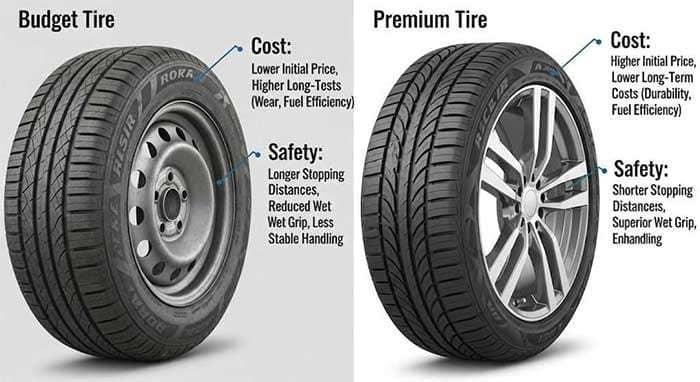
Despite the performance differences we've outlined, budget tires continue to attract many drivers for practical reasons. Understanding these factors helps explain why so many people still opt for lower-cost options when it's time to replace their tires.
The biggest draw for budget tires comes down to simple economics. A complete set typically costs between $200 and $400, while premium options often exceed $800. For drivers facing an unexpected tire replacement or working within tight budgets, this price difference can be the deciding factor.
The financial logic becomes even clearer for certain situations:
Secondary family vehicles with limited mileage
Older cars where premium tire investment might exceed the vehicle's value
Emergency replacements when you need to get back on the road immediately
Budget tires offer another practical advantage - widespread availability in standard sizes. Whether you drive a family sedan or compact crossover, finding a budget option that fits your vehicle typically doesn't require special orders or extended waiting periods.
This accessibility proves valuable when you're dealing with emergency situations and need to get back on the road quickly. Many local shops and online retailers keep substantial inventories of common budget tire sizes, often making same-day replacement possible.
For most drivers who primarily travel in urban or suburban environments, budget tires perform adequately during everyday use. They handle city streets, highways, and mild weather conditions satisfactorily.
If you primarily drive short distances in moderate weather conditions, budget tires often deliver perfectly acceptable performance. The performance gap becomes noticeable mainly during challenging situations like heavy rain, snow, or emergency maneuvers - circumstances that many city drivers encounter infrequently.
Many affordable options come from reputable manufacturers and still deliver good tread life, safety, and basic performance features. Brands like Cooper Tires, Kumho, and General Tire have built solid reputations for quality tires at more budget-friendly price points.
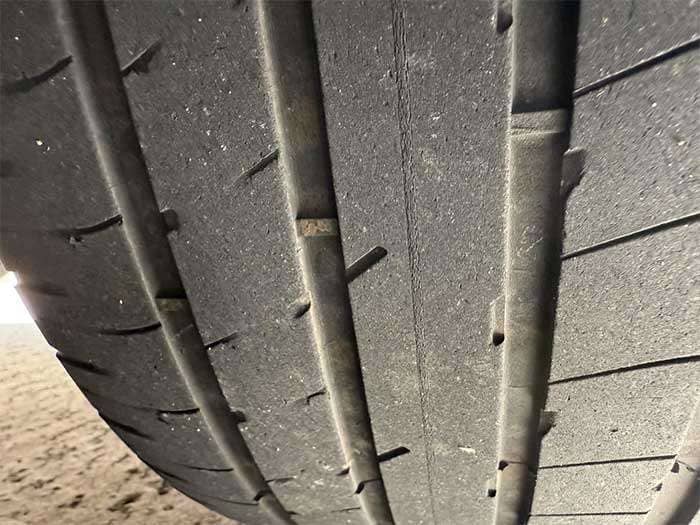
Real-world testing over 20,000 miles exposes the hidden costs of budget tire choices. What starts as smart money-saving quickly turns into multiple performance issues that impact both safety and your wallet.
Quality tires deliver 35,000 to 40,000 miles of reliable service, but many budget options show serious wear at just 20,000 miles. The deterioration appears as uneven tread patterns, with front tires typically wearing faster than rears. Premium touring tires can reach 80,000 miles, while budget economy models rarely exceed 30,000 to 40,000 miles.
Budget performance tires perform even worse, requiring replacement after only 20,000 to 30,000 miles. Lower-quality rubber compounds simply cannot withstand regular driving conditions as effectively as premium materials.
Cheap tires start with compromised wet-weather capabilities that worsen as they age. The inferior rubber compounds become harder in cold conditions, reducing grip exactly when you need it most. Stopping distances increase and handling becomes unpredictable during rain or snow.
Budget tires use basic rubber compounds designed for cost rather than comfort. Road noise increases as air gets trapped between tire grooves and pavement surfaces. The driving experience becomes noticeably louder over time.
Balance problems develop more frequently with cheaper construction. Uneven wear creates vibrations that start subtly but progress to uncomfortable shaking through the steering wheel and pedals. These vibrations also cause additional wear on your vehicle's suspension system.
Warranty differences reveal manufacturer confidence levels. Summer performance tires, which include many budget options, typically offer zero warranty protection. When coverage exists, it often provides 50% less protection than premium alternatives.
This lack of manufacturer backing leaves you responsible for premature replacement costs due to defects or early wear.
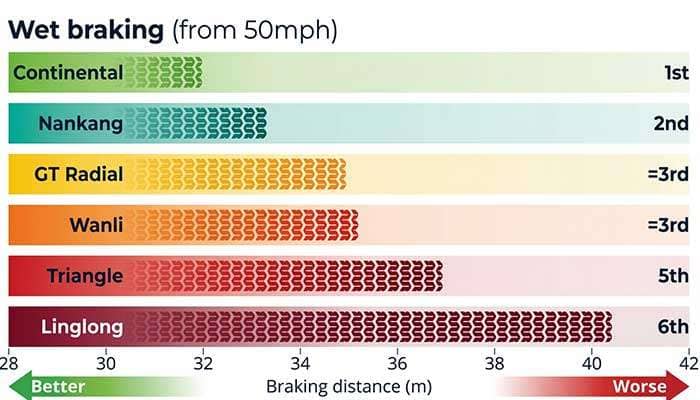
Real-world testing data reveals significant performance gaps between budget and premium tires across critical safety metrics. These differences become especially important when you consider how they affect your daily driving experience and safety.
Premium tires consistently outperform budget options in braking tests. Testing shows premium tires stop 8.1 meters before the average budget tire in wet conditions. When a premium tire has completely stopped, the worst budget tire tested was still moving at 49 km/h. Budget tires often receive F ratings for wet braking, while premium options typically earn A ratings.
This stopping distance difference can determine whether you avoid an accident or experience one.
Budget tires show reduced stability during cornering and increased risk of aquaplaning. Testing revealed budget tires needed a 3.11 mph speed reduction to match premium tire handling on wet roads. Worn tires with 2-3mm of tread depth demonstrated maximum cornering speeds that were 10-18% lower than new tires.
Tire selection affects your fuel costs more than you might expect. About 20-30% of fuel consumption is tire-related. Premium tires with lower rolling resistance can improve fuel economy by 1-4%. Over a year of driving, high-rated premium tires can save up to 80 liters of fuel.
Premium tires use advanced noise-reducing technologies that budget options typically lack. Manufacturers like Continental and Michelin design tread patterns with varying block sizes that create frequencies which partially cancel each other out, reducing cabin noise. Budget tires, with their stiffer sidewalls and less sophisticated designs, transmit more vibrations and road noise into the cabin.
Finding the right balance between performance and price requires understanding what your specific driving situation demands. Several key factors beyond the price tag will help guide you to the best choice for your vehicle and driving habits.
Your local weather patterns should drive your tire selection decisions. Regions with consistent temperatures below 44°F or heavy snow conditions require winter tires for superior grip compared to standard options. Drivers in hot, dry areas like Arizona or Nevada get optimal handling and braking performance from summer tires. Variable weather with frequent rainfall calls for all-season tires featuring deeper grooves and wider tread channels.
Certain budget tire brands consistently earn poor safety ratings and should be avoided entirely. Problematic brands include Accelera, Autogreen, Triangle, and Westlake. These tires exhibit dangerous characteristics like poor wet-weather grip, extended stopping distances, and sudden traction loss at highway speeds. Any tire brand that lacks a website or verifiable company information represents a major red flag.
The best tire choice balances overall performance, expected tread life, and purchase price. For typical daily driving in common sizes like 185/65R15, 195/65R15, and 205/55R16, mid-range options from General, Kumho, Cooper, and Yokohama deliver excellent quality at reasonable prices. Performance Plus Tire offers expert guidance and a huge selection of quality tires at competitive prices - visit Performance Plus Tire.
The Uniform Tire Quality Grading (UTQG) system helps compare tire performance across brands. Treadwear ratings show relative durability - a tire rated 400 should theoretically last twice as long as one rated 200 under identical conditions. Traction grades range from AA (highest) to C (lowest) and indicate stopping ability on wet pavement. Temperature ratings of A, B, or C show heat resistance, with A offering the best protection against heat-related failures. These ratings help match tires to your specific driving requirements.
Safety and long-term value should guide your tire selection decision above all else. Our extensive testing confirms that budget tires consistently compromise performance when it matters most, particularly in wet weather conditions where stopping distance becomes critical.
We've found that cheap tires create false economy through faster wear rates, increased road noise, and minimal warranty coverage. While the upfront savings appear attractive, these options typically require replacement much sooner, resulting in higher costs per mile driven. Their poor performance in challenging weather conditions also creates unnecessary safety risks.
Mid-range tires from trusted manufacturers like Cooper, Kumho, and General offer the ideal balance between cost and performance. These options deliver solid tread life while maintaining essential safety features. At Performance Plus Tire, we help customers find this perfect balance of quality and value without compromising on crucial performance characteristics. Visit Performance Plus Tire to explore our selection of reliable mid-range options.
Tire selection requires more than price comparison. The right choice depends on honest evaluation of your driving patterns, local weather conditions, and long-term value expectations. Budget tires serve specific purposes - secondary vehicles with limited use or older cars - but rarely provide the best overall value.
Quality tires deliver measurable benefits through enhanced safety, extended lifespan, and improved driving comfort. Your tires represent the only connection between your vehicle and the road surface. This critical contact area deserves thoughtful consideration rather than simply choosing the lowest price available.
After 20,000 miles of comprehensive testing, the data reveals critical insights about tire value that every driver should understand before making their next purchase.
• Safety trumps savings: Budget tires require up to 47 feet more stopping distance on wet roads, potentially meaning the difference between avoiding an accident or experiencing one.
• False economy exposed: Cheap tires wear out faster and need replacement sooner, making them more expensive per mile despite lower upfront costs.
• Performance gaps widen over time: Budget tires develop increased road noise, vibration, and reduced grip as they age, while premium options maintain consistent performance.
• Mid-range offers sweet spot: Brands like Cooper, Kumho, and General provide the best balance of safety, longevity, and affordability without compromising essential performance features.
• Weather conditions matter most: Your local climate should drive tire selection—budget options become dangerously inadequate in wet, cold, or challenging driving conditions.
The bottom line: Your tires are the only four contact points between your vehicle and the road. Investing in quality tires delivers measurable improvements in safety, comfort, and long-term value that far outweigh the initial price difference.
While cheap tires may seem appealing due to their lower upfront cost, they often compromise on safety. Testing has shown that budget tires can require up to 47 feet more stopping distance on wet roads compared to premium options, which could be the difference between avoiding an accident or not.
Cheap tires generally have a shorter lifespan compared to premium options. While quality tires can last between 35,000 to 40,000 miles, many budget options show significant wear at just 20,000 miles. Some cheap performance tires may only last 20,000 to 30,000 miles before requiring replacement.
The key differences include safety performance, longevity, and comfort. Expensive tires typically offer better grip, especially in wet conditions, last longer, and provide a quieter, more comfortable ride. They also tend to have better fuel efficiency due to lower rolling resistance.
Yes, mid-range tires from reputable manufacturers like Cooper, Kumho, and General often provide the best balance of quality and affordability. They deliver reasonable tread life while maintaining crucial safety characteristics, making them a good choice for many drivers.
When selecting tires, consider your driving habits, local climate, and long-term value expectations. Check independent tests for wet braking, snow performance, treadwear, and comfort. Also, look at the cost-per-mile by dividing the purchase price by the expected mileage. Prioritize safety and fit-for-purpose over the lowest upfront price.



