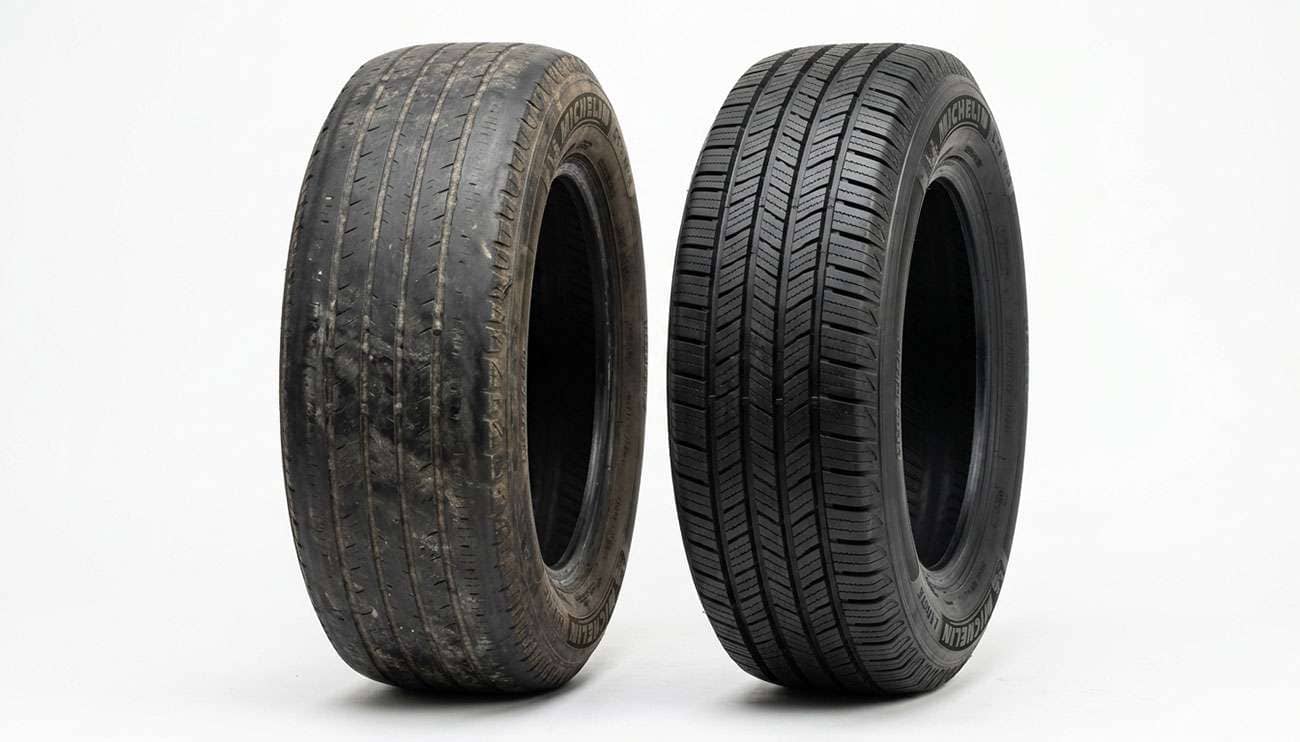
This is one of the most common questions I field, and the answer surprises people more often than you would think. On the vast majority of vehicles on the road, the front tires wear out fastest. Not by a little, either. On a front-wheel-drive car, the fronts can wear roughly twice as fast as the rears. But the full answer depends on your drivetrain, your driving habits, and even which corner of the car you are looking at. Let me break it down the way I would when a customer brings in a set that wore unevenly and wants to know why.
Across almost every layout, the front tires take more abuse than the rears. The only common exception is a powerful rear-wheel-drive car driven hard, or a mid- or rear-engine sports car where the weight sits over the back axle. For everything else, the front tires are doing more jobs at once, and that workload shows up in the tread first. If you have noticed your fronts going bald while the rears still look healthy, you are seeing exactly what physics predicts. Our guide on why your car tires are wearing covers the broader causes, but the position question comes down to a few clear forces.
Three things load up the front tires more than the rears. First, steering. Every time you turn, the front tires scrub sideways against the pavement, generating the lateral forces that actually change the car's direction. The rears mostly follow along. Second, braking. Weight transfers forward under braking, so the front tires handle the majority of stopping force and the heat and scrub that come with it. Third, weight bias. Most cars carry the engine and transmission up front, so the fronts support more static weight even before you touch the pedals or the wheel.
Stack those three together and the front contact patches are simply working harder for more of the time. Add a fourth force on front-drive cars, acceleration torque, and the fronts are doing all four jobs at once. That is the recipe for fast front wear. If your wear looks irregular rather than just heavier up front, the pattern itself tells a story, which I break down in how to read tire wear patterns.
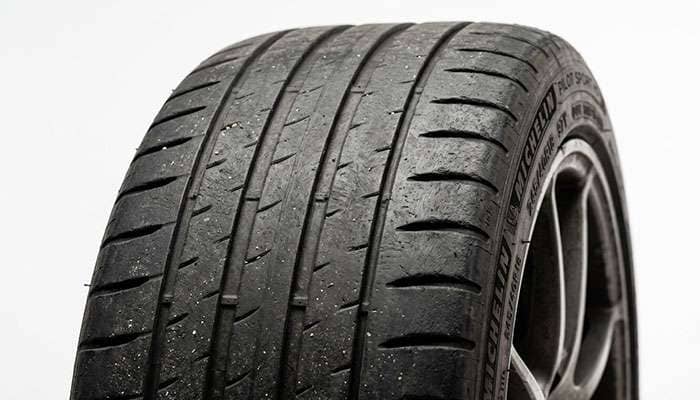
Drivetrain is the single biggest variable in which tire wears fastest, so here is how each layout behaves.
Front-wheel drive is the most common setup on sedans, hatchbacks, and crossovers, and it is the hardest on front tires. The fronts steer, brake, carry the engine weight, and put the power down, all at once. Expect them to wear roughly twice as fast as the rears. Rear-wheel drive spreads the load more evenly. The rears handle acceleration torque while the fronts handle steering and braking, so neither axle is overwhelmed the way fronts are in a front-driver. Wear tends to be closer to balanced unless the car is powerful and driven aggressively. All-wheel drive splits torque across all four tires, which evens things out further, but the fronts still wear slightly faster because of steering loads and the front weight bias most AWD crossovers carry. Four-wheel-drive trucks in normal two-wheel daily driving behave much like a comparable rear-driver, with wear depending heavily on alignment and load.
Electric vehicles deserve their own note because they wear tires noticeably faster than comparable gas cars, often around 20 percent quicker. Two things drive this. EVs are heavy, because battery packs add hundreds of pounds, and that weight presses the tires harder into the road. And electric motors deliver full torque the instant you press the pedal, which puts real stress on the drive tires every time you pull away from a stop. Many EVs are also front-heavy or use front-biased all-wheel drive, which concentrates that extra wear up front. If you drive an EV, plan on shorter tire life overall and stay on top of rotations. For realistic mileage expectations across vehicle types, see how long do tires last.
Even between your two front tires, wear is rarely perfectly equal. Crowned roads, which slope slightly toward the shoulder for drainage, put a small constant load toward one side. Turning patterns matter too, since most drivers favor certain turns at speed. And the biggest culprit by far is alignment. A toe or camber setting that is even slightly off will chew through one edge of one tire much faster than the rest. Wheel offset plays a role here as well, because it changes the scrub geometry at the contact patch, which I explain in how wheel offset affects tire wear. If one front tire is wearing dramatically faster than its partner, get the alignment checked before you do anything else.
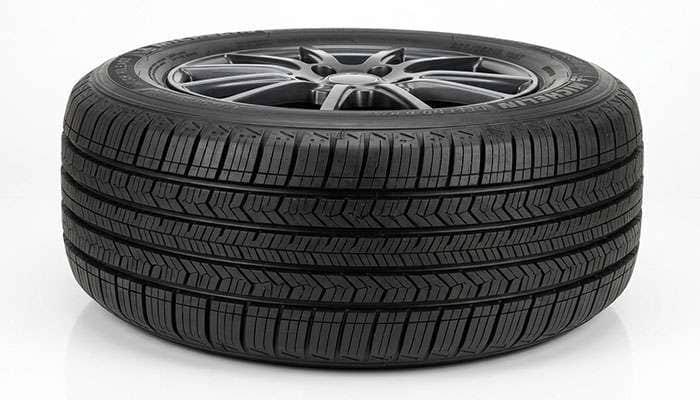
Position is only half the story. The tire you choose has a built-in wear rate, expressed as its treadwear grade. A soft, grippy summer or performance compound is designed to stick, and it trades longevity for that grip, so it wears faster everywhere it is fitted. A touring all-season with a high treadwear grade is engineered to go the distance. If long life is your priority, a tire like the Continental TrueContact Tour or the Cooper CS5 Grand Touring is built specifically for high mileage, and either will outlast a performance tire by a wide margin in the same position on the same car.
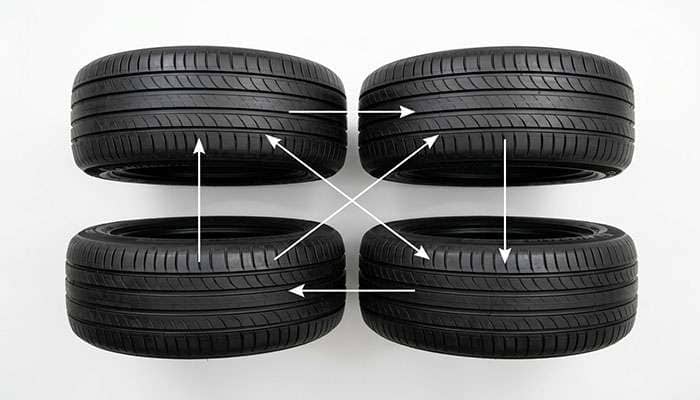
Here is the good news: you can fight uneven wear and stretch a lot more life out of every set. The single most effective tool is rotation, which moves the hardest-working tires to the easiest positions on a schedule so no single tire carries the burden the whole time. Most manufacturers call for rotation every 5,000 to 8,000 miles, and our guide on how often to rotate tires spells out the right interval for your situation. Pair that with a proper alignment, since even a small misalignment quietly destroys tread, and our wheel alignment guide walks through what to check. For the full prevention playbook, including pressure and driving habits, see our tips to reduce tire wear.
So which tire wears out fastest? On almost every vehicle, it is a front tire, because the fronts steer, brake, and carry the most weight, and on front-drive cars they put the power down too. Front-wheel drive sees the most lopsided wear, rear-wheel drive evens it out, all-wheel drive lands in between, and EVs burn through tread about 20 percent faster across the board. Within the front axle, alignment usually decides which side goes first. The fix is the same regardless of layout: rotate on schedule, keep the alignment true, and choose a tire whose treadwear grade matches how you actually drive. If you want help picking a long-wearing set or diagnosing why one tire went early, tell us your year, make, and model and browse the options at our tire store.
Front tires wear out faster on most vehicles because they handle steering, the majority of braking, and the front weight bias. On front-wheel-drive cars they also put the power down, so they can wear about twice as fast as the rears.
If you drive a front-wheel-drive car, the front tires are doing four jobs at once: steering, braking, carrying the engine weight, and accelerating. That combined load wears them roughly twice as fast as the rears, which is why regular rotation matters so much on these vehicles.
Yes, often around 20 percent faster than a comparable gas car. EVs are heavier because of their battery packs, and electric motors deliver full torque instantly, which stresses the drive tires every time you accelerate. Many EVs are also front-heavy, concentrating wear up front.
Rotate your tires every 5,000 to 8,000 miles so the front tires spend part of their life in the easier rear positions, keep your alignment in spec, maintain correct tire pressure, and choose a touring tire with a high treadwear grade if longevity is your goal.