
Looking for last year's rankings? See our 2025 affordable tire picks.
Sub-$100 tire pricing is realistic for commuter sizes — 185/65R15, 195/65R15, 205/55R16, and similar fitments that dominate compact sedan and small crossover applications. For 18-inch and larger fitments, sub-$100 pricing typically signals construction compromises that aren't worth the savings. For LT (light truck) applications, sub-$100 pricing typically doesn't exist for any reputable manufacturer. The 9 tires below are ranked specifically for the commuter-size price point where sub-$100 retail pricing is genuine — not for fitments where the pricing implies cut corners on construction quality.
The wet-braking gap between budget and premium tires is real and measurable. Independent comparative testing consistently shows premium tires stop 30-50 feet shorter from 60 mph on wet pavement than typical budget alternatives. That's three additional car lengths of stopping distance — meaningful safety margin in heavy rain. The economic question is whether that safety margin is worth the price differential for your specific driving profile. For commuter applications where rain is occasional and speeds are moderate, the answer is often no. For drivers who see daily heavy rain, frequent highway speeds, or operate performance vehicles, premium pricing typically pays off in safety terms even when budget alternatives technically work.
Every tire on this list is in current stock at Performance Plus Tire with multiple commuter-size variants. Click any tire to verify size availability and current pricing for your specific vehicle.
Tire manufacturing involves trade-offs. Premium pricing pays for advanced silica-rich compound chemistry, sophisticated tread geometries developed through extensive testing, premium internal construction with multiple ply types, and quality control standards that produce consistent performance across production runs. Budget pricing sacrifices some combination of these to deliver acceptable performance at meaningfully lower cost.
Tread compound chemistry. Premium tires use functionalized silica compounds with chemical bonding agents that maintain wet grip across the tire's full service life. Budget tires use simpler silica-carbon-black compounds that work acceptably when new but lose wet performance more aggressively as the tire wears. The compound difference is measurable in UTQG traction ratings — premium tires regularly earn AA, while budget tires typically earn A (acceptable) or occasionally B (avoid for serious wet-weather applications).
Tread design sophistication. Premium tires use computer-modeled tread geometries that optimize water evacuation, dry handling, and noise simultaneously. Budget tires use simpler designs that handle individual performance characteristics adequately but rarely excel at any of them. The difference shows up at the limits — premium tires hold performance better as conditions deteriorate (heavy rain, high speeds, aggressive cornering).
Internal construction. Premium tires often use Aramid-Nylon hybrid belt construction with multiple cap plies for high-speed stability and durability. Budget tires use standard polyester construction with simpler belt geometry. The construction difference matters most at sustained highway speeds and under heavy loads.
Quality control consistency. Premium tire manufacturers use tighter quality control tolerances and reject more product as out-of-spec. Budget manufacturers accept slightly wider variance in production. The result is that premium tires deliver more consistent performance from one tire to the next; budget tires occasionally produce outlier individual tires that perform meaningfully better or worse than the brand's average.
None of these trade-offs make budget tires unsafe for typical commuter applications. They make budget tires deliver less peak performance, less wet-weather safety margin, and less consistency than premium alternatives. For the right buyer profile, that's an acceptable trade-off in exchange for $40-80 per tire savings.
Five factors determine ranking among budget tires. UTQG traction rating is the headline measure — A-rated and AA-rated budget tires deliver acceptable wet braking; B-rated tires should be avoided for any serious wet-weather application. UTQG treadwear rating indicates expected service life — 600+ ratings deliver 50,000+ miles typical service; 400-500 ratings deliver 30,000-45,000 miles; below 400 produces shorter service life that compromises the tire's economic value. Wet performance characteristics matter beyond UTQG ratings — actual wet braking distance and hydroplaning resistance vary among A-rated tires meaningfully. Comfort and noise affect daily driving experience — some budget tires deliver surprisingly civilized highway behavior; others are noticeably louder and harsher than premium alternatives. Brand reliability matters because budget tier brands vary significantly in long-term consistency — some budget brands deliver predictable acceptable performance; others vary tire-to-tire in ways that make customer satisfaction inconsistent.
The 9 tires below all meet a baseline standard for commuter-grade safety and acceptable daily driving performance. They represent the tier of budget tires that I'd put on my own family member's car for daily commuter use — not the absolute cheapest options, but the strongest values within the under-$100 commuter-size price point.
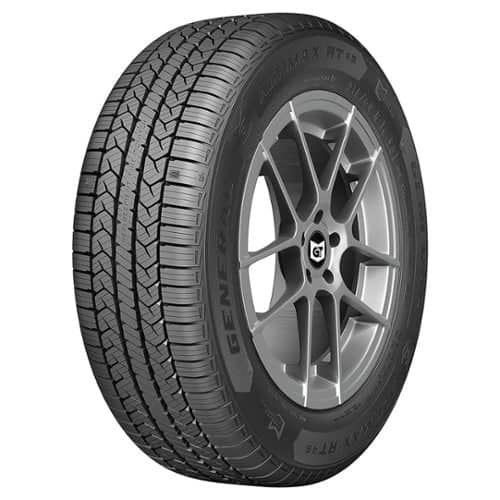
Category: All-Season Touring • UTQG: 700 A B • Best For: Daily commuter applications prioritizing balanced performance • Typical Price: $80-95 per tire in commuter sizes
The General Altimax RT45 leads the 2026 budget ranking for the same reason its predecessors led — General delivers more performance per dollar in the budget tier than virtually any other manufacturer. The RT45 is the current generation of General's longest-running budget all-season family, with refinements over the previous RT43 in tread life consistency and wet-weather behavior. The 700 UTQG treadwear rating delivers 65,000-mile service life typical, which for a sub-$100 tire produces exceptional cost-per-mile economics.
The Twin Cushion Silica tread compound (General's silica-rich blend) delivers wet braking comparable to premium budget tires while maintaining tread life leadership. The asymmetric tread pattern uses circumferential grooves with sipe networks across the tread blocks for water evacuation and acceptable dry handling. While not class-leading at any individual performance metric, the RT45 doesn't have any meaningful weakness either — it delivers acceptable performance across the full range of typical driving conditions.
The RT45 covers commuter sizes from 14-inch through 18-inch with bolt patterns for compact and midsize sedan applications. Sub-$100 pricing is realistic in 185/65R15, 195/65R15, 205/55R16, 215/60R16, and similar commuter fitments. For Civic, Corolla, Camry, Accord, Sentra, Elantra, and similar daily-driver applications, the RT45 is consistently the right answer in the budget tier. General also backs the tire with a 65,000-mile treadwear warranty — uncommon in the under-$100 category.
Browse General Altimax RT45 sizes and pricing, or see the full General Tires lineup.
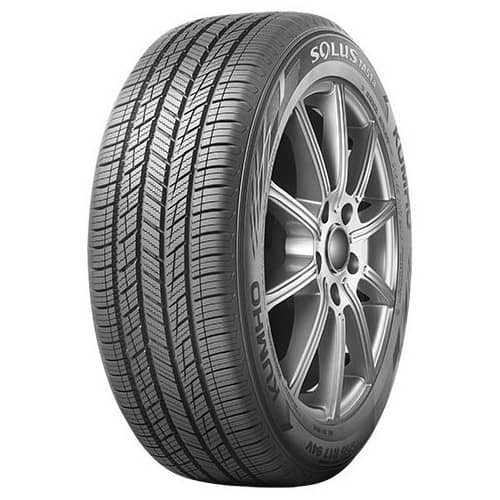
Category: Grand Touring All-Season • UTQG: 740 A B • Best For: Comfort-focused commuter applications • Typical Price: $75-90 per tire in commuter sizes
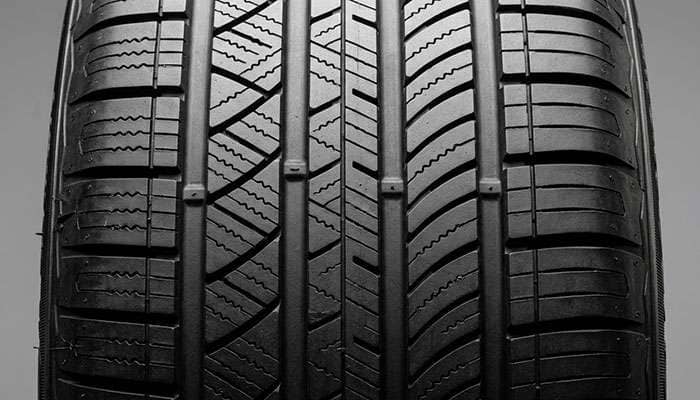
Kumho's Solus TA51a is the comfort specialist of the budget tier. Where the General Altimax RT45 delivers balanced performance, the Solus TA51a tilts the trade-offs toward ride comfort and noise reduction at slight expense of peak handling. The 740 UTQG treadwear rating produces 60,000-mile service life typical, and the asymmetric tread pattern uses tighter shoulder block geometry that produces lower frequency noise patterns at highway speeds.
What separates the Solus TA51a from competitors is the specific tuning for ride comfort. Kumho engineers a slightly more compliant sidewall and uses tread compound chemistry tuned for vibration absorption rather than peak grip. The result is a tire that's noticeably quieter and smoother on highway than typical budget alternatives — particularly meaningful for commuters who spend significant time at sustained highway speeds where tire noise becomes the dominant cabin sound.
The trade-off is dry handling characteristics. The Solus TA51a's softer ride sidewall produces slightly more body roll feel through aggressive cornering, and steering response is marginally less crisp than the Altimax RT45 or premium-tier alternatives. For daily commuter use where aggressive driving isn't the norm, that trade-off is invisible. For drivers who want the budget price with sportier handling characteristics, alternatives further down this list make more sense.
The Solus TA51a covers commuter sizes from 14-inch through 18-inch. Pricing typically lands $5-10 per tire below the General Altimax RT45 at comparable sizes, while delivering comparable safety performance with the comfort advantage. For Honda Civic, Toyota Corolla, Mazda3, Hyundai Elantra, and similar comfort-focused commuter applications, the Solus TA51a is the right answer. Browse Kumho Solus TA51a sizes, or see the full Kumho Tires lineup.
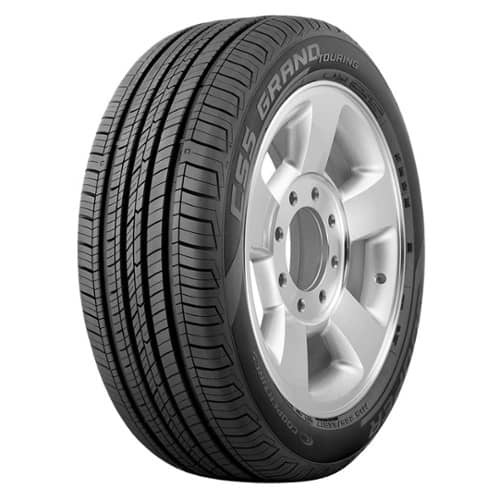
Category: Grand Touring All-Season • UTQG: 720 A B • Best For: High-mileage drivers prioritizing long tread life • Typical Price: $85-100 per tire in commuter sizes
Cooper's CS5 Grand Touring is the tread life specialist of the budget category. Cooper has built its U.S. market reputation on tires that deliver longer service life than competitors at the same price point, and the CS5 Grand Touring continues that pattern. The 720 UTQG treadwear rating combined with Cooper's proprietary Stabiledge Performance Technology (which reduces tread block deformation under load) produces 70,000-mile service life typical for many drivers — exceptional for a sub-$100 tire.
The Wear Square treadwear monitoring system is one of the CS5's distinctive features. Cooper molds wear indicator squares into the tread blocks that change shape as the tire wears, providing visual feedback on remaining tread life that's easier for typical drivers to interpret than the standard 2/32-inch wear bar. The feature isn't a performance advantage but it does help drivers replace tires at the appropriate time rather than running them past safe wet-weather operation.
Wet performance is acceptable but not class-leading. The CS5 Grand Touring delivers UTQG A traction rating, which is appropriate for typical commuter applications but not class-leading. Wet braking from 60 mph typically lands in the 145-155 foot range — meaningfully shorter than B-rated budget alternatives but longer than premium-tier touring tires. For drivers who see daily heavy rain or operate at sustained highway speeds in wet conditions, more wet-focused alternatives make better sense.
Cooper backs the CS5 Grand Touring with a 70,000-mile treadwear warranty — among the longest warranties in the under-$100 category. Sizes cover 14-inch through 18-inch with bolt patterns for compact, midsize, and small crossover applications. For high-mileage commuters and ride-share drivers who put 25,000+ miles per year on their vehicles, the long tread life economics of the CS5 Grand Touring deliver meaningful long-term savings. Browse Cooper CS5 Grand Touring sizes, or see the full Cooper Tires lineup.
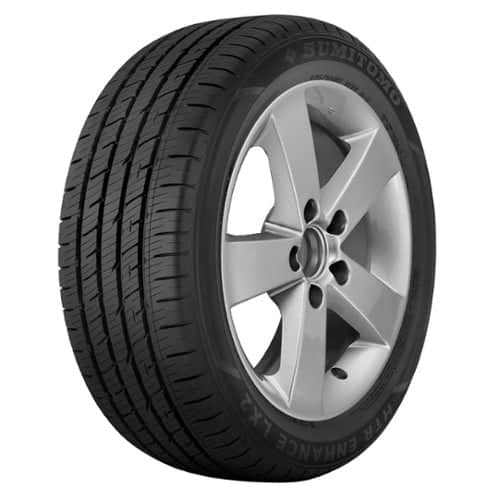
Category: Performance All-Season • UTQG: 540 A A • Best For: Performance-oriented commuter applications • Typical Price: $80-95 per tire in commuter sizes
The Sumitomo HTR Enhance LX2 is the performance-leaning alternative in the budget tier — a tire that splits the difference between true touring tires and ultra-high-performance all-season tires that cost meaningfully more. The 540 UTQG treadwear rating is lower than the touring alternatives above (translating to approximately 45,000 miles typical service), but the AA traction rating delivers wet braking performance comparable to premium touring tires at a meaningfully lower price point.
What gives the HTR Enhance LX2 its position is the AA traction rating, which is uncommon at sub-$100 pricing. The compound chemistry uses Sumitomo's silica-enriched rubber tuned for wet performance specifically, and the asymmetric tread pattern with directional outer tread blocks delivers handling characteristics closer to UHP all-season alternatives than typical budget touring tires. For drivers who want sportier handling characteristics with budget pricing, the HTR Enhance LX2 is one of the few options that delivers both.
The trade-off is tread life. 540 UTQG produces 40,000-50,000 miles typical service depending on driving style — meaningfully shorter than the touring alternatives above. For drivers who replace tires every 2-3 years anyway, the shorter service life isn't an economic disadvantage. For drivers who want maximum tread life economics, the General Altimax RT45 or Cooper CS5 Grand Touring deliver better long-term value.
Sumitomo is owned by the same parent company as Falken (Sumitomo Rubber Industries), and the HTR Enhance LX2 shares some compound technology with Falken's higher-tier performance offerings. The brand's positioning is essentially "Falken-quality engineering at value-tier pricing." Sizes cover 14-inch through 18-inch with bolt patterns for compact, midsize sedan, and crossover applications. Browse Sumitomo HTR Enhance LX2 sizes.
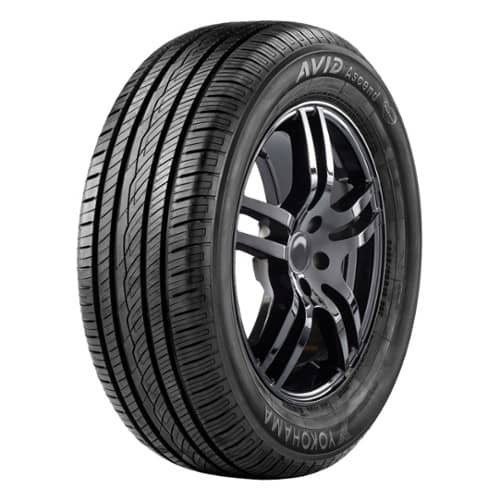
Category: Standard All-Season Touring • UTQG: 700 A B • Best For: Buyers who prioritize established Japanese brand reliability • Typical Price: $85-100 per tire in commuter sizes
The Yokohama AVID Ascend brings established Japanese tire engineering to the budget tier. Yokohama's brand reputation in the U.S. market is built on consistency and quality control — Yokohama tires from one production run perform very similarly to tires from the next, which produces predictable customer satisfaction in ways that some budget brands struggle to deliver. The AVID Ascend specifically targets the value-conscious touring tire buyer with technology developed for Yokohama's premium offerings applied at budget pricing.
The TriBLEND tread compound (Yokohama's silica-enriched value-tier compound) delivers wet braking performance competitive with the General RT45 at slightly higher price points. Tread design uses Yokohama's distinctive zigzag center rib pattern that stabilizes handling at highway speeds, and the asymmetric shoulder design provides acceptable dry cornering while maintaining ride comfort. The 700 UTQG treadwear rating produces 60,000-65,000 miles typical service life.
What gives the AVID Ascend its position over similarly-priced alternatives is the brand reliability. Yokohama's quality control consistency means the tire delivers predictable performance across production runs, which matters for buyers who don't want to gamble on tire-to-tire variability. The brand also has strong dealer network support, which means warranty issues and service follow-through are typically better than less-established budget brands.
Sizes cover 14-inch through 19-inch with bolt patterns for compact, midsize, and crossover applications. Pricing typically lands $5-15 per tire above the General Altimax RT45 at comparable sizes — the price premium reflects Yokohama's brand positioning and consistency advantage. For buyers who prioritize Japanese brand reliability over absolute lowest pricing, the AVID Ascend is the right answer. Browse Yokohama AVID Ascend sizes, or see the full Yokohama Tires lineup.
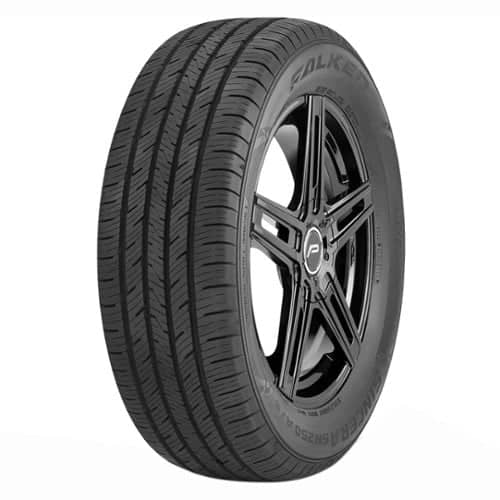
Category: Standard All-Season Touring • UTQG: 720 A B • Best For: Value-conscious commuter applications with strong wet performance • Typical Price: $80-95 per tire in commuter sizes
Falken's Sincera SN250 A/S delivers premium-tier compound engineering at budget pricing. Falken (owned by Sumitomo Rubber Industries, the same parent as Sumitomo above) has positioned itself as a value-engineered alternative to premium brands rather than a deep-discount budget brand, and the Sincera SN250 A/S reflects that positioning. The 4D Nano Design tread compound (Falken's molecular-level engineered silica blend) delivers wet braking performance closer to premium touring tires than typical budget alternatives, while the treadwear rating of 720 produces 60,000+ mile typical service life.
The asymmetric tread pattern uses sweeping circumferential grooves combined with shoulder blocks designed for both dry handling and wet evacuation. The center rib provides directional stability at highway speeds, while the dense sipe network across the tread blocks delivers wet braking performance that consistently exceeds the rated UTQG A traction grade. Independent testing typically places the Sincera SN250 A/S among the strongest budget tire wet performers — meaningfully better than typical B-rated budget alternatives.
What separates Falken from deep-discount budget brands is the engineering investment. Falken funds tire development at levels closer to premium-tier brands than typical budget brands, which produces compound technology and tread design sophistication that doesn't show up in deeper budget alternatives. For buyers who want budget pricing without compromising on the engineering depth, Falken consistently delivers strong value across the brand's lineup. The Sincera SN250 A/S extends that pattern to the under-$100 commuter category.
Sizes cover 14-inch through 18-inch with bolt patterns for compact and midsize sedan applications. Browse Falken Sincera SN250 A/S sizes, or see the full Falken Tires lineup.
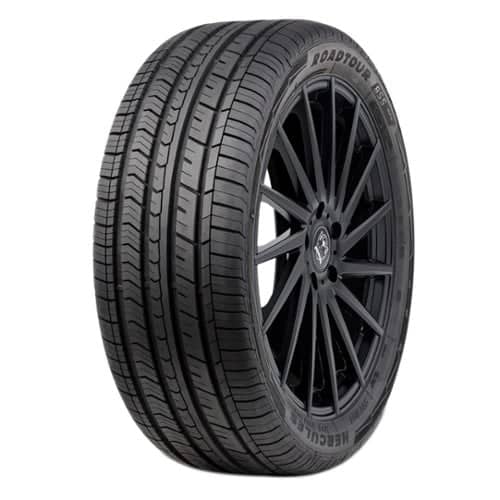
Category: Standard All-Season Touring • UTQG: 600 A B • Best For: Lowest-cost commuter operation prioritizing absolute value • Typical Price: $60-80 per tire in commuter sizes
Hercules positions itself in the deep-value tier — pricing below mainstream budget brands while delivering acceptable performance for typical commuter applications. The Roadtour 855 SPE represents Hercules' standard touring offering, with construction and compound chemistry tuned for cost optimization rather than peak performance. The 600 UTQG treadwear rating delivers 50,000-mile typical service, while the A traction rating provides acceptable wet performance for moderate-rainfall commuter applications.
What Hercules delivers at sub-$80 pricing is acceptable safety margin in a tire that won't deliver class-leading performance but won't fail safety expectations either. The construction uses standard polyester casing with two cap plies, basic silica-carbon-black compound chemistry, and tread geometry that addresses water evacuation, dry handling, and noise reduction at acceptable levels without excelling at any. The trade-off compared to premium-tier or even mid-budget tires is reduced peak performance and shorter compound life — the Hercules's wet performance degrades faster as the tire wears than the General RT45 or Falken Sincera SN250.
For typical commuter applications — daily highway commute, occasional rain, no aggressive driving — the Hercules Roadtour 855 SPE delivers acceptable safety and value. For drivers who see frequent heavy rain, sustained high speeds, or drive performance vehicles, the price savings don't justify the performance trade-off compared to the mid-budget alternatives further up this list.
Sizes cover 14-inch through 18-inch with bolt patterns for compact and midsize sedan applications. For absolute lowest-cost commuter operation where performance margin isn't the priority, the Hercules Roadtour 855 SPE delivers genuine value. Browse Hercules Roadtour 855 SPE sizes.
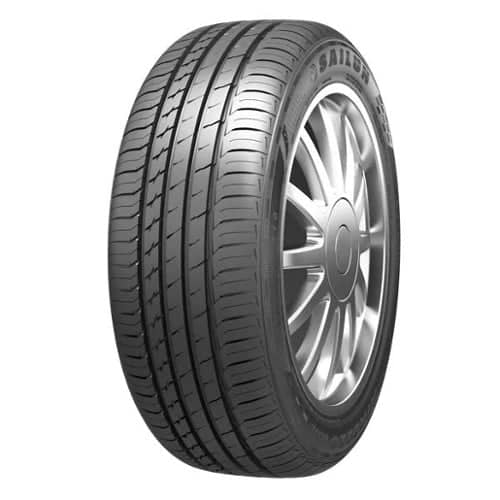
Category: Standard All-Season Touring • UTQG: 460 A A • Best For: Extreme value priority with acceptable performance margins • Typical Price: $55-75 per tire in commuter sizes
Sailun is the largest Chinese tire manufacturer with established U.S. distribution, and the Atrezzo SH408 is the brand's value-leaning standard touring tire. The 460 UTQG treadwear rating combined with the AA traction rating produces a specific value proposition — strong wet performance and acceptable tread life at pricing meaningfully below mainstream budget alternatives. The AA traction rating in particular is uncommon at sub-$75 pricing, making the Atrezzo SH408 one of the strongest wet-performance budget options.
The compound chemistry uses Sailun's proprietary EcoPoint silica blend, which delivers wet braking performance competitive with mid-budget tires from established brands. Tread design uses asymmetric pattern with directional shoulder blocks and dense sipe networks — design elements typically found in higher-tier tires. The construction uses standard polyester casing with two cap plies, similar to other budget tires in the category.
The trade-offs are tread life and brand recognition. The 460 UTQG rating produces 40,000-mile typical service life — shorter than the General RT45 or Cooper CS5 by 30%+. For high-mileage drivers, the shorter service life partially offsets the lower purchase price. Brand recognition concerns are common with Chinese-manufactured tires; Sailun's establishment in the U.S. market through OE supply contracts and dealer network development addresses some of those concerns, but buyers should be aware that the brand doesn't carry the same long-term reputation as established Japanese, Korean, or American manufacturers.
For drivers seeking absolute lowest pricing with acceptable safety margins, the Sailun Atrezzo SH408 delivers the strongest combination of price and AA traction rating in the category. Sizes cover 14-inch through 18-inch with bolt patterns for compact and midsize sedan applications. Browse Sailun Atrezzo SH408 sizes.
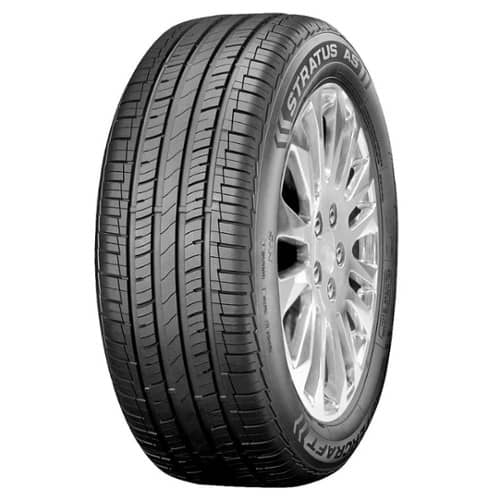
Category: Standard All-Season Touring • UTQG: 580 A B • Best For: Cooper-affiliated brand quality with sub-Cooper pricing • Typical Price: $70-85 per tire in commuter sizes
Mastercraft is Cooper Tire's value-engineered sub-brand, manufactured in the same facilities using simplified compound formulations and tread designs at meaningfully lower price points. The Stratus AS represents Mastercraft's standard touring offering — built on construction quality similar to Cooper's tires but tuned for value rather than premium performance. The 580 UTQG treadwear rating delivers 50,000-mile typical service life with A traction rating providing acceptable wet performance for typical commuter applications.
What gives the Mastercraft Stratus AS its position over deeper-budget alternatives is the Cooper manufacturing relationship. The construction quality control standards used at Cooper's facilities apply to Mastercraft production, which produces more consistent tire-to-tire performance than typical budget brands. The compound chemistry is simpler than Cooper's premium offerings, but the underlying construction quality is comparable.
The compromise compared to the Cooper CS5 Grand Touring above is in tread life and peak performance. Mastercraft Stratus AS delivers approximately 50,000 miles versus the Cooper CS5 Grand Touring's 70,000 miles — meaningful difference in long-term economics. Wet performance is also slightly behind the Cooper at the limit. For buyers who want Cooper construction quality at the absolute lowest Cooper-family pricing, the Mastercraft Stratus AS delivers meaningful value.
Sizes cover 14-inch through 17-inch with bolt patterns for compact and midsize sedan applications. Browse Mastercraft Stratus AS sizes.
The trade-offs between premium and budget tires are real and measurable. Here's what you're giving up at sub-$100 pricing.
Performance Category |
Premium Tier ($150-220) |
Budget Tier (under $100) |
Typical Gap |
|---|---|---|---|
Wet braking 60-0 mph |
125-140 feet |
145-165 feet |
20-25 feet longer |
Hydroplane resistance |
52-55 mph typical |
45-50 mph typical |
5-7 mph lower |
Cabin noise |
Quieter, lower frequency |
Noticeable highway hum |
3-5 dB louder typical |
Ride comfort |
Compliant, isolates impacts |
Stiffer, transmits texture |
Noticeable but acceptable |
Tread life |
60,000-80,000 miles |
40,000-65,000 miles |
15-25% shorter typical |
Performance retention with wear |
Holds 80%+ at 4/32" |
Holds 65-75% at 4/32" |
15% faster degradation |
Tire-to-tire consistency |
Tight production tolerances |
Wider production variance |
Occasional outliers |
The 20-25 foot wet braking gap is the most consequential trade-off. From 60 mph, that's roughly 1.5 car lengths of additional stopping distance — the difference between stopping safely and rear-ending the vehicle in front. For drivers who see frequent heavy rain or operate at sustained highway speeds in wet conditions, that safety margin matters more than the price savings. For drivers in typically dry climates with moderate speeds, the gap is rarely the determining factor in actual safety outcomes.
For deeper analysis on this specific trade-off, see our 8 best wet road tires ranking, where the wet braking advantages of premium tires are quantified in detail.
Match yourself to the right scenario.
Budget tires make sense for: Daily commuter applications in compact and midsize sedans. Drivers who put 10,000-15,000 miles per year on their vehicle. Climates with primarily dry conditions (Southwest, parts of California, parts of the South). Moderate driving speeds — primarily city and suburban with occasional highway use. Applications where the vehicle is already 5+ years old and additional investment in premium components is hard to justify. Second vehicles used primarily for short-distance commuting. Older drivers and family applications where the vehicle is driven gently.
Budget tires don't make sense for: Drivers who see daily heavy rain (Pacific Northwest, Gulf Coast, coastal Northeast). Performance vehicles where the chassis is engineered for premium tires. High-speed sustained operation (frequent interstate driving above 75 mph). Drivers who put 25,000+ miles per year (the tread life economics flip — premium tires often deliver lower cost per mile despite higher purchase prices). Newer luxury and performance vehicles where the OE specification calls for premium-tier replacement. Snow and severe winter conditions where 3PMSF-rated all-weather alternatives are required regardless of budget.
For drivers in the second category, mid-tier alternatives (Continental TrueContact Tour, Michelin Defender 2, Goodyear Assurance MaxLife) typically deliver substantially better safety performance at $130-160 per tire — meaningfully more than budget tier but well below premium pricing. The mid-tier represents the strongest value proposition for drivers who don't fit the typical budget tier profile. For broader options across price tiers, see our 12 best all-season tires for 2026.
Rank |
Tire |
UTQG |
Best For |
|---|---|---|---|
1 |
General Altimax RT45 |
700 A B |
Best overall budget pick |
2 |
Kumho Solus TA51a |
740 A B |
Comfort-focused commuter |
3 |
Cooper CS5 Grand Touring |
720 A B |
Long tread life leader |
4 |
Sumitomo HTR Enhance LX2 |
540 A A |
Performance-leaning value |
5 |
Yokohama AVID Ascend |
700 A B |
Established Japanese brand value |
6 |
Falken Sincera SN250 A/S |
720 A B |
Wet performance leader in budget tier |
7 |
Hercules Roadtour 855 SPE |
600 A B |
Deep value tier |
8 |
Sailun Atrezzo SH408 |
460 A A |
Extreme value with AA traction |
9 |
Mastercraft Stratus AS |
580 A B |
Cooper-affiliated mid-budget |
The General Altimax RT45 leads the 2026 budget ranking. The combination of 700 UTQG treadwear rating, 65,000-mile warranty, A traction rating, and balanced performance across daily driving conditions makes it the most reliable choice for typical commuter applications. Pricing typically lands $80-95 per tire in popular commuter sizes (185/65R15, 195/65R15, 205/55R16). For drivers prioritizing comfort over absolute peak performance, the Kumho Solus TA51a delivers slightly quieter highway operation at similar pricing. For long-tread-life economics, the Cooper CS5 Grand Touring's 70,000-mile warranty produces lower cost-per-mile despite slightly higher purchase price.
Quality budget tires from established manufacturers are safe for typical commuter applications, but with measurably less performance margin than premium alternatives. The wet braking gap between budget and premium tires from 60 mph is approximately 20-25 feet — about 1.5 car lengths of additional stopping distance. For typical commuter applications in moderate-rainfall climates, this gap is rarely the determining factor in safety outcomes. For drivers who see daily heavy rain, sustained high-speed operation, or operate performance vehicles, the safety margin gap typically justifies stepping up to mid-tier or premium alternatives. UTQG B-rated tires should be avoided for serious wet-weather applications regardless of price.
Quality budget all-season tires typically deliver 40,000 to 70,000 miles of service life depending on the specific tire and driving conditions. The Cooper CS5 Grand Touring leads the budget category at 70,000-mile typical service life with matching warranty. The General Altimax RT45 delivers 65,000-mile service. The Kumho Solus TA51a, Yokohama AVID Ascend, and Falken Sincera SN250 A/S typically deliver 60,000+ miles. Performance-leaning budget alternatives like the Sumitomo HTR Enhance LX2 deliver 45,000 miles. Deep-value alternatives like the Sailun Atrezzo SH408 deliver 40,000 miles. For high-mileage drivers, the tread life economics matter — a tire that costs $80 and lasts 60,000 miles delivers better cost-per-mile than a tire that costs $60 and lasts 40,000 miles.
Sub-$100 pricing is realistic primarily for commuter-size fitments — 14-inch, 15-inch, and 16-inch tires for compact and midsize sedan applications. Common sub-$100 sizes include 185/65R15, 195/65R15, 205/55R16, 215/60R16, 195/55R15, and similar fitments. For 17-inch and larger, sub-$100 pricing exists but typically signals deeper budget tier construction with more meaningful trade-offs. For 18-inch and larger fitments, sub-$100 pricing is rare and usually indicates compromises that don't justify the savings. For LT (light truck) applications, sub-$100 pricing typically doesn't exist for any reputable manufacturer — light truck tires require heavier construction that pushes pricing above the budget threshold.
Both deliver strong value at the budget price tier with specific advantages. Sumitomo (owned by Sumitomo Rubber Industries, the same parent as Falken) brings premium-tier engineering investment to value-tier pricing — the HTR Enhance LX2 carries an AA traction rating uncommon at sub-$100 pricing and delivers wet performance comparable to mid-budget tires from established brands. Sailun is the largest Chinese tire manufacturer with established U.S. distribution; the Atrezzo SH408 also carries an AA traction rating with EcoPoint silica compound technology. Sumitomo benefits from the Falken brand relationship and longer U.S. market presence. Sailun delivers absolute lowest pricing at acceptable safety margins. For buyers prioritizing brand recognition alongside budget value, Sumitomo edges Sailun. For buyers prioritizing absolute lowest pricing with AA traction, Sailun delivers the strongest value.
Stepping up to mid-tier or premium tires makes sense when specific factors apply: daily heavy rain conditions (Pacific Northwest, Gulf Coast, coastal Northeast) where the 20-25 foot wet braking advantage matters; performance vehicles where the OE specification calls for UHP-class tires; sustained high-speed operation (frequent interstate driving above 75 mph) where the higher speed rating and stability matter; high-mileage operation (25,000+ miles per year) where the tread life economics flip in favor of premium tires; severe winter conditions where 3PMSF-rated all-weather alternatives are required; newer luxury and performance vehicles where the chassis is engineered for premium tires. For typical commuter applications in moderate climates with moderate driving speeds, budget tires deliver acceptable performance at meaningful savings.
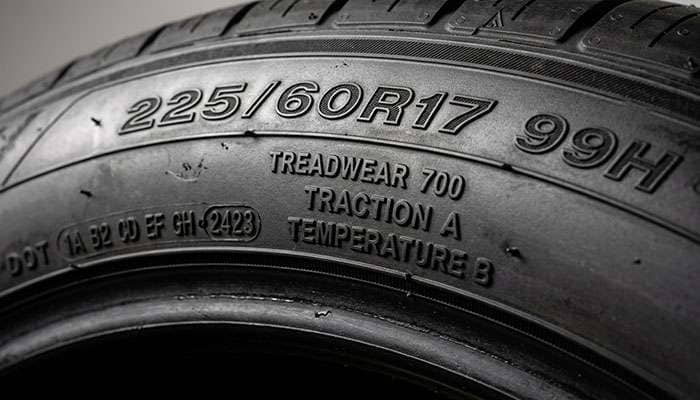
UTQG stands for Uniform Tire Quality Grading — a federally mandated rating system that's molded into every passenger tire's sidewall. The rating consists of three components. Treadwear is a numeric score where higher numbers indicate longer expected service life — 600+ is typical for touring tires, 400-500 for performance tires, 300 or below for max performance summer tires. Traction is letter-graded — AA is the top rating, A is acceptable for most driving, B should be avoided for serious wet-weather applications, C is the minimum legal rating. Temperature is letter-graded — A indicates the highest heat resistance, B is acceptable, C is the minimum legal rating for high-speed operation. For budget tire selection, AA or A traction rating with treadwear of 500+ produces the strongest combination of safety and economics. Avoid B traction tires regardless of price.
Generally not recommended. Luxury vehicles typically come with premium-tier OE tires that have been engineered for the specific chassis dynamics, weight distribution, and performance envelope of the vehicle. Replacing premium OE tires with budget alternatives produces noticeably degraded handling, increased noise, and reduced wet-weather safety margin compared to OE specification. The chassis tuning that delivers the luxury vehicle's signature ride and handling assumes specific tire characteristics — budget tires typically don't deliver those characteristics. For luxury vehicle owners seeking value, mid-tier alternatives (Continental TrueContact Tour, Michelin Defender 2, Bridgestone Turanza QuietTrack) at $130-160 per tire represent meaningful savings versus OE specification while maintaining acceptable luxury vehicle performance. Going below the mid-tier on a luxury vehicle generally produces customer dissatisfaction with the vehicle's overall driving feel.



