
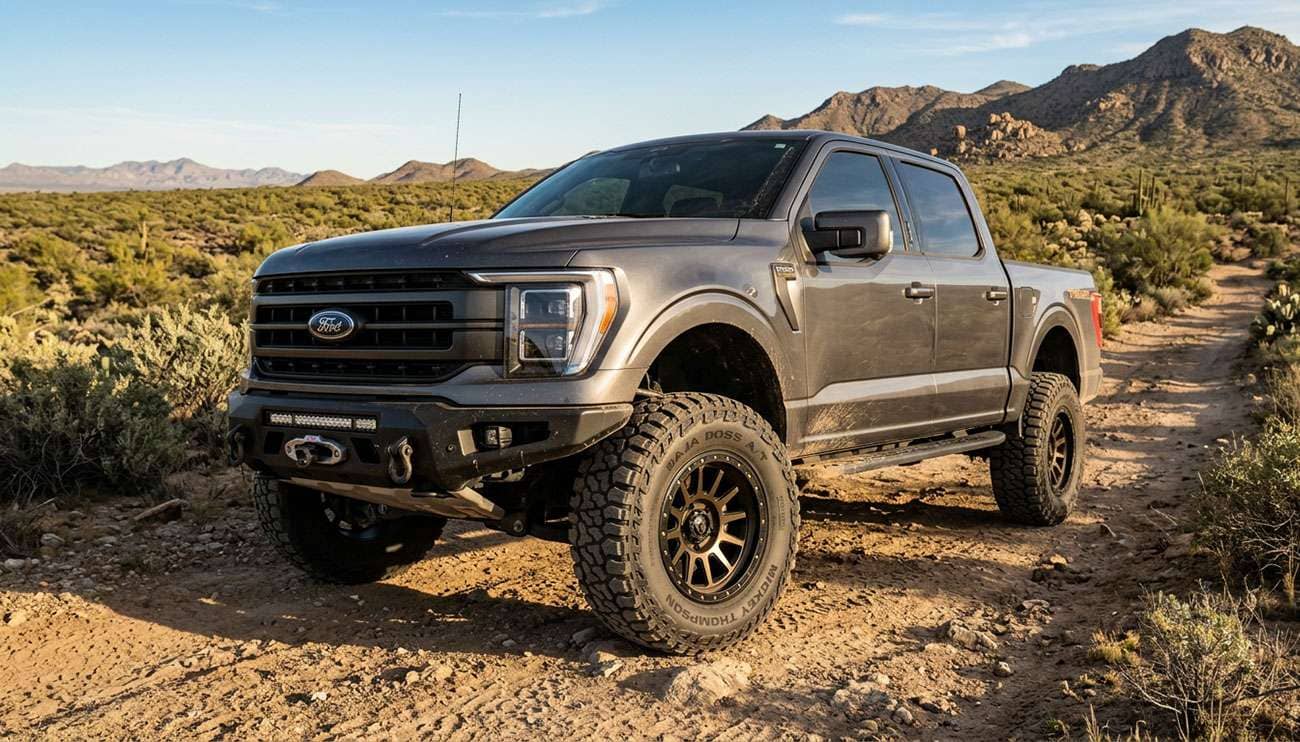
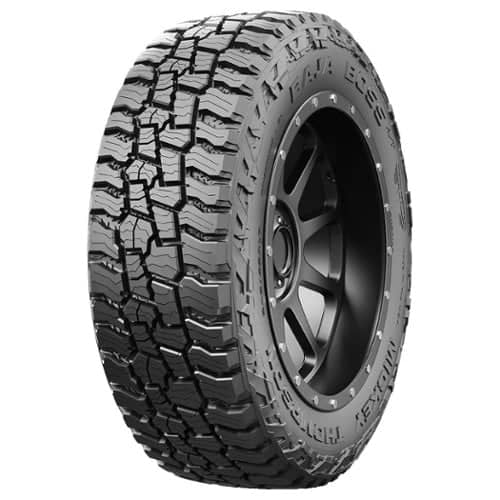
Yes, with one condition almost nobody states out loud: the Baja Boss A/T is sold as two structurally different tires under one name. LT and flotation sizes get 3-ply PowerPly XD construction, Extreme Sidebiters, the T1 compound, 18/32 of tread and a 50,000-mile warranty. Euro-metric SUV sizes get a 2-ply casing, no Sidebiters, the S1 compound, 16/32 of tread and a 60,000-mile warranty. Pick the wrong branch for your truck and you either overpay for casing you will never load, or you buy a tire that cannot take the hit you are about to give it.
I have been fitting this tire since it launched, and the pattern in returns and complaints is remarkably consistent. Almost every unhappy Baja Boss customer bought the correct model in the wrong construction. The reviews that call it harsh and heavy were written by drivers in LT sizes who wanted the SUV build. The reviews that call it soft off-road came from drivers in Euro-metric sizes expecting Sidebiters that their size never had. Below is how to tell which one you need before you spend the money.
Mickey Thompson does not hide this, but retail listings flatten it. Scroll most product pages and you will see one set of bullet points and one warranty number applied to all 63 sizes. That is wrong roughly half the time. Here is the actual split.
Feature |
LT And Flotation Sizes |
Euro-Metric SUV Sizes |
|---|---|---|
Casing construction |
3-ply with PowerPly XD |
2-ply casing |
Extreme Sidebiters |
Yes, 150 percent deeper than Baja ATZP3 |
No |
Tread compound |
T1 |
S1 |
Tread depth |
18/32 |
16/32 |
Treadwear warranty |
50,000 miles |
60,000 miles |
Typical speed rating |
Q (99 mph) |
T (118 mph) |
Load range |
D, E or F |
SL or XL |
Best suited to |
Towing, payload, rock and trail work |
Daily driving, light dirt, ride quality |
PowerPly XD is the piece that matters most. Mickey Thompson runs a third body ply at a bias angle and uses a heavier denier cord in it. The bias angle is the trick. A radial casing resists vertical load well but flexes laterally, which is exactly the motion that walks a sidewall onto a rock edge. Adding a bias-angle ply cross-braces that flex, which is why LT Baja Boss sizes resist punctures and feel sharper on turn-in under load. It is also why they weigh what they weigh. That casing is not free, and it is the single biggest reason two drivers describe this tire in completely opposite terms.
If you have never worked through load range designations, our guide on how to read tire load range and ply ratings explains what the D, E and F markings actually change about the tire under you.
Across our current catalog, the Baja Boss A/T runs from 192.69 USD for the 235/75R15 up to 763.29 USD for the LT37x13.50R24. That spread is wide because it covers 15-inch SUV fitments and 24-inch flotation sizes in the same line. Here is the ladder by wheel diameter so you can find your bracket fast.
Feature |
Price Range Per Tire |
Notes |
|---|---|---|
15 inch |
192.69 USD |
Single Euro-metric fitment |
16 inch |
233.39 to 314.99 USD |
Mix of Euro-metric and LT |
17 inch |
241.09 to 465.39 USD |
Deepest selection, 16 sizes |
18 inch |
295.49 to 484.69 USD |
Common half-ton and 3/4-ton fitment |
20 inch |
293.19 to 574.39 USD |
Largest size count, 21 fitments |
22 inch |
461.69 to 646.29 USD |
Mostly F load range flotation |
24 inch |
716.39 to 763.29 USD |
Two sizes only |
The number most buyers actually want is the popular fitment price. LT285/70R17 in load range E runs 398.20 USD. LT265/70R17 is 311.29 USD. LT33x12.50R17 is 381.79 USD, and LT35x12.50R17 is 441.39 USD. On the SUV side, 265/70R17 XL is 253.59 USD and 275/55R20 XL is 325.69 USD.
Be honest with yourself about what that means. In LT285/70R17, the Baja Boss A/T costs more than the Baja Boss M/T does at 374.99 USD. You are paying a premium over the mud tire in that size for a tire that gives up mud clearing ability. What you get back is the 3PMSF rating, the silica compound and highway manners the M/T will not match on a 500-mile tow day. If none of those three matter to you, the M/T is the better value in that specific size, and I would rather tell you that now than after you mount four.
Warranty first, because the two branches differ and retailers routinely publish only one number. LT and flotation sizes carry 6 years or 50,000 miles. Euro-metric SUV sizes carry 6 years or 60,000 miles. If a listing shows 60,000 miles next to an LT size, the listing is wrong and the claim will be adjudicated at 50,000.
Real-world wear tracks close to those numbers when the tire is rotated on schedule and pressures are correct. Owners running Euro-metric sizes on unloaded half-tons commonly report 50,000 to 60,000 miles. LT sizes on trucks that tow regularly tend to land in the 40,000 to 50,000 range, which is normal for any 3-ply casing carrying weight.
Two wear behaviors are worth knowing before you buy.
Shoulder chunking past 40,000 miles. Multiple long-term reviews report chunking at the outer shoulder blocks late in tread life. The mechanism is heat. A thick, stiff sidewall and a tall tread block flex against each other every revolution, and flex converts to heat. Heat degrades the bond at the base of the block. Once a block starts to tear at its base, each subsequent impact peels a little more. It shows up at the shoulder first because that is where deflection is greatest. Correct pressure and rotation are the two things that meaningfully slow it, because both reduce how far the shoulder deflects per revolution.
Sipe depth is not full depth. Owners who have measured report the sipes running roughly 1/8 inch, not cut all the way down to the wear bars. That is a deliberate engineering trade. Shallower sipes mean stiffer blocks, which means better dry handling, better towing stability and a longer wearing tread. It also means the snow and wet performance you get at 18/32 is not the snow and wet performance you get at 9/32. If you live where winter is a serious factor and you keep tires until they are legally worn out, budget for the fact that this tire's cold-weather grip fades faster through its life than a full-depth-siped competitor's does.
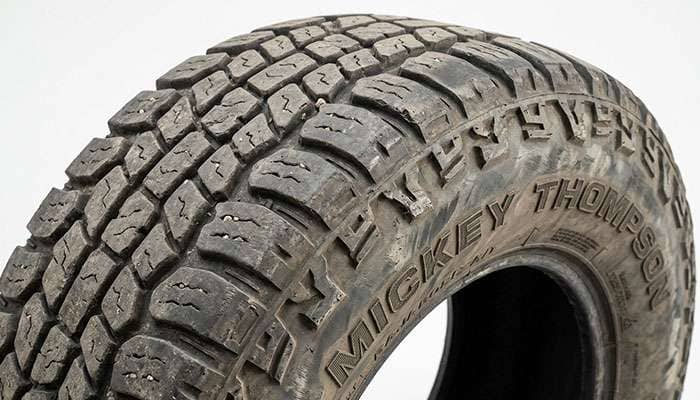
Watch the sidewall as carefully as the tread on a tire this aggressive, since Sidebiter lugs take impacts a smooth sidewall never would. If you find a gouge and are not sure whether it is cosmetic, our breakdown of tire sidewall damage and whether it is safe to drive walks through the specific cases that need immediate replacement.
This is where the two branches diverge hardest, and where most Baja Boss ride complaints come from.
If you bought a Euro-metric size in the factory dimension, run the pressure on your door jamb placard. The tire was engineered around that load table, and the placard number is correct.
If you bought an LT size, the placard number is almost certainly wrong for you. Placards on half-ton trucks and SUVs are written for P-metric or Euro-metric tires. LT tires carry the same load at a higher pressure because they use a stiffer, higher-capacity casing, so running an LT tire at the P-metric placard number leaves you underinflated and running it at the LT tire's max sidewall pressure leaves you badly overinflated on an empty truck. Neither is what you want.
The correct method is a load table conversion. Find the load your placard assigns to each axle, then look up the pressure at which your specific LT size supports that load in the manufacturer's load and inflation table. On common half-ton LT conversions that usually lands somewhere in the low-to-mid 40s unloaded, dropping the harshness owners complain about without sacrificing stability. When you hitch a trailer or load the bed, go back to the table and inflate for the new axle load.
A chalk line across the tread confirms the result. Drive a short straight distance and read the wear. Chalk gone at the edges and surviving in the center means you are under. Chalk gone in the center and surviving at the edges means you are over. Even removal means the contact patch is flat and you are done. Our guide on how to find your recommended tire pressure covers the placard and load table process in more detail.
One caution specific to this tire. LT Baja Boss sizes are heavy, with owners reporting figures in the high 50-pound range for a LT265/75R16. Rotating mass that high changes how your suspension responds and how the truck accelerates and stops. Do not try to correct a heavy-tire ride complaint by dropping pressure below what the load table calls for. That fixes the symptom by loading the sidewall, and the sidewall is what pays for it in heat and chunking.
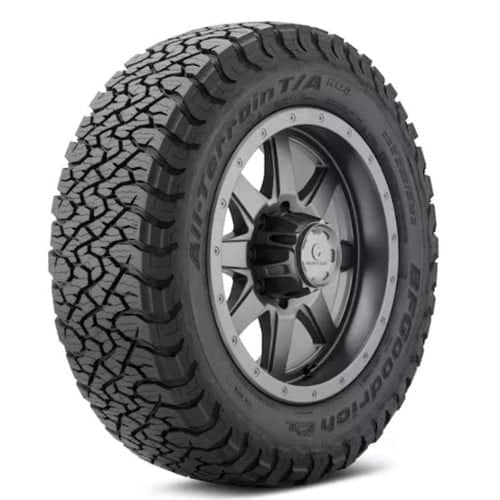
Different tires aimed at different owners, and the honest answer depends on what fraction of your miles are pavement.
Feature |
Mickey Thompson Baja Boss A/T |
BFGoodrich All-Terrain T/A KO3 |
|---|---|---|
Category |
Rugged all-terrain, hybrid leaning |
Balanced off-road all-terrain |
Tread depth, LT sizes |
18/32 |
15/32 to 16/32 |
Siping |
Shallow, roughly 1/8 inch |
Full depth to the wear bars |
Sidewall protection |
Extreme Sidebiters, LT sizes only |
Serrated shoulder, milder profile |
Treadwear warranty |
50,000 LT, 60,000 Euro-metric |
50,000 miles |
Price, LT285/70R17 |
398.20 USD |
320.99 to 330.99 USD |
Strongest at |
Mud, rock, sand, loaded stability |
Wet pavement, snow late in tread life, quiet |
The Baja Boss carries a real premium, roughly 70 to 80 USD per tire in that fitment, which is around 300 USD across a set. You are buying two to three extra thirty-seconds of tread and a heavier casing. That is defensible if you actually use it. If your truck sees a fire road twice a year and 25,000 highway miles, the KO3's full-depth siping and lighter build will serve you better and cost less. If you run rock, mud or heavy sand, or if you tow near your payload ceiling, the Baja Boss earns the difference and then some.
Worth noting on the KO3 side: its major improvement over the KO2 was wet traction, which was the KO2's long-standing weak point. Our review of whether KO3 tires are any good covers what changed and where the tire still gives ground.
If you want the middle of that spread, the Falken Wildpeak A/T4W sits at 299 to 312 USD in LT285/70R17 with 18/32 of tread and a 60,000-mile warranty across LT sizes, which is the strongest warranty position of the three.
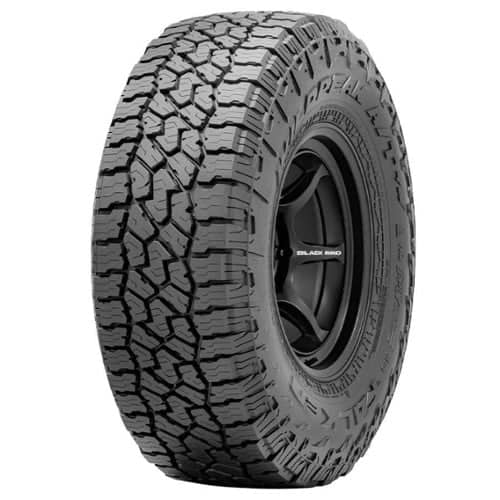
Quieter than it looks, louder than a highway tire, and it gets louder as it wears. All three of those are true at once, which is why owner reviews on this point look contradictory.
The asymmetric tread pattern with variable pitch sequencing is doing real work. Tread noise is generated when air trapped in a groove is compressed and released as each block enters and leaves the contact patch. If every block is the same size and spacing, every release happens at the same frequency and the sound reinforces itself into a single loud tone. Mickey Thompson varies block length and spacing so those releases happen at different frequencies, which spreads the energy across a broader band and lets waves partially cancel. The total sound energy barely changes. What changes is that your ear stops hearing a whine and starts hearing broadband rush, which reads as much quieter.
That is why a tire this aggressive can be genuinely civil on a fresh set and why owners coming off worn KO2s often report it as quiet or quieter. It is also why the noise climbs. As blocks wear down, the groove volume shrinks, the block edges square off from wear, and the carefully tuned pitch relationships drift. Owners commonly notice the change somewhere around 15,000 miles, and it is more pronounced on LT sizes with taller blocks and more block movement to begin with.
Set expectations by branch. Euro-metric sizes at 16/32 stay comfortable for most of their life. LT sizes at 18/32 start civil, get noticeably busier in the back half, and are still nowhere near mud-tire territory. If a rising hum shows up earlier than that, it usually is not the tread pattern at all. Our guide to tire noise causes covers the wear patterns and bearing symptoms that get blamed on tires.
This one costs people real money and I have never seen it stated plainly on a retail page.
The Baja Boss A/T carries the three-peak mountain snowflake symbol only on sizes 12.50 inches, or 315 millimeters, and narrower. Go wider than that and the severe snow service rating does not come with the tire.
Practically, that means an LT35x12.50R17 is 3PMSF branded and an LT35x13.50R20 is not. Same model, same compound family, same tread pattern, different regulatory status. If you live somewhere that enforces traction requirements in winter, or if your insurance or employer specifies severe snow service tires, the width you pick determines whether you are compliant. Buyers who assume the whole line is rated find out at a checkpoint.
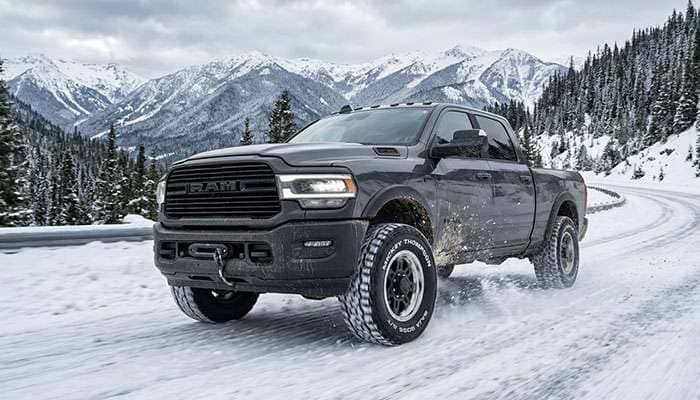
The wide flotation sizes are still capable in snow. They simply have not been submitted and certified to the severe snow service standard, largely because the wider footprint changes how the tire performs in the medium-packed snow acceleration test the certification is built around. A narrower tire cuts down to a firmer layer, a wider tire tends to float on top of it, and floating is not what that test rewards. Our explainer on what the snowflake tire symbol means covers what the certification does and does not promise.
The failure mode here is rarely dramatic. It is a slow bleed that most owners never connect back to the purchase.
Weeks one through four. The ride feels harsher than you expected on an LT conversion, so you let air out to soften it. You have now moved the load off the tread and onto the sidewall.
Months two through six. The underinflated sidewall flexes further per revolution than it was designed to. Flex becomes heat. The shoulders start wearing faster than the center, and fuel economy drops one to two miles per gallon because rolling resistance is up.
Months six through eighteen. The shoulder blocks, running hot and wearing unevenly, begin to chunk at their base. Now you have a cosmetic problem that is also a structural one, because a torn block base is a path for water and debris into the tread package.
Beyond that. The uneven wear is far enough along that rotation cannot correct it. You replace at 30,000 to 35,000 miles on a tire warranted for 50,000, and the claim gets denied because the wear pattern shows inflation error rather than a manufacturing defect. On a set of LT285/70R17 at 398.20 USD each, that is roughly 1,590 USD spent to get 60 percent of the life you paid for, and a second set due years early.
Every step in that chain traces back to two decisions made before the tires were mounted: which construction branch you bought, and what pressure you set it to. Both are free to get right.
Ready to spec a set correctly? Browse the full range of sizes and load ranges on our Mickey Thompson tires page, and call if you want us to run the load table conversion for your truck before you order.
Feature |
What To Buy |
Why |
|---|---|---|
Daily driver SUV, light dirt, no towing |
Euro-metric size, factory dimension |
Lighter, softer riding, 60,000-mile warranty, placard pressure works |
Half-ton that tows a few times a year |
LT in load range C or D |
Casing strength without the weight and stiffness of an E |
3/4-ton or 1-ton, regular towing |
LT in load range E |
PowerPly XD stability under load is the whole point of this tire |
Rock and trail, sidewall exposure |
LT, any load range |
Extreme Sidebiters do not exist on the Euro-metric build |
Winter traction requirements |
12.50 inch or narrower |
3PMSF branding stops above that width |
Mostly highway, occasional fire road |
Consider KO3 or Wildpeak A/T4W instead |
Full-depth siping and lower price serve those miles better |
If you are still weighing the brand as a whole rather than this one model, our look at whether Mickey Thompson is a good tire brand puts the Baja Boss line in context against the rest of the catalog.
The Baja Boss A/T is a very good tire, and it is the right tire for a narrower slice of buyers than its popularity suggests. In LT sizes it is one of the strongest rugged all-terrains available, with a genuinely clever asymmetric pattern, a casing that holds shape under load, and 18/32 of tread to work with. In Euro-metric sizes it is a comfortable, good-looking, well-warrantied SUV tire that happens to share a name with something considerably tougher.
Buy the branch that matches how the truck actually gets used, inflate it from a load table rather than a guess, and keep it on a rotation schedule. Do those three things and this tire will give you every mile it promised. Skip them and you will write one of the reviews that says it is heavy, harsh and wore out early, which is a description of an installation error more than a description of the tire.
Yes, provided you buy the right construction. LT and flotation sizes use 3-ply PowerPly XD with Extreme Sidebiters and 18/32 of tread, making them one of the strongest rugged all-terrains available for towing, rock and mud. Euro-metric SUV sizes use a 2-ply casing with no Sidebiters and 16/32 of tread, which rides better on pavement but gives up serious off-road protection. Most complaints about this tire trace back to buying the wrong branch for the job.
Current pricing runs from 192.69 USD for the 235/75R15 to 763.29 USD for the LT37x13.50R24. Popular fitments land in the middle: LT265/70R17 at 311.29 USD, LT285/70R17 at 398.20 USD, LT33x12.50R17 at 381.79 USD and LT35x12.50R17 at 441.39 USD. Euro-metric SUV sizes are cheaper, with 265/70R17 at 253.59 USD.
The treadwear warranty is 6 years or 50,000 miles on LT and flotation sizes, and 6 years or 60,000 miles on Euro-metric sizes. Real-world results track close to that with correct pressure and regular rotation. Trucks that tow heavily on LT sizes commonly see 40,000 to 50,000 miles. Some long-term reviews report shoulder chunking past 40,000 miles, which is driven by heat from sidewall and tread block flex and is slowed by correct inflation.
If you bought a Euro-metric size in the factory dimension, use the pressure on your door jamb placard. If you bought an LT size on a vehicle whose placard was written for P-metric or Euro-metric tires, the placard number does not apply. Convert using the manufacturer's load and inflation table: find the axle load your placard assigns, then find the pressure at which your LT size carries that load. Re-check the table when you tow or load the bed, and confirm the result with a chalk test across the tread.
It depends on your pavement-to-dirt ratio. The Baja Boss A/T offers deeper tread at 18/32 and Extreme Sidebiters, making it stronger in mud, rock and sand and more stable under load. The KO3 uses full-depth siping that holds wet and snow grip later in tread life, rides quieter, and costs roughly 70 to 80 USD less per tire in LT285/70R17. Choose the Baja Boss for serious off-road and towing use, and the KO3 for mostly-highway driving with occasional trails.
They are much quieter than their appearance suggests when new, because the asymmetric tread uses variable pitch sequencing to spread noise across a broader frequency band instead of one loud tone. Noise does climb with wear, and owners commonly notice the change around 15,000 miles as block wear detunes that pitch sequence. LT sizes get busier than Euro-metric sizes because their taller blocks move more. Neither approaches mud-terrain noise levels.



