You're cruising the highway and something is wrong — a low, persistent hum vibrating through the cabin, or a rhythmic thumping that definitely wasn't there six months ago. If you've wondered why are my tires so loud while driving, you're in good company. Tire noise ranks among the most common complaints drivers bring into tire shops, and it's also one of the most misdiagnosed. Too many drivers write it off as the road surface or a quirk of their vehicle — and tune it out right up until something far more serious and expensive fails.
Here's what every driver needs to understand: tire noise is almost never random. Every squeal, hum, thump, and rumble is your tire and wheel assembly sending you a direct signal. Reading that signal correctly is the difference between a $75 fix and a $750 one — or worse, a safety incident on the highway. This guide covers every major tire noise cause, walks you through how to tell a tire problem from a wheel bearing problem, and gives you clear, actionable steps for what to do next. Whether your tires sound like a jet engine at 70 mph or you're catching a faint ticking at slow speed, there's a specific answer here for your situation.
Solving a noise problem starts with understanding exactly what's happening between your tires and the pavement. Tire noise is the product of several overlapping physical forces — tread blocks compressing and releasing, air being pushed through grooves, rubber vibrating against pavement, and the entire rotating assembly working against your suspension geometry. Each force produces a distinct acoustic signature, which is why tire noise sounds so different from one vehicle to the next, or even from the front axle to the rear on the same car. Get the diagnosis right by listening carefully and knowing your categories.
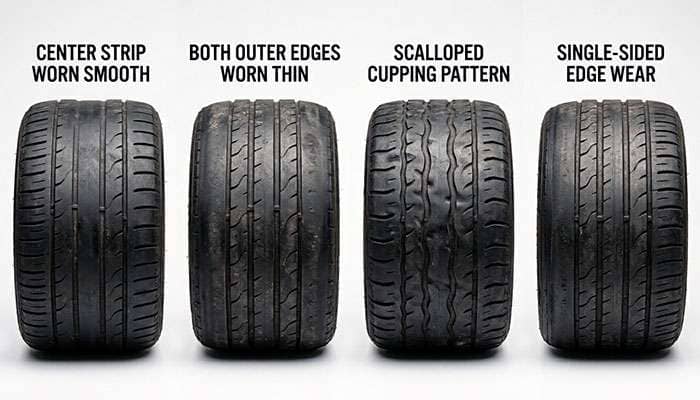
There are five primary tire noise types, and each one points to a specific cause. Humming or droning is the most common — that steady, low-frequency sound that climbs in pitch as you accelerate. Uneven tread wear is almost always the culprit, though a failing wheel bearing produces the same symptom. A rhythmic thumping that accelerates with vehicle speed is the classic signature of cupped tires — the direct result of worn or failing shock absorbers letting the tire bounce unevenly against the road. Squealing on turns points to low tire pressure, cornering beyond the tire's grip limit, or worn tread. Roaring — that aggressive, textured sound from large-block tread designs — is pure physics: more tread block edges means more road contact noise. A fine hissing or whistling is usually a pressure issue or debris lodged in a groove.
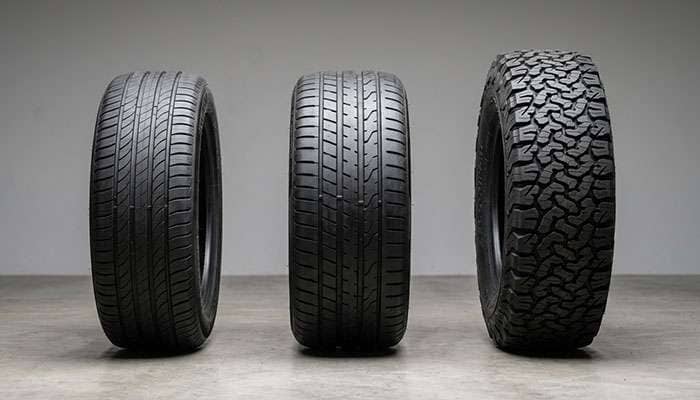
Tread design is central to all of this. Symmetric tread patterns, common on touring and all-season tires, produce the least noise because the tread blocks are uniform and balanced. Asymmetric tires used on performance models trade a little extra noise for better lateral grip. Directional tires — with that distinctive V-shaped tread — fall in the middle: excellent at water evacuation, but capable of a notable hum at highway speeds. Aggressive all-terrain and mud-terrain tires sit at the loudest end of the spectrum by design. Those large, widely-spaced tread blocks that bite through dirt and rock create significant air-pumping noise the moment you hit pavement.
The biggest mistake drivers make is deciding all tire noise is normal and ignoring it. The second biggest mistake is blaming the wrong component entirely. A loud humming noise from tires frequently gets blamed on the tires themselves when a worn wheel bearing is the actual culprit — and those two problems carry very different repair costs and urgency levels. Here's the key distinction: noise caused by uneven tread wear or tread design stays consistent regardless of whether you're turning left or right. Wheel bearing noise shifts in intensity when you change lanes or gently swerve. If the noise gets louder when you veer right and quieter when you veer left — or the reverse — that's load shifting off and onto a failing bearing. That is a safety issue requiring immediate attention, not something to monitor for a few more weeks.
Neglecting rotation intervals is another mistake that costs drivers real money. Most manufacturers recommend rotating tires every 5,000–7,500 miles. Skip a couple of rotations and you create near-guaranteed conditions for uneven wear that will generate noise. Running tires even 5–7 PSI below your vehicle's specified cold inflation pressure changes the contact patch shape and accelerates edge wear — a primary humming noise cause that most drivers never connect to something as simple as air pressure.
When you're shopping for tires, noise performance is expressed in decibels (dB) and — in Europe — the EU noise class label showing one, two, or three sound waves. A tire rated at 68 dB is noticeably quieter than one rated at 74 dB. That 6 dB gap represents approximately four times the acoustic energy. The US has no mandatory noise label, but most major brands publish interior cabin noise test data in their product specs. Michelin, for example, targets acoustic comfort as a primary engineering goal across their Defender and CrossClimate lines. The tread pitch count is another real specification — engineers vary the size and spacing of tread blocks in a precise sequence to scatter sound energy across multiple frequencies instead of concentrating it at a single resonant pitch. When you see terms like "variable pitch tread" or "noise-canceling groove design," that's exactly what they're describing — and it genuinely delivers results you can hear.
Sidewall stiffness plays a role too. Low-profile tires — a 35 or 40 series, for example — transmit more road texture directly into the cabin because there's simply less rubber to absorb vibration. That's not a defect. It's an inherent trade-off of performance fitments. If you're running 20- or 22-inch wheels with a stretched sidewall and wondering why your cabin sounds harsh, the wheel and tire combination is performing exactly as engineered.
Once you've identified your tire noise source, the next question is whether the fix is a change in driving habits, a tighter maintenance schedule, or new tires altogether. In many cases, choosing the right tire from the start eliminates the noise problem entirely — before it ever develops. Selecting a tire purely on price or brand name without considering how its tread design and compound interact with your specific vehicle type and driving pattern is a reliable path to disappointment. Here's how to make the right call.
Your vehicle's original equipment (OE) tire size and category are your starting point for a reason. Automakers invest thousands of engineering hours tuning suspension geometry, wheel well clearances, and noise isolation to work with a specific tire footprint and stiffness profile. Going significantly wider or taller than the OE spec can introduce noise, vibration, and harshness (NVH) problems even with a premium-tier tire. For sedan and crossover drivers whose vehicles were designed around a standard all-season or touring tire, staying near OE size and selecting from the touring or grand touring category will deliver the quietest result, consistently. If you drive an SUV, the best tires for SUVs in the touring all-season category are engineered specifically for the weight and load demands of those platforms — and that directly affects noise performance.
For truck owners, the calculation is different. A full-size pickup used primarily for commuting has no real need for an aggressive all-terrain tire. Those large tread blocks and open shoulder design will hum continuously at highway speed. A highway-terrain or crossover tire in a truck-rated load index delivers dramatically better noise levels for street use without sacrificing any capability you actually use day to day.
Performance drivers who prioritize cornering grip and high-speed stability need to accept a noise trade-off — but that doesn't mean tolerating a jackhammer cabin. Ultra-high performance summer tires use large, stiff tread blocks and softer compounds for maximum contact patch, and they run louder than a comparable all-season. That said, manufacturers like Continental and Michelin have invested heavily in acoustic foam liners and variable pitch tread technology that have brought cabin noise down significantly on their performance lines — meaningfully better than even five years ago. If you want performance and relative quiet together, specifically look for tires that advertise acoustic comfort technology. Some models include a foam layer bonded to the inside of the tread area that absorbs the standing sound wave inside the tire cavity, cutting road noise by 3–9 dB.
Off-road and overlanding drivers should plan for the noise reality of all-terrain tires on pavement. The trade-off comes with the territory. What you can control is tire pressure — running your all-terrain tires at the correct on-road inflation pressure, not the low-pressure airing-down setting you use on the trail, keeps the contact patch uniform and prevents the edge wear that makes aggressive tires grow progressively noisier over time.
Here's the unvarnished truth: the cheapest tires are almost always the loudest. Not because budget brands are engineering failures — many budget tires perform respectably in dry traction tests — but because acoustic engineering is expensive. Developing a variable pitch tread sequence, testing it in an anechoic chamber, and iterating the mold design adds cost that gets passed to the consumer. Budget brands cut here first. That said, the gap between mid-tier and premium has narrowed considerably in recent years. You don't have to spend Michelin money to get a quiet tire. Brands like Hankook and Falken have brought serious noise engineering to their mid-range lines at genuinely competitive price points.
The real budget trap is buying cheap tires and then paying for alignment corrections, extra rotations, and premature replacement when they wear unevenly and start howling at 25,000 miles. A slightly more expensive tire that wears evenly to 60,000 miles is almost always the smarter financial decision once you factor in total cost of ownership — not just the sticker price on day one.
Noise Type |
Most Likely Cause |
DIY Check |
Urgency |
|---|---|---|---|
Steady Humming / Droning |
Uneven tread wear or wheel bearing |
Swerve gently — if noise changes side, suspect bearing |
High — inspect immediately |
Rhythmic Thumping |
Cupped tires from worn shocks |
Run hand across tread — feel for scalloped texture |
High — replace shocks and tires |
Squealing on Turns |
Low pressure or worn tread |
Check cold inflation PSI against door placard |
Medium — address within days |
Roaring / Aggressive Hum |
Aggressive tread pattern (A/T or M/T tires) |
Compare to OE spec — is this the right tire for this vehicle? |
Low — cosmetic/comfort issue |
Hissing / Whistling |
Debris in groove or slow air leak |
Visual inspect tread; check PSI weekly |
Medium — monitor closely |
Clicking or Ticking (low speed) |
Rock or debris lodged in tread |
Inspect grooves visually; remove with pick |
Low — remove debris promptly |
You now understand what drives tire noise and how to match a tire to your specific needs. Let's get specific. These recommendations are grounded in real-world noise performance data, verified owner feedback, and the tread engineering principles covered above. Every tire listed here is available at Performance Plus Tire, and every one represents a genuine, measurable step up in acoustic comfort compared to the budget alternatives in its class.
If you're putting 12,000–20,000 miles a year on mixed highway and city roads, noise comfort ranks just behind safety as your most important tire attribute. You spend more time in your vehicle than nearly anywhere else — that cabin acoustic experience matters every single day. The Michelin CrossClimate2 sets the standard here. It combines a variable pitch tread pattern with a touring-class compound that delivers even wear across a 60,000-mile tread life warranty, and Michelin's Acoustic technology — an interior foam liner — is available in select sizes. For drivers who want a quieter commute without the premium price tag, the Continental PureContact LS earns serious consideration. Continental's Comfort Ride Technology has consistently ranked it among the quietest tires in its class across multiple independent evaluations. Both tires are available through Performance Plus Tire's full tire inventory in a wide range of OE sizes.
One maintenance note for commuters: at every rotation interval — every 5,000–7,500 miles — have the shop check your alignment too. A toe misalignment of just 0.2 degrees produces a feathering wear pattern that generates a distinct hissing hum within 10,000 miles. A $75 alignment check prevents it entirely.
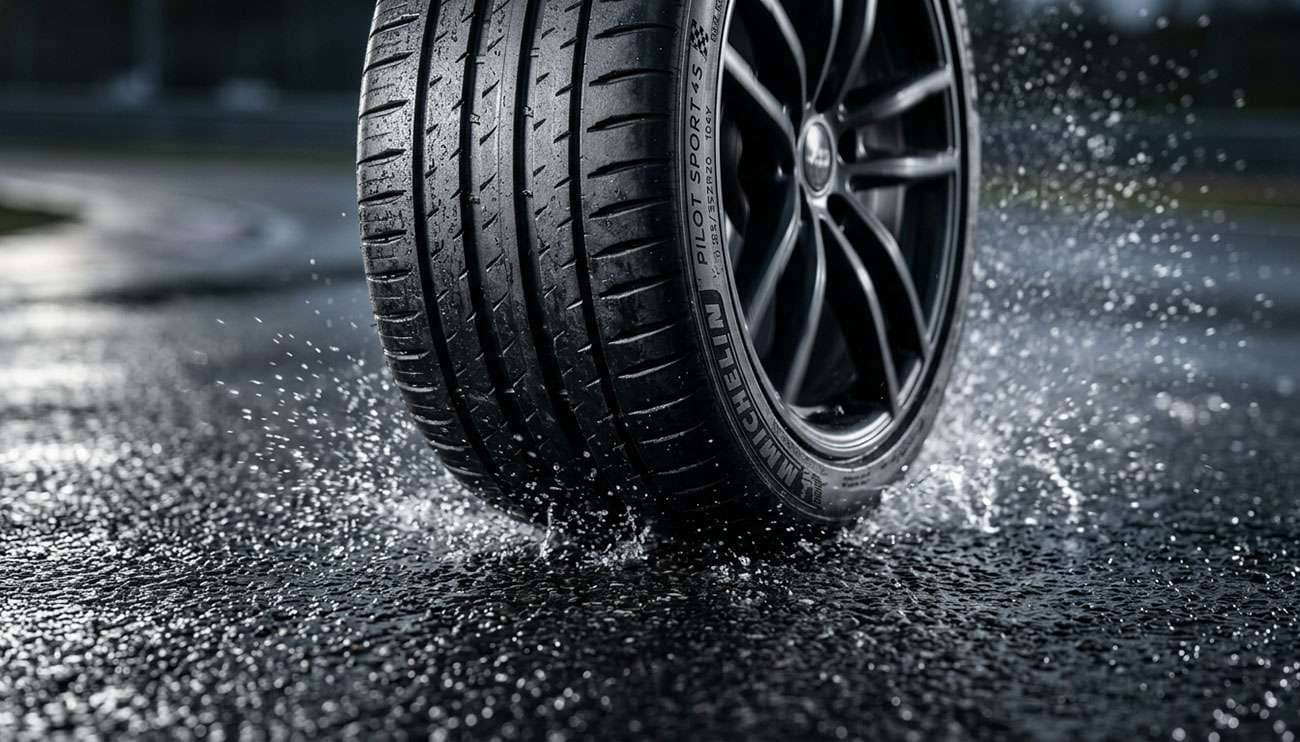
If you're shopping for ultra high performance tires, recalibrate your noise expectations — but don't resign yourself to a jackhammer cabin. The Michelin Pilot Sport 4S remains one of the best-engineered performance tires for balancing outright grip with livable noise levels. Its variable pitch tread design and optimized block sequencing prevent the resonant frequency buildup that makes lesser performance tires feel like driving over a rumble strip. The Bridgestone Potenza Sport is a strong alternative, delivering exceptional dry-road feedback with better-than-expected NVH characteristics for its performance tier.
If you occasionally track your car but drive on public roads the rest of the time, avoid full competition tires (R-compound) for daily use. Their stiff compounds and minimal void ratio optimize for grip only — not acoustic comfort — and they will be significantly louder on public pavement than any high-performance street tire. Keep the competition rubber for the track where it belongs.
Budget doesn't have to mean loud — it just demands more careful selection. Among value-tier tires, the Falken Sincera SN250 A/S consistently punches above its price point in noise testing, featuring a symmetric tread design with tuned pitch sequencing that most budget brands skip entirely. The Nexen N'Priz AH8 is another strong performer in the value segment — its silica-infused compound promotes quieter operation and even wear at a price point well below the premium tier. Neither tire will match a Michelin or Continental in ultimate refinement, but both will be dramatically quieter than the no-name imports at the very bottom of the price ladder.
When shopping budget, always cross-reference the UTQG treadwear rating. A tire rated at 700 will significantly outlast a 400-rated tire, meaning fewer replacements and fewer opportunities for the uneven wear that generates noise over time. A budget tire with a high treadwear rating is a smarter buy than a cheap tire you'll be swapping out at 25,000 miles.
Tire noise rewards the driver who pays attention. If you listen carefully, identify the type of noise, and connect it to a specific cause, you'll solve the problem faster and cheaper than the driver who ignores it until a minor wear issue becomes a structural failure — or a wheel bearing grinds itself into a safety incident. The principles here are straightforward: know your noise types, stay on top of rotation and inflation, distinguish between tire noise and wheel bearing noise before spending a dollar, and choose tires engineered for acoustic performance if a quiet cabin matters to you.
If you're already dealing with loud tires and aren't sure whether you're facing a tire issue, a bearing, or a suspension problem, start with the swerve test and a hands-on inspection of the tread surface. Cupping, feathering, and one-sided wear are mechanical stories your tires are telling you in plain language — and every one of them has a clear solution. Sometimes it's a rotation and an alignment. Sometimes it's new tires and a fresh set of shocks. Either way, knowing beats guessing every time.
At Performance Plus Tire, we carry tires across every category discussed in this guide — from the quietest touring all-seasons to the most aggressive off-road compounds. Our team is here to help you match the right tire to your vehicle, your driving style, and your noise expectations. Browse our full selection or reach out directly and let's find the right fit for your specific situation.
Here are the five most important things to remember about tire noise causes and solutions.
• Noise type identifies the cause: Humming suggests uneven wear or a failing wheel bearing, thumping points to cupped tires from worn shocks, and squealing on turns usually means low pressure or worn tread — each sound has a specific diagnosis.
• Wheel bearing vs. tire noise is a critical distinction: If noise intensity shifts when you swerve gently left or right at highway speed, that's a wheel bearing — not a tire — and it's a safety-critical repair that should not be delayed.
• Maintenance prevents most noise problems: Rotating every 5,000–7,500 miles, maintaining correct cold inflation pressure, and keeping alignment within spec eliminates the conditions that cause the majority of tire noise complaints before they start.
• Tread design determines noise level: Symmetric touring tread patterns are quietest; directional and asymmetric performance patterns are moderate; aggressive all-terrain and mud-terrain tires are loudest by design — choose accordingly for your primary driving environment.
• Budget tires cost more long-term: Very cheap tires often lack noise engineering features like variable pitch tread and tend to wear unevenly, leading to earlier noise onset and more frequent replacement — mid-tier options from brands like Hankook and Falken offer far better acoustic value.
A loud humming noise at highway speed is most commonly caused by uneven tire wear — specifically cupping, feathering, or one-sided wear — or by a failing wheel bearing. To tell the difference, gently swerve left and right at speed: if the noise changes intensity based on direction, suspect a wheel bearing. If the noise stays constant, check your tires for uneven wear patterns by running your hand across the tread surface. Both issues require prompt attention, but a failing wheel bearing is the more urgent safety concern.
Tire noise is speed-dependent — the faster the tire rotates, the more air is pumped through the tread grooves and the more the tread blocks compress and release per second. This is why noise is more noticeable at 60–75 mph than at 25 mph. Aggressive tread patterns, worn or cupped tires, and low-profile sidewalls all amplify this effect at highway speeds. If your city driving is quiet but highway driving is loud, the issue is most likely tread design or wear-related rather than a mechanical fault like a bearing.
The most reliable field test is the lane-change swerve: at a safe highway speed on an open road, gradually veer left, then gradually veer right. When you load weight onto a failing bearing (by turning away from that side), the noise gets louder. When you unload it (turning toward that side), it gets quieter. Tire noise from wear or tread design remains consistent through the swerve. Wheel bearing noise also tends to have a rougher, more grinding quality versus the smoother hum of tire noise. If you suspect a bearing, have it inspected immediately — bearing failure can lead to loss of vehicle control.
Yes — both over-inflation and under-inflation affect tire noise. Under-inflated tires run with a contact patch that's too wide, causing the outer tread edges to work harder and wear faster, which produces a hissing or humming noise over time. Over-inflated tires contact the road primarily in the center, causing center-rib wear and a different pattern of noise development. Always check cold inflation pressure against the sticker on your driver's door jamb — not the maximum pressure printed on the tire sidewall — and check monthly since tires lose approximately 1 PSI per month naturally.
New tires will eliminate noise caused by worn or unevenly worn rubber, but they won't fix underlying mechanical problems. If your noise was caused by worn shock absorbers creating cupped tires, replacing only the tires will result in the new tires cupping quickly and the noise returning within 10,000–15,000 miles. Always address the root cause — alignment, suspension components, rotation schedule — alongside the tire replacement. Also note that some new tires have a brief break-in period of 500–1,000 miles during which noise and handling settle as the mold release compound wears off the tread surface.