
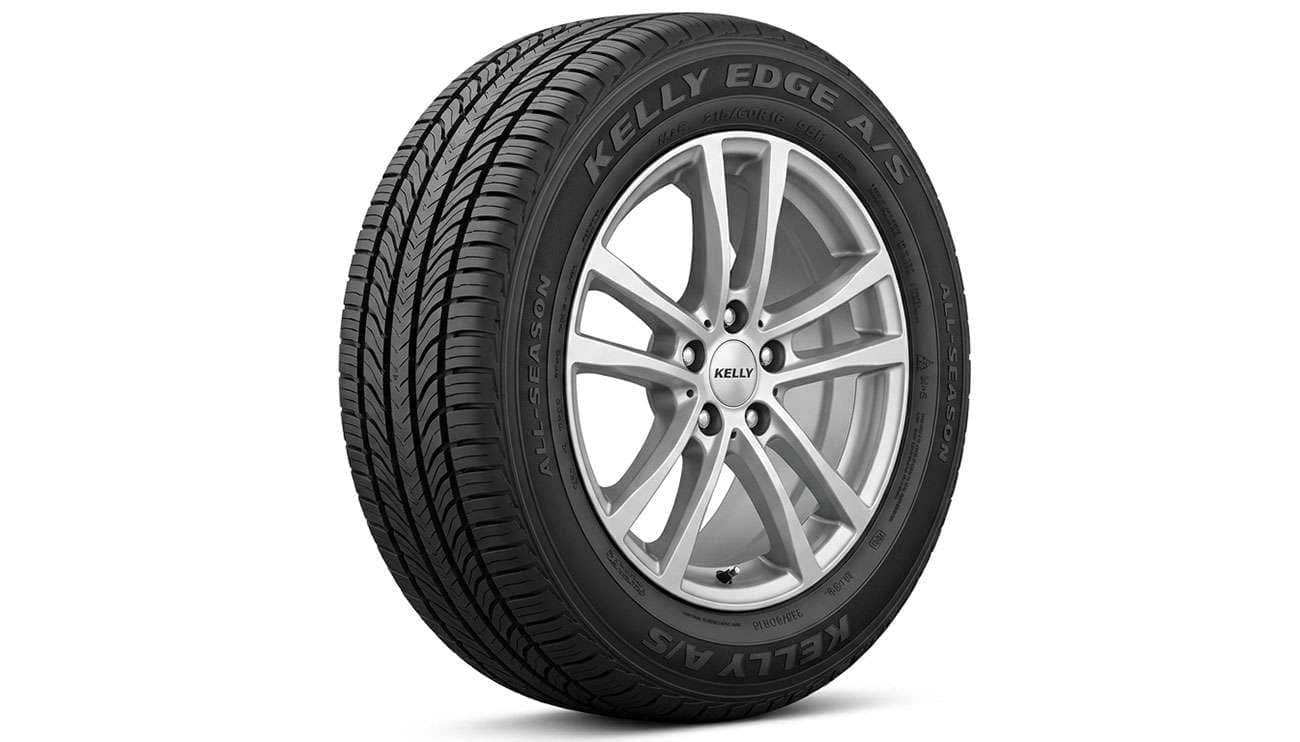
When customers ask me whether Kelly tires are any good, what they're really asking is a value question: can a tire that costs meaningfully less than the flagship names still deliver the safety, longevity, and fitment performance they need? As someone who spends his days matching tires to vehicles by load index, speed rating, and section width, I can tell you the answer is yes — and the reason comes down to one fact most shoppers don't fully appreciate. Kelly isn't a no-name brand riding on a low price. It's one of the oldest tire names in America, and it's owned and engineered by Goodyear.
That single detail changes the entire calculation. You're not gambling on an unknown overseas factory. You're buying a value-tier product that draws on Goodyear's compounds, casing technology, and quality control. Let's break down exactly what that gets you, line by line.
Yes. For the driver who wants dependable, properly engineered tires without paying a premium-badge price, Kelly is one of the smartest value plays on the market. The Edge family covers the everyday needs of sedans, crossovers, and trucks, and the Safari line handles light off-road duty. Across the board you get solid all-season traction, reasonable tread life, and a manufacturer warranty backed by one of the largest tire companies in the world.
The nuance is simply this: know which tier you're buying into. Kelly is positioned below Goodyear's flagship lines on purpose. You're trading the absolute last few percent of ultra-high-performance grip and the longest treadwear warranties for a substantially lower entry price. For most drivers, that trade is exactly the right call — and that's the whole point of the brand.
Kelly traces its roots to the Kelly-Springfield Tire Company, one of the original American tire makers dating back to the 1890s. Goodyear has owned the Kelly brand for decades, and that ownership is the foundation of everything I'm about to tell you. When you buy a Kelly, you're buying into Goodyear's engineering pipeline — the same compound science, the same casing and belt-package know-how, and the same manufacturing and distribution network that supports the premium lines.
From a fitment specialist's seat, that matters in concrete ways. It means consistent dimensional tolerances, so the tire mounts and balances predictably. It means a load-index and speed-rating spread that's properly engineered, not just printed on a sidewall. And it means parts availability and warranty support you can actually count on. A value tire is only a good value if it performs to spec and stands behind its rating — and Goodyear backing is what gives Kelly that credibility.
There's a quality-control angle here that's easy to overlook. Tire performance lives or dies on manufacturing consistency — uniform rubber distribution, balanced construction, and tight tolerances that keep road-force variation low. Those are exactly the things a major manufacturer's process control is built to deliver, and they're the difference between a value tire that rides smooth and one that fights you at the balancer. With Kelly, you're getting that process discipline at a value price, which is the heart of why I'm comfortable recommending the brand to customers who'd otherwise be nervous about trading down from a flagship name.
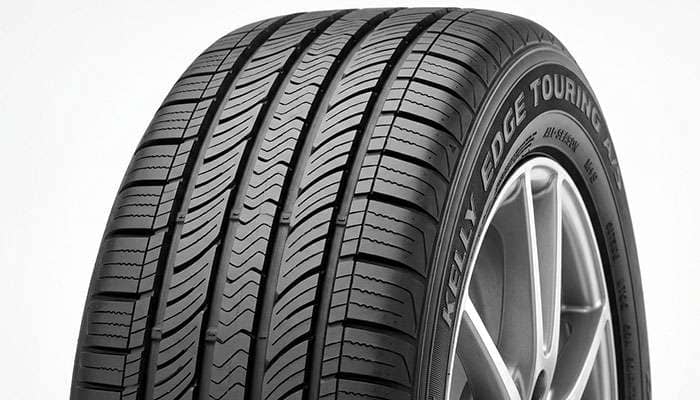
Kelly organizes its catalog cleanly, which makes my job easy. The Edge family is the consumer core, and the Safari line handles the truck and SUV off-road segment. Here's how I sort them by the job they're built to do.
This is where most Kelly buyers land, and rightly so. The Edge Touring A/S and Edge Touring Plus are the workhorses — designed for quiet, long-wearing, all-season service on sedans and crossovers. The Edge All Season covers the broad everyday segment. If your priority is a comfortable, dependable daily driver tire that won't break the bank, these are the lines to look at. For broader context on this category, our roundup of the best touring tires for daily commuters is a useful companion read.
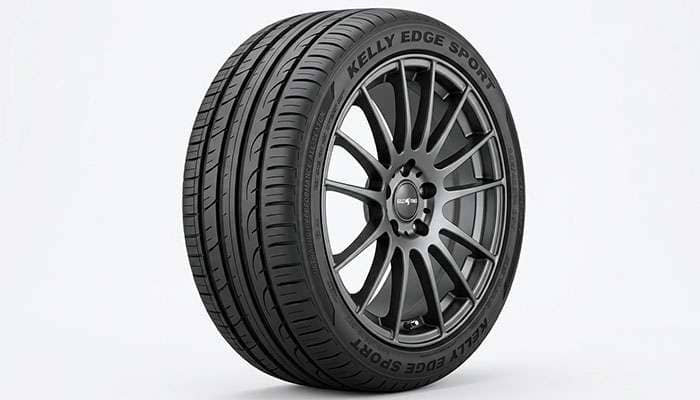
For drivers who want more responsive handling, the Edge Sport and Edge HP step up the grip and steering precision while keeping the value proposition intact. These won't chase a dedicated max-performance summer tire on a track day, and they're not meant to — they're the sensible-performance choice for someone who enjoys driving but lives in the real world. If you want to see where the segment leaders sit for comparison, our list of all-season performance picks lays out the field.
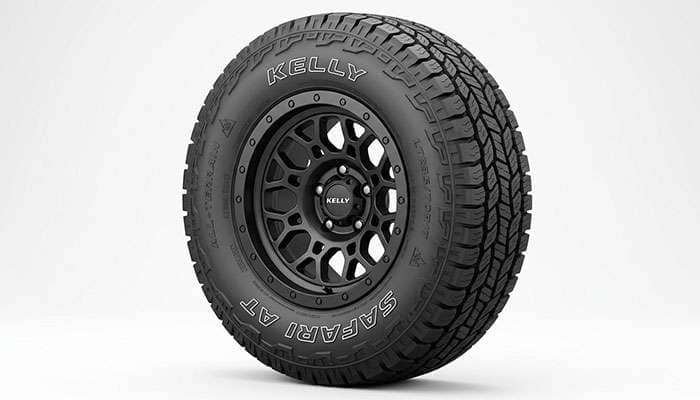
The truck and SUV side is broader than most people expect from a value brand. The Edge HT is the highway-terrain option for drivers who want a smooth, quiet ride and don't leave the pavement. The Edge AT and Safari AT add genuine all-terrain capability for light trails and gravel, while the Edge MT and Safari MT bring aggressive mud-terrain tread for the folks who actually get dirty. If you're unsure which terrain rating you need, start with our breakdown of highway, all-terrain, and mud-terrain tires, and if you're weighing capability against ride quality, the all-terrain versus all-season comparison will help you decide.
Kelly Line |
Category |
Best For |
|---|---|---|
Edge Touring A/S / Touring Plus |
Touring all-season |
Quiet, long-wearing daily driving on sedans and crossovers |
Edge All Season |
All-season |
Everyday dependable traction at a value price |
Edge Sport / Edge HP |
Performance |
Responsive handling for real-world driving |
Edge HT |
Highway terrain |
Smooth, quiet ride on trucks and SUVs |
Edge AT / Safari AT |
All terrain |
Light trails, gravel, and mixed-surface driving |
Edge MT / Safari MT |
Mud terrain |
Aggressive off-road traction |
Here's where the numbers actually favor Kelly. The smart way to evaluate any tire isn't the sticker price — it's cost per mile, which is the purchase price divided by the realistic tread life. When a tire costs significantly less up front but delivers a respectable mileage rating, the cost-per-mile figure often lands very close to a premium tire that costs far more to buy. That's the core of the Kelly value argument, and it's why I run the math with customers rather than just comparing price tags. Our deeper dive into whether budget tires are worth it walks through this calculation in detail.
On the warranty side, Kelly's treadwear coverage is competitive for the tier, and because it's administered through Goodyear's network, claims are straightforward. The one habit I always recommend: read the actual mileage warranty and its conditions before you buy, because the headline number always comes with fine print. Our guide on how to read tire treadwear ratings explains what those numbers really mean so you can compare apples to apples.
There's also a replacement-cost reality that drives a lot of real-world buying decisions. When all four tires wear out at once — and on a well-rotated set they usually do — the difference between a value tire and a flagship can be hundreds of dollars per set. For a household weighing that expense against everything else competing for the budget, a Goodyear-backed value tire that still meets the vehicle's load and speed requirements is often the responsible choice, not a compromise. That's the calculation I walk customers through, and it's why Kelly lands on so many of my recommendations for mainstream vehicles.
From a sizing standpoint, Kelly covers the high-volume fitments extremely well. The Edge touring and all-season lines blanket the common passenger and crossover sizes that account for the bulk of what's on the road — the popular 15- through 18-inch diameters with mainstream section widths and aspect ratios. The Safari and Edge truck lines extend coverage into the light-truck and SUV sizes, including the load ranges those vehicles require.
What that means practically: if you drive a mainstream sedan, crossover, or half-ton truck, there's a very good chance Kelly has a properly engineered size for your vehicle. Where coverage thins out is at the extremes — the most exotic staggered performance fitments or the largest specialty off-road sizes. If you're running something unusual, confirm the exact size and load rating first, but for the vast majority of drivers, Kelly's catalog has you covered. As always, match the load index and speed rating to or above your vehicle's placard, and you're set.
Kelly is the right call if you want dependable, properly engineered tires at a value price and you drive a mainstream vehicle — a commuter sedan, a family crossover, or a daily-driver truck. It's an especially strong choice for drivers replacing a full set who feel the sting of premium pricing but don't want to drop down to an unproven brand. With Kelly, you get the safety net of Goodyear engineering at a price that makes replacing all four tires far less painful. It's also a sensible pick for a second vehicle or a fleet where cost-per-mile is the deciding metric. For value-minded comparison shopping, it's worth seeing how a respected name like Cooper stacks up alongside it.
If your priority is the last increment of ultra-high-performance grip or the absolute longest treadwear warranty on the market, you'll want to step up to a flagship line — and that's by design. Kelly isn't trying to be the top-shelf tire. It's trying to be the smart-money tire, and at that job it succeeds.
So, are Kelly tires any good? From a fitment specialist's perspective, they're one of the better-kept secrets in value tires. You get Goodyear-backed engineering, clean and predictable fitment, competitive cost-per-mile economics, and a warranty supported by a major manufacturer — all at a price that respects your budget. Match the right Edge or Safari line to how you actually drive, keep up with rotations and proper inflation, and Kelly will deliver exactly the dependable service it promises. When you're ready to find your size, browse the full Kelly tire lineup and match the load and speed rating to your vehicle's placard.
Kelly tires are made by Goodyear. The Kelly brand traces back to the Kelly-Springfield Tire Company, one of America's oldest tire makers, and has been owned by Goodyear for decades.
Kelly is a separate, value-positioned brand owned by Goodyear. It draws on Goodyear's engineering and manufacturing resources but sits below the flagship Goodyear lines in price and positioning.
Kelly's touring and all-season lines carry competitive treadwear ratings for the value tier. Actual mileage depends on driving habits, rotation schedule, and proper inflation, but many drivers see dependable, full-season service across the life of the tire.
Yes. The Edge Touring and Edge All Season lines are designed specifically for quiet, comfortable, dependable daily driving on sedans and crossovers, making them a strong everyday value.
For drivers who want properly engineered tires at a value price, Kelly is well worth it. The combination of Goodyear backing, solid fitment coverage, and favorable cost-per-mile economics makes it a smart choice for mainstream vehicles.



