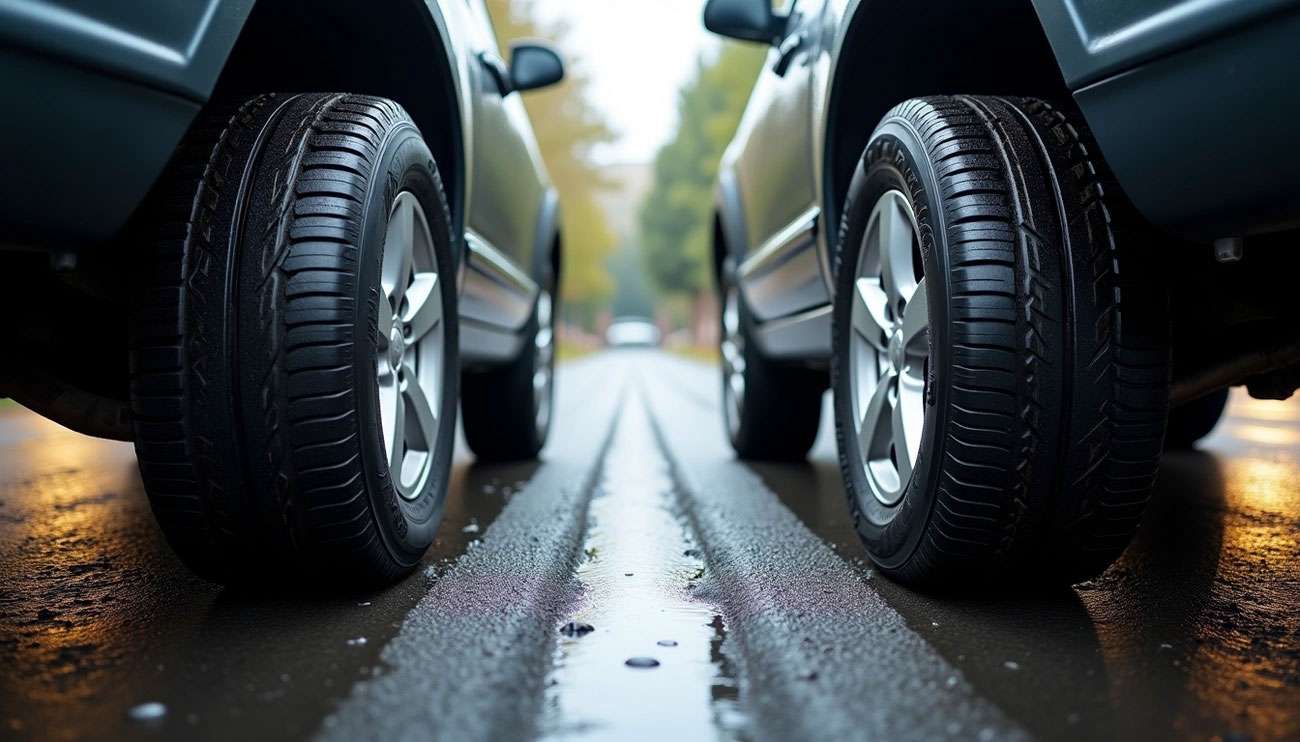
Budget tires cost $200-$400 for a complete set while premium options run $800 or more. The upfront savings look attractive, but our real-world testing uncovered some serious performance gaps you need to know about.
The numbers tell a stark story. Our braking tests revealed the worst-performing budget tires required 30 additional feet to stop on dry pavement—and an alarming 47 extra feet on wet roads—compared to top performers. When you consider that nearly two million MOT failures happen every year due to defective tires, with half classified as "dangerous", these stopping distances matter more than you might think.
Budget tires rely on lower-grade rubber compounds that directly impact braking performance. While they save money initially, their shorter lifespan often wipes out those savings over time. We put 10 different budget tire brands through rigorous testing to find out exactly when the cost savings make sense—and when they definitely don't.

Budget tires represent the affordable segment of the tire market, typically priced between $200-$400 for a complete set compared to premium options that often exceed $800. Understanding what defines budget tires and who benefits most from them goes well beyond sticker price alone.
Budget tires aren't just "cheap tires"—they're legitimate products that must meet the same basic safety standards as any tire sold. Every budget option passes mandatory safety testing before reaching the market. The Uniform Tire Quality Grading (UTQG) system provides standardized ratings on tire sidewalls that indicate treadwear, traction, and temperature resistance.
Higher treadwear numbers (600+) suggest longer-lasting tires, while traction grades range from AA (highest) to C (lowest). Temperature ratings use A, B, or C classifications to indicate heat resistance at different speeds, with A-rated tires designed to handle speeds above 115 mph. These ratings help you compare options within your budget range.
Budget tires make sense for specific driving scenarios. Drivers who primarily travel in urban or suburban environments without extreme weather conditions often find the performance differences between budget and premium options minimal during everyday use.
Budget tires work particularly well for:
Vehicles driven infrequently or for shorter distances
Second family cars that see limited use
Older vehicles where premium tire investment exceeds the vehicle's value
Emergency replacements when funds are tight
Short-term ownership situations where longevity matters less
City driving and standard commuting in mild weather conditions suit budget tires well. They become less suitable for high-speed highway driving, extreme weather conditions, or performance vehicles where superior handling matters most.
Several manufacturers produce quality budget tires that balance affordability with acceptable performance. We carry many of these brands at Performance Plus Tire:
Achilles – Operating since 1991 and sold in over 80 countries
Atturo – Known for affordable truck and SUV tires
Federal – Recognized for performance-oriented budget options
General – Offers reliable all-season options at modest prices
Ironman – Provides some of the most affordable yet safe options
Lexani – Known for stylish low-profile designs
Mastercraft – A trusted Cooper Tires sub-brand with over 100 years of experience
Milestar – Popular with commuters for high-mileage durability
Nexen – Produces budget tires for various vehicles with strong warranties
Hankook – Slightly higher-priced but offers better performance than most budget brands
These brands prove that "budget" doesn't equal "dangerous"—quality affordable options exist for everyday drivers with realistic expectations about their tire performance needs.
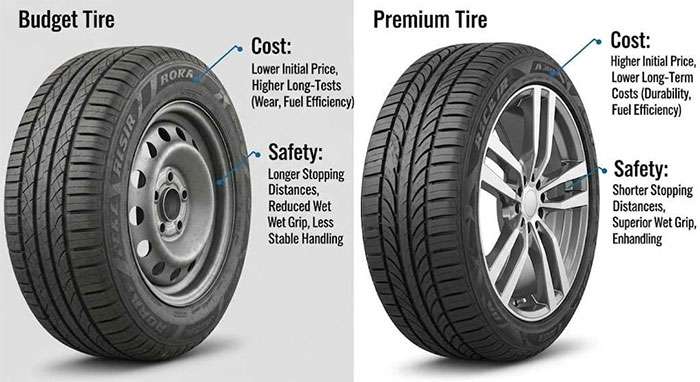
The gap between budget and premium tires runs much deeper than price tags. These fundamental differences explain why your tire choice impacts everything from stopping distance to daily comfort.
Premium tire manufacturers invest heavily in advanced rubber compounds that blend natural and synthetic materials with specialized additives. These high-grade formulations contain silica-enriched materials that boost wet traction, maintain flexibility in cold weather, and reduce rolling resistance. Budget tires rely primarily on carbon black fillers with minimal silica content—a cost-cutting approach that creates harder rubber compounds prone to heating up during extended driving.
Internal construction tells a similar story. Premium options feature reinforced construction with stronger belts and sidewalls that enhance stability and resist damage. This robust architecture provides superior protection against road hazards like potholes and debris. Budget alternatives use simpler construction methods that meet basic safety requirements but sacrifice long-term durability.
Tread patterns reveal another critical distinction. Premium tires showcase precisely engineered groove systems that effectively channel water away from the tire's contact area. The specific depth and spacing of these grooves prevent hydroplaning at higher speeds—premium tires maintain traction until approximately 50 mph in wet conditions while budget options lose grip much earlier.
Premium tires typically start with deeper tread depths (10/32" or more) compared to budget alternatives (8/32" or less). This extra 2/32" doesn't sound like much, but it translates to thousands of additional miles and consistent performance throughout the tire's lifespan. Budget tires wear down faster due to their softer compound formulations, especially in demanding driving conditions.
Braking distance differences separate good tires from dangerous ones. Independent tests consistently show premium tires stop 15-20% faster than budget alternatives in both dry and wet conditions. On wet pavement, this performance gap becomes even more pronounced—the worst-performing budget tires require an extra 18 meters (nearly 60 feet) to stop from 50 mph.
Noise levels also vary significantly between tire categories. Premium tires feature advanced noise-reduction technologies like foam insulation and optimized tread patterns that minimize road roar. Budget tires often produce noticeably louder cabin noise, particularly at highway speeds, because they lack these refinements.
Handling characteristics matter for both safety and enjoyment. Premium tires provide crisper steering response and better lateral stability during cornering. Budget alternatives typically offer mushier feedback and less precise control inputs, making them feel vague in emergency maneuvers where quick reactions count most.
Rolling resistance directly affects your fuel costs. Budget tires generally create more friction against road surfaces, forcing your engine to work harder and burn more fuel. Studies show budget tires can decrease fuel economy by 8-10% compared to low-rolling-resistance premium options.
Premium manufacturers engineer tires that balance grip with efficiency. Their advanced silica compounds reduce rolling resistance without sacrificing traction performance. This technology costs more initially but pays back through fuel savings—particularly valuable for high-mileage drivers who might save $100-200 annually on gas.
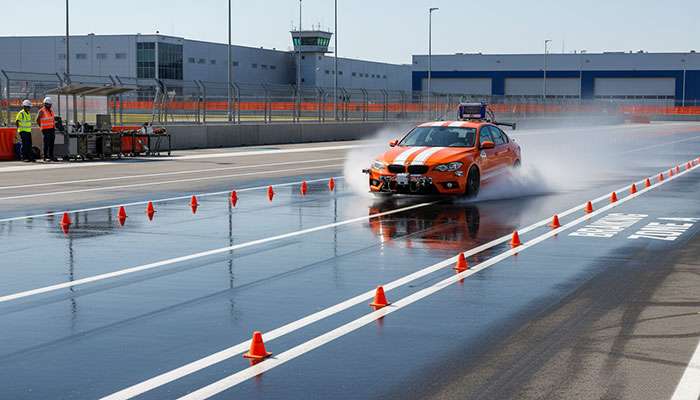
We tested 10 budget tire brands using standardized protocols that mirror real-world driving conditions. These tests focus on the performance characteristics that matter most for everyday safety and value.
Our braking tests use consistent testing procedures at a dedicated facility. Each tire undergoes emergency stopping tests from 50 mph on both dry and wet pavement. Multiple runs ensure accuracy, with results averaged to eliminate variables like driver reaction time.
The wet braking evaluation proves particularly revealing. We measure exact stopping distances and the speed at which the vehicle would still be traveling when a premium tire brings the car to a complete stop. This "leftover speed" metric demonstrates real-world safety implications—some budget tires were still traveling at 49 km/h (approximately 30 mph) when premium options had fully stopped.
Hydroplaning tests measure the speed at which tires lose contact with wet pavement. We drive through standing water at progressively higher speeds until the tire begins to float. Premium tires maintained grip until 80.9 km/h, while budget alternatives failed at significantly lower speeds.
These tests use calibrated water depth and surface conditions to ensure consistency across all tire samples. The results directly correlate with real-world safety during heavy rain or highway driving through standing water.
Sound level testing occurs on standardized road surfaces at highway speeds (70 mph). We use decibel meters positioned inside the cabin to measure actual driver experience. Noise differences between premium and budget tires typically range from 2-5 decibels—a small number that represents a significant perceived volume increase.
Treadwear testing combines controlled mileage accumulation with tread depth measurements at regular intervals. We project total lifespan based on wear rates observed during the first 5,000 miles of use. These projections account for different driving styles and conditions to provide realistic mileage expectations.
Budget tires showed accelerated wear patterns, particularly in the shoulder areas. This uneven wear reduces effective lifespan and creates handling imbalances before the tire reaches the legal tread depth minimum.
Not all budget tires compromise safety for savings. These three brands delivered impressive results that challenge common assumptions about affordable rubber.
The Tomket Sport Series 1 emerged as the clear winner in our budget category testing. When stopping from 50 mph on wet pavement, these tires stopped just 7.11 meters longer than premium Continental ContiPremiumContact 5 tires—an excellent result that brings them within striking distance of mid-range options.
Dry braking performance proved even more competitive. The Tomket tires required only 1.56 meters additional stopping distance compared to the premium benchmark. This minimal gap means drivers won't sacrifice meaningful safety in typical driving conditions.
Pricing sits squarely in budget territory at approximately $60-80 per tire, making a complete set cost under $350 including basic installation. The combination of strong performance and affordable pricing makes Tomket an easy recommendation for cost-conscious drivers.
Nankang delivered surprisingly strong results in both wet and dry testing. The Econex NA1 stopped 7.3 meters longer than premium tires in wet conditions—essentially matching the Tomket's performance while typically selling for $5-10 less per tire.
This Taiwanese manufacturer has built a reputation for producing reliable budget options without cutting critical safety corners. The NA1 features directional tread patterns that effectively channel water, helping explain its solid hydroplaning resistance.
Drivers can expect around 35,000-40,000 miles from these tires under normal driving conditions. While this falls short of premium longevity, it represents respectable durability for the budget segment.
The Winrun R330 rounds out our top three with wet braking results of 8.44 meters longer than premium tires. Though slightly behind the first two contenders, this performance still places it among the safer budget choices we tested.
Dry pavement results showed similar patterns—close enough to premium performance that everyday drivers won't notice significant differences. The R330 excels particularly in noise control for its price point, producing quieter cabin environments than most budget alternatives.
Pricing varies by size but generally falls between $55-75 per tire. The combination of adequate safety margins, decent treadlife projections (30,000-35,000 miles), and competitive pricing makes the R330 a solid third choice for budget-minded shoppers.

Some budget tires create genuine safety risks that no amount of cost savings can justify. These three brands performed so poorly in our testing that we recommend avoiding them entirely.
The Triangle TC101 produced the worst wet braking results in our entire test group. When premium tires brought vehicles to a complete stop from 50 mph, the TC101-equipped car was still traveling at approximately 49 km/h—nearly 30 mph. This "leftover speed" represents the difference between a close call and a serious collision.
Dry braking performance proved only marginally better. The additional stopping distance combined with poor hydroplaning resistance makes these tires dangerous in any weather conditions beyond perfectly dry pavement.
Despite rock-bottom pricing (often $40-50 per tire), the Triangle TC101's safety compromises outweigh any potential savings. Even drivers on tight budgets can find safer alternatives at similar price points.
The Radar Dimax R8+ demonstrated concerning inconsistency during testing. While some individual test runs showed acceptable performance, others revealed alarming braking distance variations that suggest quality control issues.
Wet weather performance placed this tire near the bottom of our rankings. The tread pattern fails to evacuate water effectively, leading to early hydroplaning onset—these tires lost grip at speeds where safer budget options maintained full contact with the road.
Noise levels also ranked among the highest we measured, creating fatiguing cabin environments during highway driving. Combined with marginal safety performance, the Dimax R8+ represents poor value even at its budget price point.
The Goodride SA37 exemplifies the risks of choosing price over performance. Wet braking tests showed this tire stopping 11.44 meters (37.5 feet) longer than premium options—a gap that often determines accident outcomes.
Treadwear projections suggest these tires will need replacement after just 25,000-30,000 miles. The combination of short lifespan and poor safety margins eliminates any cost advantage the low initial price might offer.
Handling characteristics also disappointed. The SA37 produces vague steering feedback and exhibits concerning lateral instability during lane changes at highway speeds. These handling issues compound the already problematic braking performance.
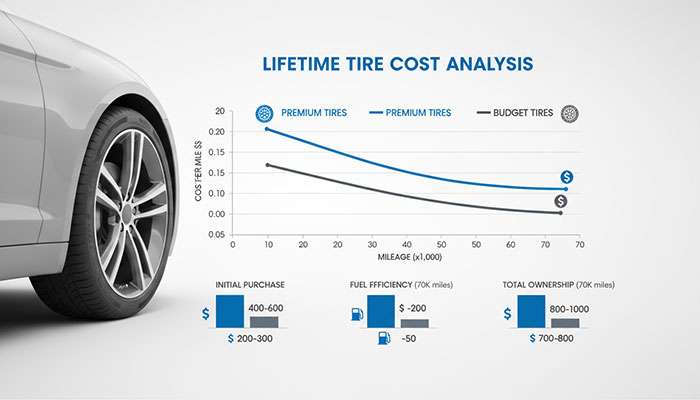
Simple price comparisons mislead shoppers who don't calculate total ownership costs. When you factor in lifespan and performance, premium tires often deliver better value than their sticker prices suggest.
Budget tires typically cost $200-400 for a complete set of four, including basic mounting and balancing. Premium options run $600-1,000 for the same services. This $400-600 price gap represents the primary appeal of budget choices.
Mid-range tires occupy the middle ground at $400-600 per set. These options often provide the best balance between safety and affordability, though they don't make sense for every driving situation.
Individual tire prices vary significantly by size. Common passenger car sizes (205/55R16) might cost $50 for budget, $100 for mid-range, and $150+ for premium. Larger SUV and truck sizes increase all categories proportionally—budget options still maintain a 50-60% price advantage.
Budget tires averaging $100 each typically last 30,000 miles, resulting in a cost of 1.33 cents per mile. Premium tires at $200 each often deliver 70,000 miles—just 1.14 cents per mile. This counterintuitive result shows premium tires actually cost less to operate over their lifespan.
The calculation becomes even more favorable for premium options when you include fuel economy impacts. Budget tires with higher rolling resistance can reduce fuel economy by 8-10%. For drivers covering 15,000 miles annually at 25 mpg average, this efficiency loss costs approximately $50-75 per year in additional fuel.
Installation costs also matter. Most tire shops charge $15-25 per tire for mounting and balancing. Budget tires requiring replacement every 30,000 miles mean you'll pay these fees more than twice as often as premium tire users over equivalent mileage.
Safety-related costs rarely appear in simple comparisons but carry significant financial implications. Insurance deductibles after accidents range from $500-2,000 depending on coverage. Vehicle repairs following collisions typically cost thousands more. Premium tires' superior braking performance reduces accident probability, potentially saving substantial money.
Noise and comfort differences affect driver fatigue and vehicle resale value. Excessive tire noise can decrease resale value by several hundred dollars—particularly noticeable in quieter vehicles like luxury sedans and electric cars where tire noise becomes the primary sound source.
Warranty coverage varies dramatically. Premium manufacturers often include road hazard warranties covering repairs or replacements for tire damage. Budget brands rarely offer similar protection, leaving drivers to absorb costs for punctures, sidewall damage, or manufacturing defects.
High-mileage drivers reach the break-even point quickly. Someone driving 20,000 miles annually crosses the cost-per-mile advantage threshold in less than two years with premium tires. The superior durability and performance make premium options the economical choice for frequent highway commuters.
Low-mileage drivers (under 5,000 miles annually) might never reach break-even. If tires age out before wearing out—which happens after 6-8 years regardless of tread depth—the budget option's lower initial cost provides genuine savings.
Calculate your personal break-even point using this formula: (Premium price - Budget price) ÷ (Budget cost per mile - Premium cost per mile) = Break-even mileage. For typical prices, this calculation yields approximately 35,000-45,000 miles—less than three years for average drivers.
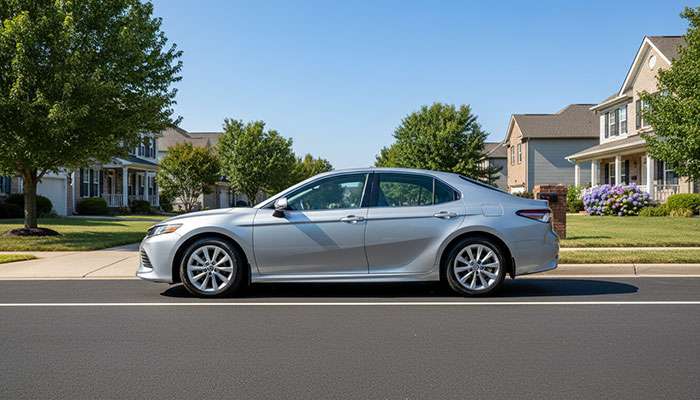
Budget tires serve legitimate purposes when matched to appropriate driving conditions. Understanding these scenarios helps drivers save money without compromising safety.
Vehicles covering fewer than 1,500 miles annually make perfect candidates for budget tires. The superior durability of premium options becomes irrelevant when tires age out before wearing out. Rubber compounds degrade over time regardless of tread depth—most manufacturers recommend replacement after 6-8 years even with adequate tread remaining.
Second cars that sit in driveways most weeks fall into this category. The occasional trip to the grocery store or airport doesn't justify premium tire investments when the tires will expire from age rather than wear. Budget options save money without meaningful safety tradeoffs for these limited-use scenarios.
City driving patterns suit budget tire characteristics well. Lower speeds reduce the importance of ultimate braking performance—the 15-foot stopping distance gap between budget and premium tires matters less at 35 mph than at highway speeds. Stop-and-go traffic patterns don't stress tires the way sustained high-speed driving does.
Suburban commuters who rarely encounter highways can safely choose quality budget brands. Most suburban driving occurs on well-maintained roads in fair weather conditions where budget tires perform adequately. The performance gap narrows significantly when vehicles rarely exceed 50 mph or face challenging weather.
Vehicles worth less than $5,000 rarely justify premium tire investments. When a complete set of premium tires costs 15-20% of the vehicle's value, the economics favor budget alternatives. These older vehicles often face other age-related issues that make long-term tire longevity less relevant.
Cars approaching the end of their useful life benefit from immediate cost savings over long-term value. If you plan to replace a vehicle within 12-18 months, budget tires make financial sense—you'll likely never need to replace them before selling or scrapping the car.
Regions with minimal rainfall and no snow see smaller performance gaps between tire categories. Southern California, Arizona, and similar climates rarely test tires' wet weather capabilities. Budget tires perform closer to premium options when weather conditions matter most.
Temperature stability also helps budget tire performance. Extreme heat or cold challenges basic rubber compounds, but moderate climates (50-80°F year-round) keep budget tires in their optimal operating range. This environmental advantage reduces the performance disadvantages that plague budget options elsewhere.
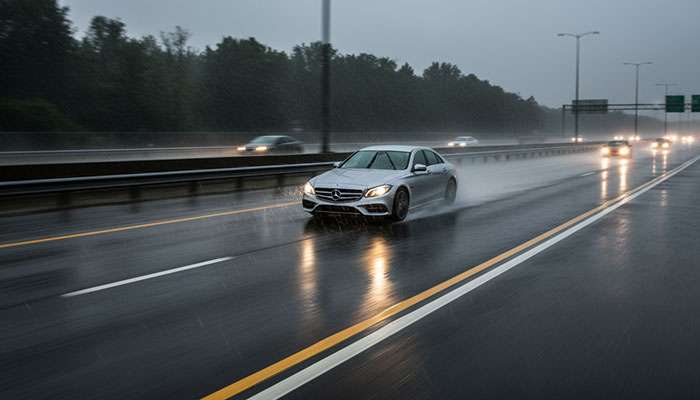
Certain driving conditions expose budget tires' limitations to dangerous effect. These scenarios demand premium performance where cost savings become false economy.
Highway speeds magnify every performance difference between tire categories. The kinetic energy requiring dissipation during emergency braking increases exponentially with speed—stopping from 70 mph demands four times more energy than stopping from 35 mph.
Budget tires struggle with sustained high-speed operation. The inferior rubber compounds heat up excessively during extended highway driving, accelerating wear and reducing grip. Temperature resistance ratings matter most at highway speeds where budget alternatives often show their weakest performance.
Interstate commuters regularly facing 65+ mph speeds should invest in premium tires. The safety margins during emergency situations justify the additional cost, particularly when you consider that highway accidents typically involve higher speeds and more severe outcomes than urban collisions.
Vehicles designed for spirited driving demand tires that match their capabilities. Performance cars generate higher cornering forces and require crisper steering response than budget tires can provide. The mushy handling characteristics of budget alternatives compromise the driving dynamics that make performance vehicles enjoyable.
Sports cars often wear staggered tire sizes with wider rear tires. These specialized sizes cost more across all categories, but the percentage price difference between budget and premium narrows. A $150 budget tire and $250 premium tire represent a smaller relative gap than smaller sizes—making premium choices more justifiable.
High-performance vehicles also generate more heat during aggressive driving. Budget tire compounds can't handle these thermal loads safely. Pushing budget tires hard risks catastrophic failure modes that premium tires' reinforced construction prevents.
Trucks and SUVs hauling heavy loads place enormous stress on tires. Load ratings become critical safety factors—budget tires often meet minimum requirements without the safety margins premium options provide. The additional 500-1,000 pounds of weight during towing creates heat and flexing that budget tire construction can't handle reliably.
Trailer sway amplifies handling issues. Budget tires' imprecise steering response becomes dangerous when managing trailer dynamics. Premium tires' superior lateral stability helps drivers maintain control during emergency maneuvers while towing.
Load range matters significantly. E-rated premium tires designed for heavy-duty use cost more than passenger-rated budget alternatives, but attempting to save money with insufficient load ratings creates genuine safety hazards. Never compromise on load rating regardless of budget concerns.
Weather conditions reveal the biggest performance gaps between tire categories. Budget tires lose traction and begin hydroplaning at much lower speeds than premium options. Premium tires maintain grip until 80.9 km/h in wet conditions, while budget tires fail substantially earlier.
Budget tires create serious safety hazards in:
Heavy rain (stopping distances increase up to 18 meters)
Snow and ice conditions (stopping distances can double compared to proper winter tires)
The inferior tread designs and basic rubber compounds in budget tires simply can't handle challenging weather when you need reliable performance most.
Selecting the right tires requires more than just matching size numbers. Smart tire shopping means understanding the tools available and asking the right questions to match your specific driving needs.
EU tire labels provide standardized ratings that take the guesswork out of tire shopping. The classification system ranges from A (best) to E (worst), covering three main categories: fuel efficiency, wet grip, and external noise.
The fuel efficiency rating directly impacts your wallet—A-rated tires can save up to 80 liters of fuel annually. More importantly for safety, the wet grip rating tells you exactly how well tires stop in rain—each class difference represents 3-6 meters in braking distance. External noise ratings (A-C) matter for ride comfort, especially in quieter vehicles.
Look for additional symbols on newer labels. Snow grip symbols (3PMSF) and ice grip indicators show winter performance capabilities, while QR codes link to detailed manufacturer specifications.
Your driving patterns determine which tire characteristics matter most. City drivers need tires with reinforced sidewalls to handle potholes and curb impacts. Highway drivers should prioritize tires engineered for sustained high-speed performance.
Consider your local climate conditions carefully. Temperatures below 44°F require winter tires because standard rubber compounds harden and lose grip effectiveness. Year-round drivers in moderate climates benefit most from quality all-season options.
Don't forget to ask about warranty coverage. Find out what's included for road hazards, manufacturing defects, and complimentary services like rotations.
Get the best price on budget brand tires at Performance Plus Tire while ensuring they meet your specific driving requirements and safety standards.
Our testing of 10 budget tire brands reveals a clear picture: the right choice depends entirely on how you drive. Budget tires deliver adequate performance for specific situations, yet create genuine safety risks in others.
The braking performance differences we uncovered cannot be ignored. When premium tires bring your vehicle to a complete stop in wet conditions, some budget options still travel at dangerous speeds. This safety gap alone makes premium tires worth considering for anyone who regularly encounters rain or drives at highway speeds.
Cost calculations often surprise drivers. While budget tires save money upfront, their shorter lifespan frequently makes premium options more economical over time. Premium tires lasting 70,000 miles cost about 1.1 cents per mile compared to 1.3 cents for budget alternatives lasting 30,000 miles.
Our testing did reveal some standout budget performers. Tomket Sport Series 1 stopped just 7.11 meters longer than premium Continental tires in wet conditions—impressive results that prove not all affordable options compromise safety. Nankang Econex NA1 and Winrun R330 also delivered solid performance that challenges common assumptions about cheap tires.
Budget tires make perfect sense for second vehicles driven occasionally, older cars nearing replacement, or short-term ownership situations. When vehicles cover fewer than 1,500 miles annually, the durability advantages of premium tires matter less than immediate savings.
Highway drivers, high-mileage commuters, and those facing frequent weather challenges should invest in premium rubber. The enhanced safety margins during emergency situations justify the additional cost, along with improved comfort and reduced noise.
Your driving patterns should guide your decision. City commuters traveling short distances in mild weather can safely choose quality budget brands. Highway drivers facing varied conditions benefit significantly from premium safety and performance. Get the best price on budget brand tires at Performance Plus Tire while making the choice that matches your specific driving needs.
After testing 10 budget tire brands, here's what every driver needs to know about balancing cost savings with safety and performance:
• Budget tires can be 47 feet longer to stop on wet roads - Premium tires stop completely while budget options still travel at 49 km/h, creating serious safety risks in emergency situations.
• Premium tires often cost less per mile despite higher upfront prices - Budget tires ($400) lasting 30,000 miles cost 1.3¢/mile vs premium ($800) lasting 70,000 miles at 1.1¢/mile.
• Top budget performers like Tomket Sport Series 1 challenge expectations - Some budget brands stopped just 7 meters longer than premium Continental tires, proving not all cheap tires are dangerous.
• Budget tires make perfect sense for specific scenarios - Second cars, low-mileage drivers under 1,500 miles annually, and short-term ownership situations benefit from immediate savings.
• Avoid budget tires for highway driving and extreme weather - High-speed travel and wet conditions expose budget tires' safety limitations, where performance gaps become life-threatening.
The decision ultimately depends on your driving patterns: city commuters in fair weather can safely choose quality budget brands, while highway drivers facing varied conditions should invest in premium safety margins.
Budget tires can provide adequate performance for typical urban driving in fair weather conditions. However, they may have reduced wet grip and longer braking distances compared to premium options, especially in emergency situations.
On average, budget tires deliver between 20,000 to 40,000 miles before requiring replacement. This is notably less than premium options, which can often achieve 55,000 to 95,000 miles.
Yes, budget tires can impact fuel efficiency. They typically have higher rolling resistance, which causes the engine to work harder and burn more fuel. This can lead to a decrease in fuel economy of up to 10% in some cases.
Budget tires are suitable for vehicles driven infrequently (less than 1,500 miles annually), second cars used for short trips, older vehicles nearing the end of their lifespan, or in short-term ownership scenarios where immediate cost savings are prioritized.
Budget tires generally have inferior performance in wet conditions compared to premium options. They may begin to hydroplane at lower speeds and can require significantly longer stopping distances - in some cases up to 18 meters more when braking from 50 mph on wet roads.