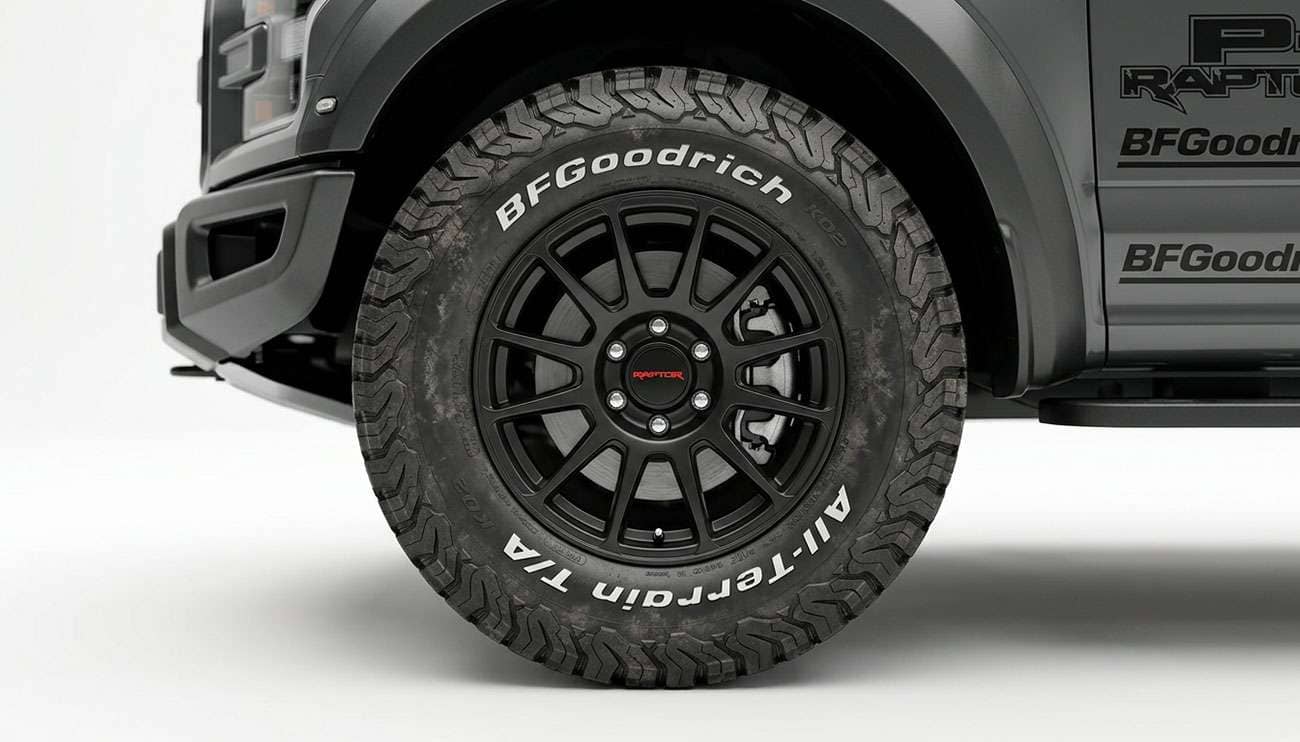
I've been mounting tires since the days when a set of raised-white-letter radials was the first thing a kid bought after his first paycheck. In all those years, a handful of names have come and gone, gotten bought out, watered down, or quietly disappeared. BFGoodrich is one of the few that's still standing, still respected, and still sitting on the rack in just about every serious shop in the country. So when somebody rolls in and asks me straight up, "Hank, are BFGoodrich tires any good?" — I don't have to think hard about it.
But "good" is doing a lot of work in that question. Good for what? Good for crawling over rocks, good for laying down 60 in a quarter mile, good for hauling the family to grandma's, or good for finishing off a '68 Camaro the right way? BFGoodrich makes tires for all of those jobs, and they don't all earn the same grade. Let me walk you through what I tell customers across the counter.
Yes. For most of what people actually buy them for — off-road, all-terrain, performance street, and classic restoration — BFGoodrich is one of the safest bets on the wall. They're not the cheapest tire you can put on a vehicle, and they're not trying to be. What you're paying for is a tire that does what the sidewall says it'll do, holds up when you lean on it, and comes from a company that has been proving itself in the dirt and on the track for over a hundred years.
Where I pump the brakes a little is on value-shopping. If your only goal is the lowest price per tire and you drive a sensible commuter that never sees anything rougher than a pothole, there are cheaper tires that'll serve you fine. BFGoodrich earns its keep when the conditions get serious. The closer you get to mud, rock, drag strips, or a show-quality restoration, the more sense the brand makes.
BFGoodrich isn't some marketing label dreamed up last decade. The company put the first pneumatic tires on American automobiles back at the turn of the last century, and it's been part of the country's car culture ever since. These days the brand is owned by Michelin — and before anyone wrinkles their nose at that, understand it's a good thing. It means BFGoodrich gets access to one of the deepest engineering benches on the planet while keeping its own personality.
And that personality was forged in the desert. BFGoodrich made its bones in off-road racing — the Baja peninsula, the brutal endurance runs where a tire either survives or it doesn't. That's not a billboard claim; that's where the All-Terrain and Mud-Terrain lines actually got hardened. When a tire has to live through a thousand miles of rock and silt with a championship on the line, the lessons trickle straight down to the set you bolt onto your truck. That heritage is the single biggest reason I trust the brand when the pavement ends.
The biggest mistake folks make is treating "BFGoodrich" like it's one tire. It isn't. The brand covers four very different worlds, and the right answer depends entirely on which one you live in. Here's how I sort it out at the counter.
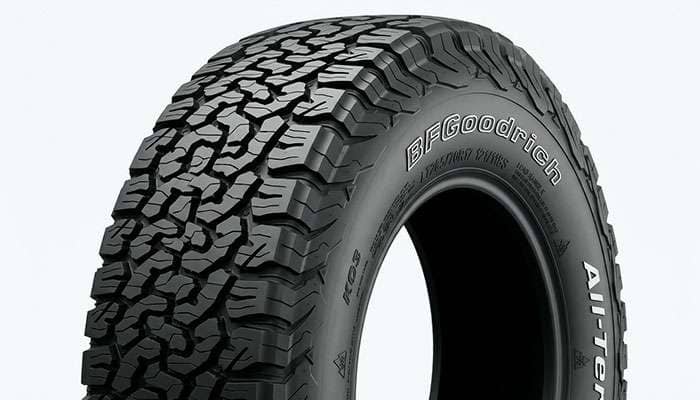
This is the heart of the brand. The All-Terrain T/A KO2 has been the default recommendation for serious trucks and 4x4s for years — tough sidewalls, a tread that bites without beating you to death on the highway, and a reputation for shrugging off the kind of abuse that shreds lesser tires. The newer All-Terrain T/A KO3 builds on it with better wear and wet grip, and it's already proving itself. If your idea of a good weekend involves leaving the pavement behind, this is where I'd point you. Want to see how it stacks up against the competition, take a look at our breakdown of the KO3 versus the Nitto Ridge Grappler.
For the folks who spend more time in the muck than on the road, the Mud-Terrain T/A KM3 is the heavy hitter — that aggressive tread clears mud and chews rock with the best of them. And the Trail-Terrain T/A splits the difference for crossover and SUV owners who want a softer ride but still some real capability. If you're not sure which category you fall into, our guide to highway, all-terrain, and mud-terrain tires lays it out plainly.
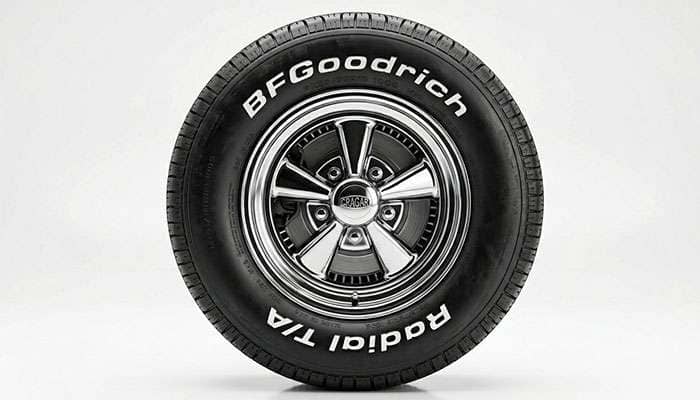
Here's where my heart lives. The Radial T/A — that raised-white-letter classic — is the tire that's been wrapping muscle car wheels since the disco era, and BFGoodrich still makes it. There's nothing that finishes off a restored Mustang or Chevelle quite like a proper set of T/As. For the modern performance crowd, the g-Force line covers the bases: the g-Force COMP-2 A/S+ for all-season grip, the Sport COMP-2 for dry-weather aggression, and the g-Force Phenom T/A for drivers who want sticky without going broke.
Not everybody's beating up a trail or burning rubber, and BFGoodrich hasn't forgotten the daily driver. The Advantage Control and Advantage T/A Sport lines are the brand's answer for sedans, crossovers, and folks who just want a quiet, long-wearing, dependable tire. These are honestly the lines I think about most when someone asks whether BFGoodrich is "worth it" for a normal car — they're solid, but this is also where the competition is fiercest and the price gap matters most.
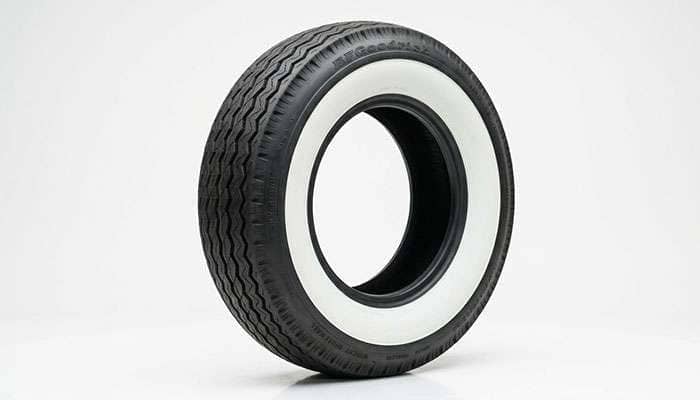
This is the part most reviews skip, and it's the part I love. BFGoodrich's Silvertown line — bias-ply, radial, wide whitewalls, redlines, goldlines — is the real deal for classic and antique restoration. If you're chasing period-correct rubber for a '50s cruiser or a '60s hot rod, these aren't reproductions of someone else's idea; they're BFGoodrich's own heritage construction. If you're weighing whether to go original or modern under those classic fenders, our piece on the bias-look versus true radial question is worth your time, and so is our broader antique car tire guide.
BFGoodrich Line |
Best For |
What Stands Out |
|---|---|---|
All-Terrain T/A KO2 / KO3 |
Trucks and 4x4s, daily-plus-trail |
Tough sidewalls, proven durability, balanced on-road manners |
Mud-Terrain T/A KM3 |
Serious off-road and rock crawling |
Aggressive tread, excellent mud and rock traction |
g-Force COMP-2 / Sport / Phenom |
Performance street and weekend driving |
Strong grip for the money, modern compounds |
Radial T/A |
Muscle cars and classic street builds |
Iconic raised white letters, period-correct look |
Advantage Control / T/A Sport |
Daily drivers, sedans, crossovers |
Quiet, long-wearing, dependable touring tire |
Silvertown (bias / radial / whitewall) |
Antique and classic restoration |
Authentic heritage construction, period styles |
Talk is cheap, so let's get to the part that matters: do these tires last, and do they behave? In my shop's experience, the All-Terrain lines are the standout. Folks regularly get 40,000 to 50,000 miles out of a set of KO2s when they keep up with rotations and don't run them flat-out underinflated. The KO3 looks set to do even better on wear. For an aggressive tire that can actually go off-road, that's strong. If you want to understand what eats into that number, our look at off-road tire tread life covers the factors that matter.
Ride quality is the other thing people worry about with an aggressive tire, and here BFGoodrich does better than its looks suggest. The All-Terrains are noticeably more civilized on the highway than the chunky tread would lead you to believe. The Mud-Terrains, on the other hand, are loud — that's the cost of doing business with a tire built to claw through a swamp, and nobody buying a KM3 is surprised by it. On the performance side, the g-Force tires deliver grip that punches above their price, which is exactly what you want in a tire you're going to push.
Wet and winter performance is solid across the board, though I'll be honest — these are not dedicated snow tires. The All-Terrains carry the three-peak mountain snowflake rating in many sizes and will get you through a Northern winter respectably, but if you live somewhere that buries you every December, a proper winter tire still beats an all-terrain. Match the tire to the job and BFGoodrich rarely lets you down.
No tire's perfect, and I'd be doing you a disservice if I only sang praises. Price is the obvious one. BFGoodrich sits in the premium tier, and you'll pay for the badge. For a budget-conscious commuter, there are tires that cost noticeably less and do the everyday job nearly as well. If you're cross-shopping value brands, it's worth seeing how a respected mid-tier name like Cooper stacks up before you commit.
The second thing: the daily-driver touring lines, while perfectly good, aren't where the brand's magic lives. If you put a BFGoodrich Advantage up against the best touring tires from the other premium makers, it holds its own but doesn't necessarily win. And in the all-terrain space, the competition has gotten fierce — tires like the Falken Wildpeak have closed the gap considerably, and they're worth a look. Our review of the Falken Wildpeak A/T lays out where that competition stands.
Finally, the mud-terrains trade comfort for capability, and that's a real trade. If you spend 90 percent of your time on the highway and only occasionally hit the trail, a KM3 will punish you with noise and faster wear for traction you rarely use. That's not a flaw in the tire — it's a mismatch between tire and driver, and it's the most common buying mistake I see.
Buy BFGoodrich if you've got a truck or 4x4 that actually leaves the pavement, if you're building a muscle car and want the right look and feel, if you're restoring a classic and need authentic rubber, or if you simply value a tire that's proven itself over generations. In those cases the brand isn't just good — it's one of the first names I'd put on the list.
Think twice if your only metric is the lowest possible price on a tire for a basic commuter that never sees anything rough. You won't get hurt buying BFGoodrich for that car, but you might be paying for capability you'll never use. Spend that money where it counts for how you actually drive, and BFGoodrich becomes an easy yes.
So, are BFGoodrich tires any good? After four decades of bolting them onto everything from rock buggies to restored Mopars, my answer is an easy yes — with the caveat that you buy the right line for the right job. This is a brand that earned its reputation in the hardest conditions on earth and has kept earning it ever since. Match the tire to how you drive, keep up on your air pressure and rotations, and a set of BFGoodrich tires will reward you. When you're ready to look, browse the full BFGoodrich tire lineup, and if you're chasing that classic look, the BFGoodrich whitewall collection is right where you'd expect it.
BFGoodrich is owned by Michelin and produces tires in several facilities, including plants in the United States. Manufacturing location can vary by model and size, but the brand maintains a significant North American production presence.
BFGoodrich is a brand owned by Michelin, but the two are positioned differently. BFGoodrich keeps its own identity built around off-road, performance, and heritage products, while benefiting from Michelin's engineering and manufacturing resources.
With regular rotations and proper inflation, many owners see 40,000 to 50,000 miles from a set of All-Terrain T/A KO2 tires. Wear depends heavily on driving habits, load, and how much time is spent off-road.
Many BFGoodrich All-Terrain sizes carry the three-peak mountain snowflake rating and handle winter conditions well. For severe, regular snowfall, however, a dedicated winter tire will still outperform an all-terrain tire.
For off-road, performance, and restoration use, BFGoodrich is well worth the premium thanks to its durability and proven track record. For a basic commuter where capability is not a priority, a less expensive tire may offer better value.