What Is the 30-60-90 Rule for Cars?
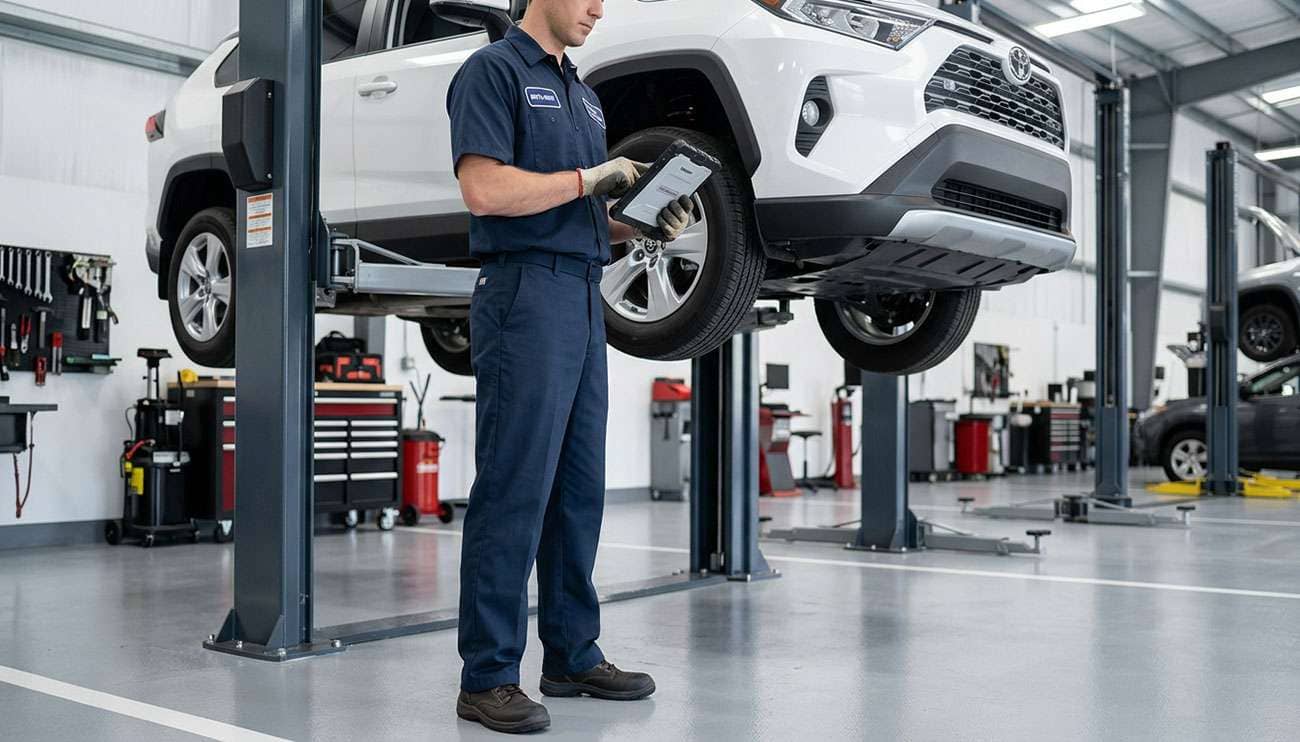
The 30-60-90 rule is a preventative maintenance schedule that calls for major vehicle inspections and service at 30,000, 60,000, and 90,000 miles. The point is simple: instead of waiting for something to break, you replace wear items before they fail. You keep the vehicle running longer, keep the warranty valid, and avoid the expensive repairs that follow when a belt, a filter, or a fluid gets ignored too long. You'll also hear this called "factory-recommended maintenance," "milestone servicing," or the "30/60/90K service."
In my shop, the trucks and cars that go 250,000+ miles without major drama are almost always the ones whose owners stuck close to this schedule. The ones that end up on a flatbed at 120,000 miles are almost always the ones who didn't. The 30-60-90 rule isn't complicated, but it covers a lot of ground. Here's what actually happens at each mark — with notes on the tire and wheel items that most maintenance lists skip right past.
What's Done at 30,000 Miles
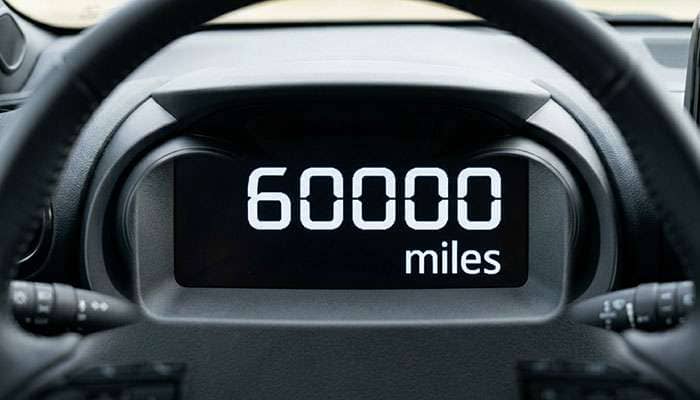
The 30K service is the lightest of the three but still covers a lot. This is the first big checkup — the vehicle has been through its first couple of years of real-world driving and enough wear items are starting to show signs of use that a proper inspection makes sense. Here's what belongs on the list:
- Oil and oil filter change. Usually done on a much shorter interval (every 5,000 to 7,500 miles for most modern engines), but the 30K service is a chance to use a higher-quality synthetic if you haven't been.
- Engine air filter. A dirty air filter chokes the engine and hurts fuel economy. Cheap to replace, noticeable impact on performance if it's been neglected.
- Cabin air filter. Controls the air coming through your vents. Gets nasty fast, especially in dusty or pollen-heavy areas.
- Fuel filter. On vehicles that still have a serviceable fuel filter. Many modern vehicles use lifetime filters inside the tank, but older trucks and some imports have in-line filters that need attention.
- Fluid top-offs and inspection. Coolant, brake fluid, power steering fluid, windshield washer fluid, differential and transfer case fluid where applicable. Each gets checked for level and condition.
- Brake inspection. Pad thickness, rotor condition, brake line integrity, parking brake function. Pads don't always need replacement at 30K, but you want to know where they stand.
- Belts and hoses. Visual inspection for cracking, glazing, and soft spots. Usually fine at 30K but it's the first real check.
- Battery test. A simple load test catches a tired battery before it leaves you stranded.
- Tire rotation and inspection. This is where most maintenance lists get thin. At 30K, you should have had three or four rotations already (every 5,000 to 7,500 miles). The 30K service is a good checkpoint to verify rotation has been consistent, inspect wear patterns for alignment issues, and check tread depth. For the full breakdown on rotation benefits, how to double your tire life: a simple guide to tire rotation benefits covers the math.
- Alignment check. If you've hit any curbs, ruts, or potholes (and who hasn't?), the 30K mark is a good time to have alignment verified. Even small alignment issues show up as uneven tire wear long before they show up in the steering. Our mechanic's guide to wheel alignment walks through what a proper alignment involves.
- Wipers. Cheap, quick, often overlooked until visibility gets bad in rain.
A typical 30K service takes a shop two to four hours and should come with a multi-point inspection report. If you're getting a 30K service and the shop isn't handing you a sheet showing what they checked, find a different shop. For a broader look at whether a given concern calls for rotation, alignment, or balancing specifically, tire alignment vs rotation vs balancing sorts it out.
What's Added at 60,000 Miles
The 60K service does everything the 30K did, plus a list of items that tend to show real wear between 30K and 60K. This is where preventative maintenance actually starts preventing expensive failures:
- Everything on the 30K list gets repeated — oil, filters, brake inspection, fluid checks, belts and hoses, tire rotation and inspection.
- Spark plugs. Conventional spark plugs often run 30,000 miles. Platinum and iridium plugs go 60,000 to 100,000 depending on the vehicle. Check your owner's manual for spec. Running old plugs costs you fuel economy and eventually leads to misfires.
- Transmission fluid (and filter, if serviceable). This one is debated — some manufacturers call their transmission fluid "lifetime" and say never change it. In my experience, a fluid-and-filter service at 60K on a vehicle that does any real work (towing, city traffic, hot climate) pays for itself many times over. Transmissions are expensive.
- Coolant check or partial flush. Coolant loses its corrosion inhibitors over time. Most modern long-life coolants can go 100K+ but a condition check at 60K is cheap insurance.
- Brake pads (and often rotors). Most brake pads last somewhere between 30,000 and 70,000 miles, though driving style makes a huge difference. By 60K, many vehicles need new pads. Rotors may need replacement or resurfacing at the same time.
- Battery replacement (often). Batteries typically last 3 to 5 years. A vehicle at 60K miles is usually in that window regardless of how it tests today.
- Wheel bearing inspection. Here's another tire-shop item. Wheel bearings can start showing wear in the 60K to 100K range, especially on vehicles that have seen any kind of off-road or heavy-load use. A bad bearing makes a cyclical humming noise that changes with speed — worth catching early.
- Shocks and struts. They don't fail all at once, but by 60K they've absorbed a lot of impact cycles. A proper inspection checks for leaks, uneven tire wear that points to worn dampers, and bounce-test response.
- TPMS sensor battery life check. TPMS sensors run on internal batteries that typically last 5 to 10 years. A vehicle at 60K miles that's over 5 years old is getting close to sensor battery replacement territory. Our TPMS guide covers when and how sensor replacement happens.
The 60K service is bigger than the 30K — typically four to six hours of shop time. Some shops will split it across two visits, especially if brake work is involved.
What's Tackled at 90,000 Miles
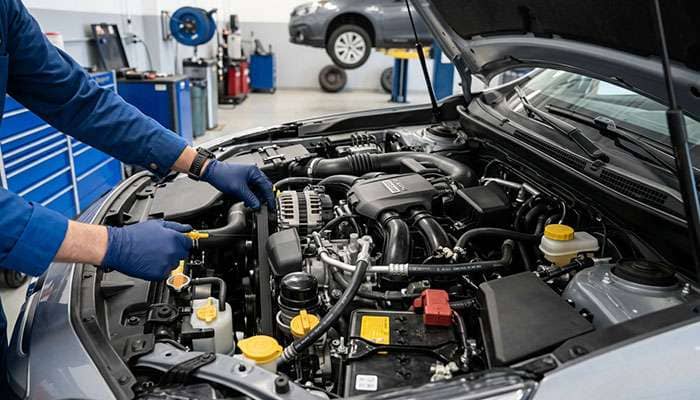
The 90K service is the big one. This is where the major wear items start getting replaced proactively rather than waiting for them to fail on the highway. Everything on the 30K and 60K lists plus:
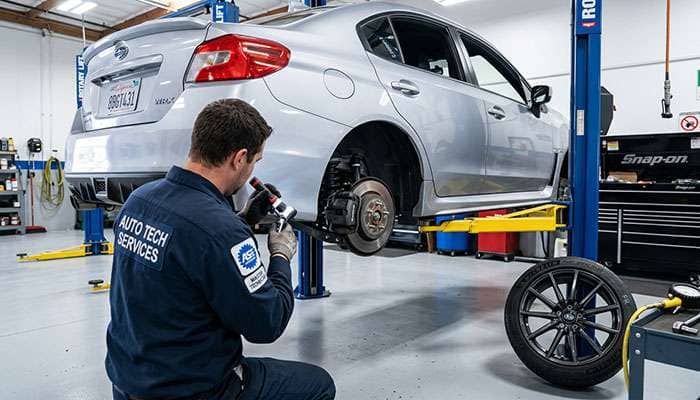
- Timing belt (if equipped). This is the most important item on the 90K list. Timing belts on vehicles that use them typically call for replacement at 60K to 100K miles depending on manufacturer. A timing belt failure on an interference engine — which is most modern engines — destroys the engine. Period. If your vehicle has a timing belt (not a timing chain), getting it changed at its manufacturer-specified interval is the single highest-ROI maintenance item on the whole list. Check your owner's manual.
- Water pump. If the timing belt drives the water pump (common on many engines), the water pump gets replaced at the same time. It's most of the labor anyway.
- Full coolant flush and refill. Even long-life coolants benefit from a complete flush at 90K to 100K miles.
- Power steering fluid flush. On vehicles that still use hydraulic power steering.
- Differential and transfer case fluid. On trucks, SUVs, and AWD cars, these often get service intervals around 60K to 90K depending on use.
- PCV valve. On vehicles that have a serviceable one. Cheap part, prevents sludge buildup.
- Suspension and steering inspection. Ball joints, tie rod ends, sway bar links, control arm bushings. Wear items that show up by 90K on most vehicles.
- Full alignment. Not just a check — a proper four-wheel alignment. By 90K, original alignment spec is almost always off.
- Transmission service. Even "lifetime" transmission fluid usually deserves a change by 90K to 100K on vehicles that see real work.
- Tire replacement (likely). The average tire lasts 40,000 to 60,000 miles, so by the time your vehicle hits 90K, you've often gone through two sets of tires. The tire wear pattern at this point also tells you a lot about your vehicle's alignment and suspension condition. Our guide on how often tires should be replaced covers the specific signals.
- Wheel hub and bearing replacement (if needed). Bearings that were "monitoring" at 60K often need replacement by 90K.
Count on the 90K service being the most expensive of the three — typically USD 800 to USD 2,500 depending on vehicle, what actually gets replaced, and whether the timing belt is part of the job. Some vehicles (modern Toyotas, many Hondas, most trucks) use timing chains that don't need scheduled replacement, which drops the 90K cost significantly.
Why Severe-Duty Drivers Need Earlier Service
The 30-60-90 rule assumes average driving conditions — mostly highway miles, moderate climate, no heavy loads. If your driving doesn't match that profile, you need to move the numbers up, which manufacturers and shops call "severe service" intervals:
- Heavy stop-and-go city traffic. More heat cycles, more brake wear, more transmission stress, more short trips where the engine never reaches full operating temperature. Service at 22K / 45K / 67K instead.
- Towing or hauling. Adds load stress to the transmission, cooling system, brakes, and tires. If you tow regularly, service intervals should move up 25 to 30%.
- Hot climate driving. Desert summers and southern coastal areas push engine and transmission temperatures higher. Fluids break down faster. Arizona, Texas, Southern California, Florida drivers should not be on the same schedule as someone in Oregon.
- Dusty or off-road conditions. Air filters and cabin filters need more frequent service. Wheel bearings and suspension components wear faster.
- Short-trip driving. If most of your trips are under 10 miles, the engine doesn't get hot enough to burn off moisture in the oil. Oil change intervals shorten significantly.
- Cold climate. Battery replacement comes sooner. Cold starts are harder on oil and belts. Tires take more temperature cycling.
Truck owners especially should think hard about severe-duty intervals. A half-ton that's used as a daily commuter is on the standard schedule. A half-ton that regularly tows a boat or camper is on severe-duty. A three-quarter-ton work truck that tows or hauls every day is on severe-duty plus — some items need service at half the standard interval.
What the 30-60-90 Service Actually Costs
Realistic shop pricing for the three milestones, assuming a reputable independent shop (dealerships typically run 30 to 50% higher):
- 30K service: USD 200 to USD 500. Oil change, filters, fluid top-offs, inspection, tire rotation. No major replacements.
- 60K service: USD 400 to USD 1,200. Everything in the 30K list plus spark plugs, transmission service, potentially brake pads, potentially battery. Wide range because the specific items that need replacement vary a lot.
- 90K service: USD 800 to USD 2,500. Big range. At the low end, no timing belt and minimal replacements. At the high end, timing belt, water pump, full coolant flush, new brake pads and rotors, new tires, and possibly suspension components.
Total cost across all three milestones usually falls in the USD 1,500 to USD 4,000 range over the life of a 90,000-mile ownership period. That sounds like real money until you compare it to the cost of a transmission rebuild (USD 3,500 to USD 8,000), a destroyed interference engine (USD 4,000 to USD 10,000), or the resale value hit of a poorly maintained vehicle.
Warranty and Resale Implications
Two things most drivers don't think about until they need to:
Warranty validity. Most new-vehicle warranties require you to follow the manufacturer's maintenance schedule — which is essentially the 30-60-90 rule with specific per-vehicle items. If a covered component fails and you can't produce maintenance records showing you kept up with scheduled service, the manufacturer can deny the claim. Federal law (Magnuson-Moss Warranty Act) says you don't have to use the dealer, but you do have to maintain the vehicle on schedule. Keep your receipts.
Resale and trade-in value. A vehicle with a complete maintenance history sells for significantly more than one without. Dealer used-car buyers are trained to pull service records — no records means they assume the worst and price accordingly. I've seen USD 2,000 to USD 5,000 trade-in differences on identical vehicles based purely on documented maintenance history.
Both of these are real-money reasons to follow the schedule even if you're planning to sell the vehicle before something major fails. The maintenance pays for itself through warranty coverage and resale value, not just through avoided repairs.
When to Follow Your Owner's Manual Instead
Here's the honest truth: the 30-60-90 rule is a useful general framework, but modern vehicles don't all follow it exactly. Extended-interval oils, long-life spark plugs, and timing chains instead of belts have moved some of these items well past the 30-60-90 marks.
Always check your owner's manual first. What the manual says for your specific vehicle takes priority over any general rule. Some examples of how modern vehicles differ:
- Many modern engines use timing chains that are designed to last the life of the vehicle — no 90K replacement needed.
- Iridium spark plugs in many modern vehicles are rated for 100,000 to 120,000 miles, not 60K.
- Some European vehicles (BMW, Audi) use longer service intervals but call for very specific fluids and parts when service does happen.
- Electric vehicles have dramatically different schedules — no oil, no spark plugs, no timing belt — but still need tire rotations, brake fluid changes, and suspension inspections.
Use the 30-60-90 rule as a mental framework for "the big milestones where you should check in on the whole vehicle." But use your manual for the specific items and intervals that apply to the car or truck you actually own.
For the tire side of scheduled maintenance, rotation every 5,000 to 7,500 miles and alignment once a year or every 12,000 to 15,000 miles holds true regardless of what else is going on. A full breakdown of what affects tire life — and how maintenance affects it — is in how to double your tire life. If you're running aftermarket wheels and want to keep them looking factory-fresh through the maintenance milestones, how to make your alloy wheels last forever covers the maintenance side of wheel care.
Key Takeaways
- The 30-60-90 rule is a preventative maintenance framework calling for major inspections and service at 30K, 60K, and 90K miles.
- 30K is the first major checkup: oil, filters, fluids, brake inspection, tire rotation, alignment verification.
- 60K adds major wear items: spark plugs, transmission service, brake pads, battery, wheel bearings, TPMS battery life check.
- 90K is the big one: timing belt (if equipped), full coolant flush, suspension inspection, full alignment, often tire replacement.
- Severe-duty drivers should move intervals up 25 to 30%. Towing, hot climates, city traffic, and short trips all accelerate wear.
- Total cost across all three milestones: USD 1,500 to USD 4,000. Compared to the cost of a destroyed engine or transmission, it's an easy investment.
- Skipped maintenance hurts warranty claims and trade-in value. Keep your receipts.
- Your owner's manual beats the general rule. Modern vehicles often have different intervals for specific items.
FAQs
What does the 30-60-90 rule mean for cars?
The 30-60-90 rule is a preventative maintenance schedule that calls for major vehicle inspections and service at 30,000, 60,000, and 90,000 miles. It's designed to catch wear items before they fail, extend vehicle life, keep the factory warranty valid, and avoid expensive emergency repairs. You'll also hear it called "factory-recommended maintenance," "milestone servicing," or "30/60/90K service."
Is the 30-60-90 rule the same for every car?
No. The 30-60-90 rule is a useful general framework, but modern vehicles have different specific intervals for different components. Iridium spark plugs can last 100,000+ miles instead of 30,000 or 60,000. Timing chains don't need scheduled replacement like timing belts do. Your owner's manual specifies the exact intervals for your vehicle, and those specific numbers take priority over the general rule.
What happens if I skip the 30-60-90 service?
Two things. First, you risk expensive component failures — worn spark plugs lead to ignition coil failures, old transmission fluid leads to transmission damage, a neglected timing belt can destroy the engine entirely. Second, skipped maintenance can void factory warranty coverage and significantly hurt trade-in value when you sell. The maintenance cost is almost always much less than the cost of the repairs it prevents.
How much does a 90,000-mile service cost?
Typically USD 800 to USD 2,500 at a reputable independent shop, depending on vehicle and what specifically needs replacement. Vehicles with timing belts that need replacement at 90K run at the higher end. Vehicles with timing chains and fewer scheduled replacements at 90K run lower. Dealerships usually charge 30 to 50% more than independent shops for the same work.
Does the 30-60-90 rule apply to electric vehicles?
Partially. EVs don't have oil, spark plugs, transmission fluid (in the conventional sense), or timing belts. But they still need scheduled maintenance: tire rotations every 5,000 to 7,500 miles, brake fluid changes every 2 years or so, cabin air filter changes, coolant service for the battery cooling system, and suspension and alignment checks. EV owners should follow their manufacturer's specific schedule, which is usually simpler than the 30-60-90 framework.
What's included in a 30,000-mile service?
A typical 30K service includes an oil and filter change, engine air filter replacement, cabin air filter replacement, fluid level checks and top-offs (coolant, brake fluid, power steering, washer fluid), a brake inspection, a visual belt and hose check, a battery test, tire rotation and inspection, and often an alignment check. Expect two to four hours of shop time and a multi-point inspection report documenting what was checked.




