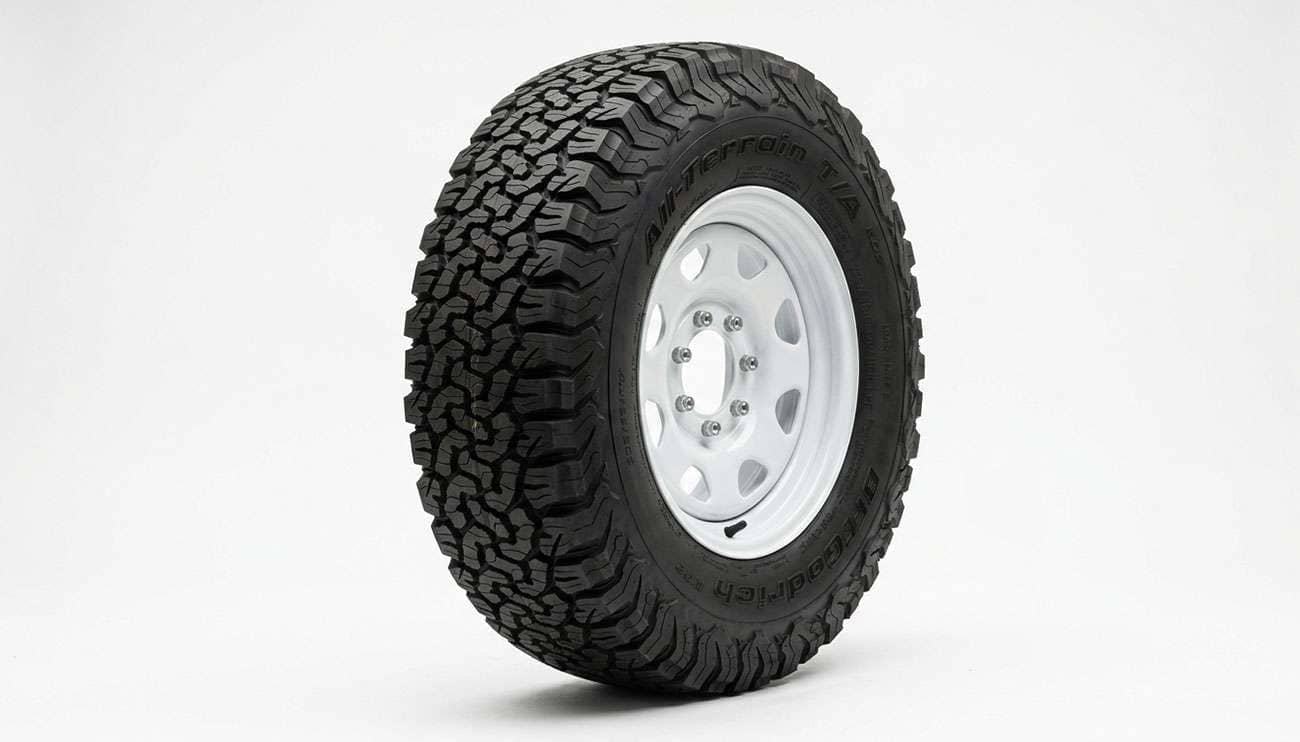
A 235/85R16 is 31.7 inches tall and 9.3 inches wide, mounted on a 16 inch wheel. Sidewall height is 7.86 inches. That is the answer to the question as asked, and every chart on the internet will tell you the same thing.
Here is what the charts leave out, and it is the part that actually costs people money. That 31.7 inch figure is a free standing measurement, taken unloaded, on a specified measuring rim. Put the tire on your truck with the weight of the truck on it and you will measure closer to 30.8 to 31 inches. Roughly an inch disappears. If you are planning fender clearance, calculating a gear ratio, or working out a speedometer correction off that 31.7, you are working off a number your truck does not actually have.
I have been selling this size since it was called something else. Let me go through the whole cluster of questions people ask about it.
Size |
Diameter |
Section Width |
Rim Width Range |
What It Is For |
|---|---|---|---|---|
235/85R16 |
31.7 in |
9.3 in |
6.0 to 7.0 in |
Tall and narrow. Snow, mud, gravel, fuel economy, tight fenders |
265/75R16 |
31.6 in |
10.4 in |
7.0 to 8.0 in |
Same height, over an inch wider. Towing, sand, stability under load |
235/80R16 |
30.8 in |
9.3 in |
6.0 to 7.0 in |
Same width, 0.9 in shorter. Common OE size on older trucks and vans |
7.50R16 |
31.8 in |
8.7 in |
6.0 in spec |
The old numeric size this one replaced. Nearly identical height |
285/75R16 |
32.8 in |
11.2 in |
7.5 to 9.0 in |
The usual next step up. Expect trimming or a leveling kit |
315/75R16 |
34.6 in |
12.4 in |
8.0 to 10.0 in |
The closest thing to a 35 on a 16 inch wheel. Needs a lift |
First, where 31.7 comes from. The math is simple once somebody shows it to you one time.
The 235 is the section width in millimeters. The 85 is the aspect ratio, meaning the sidewall is 85 percent as tall as the tire is wide. The 16 is the wheel diameter in inches.
Now the part that trips people up. Divide 63,360 inches in a mile by that 99.65 inch circumference and you get about 636 revolutions per mile. But go look at what the tire manufacturers actually publish for this size and you will see a number closer to 656 revolutions per mile. Twenty revolutions higher.
That gap is not a misprint, and it is the whole point. Work it backwards. If the tire truly turns 656 times per mile, its rolling circumference is 96.6 inches, which means its effective rolling diameter is about 30.8 inches. Not 31.7.
Why? Because a tire is not a rigid hoop. Put several thousand pounds of truck on it and the bottom flattens into the contact patch. The distance from the axle centerline to the ground shrinks, and the tire covers less ground per revolution than its free standing size suggests. The published revs per mile figure already accounts for that. The 31.7 inch spec does not.
This lines up with what people report when they actually crawl under the truck with a tape. Measured heights on a mounted, loaded 235/85R16 commonly come in three quarters of an inch to a full inch under the chart number. That is not the tire being undersized. That is the difference between measuring a tire on a stand and measuring one doing its job.
So use the right number for the right job. Use 31.7 for fender and clearance planning, because at full droop with the wheel unloaded, that is close to what you have. Use the revs per mile figure for gearing and speedometer math, because that reflects how far the truck actually travels per turn of the wheel. Mixing them up is how people end up with gearing that feels wrong on paper and worse on the road.
This is the comparison everybody makes, and most of what gets written about it is wrong. So let me put the actual numbers side by side.
Read that again. These two tires are the same height and they have the same sidewall. You will find article after article telling you the 235/85R16 has a taller sidewall that gives you a more comfortable ride off road. The difference is three hundredths of an inch. That is the thickness of a couple of business cards. Nobody has ever felt it, and anybody selling you that story has not done the arithmetic.
The only thing that meaningfully separates these two sizes is width, and width is a real decision with real consequences.
Narrower wins where you need to cut down to something solid. Same weight on less tread equals higher ground pressure. In deep snow, in slop over a hard base, and on loose gravel, the 235 pushes through to the firm stuff underneath while the wider tire tries to ride up on top of it. Narrower also means less rolling resistance, which usually shows up as a small fuel economy gain, and it is easier on the steering on a heavy truck.
Wider wins where you need to float and where you need capacity. Dry sand rewards staying on top. And the 265 typically carries meaningfully more load per tire, which matters if you tow or haul near your ratings. Tire people will also tell you a narrow tall tire feels squirrelly under a heavy load, and there is truth to that. A taller, narrower footprint has less lateral stability when there is a camper pushing on it.
One more thing worth knowing, because it is the mechanism behind why narrow tires do better off road than people expect. When you air down, the contact patch does not mainly get wider. It gets longer. The large majority of the added contact area comes from the patch stretching lengthwise, not sideways. A tall narrow tire aired down develops a long footprint that grips beautifully while keeping the frontal area small. That is why the skinny tire crowd is not crazy. If you want the full procedure, we covered it in should I air down tires.
If you are cross shopping the wider option, we broke down its equivalents in are 265/75R16 the same as 31x10.5R15.
Now we are into my territory, because I remember when the 7.50-16 was just what you bought.
Before the metric system took over tire sidewalls, sizes were written in inches as a nominal section width and a rim diameter. A 7.50-16 meant roughly seven and a half inches wide on a sixteen inch wheel. When the industry converted to metric in the late seventies and eighties, the 235/85R16 became the direct replacement for the 7.50-16. That is the whole relationship. Same job, new notation.
The numbers back it up:
Height is within a tenth of an inch. The metric size runs a bit over half an inch wider in the section.
Here is the technical detail that actually decides whether you can swap them, and almost nobody mentions it. Both sizes use a 5 degree bead seat profile. That is the taper of the seat where the tire bead locks onto the rim. This matters enormously, because the half inch sizes you see on commercial equipment, the 16.5, 17.5, 19.5 and 22.5, use a 15 degree bead profile instead. A 16 inch tire and a 16.5 inch rim are not a size apart, they are a different mounting system, and trying to combine them is genuinely dangerous. Because the 7.50-16 and the 235/85R16 share the same 5 degree bead, they mount on the same wheels.
Rim width is the one thing to check. The Tire and Rim Association specifies a 6.0 inch rim for the 7.50-16 and a 6.5 inch rim for the 235/85R16. If your truck is running original 6 inch wheels, you are at the narrow edge of the 235/85R16 range rather than in the middle of it. Most people run it there without trouble, but know that is where you are sitting.
The practical differences you will actually notice going from an old bias 7.50-16 to a modern radial 235/85R16 have nothing to do with size. The radial's sidewall bulges more at the same pressure, which surprises people. It also runs considerably cooler, rides better, and lasts far longer. It is a straight upgrade.
Depends entirely on what you have bolted it to, which is why this question gets answered badly so often.
The 235 is millimeters of section width, which converts to 9.25 inches. Now put that in context:
And here is the distinction that trips up nearly everyone. Section width is not tread width. Section width is measured at the widest point of the inflated sidewall, bulge included. The actual tread that touches the road on a 235/85R16 is more like 7.5 to 8 inches. So when you compare a 235 against a 265, you are not comparing contact patches directly, you are comparing sidewall bulge measurements that happen to correlate with tread width.
Calling it a wide tire is a category error. It is a tall tire that happens to be 235 millimeters across. Height is what people buy it for.
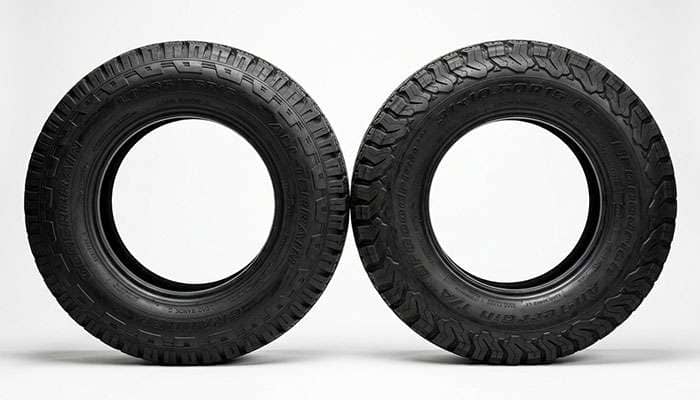
Usually yes, and it is one of the easiest upsizes there is. But run the numbers before you commit.
Identical section width. Identical rim width range. You are adding 0.9 inches of overall diameter, which is 0.45 inches of extra clearance at the top of the tire and 0.45 inches at the bottom.
Three things to check:
Speedometer error. That 0.9 inch increase works out to about a 2.9 percent larger diameter. Your speedometer will read low by roughly that amount, so an indicated 60 will be closer to 62 actual. Your odometer undercounts by the same percentage. The common industry guideline is to stay within 3 percent of the original diameter, so this swap lands right at the edge of it. Acceptable for most people, but do not stack it with anything else.
Clearance. Less than half an inch at the top is not much, and most trucks that came on 235/80R16 will take the 85 series without complaint. Check at full lock and full compression, not sitting in the driveway. The place it bites is the front inner fender at full steering lock.
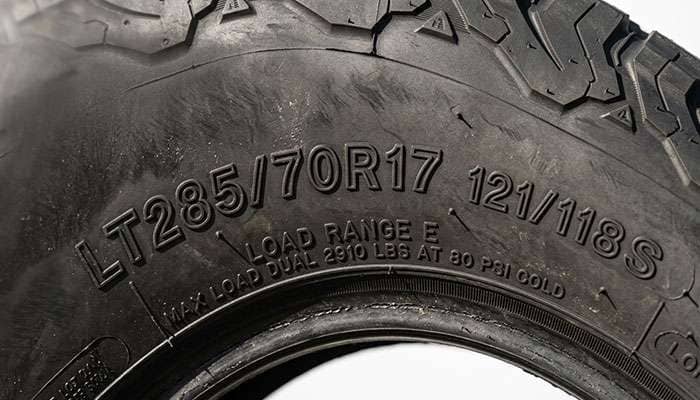
Load rating. This is the one people skip. Do not assume the new tire carries what the old one did. Compare load index numbers directly, not ply ratings or marketing language. A typical LT235/85R16 carries a 120/116 load index, meaning 3,086 pounds per tire in single application and 2,756 in dual. But this size also comes in heavier ratings. The Ironman All Steel HD in this size runs a 132/127 index, worth 4,079 pounds single. If you tow, that difference is the whole decision. We laid out how to read these in load range versus load index and how to read tire load range and ply ratings.
No. Not remotely. A 235/85R16 is 31.7 inches tall, and about 30.8 inches loaded on the truck.
I know exactly where this question comes from, because I get asked it across the counter. Somebody sees 235 and reads it as a size in the same family as a 33 or a 35. It is not. The 235 is millimeters of width. A 35 inch tire is inches of height. Two completely different measurements in two different unit systems, which is a genuinely confusing thing for the tire industry to have done, and the confusion is not your fault.
If you actually want something near 35 inches tall on a 16 inch wheel, here is what gets you there:
Understand that any of those is a completely different project from a 235/85R16. You are looking at a lift, likely fender trimming, probably a regear, and definitely wider wheels. Going from 31.7 to 34.6 inches is nearly three inches of diameter.
That 255/85R16 deserves a mention for the narrow tire crowd, because it is the same idea as the 235 taken one step further. Tall, skinny, and it fits where a wide 33 will not. If you are working through the wider options in this diameter class, we broke down the next size up in what size is a 285/75R16 tire.
Six to seven inches, with 6.5 inches as the specified measuring rim. That is the range where the tire sits at the shape its engineers designed.
Most people asking about this size are running factory steel wheels off a heavy duty truck or a work van, and those are commonly 6.5 or 7 inches wide. You are already in range.
Where it goes wrong is people who want to run this tire on a wide aftermarket wheel because they like the wheel. Mounting a 235/85R16 on a rim wider than about 7.5 inches stretches the bead outward, pulling the sidewall away from its intended vertical profile. That flattens the crown of the tread, changes how the contact patch loads, puts extra stress on the bead area, and can compromise the load carrying ability the tire was rated for. On a load range E tire that lives under a heavy truck, that is not a cosmetic problem.
Going the other way, too narrow a rim pinches the tire inward, which rounds the tread crown and wears the center prematurely.
The reason this size holds its shape so well in the correct range is the same reason people like it. That 85 series sidewall is tall, and a tall sidewall wants a rim close to its section width to stand up straight. Get that relationship right and this tire will run true for a very long time.
We stock this size deep, which tells you something in itself. A size with this much brand support is a size people keep coming back for. Here is how it sorts out.
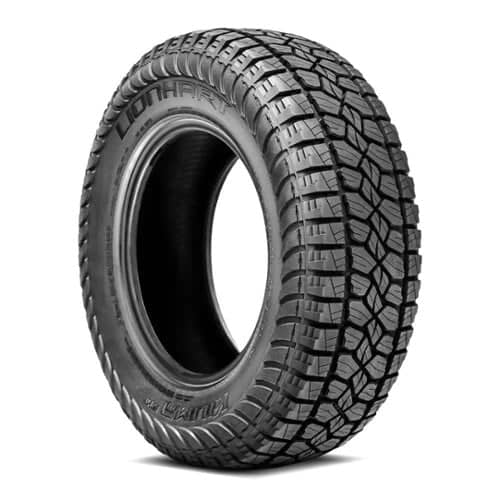
For mixed on and off road use, the all terrains are where most of this size sells. The Lionhart Kilima A/T in LT235/85R16, 120S, 10 ply, runs $131.69. The Lexani Terrain Beast AT in LT235/85R16, 120/116S, 10 ply, is the same $131.69. The Americus Rugged A/TR in 120/116S is $133.53.
For highway miles and work truck duty, the Cosmo EL Jefe HT2 in LT235/85R16, 120/116Q, 10 ply, comes in at $72.75, and the Sumitomo Encounter HT in 120/116S is $101.19. If you are putting on highway miles with a load behind you, this is the category to shop.
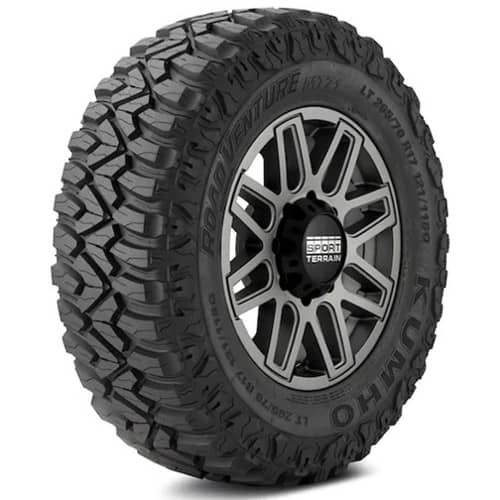
For serious mud, the Kumho Road Venture MT KL71 in LT235/85R16, 120/116Q, 10 ply, is $146.55, and the Federal Couragia M/T in 116Q is $178.17. A narrow mud terrain is a genuinely effective combination, because you get the aggressive tread cutting down under high ground pressure.
For heavy hauling, look at the commercial grade options. The Ironman All Steel HD in 235/85R16 carries that 132/127L rating at $161.25, which is a substantially higher capacity than the standard 120/116 tires above it on this page. The GT Radial Maxmiler Pro in 120/116R is $185.99.
If you are still weighing this size against its neighbors, our breakdowns of 245/75R16 in inches and 265/70R16 cover the two most common alternatives on the same wheel.
A 235/85R16 is 31.7 inches tall and 9.3 inches wide on a 16 inch wheel, with a 7.86 inch sidewall. That is the number you came for. But carry the second number with you too, because on your truck under load it rolls like something closer to 30.8 inches, and the published revs per mile figure proves it.
The rest of it comes down to one honest fact. Against the 265/75R16 that everybody cross shops it with, this tire is the same height and has the same sidewall. The only real difference is an inch and a fifth of width, and that inch buys you ground pressure, fuel economy, and snow performance while costing you load capacity and stability under a heavy load. That is the trade. Anybody telling you it is about ride comfort is quoting a three hundredths of an inch difference they never measured.
It replaced the 7.50-16 forty odd years ago, it shares that tire's 5 degree bead, and it is still here because a tall narrow tire does things a wide one cannot. Know which of those things you need and the size picks itself.
A 235/85R16 measures 31.7 inches in overall diameter and 9.3 inches in section width, on a 16 inch wheel. The sidewall is 7.86 inches tall. Note that this is a free standing measurement taken unloaded on a specified measuring rim. Mounted on a vehicle with weight on it, the tire measures closer to 30.8 to 31 inches.
Width, and essentially nothing else. Overall diameter is 31.72 versus 31.64 inches and sidewall height is 7.86 versus 7.83 inches, so both are effectively identical. Section width is 9.25 versus 10.43 inches. The narrower 235 gives higher ground pressure for snow and mud plus lower rolling resistance, while the wider 265 typically carries more load and feels more stable when towing.
The 235/85R16 is the metric replacement for the older numeric 7.50-16. Heights are nearly identical at about 31.7 versus 31.8 inches, with the metric size roughly half an inch wider in section width at 9.3 versus 8.7 inches. Both use a 5 degree bead seat profile, so they mount on the same wheels. The Tire and Rim Association specifies a 6.0 inch rim for the 7.50-16 and 6.5 inches for the 235/85R16.
It depends on the vehicle. At 9.25 inches of section width, a 235 is moderately wide on a passenger car but narrow on a truck, where 265 to 285 is typical from the factory. Among 16 inch light truck sizes, the 235/85R16 is one of the narrowest tall tires still in production, which is exactly why buyers seek it out. Also note that section width includes sidewall bulge; actual tread width is closer to 7.5 to 8 inches.
Generally yes. Section width and rim width range are identical, so the only change is 0.9 inches of added diameter, from 30.8 to 31.7 inches. That is about 2.9 percent, which sits right at the edge of the common 3 percent speedometer guideline, so expect an indicated 60 mph to be roughly 62 actual. Check clearance at full steering lock and compare load index figures directly rather than assuming they match.
No. A 235/85R16 is 31.7 inches tall. The confusion comes from mixing measurement systems: the 235 is millimeters of section width, while a 35 inch tire is stated in inches of overall height. For something close to 35 inches on a 16 inch wheel, look at a 315/75R16 at 34.6 inches or a 35x12.50R16 in flotation sizing, both of which require substantially more clearance.
Ready to buy? Browse the full range of all terrain tires, or give us your year, make, and model and we will confirm what fits before you order.