
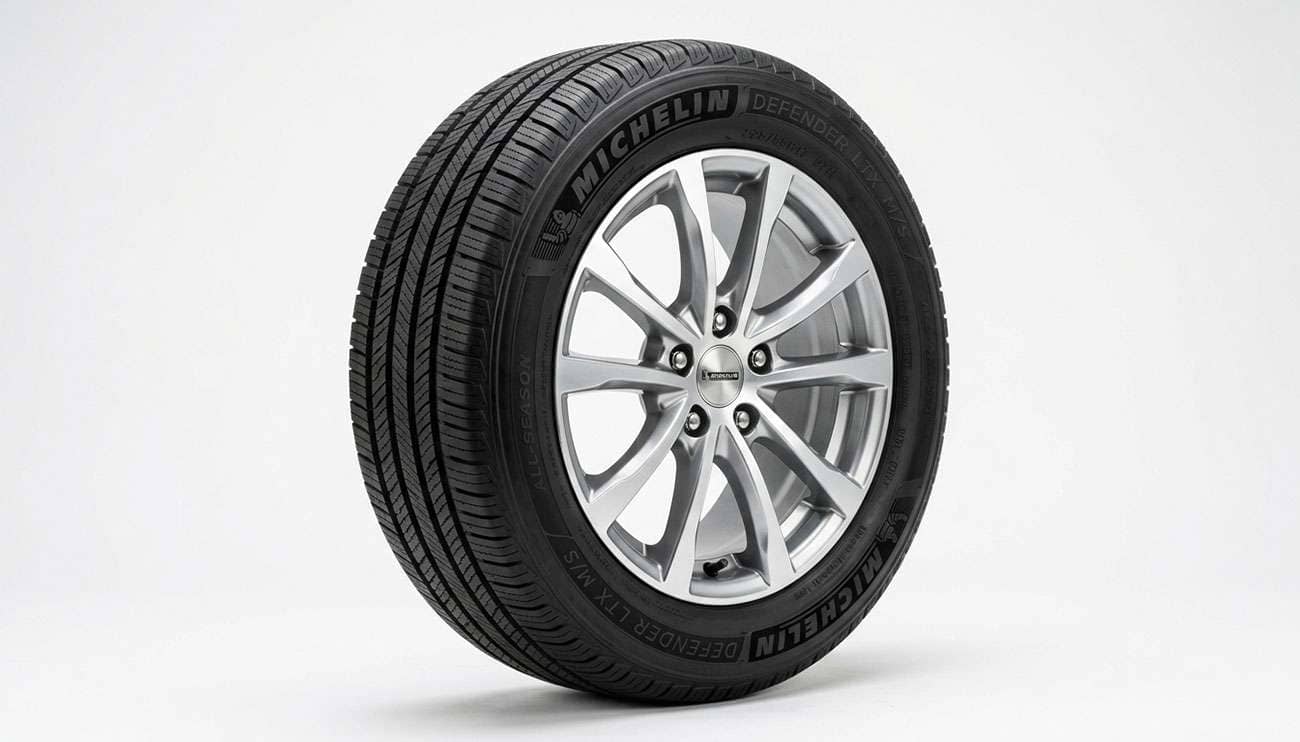
A 225/55R17 tire has an overall diameter of 26.7 inches (26.74 in, 679 mm), a section width of 8.9 inches (225 mm), and a sidewall height of 4.9 inches (124 mm). It mounts on a 17-inch wheel, measures 84.0 inches around, completes 754 revolutions per mile, and is approved for rim widths from 6.0 to 8.0 inches. This is a mid-profile, 55-series size, and it is one of the most common fitments on midsize sedans and compact crossovers.
I am Dennis Feldman, and fitment is what I do here at Performance Plus. The 225/55R17 is a size I quote every single day, because it sits right in the sweet spot of the market. What follows is the precise data, the exact vehicles it fits, a straight answer on the H versus V speed-rating question, and how the 3 percent rule governs what you can safely swap it for. No guesswork, just the numbers.
Here is the full dimensional breakdown in both inches and millimeters. These are the industry-standard reference figures derived from the size code. Actual numbers vary a hair by manufacturer and tread design, but these are the values your speedometer and fitment calculations are built on.
Measurement |
Inches |
Millimeters |
|---|---|---|
Overall diameter (height) |
26.74 in (about 26.7 in) |
679 mm |
Section width (tread) |
8.86 in (about 8.9 in) |
225 mm |
Sidewall height |
4.87 in (about 4.9 in) |
124 mm |
Circumference |
84.0 in |
2134 mm |
Wheel (rim) diameter |
17 in |
432 mm |
Approved rim width |
6.0 to 8.0 in |
152 to 203 mm |
Revolutions per mile |
754 |
468 per km |
In flotation shorthand, a 225/55R17 converts to roughly a 26.7x8.9R17. That taller 55-series sidewall is the whole point of this size: it delivers a comfortable, compliant ride while keeping a 17-inch wheel and reasonable handling. It is the classic midsize-sedan and crossover compromise.
Every character in the size code carries a specific, standardized meaning. Once you can read one, you can read them all. For the complete framework, we maintain a full guide to reading tire numbers, but here is this size decoded.
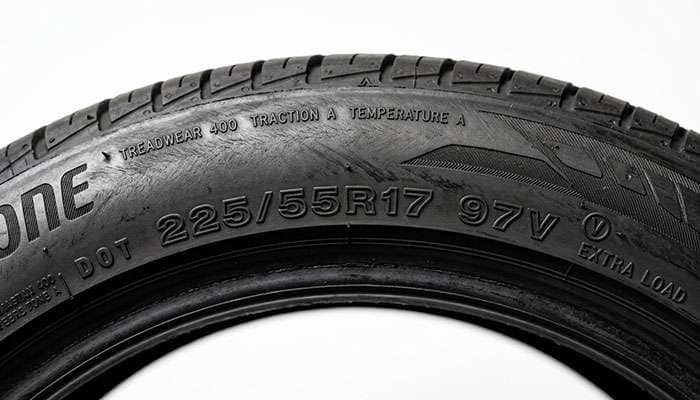
225 is the section width in millimeters, sidewall to sidewall. Divided by 25.4, that is 8.86 inches. 55 is the aspect ratio: the sidewall height is 55 percent of the section width, which puts this in mid-profile territory. That middle number drives ride quality, and we cover it in detail in our breakdown of the tire aspect ratio. R denotes radial construction. 17 is the wheel diameter in inches, and it must match your wheel exactly.
You will usually see a service description after the size, such as 225/55R17 97V or 97H. The 97 is the load index, which corresponds to a maximum load of 1,609 pounds per tire. The final letter is the speed rating, and it is worth understanding, which brings us to the next section.
This size is a factory and replacement staple across midsize sedans and compact-to-midsize crossovers. If your vehicle rides on 17-inch wheels and leans toward comfort over sport, there is a strong chance it uses this size. Common fitments include:
Because it is such a high-volume size, every brand from value to premium builds a strong lineup here. Always confirm your exact size against the placard in the driver door jamb before ordering, since trim and package changes can shift the factory fitment.
This is the question I field most often on this size, because 225/55R17 is sold in both. Here is the precise answer. The speed rating is the letter in the service description, and it certifies the maximum sustained speed the tire is engineered to handle. An H-rated tire is good to 130 mph (210 km/h). A V-rated tire is good to 149 mph (240 km/h). By that measure, V is the higher rating.
But higher is not automatically better for you. The right answer is the rating that meets or exceeds your vehicle's original equipment specification. For most sedans and crossovers running this size, H is the factory rating and it is completely adequate. Stepping up to V typically buys you a stiffer, more responsive sidewall and a bit more high-speed stability, at the cost of slightly firmer ride and sometimes marginally shorter tread life. The one rule you never break: do not go below your OE speed rating. If you want the full comparison, we wrote a dedicated piece on H versus V rated tires.
Before you consider any size change, you need to understand the tolerance that governs it. Here is how the 225/55R17 compares against the sizes drivers ask about most.
Size |
Overall Diameter |
Difference vs 225/55R17 |
Verdict |
|---|---|---|---|
225/55R17 |
26.7 in |
Baseline |
Your size |
215/55R17 |
26.3 in |
About -1.5% |
Safe swap, slightly narrower |
235/55R17 |
27.2 in |
About +1.9% |
Safe swap, wider and slightly taller |
225/50R17 |
25.9 in |
About -3.4% |
Just outside the safe window |
225/65R17 |
28.5 in |
About +6.7% |
Not a safe swap, taller SUV size |
The 3 percent rule is the industry standard for tire size changes: any replacement tire should stay within 3 percent of the original overall diameter. Your speedometer, odometer, ABS, traction control, and transmission shift points are all calibrated to the stock tire's diameter and its revolutions per mile. Stay inside 3 percent and those systems keep reading accurately. Exceed it and your speedometer error grows, your odometer drifts, and on modern vehicles the electronic aids can misinterpret wheel speed. When in doubt, run the numbers with our plus-sizing guide before you buy.
Not as a direct swap. A 225/65R17 stands about 28.5 inches tall against your 26.7 inches, a difference of roughly 6.7 percent. That is more than double the 3 percent limit. At an indicated 60 mph you would actually be traveling closer to 64 mph, and your odometer would under-count every mile. The 225/65R17 is a taller crossover and small-SUV size, not an interchangeable option for a vehicle specified with 225/55R17. Only consider it if your vehicle was factory-offered with that size and you have confirmed clearance and load rating. We break down that larger size in our look at whether the 225/65R17 is a common tire size.
Both are safe. A 215/55R17 is 10 millimeters narrower and about 1.5 percent smaller in diameter, well inside tolerance, and it is the closest downsize. See our full breakdown of the 215/55R17 size for the specifics. A 235/55R17 goes the other way: 10 millimeters wider and about 1.9 percent taller, also within the window, giving you a slightly larger contact patch. Confirm wheel width and fender clearance before committing to either.
Because this size spans everything from economy commuters to premium crossovers, pricing covers a wide band. Value and mainstream all-season tires generally run from about 90 to 130 dollars each. Premium touring and all-weather tires land in the 150 to 200 dollar range. Premium performance and run-flat options climb past 260 dollars. What you pay tracks the tire type and brand, not the size itself.
Here are five solid options from our inventory spanning the full range, from a value pick to premium all-weather.
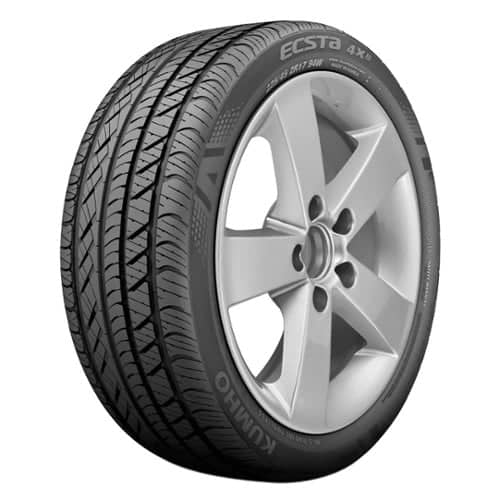
Kumho Ecsta 4X II KU22 (around 87 dollars). The value leader. A capable ultra-high-performance summer tire that punches well above its price for drivers who want grip without the premium sticker.
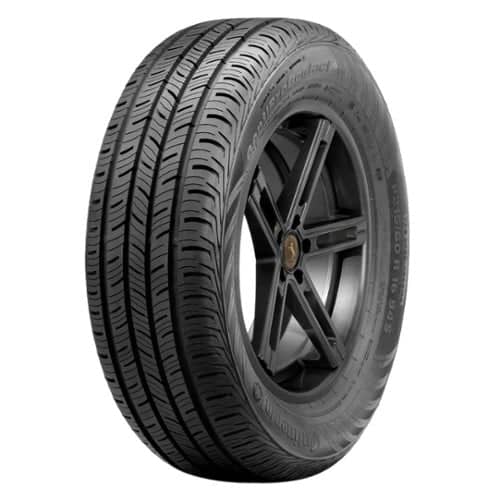
Continental ContiProContact (around 151 dollars). A refined all-season touring tire and a common original-equipment fit. Quiet, balanced, and dependable for the daily commute.
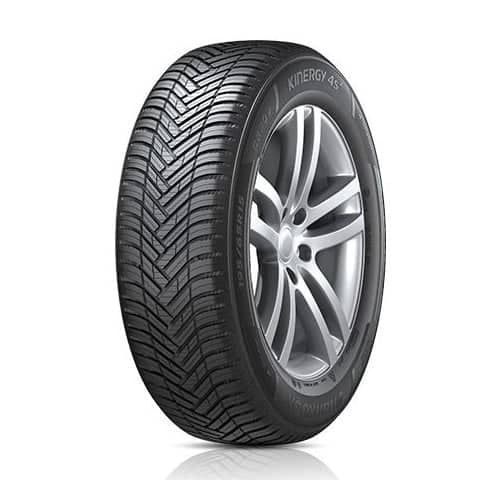
Hankook Kinergy 4S2 H750 (around 164 dollars). A true all-weather tire with the 3-peak mountain snowflake rating, so it handles light winter conditions without a dedicated snow set. Strong value in the all-weather category.
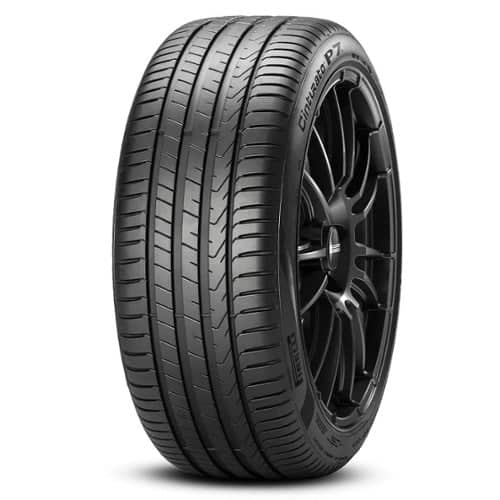
Pirelli Cinturato P7 (around 181 dollars). A premium grand-touring tire with a real performance pedigree. Low rolling resistance, quiet manners, and confident wet grip.

Michelin CrossClimate+ (around 190 dollars). The premium do-it-all choice. All-weather capability with the 3-peak rating and Michelin longevity, ideal if you want one tire for every season.
Ready to compare the full lineup and check pricing for your vehicle? Shop every 225/55R17 tire we carry here.
The 225/55R17 earns its high-volume status by balancing ride comfort, handling, and a huge range of tire choices at every price point. You now have the exact measurements, the vehicles it fits, a definitive answer on the H versus V question, and the tolerance that governs any size change. Confirm your fitment on the door placard, respect the 3 percent rule when you swap, and match at least your factory speed rating. If you want a second set of eyes on your specific vehicle, our fitment team is here to help.
A 225/55R17 is about 26.7 inches tall (26.74 in), 8.9 inches wide (225 mm), with a 4.9-inch sidewall, mounted on a 17-inch wheel. Its circumference is 84.0 inches and it turns 754 times per mile.
It is a common midsize-sedan and crossover size, found on vehicles like the Toyota Camry, Honda CR-V, Chevrolet Equinox and Malibu, Ford Fusion, Nissan Altima and Rogue, Subaru Forester, and Volkswagen Tiguan. Confirm your exact size on the door-jamb placard.
Value and mainstream all-season tires run about 90 to 130 dollars each, premium touring and all-weather tires 150 to 200 dollars, and premium performance or run-flat options 260 dollars and up.
Strong choices in this size include Michelin (CrossClimate+), Continental (ContiProContact), Pirelli (Cinturato P7), and Hankook (Kinergy 4S2) for all-weather value, with Kumho leading the budget end. The best pick depends on your climate and priorities.
V is the higher speed rating, good to 149 mph, versus H at 130 mph. For most vehicles in this size, the H rating is the factory spec and is fully adequate. Choose a rating that meets or exceeds your original equipment, and never go below it.
Not as a direct swap. A 225/65R17 is about 28.5 inches tall versus 26.7 inches, roughly 6.7 percent larger, well beyond the safe 3 percent limit. It is a taller crossover and SUV size and would throw off your speedometer and electronics.
The 3 percent rule says a replacement tire should stay within 3 percent of the original overall diameter. This keeps your speedometer, odometer, ABS, and traction control accurate, since they are calibrated to the stock tire's diameter and revolutions per mile.
The 225/55R19 is a separate, larger-wheel size, not a 17-inch fitment. It appears on some compact and midsize crossovers with 19-inch wheels, such as certain hybrid and higher-trim SUV models. It is not interchangeable with a 225/55R17.



