
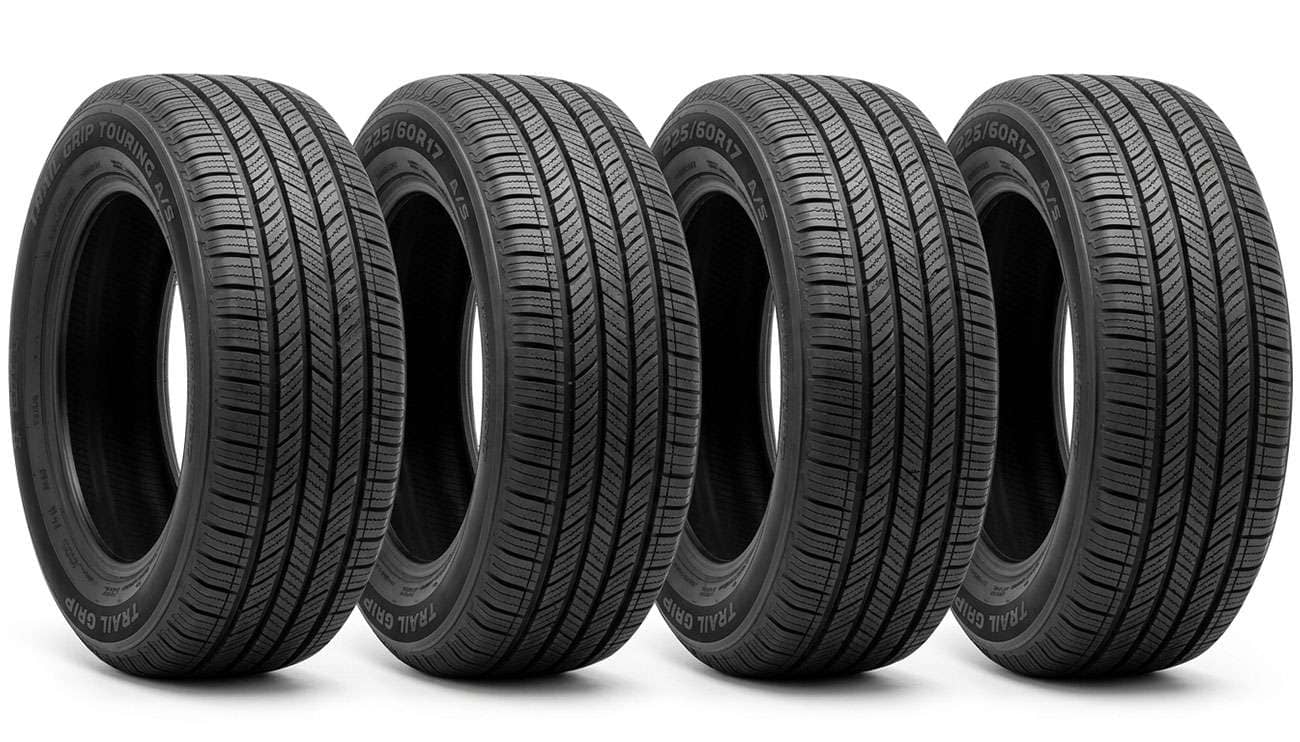
The best 225/60R17 tire is the Hankook Kinergy PT H737 for pure mileage, the Michelin CrossClimate2 CUV for year-round weather, and the Pirelli P4 Persist AS Plus if you want both. But the first thing to sort out is whether this tire is going on a sedan or a crossover. Same size marking, two very different vehicles, and the size ships in two load ratings to cover both. Get that backwards and the rest of the list does not matter.
I have been standing behind a tire counter in Long Beach for a long time, and 225/60R17 is one of the sizes where I ask the most questions before I quote anything. Not because the tires are complicated. Because the size sits at a crossroads. It goes on a Crown Victoria and it goes on a Hyundai Tucson. It went on base V6 Mustangs and it goes on minivans. Those vehicles want different things out of the same three numbers.
So here is how I would sort it if you walked in today.
What you are after |
My pick |
Treadwear |
Warranty |
Price |
|---|---|---|---|---|
The most miles per dollar, period |
Hankook Kinergy PT H737 |
860 A A |
90,000 miles |
USD 177.99 |
Real snow grip without a second set of wheels |
Michelin CrossClimate2 CUV |
640 B A |
60,000 miles |
USD 224.99 |
Long life and the best wet grade in the size |
Pirelli P4 Persist AS Plus |
820 AA A |
85,000 miles |
USD 221.13 |
Crossover or small SUV, all-season |
Continental CrossContact LX25 |
740 A A |
70,000 miles |
USD 183.99 |
Best money-per-mile without going cheap |
Cooper CS5 Grand Touring |
780 A A |
80,000 miles |
USD 149.08 |
Tight budget, still want A traction |
Hercules Roadtour 855 SPE |
620 A A |
70,000 miles |
USD 72.99 |
Real winter, ice and packed snow |
Michelin X-Ice Snow 103XL |
Not graded |
40,000 miles |
USD 224.71 |
Prices are per tire and they move. Everything under here is the reasoning, including where each one gives something up, because they all do.
This size turns up on about 174 models across more than 60 manufacturers, which is a wider spread than most people expect from a 17-inch tire. That range is the whole reason the best-tire question does not have one answer.
Four groups cover most of what rolls through the shop.
Compact crossovers and small SUVs. Hyundai Tucson through a long production run, Chevrolet TrailBlazer, Infiniti QX50 and EX37, Hyundai Nexo. These are the heaviest vehicles wearing this size and they are the ones most likely to need the higher load rating.
Full-size sedans and coupes. Ford Crown Victoria in its last years, base V6 Mustangs from the early 2010s, Audi A6. Heavier than a compact car, lower than a crossover, and usually happier on a touring tire than on anything with a chunky tread.
Minivans and people movers. Buick Rendezvous and Terraza, Chevrolet Uplander, Dodge Caravan applications. These get loaded up with family and cargo more often than anything else on the list, which puts load index front and center.
Everything else. Honda Element, various Buick sedans, a long tail of crossovers that adopted the size as 17-inch wheels became standard on mid-trim packages.
Notice what those four groups have in common: not much. A loaded minivan on a summer road trip and a Mustang running errands are asking the same tire for opposite things. That is why the shopping starts with your door placard, not with a ratings list.
Look at the end of the size on your sidewall. You will see something like 99H or 103T. That number is the load index and it is the first filter, before brand, before price, before anything.
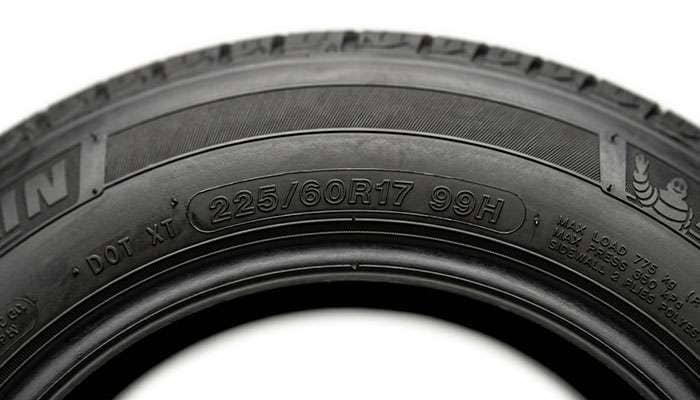
In 225/60R17 the overwhelming majority of what gets built is load index 99 standard load, rated for 1,709 pounds per tire. A smaller group is built at load index 103 extra load, rated for 1,929 pounds. There is a handful at 98, rated 1,653 pounds, mostly on older passenger applications.
The gap between 99 and 103 is 220 pounds at every corner. Across four tires that is 880 pounds of capacity. On a crossover that already weighs 3,800 pounds empty and then gets loaded with four people, a dog and a week of luggage, that is not a spec-sheet curiosity.
Extra load construction earns the bigger rating by being certified at a higher inflation pressure, roughly the low 40s psi instead of the mid 30s. The casing is reinforced to live at that pressure. That is the whole trick.
Which brings me to the part I end up explaining at the counter about once a week. An extra load tire only gives you the extra capacity when it is actually inflated to the pressure the rating is built around. Fit a 103XL and then set it at 33 psi because somebody said low pressure rides softer, and you have paid for capacity you are not receiving. The reinforcement is still in there. The rating is not, because the rating and the pressure are the same specification.
The rule is simple and it does not bend. Match your placard number or go higher. Never lower. If your Tucson calls for 103 and somebody sells you a 99 because it was on sale, that tire is under-specified for the vehicle no matter how well it reviews. If you want the full breakdown of how these ratings are put together, we walk through it in load range vs load index.
This size shows up mostly in H and T, with a smaller group at V. T tops out at 118 mph, H at 130, V at 149. Nobody reading this is driving 118 mph, so the practical difference is not top speed. It is that speed rating changes what else comes with the tire.
Higher speed ratings usually mean a stiffer casing and a firmer ride, and manufacturers frequently publish a shorter mileage warranty on the faster version of the same model. Hankook, for instance, backs the Kinergy PT for 90,000 miles in T and H and 75,000 miles in V. Same tread pattern, different casing, different promise. If your placard says H, buying V does not buy you anything except a firmer ride and a shorter warranty. We break the letters down in H vs T tires.
This is a mileage size. Nobody buys 225/60R17 because they want to feel the road. They buy it because the car needs tires and they would like to not do this again for a long time. Good news: the mileage end of this size is unusually deep right now.
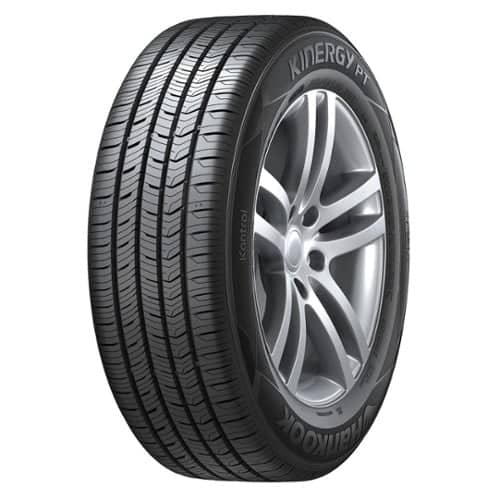
Hankook Kinergy PT H737, USD 177.99, 225/60R17 99H. This is the one I point at. UTQG 860 A A with a 90,000-mile warranty, and that 860 treadwear grade is the highest in the size. It is not a close race either. Hankook is not a badge that impresses anybody in the driveway, and I do not care, because the tire does the job. Quiet, low rolling resistance, and it backs the mileage claim with the longest warranty anybody publishes here. If you drive a lot and you want to stop thinking about tires, buy these. View this tire.
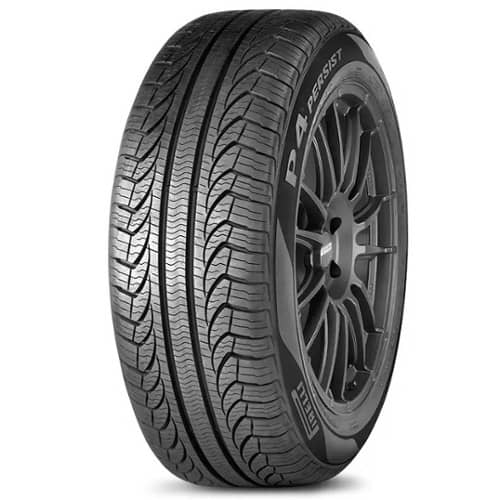
Pirelli P4 Persist AS Plus, USD 221.13, 225/60R17 99T. UTQG 820 AA A with an 85,000-mile warranty and 12/32 inch of tread depth to start with. Here is what makes this one special: that AA is the top wet traction grade the government test issues, and it is the only all-season in this size carrying it. Long life usually costs you wet grip because the compound gets harder. This one does not make you choose. It is a T-rated tire, so the ride is soft and the steering is relaxed rather than sharp. That is a feature on a family car. View this tire.
Continental TrueContact Tour 54, USD 180.99, P225/60R17 99H. UTQG 840 A A, 80,000 miles, 11/32 inch of depth. Sits right between the Hankook and the Pirelli. A traction rather than AA, but a genuinely quiet highway tire and Continental has a long track record in touring. View this tire.
Yokohama Avid Ascend LX, USD 175.99, 225/60R17 99H. UTQG 800 A A with an 85,000-mile warranty. Same money as the Hankook, slightly lower treadwear grade, slightly better ride comfort in my experience. Fine choice if you want the mileage without the Hankook badge. View this tire.
Tire |
UTQG |
Mileage warranty |
Service description |
Price |
|---|---|---|---|---|
Hankook Kinergy PT H737 |
860 A A |
90,000 miles |
99H |
USD 177.99 |
Continental TrueContact Tour 54 |
840 A A |
80,000 miles |
99H |
USD 180.99 |
Michelin Defender2 |
840 B B |
80,000 miles |
99H |
USD 214.99 |
Pirelli P4 Persist AS Plus |
820 AA A |
85,000 miles |
99T |
USD 221.13 |
Yokohama Avid Ascend LX |
800 A A |
85,000 miles |
99H |
USD 175.99 |
Cooper CS5 Grand Touring |
780 A A |
80,000 miles |
99T |
USD 149.08 |
Nexen Aria AH7 |
760 A A |
80,000 miles |
99T |
USD 161.00 |
One thing about reading that table. Treadwear numbers only compare honestly inside one brand, because every manufacturer runs its own reference test and grades against it. A Michelin 840 and a Continental 840 are not a promise of the same mileage. The warranty column is the number that actually costs somebody money if it is wrong, so weight that heavier. More on both in how to read tire treadwear ratings and how long car tire warranties really last.
If you get real winter and you are not willing to run a second set of wheels, this is your section. These are all-weather tires, which is a different animal from all-season. They carry the three-peak mountain snowflake and they are built to keep working when the thermometer drops, at the cost of some tread life.
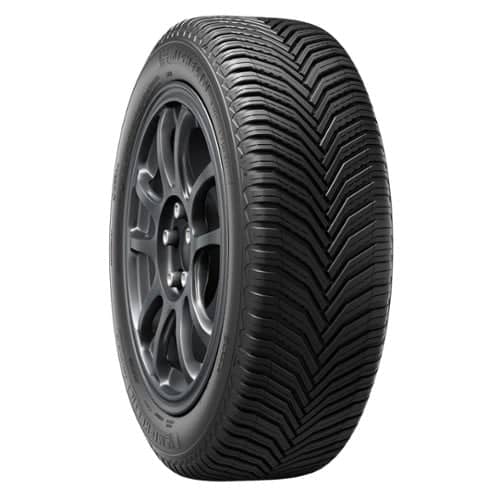
Michelin CrossClimate2 CUV, USD 224.99, 225/60R17 99H. The one everybody names, and it deserves it. The V-shaped directional tread and the thermal adaptive compound do something genuinely unusual, which is behave like a real snow tire in December without falling apart in August. UTQG 640 B A with 60,000 miles. That B treadwear grade next to the Hankook's 860 tells you exactly what you are paying for winter capability with: about a third of the tread life. If you drive where it snows, that is a fair trade. If you live in Southern California, it is money spent on nothing. We put it head to head with the Continental alternative in CrossClimate 2 vs Continental all-season. View this tire.
Bridgestone WeatherPeak, USD 117.61, 225/60R17 99H. UTQG 700 A A with a 70,000-mile warranty, snowflake rated, and it costs about half what the Michelin does. Bridgestone built this specifically to bring all-weather capability down to a normal price. It does not have the CrossClimate2's outright snow bite, but it has more tread life and an A traction grade. For most people who see occasional snow rather than constant snow, this is the smarter buy. View this tire.
Firestone WeatherGrip, USD 175.99, 225/60R17 99H. UTQG 640 A A, 65,000 miles, snowflake rated. Sits between the two above on both price and capability.
Nokian One, USD 178.81, 225/60R17 99H. UTQG 720 A A with an 80,000-mile warranty. Nokian is a Finnish company that has been building for snow longer than most, and the One is their attempt at an all-season that does not embarrass itself in winter. Strong warranty for the category.
If your 225/60R17 is going on a Tucson, a TrailBlazer, a QX50 or anything else that sits tall, you want a tire designed for the extra weight and the higher center of gravity. CUV-specific construction means a stiffer shoulder so the tire does not roll over on itself in a lane change with a full load.
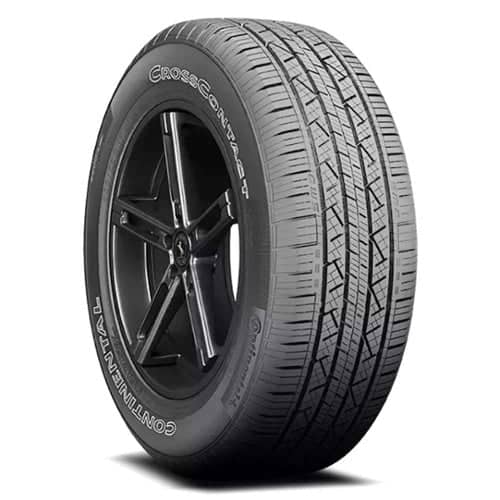
Continental CrossContact LX25, USD 183.99, P225/60R17 99H. UTQG 740 A A, 70,000 miles, 12/32 inch of tread to start. Built specifically for crossovers, quiet on the highway, and the deep starting tread means the mileage warranty is not wishful thinking. This is my default recommendation for anybody with a compact SUV who is not chasing snow performance. View this tire.
Yokohama Geolandar CV G058, USD 166.99, 225/60R17 99H. UTQG 740 A A with 65,000 miles. Same grades as the Continental, seventeen dollars less per tire, marginally more road noise. Good value in the category. View this tire.
Falken Wildpeak A/T Trail, USD 204.00, 225/60R17 99H. UTQG 680 A A, 65,000 miles, snowflake rated. This is the one for people whose crossover actually leaves pavement occasionally. A real light all-terrain tread that still rides civilly on the highway, which is a harder engineering problem than it sounds. You will hear it a little at 70 mph. That is the price of admission. View this tire.
One caution on the all-terrain options in this size. Several of them are built at 103XL, which is correct for a crossover but may be more tire than a sedan needs. If your placard says 99, a 103 will fit and carry more, but it will also ride firmer at the pressure your car asks for.
Here is something that has changed a lot in the years I have been doing this. The budget end of a mainstream size like 225/60R17 used to be a genuine gamble. Now several of the value brands carry A traction grades and warranties that would have been premium territory a decade ago.
Tire |
UTQG |
Warranty |
Service description |
Price |
|---|---|---|---|---|
Hercules Roadtour 855 SPE |
620 A A |
70,000 miles |
99H |
USD 72.99 |
Kumho Solus TA11 |
700 A B |
75,000 miles |
99T |
USD 99.06 |
Bridgestone WeatherPeak |
700 A A |
70,000 miles |
99H |
USD 117.61 |
Uniroyal Tiger Paw Touring A/S |
700 A A |
75,000 miles |
99H |
USD 118.96 |
General AltiMax RT43 |
700 A B |
75,000 miles |
99T |
USD 120.49 |
Cooper CS5 Grand Touring |
780 A A |
80,000 miles |
99T |
USD 149.08 |
The Hercules Roadtour 855 SPE at 73 dollars is the one that raises eyebrows. A traction, A temperature, 70,000-mile warranty, at a price where you would normally expect a B grade and no warranty at all. It will not ride like the Michelin and the tread will not last like the Hankook, but it is a legitimate tire and it is not pretending otherwise.
The Cooper CS5 Grand Touring at 149 dollars is, if I am honest, the pick I would hand most people who ask for value. 780 treadwear, A and A grades, 80,000 miles. It gets you within striking distance of the premium mileage tires for about seventy dollars less per corner. Four tires, that is a two hundred eighty dollar difference.
Winter tires are a small slice of what moves in 225/60R17, and most of what exists is built at 103XL because winter is when crossovers get loaded and driven badly. If you are in a place with genuine ice, a dedicated set on a second rim is still the best safety money you can spend on a car. Nothing in the all-weather section above matches a real winter tire on ice.
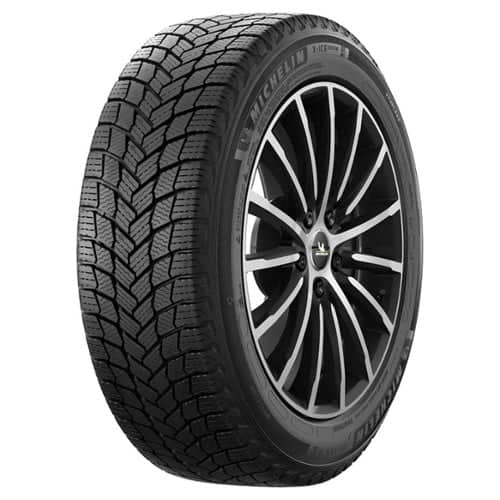
Michelin X-Ice Snow, USD 224.71, 225/60R17 103XL T. The ice tire to beat, and unusual in carrying a 40,000-mile warranty when most winter tires carry none at all. Built at 103XL, so it covers the crossover applications properly. View this tire.
Continental Viking Contact 7, USD 171.91, 225/60R17 103XL T. Strong ice and slush performance for fifty-three dollars less per tire. My value pick in the category and the one I sell most of. View this tire.
Nokian Hakkapeliitta R5 SUV, USD 234.92, P225/60R17 103XL R. If you live somewhere that gets a serious winter, this is the specialist. The R speed rating caps at 106 mph, which tells you where the engineering priorities went.
Note the speed ratings across that group: T and R, where your all-season is probably H. That drop is normal and unavoidable, because winter compounds cannot survive the heat a high speed rating certifies against. It does mean your car's limits change with the season.
Straight answer: the size runs from roughly 71 dollars at the entry point to about 285 dollars at the premium end, and the middle of the market lands right around 157 dollars per tire. Specialty builds like whitewalls and redlines sit above that range.
That is a four-times spread from bottom to top, which is wide even by tire standards, and it is worth understanding what the extra money actually buys.
Price band |
What you get |
Typical warranty |
|---|---|---|
USD 71 to 100 |
Basic touring construction, mostly A traction, some B temperature grades |
35,000 to 70,000 miles |
USD 100 to 150 |
Mainstream touring, consistent A grades, quieter tread designs |
55,000 to 80,000 miles |
USD 150 to 200 |
Premium touring, high treadwear grades, deeper starting tread |
65,000 to 90,000 miles |
USD 200 to 285 |
Flagship touring, all-weather snowflake ratings, CUV-specific construction |
40,000 to 85,000 miles |
Two things jump out of that table. First, the warranty numbers do not climb steadily with price. The longest warranties in the size sit in the 150 to 200 band, not at the top, because the most expensive tires are buying you weather capability instead of mileage. Second, four tires plus mounting, balancing, valve stems and disposal will land somewhere between about 380 dollars and 1,250 dollars depending on where you buy in that range. That is a real decision, not a rounding error.
My honest read: the sweet spot in this size is 150 to 200 dollars per tire. Below 100 you are giving up tread life you will notice. Above 225 you are paying for snow capability, and if you do not get snow, you are paying for nothing.
Not without consequences. A 225/55R17 is 3.2 percent shorter than your 225/60R17, which puts it just outside the three percent tolerance most of us work to.
Here are the actual numbers. Your 225/60R17 stands 27.63 inches tall with 5.32 inches of sidewall and turns about 730 revolutions per mile. A 225/55R17 stands 26.74 inches, has 4.87 inches of sidewall, and turns about 754 revolutions per mile.
What that does to you, in order of how much it matters:
The one case where I would say yes: you are buying a complete winter setup on separate wheels, you accept the speedometer offset, and the load index still meets your placard. Otherwise, stay on 60 series. Full dimensions on the alternative are in 225/55R17 in inches.
Same answer, opposite direction, and this one is the more dangerous of the two.
A 225/65R17 stands 28.52 inches, which is 3.2 percent taller than your 225/60R17, and turns about 707 revolutions per mile against your 730. Also just outside tolerance.
The direction of the error is what makes this worse. Fewer revolutions per mile means your speedometer reads low. At an indicated 70 mph you are actually doing about 72. You are going faster than the gauge says, all the time, and your odometer under-counts the miles you drive. People discover this at a traffic stop.
The other issues are the mirror image of the shorter tire. You gain 0.44 inch of ride height per corner, which can rub in the wheel well at full steering lock on tighter applications, and you gain sidewall, which softens the ride. The load index usually goes up rather than down, which is at least not a safety problem.
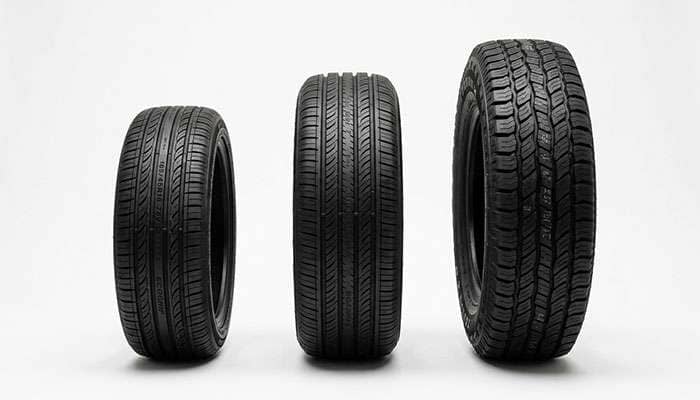
Worth knowing: 225/65R17 is a genuinely popular size in its own right on crossovers, so if your vehicle offers both as factory options you are in different territory and should follow the placard for the wheel you have. If it does not, stay on the size the car was engineered around. We covered the taller size separately in the best 225/65R17 tire.
Size |
Overall diameter |
Difference |
Revs per mile |
Speedometer effect |
|---|---|---|---|---|
225/60R17 (yours) |
27.63 in |
Baseline |
730 |
Correct |
225/55R17 |
26.74 in |
Minus 3.2 percent |
754 |
Reads high, you drive slower than indicated |
225/65R17 |
28.52 in |
Plus 3.2 percent |
707 |
Reads low, you drive faster than indicated |
215/60R17 |
27.16 in |
Minus 1.7 percent |
743 |
Within tolerance |
235/60R17 |
28.10 in |
Plus 1.7 percent |
718 |
Within tolerance |
215/65R17 |
28.00 in |
Plus 1.3 percent |
720 |
Within tolerance |
If you genuinely need to move off 225/60R17, the bottom three rows are where to look. 215/60R17 and 235/60R17 both land inside two percent and keep your sidewall height close.
I get asked this constantly and I am going to answer it a little sideways, because after enough years at the counter I do not think brand is the right unit of measurement.
Every major manufacturer builds excellent tires and every major manufacturer builds ordinary ones. Michelin makes the CrossClimate2 and Michelin also makes tires I would not pay that money for. The same is true up and down the list. Judging by badge will steer you wrong in both directions: it will talk you into overpaying for a mediocre tire with a good name, and it will talk you out of something like that Hercules at 73 dollars that is genuinely fine.
What you actually want is a way to spot a tire that will disappoint you. Four checks, and they take about a minute.
Run those four and the brand question mostly answers itself. What I would steer you away from is not a company, it is a spec sheet: no mileage warranty, a B traction grade, and a treadwear number under about 500 in a size where 700 and up is widely available. In 225/60R17 you do not have to accept any of that, because several value brands here carry A grades and 70,000-mile warranties. Cheap and bad are not the same thing in this size, and that is a nicer situation than we had ten years ago.
The Hankook Kinergy PT H737 is the best 225/60R17 tire for most people, because most people in this size want maximum miles and the 860 treadwear grade and 90,000-mile warranty are the best of that in the size. If you see snow, the Michelin CrossClimate2 CUV is worth its premium and the Bridgestone WeatherPeak is worth a hard look at half the money. If you want long life without giving up wet grip, the Pirelli P4 Persist AS Plus is the only all-season here carrying an AA traction grade.
But start with the placard. This size covers minivans, crossovers, full-size sedans and base Mustangs, and it comes in load ratings from 98 to 103 to handle that spread. The 220 pounds per corner between a 99 and a 103 is the difference between a tire that fits your car and a tire that merely fits your wheel.
Check your number, then come shop the full range of 225/60R17 tires filtered to what your vehicle actually asks for.
For maximum tread life, the Hankook Kinergy PT H737 at USD 177.99 leads the size with an 860 treadwear grade and a 90,000-mile warranty. For year-round weather including snow, the Michelin CrossClimate2 CUV at USD 224.99 is the benchmark. For long life with top-grade wet traction, the Pirelli P4 Persist AS Plus at USD 221.13 is the only all-season here rated AA. Which is best for you depends first on whether the tire is going on a sedan or a crossover, since that determines the load index you need.
About 174 models across more than 60 manufacturers. The largest groups are compact crossovers including the Hyundai Tucson, Chevrolet TrailBlazer and Infiniti QX50 and EX37; full-size sedans and coupes including the Ford Crown Victoria, base V6 Mustang and Audi A6; and minivans including the Buick Rendezvous and Terraza and the Chevrolet Uplander. That spread from minivan to Mustang is why the size is built in multiple load ratings.
Not without consequences. A 225/55R17 stands 26.74 inches against your 27.63 inches, which is 3.2 percent shorter and just outside the usual three percent tolerance. Your speedometer will read high, so at an indicated 70 mph you are actually doing about 68, and your odometer over-counts miles. You also lose 0.44 inch of ride height and half an inch of sidewall at every corner, and the load index typically drops. Only consider it for a complete winter setup on separate wheels where the load index still meets your placard.
Roughly USD 71 at the entry point to about USD 285 at the premium end, with the middle of the market near USD 157 per tire. Specialty whitewall and lettered builds sit above that range. Four tires plus mounting, balancing, valve stems and disposal lands somewhere between about USD 380 and USD 1,250. The best value sits in the USD 150 to 200 band, which is also where the longest mileage warranties are found.
Brand is the wrong unit of measurement, because every major manufacturer builds both excellent and ordinary tires. Judge the spec sheet instead. Check for a published mileage warranty, since that is the only number a manufacturer must pay out against. Check the traction grade, where A or AA is what you want and B is a real step down in wet braking. Compare treadwear against price within a single brand. And confirm the load index matches your door placard. In 225/60R17 several value brands carry A grades and 70,000-mile warranties, so a low price does not automatically mean a poor tire.
It is 3.2 percent taller, at 28.52 inches against 27.63 inches, which puts it just outside tolerance. This is the riskier of the two common swaps because the speedometer reads low: at an indicated 70 mph you are actually doing about 72, and the odometer under-counts your miles. You also gain 0.44 inch of ride height per corner, which can rub at full steering lock on tighter applications. If your vehicle offers both sizes as factory options, follow the placard for the wheel you have. Otherwise stay on 225/60R17.
Load index 99 is rated for 1,709 pounds per tire and 103 for 1,929 pounds, a difference of 220 pounds per corner or 880 pounds across four tires. The 103 builds are extra load construction certified at a higher inflation pressure, roughly the low 40s psi rather than the mid 30s, and they exist because crossovers and loaded minivans in this size need the extra capacity. Match your door placard number or go higher, never lower, and inflate extra load tires to the placard pressure or you do not receive the rating you paid for.



