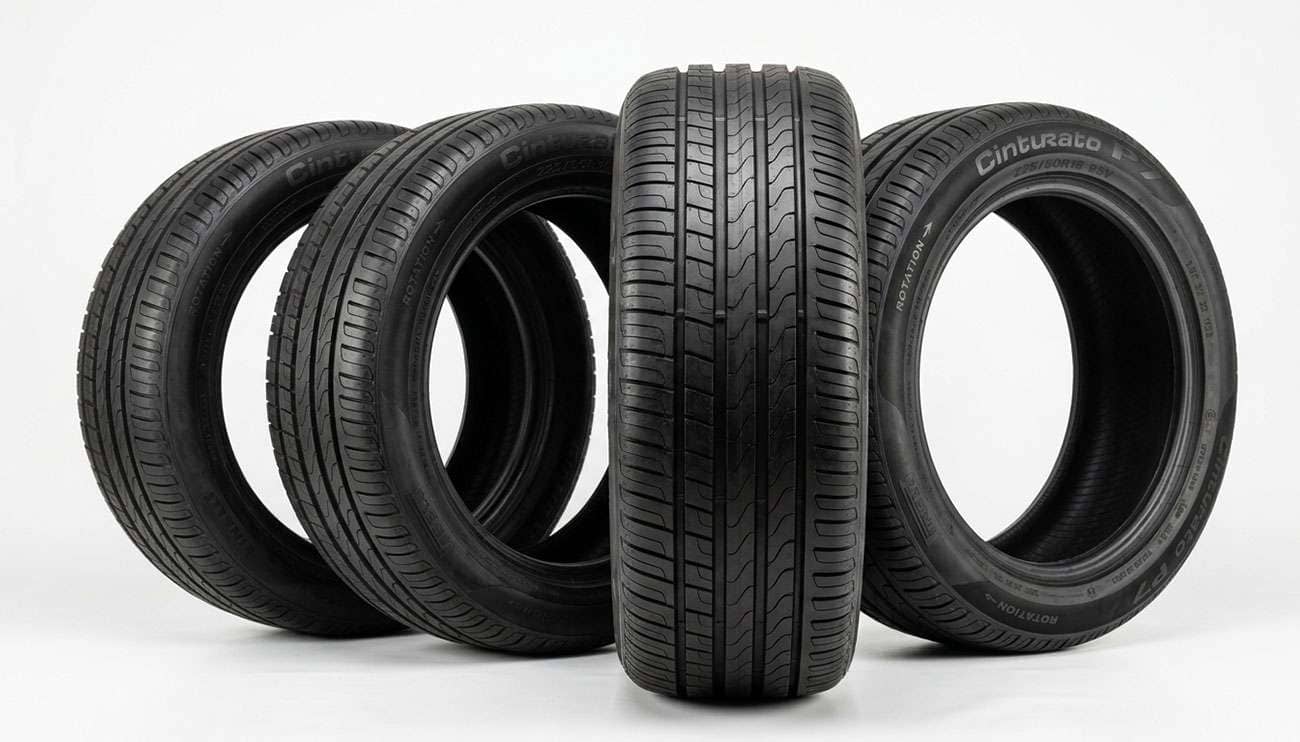
The best 225/50R18 tire is not one tire. This size ships in two different load indexes, 95 and 99 XL, and in two different constructions, standard and run-flat. Those four combinations are not interchangeable, and a tire that is excellent in one column is the wrong part in another. Most best-of lists rank by an overall score and never tell you which column your car sits in. Find your load index and your spare-tire situation first, then pick.
I pull fitment data for this size constantly, and 225/50R18 is one of the more misunderstood sizes on the road. It looks like a simple mid-range sedan and small-crossover size, and in tread pattern terms it mostly is. The complication is underneath. The same three numbers get molded onto a 95-load-index standard tire built for a 2012 Passat and onto a 99 XL run-flat built for a BMW that left the factory without a jack. Those two tires have different sidewall stiffness, different inflation tables, different maximum load, and different failure behavior. Swapping one for the other is not a preference. It is a spec change.
So before the picks, the table that actually decides your answer.
Your Car's Situation |
What You Need |
What Goes Wrong If You Ignore It |
|---|---|---|
Placard reads 225/50R18 95V or 95H, spare or inflator kit in the trunk |
Standard-load 95 tire, any construction |
Nothing. You have the widest choice of any 225/50R18 owner |
Placard reads 225/50R18 99V or 99Y with XL after the size |
Extra Load 99 tire only |
A 95 tire is roughly 220 lb per corner short of the load your car was engineered around |
No spare tire, no jack, no inflator kit anywhere in the car |
Run-flat replacement, or a mobility kit added deliberately |
A puncture leaves you with no way to move the car at all |
Currently on run-flats but you carry a plug kit and compressor |
Standard construction is a legitimate downgrade path |
Nothing, and ride quality usually improves noticeably |
Car sees real snow more than a few days a year |
Dedicated winter set in 95T or 95H |
An all-season in this size gives up most of its grip below 45 degrees F |
Find your row. The rest of this article is organized so you can jump straight to the pick that matches it.
225/50R18 sits in a specific band of the market: mid-size sedans on their upgraded wheel package, compact luxury sedans on base 18-inch wheels, and a growing group of small crossovers. The list runs long, but the vehicles cluster into three groups that matter for what you buy.
Group one, the standard-load sedans. Volkswagen Passat and CC, Chevrolet Malibu, Ford Fusion, Nissan Altima, Hyundai Sonata, Kia Optima, Mazda6, Buick Regal, Chrysler 200. These almost always run a 95 load index, they came from the factory with a spare or a compact spare, and their owners have the full run of the size. If you are in this group, ignore the run-flat sections entirely and shop on tread pattern and warranty.
Group two, the German cars with no spare. BMW 3 Series and 5 Series on base 18s, BMW X1, BMW Z4, and various Audi A4 and A6 trims. This group is the reason the size has a large run-flat presence. Many of these cars shipped with run-flats specifically so the manufacturer could delete the spare and the jack, and reclaim the trunk well. If you have one of these, open your trunk and look before you shop. What you find there changes the answer.
Group three, the crossovers. Honda HR-V, Subaru Legacy and Outback on certain trims, Toyota Corolla Cross, Chevrolet Equinox, and several others. These are the vehicles most likely to specify the 99 XL load index, because they carry more weight over the front axle and manufacturers build in a margin for a loaded cabin. This is also the group where owners most often unknowingly downgrade to a 95 because the cheaper tire came up first in a size search.
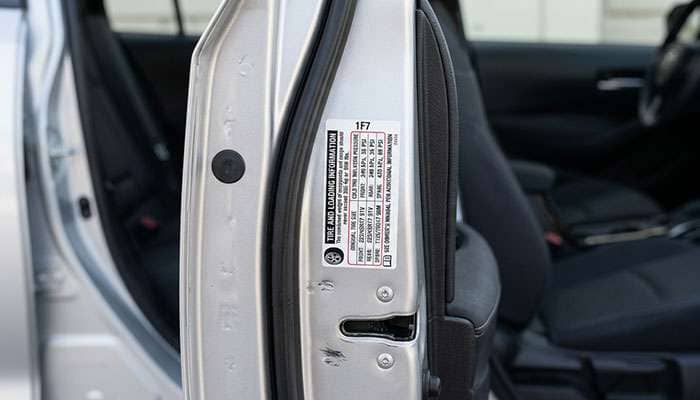
The takeaway is not the vehicle list. It is that three very different engineering assumptions share one size string. Your door jamb placard, not the size on your sidewall, is the document that tells you which assumption applies to your car.
Some are and most are not. That mix is exactly what makes this size worth a click.
225/50R18 is one of the sizes where run-flat availability is genuinely broad. Bridgestone, Pirelli, Michelin, and Goodyear all build run-flat versions in this size, marked variously as RFT, ROF, Runflat, or DriveGuard depending on the manufacturer. But run-flats are still the minority of what is sold in 225/50R18, which means a size search sorted by price will bury them and hand you a standard tire by default.
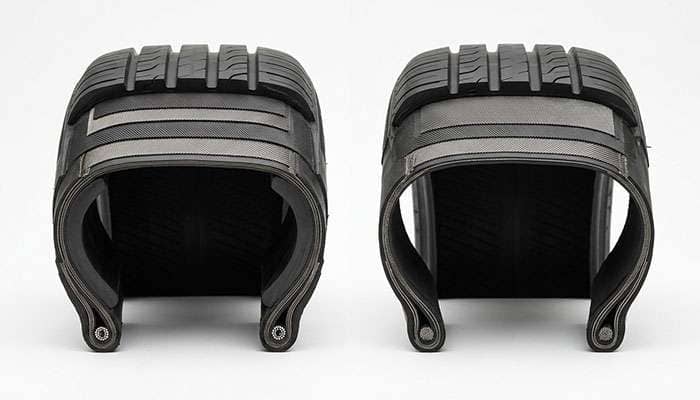
The mechanism is worth understanding because it explains the trade-off. A run-flat carries a reinforced rubber insert bonded into the sidewall, typically adding meaningful section stiffness. When the tire loses pressure, that insert carries vehicle load instead of the air column, which is what lets you drive roughly 50 miles at up to 50 mph on zero pressure. The cost of that insert is ride harshness, extra unsprung weight, and a shorter useful life once the tire has been run flat even briefly. Most manufacturers consider a run-flat that has been driven on with no pressure to be scrap, not a repair candidate.
Here is the practical decision. If your car has no spare and no jack, replacing run-flats with standard tires is legal and common, but you are accepting that a puncture on the freeway means a tow unless you add a plug kit and a 12-volt compressor to the trunk yourself. Plenty of owners make that trade deliberately and are happier for it, because the ride improvement in this size is substantial. Plenty of others discover the trade at 11 p.m. on a shoulder. Our breakdown of run-flat tires versus regular tires walks through the cost and convenience math in full.
One thing that is not optional either way: a run-flat that has lost pressure, or any tire with a bulge, cut, or gouge in the sidewall, is not repairable. Sidewall damage is structural damage. Our guide on tire sidewall damage and whether it is safe to drive covers what is repairable and what is not.
Continental ExtremeContact DWS06 Plus, 225/50ZR18 95W, around $183.
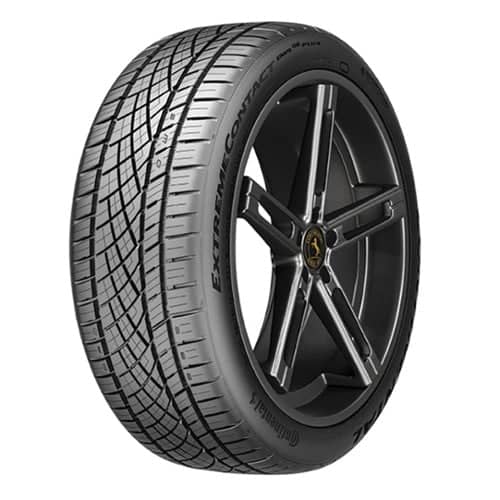
If your placard reads 95 and you want one set of tires to handle a Southern California winter, a Midwest spring, and a summer canyon run without complaint, the Continental ExtremeContact DWS06 Plus is the tire that keeps winning this slot, and it wins it on merit rather than reputation.
The reason it works in 225/50R18 specifically comes down to how the tread handles a relatively narrow contact patch. At 225 mm on a 50 series sidewall, you do not have a lot of footprint to distribute water. The DWS06 Plus uses a macro-block tread with wide circumferential grooves and a high sipe density, which gives it a wet braking figure most competitors in this size cannot match at the same treadwear grade. The 560 UTQG treadwear rating alongside a 50,000-mile warranty is a genuinely unusual pairing for a W-speed-rated ultra-high-performance all-season. Most tires that grip this well in the wet trade away tread life to get there.
The W speed rating is worth noting as a matter of spec, not bragging rights. If your placard calls for V or H, a W tire is a legal upgrade. Going the other direction, from a W-rated original to an H-rated replacement, changes the tire's certified heat capacity at sustained speed. Our explainer on tire speed rating de-rating covers what that actually changes and when it matters.
Where it is the wrong pick: if your placard reads 99 XL, this specific SKU does not fit your spec. Skip to the XL note below.
If you need the XL version of this answer: the Michelin Pilot Sport A/S 4 in 225/50ZR18 99Y XL, around $209, is the strongest ultra-high-performance all-season in the correct load index for XL cars. A 300 treadwear grade means you are buying grip over longevity, but the load index is right, and that comes first.
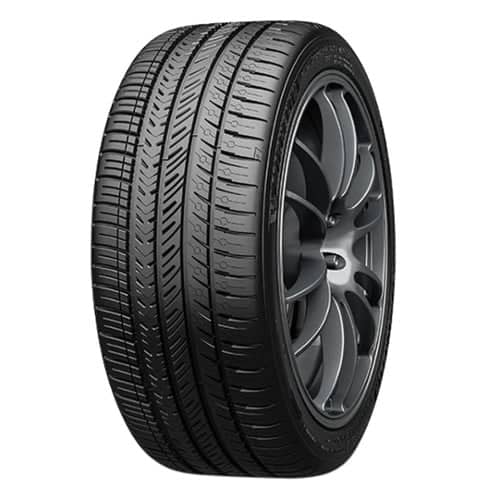
Bridgestone DriveGuard Plus, 225/50ZR18 95V, around $298.
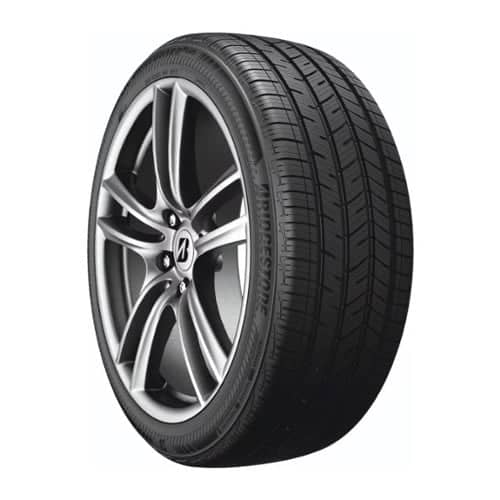
Run-flats have a deserved reputation for riding badly, and most of that reputation was earned by original-equipment run-flats fitted in the 2005 to 2015 window. The Bridgestone DriveGuard Plus is the tire that changed the calculation, and it is the one I point owners toward more than any other in this size.
The engineering difference is in the sidewall insert construction. Rather than a single thick rubber wedge, DriveGuard uses a cooling-fin sidewall profile and a lower-hysteresis insert compound, which reduces heat buildup during zero-pressure running and lets Bridgestone use less material for the same 50-mile capability. Less material means less stiffness, which means the ride penalty is a fraction of what a 2010 OE run-flat imposed.
The numbers behind it are the argument. A 640 UTQG treadwear grade with a 65,000-mile warranty is not merely good for a run-flat, it beats a large share of standard-construction touring tires in this size. That combination did not exist in a run-flat five years ago. If you have a BMW or an Audi with an empty spare well and you want to keep the no-spare architecture intact without punishing your spine, this is the pick.
Two things to know before you buy. First, run-flats in this size run a meaningful price premium over standard construction, and that premium is the cost of the trunk space and the tow you do not take. Second, a functioning tire pressure monitoring system is not optional with run-flats. The entire safety case depends on the car telling you the tire is flat, because the tire will not tell you itself through the steering wheel the way a standard tire does.
Michelin Defender2, 225/50R18 95H standard load around $215, or 225/50R18 99V XL around $235.
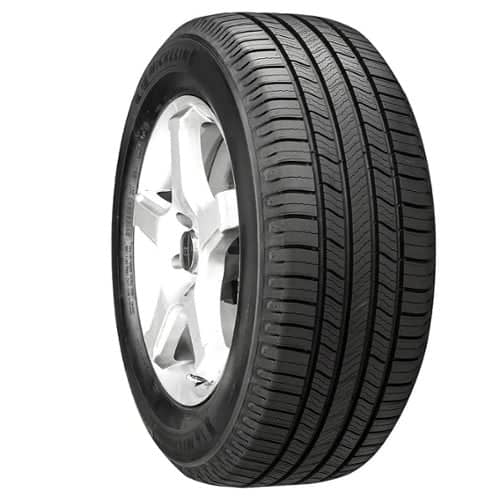
This is the pick for the driver who wants to buy tires once and forget about them. The Michelin Defender2 carries an 840 UTQG treadwear grade and an 80,000-mile warranty in 225/50R18, which is the longest warranty available in the size by a wide margin.
It is also the cleanest illustration of the load index point this whole article is built around, because Defender2 is offered in both columns. The standard-load version is 95H. The Extra Load version is 99V. Same tread pattern, same compound, same brand, roughly $20 apart, and they are not substitutes for each other. If your placard reads 99 and you buy the 95 because it came up first and cost slightly less, you have quietly removed load capacity your car's engineers specified.
An 840 treadwear grade is a genuinely high number, and it is worth understanding what that grade does and does not promise. UTQG treadwear is a comparative index measured against a control tire, self-reported by the manufacturer, and comparable within a brand more reliably than across brands. Our guide to UTQG tire ratings decoded explains how to read the number without over-trusting it.
The trade you are making is grip at the limit. The H and V speed ratings and the hard, long-wearing compound mean this tire will not reward aggressive driving the way the DWS06 Plus will. For a commuter putting on 18,000 miles a year, that is a trade worth taking every time.
Michelin Pilot Sport 4 S, 225/50ZR18 99Y XL, around $285.
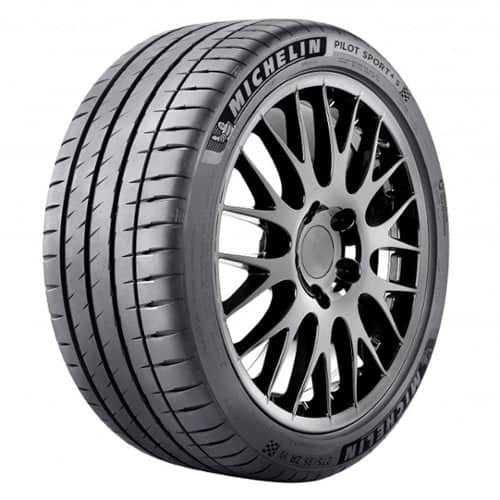
If your 225/50R18 lives on a BMW or an Audi that only sees pavement above 50 degrees F, the Michelin Pilot Sport 4 S remains the benchmark ultra-high-performance summer tire, and it happens to come in this size in the 99 XL load index that most of those cars want.
The relevant engineering here is the bi-compound tread. The outboard shoulder uses a high-silica compound tuned for dry lateral grip and the inboard portion uses a compound tuned for wet traction, molded as one tread with a joint that does not shear under load. In a 225-section tire on a 50 series sidewall you have limited shoulder area to work with, so getting maximum work out of the outer third of the tread is where the lap time and the emergency-lane-change stability actually come from.
The honest caveats. A 300 treadwear grade and a 30,000-mile warranty mean this is a consumable, not an investment. And summer compound means summer. Below roughly 45 degrees F the compound stiffens and grip falls off sharply, including in the dry. If you drive year-round in a climate with real winter, this tire needs a second set alongside it, because a summer compound below freezing is not a compromise, it is a different tire behaving badly.
Bridgestone Blizzak WS90, 225/50R18 95T, around $283.
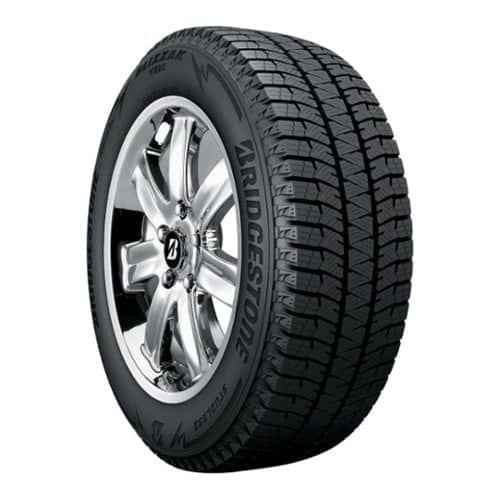
For anyone in this size who sees real snow, the Bridgestone Blizzak WS90 is the studless ice-and-snow tire I recommend without hesitation.
The mechanism that matters in a 50 series sidewall is block stability. Winter tires get their ice grip from a hydrophilic compound and enormous sipe density, but sipes cut into a tread block make it flexible, and a flexible block squirms under braking on dry pavement. The WS90 uses a higher block stiffness than the WS80 it replaced along with 3D zigzag sipes that interlock under load, so the block stays planted when you brake hard on a dry patch between snow patches. On a performance sedan with a short sidewall and quick steering, that dry-pavement composure is what makes a winter tire livable rather than merely capable.
Note the T speed rating. Every dedicated winter tire in this size carries a lower speed rating than the all-season it replaces, and that is normal and expected. It is a seasonal set, not a year-round de-rating.
General AltiMax RT45, 225/50R18 95H around $187 or 99V XL around $188.
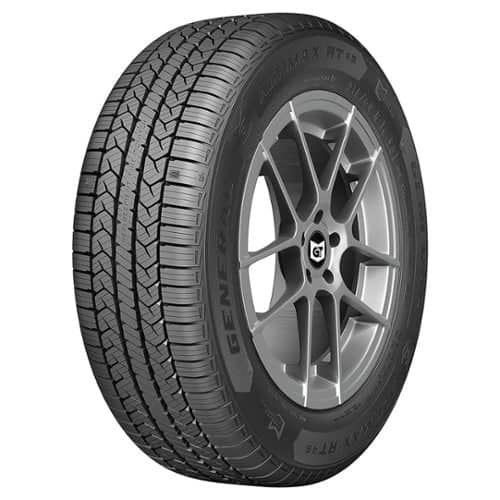
Value in tires is not the lowest price. It is the lowest cost per mile with no safety compromise, and by that measure the General AltiMax RT45 is difficult to argue with in this size. A 700 UTQG grade and a 75,000-mile warranty on the standard-load version, at a price under $200, works out to a cost per mile that most premium tires cannot approach.
General is Continental's second brand, and the RT45 inherits real engineering rather than just a price point: a replacement tire monitor molded into the tread, twin sipe technology through the shoulder blocks, and a visual alignment indicator. It will not match the DWS06 Plus in a wet emergency stop, and it is quieter than it is sharp. For a commuter sedan whose owner wants 75,000 honest miles, that is the correct set of priorities.
Like the Defender2, it is available in both load indexes with only about a dollar between them, which removes the last excuse for getting the load index wrong.
Below this price band the compromises start to bite. There are 225/50R18 tires available in the $135 to $150 range, and they will hold air and pass inspection. What you give up is wet braking distance and tread life, and in a size that goes on cars weighing 3,400 to 4,000 pounds with modern braking expectations, wet stopping distance is not the place to economize.
If Your Priority Is |
Pick |
Load Index Available |
Approx. Price |
|---|---|---|---|
Best all-around wet and dry grip |
Continental ExtremeContact DWS06 Plus |
95W standard load |
$183 |
Grip with the XL load index |
Michelin Pilot Sport A/S 4 |
99Y Extra Load |
$209 |
Keeping a no-spare car mobile |
Bridgestone DriveGuard Plus |
95V run-flat |
$298 |
Longest possible tread life |
Michelin Defender2 |
95H and 99V both offered |
$215 to $235 |
Maximum dry performance, warm climate |
Michelin Pilot Sport 4 S |
99Y Extra Load summer |
$285 |
Snow and ice traction |
Bridgestone Blizzak WS90 |
95T winter |
$283 |
Lowest cost per mile |
General AltiMax RT45 |
95H and 99V both offered |
$187 |
Whatever your door jamb placard says, which for most vehicles running this size falls between 32 and 36 psi cold. There is no correct pressure for a tire size. There is only a correct pressure for a vehicle and tire combination.
This is the single most common mistake I see with 225/50R18. The number molded into the sidewall, typically 44 or 51 psi, is the maximum pressure at which the tire may carry its maximum rated load. It is a ceiling, not a recommendation, and inflating to it will ride terribly, wear the center of the tread, and reduce your contact patch exactly when you need it. Our guide on how to find your recommended tire pressure shows where the placard lives on different vehicles.
Two adjustments specific to this size are worth knowing.
If you moved from 95 to 99 XL: the correct pressure does not automatically stay the same. An XL tire achieves its higher load capacity through a stiffer casing that is designed to run at higher pressure. Manufacturers publish load and inflation tables for exactly this, and if your car specified a 99 XL from the factory, the placard already reflects it. If you upgraded to XL from a 95 spec by choice, stay with the placard pressure and understand you are not accessing the extra capacity, just carrying a stiffer tire.
Cold weather: a 50 series sidewall in this size loses roughly 1 psi for every 10 degrees F drop in ambient temperature. A car set to 34 psi on an 80-degree afternoon reads about 29 psi on a 30-degree morning, which is far enough below spec to trigger tire pressure monitoring on most vehicles and to accelerate shoulder wear. Check pressures cold, monthly, and in the fall.
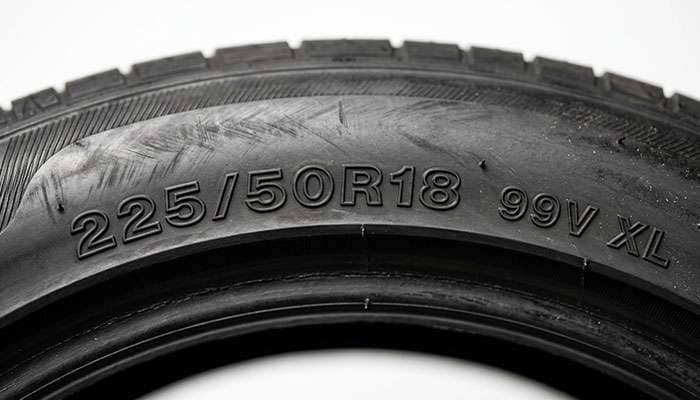
This deserves its own section because the damage ladder is gradual enough that most drivers never connect the cause to the effect.
Load index 95 corresponds to a maximum load of 1,521 pounds per tire. Load index 99 corresponds to 1,709 pounds. That is a gap of 188 pounds per corner, or roughly 750 pounds across the axle set. A vehicle engineered around the 99 figure is one whose designers wanted that margin available at gross vehicle weight, with a full cabin, cargo, and a full tank.
Here is what running the lower index actually does, in order.
First, the sidewall works harder. A tire under a load closer to its maximum flexes more per revolution. Sidewall flex is hysteresis, and hysteresis is heat. The tire runs measurably hotter at the same speed and ambient temperature than the specified tire would.
Second, the wear pattern changes. More flex means more shoulder scrub in corners and more heat in the shoulder blocks. You will see shoulder wear outpacing center wear well before the warranty mileage.
Third, heat attacks the belt package. The bond between the steel belts and the surrounding rubber is a chemical bond that degrades with sustained heat exposure. This is the mechanism behind belt separation, and it does not announce itself. It develops over thousands of miles and then presents as a vibration, a bulge, or a tread separation at speed.
Fourth, the insurance and warranty question. A tire fitted below the manufacturer's specified load index is a documented deviation from vehicle specification. If that tire is implicated in an incident, that fact will be in the record.
None of this is theoretical. The load index system exists because the Federal Motor Vehicle Safety Standards require manufacturers to specify tires adequate to the vehicle's gross axle weight rating, and the Tire and Rim Association tables that define those load values are the reference the whole industry works from. Our explainer on load range versus load index covers how the two systems relate and why passenger tires use one and light truck tires use the other.
The fix is free. Read your placard before you shop.
Step one: open the driver's door and read the placard. Write down the full size string including the load index and speed rating. For most cars in this size it will read something like 225/50R18 95V or 225/50R18 99V XL. That string, not the size alone, is your shopping filter.
Step two: open the trunk and lift the floor. Spare tire, compact spare, inflator kit, or empty well. If the well is empty and there is no kit, you are in run-flat territory unless you are prepared to add a plug kit and compressor yourself.
Step three: decide your season strategy honestly. If you see snow more than a handful of days a year, budget for a dedicated winter set rather than asking one all-season to do a job it is not built for. If you never see freezing temperatures, a summer tire is on the table and will reward you.
Step four: pick your priority, not your brand. Grip, longevity, mobility, or cost per mile. The table above maps each of those to a specific tire in the correct load index. Choosing a priority first prevents the most common failure mode, which is buying a performance tire for a commuter or a touring tire for a canyon car.
Step five: replace in sets of four, or at minimum in axle pairs. On any all-wheel-drive car this is not advice, it is a driveline requirement, because circumference mismatch between axles loads the center differential continuously. On front-wheel-drive cars, mismatched pairs change the handling balance in wet conditions in ways that show up exactly when you need the car to be predictable. If you are cross-shopping the adjacent size because you are also considering a wheel change, our guide to 225/45R18 tire options covers how the shorter sidewall changes ride and speedometer accuracy.
The ranked lists are not wrong about the tires. The Continental ExtremeContact DWS06 Plus really is an outstanding all-season, and it earns its place at the top of most 225/50R18 lists. What those lists leave out is the step that comes before the ranking.
225/50R18 is sold in two load indexes and two constructions, and those four combinations serve four different cars. A 95 standard-load tire on a Passat is exactly right. The same tire on a crossover that specifies 99 XL is a quiet downgrade with a mechanism behind it. A standard tire on a BMW with an empty spare well is a legitimate choice made deliberately and a bad surprise made accidentally.
Read your placard, look in your trunk, then pick your priority. The tire that is best for your car is in one of the sections above, and now you know which one.
Ready to shop the size? Browse the full range of 225/50R18 tires and filter by load index, speed rating, and season.
It depends on your load index and whether your car carries a spare. For standard-load 95 vehicles wanting one year-round set, the Continental ExtremeContact DWS06 Plus is the strongest all-around choice. For Extra Load 99 vehicles, the Michelin Pilot Sport A/S 4 is the equivalent pick in the correct load index. For cars with no spare, the Bridgestone DriveGuard Plus is the best run-flat available in this size. For maximum tread life in either load index, the Michelin Defender2 carries an 840 treadwear grade and an 80,000-mile warranty.
Mid-size sedans on upgraded wheel packages including the Volkswagen Passat and CC, Chevrolet Malibu, Ford Fusion, Nissan Altima, Hyundai Sonata, Kia Optima and Mazda6; compact luxury sedans including BMW 3 Series and 5 Series on base 18-inch wheels, BMW Z4 and various Audi A4 and A6 trims; and small crossovers including the BMW X1, Honda HR-V, Toyota Corolla Cross and certain Subaru Legacy and Outback trims. The crossovers are the group most likely to specify the 99 Extra Load index.
Some are, but most are not. Bridgestone, Pirelli, Michelin and Goodyear all offer run-flat versions in 225/50R18, marked RFT, ROF, Runflat or DriveGuard depending on the brand. Because run-flats are a minority of what is sold in this size and cost more, a price-sorted search will show standard-construction tires first. If your car left the factory with run-flats and no spare or jack, check what is in your trunk before you order.
Use the pressure on your driver door jamb placard, which for most vehicles in this size falls between 32 and 36 psi cold. The 44 or 51 psi figure molded into the sidewall is the maximum pressure for the tire's maximum rated load, not a recommendation. Check pressures cold, before driving, and expect to lose roughly 1 psi for every 10 degree F drop in ambient temperature.
No. Load index 95 is rated for 1,521 pounds per tire and load index 99 for 1,709 pounds, a difference of 188 pounds per corner. A vehicle specified for 99 was engineered around that margin at gross axle weight. Running the lower index increases sidewall flex, which increases operating temperature, which accelerates shoulder wear and degrades the belt-to-rubber bond over time. You may always go up in load index. Never go down.
Yes, and many owners do it for the ride quality improvement and lower price. The condition is that you accept responsibility for mobility after a puncture. If your car has no spare and no jack, add a tire plug kit and a 12-volt compressor to the trunk before the swap. Keep the tire pressure monitoring system functional either way, and match the load index and speed rating on your placard.
Measured as cost per mile rather than sticker price, the General AltiMax RT45 is difficult to beat in this size. It carries a 700 UTQG treadwear grade and a 75,000-mile warranty at a price under $200, and it is offered in both the 95 and 99 load indexes for about a dollar difference. General is Continental's second brand, so the engineering behind it is real rather than a badge on a budget casing.