
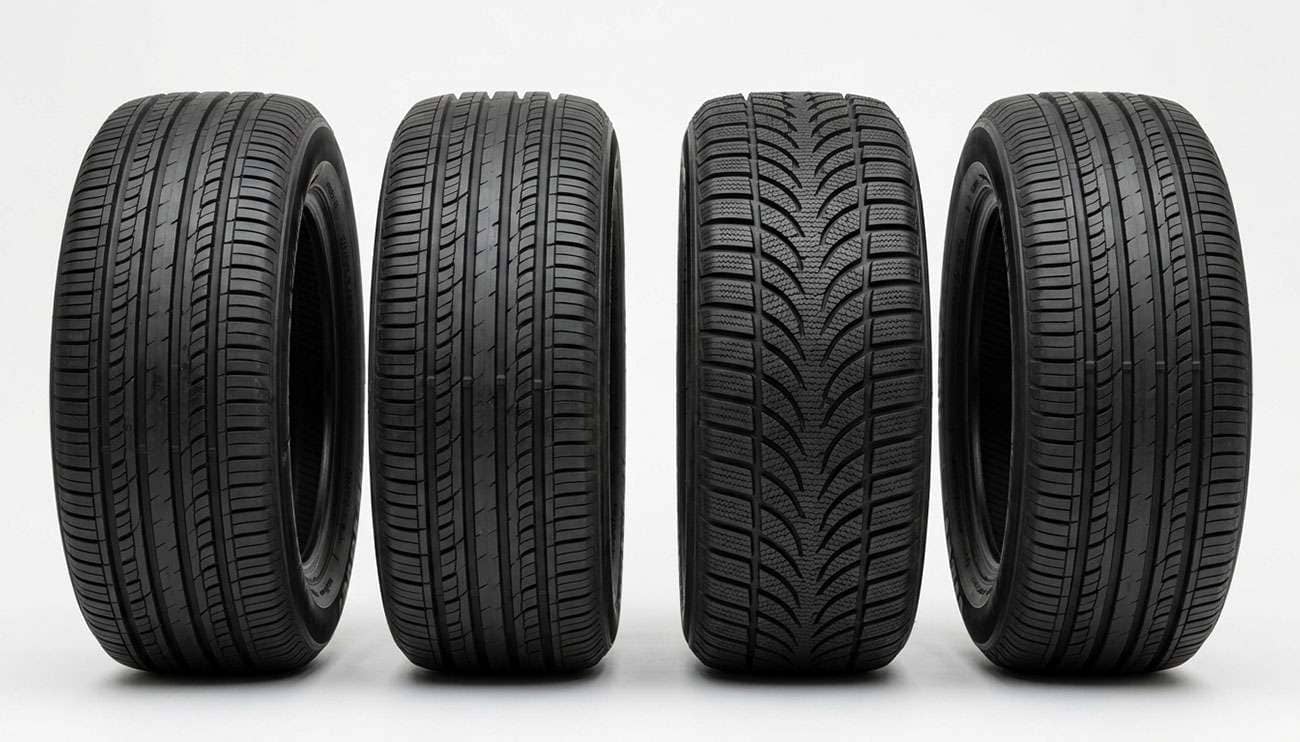
The Michelin CrossClimate2 is the best all-around 205/60R16 for most drivers, but the honest answer starts one step earlier than the ranking. This size ships in three different load indexes, 91, 92 and 96, and that spread is 209 lb of capacity per corner. A car that left the factory on a 96 XL cannot legally drop to a 92. Sort that first, then pick by what the car is: a mid-2000s midsize sedan and a modern compact crossover both wear 205/60R16 and want different tires.
Most best-of lists for this size are ranked on one axis, usually winter grip or a review average, and that leaves you comparing a snow tire against a grand touring tire as though they were competing for the same job. They are not. Below are eight picks sorted by mission, with real prices, so you can find the one that matches your car instead of the one that topped somebody's chart.
Tire |
Best For |
Price |
Treadwear |
Mileage Warranty |
|---|---|---|---|---|
Michelin CrossClimate2 |
Best overall, year-round including snow |
USD 136.92 |
640 |
60,000 miles |
Continental TrueContact Tour 54 |
Premium touring, long life with refinement |
USD 157.99 |
840 |
80,000 miles |
Hankook Kinergy PT H737 |
Highest mileage warranty in the size |
USD 137.99 |
860 |
90,000 miles |
General AltiMax RT45 |
Best value, most tire per dollar |
USD 124.99 |
700 |
75,000 miles |
Bridgestone Ecopia EP422 Plus |
Hybrids and fuel economy priority |
USD 131.19 |
540 |
70,000 miles |
Bridgestone Blizzak WS90 |
Dedicated winter, ice traction |
USD 158.42 |
Not rated, winter |
None, winter tire |
Continental PureContact LS |
Sportier steering with touring life |
USD 137.98 |
700 |
70,000 miles |
Bridgestone Turanza QuietTrack |
Quietest ride in the size |
USD 196.60 |
800 |
80,000 miles |
If you are also shopping a second vehicle, we run the same mission-first breakdown for the best 235/55R17 tires. Prices shown here are current at publication and move with the market. Treadwear is the UTQG number molded into the sidewall, and it is a useful comparison within a brand but a rough one across brands, since each manufacturer runs its own reference test. The mileage warranty is the number the manufacturer will stand behind, which is why I weight it more heavily than treadwear when the two disagree.
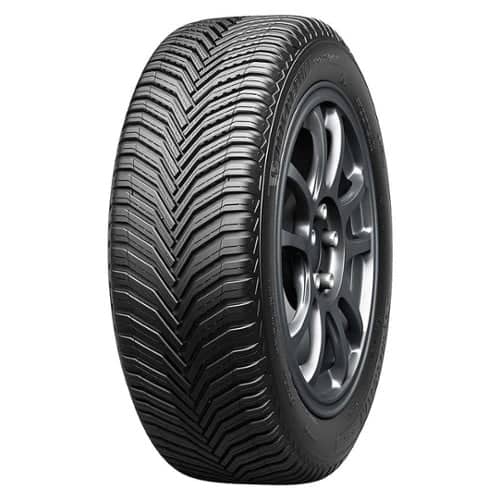
The CrossClimate2 carries the three-peak mountain snowflake symbol, which means it passed a certified severe-snow traction test rather than just claiming all-season capability. In a 16-inch size that lives on commuter cars in every climate in the country, that changes the math on whether you need a second set of wheels at all.
What you give up is treadwear, and I would rather be straight about that than sell around it. At 640 treadwear and a 60,000 mile warranty, it is not the longest-lasting tire on this list, and it is not close. What you get is a tire that stops in the wet like a much more expensive tire and handles a surprise January storm without you having to plan for it. For a driver in a place that gets four or five real snow events a year and cannot justify a winter set, this is the single best answer in the size.
Skip it if you live somewhere that never freezes. In pure dry-and-wet duty the touring tires below will outlast it substantially for similar money, and you will not be using the capability you paid for.
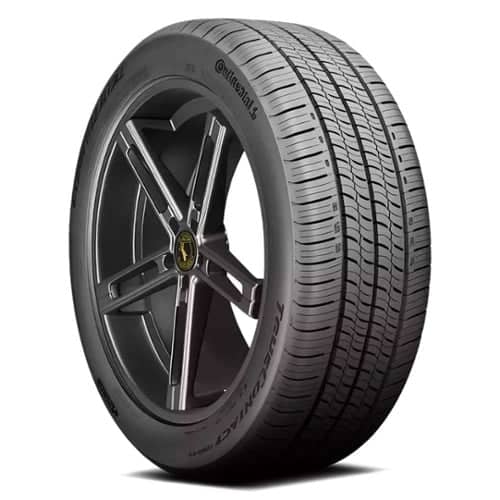
An 840 treadwear rating with an 80,000 mile warranty is a serious number, and Continental has historically delivered on its wear claims in this category. This is the tire I would put on a Camry or an Accord that somebody plans to keep another six years.
The reason it earns the premium label rather than just the mileage label is what it does at half tread depth. Plenty of long-wearing tires post good numbers when new and then go vague in the wet once they are worn in. Continental builds this line around retained wet performance, and that is the property that actually protects you in year four, which is when most people stop thinking about their tires entirely.
The tradeoff is price and a slightly softer steering feel than the sportier options. If you want the car to feel eager rather than composed, look at the PureContact LS instead. If you want to install these and forget about them, this is the pick.
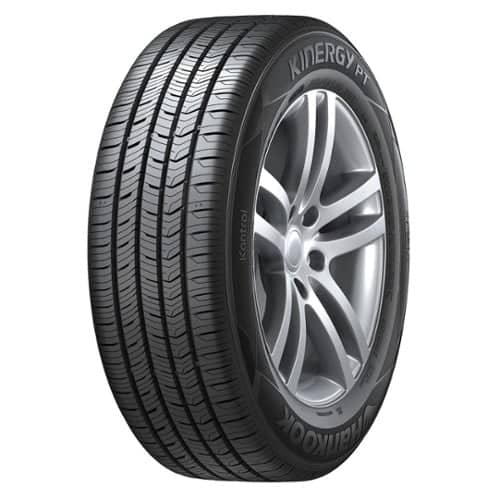
860 treadwear and a 90,000 mile warranty is the highest combination available in 205/60R16, from any brand, at any price. If mileage is the number you shop on, the search ends here and it costs 20 dollars less than the Continental.
Hankook has spent the last decade moving from value brand to genuine mid-premium, and the Kinergy line is where that shows most clearly. It is a quiet, comfortable, long-wearing highway tire that does its best work at steady speed on pavement. Ride quality is good, road noise is well controlled, and the wear rate is genuinely excellent.
Where it comes up short is at the limit. Push it hard through a wet on-ramp and it gives up earlier than the Michelin or the Continental. For the driving that most 205/60R16 cars actually do, that limit is well past anything you will meet on a commute. For a driver who wants margin in bad weather, spend the difference elsewhere on this list.
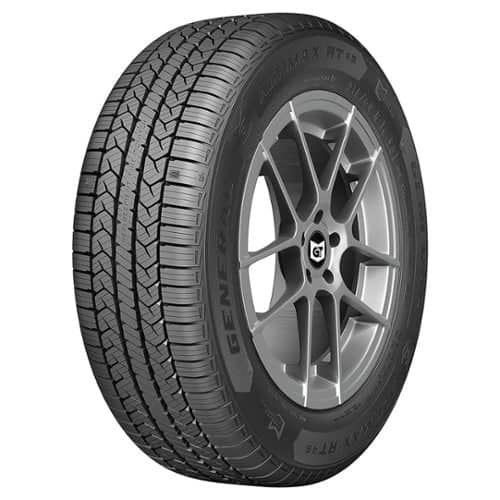
700 treadwear, a 75,000 mile warranty, and it comes in under the rest of this group. General is Continental's value brand, which means the engineering underneath is not a mystery, and the RT45 is the current generation of a line that has been a quiet recommendation at parts counters for years.
The RT45 is available in T, H and V speed ratings in this size at essentially the same price, which is more flexibility than most tires here offer. That matters because you should match or exceed the speed rating your car came with, and being able to do that without changing tires or budget is worth something.
This is the tire I recommend when somebody tells me the car is worth about what a set of premium tires costs. It is not going to feel like a Michelin. It is going to last a long time, behave predictably, and leave money in your pocket, and there is nothing wrong with any of that.
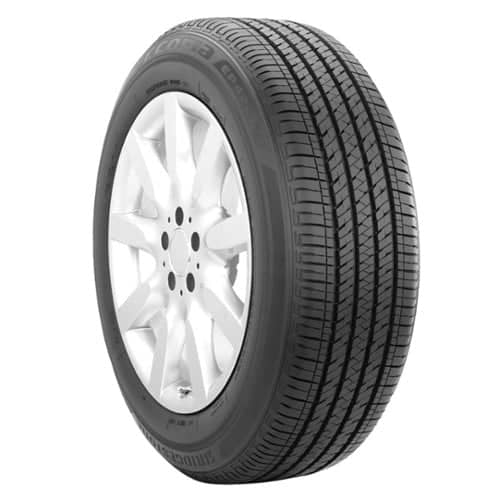
If your car is a hybrid, or if you simply care more about the fuel bill than about lap times, rolling resistance is the specification that should be driving your purchase, and almost no roundup treats it that way. The Ecopia line is built around it, using a low rolling resistance compound and a sidewall design intended to reduce energy loss as the tire flexes.
The mechanism is straightforward. A tire loses energy every rotation as the rubber deforms entering the contact patch and recovers leaving it. That hysteresis loss is heat, and heat is fuel you already paid for. Cutting it does not make the car faster, it just stops throwing away a slice of every gallon.
The tradeoff shows up in the treadwear number, 540, which is the lowest of the all-season tires here. Low rolling resistance compounds generally trade some abrasion resistance for reduced hysteresis. The 70,000 mile warranty is still respectable, and if you are driving 15,000 miles a year in a hybrid, the fuel savings across a set will usually outrun the wear difference. Our comparison of the best tires for hybrid vehicles works through the efficiency math in more detail.
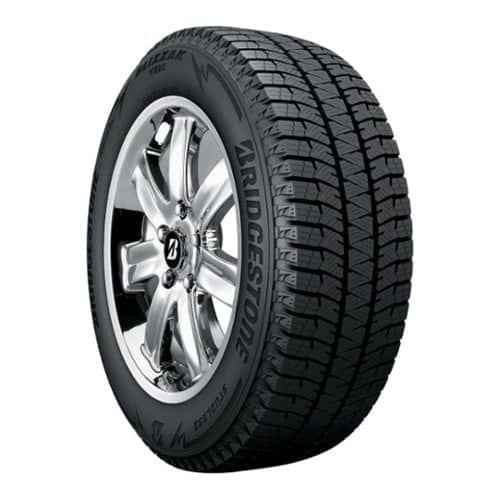
If you live where winter is a season rather than an occasional inconvenience, a dedicated winter tire is not a luxury and no all-season is a substitute for one. The Blizzak WS90 is the benchmark for ice traction in passenger sizes, and 205/60R16 is exactly the kind of commuter fitment it was designed for.
What separates a real winter tire from a good all-season is compound behavior below about 45 degrees Fahrenheit. All-season rubber stiffens as it gets cold and the tread stops conforming to the road surface. Winter compounds stay pliable at temperatures where all-seasons have gone hard, so the tread blocks and the sipes keep working. That is a chemistry difference, not a tread pattern difference, and it is why tread depth alone never tells you whether a tire is a winter tire.
Run them on a second set of wheels if you can. Mounting and dismounting twice a year costs more over time than the wheels do, and it saves your bead seats. Two other strong options in this size are the Continental VikingContact 7 and the Michelin X-Ice Snow, both current and both excellent on ice. Our results-based look at the best tires for snow compares the category head to head.
Two more worth knowing about before we leave the picks. The Continental PureContact LS gives up nothing in tread life at 700 treadwear and 70,000 miles while steering noticeably sharper than the touring tires, which suits a car you actually enjoy driving. And the Bridgestone Turanza QuietTrack is the quietest tire available in this size by a clear margin, at 800 treadwear and an 80,000 mile warranty, if road noise is the thing that bothers you most about your car.
Expect roughly 55 to 225 dollars per tire depending on tier, which works out to about 220 to 900 dollars for a set of four before mounting, balancing and disposal. That is a wide band, and knowing where the breaks fall keeps you from overpaying or underbuying.
Tier |
Price Per Tire |
Set Of Four |
What You Get |
|---|---|---|---|
Budget import |
USD 55 to 90 |
USD 220 to 360 |
Safe and legal, shorter life, weaker wet grip when worn |
Mid-tier replacement |
USD 90 to 140 |
USD 360 to 560 |
The value sweet spot, long warranties, solid all-round behavior |
Premium touring |
USD 140 to 225 |
USD 560 to 900 |
Best wet performance at half tread, quietest ride, longest life |
Dedicated winter |
USD 95 to 185 |
USD 380 to 740 |
Ice and snow traction no all-season can match |
Specialty whitewall and restoration |
USD 230 to 410 |
USD 920 to 1,640 |
Period-correct sidewall styling for show and classic builds |
The mid-tier band is where this size delivers the most value, and it is not close. Several tires between 120 and 145 dollars carry 75,000 to 90,000 mile warranties, which is better coverage than some tires at twice the price. Below about 90 dollars the compromise stops being about comfort and starts being about wet stopping distance once the tread is half gone, which is the part of a tire's life nobody shops for and everybody drives through.
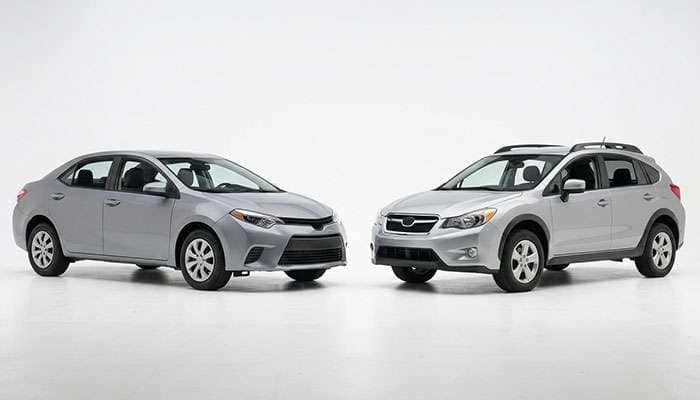
205/60R16 spans two generations of car that have almost nothing else in common. On the older side it is a midsize sedan size: the 2000-2002 Toyota Camry, the mid-2000s Honda Accord, the 2006-2012 Ford Fusion. On the newer side it is a compact crossover and small sedan size: the 2018-2022 Nissan Kicks, the 2020-2022 Nissan Sentra, the 2014-2023 Kia Soul, the 2019-2021 Volkswagen Jetta, and the 2017-2018 Mazda 3.
That split is the reason a single ranking does not serve this size well. A 2001 Camry owner is optimizing for cost per mile and a quiet ride on a car that is worth a few thousand dollars. A 2021 Kicks owner is optimizing for fuel economy and wet grip on a car that still has payments. Both are correct, and they should not buy the same tire.
The specification that decides your shortlist is on the driver's door jamb placard, not the tire currently on the car. This size is sold in load index 91, 92 and 96, which carry 1,356 lb, 1,389 lb and 1,565 lb per tire respectively. The 96 versions are extra load construction. If your placard calls for a 96, dropping to a 92 costs you 176 lb of capacity per corner and puts you below what the vehicle was certified with. Going the other way, up to a 96 from a 92, is allowed and simply means running a stiffer tire.
The 205/60R16 is 0.81 inches taller in overall diameter, which is a 3.3 percent difference and puts the swap just outside the 3 percent window the trade uses as its go or no-go line. Both are 205mm wide. The only thing that changes is sidewall height.
Measurement |
205/55R16 |
205/60R16 |
|---|---|---|
Sidewall height |
4.44 in |
4.84 in |
Overall diameter |
24.88 in |
25.69 in |
Revolutions per mile |
811 |
785 |
Speedometer at indicated 60 |
Reference |
About 62.0 mph actual |
Because aspect ratio is a percentage of section width, 55 percent of 205mm gives 112.75mm of sidewall while 60 percent gives 123mm. That 10.25mm difference gets doubled across the diameter of the tire, which is where the 0.81 inches comes from. Our explainer on what tire aspect ratio actually controls covers how that one number drives ride, load and clearance.
In practice the taller tire rides softer, protects the wheel lip better and reads about 2 mph slow on the speedometer. The shorter one turns in more crisply and keeps your instruments honest. Since the change exceeds 3 percent, treat it as a modification rather than a substitution, and check clearance at full lock before committing. If you are researching the other direction, we have a full breakdown of what size a 205/55R16 tire is.
Most vehicles wearing 205/60R16 call for 32 to 35 psi cold, but the correct number is whatever is printed on your driver's door jamb placard, not on the tire. That is worth saying plainly because the number molded into the sidewall is the maximum the tire can hold, commonly 44 or 51 psi in this size, and it is not a recommendation.
The reason the placard wins is that inflation pressure is a vehicle specification, not a tire specification. The engineers set it based on the car's corner weights, its suspension geometry and the load capacity the tire delivers at that pressure. Two cars running identical 205/60R16 tires can correctly call for different pressures because they weigh different amounts and distribute that weight differently.
A few practical notes. Check cold, meaning before driving or at least three hours after, because a warm tire reads several psi high. Pressure drops roughly 1 psi for every 10 degrees Fahrenheit the ambient temperature falls, which is why the warning light appears on the first cold morning of autumn. And if your placard lists a higher rear pressure for a full load, that column applies when the car is loaded, not all the time. Our guide on how to find your recommended tire pressure walks through reading the placard correctly.
Reliability is decided by three things ahead of the badge: matching the load index and speed rating on your placard, buying a tire that is fresh rather than old stock, and keeping it inflated. Get those wrong and the best brand in the world underperforms a correctly specified mid-tier tire.
That said, the brands are not equal, and pretending otherwise is not useful. The manufacturers with the deepest engineering investment and the most consistent production in passenger sizes are Michelin, Bridgestone, Continental and Goodyear, with Pirelli strong in the sportier end. Below them sits a mid-tier that has closed a lot of ground in the last decade, including Hankook, Kumho, Toyo, Yokohama, Falken and General, where you can now get 80 to 90 percent of premium performance for 60 to 70 percent of the money. The value tier is safe, since every tire sold for road use in the United States must meet the federal standard, but consistency and wet performance at half tread are where the gaps show.
The single most useful check has nothing to do with brand. Read the DOT date code on the sidewall before the tire goes on the wheel. The last four digits give week and year of manufacture, so 1225 means the twelfth week of 2025. Rubber ages whether it rolls or not, and a premium tire that sat in a warehouse for four years is a worse buy than a fresh mid-tier one. Our ranking of the best tire brands by safety and performance breaks the tiers down further.
For most drivers in this size, the Michelin CrossClimate2 is the best single answer, because it removes the seasonal decision entirely for the price of some tread life. If you are keeping the car a long time and want the miles, the Hankook Kinergy PT H737 carries the longest warranty available here at 90,000 miles, and the Continental TrueContact Tour 54 delivers similar life with better behavior once it is worn in. If the budget is the constraint, the General AltiMax RT45 is the most tire per dollar in the size.
Before any of that, though, check the placard. This size comes in three load indexes and a range of speed ratings, and matching what your car was certified with is the one part of this decision that is not a preference. Everything after that is about what you drive and where you drive it.
Ready to shop? Browse the full 205/60R16 tire selection and filter to the load index and speed rating your placard calls for.
The Michelin CrossClimate2 is the best all-around choice for most drivers, because it carries a severe snow rating alongside strong wet performance. For maximum tread life the Hankook Kinergy PT H737 leads the size at 860 treadwear and a 90,000 mile warranty. For best value the General AltiMax RT45 delivers 75,000 miles at a lower price. For true winter duty, no all-season substitutes for a dedicated winter tire like the Bridgestone Blizzak WS90.
Roughly USD 55 to 225 per tire, or about USD 220 to 900 for a set of four before mounting and balancing. Budget imports run USD 55 to 90, mid-tier replacements USD 90 to 140, and premium touring USD 140 to 225. Dedicated winter tires fall between USD 95 and 185. The best value in this size is concentrated between USD 120 and 145.
Older midsize sedans including the 2000-2002 Toyota Camry, mid-2000s Honda Accord and 2006-2012 Ford Fusion, plus newer compact vehicles including the 2018-2022 Nissan Kicks, 2020-2022 Nissan Sentra, 2014-2023 Kia Soul, 2019-2021 Volkswagen Jetta and 2017-2018 Mazda 3. Check the door jamb placard for your required load index, since the size is sold in 91, 92 and 96.
Both are 205mm wide, but the 205/60R16 has a taller sidewall at 4.84 inches against 4.44 inches, making it 0.81 inches larger in overall diameter. That is a 3.3 percent difference, which falls just outside the 3 percent substitution window. Running a 60 in place of a 55 makes the speedometer read about 2 mph slow at an indicated 60.
Typically 32 to 35 psi cold, but the correct figure is whatever your driver's door jamb placard specifies. The pressure molded into the sidewall, commonly 44 or 51 psi in this size, is the tire's maximum and not a recommendation. Inflation pressure is a vehicle specification set from corner weights and suspension geometry, so two cars on identical tires can correctly call for different numbers.
Michelin, Bridgestone, Continental and Goodyear carry the deepest engineering investment and most consistent production in passenger sizes, with Pirelli strong at the sporty end. Hankook, Kumho, Toyo, Yokohama, Falken and General now deliver most of that performance for less money. Matching your placard load index and speed rating, and checking the DOT date code for freshness, matters more than the badge.
Match what the placard specifies. A load index 96 tire is extra load construction and carries 1,565 lb per corner against 1,389 lb for a 92. If your vehicle was certified on a 96, dropping to a 92 leaves you 176 lb short per corner. Moving up from a 92 to a 96 is permitted and simply gives a stiffer tire and a firmer ride.
The approved rim width range is 5.5 to 7.5 inches, with 6.0 inches serving as the industry measuring rim. Most factory wheels for the vehicles that wear this size fall between 6.0 and 6.5 inches, which places the tire comfortably inside its designed window.



