
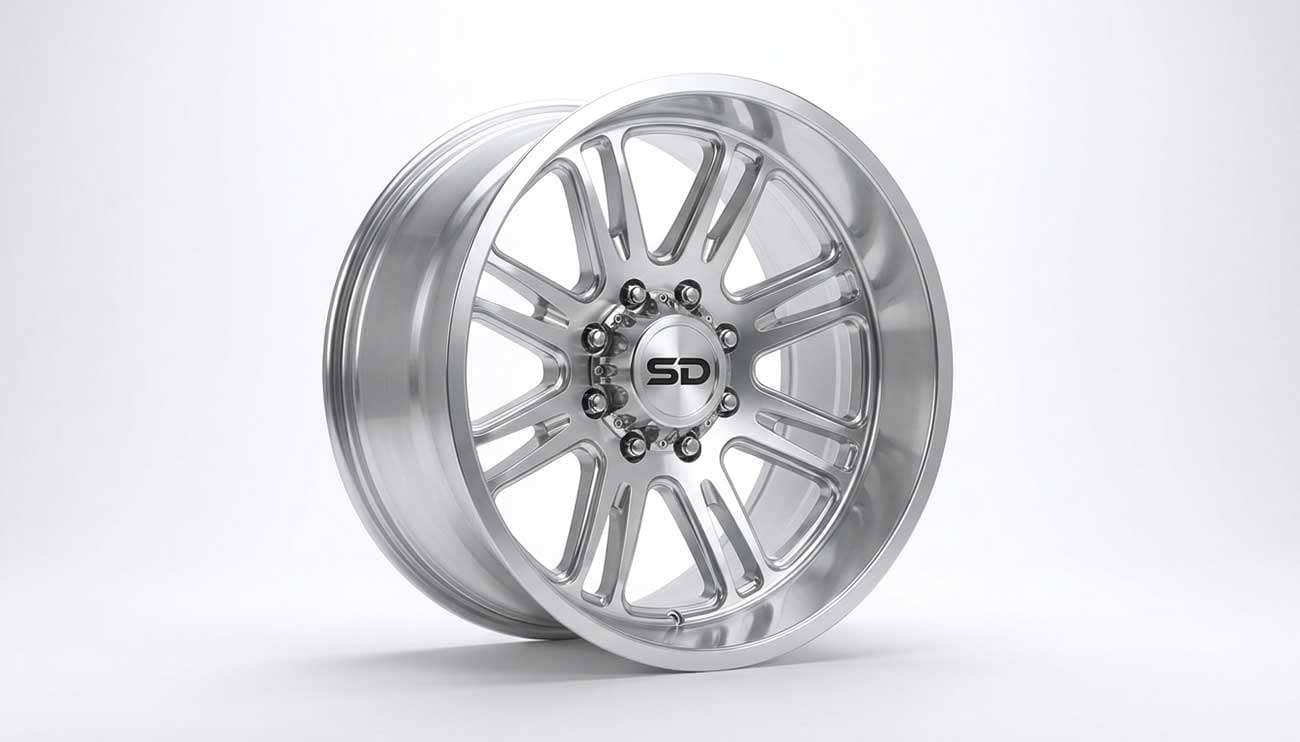
8 lug wheels are built specifically for heavy-duty trucks that demand extra strength and load capacity. These wheels use eight lug nuts to secure the wheel to your vehicle, making them the go-to choice for three-quarter-ton and one-ton trucks. The additional mounting points deliver superior stability and strength when you're hauling heavy loads or tackling demanding jobs.
The "8 lug" designation comes from the bolt pattern, which determines whether a wheel will fit your truck. This pattern uses two key measurements: the number of lugs (8) and the diameter of the circle they form, called the pitch circle diameter. When you see "8 x 6.5" on a wheel specification, that means eight lugs arranged in a 6.5-inch diameter circle.
Different truck manufacturers use distinct 8 lug patterns, and understanding these differences is crucial for proper fitment:
8x165.1mm (8x6.5"): Found on older GM trucks, Dodge RAM 2500s, single rear wheel 3500s, and earlier Silverado and Sierra 2500s
8x170mm: Used exclusively on Ford Super Duty trucks from 1999 forward
8x180mm: Standard on GM trucks (Chevy and GMC) from 2011 and newer
8x200mm: Common on Ford Super Duty trucks (F-250 and F-350) from 2005 to present
8x210mm: Used on heavy-duty GM trucks like Chevrolet Silverado 3500HD from 2011 onward
Measuring your 8-lug pattern requires precision. You'll need to measure from the center of one wheel stud hole straight across to the center of the opposite hole. Even small differences matter here – the 4.9mm variance between 8x6.5 and 8x170 patterns means these wheels won't interchange without adapters.
Popular trucks using 8 lug wheels include Ford F-250/F-350 Super Duty, Ram 2500/3500, Chevrolet Silverado 2500HD/3500HD, and GMC Sierra 2500HD/3500HD models. These robust wheels serve a functional purpose beyond appearance – trucks built for heavy hauling need wheels and hubs engineered to handle the stress. The larger assemblies also work with the beefier axles and enhanced suspension systems that heavy-duty trucks require.
Getting the right 8 lug wheels for your truck means matching both the lug count and the specific bolt pattern diameter to your vehicle's specifications. This ensures proper fit and the strength needed for heavy-duty applications.
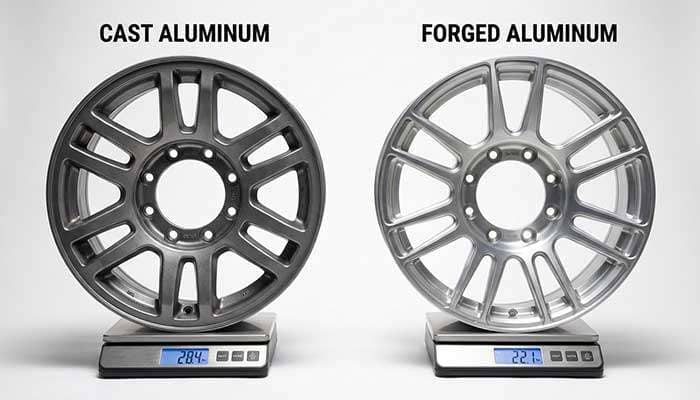
Heavy-duty truck owners have several wheel options to choose from, each engineered for specific performance requirements and applications. Understanding these differences helps you select wheels that match your truck's intended use and your performance expectations.
Steel 8 lug wheels deliver exceptional durability for demanding applications. Built from iron and carbon alloy, these wheels resist damage from road salt, gravel impacts, and brake dust better than other materials. Steel wheels excel at absorbing impacts without cracking, making them ideal for work trucks and harsh conditions. The trade-off comes in weight - heavier steel wheels can reduce acceleration and fuel economy.
Aluminum alloy wheels combine aluminum with nickel to create a lighter, stronger alternative that offers superior heat dissipation. This thermal advantage prevents brake fade and wheel warping during heavy towing or repeated hard braking. Alloy wheels also resist corrosion naturally, maintaining their appearance longer without the need for refinishing. For drivers who prioritize performance and aesthetics, alloy wheels provide the best balance of strength and weight savings.
Cast 8 lug wheels represent the most economical option, manufactured by pouring molten aluminum into molds. A complete set of 24x14 cast wheels typically costs around $2,000. While affordable, cast wheels are heavier and less durable than alternatives.
Forged wheels undergo high-pressure manufacturing that compresses heated aluminum blocks, creating superior strength-to-weight ratios. Premium forged wheels often cost over $1,000 per wheel but deliver unmatched performance. Flow-formed wheels offer a middle-ground solution, starting as cast wheels before undergoing barrel extension processing that improves grain structure and reduces weight by 20%.
Specialized trailer wheels meet DOT standards for heavy hauling applications. Available in sizes like 16x6", 16x6.5", and 16x7", these wheels support boat, horse, enclosed, construction, and camper trailers. Pricing ranges from economical steel models at $56.99 to premium aluminum designs at $175.99. Many feature modular designs with circular cutouts that combine functionality with classic styling.
Chevrolet Silverado 2500HD applications require wheels engineered for substantial loads and torque. Popular sizes range from 17×8.5 to 22×14, with 20-inch diameters being particularly common. Available finishes include anthracite, gunmetal, gloss black, chrome, and brushed silver to match different styling preferences. Each design handles the substantial torque, towing capacity, and oversized tire combinations typical of heavy-duty applications.
Off-road enthusiasts often choose specialized beadlock wheels that prevent tire bead separation during low-pressure driving. Monster beadlocks have proven successful in off-road racing for nearly two decades, while forged beadlocks crafted from 6061-T6 aluminum deliver ultimate strength-to-weight performance.
Highway-focused 8 lug wheels prioritize comfort, fuel efficiency, and reduced road noise through different designs and materials. Lighter aluminum construction improves steering response and handling on paved surfaces compared to heavier steel alternatives. The choice between off-road and highway wheels depends on your primary driving conditions and performance priorities.
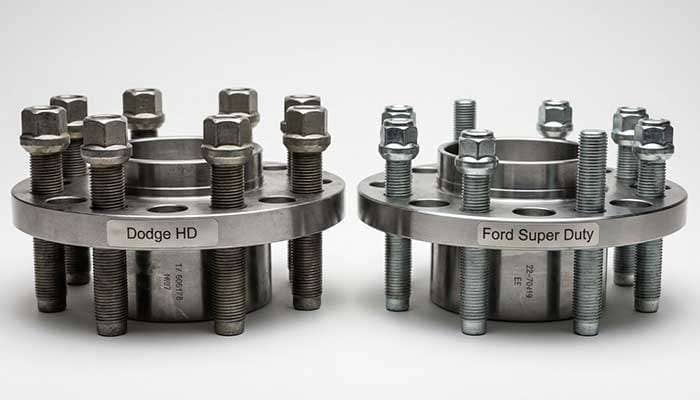
The simple "8 lug" designation creates a common misconception among truck owners. These wheels are definitely not universally interchangeable across different trucks and trailers. Several critical differences determine whether wheels will fit your specific vehicle.
Understanding 8 lug bolt patterns is essential when shopping for wheels. The bolt pattern consists of two measurements: the number of lug holes and the diameter of the circle they form. Here are the most common patterns you'll encounter:
8x165.1mm (8x6.5"): Found on older GM, Dodge, and Ford trucks
8x170mm: Used exclusively on Ford Super Duty trucks from 1999 forward
8x180mm: Standard on GM trucks (Chevy and GMC) from 2011 and newer
8x200mm: Common on Ford Super Duty trucks (2005-present)
8x210mm: Used on heavy-duty GM trucks after 2011
8x225mm: Found on certain European commercial trucks
8x275mm: Used on larger specialty commercial vehicles
Even small differences in bolt circle diameter prevent proper mounting without adapters. This is why precision matters when measuring your truck's pattern.
Ford and Chevy 8 lug wheels follow different specifications that make them incompatible in most cases. Both manufacturers used the 8x165.1mm pattern before 1999. Ford switched to the metric 170mm pattern when they introduced the Super Duty lineup in 1999. Chevrolet continued with the 8x6.5" pattern until changing to 8x180mm in 2011.
Center bore sizes create additional fitment challenges. Ford trucks typically feature larger hubs, especially on rear axles. This means many Chevrolet wheels physically cannot fit over Ford hubs, though Ford wheels sometimes work on Chevrolet trucks.
Dodge and Chevrolet share the same 8x165.1mm bolt pattern on many models. However, complete interchangeability remains problematic due to center bore differences—Dodge uses a slightly larger center hole than Chevrolet.
Some truck owners successfully mount Dodge wheels on Chevrolet trucks without vibration issues or reduced towing capacity. The reverse situation typically requires modification—grinding approximately 1/8 inch around the center to accommodate the larger Dodge hub.
Aftermarket wheels often solve these compatibility issues by featuring appropriate center bores or including hubcentric rings that adapt the center hole size for different applications.
Selecting the right 8 lug wheels for your heavy-duty truck involves understanding several critical measurements and specifications. Getting these details right the first time prevents compatibility issues and ensures your wheels can handle your truck's demands.
Measuring an 8-lug wheel pattern requires checking from the center of one lug hole directly across to the center of the opposite hole. For trucks with 8 lugs, skip three bolt holes when measuring across the wheel's center. Express the pattern as two numbers: 8 (lug count) followed by the circle diameter in inches or millimeters—for example, "8 x 6.5" or "8 x 165mm".
This measurement is crucial because even small differences can make wheels incompatible. We've seen customers assume all 8 lug patterns are the same, only to discover their new wheels won't fit properly.
Load ratings indicate maximum weight capacity per wheel. The load range, represented by letters (C, D, E, etc.), corresponds to ply ratings that indicate tire strength. For instance, "E1" represents a 10-ply rating with 80 PSI maximum pressure. The load index provides more precise weight capacity—most heavy-duty trucks use index values between 70-124. Check the manufacturer's specifications to match your vehicle's weight requirements.
When it comes to heavy-duty applications, you don't want to compromise on load capacity. Your wheels need to handle not just your truck's weight, but also whatever you're hauling or towing.
Offset measures the distance (in millimeters) between the wheel's mounting surface and centerline. Positive offset places the mounting surface toward the outside, creating a tucked appearance, whereas negative offset pushes wheels outward. Backspacing measures (in inches) from the mounting surface to the wheel's inner edge. Similar backspacing to factory wheels prevents interference with suspension components.
Getting offset wrong can cause serious problems. Too much positive offset might cause the wheel to hit brake calipers or suspension parts. Too much negative offset can stress wheel bearings and affect handling.
Online wheel fitment guides identify compatible options by vehicle year, make, and model. These resources automatically filter for correct bolt patterns and load ratings. Additionally, consult manufacturer specifications for precise center bore sizes and recommended wheel dimensions for your specific truck application.
At Performance Plus Tire, we understand that wheel fitment can be complex. Our experts can help you verify compatibility and find the perfect 8 lug wheels that meet your truck's specifications and your performance needs.
Wheel adapters spark heated debates among truck owners, but the reality is straightforward. High-quality 8 lug adapters can work safely when you choose the right type and install them correctly. The key lies in understanding when they're appropriate and following proper installation procedures.
Adapters serve a practical purpose when you need to mount wheels with different bolt patterns to your truck. We see three main scenarios where they provide value: converting between incompatible bolt patterns, adjusting wheel offset for improved appearance, and creating clearance for larger tires or suspension modifications. Most truck owners use adapters to switch between Ford and Chevy 8 lug patterns or to accommodate aftermarket wheels that don't match their truck's factory specifications.
Hub-centric adapters offer the safest solution because they match both your vehicle's hub and the wheel's center bore. This design distributes weight properly across the entire mounting surface rather than relying solely on lug nuts for centering.
Adapter quality makes the difference between safe operation and potential failure. Look for adapters made from 6061-T6 billet aluminum or forged steel rather than cast aluminum, which can have weak spots that lead to cracking. Hub-centric designs distribute loads evenly, while lug-centric adapters create dangerous imbalances by depending only on lug nuts for proper centering.
Keep in mind that adapters increase stress on wheel bearings and suspension components, which can accelerate wear over time. This doesn't make them unsafe, but it does require more frequent inspections of these parts.
Installation requires precision. Use a calibrated torque wrench set to manufacturer specifications - typically 90 ft-lbs - instead of impact guns that can over-torque and damage threads. Check torque again after 100 miles of driving and during regular maintenance intervals. Apply thread-locking compound and ensure at least 7 full thread rotations for proper security.
At Performance Plus Tire, we recommend choosing adapters only when necessary and always selecting hub-centric designs from reputable manufacturers. When installed correctly with proper maintenance, quality adapters can provide years of safe service.
Understanding 8 lug wheels is crucial for heavy-duty truck owners to ensure proper fitment, safety, and performance for their vehicles.
• 8 lug wheels aren't universal - Different manufacturers use distinct bolt patterns (8x165.1mm, 8x170mm, 8x180mm) making cross-brand compatibility impossible without adapters.
• Measure your bolt pattern precisely - Check from center of one lug hole to the opposite hole center, as even small differences prevent proper wheel mounting.
• Consider material trade-offs carefully - Steel wheels offer superior durability and impact resistance, while aluminum alloy provides better heat dissipation and corrosion resistance.
• Load ratings must match vehicle requirements - Check manufacturer specifications for weight capacity and ply ratings to ensure wheels can handle your truck's hauling demands.
• Use adapters cautiously with proper installation - High-quality hub-centric adapters can work safely when torqued correctly and regularly maintained, but they increase stress on components.
Proper wheel selection involves matching bolt patterns, load ratings, and offset specifications to your specific truck model for optimal safety and performance.
8 lug wheels are designed for heavy-duty trucks, using eight lug nuts to secure the wheel to the vehicle. They provide enhanced load capacity and durability, making them ideal for three-quarter-ton and one-ton trucks that haul heavier loads.
No, 8 lug wheels are not universally interchangeable. Different manufacturers use distinct bolt patterns, such as 8x165.1mm, 8x170mm, or 8x180mm, which prevent cross-brand compatibility without adapters.
Steel 8 lug wheels offer superior durability and impact resistance but are heavier. Aluminum alloy wheels are lighter, dissipate heat more efficiently, and resist corrosion better, but may be more susceptible to damage from impacts.
To choose the right 8 lug wheel, measure your truck's bolt pattern, understand load ratings, consider offset and backspacing, and use an interchangeable wheels guide. Always consult manufacturer specifications for precise fitment information.
High-quality wheel adapters can be safe when properly installed and maintained. However, they should be used cautiously as they can increase stress on wheel bearings and suspension components. Always use hub-centric adapters and follow manufacturer torque specifications for installation.



