
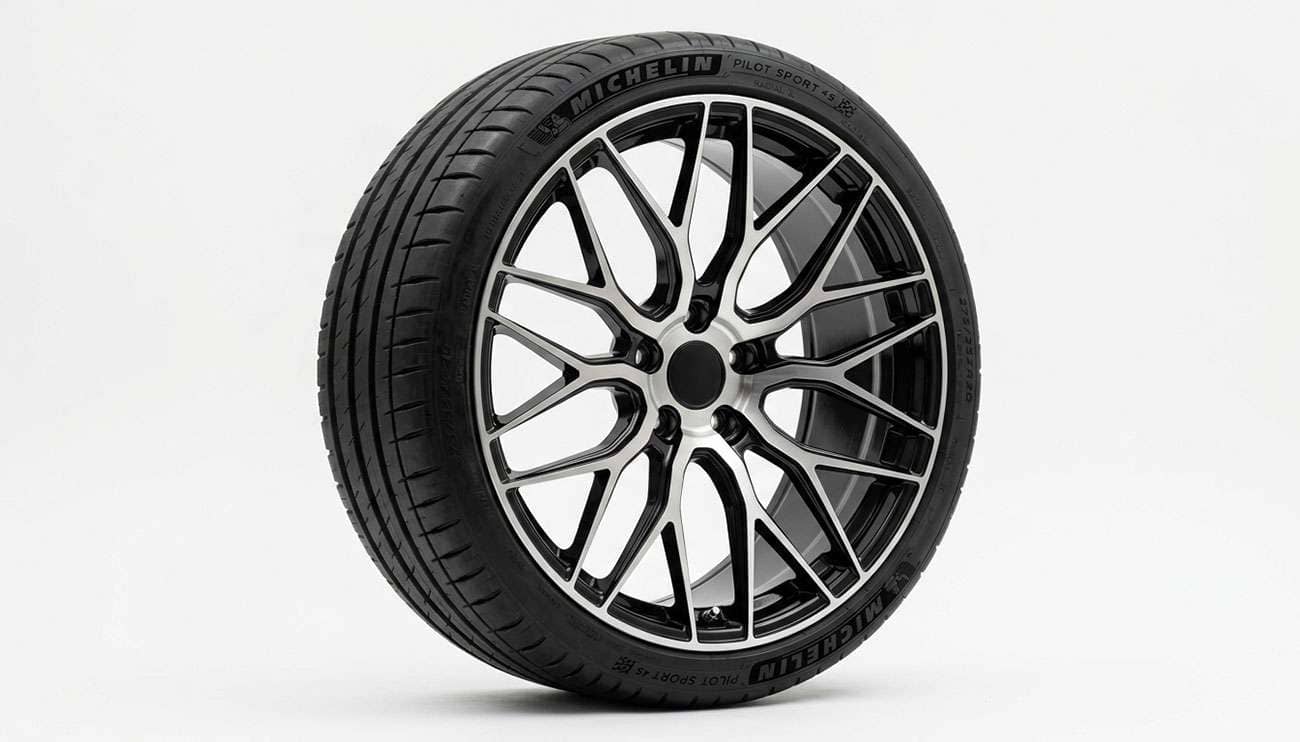
A 20x8.5 rim is 20 inches in diameter at the bead seats and 8.5 inches wide between them. That is the whole definition, and it takes about eleven words. The problem is that those two numbers do not tell you whether the wheel will fit your car, and they do not tell you what tire to put on it. Offset and bolt pattern decide the first. Tire section width and aspect ratio decide the second. Neither one appears in the name.
I have had this conversation across the counter more times than I can count. Somebody walks in holding a phone with a wheel on the screen, tells me it is a 20x8.5, and asks whether it will work. And I have to explain that "20x8.5" is roughly as specific as saying you drive a red car.
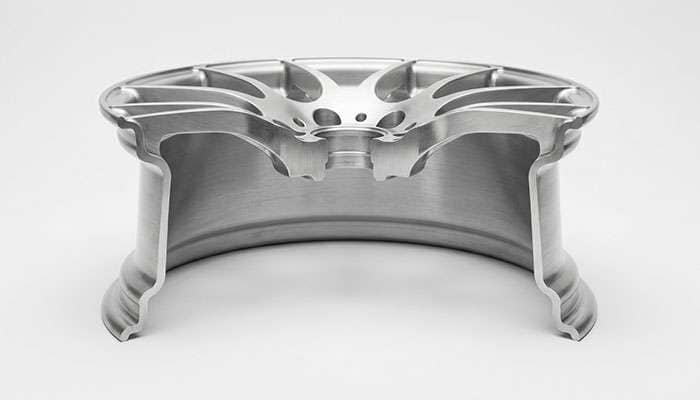
Here is the part that catches people. Wheel diameter and width are measured at the bead seats, on the inside of the rim, not across the outside lip. A 20x8.5 measures more than 8.5 inches across the outer flanges, usually about an inch more once you count both lips. If you are out in the driveway with a tape measure trying to figure out what you have, measuring the wrong surface is the number one way people end up ordering tires that are a full size off.
The other thing worth knowing up front: 20x8.5 is not some oddball size. Across the aftermarket it is the third most common 20-inch width, sitting behind 20x9 and 20x10. It is the width the industry settled on for passenger cars, luxury sedans and crossovers that want the twenty-inch look without a fender-filling tire. So there is no shortage of options. There is just a shortage of people telling you which numbers actually matter.
Same grammar, different width. A 20x8 wheel is 20 inches across and 8 inches wide. The first number is always diameter, the second is always width, and both are in inches even on wheels sold everywhere else in the world in millimeters. That is one of those industry quirks that has outlived every good reason for it.
But the stamp on the back of the wheel usually says a lot more than that, and this is where you get the numbers that actually matter. Flip a wheel over and look at the inside of the barrel near the valve stem or on the back of a spoke.
What You See |
What It Means |
Why You Care |
|---|---|---|
20 |
Diameter in inches at the bead seat |
Has to match the last number of your tire size |
8.5 |
Width in inches between bead seats |
Sets the range of tire widths you can mount |
ET35 or +35 |
Offset in millimeters from the centerline |
Decides whether the wheel clears strut and fender |
5x114.3 |
Bolt pattern: five studs on a 114.3 mm circle |
Either matches your hub or it does not; no adapting around it casually |
CB 73.1 |
Center bore in millimeters |
Must be equal to or larger than your hub, with a ring to take up slack |
Max load and JWL or VIA |
Load rating and Japanese testing standard marks |
Load rating must clear your vehicle's corner weight |
Offset is expressed in millimeters even though width is in inches, which tells you everything about how this industry evolved. Positive offset pushes the mounting face toward the street side of the wheel and tucks the wheel inward. Negative offset does the opposite and pushes it out toward the fender. Zero means the mounting pad sits dead on the wheel's centerline.
Backspacing measures the same thing from a different direction: it is the distance from the mounting pad to the inboard lip, in inches. Old-school shops still quote backspacing, and if you grew up in a hot rod garage the way I did, that is the number you think in. On a 20x8.5, the typical wheel runs right around 6.1 inches of backspacing. If someone hands you offset and you want backspacing, the conversion is straightforward, and our guide on how to measure wheel offset walks it through.
This is the question people actually came for, and most answers you will find give you a range and stop. "225 to 275." Fine. But that range spans two completely different tires, and where you land inside it changes how the car drives, how the tire wears and how it looks.
Every tire size has three widths that matter: the minimum rim it can legally mount on, the maximum rim it can legally mount on, and the recommended range in between where the manufacturer actually designed it to work. The industry shorthand is that rim width should land somewhere around 70 to 90 percent of the tire's section width converted to inches.
Here is what that shakes out to for an 8.5-inch rim.
Tire Width |
Where 8.5 Falls |
Verdict |
What It Looks and Feels Like |
|---|---|---|---|
225 |
At the maximum |
Legal, at the edge |
Slight stretch, sidewall pulled taut, tread flattened outward |
235 |
Upper end of approved |
Works well |
Crisp turn-in, a little more exposed sidewall |
245 |
Inside recommended |
Sweet spot |
Flat contact patch, even wear, the design target |
255 |
Inside recommended |
Sweet spot |
Best balance of grip and sidewall protection |
265 |
Bottom of recommended |
Works well |
Slight crown to the tread, fuller sidewall |
275 |
Below recommended, above minimum |
Depends on aspect ratio |
Noticeable bulge, softer steering response |
285 |
At the minimum |
Edge case only |
Ballooned profile, vague steering, uneven center wear |
If you want the short version: 245 and 255 are what an 8.5-inch rim was built around. Everything else is a trade you are making on purpose. If you are coming at this from the other direction and starting with a tire you already own, our guide to picking a tire size for wheel width runs the same math in reverse.
One more number worth carrying around. A tire's stated section width is measured on one specific rim, called the measuring rim, and it grows or shrinks by roughly 5 millimeters, or about two tenths of an inch, for every half inch of rim width you move away from it. So a 245 that measures 245 mm on its 8-inch measuring rim will measure closer to 250 mm mounted on your 8.5. That is not a rounding error when you are counting fender clearance in single millimeters.
Here is the thing that trips up more people than anything else on this page, and almost nobody puts it in front of you.
Those width charts are organized by section width alone. 245 gets one row, 275 gets another. But the actual approved rim width for a specific tire moves with the aspect ratio, and it moves a lot. Two tires both stamped 275 can have completely different minimum rims.
Tire Size |
Approved Rim Range |
On an 8.5? |
Overall Diameter |
|---|---|---|---|
275/40R20 |
9.0 to 11.0 in |
No. Below minimum |
28.7 in |
275/45R20 |
8.5 in at the narrow end |
Yes, right at the limit |
29.8 in |
275/55R20 |
Comfortably includes 8.5 in |
Yes, no drama |
31.9 in |
Same 275. Three different answers. The lower the aspect ratio, the wider the rim the tire demands, because a short stiff sidewall has almost no ability to pull inward and still seat properly. A tall sidewall can bend its way onto a narrower rim without distorting the tread face.
So when a chart tells you "275 fits an 8.5," what it means is that some 275s do. The Tire and Rim Association and ETRTO publish rim width ranges per size, and every tire manufacturer publishes a data sheet for each model. That data sheet is the authoritative answer, not the generic chart, and not me. Look it up for the exact tire you are buying.
A reputable shop will refuse to mount a combination that is out of spec. If a tire installer tells you no, that is not them being difficult. That is them keeping a bead on a rim.
Yes. And you should know exactly what you are signing up for.
An 8.5-inch rim is the maximum width most 225s are approved for. Not the recommended width, not the middle of the range. The top end. Mount a 225 on an 8.5 and the tire gets pulled outward at the bead, the tread face flattens, and the sidewall sits at a steeper angle than the engineers drew it.
What that costs you, in the order you will notice it:
People do it on purpose. The stretched look is a whole aesthetic and I am not going to pretend it is not a real thing in the stance world. Just do it with your eyes open, and understand that "fits" and "is a good idea" are two different tests. If you want the full mechanical picture of what changes when you move the same tire across rim widths, we broke it down in what putting the same size tire on different rim widths does.
My honest counter-recommendation: if you are on a 20x8.5 and you were about to order 225s, step up to a 245. You will spend a little more, you will keep the same overall diameter with a small aspect ratio adjustment, and you will get a tire sitting where it was designed to sit.
Half an inch of rim shifts the whole window down by roughly one tire size. Not two. One.
Rim Width |
Narrowest Workable |
Sweet Spot |
Widest Workable |
|---|---|---|---|
20x8 |
215 |
235 to 245 |
275 at taller aspect ratios |
20x8.5 |
225 |
245 to 255 |
285 at taller aspect ratios |
20x9 |
235 |
255 to 275 |
295 at taller aspect ratios |
There is a lot of overlap in the middle, which is why a 245 or a 255 shows up as a reasonable answer on all three widths. It sits at the wide end of an 8, dead center on an 8.5, and at the narrow end of a 9. That overlap is also why people get away with sloppy advice for years before something wears funny. If you are shopping the next width up, we covered what tires fit 20x9 wheels in its own guide.
Good news: the width rule does not care about diameter. An 8.5-inch rim takes the same range of section widths whether it is a 17x8.5, an 18x8.5 or a 20x8.5. Rim width governs tire width. Rim diameter governs tire diameter. They are independent axes.
So the 225-through-285 window from the table above applies straight across. What changes with diameter is which aspect ratios are available to you, because tire manufacturers build the sizes the market asks for. On an 18x8.5 you will find plenty of 245/45 and 255/45. On a 20x8.5 the same widths show up more often in 35, 40 and 45 series, because a twenty-inch wheel is usually going on something that wants the low-profile look.
The one thing that does change with diameter is consequence. A 35-series sidewall on a twenty gives you about three and a half inches of rubber between the rim lip and the road. Get the width wrong on a setup like that and you find out fast, because there is no sidewall left to absorb the mistake. On a taller sidewall the tire forgives you.
If you are moving from a smaller wheel to a 20x8.5 and trying to hold your overall diameter steady, that is a plus-sizing exercise and there is real math to it. Our guide to plus sizing tires covers keeping the rolling diameter within tolerance so your speedometer and stability control stay honest.
Everything up to here has been about the tire. Now the part that decides whether the wheel bolts on at all.
Two wheels can both be 20x8.5 and sit two full inches apart on your car. Across the aftermarket, 20x8.5 wheels run everywhere from deep negative offset up past +50 mm, and most of them cluster between +35 and +50. That clustering is not an accident. It reflects the vehicles this size is built for, which lean heavily toward front-wheel-drive and all-wheel-drive platforms with struts that need clearing on the inboard side.
Offset Range |
Where the Wheel Sits |
Typical Application |
What to Watch |
|---|---|---|---|
+35 to +50 |
Tucked in, flush or slightly inside the fender |
Most factory-replacement crossover and sedan fitments |
Strut and inner fender clearance at full lock |
+20 to +35 |
Pushed slightly outward toward flush |
Mild aftermarket look on stock suspension |
Fender lip contact over bumps and at full compression |
0 to +20 |
Noticeably proud of the fender line |
Trucks, older rear-drive platforms, aggressive stance |
Added scrub radius, heavier steering, more bearing load |
Negative |
Well outside the fender |
Deep-lip and multi-piece builds, show cars |
Fender modification usually required; legality varies locally |
Change offset and you change scrub radius, which is the distance between where your steering axis meets the pavement and where the tire's contact patch centers. Move it far enough and the steering gets heavy, the car tramlines on grooved pavement, and wheel bearings carry load they were never designed to carry. That last one is a slow failure. It does not announce itself; it just shows up as a bearing hum at 60,000 miles that would not have happened otherwise.
The other two numbers you cannot skip. Bolt pattern has to match, full stop. On 20x8.5 the market is dominated by 5x114.3, then 5x112 and 5x120, which is exactly the crossover, German luxury and midsize sedan crowd. A fair number of 20x8.5 wheels also ship as undrilled five-lug blanks so a shop can drill them to whatever pattern you have, which is a nice option on a custom build and a complete non-starter if you were hoping to bolt them on Saturday morning. If you are not sure what you have, our guide to cars with a 5x114.3 bolt pattern is the place to start, since it is the single most common pattern in this width.
Center bore has to be equal to or larger than your hub. If it is larger, you use hub-centric rings to take up the difference so the wheel centers on the hub rather than hanging on the lug seats. Skipping the rings is the most common cause of a vibration that no amount of rebalancing will fix.
Every wheel size is a compromise, and this one compromises in a direction I happen to like.
A 20x8.5 gives you the twenty-inch look with enough width to carry a proper 245 or 255 without pushing you into the wide-tire penalties. You keep steering effort reasonable. You keep the tire bill reasonable, because 245 and 255 in twenty-inch sizes are high-volume sizes and the competition keeps prices honest. And you keep tire selection wide open, which matters more than people expect once you start looking for something specific like a genuine winter tire.
Go wider, to a 20x9 or 20x10, and you gain dry grip and presence but you start paying for it in tramlining, hydroplaning resistance and tire cost. Go narrower to a 20x8 and you have given up the ability to run a 255 comfortably without gaining much.
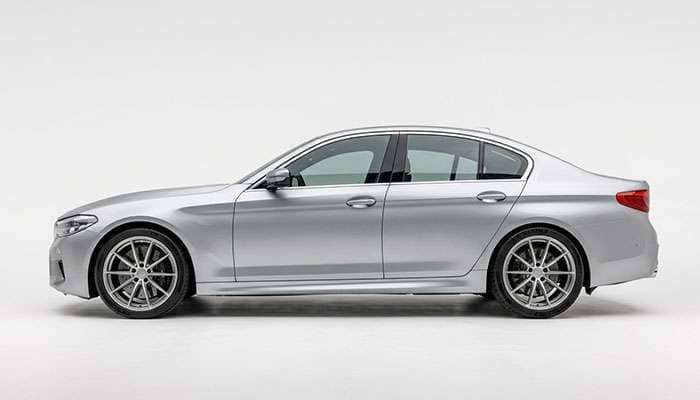
Where 20x8.5 really earns its keep is as the front half of a staggered setup, with something wider out back on a rear-drive car. That is a classic arrangement and it works because the front axle wants steering precision while the rear wants traction. We covered that pairing specifically in our piece on the 20x8.5 and 20x10 staggered setup.
One caution on staggered: you cannot rotate front to rear, so you are buying tire life in two separate transactions from then on. Worth knowing before, not after.
A 20x8.5 rim is twenty inches across and eight and a half wide. That is the easy part, and it is the part every search result will hand you in one sentence.
The useful answer is that those two numbers are the beginning of the spec, not the whole of it. Offset and bolt pattern decide whether the wheel goes on your car. Tire section width and, critically, aspect ratio decide what you can safely mount on it. A 245 or a 255 is what an 8.5-inch rim was engineered around. A 225 will fit but sits at the outer limit of what it is approved for. A 275 might fit or might not, and the deciding factor is a number most charts do not even show you.
Get those right and a 20x8.5 is one of the most useful, best-supported wheel sizes on the market. Get them wrong and you will find out on a pothole.
When you are ready to look at what is out there in this size, browse the full 20x8.5 wheel selection.
A 20x8.5 rim is a wheel measuring 20 inches in diameter and 8.5 inches in width, both measured at the bead seats on the inside of the rim rather than across the outer lips. It is the third most common 20-inch width in the aftermarket and is used mainly on passenger cars, luxury sedans and crossovers. The label does not include offset, bolt pattern or center bore, which are the numbers that actually determine whether the wheel fits your vehicle.
It means the wheel is 20 inches in diameter and 8 inches wide, both in inches and both measured at the bead seats. The full wheel spec also includes offset in millimeters, marked as ET followed by a number, plus the bolt pattern and center bore. A 20x8 takes tire widths from about 215 up to 275 at taller aspect ratios, with 235 to 245 as the sweet spot.
Section widths from 225 to 285 will mount on a 20x8.5, with 245 and 255 sitting in the manufacturer's recommended range. Common choices include 245/45R20, 255/45R20, 255/50R20 and 265/50R20. Always confirm against the specific tire model's data sheet, because approved rim width shifts with aspect ratio and the generic width charts do not account for that.
The same 225 to 285 range applies at any wheel diameter, because rim width governs tire width independently of rim diameter. A 17x8.5, an 18x8.5 and a 20x8.5 all take the same section widths. What changes with diameter is which aspect ratios are commonly manufactured, and how much sidewall you have left to absorb a fitment mistake.
Yes, but 8.5 inches is the maximum approved rim width for most 225s rather than the recommended one. The tire gets pulled outward at the bead, the tread flattens, and the sidewall sits at a steeper angle that puts more rubber in the path of potholes and curbs. Expect faster edge wear and a thinner margin against debeading. A 245 is the better choice on an 8.5-inch rim.
A 20x8 takes 215 at the narrow end and up to 275 at taller aspect ratios, with 235 to 245 as the design sweet spot. Half an inch of rim width shifts the whole window by roughly one tire size, so a 20x8 sits one step below a 20x8.5. Both widths handle a 245 comfortably, which is why that size shows up as a safe answer across several rim widths.



