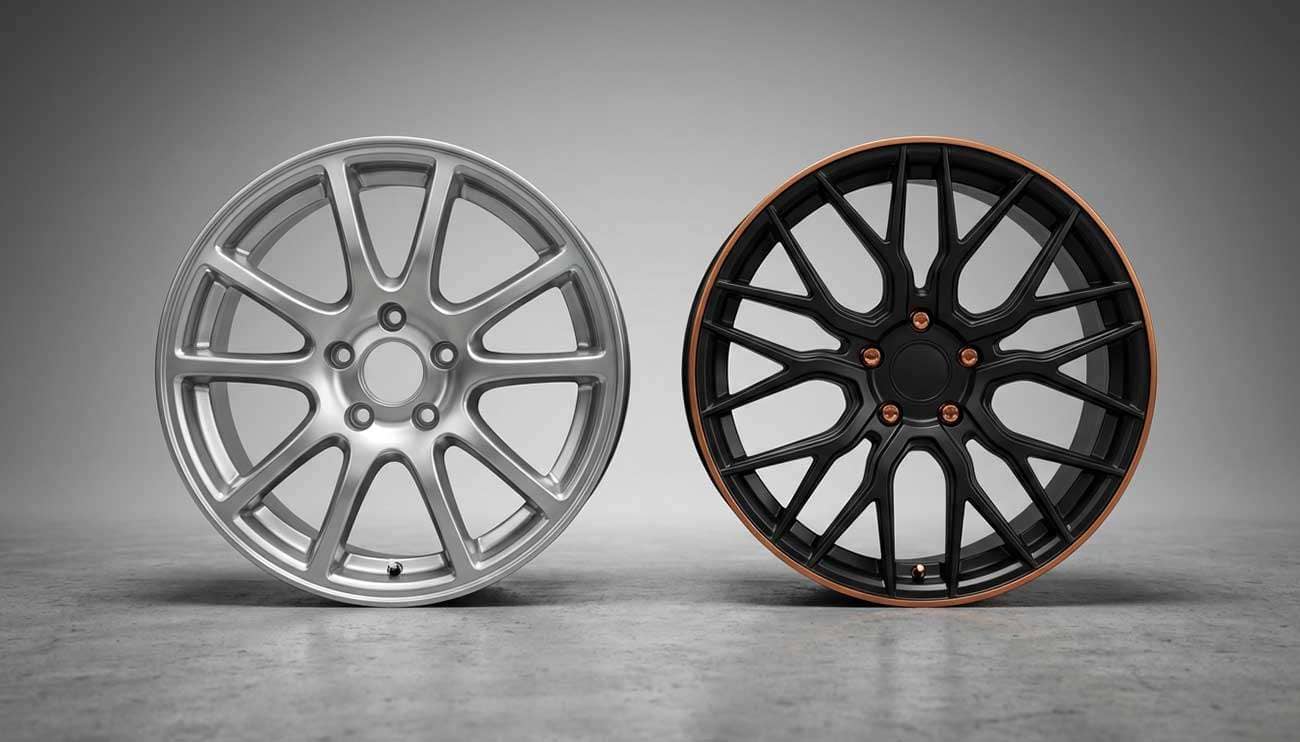
Aftermarket rims are wheels produced by companies other than your vehicle's original manufacturer. When you want to replace or upgrade the stock wheels that came with your car, these third-party options offer significantly more choices for appearance, performance, and personalization. Some aftermarket rims are designed as "replica wheels" that closely match OEM styles, while others focus on completely unique designs.
Most aftermarket rims use aluminum as their base material, frequently combined with other metals like magnesium to create stronger alloy compositions. The quality varies dramatically between manufacturers and price points. High-end aftermarket rims often exceed factory wheel specifications in both construction and materials, while budget options may sacrifice durability and safety features to meet lower price targets.
Manufacturing processes range from basic gravity casting to sophisticated forging techniques. Each method delivers different levels of strength, weight reduction, and design possibilities. Cast wheels offer affordability but typically weigh more, while forged options provide exceptional strength-to-weight ratios at premium prices.
When it comes to pricing, aftermarket rims span a wide spectrum. Quality options from reputable brands start around $887.00 for a complete set, while premium alternatives with specialized features can exceed $1672.00. Vision Offroad represents the accessible end of quality aftermarket wheels, whereas brands like Fuel command higher prices for advanced features such as simulated beadlock rings and custom finishes.
The variety available in aftermarket rims far exceeds factory options:
Finishes: Chrome for mirror-like shine, painted colors for personalization, matte for modern aesthetics, or polished aluminum for metallic appeal
Spoke Patterns: Multi-spoke, mesh, split-spoke, or deep dish configurations that create distinct visual impacts
Advanced Materials: Carbon fiber, magnesium alloy, titanium, and specialized composites for performance applications
Beyond appearance, aftermarket rims deliver measurable performance improvements. Lightweight construction reduces unsprung weight, which directly improves acceleration, braking response, and handling characteristics. This weight reduction can also boost fuel efficiency and reduce stress on suspension components. Certain specialized designs enhance traction and grip, contributing to both safety and driving enjoyment.
The fundamental difference between aftermarket and OEM rims lies in their design philosophy. OEM wheels prioritize reliability and balanced performance for your specific vehicle model, while aftermarket options focus on customization, specialized performance characteristics, or distinctive styling. Understanding this distinction helps you evaluate the advantages and potential considerations involved in upgrading your wheels.
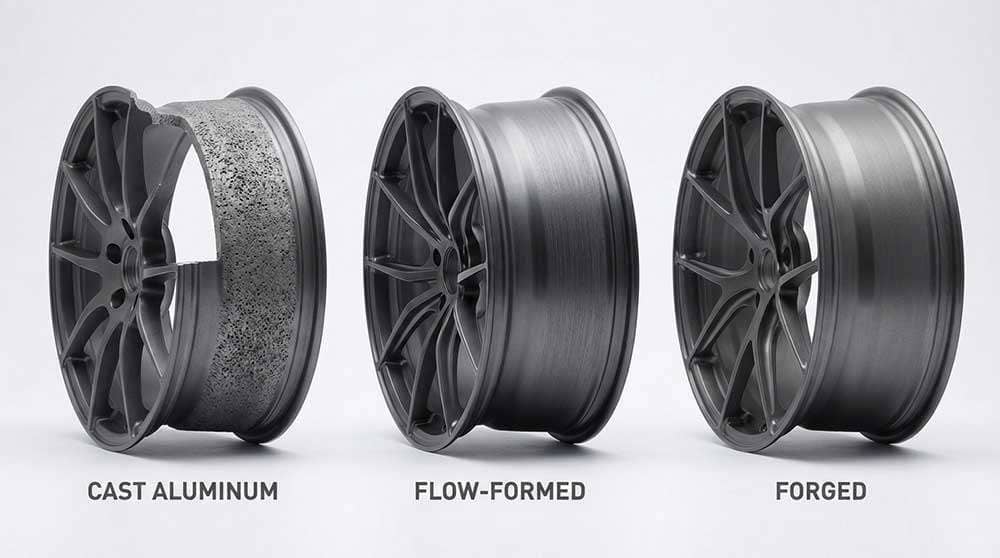
Understanding the different types of aftermarket rims is crucial when selecting wheels for your vehicle. Four main manufacturing methods dominate the market, each offering distinct advantages depending on your driving needs and budget.
Cast rims represent the most common wheel manufacturing method. The process involves pouring molten aluminum into a mold where it cools and solidifies into the final wheel shape. Two primary casting techniques are used: gravity casting allows the molten aluminum to fill the mold naturally, while low-pressure casting applies positive pressure to create denser wheel construction.
Cast wheels offer excellent value for everyday driving. They perform reliably under normal conditions and provide the most affordable entry point into aftermarket wheels. However, the casting process creates some porosity in the metal structure, making these wheels heavier than other types. The additional material needed to maintain structural integrity can impact performance in demanding driving situations.
Forged wheels represent the pinnacle of wheel manufacturing. The manufacturing process starts with a solid aluminum billet that gets heated and shaped under tremendous pressure. This intensive process aligns the metal's grain structure, creating wheels with exceptional strength-to-weight ratios.
The benefits are immediately noticeable. Forged wheels are significantly lighter and stronger than cast alternatives, offering superior performance in every driving scenario. Racing teams and performance enthusiasts choose forged wheels for their outstanding strength, reduced weight, and excellent heat dissipation capabilities. The premium quality comes with premium pricing, with some models starting at USD 2350.00 per wheel.
Flow-formed wheels deliver near-forged performance at more accessible prices. This innovative technique begins with a cast wheel face, then applies heat and pressure through steel rollers to stretch and compress the barrel section. The result is enhanced tensile strength that approaches forged wheel performance.
The process creates barrel walls up to 30% thinner without sacrificing structural integrity. Brands like Konig, Enkei, and BBS use this technology to produce wheels that bridge the gap between cast affordability and forged performance. Flow-formed wheels offer an excellent middle ground for drivers seeking performance improvements without the premium cost of fully forged options.
Multi-piece wheels offer unmatched customization possibilities. Two-piece construction separates the center from the rim, while three-piece designs split the rim into two additional components. This modular approach allows manufacturers to combine different materials and manufacturing methods within a single wheel.
Originally developed for racing applications in the early 1970s, multi-piece wheels remain popular in larger diameters of 17 inches and above. The flexibility for width adjustments and offset customization makes them ideal for specialized applications. The bolted construction also enables easier repairs and component upgrades compared to one-piece alternatives, making them a practical choice for serious enthusiasts.
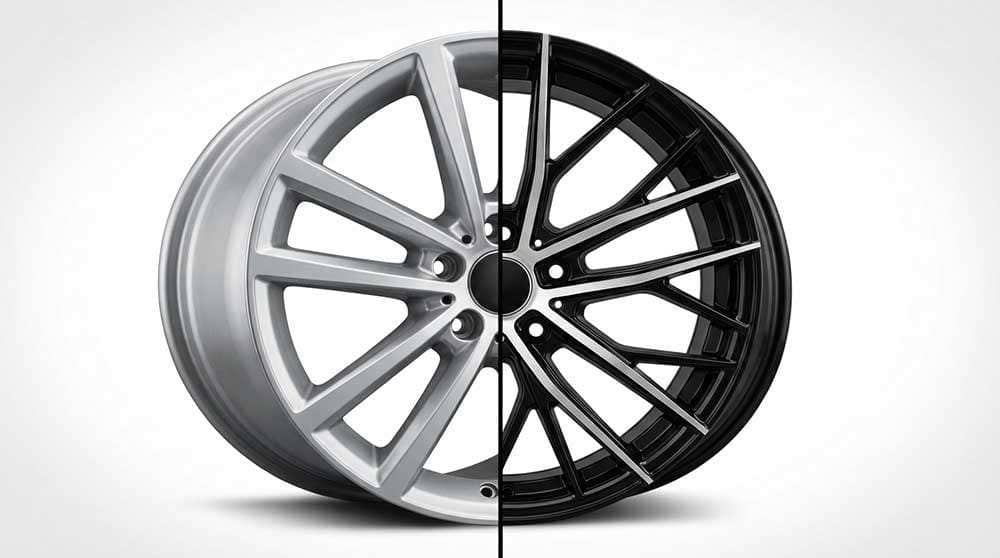
The difference between aftermarket and OEM (Original Equipment Manufacturer) rims goes far beyond where they're made. OEM rims are designed by vehicle manufacturers specifically for particular models, ensuring perfect fitment and compatibility with your car's electronic and suspension systems. Aftermarket rims focus primarily on size specifications rather than vehicle-specific design.
We see significant quality variations between these options. OEM rims undergo rigorous testing procedures to meet manufacturer standards, while aftermarket rim quality varies dramatically across brands. High-quality aftermarket options can actually surpass OEM specifications, especially for extreme driving conditions. However, lower-quality alternatives might compromise safety.
Performance differences show up most clearly in weight characteristics. OEM wheels typically weigh more because manufacturers use additional material during mass production. Premium aftermarket options, especially those using flow-forming or forging techniques, can be 15-30% lighter. This weight reduction delivers noticeable improvements in handling, acceleration, braking response, and potentially fuel efficiency by decreasing unsprung mass.
The price spectrum reveals interesting patterns. OEM replacements typically command premium prices, while aftermarket alternatives offer both budget-friendly options and high-end upgrades. A complete set of Vision Offroad wheels starts around USD 887.00, while premium Fuel wheels with specialized finishes can cost approximately USD 1672.00.
Customization represents another crucial advantage. OEM wheels provide limited style and color options designed for broad appeal. Aftermarket rims offer extensive personalization through various designs, finishes, and materials. This versatility makes aftermarket options particularly appealing for enthusiasts seeking unique appearance.
Warranty considerations differ substantially between these options. OEM wheels typically maintain coverage under the vehicle manufacturer's warranty, while aftermarket options may void certain warranty aspects. Some vehicle computer systems designed to adjust handling and suspension might not interpret data correctly with non-OEM wheels, potentially affecting braking and stability.
OEM wheels prioritize reliability and balanced performance for typical driving conditions. Aftermarket options target specific needs—whether lightweight performance, unique styling, or specialized functionality for particular driving environments. The choice depends on your priorities and driving requirements.
When selecting aftermarket rims for your vehicle, understanding both the advantages and potential challenges helps you make the right choice for your specific needs and driving style.
Aftermarket rims offer customization possibilities that factory wheels simply cannot match. While OEM wheels provide limited styles designed for broad market appeal, aftermarket options give you virtually endless personalization choices. You can select from sleek, minimalist designs to bold, aggressive styles that completely transform your vehicle's appearance.
The finish options available surpass anything manufacturers offer. Chrome-plated wheels deliver mirror-like reflection, powder-coated finishes provide superior durability, and polished aluminum creates a brilliant metallic sheen. Additional options include matte finishes for a contemporary look, gloss treatments, and custom paint colors that match your exact vision.
Premium aftermarket rims deliver weight reductions of up to 30% compared to OEM alternatives, creating noticeable improvements in handling, acceleration, and overall driving dynamics. Flow-formed wheels typically weigh 15-25% less than cast options, while fully forged wheels achieve 25-30% weight savings.
This reduction in unsprung mass provides measurable performance benefits. When a typical passenger vehicle's 28-pound OEM wheels were replaced with 18-pound aftermarket alternatives, the difference was immediately apparent. Wider aftermarket wheels also create a larger contact patch with the road, substantially improving handling, stability, and traction.
Quality varies significantly across both aftermarket and OEM categories. OEM wheels undergo rigorous testing including fatigue, impact, and strain analysis to meet manufacturer standards. However, premium aftermarket wheels often exceed OEM specifications, particularly for extreme driving conditions.
The key difference lies in how they handle stress. Cast wheels tend to crack catastrophically under extreme conditions, while properly forged wheels typically bend without breaking completely. This characteristic can be crucial for performance driving or off-road applications.
Not all aftermarket rims are designed with your specific vehicle in mind. Improper fitment can lead to handling problems, component rubbing, or suspension damage that compromises both safety and ride quality. The most serious issue is interference with the front strut at full steering lock—a dangerous situation that requires careful attention.
Universal-fit rims often require plastic adapter rings to become hub-centric, which may not provide the same precision fit as vehicle-specific designs.
Installing aftermarket rims may affect your warranty coverage under certain circumstances. While they don't automatically void your vehicle's entire warranty, manufacturers can deny claims if problems directly relate to the modification. Vehicle computer systems designed for OEM wheels might not interpret data correctly with non-OEM alternatives, potentially affecting braking and stability systems.
These factors don't eliminate aftermarket rims as an option, but they do require careful selection and professional installation to ensure optimal results.
Shopping for aftermarket rims requires careful attention to several key specifications. Getting these details right ensures your new wheels fit perfectly and perform exactly as expected.
The bolt pattern tells you how many lug holes your wheel has and how they're arranged. When you see "5x114.3," that means five bolt holes arranged in a circle with a 114.3-millimeter diameter. Getting this wrong creates serious fitment problems and potential safety hazards.
You'll also need to determine whether your vehicle requires hub-centric or lug-centric mounting. Hub-centric wheels fit precisely against your vehicle's hub, providing better safety and smoother rides. Lug-centric wheels center themselves using the lug nuts and offer broader vehicle compatibility.
Offset measures the distance from the mounting surface to the wheel's centerline in millimeters. Backspacing shows the distance from the mounting surface to the wheel's back edge in inches. These measurements control how your wheels sit within the fenders and affect clearance around suspension components.
Positive offset wheels tuck closer to suspension components, while negative offset wheels push outward. Wrong measurements cause rubbing against brakes, steering components, or fenders—problems that can damage your vehicle and compromise safety.
Steel wheels deliver excellent durability and resist cracking, but they're heavy. Aluminum alloy wheels reduce weight by 15-30% compared to steel, improving handling, acceleration, and fuel efficiency. Forged wheels offer the best strength-to-weight ratio but cost significantly more. Carbon fiber wheels provide exceptional performance but shatter on impact rather than bending, plus they command premium prices.
Stick with manufacturers that have proven track records in the industry. Quality brands invest in rigorous testing to meet structural integrity and safety standards. Research reviews from trusted automotive communities before making your decision. Always verify that manufacturers provide proper certifications and meet industry standards—your safety depends on it.
Quality aftermarket rims from reputable brands start around $887 for a complete set, while premium options with specialized features can exceed $1,672. Flow-formed wheels offer excellent middle-ground value between performance and affordability.
Decide what matters most to you—performance gains, unique styling, or maximum durability—then set your budget accordingly. Larger diameter wheels cost more, and chrome finishes add approximately 30% to the base price compared to painted alternatives.
Understanding aftermarket rims helps you make informed decisions about upgrading your vehicle's wheels for better performance, style, and functionality.
• Aftermarket rims are third-party manufactured wheels offering extensive customization options beyond OEM limitations, with prices ranging from $887 to $1,672+ per set.
• Four main types exist: cast (affordable but heavy), forged (strongest and lightest), flow-formed (balanced performance-price), and multi-piece (maximum customization).
• Premium aftermarket rims can be 15-30% lighter than OEM wheels, significantly improving handling, acceleration, braking response, and fuel efficiency.
• Always verify bolt pattern, offset, and backspacing specifications before purchase to ensure proper fitment and avoid suspension or safety issues.
• Choose reputable brands and set realistic budgets—quality varies dramatically, and improper fitment can compromise vehicle safety and warranty coverage.
When selected correctly, aftermarket rims transform both your vehicle's appearance and performance while providing personalization options that factory wheels simply cannot match.
Aftermarket rims are wheels manufactured by third-party companies rather than the original vehicle manufacturer. They offer more options for style, performance, and customization compared to stock wheels that come with your car.
Premium aftermarket rims can be 15-30% lighter than OEM wheels, which can significantly improve handling, acceleration, braking response, and potentially fuel efficiency. However, quality varies widely among aftermarket options.
There are four main types of aftermarket rims: cast (affordable but heavier), forged (strongest and lightest), flow-formed (balanced performance and price), and multi-piece (maximum customization options).
Before purchasing aftermarket rims, it's crucial to check fitment and bolt pattern, understand offset and backspacing, choose the right material, avoid low-quality brands, and set a realistic budget. Proper fitment is essential for safety and performance.
While aftermarket rims don't automatically void a vehicle's entire warranty, manufacturers may deny claims if a problem is directly linked to the modification. It's important to consider potential warranty implications when choosing aftermarket rims.